The Global War On Christians (book review)

The Global War On ChristiansThe reports of violence against Christians is in the news almost daily, but it should be something which dominates our headlines. Less than five pages into The Global War On Christians by John Allen, Jr. I was smacked between the eyes with this statistic: “One hundred million Christians worldwide presently face interrogation, arrest, torture, or even death because of their religious convictions.” Talk about a wake-up call!

Allen does sound the wake-up call quite clearly. The first section of the book reads a little like Fox’s Book Of Martyrs from the 16th century, except these dispatches are happening right now! Allen takes us around the globe in this section with general statistics for each region, and stories of individuals that put a “face” on the already-sickening statistics. After reading this section, you may wonder, as I did, why these reports aren’t the lead news story every single day.

In the second section Allen debunks the five most common myths used to keep people comfortably numb to the atrocities happening to our Christians brothers and sisters around the globe. This is an excellent refutation to those who may say, “It’s not our problem” or “How could I do anything about this anyhow.”

In the final section of the book, Allen brings all of the stories and statistics right onto your front doorstep. He vividly and, I believe, accurately describes what will happen if we continue to allow this persecution to take place unchallenged and unreported. Truly this book is a wake-up call, and should be read by every liberty-loving, religion-cherishing, thoughtful person in America.

I am an Image book reviewer.

Monologue Or Dialogue

Dialogue with GodTrue prayer, according to the Bible, is a dialogue. If we ever think of it as a monologue, it ceases to be true prayer.

Look at the contrasting statements in the opening verses of Psalms 13 and 14—

How long, O Lord? Will You forget me forever? (13:1)

The fool says in his heart, “There is no God.” (14:1)

We can have a dialogue with God—even asking questions of the Almighty—or we can monologue to ourselves.

The dialoguer asks a lot of questions (five of them in the first two verses of chapter 13) and anticipates that God will answer. In fact, David wrote in an earlier psalm, “In the morning, O Lord, You hear my voice; in the morning I lay my requests before You and wait in expectation” (Psalm 5:3).

God’s answers are expected, as the dialoguer stops asking questions of God and begins to express his trust in God’s love, as he rejoices in God’s salvation, and sings about God’s goodness (13:5-6). Clearly, this trust, rejoicing, and singing come from assurances received in his dialogue with God.

The monologuer asks no questions of God, but makes definitive conclusions that he himself concocted. He talks to himself, making himself the final authority! The result is inevitable: “There they are, overwhelmed with dread” (14:5).

Jesus told a similar account of a man whom Jesus said, “prayed about himself” (see Luke 18:9-14). That word “about” is probably better translated “to.” That’s right: this man was so sure of himself that he now monologued to himself and thought he was praying. But Jesus said this about the monologuer: He went home without God taking notice of his prayer.

May we always be dialoguers in prayer, and never monologuers.

God wants to talk with you, even hearing and answering your many questions. Be sure you allow Him time to speak with you, as you anticipate His loving reply.

I will be continuing our series on prayer next Sunday, and I would love to have you join me!

Poetry Saturday—“A Man” by Edgar A. Guest

Edgar A. GuestA man doesn’t whine at his losses,
A man doesn’t whimper and fret,
Or rail at the weight of his crosses
And ask life to rear him a pet.
A man doesn’t grudgingly labor
Or look upon toil as a blight;
A man doesn’t sneer at his neighbor
Or sneak from a cause that is right.

A man doesn’t sulk when another
Succeeds where his efforts have failed;
Doesn’t keep all his praise for the brother
Whose glory is publicly hailed;
And pass by the weak and the humble
As though they were not of his clay;
A man doesn’t ceaselessly grumble
When things are not going his way.

A man looks on woman as tender
And gentle, and stands at her side
At all times to guard and defend her,
And never to scorn or deride.
A man looks on life as a mission.
To serve, just so far as he can;
A man holds his noblest ambition
On earth is to live as a man. —Edgar A. Guest

Don’t Exasperate Them

Pastoring is not for the faint of heart. Nor those easily offended. Nor those lacking in patience…. You get the idea!

ChrysostomJohn Chrysostom (347-407) gave this counsel to pastors—

Thus then must the Priest behave towards those in his charge, as a father would behave to his very young children; and as such are not disturbed either by their insults or their blows, or their lamentations, nor even if they laugh and rejoice with us, do we take much account of it; so should we neither be puffed up by the promises of these persons nor cast down at their censure, when it comes from them unseasonably.”

The Bible tells fathers not to irritate and provoke your children to anger [do not exasperate them to resentment], but rear them [tenderly] in the training and discipline and the counsel and admonition of the Lord. (Ephesians 6:4, Amplified Bible)

Instead we should follow the example of Jesus, the Great Shepherd—

When He saw the throngs, He was moved with pity and sympathy for them, because they were bewildered (harassed and distressed and dejected and helpless), like sheep without a shepherd. (Matthew 9:36, Amplified Bible)

Ask our Shepherd to give you His patience, and compassion, and tenderness, and wisdom to carry His sheep in your arms. After all, it’s His flock that we’ve been given the privilege and responsibility to care for!

6 Quotes From “The Cell’s Design” (and a cool infographic too)

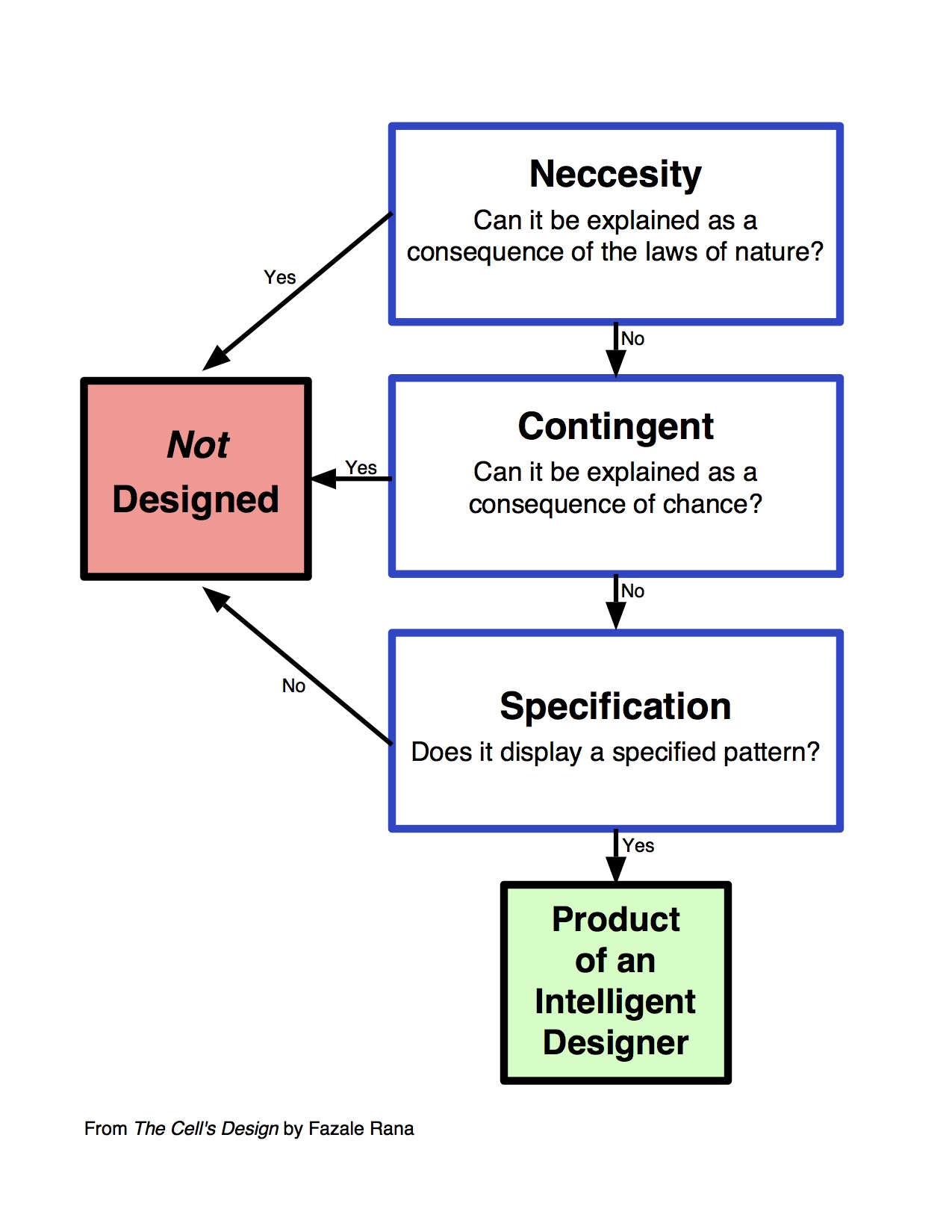
The Cell's DesignThe Cell’s Design by Fazale Rana, a distinguished biochemist, is an amazing apologetic for an intelligent designer of our universe: A Creator. You can read my full book review by clicking here. Below are a few quotes I wanted to pass along, and a graphic I created based on Rana’s findings.

“This elegance, evident in virtually all aspects of the cell’s chemistry, carries profound philosophical and theological significance that prompts questions about the origin, purpose, and meaning of life. Though I once embraced the evolutionary paradigm, its inadequate explanations for the origin of life coupled with the sophistication and complexity of the cell’s chemical systems convinced me as a biochemistry graduate student that a Creator must exist.”

“Richard Dawkins, an outspoken atheist, acknowledges that ‘biology is the study of complicated things that give the appearance of having been designed for a purpose.’”

“An event, system, or object is intentionally produced by a designer, then it will (1) be contingent, (2) be complex, and (3) display an independently specified pattern. … Three questions are used to determine if an event, system, or object stems from the activity of an intelligent agent. Can it be explained as a consequence of the laws of nature (necessity)? If yes, then it is not designed. If no, then can it be explained as a consequence of chance (contingent)? If yes, then it is not designed. If no, then does it display a specified pattern (specification)? If no, then it is not designed. If yes, then it must be the product of an intelligent designer.”

Intelligent design flowchart

(Click image for a larger view, or click here to download a PDF version → Intelligent design flowchart)

“These advances indicate that life’s bare essentials extend far beyond the number of proteins that must simultaneously occur for life to exist. Life’s minimum complexity also requires organization of these gene products within the cell.”

“It is superastro-nomically improbable for the essential gene set to emerge simultaneously through natural means alone. If left up to an evolutionary process, not enough resources or time exist throughout the universe’s history to generate life in its simplest form.”

“Instead of resembling a preschooler’s messy fingerpainting, the interior of the simplest cell is best described as a carefully planned and marvelously executed work of art—one that masterfully carries out life’s most basic processes in living color. Disrupting this arrangement is often lethal.”

Thursdays With Oswald—Heavenly Minded & Earthly Good

This is a weekly series with things I’m reading and pondering from Oswald Chambers. You can read the original seed thought here, or type “Thursdays With Oswald” in the search box to read more entries.

Oswald Chambers

Heavenly Minded & Earthly Good 

     Entire sanctification puts a man’s breast and back as either should be, places his feet on earth and his head in Heaven, and gives him the royal insignia of the saints. 

From Christian Disciplines

Have you ever heard it said of someone, “He’s so heavenly minded that he’s no earthly good”? They are saying that man has ideas which sound spiritual but aren’t very practical.

Isn’t it also true that someone could be “so earthly minded that he’s no heavenly good”? Yes, sadly, many people fall into this category!

Oswald Chambers is saying that those people who allow the Holy Spirit’s total sanctification process in their lives are both heavenly minded and earthly good. Or, as Chambers says in If Ye Will Ask, “Jesus Christ does not make monks and nuns, He makes men and women fit for the world as it is (see John 17:15).”

Christians should be the most practical people on earth, because their feet remain on earth while their mind and hearts remain in Heaven, hearing and applying God’s timeless and practical truths. True Christians should sound and live differently.

God’s Answers Are Bigger

I’m studying for our current series on prayer at Calvary Assembly of God, and I came across this amazing story (see John 20:10-15). I’m not sure if we will have time to get to it during this series or not, but in either case it’s just too good to hold back any longer …


If you are praying for something right now and the answer hasn’t arrived yet, keep on praying. God is doing something in the waiting time. Perhaps He wants you to modify your prayer, or perhaps He has something even bigger in store for you, bigger than you could have even imagined.

Keep on praying!

Sword Drills

© kpmoorse.deviantart.com

© kpmoorse.deviantart.com

When I was a kid in Sunday School, we used to have “sword drills.” Anyone remember those? We would hold our Bibles up in the air until the teacher gave us a reference to look up. The first one to find it, and stand up and read it, won that drill. For that, we received a sticker to put inside the front cover of our Bibles. I loved sword drills, and it showed: the front cover of my Bible was filled with stickers!

Oh, that we were as quick to pull out the Sword God has given us today! I wish we were as quick to flip open our Bibles as we seem to be to turn to something else. We call friends, consult a pastor or a counselor, pray about it, talk about, plan how to overcome it; but we are slow on pulling out our Swords. 

  • The writer of Hebrews tells us that the Word of God is sharper than a sword (Hebrews 4:12).
  • Paul told Timothy that the Bible was the premier place for teaching, rebuking, correcting and training (2 Timothy 3:16).
  • He told the Corinthians that God’s Word is what helps us capture wrong thoughts (2 Corinthians 10:5).
  • In Revelation we see satan defeated by the blood of the Lamb and the use of the Word (Revelation 12:11).
  • Jesus Himself demonstrated the power to defeat satan’s temptations when He used the Word to ward off every attack (Luke 4:1-13).
  • And Paul said the Sword is the weapon we should arm ourselves with every single day (Ephesians 6:17).

I love the story John Knox (1514-1572) told about defeating satan’s temptations by the Sword of the Word—

“All my life I have been tested and assaulted of satan. But my present test has assailed me most fearfully. He has set to devour me, and make an end of me. Before, he often would place all my sins before my eyes. He tried to ensnare me with the allurements of this world. But the Spirit broke those attacks. Now he has attacked me another way. This cunning devil has labored to persuade me that I have earned heaven by my faithfulness to my ministry! … Blessed be God who has enabled me to beat down and quench this fiery dart by passages from the Scripture. By the grace of God, I am what I am, not I, but the grace of God in me. Through Jesus Christ I have gained the victory.” (emphasis added)

What do you think? Is it time to brush up on our Sword-handling skills? Get some Sword drills in today, and see how God’s Word will help you!

The Cell’s Design (book review)

The Cell's DesignAfter my years in the medical science field, I’m still fascinated by the findings and operations of the many disciplines of science. I used to engage in frequent debates with my fellow students who believed our world was a result of chance and mutation spread over billions of years. But I always found it so astronomically improbable that such beautiful intricacies could result from chance. In The Cell’s Design biochemist Fazale Rana delves even deeper into the cell’s inner workings to make a powerful case for intelligent design.

Time and time again Rana shows us where there is such high-level, picture-perfect designs and operations at the smallest levels of the cell. Wherever scientists used to think, “This is as much design as we can expect, anything lower than this will be random,” they are now discovering unexpected and perfect designs.

This book is definitely not “layman” reading, but is geared for those with a working knowledge of scientific vocabulary and principles. But if you want to dive into it, you will find the results of the research to be absolutely astounding. And I think you will also find the case for a Intelligent Creator to be harder to refute. 

This quote is not in The Cell’s Design, but I think it accurately captures the essence of Rana’s findings—

“There is something in the nature of things which the mind of man, which reason, which human power cannot effect, and certainly that which produces this must be better than man. What can this be but God? … The celestial order and the beauty of the universe compel me to admit that there is some excellent and eternal Being, who deserves the respect and homage of men.” —Cicero

Prayer’s Empowerment

Prayer is not about insurance, but assurance. Prayer is not about figuring things out, but about getting God’s mind on a subject.

But how does the faith to believe for that assurance, and the faith to capture God’s discernment come to us? It comes through the Third Person of the Trinity: the Holy Spirit. The Holy Spirit empowers us; He’s the central part of our prayer life.

Check out what Jesus said about the Holy Spirit’s role in your prayer life (see John 14:15-27).

EmpowermentAssurancethe Counselor [will] be with you forever (v. 16). The Holy Spirit doesn’t come and go, but He abides constantly. Jesus said I will not leave you as orphans (v. 18), but you will be loved by My Father (vv. 21-23). The Holy Spirit plays a vital role in bringing you into this intimate relationship (Romans 8:15).

Discernment—Jesus said a key component of your prayer life was if you remain in Me and My words remain in you (John 15:7). The Holy Spirit helps teach you what the Word says, and He will remind you of everything I have said to you (John 14:26). The more you can be reminded of God’s Word, the more you can pray and live with God’s discernment.

PeaceMy peace I give you … do not be afraid (v. 27). One of the names given to the Holy Spirit is Comforter. The Amplified Bible defines this title as, “Counselor, Helper, Intercessor, Advocate, Strengthener, and Standby.”

Boldness—when you have greater assurance of God’s Word, deeper discernment into the mind of the Lord, and a more tranquil peace because of prayer, you can pray and live boldly! Want to see boldness in action? Check out how the followers of Jesus lived and prayed after they were baptized in the Holy Spirit (Acts 1:8; 2:14; 4:8; 4:31).

Make no mistake about it:

How we pray is how we will live! 

Our prayers and our lives will be more assured, more discerning, more peace-producing and more bold when we let the Holy Spirit empower every aspect!

We will be continuing our series on prayer—If You Will Asknext Sunday. I would love to have you join us!