When To Seek Consensus

David conferred with each of his officers…. He then said to the whole assembly of Israel, “If it seems good to you and if it is the will of the Lord our God…let us bring the ark of our God back to us….” The whole assembly agreed to do this, because it seemed right to all the people. (1 Chronicles 13:1-4) 
David cast a vision, consulted with his inner circle of leaders, shared the vision with the people, and got unanimous agreement from everyone. 

And yet things went horribly wrong: a man was killed and David became terrified of God.

In the above verses, notice all of the plural pronouns: we and us. David worked hard to build a consensus among the people. 

David was quick to notice that the ark of the covenant of the Lord wasn’t used to consult God during the reign of King Saul (v. 3), but that’s exactly what David didn’t do. He built a consensus among the people without getting a “yes” from God. Even a unanimous decision of the people will fail if God isn’t in it! 

Thankfully, in chapter 15, David corrects this omission. We read phrases like: 

  • “we did not inquire of [God] about how to do it in the prescribed way” 
  • we should do this “in accordance with the word of the Lord” 

I also notice that David no longer sought consensus but merely announced to the people what was happening. In this successful attempt to move the ark, David’s only consultation was with God. After that, he made arrangements with the Levites, gathered his inner circle of leaders, and then asked the people to join in the celebration. 

God had already spoken about how the ark of the covenant was to be moved: it was written in His word. Therefore, as noble as it might sound, there was no reason for David to seek a consensus from the people.

Even if it is not an area or activity explicitly addressed in the Bible, God’s will is to be sought before others are consulted. If God says “yes,” the leader must proceed even if the people say “no.” And the leader must not listen to the people’s “yes” if God has said “no.” 

Consensus is fine in its place, but only in its proper place. 

A mark of a godly leader is one who knows when to seek consensus among the people.

This is part 53 in my series on godly leadership. You can check out all of my posts in this series by clicking here.

Discovering True Friends

Last week I shared that a mark of a maturing saint is one who when he realizes he is in a trough begins to praise God in anticipation of the blessings which are coming! I believe a keyword in this statement is realizes. Once we realize that we are in a trough, what will help us turn our mourning into praise? In a word: meditation. 

Notice Asaph’s words at the beginning of Psalm 77. Twice he says he “cried out” to God. This literally means that he called aloud, not caring who heard him. It wasn’t a whimper, but Asaph said he was “distressed.” As soon as he realized the distressed state he was in, notice the words of meditation in the next four verses: 

  • remembered (2x) 
  • mused (2x) 
  • thought 
  • inquired 

Asaph also began to ask himself questions, all of which have the obvious answer “NO”:

  • Will the Lord reject me forever? NO! 
  • Will He never show His favor again? NO!
  • Has His unfailing love vanished forever? NO!
  • Has His promise failed for all time? NO! 
  • Has God forgotten to be merciful? NO! 
  • Has He in anger withheld His compassion? NO! 

Again, Asaph meditates (notice the words thought, remember, meditate, and consider once again in the next three verses). His conclusion leads him not to self-pity, but to praising God.

Asaph taught us that when we get our eyes off ourselves we can see what God is doing in us, around us, and through us. 

One lesson I learned in a very dark night time of my life: Who my true friends are. When all my “fans” stopped cheering and started jeering, I ended up in a very dark place. But as soon as I realized the valley I was in and began to meditate on God’s presence even in this dark place, I began to see what was happening around me. One of the things I saw were two men who stood up for me against all the foes attacking me. They stepped in when all my “fans” stepped away. 

The apostle Paul had the same realization in the dark night of his Roman prison cell. He stated, “at my first defense no one came to my support.” But he also saw those who stood by his side: Luke, Timothy, and Mark.

Dark times can quickly lead us to self-pity UNLESS we will realize we are in a dark place and begin to meditate on all that God says in His Word about His faithfulness. Once we get our eyes off ourselves and onto Him, we will begin to see the lessons God is teaching and the amazing things He is accomplishing. 

I can be thankful IN the night because the dark nights have shown me my true friends. 

If you’ve missed any of the messages in this series, you can find them all by clicking here. 

Poetry Saturday—Keep Your Lips From Slips

If your lips would keep from slips,
Five things observe with care;
To whom you speak, of whom you speak,
And how, and when, and where. —William Edward Norris

Things That Diminish Pastoral Ministry

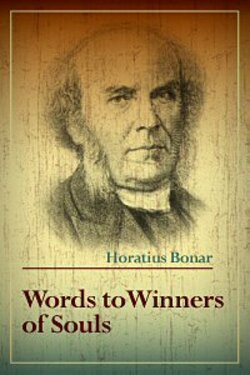
Horatius Bonar pulls no punches when he talks to pastors! Words To Winners Of Souls is a compilation of sermons Bonar preached to fellow pastors. 

These are a list of things that Bonar said would diminish a pastor’s ministry: 

“Seldom in secret prayer with God, except to fit for public performance; and even that much neglected, or gone about very superficially. 

“Glad to find excuses for the neglect of duties. 

“Neglecting the reading of Scriptures in secret, for edifying ourselves as Christians; only reading them in so far as may fit us for our duty as ministers, and oft-times neglecting that. 

“Not given to reflect upon our own ways, nor allowing conviction to have a thorough work upon us. …

“Not guarding nor wrestling against seen and known evils, especially our predominants. … 

“Not praying for men of a contrary judgment, but using reservedness and distance from them; being more ready to speak of them than to them or to God for them. …  

“The matter we bring forth is not seriously recommended to God by prayer, to be quickened to His people. 

“Neglect of prayer after the Word is preached, that it may receive the first and latter rain; and that the Lord would put in the hearts of his people what we speak to them in his name. … 

“Choosing texts whereon we have something to say, rather than those suited to the conditions of souls and times, and frequent preaching of the same things, that we may not be put to the pains of new study. … 

“Not making all the counsel of God known to His people. … 

“Continual employment in the most solemn duties of our office, such as dealing with souls in private about their immortal welfare, or guiding the meditations and devotions of God’s assembled people, or handling the sacramental symbols—this, gone about often with so little prayer and mixed with so little faith, has tended grievously to divest us of that profound reverence and godly fear which ever ought to possess and pervade us.” —Horatius Bonar 

To my fellow pastors, may we especially heed Bonar’s fourth warning and ask the Holy Spirit to help us “reflect upon our own ways” and if necessary to allow Him to bring a “conviction to have a thorough work upon us.” 

Thursdays With Spurgeon—Honey In My Mouth

This is a weekly series with things I’m reading and pondering from Charles Spurgeon. You can read the original seed thought here, or type “Thursdays With Spurgeon” in the search box to read more entries.

Honey In My Mouth

He will glorify Me, for He will take of what is Mine and declare it to you. All things that the Father has are Mine. Therefore I said that He will take of Mine and declare it to you. (John 16:14-15) 

     So we actually receive, through Jesus Christ, by the Spirit, what is in the Father!  

     Ralph Erskine, in the preface to a sermon upon the fifteenth verse, has a notable piece. He speaks of grace as honey for the cheering of the saints, for the sweetening of their mouths and hearts. But he says that in the Father, ‘The honey is in the flower….’ In the Son, ‘the honey is in the comb…. But then we have honey in the mouth. That is the Spirit taking all things and making application of them, by showing them to us and making us to eat and drink with Christ and share of these things….

From Honey In My Mouth

My grandfather had honeybees on his farm and I was fascinated by them. So much so that in my ecology class in college, I wrote my final research paper on the fascinating inner workings of the honeybee hive. My grandfather would often plant various crops so that the nectar from those flowers would give a distinct flavor to the honey. 

The nectar of a flower has everything in it to make honey except for one thing: a honeybee’s care. The nectar has to be transported back to the hive where it then undergoes the process of being transformed into honey—precise temperatures, storage, and evaporation processes are perfectly overseen by the bees until edible honey emerges. 

Ralph Erskine’s analogy of this nectar-to-honey process is very apropos to the things of God. Our Heavenly Father said that His thoughts are higher than our thoughts: they are inaccessible by our finite human minds (Isaiah 55:8-9). Jesus came as the revelation of all of the things of the Father, declaring to us all that God has for us. Jesus added, “I still have many things to say to you, but you cannot bear them now” (John 16:12), which is why the Holy Spirit illuminates the inspired Word of God.

Do you see the whole Trinity active in this process? The Father creates, the Son reveals, and the Spirit makes accessible (or, if you will, the Spirit makes edible). 

The Holy Spirit not only makes the things of God edible to us, but He gives us new tastebuds. No longer will the things of the world satisfy our tastes, no longer will we find any satisfaction in them, no longer will those earthly things nourish us. What the Father has created, and the Son has revealed, the Spirit will make real—and delicious!—to us.


How A Leader Gains Followers

And David became more and more powerful because the Lord Almighty was with him (1 Chronicles 11:9). 

David had followers from all twelve tribes of Israel—warriors, leaders, talented men, fierce men. David wasn’t recruiting them or promising them any rewards, but they volunteered, coming in “one accord” and creating “joy in Israel” in the process (12:1-40). 

David was prepared to go alone. He fled from Saul without a single helper. David’s attitude was one of all-in trust in God, so all of these warriors came to David because of what he represented, not because of what he advertised. It was David’s wholehearted commitment to God that won the wholehearted commitment of these valiant men.

Their unity of purpose—“fully determined … one mind” (12:38)—was not because of a compelling vision that David cast but because of a mighty God David fully feared and loved. 

A leader’s focus should never be on building a following or casting a compelling vision, but on wholehearted, single-minded love and commitment to God. Any power or following only comes “because the Lord Almighty was with him.” 

A mark of a godly leader is his wholehearted devotion to God which creates a wholehearted devotion in his followers. 

This is part 52 in my series on godly leadership. You can check out all of my posts in this series by clicking here

The Craig And Greg Show: Fearless Leaders

On this episode of “The Craig And Greg Show” we talk about: 

  • Greg used to trick his younger sister into doing something he was afraid to do  
  • fear makes us tunnel-visioned   
  • I teach Greg a new phobia  
  • doctors say only two fears are innate; all the rest are learned fears   
  • “If fear is learned, it can be unlearned, and a new path relearned,” says Craig 
  • the lessons we’ve learned in the past can help us conquer today’s fears
  • what we can learn from the acrostic F.E.A.R.  
  • how Greg’s Dad helped him overcome a fear of failure  

Check out this episode and subscribe on YouTube so you can watch all of the upcoming episodes. You can also listen to our podcast on Spotify and iTunes.

Only One Thing Limits Prayer

“…the heavens, even the highest heavens, cannot contain You. How much less this temple I have built! Yet, Lord by God, give attention to Your servant’s prayer…” (2 Chronicles 6:18, 19). 

It’s amazing to think that the Limitless God of the Universe condescends to listen to frail human prayers! 

The key is my humility to approach God. Not as one afraid to approach, but as one who is humbly confident that He wants me to come to Him (see Matthew 6:8). 

Solomon repeatedly asked God to “hear” and respond (vv. 19, 20, 21, 23, 25, 27, 30, 33, 35, 39). And God says, “I have heard you and I will continue to hear and respond” (7:12, 14)! 

Oh what peace we often forfeit
Oh what needless pain we bear
All because we do not carry
Everything to God in prayer

If God wants to hear from me, why do I try to handle things on my own?! 

My prayers are only limited by my pride that keeps me from coming to God in prayer.

Praising God In The Troughs

Some people mistakenly think that the maturity of a Christian is a steady climb, and anything short of that is not God-honoring. They feel the graph has to always be moving up and to the right. In reality—if we zoom in—we will see lots of peaks and troughs that are in the climb. 

For instance, we read the worship leader of Psalm 42 saying, “By day the Lord directs His love, at night His song is with me—a prayer to the God of my life,” and we think, “Yeah, that’s what I expect from a saintly psalmist!” 

But let’s get the context. In the opening verses, this same worship leader talks about his profound thirst, his tears, and the taunts of his enemies. Twice in this psalm, he laments, “Why are you so downcast, O my soul? Why so disturbed within me?” 

Many people have gone through what has been called “the dark night of the soul.” I doubt anyone has ever given thanks because of those dark times, but they have learned to give thanks during those dark times.

Consider David’s beautiful words in Psalm 23. He points out that the Good Shepherd leads us into green pastures AND into dark valleys, beside quiet waters AND into the presence of enemies. 

But notice this: the Shepherd of our soul provides what we need in both daytime AND nighttime. He pours out blessings in the presence of our enemies, and as my grandfather wrote in the margin of his Bible next to verse 4, “Where there is shadow there must be light.” 

Consider the example of Paul who wrote to the Philippians, “Rejoice in the Lord always. I will say it again: Rejoice!” (4:4). He wrote this to the church that was birthed by Paul’s miraculous deliverance from prison, while Paul and Silas were doing just that: Praying and singing hymns to God! 

In The Screwtape Letters, C.S. Lewis gives us insight into how the demons view the temptation of Christians. Uncle Screwtape wrote to his nephew, “It may surprise you to learn that in God’s efforts to get permanent possession of a soul, He relies on the troughs even more than on the peaks; some of His special favorites have gone through longer and deeper troughs than anyone else. … It is during such trough periods, much more than during the peak periods, that the human is growing into the sort of creature He wants it to be. Hence the prayers offered in the state of dryness are those which please Him best.” 

A mark of a maturing saint is one who when he realizes he is in a trough begins to praise God in anticipation of the blessings which are coming! 

Don’t feel like you need to praise God FOR your troughs, but you can and should praise Him BECAUSE of His presence even in your driest, darkest trough. God is doing something in this trough time that He could accomplish in no other way. As David said, our Good Shepherd leads us in both sunlit and dark paths “for His name’s sake”—He will be glorified and you will be rewarded! 

Be sure to follow along on this series Thankful In The Night.

Poetry Saturday—When Sorrow Walked With Me

I walked a mile with Pleasure—
She chattered all the way
But left me none the wiser
For all she had to say.
I walked a mile with Sorrow
And ne’er a word said she,
But, oh, the things I learned from her
When Sorrow walked with me. —Robert Browning Hamilton