
The Mercyseat

Listen to the podcast of this post by clicking on the player below, and you can also subscribe on Apple or Spotify.
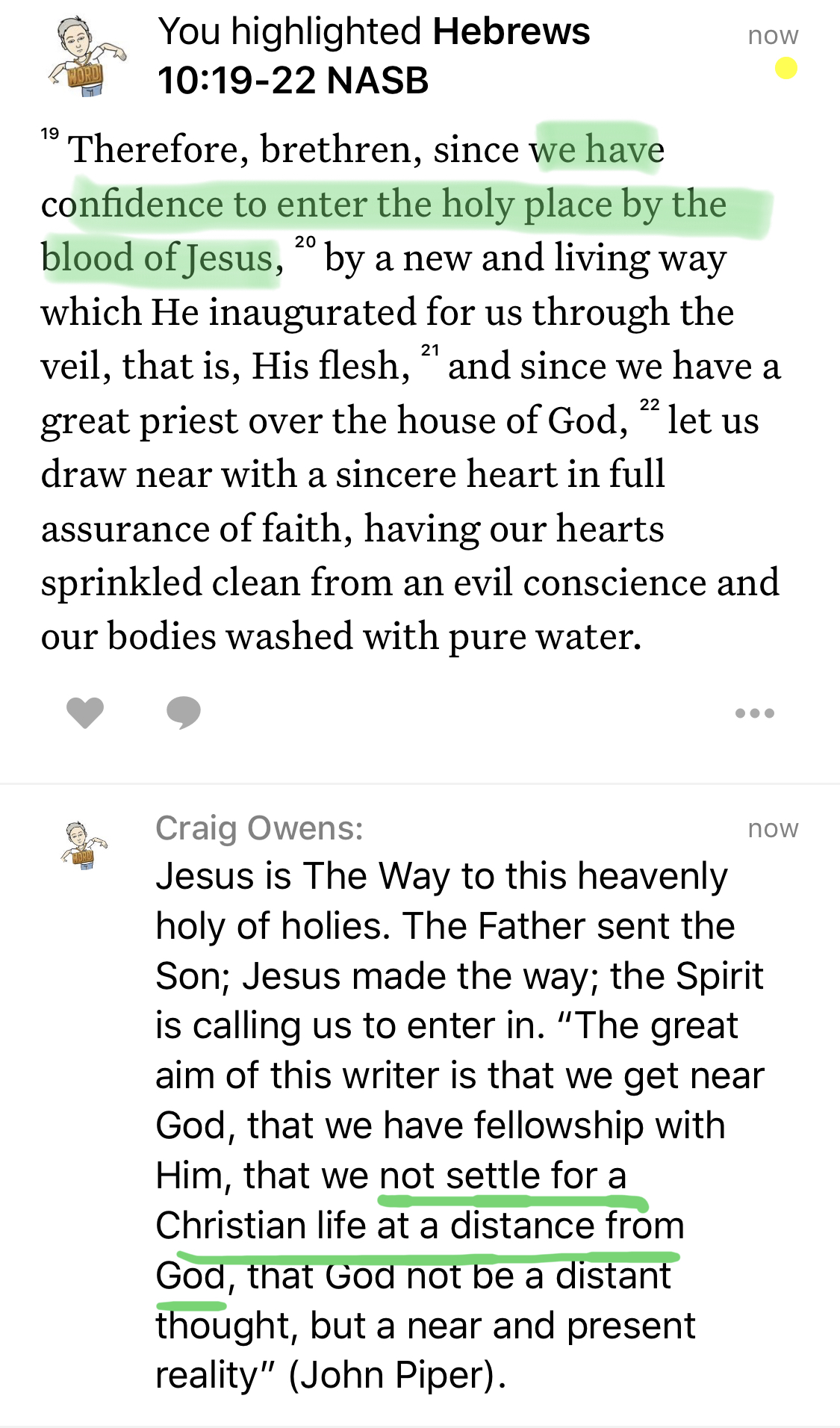
Hear my cry for mercy … He has heard my cry for mercy (Psalm 28:2, 6).

For David, his cry for mercy was never a one-and-done action. The verb in verse 2 makes this verse read more like, “Hear my cry for mercy as I am continually calling to You for help, as I am continually lifting up my hands toward Your Most Holy Place.” 

Why the Most Holy Place? What was there? Inside the Most Holy Place was the ark of the covenant of the Lord which represented the presence of God. 

What was on top of the ark of the covenant, covering and superseding the Law that was inside the ark? It was the mercyseat (or the “atonement cover” in some translations). The mercyseat is where the high priest sprinkled the blood of the sacrificial lamb every year to make atonement for sins.

Jesus became the once-for-all sacrificial Lamb to make ultimate atonement for all who would believe in Him. When Jesus had finished His work on the Cross, the curtain separating us from the Most Holy Place was torn in two. The ark of the covenant of the Lord with its covering mercyseat—the presence of God—was now accessible to all of us! It was accessible because it was in Jesus, and when I have taken Jesus as my atonement, He is in me and He takes me in to the Father. The mercyseat of my heart has been sprinkled with the blood of the Lamb (see Hebrews 9:1-5, 11-14; 10:19-22). 

Whether David was saying, “Hear my cry,” or “He has heard my cry,” the Hebrew word means to listen with interest and full attention. Whenever you pray, God listens to you with interest and full attention because you are praying right in His presence! Your very breath can be a continual crying, a continual lifting of your voice toward the mercyseat where God meets with you! 

God is not far away from us. He is closer than we usually think. That’s why David says, “My heart leaps for joy, and with my song I praise Him”! 

Keep this in mind the next time you are asking God to hear your cry: He listens to you with full attention because Jesus has taken you right into His presence.

Would you please prayerfully consider supporting this ministry?
Persistent And Insistent Prayer

Listen to the podcast of this post by clicking on the player below, and you can also subscribe on Apple or Spotify.

When I first began this series on prayer, I challenged all of us to make prayer a habit. I suggested putting up “Have I prayed about it?” Post-It Notes all over the place to get us thinking about prayer continually. 

“Have I prayed about it?” is a great start. But then I need to ask, “How long have I prayed about it?” or maybe even, “How long am I willing to pray about it?” 

Thomas Merton wrote, “What is the use of praying if at the very moment of prayer we have so little confidence in God that we are busy planning our own kind of answer to our prayer?” In other words, why do we go through the motions of praying and then strike out on our own? Or why do we pray for a little bit and then think, “Oh, perhaps God isn’t interested in this prayer”? 

In Romans 12:12, the apostle Paul challenged us to never stop praying:

  • faithful in prayer (NIV) 
  • constant in prayer (AMP) 
  • prayerful always (TLB) 
  • continuing steadfastly (NKJV) 

This verb emphasizes the –ing part. Even though this is a verb, it’s what is known as a “verbal noun”: the noun pray is the same thing as the verb praying. 

This Greek word is defined as: devoted, giving unremitting care to something, being courageous in perseverance, and staying at constant readiness. I would sum it up this way—

Prayer that is both persistent and insistent! 

When Jesus teaches us that the motive for our prayer is, “Your kingdom come, Your will be done,” He is also implying that this requires continuous—persistent and insistent—involvement. With every prayer, we are persistently and insistently advancing God’s Kingdom and God’s glory. 

One of my favorite stories in the Gospels is of a persistent and insistent mother. Her daughter was in desperate need, and she simply would not take “no” for an answer. She insistently kept asking Jesus for a miraculous touch, and Jesus finally said, “Woman, you have great faith! Your request is granted.”

I’m also moved by the insistent and persistent prayer of Nehemiah. He prayed, “Give Your servant success today by granting him favor in the presence of [King Artaxerxes].” He prayed this every day for over 4 months. The king finally noticed Nehemiah’s downcast face, asked him what was wrong, and then “because the gracious hand of my God was upon me, the king granted my requests.”  

Nehemiah kept praying for 120 days or more, believing every day God would open the door of favor. In the meantime, God was moving things into place so that when Artaxerxes finally noticed Nehemiah’s downcast face, and Nehemiah shared what was on his heart, the king granted every single request! 

Friends, don’t be timid in your prayers and don’t give up praying. P.U.S.H.—Pray Until Something Happens. Pray for God’s glory to be seen, for His kingdom to advance on earth, and for His will to be done. 

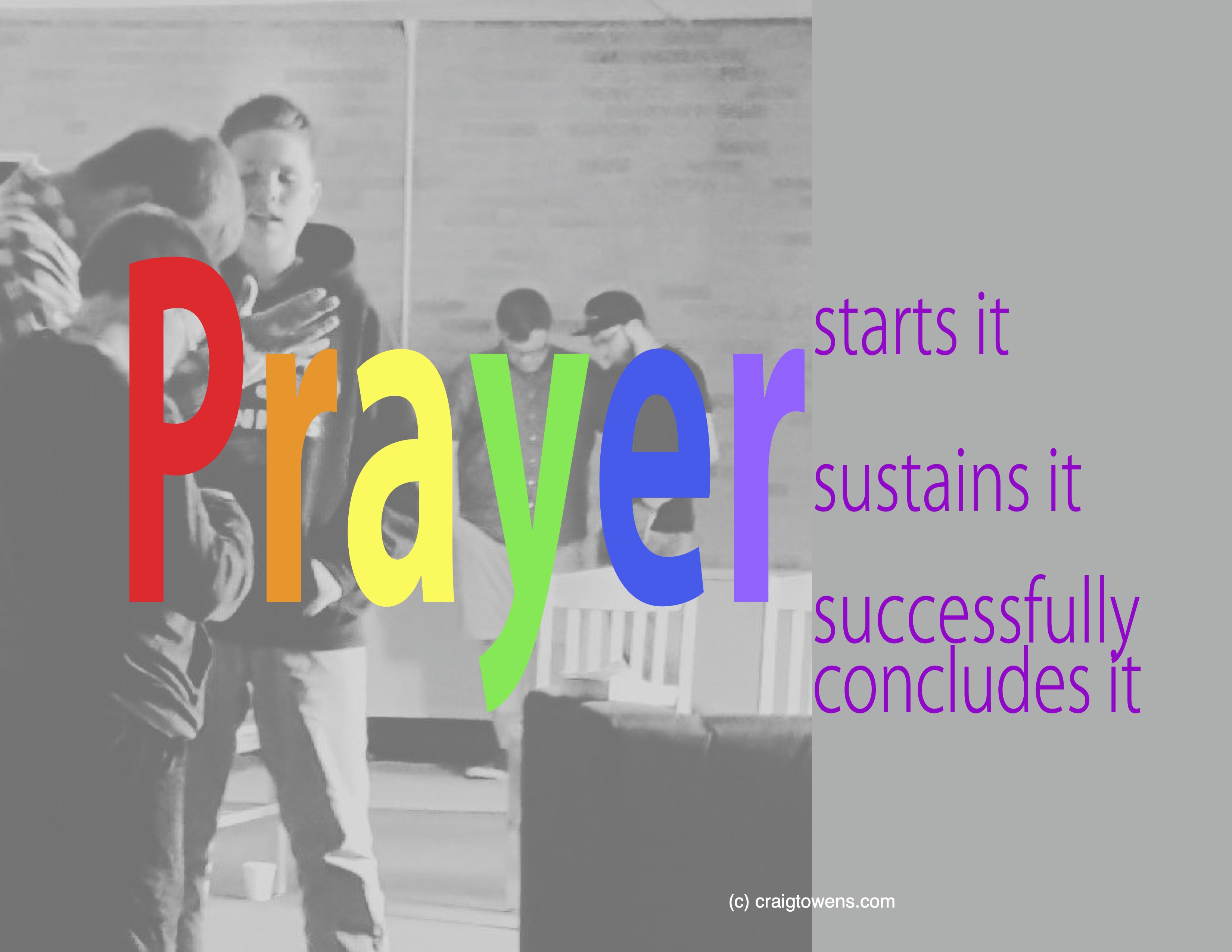
Prayer starts it, prayer sustains it, prayer successfully concludes it! 

Let me say it again: DON’T STOP PRAYING! 

If you missed any of the messages in our Be A First Responder series, you may access all of them by clicking here.

Would you please prayerfully consider supporting this ministry?

Poetry Saturday—Yesees and Noees

Listen to the podcast of this post by clicking on the player below, and you can also subscribe on Apple or Spotify.

The Yesees said yes to anything
That anyone suggested.
The Noees said no to everything
Unless it was proven and tested.
So the Yesees all died of much too much
And the Noees all died of fright,
But somehow I think the Thinkforyourselfees
All came out all right. —Shel Silverstein

Would you please prayerfully consider supporting this ministry? 

Thursdays With Spurgeon—My Rock

This is a weekly series with things I’m reading and pondering from Charles Spurgeon. You can read the original seed thought here, or type “Thursdays With Spurgeon” in the search box to read more entries.

Listen to the podcast of this post by clicking on the player below, and you can also subscribe on iTunes or Spotify.

My Rock 

[God] alone is my rock and my salvation (Psalm 62:2).

     How noble a title; it is so sublime, suggestive, and overpowering. ‘My rock.’ It is a figure so divine that to God alone will it ever be applied. …  

     Unchangeable He is in His being, firm in His own sufficiency. He keeps Himself immutably the same. And ‘therefore you are not consumed, O sons of Jacob’ (Malachi 3:6). … So is our God a sure defense, and we will not be moved if He has set our feet upon a rock and established our goings (see Psalm 40:2). …  

     ‘He is my rock.’ How glorious a thought! How safe am I and how secure and how may I rejoice in the fact that when I wade through Jordan’s stream He will be my rock! I will not walk upon a slippery foundation, but I will tread on Him who cannot betray my feet. And I may sing when I am dying, ‘He is my rock, and there is no unrighteousness in Him’ (Psalm 92:15).

From God Alone The Salvation Of His People

Spurgeon mentioned singing about God our Rock even when we come to death’s door. Immediately a couple of songs from my childhood sprang to mind.

Rock of Ages, cleft for me,
Let me hide myself in Thee;
Let the water and the blood,
From Thy wounded side which flowed,
Be of sin the double cure,
Save from wrath and make me pure.

While I draw this fleeting breath,
When my eyes shall close in death,
When I rise to worlds unknown,
And behold Thee on Thy throne,
Rock of Ages, cleft for me,
Let me hide myself in Thee. (Augustus Toplady)

Where do I go when there’s nobody else to turn to?
Who do I turn to when nobody wants to listen?
Who do I lean on when there’s no foundation stable?
I go to the Rock, I know He’s able, I go to the Rock.

I go to the Rock of my salvation,
I go to the Stone that the builders rejected,
I run to the Mountain and the Mountain stands by me.
When the earth all around me is sinking sand
On Christ, the Solid Rock, I stand
When I need a shelter, when I need a friend, I go to the Rock. (Dottie Rambo)

My friend, no matter how unstable things may seem, no matter how uncertain the future may appear, remember the One and Only Rock. He alone is my rock and my salvation! Jesus is the same yesterday, today, and forever. Don’t try to make your own secure place, but run to the Rock of Ages, and this immovable Mountain will stand by you and keep you secure for all of eternity! 

Would you please prayerfully consider supporting this ministry? 


6 Quotes From “Voice Of A Prophet”

Listen to the podcast of this post by clicking on the player below, and you can also subscribe on Apple or Spotify.

A.W. Tozer pulls no punches in the way he confronts modern-day preachers (those he calls “sons of the prophets”). He challenges pastors to return to the Scriptures, hit their knees in prayer, and do some serious soul searching on where they may be falling short of the standard set by the biblical prophets. You can read my full book review of Voice Of A Prophet by clicking here. 

“It is not the messenger, it is the message that needs to be proclaimed. If you study the Old and New Testaments you will discover that no prophet can ever be a celebrity. The most significant thing about the prophet is the message he conveys, and that message had better by rooted in the heart of God.” 

“The responsibility of the prophet is not to come up with his own message, but to faithfully deliver the message—the warning—that is coming from God.” 

“The song of the prophet is, ‘Thus saith the Lord.’ Any other song will never do for God’s man to be God’s voice to his generation.” 

“God takes so much delight in us that He will go to any length to bring us back to that delight.” 

“Jesus said that our problem is a spiritual danger, not a physical danger, and our visible enemies are rarely our real enemies. The man who comes at you with a gun is not your real enemy, though his intention may be to kill you. Your real enemy is that enemy within you that makes you vulnerable to him. Esau was Jacob’s enemy because of what Jacob had done to him, but Esau was not Jacob’s real enemy. Jacob was Jacob’s enemy. The crookedness in Jacob’s heart was against Jacob, and when God straightened that out, Esau was not his enemy anymore.” 

“Well do I know, Thou God of the prophets and the apostles, that as long as I honor Thee Thou will honor me. Help me therefore to take this solemn vow to honor Thee in all my future life and labors, whether by gain or by loss, by life or by death, and then to keep that vow unbroken while I live. … Save me from the error of judging a church by its size, its popularity or the amount of its yearly offering. Help me to remember that I am a prophet—not a promoter, not a religious manager, but a prophet. Let me never become a slave to crowds.” 

Would you please prayerfully consider supporting this ministry?
Refusing To Be Controlled By Fear

Listen to the podcast of this post by clicking on the player below, and you can also subscribe on Apple or Spotify.

The Lord is my light and my salvation—whom shall I fear? The Lord is the stronghold of my life—of whom shall I be afraid? (Psalm 27:1)

How many of my daily choices are affected by fear?

  • whether to try something new or to stick with what’s familiar?
  • should I confront a friend on a bad choice or let him figure it out on his own?
  • to spend money or to invest it for later? what do I buy? where do I invest?
  • what if people don’t like what I do or say? what if they talk behind my back?

David begins this psalm with the same kinds of questions, as he battles enemies surrounding him, the possibility of his family rejecting him, false witnesses speaking lies against him, and foes closing in from every side. 

In the middle of all of these swirling issues, David exhibits a confidence that starkly stands out:

  • whom shall I fear?
  • of whom shall I be afraid?
  • my heart will not fear
  • I will be confident
  • I am still confident

How can David respond this way? He kept turning his thoughts from the temporal to the eternal—

It may seem dark now, but God is light.

People may be fickle, but God is unchanging.

Foes may be strong, but God is the strongest.

People are mean, but God is good.

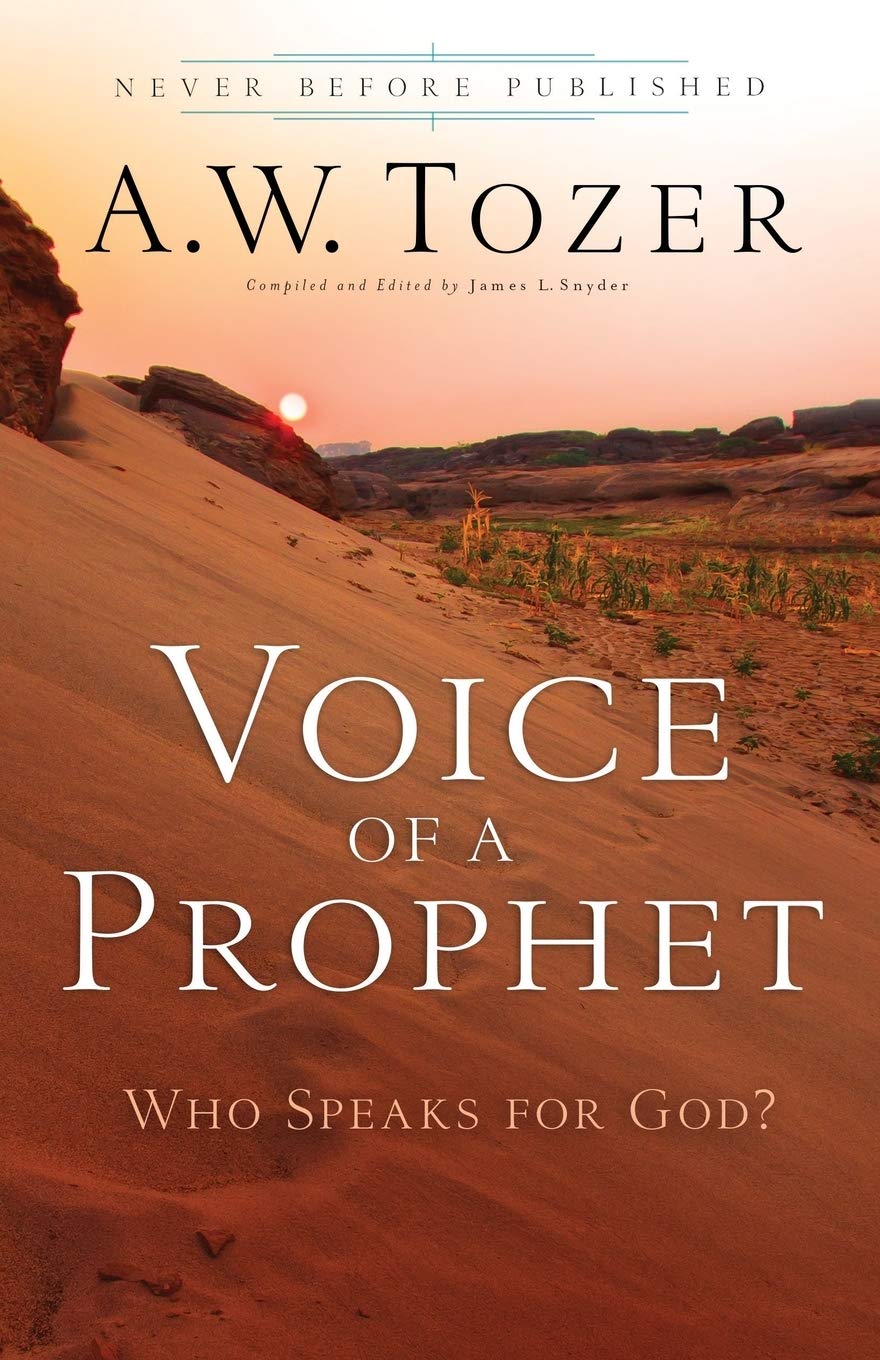
Both David’s opening and closing thoughts in this psalm are really a conversation with himself: The Lord is my light and my salvation—whom shall I fear? The Lord is the stronghold of my life—of whom shall I be afraid? … I am still confident of this: I will see the goodness of the Lord in the land of the living. Wait for the Lord; be strong and take heart and wait for the Lord. (vv. 1, 13, 14)

My friends, don’t let fear drive your decisions. Let confidence in God drive your decisions. Talk back to your fearful thoughts like David did and remind them of the great and loving God that cares for you. Don’t take matters into your own hand, but wait for the Lord; be strong and take heart and wait for the Lord. 

I used Psalm 27 as a teaching example of how to turn passages from the Bible into our own personalized prayers. Check out this 5-minute video here:

Would you please prayerfully consider supporting this ministry? 
Voice Of A Prophet (book review)

Listen to the podcast of this post by clicking on the player below, and you can also subscribe on Apple or Spotify.

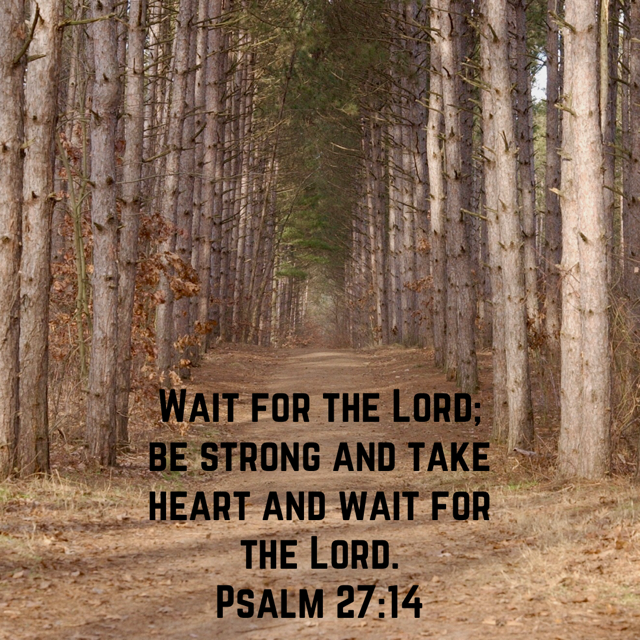
I’ve always appreciated A.W. Tozer’s prophetic voice. By that I mean, his unabashed call for Christians to live up to the Christlike standard given to us in the Scriptures. But in Voice Of A Prophet, Tozer hits a little closer to home for me (and for all of us who are in ministry positions) as he specifically calls on pastors to live up to the prophetic standard given to us in the Bible. 

Sometimes people misunderstand the title “prophet” to be one who foretells future events. At times, that is the function of a prophet, but primarily the prophet is more of a forthteller than a foreteller. The prophet is called upon to boldly proclaim God’s truth and tell forth where godly people are falling short. Prophets are God’s messengers to God’s people, usually sent to reawaken His people to truths that they have forgotten or strayed from. 

Tozer calls modern-day pastors and preachers—those he calls “the sons of the prophets”—to look to the prophetic fathers of the Scripture. He calls us to live up to the God-fearing standard of the prophets like Elijah, Isaiah, John the Baptist, and Jesus. He forthtells how too many have succumbed to the voice of culture instead of adhering to the voice of their Lord, and how they have traded “Thus saith the Lord” for “Thus saith me.” 

The opening chapter of Voice Of A Prophet reprints a prayer that Tozer wrote out when he was ordained in 1920. Part of that prayer for himself should remain a prayer for all who are called by God to be pastors today: “Let me stand before the great or minister to the poor and lowly; that choice is not mine, and I would not influence it if I could. I am Thy servant to do Thy will, and that will is sweeter to me than position or riches or fame and I choose it above all things on earth or in heaven.”

Voice Of A Prophet is an important read for those in pastoral ministry. FAIR WARNING: You will be challenged and convicted by Tozer’s timeless words! But if you will heed those words, God will be pleased to bless your efforts. I would also recommend this book to anyone who would like to know how they can better support and pray for their pastor, as I think they will find valuable insights in this book. 

Would you please prayerfully consider supporting this ministry?
First In Forgiveness

Listen to the podcast of this post by clicking on the player below, and you can also subscribe on Apple or Spotify.

From David’s bookend prayers to Jesus making prayer the central, empowering practice of the Christian lifestyle, I hope you’re beginning to see that prayer starts it, prayer sustains it, prayer successfully concludes it! 

There is another thing both David and Jesus agree upon. They both tell us that there is one thing that can block our prayer: unconfessed, unrepented sin. 

David wrote, “If I regard iniquity in my heart, the Lord will not hear.” The Hebrew word translated “regard” means to be aware of something. David teaches us that we have to be made aware of our sin in order to confess our sin and ask forgiveness. We become aware of our sin through prayer and reading the Bible (Psalm 139:23; James 1:25; Romans 7:7-12). 

The NIV translates the same Hebrew word in Psalm 66:18 as “cherished.” After becoming aware of our sin, we have to be careful not to make excuses or justifications for it. And then the NLT translates the same word “not confessed.” After becoming aware of our sin and accepting responsibility for it, then we can confess it to God. 

In teaching us to pray, Jesus said our forgiveness of others had a direct correlation to the forgiveness we would receive from our Heavenly Father (Matthew 6:12, 14-15). Jesus further expounds this thought when He tells Peter to forgive others “seventy times seven times”; in other words: countless times. 

Think of it this way: Have you asked God’s forgiveness more than seven times? How about more than seven times for the same sin? I have! So Jesus is really asking Peter, “Do you want God to put a limit on how many times He will forgive you? If not, then don’t you put a limit on how many times you will forgive others.” 

The Amplified Bible has a great definition of forgiveness in Matthew 6:12—left, remitted, let go of the debts, and have given up resentment against. The Hebrew word David uses in Psalm 32:1 has a similar feel—lifted up, taken away, carried off. 

Our forgiven sins are forgotten sins. Every time we come to God for forgiveness, it’s like it is the first time. And Jesus says this is the same way we need to treat others. 

Let’s all strive to be first responders in confessing our own debts to God so we can be forgiven, AND then let’s also be first responders in forgiving the debts others have incurred against us. 

As I’ve said before: A mark of a maturing saint is one who is closing the gap between awareness of his sin and making his confession of that sin. 

But this is just as true: 

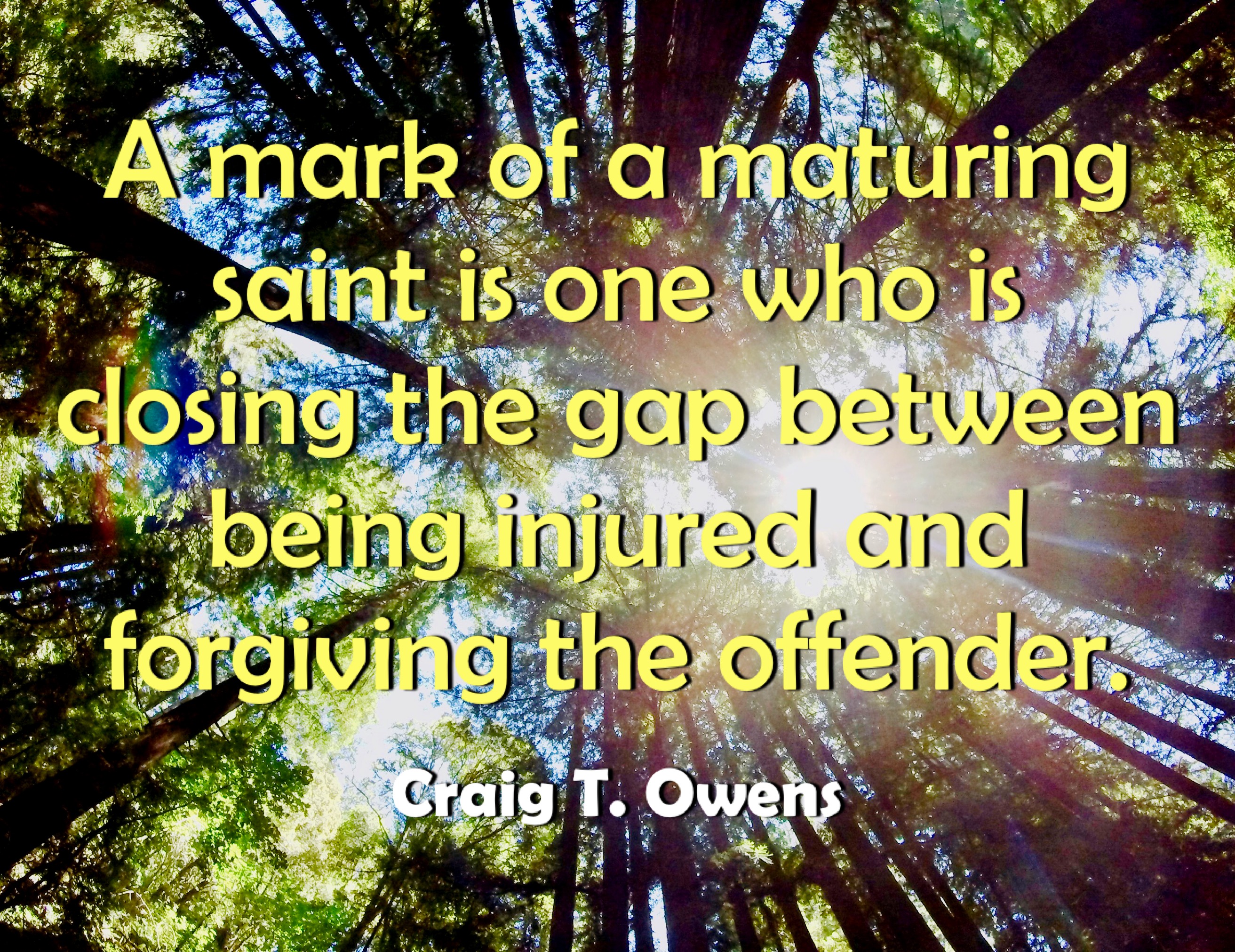
A mark of a maturing saint is one who is closing the gap between being injured and forgiving the offender. 

We do this again and again and again—countless times!—because that’s how often our Heavenly Father forgives us. 

Be a first responder in both asking for forgiveness and giving forgiveness.
Don’t let your debts block your prayers.
Don’t let your unreceived forgiveness weigh you down.
Don’t let your ungiven forgiveness weigh others down.

If you’ve missed any of the other messages in this series on prayer, you can find the full list by clicking here. 

Would you please prayerfully consider supporting this ministry?
Poetry Saturday—Must I My Brother Keep?

Listen to the podcast of this post by clicking on the player below, and you can also subscribe on Apple or Spotify.

Must I my brother keep,
And share his pain and toil;
And weep for those who weep,
And smile with those who smile;
And act to each a brother’s part,
And feel his sorrows in my heart?

Must I his burden bear,
As though it were my own,
And do as I would care,
Should to myself be done;
And faithful to his interests prove,
And as myself my neighbor love?

Then Jesus at Thy feet
A student let me be,
And learn as it is meet,
My duty, Lord, of Thee;
For Thou didst come on mercy’s plan,
And all Thy life was love to man.

Oh! make me as Thou art;
Thy Spirit, Lord, bestow—
The kind and gentle heart
That feels another’s woe.
May I be thus like Christ my Head,
And in my Savior’s footsteps tread! —Thomas Raffles

Would you please prayerfully consider supporting this ministry? 
Standing In The Gap

Listen to the podcast of this post by clicking on the player below, and you can also subscribe on Apple or Spotify.

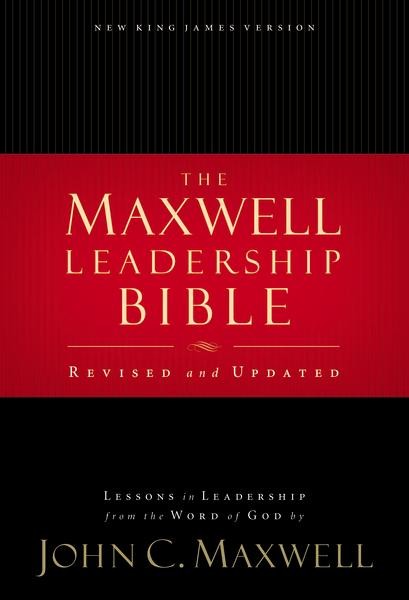
Pastors and other Christian leaders, this is from the Maxwell Leadership Bible and it’s well worth your time to contemplate. 

“God contrasts the poor leader with the godly leader in Ezekiel 22. The poor leader oppresses and destroys his or her followers, while the godly leader ‘stands in the gap’ on behalf of the land and the people. These leaders represent God to the people, and represent the people to God. They serve as ‘middle-men,’ serving God and serving the needs of the people. This text describes ten traits of the leader God affirms:

    1. Consecration: They set themselves apart and remain committed to their call.
    2. Discipline: They do what is right even when it is difficult.
    3. Servanthood: They model a selfless life, lived for the benefit of others.
    4. Vision: They see what God sees and live off the power of potential.
    5. Compassion: Love for their cause and their people moves them to action.
    6. Trustworthiness: They keep their word regardless of what others do.
    7. Decisiveness: They make good decisions in a timely manner.
    8. Wisdom: They think like God thinks and avoid impetuous moves.
    9. Courage: They take risks for what is right.
    10. Passion: They demonstrate enthusiasm for their divine calling.” —John Maxwell

Check out what God Himself says:

“Your princes plot conspiracies just as lions stalk their prey. They devour innocent people, seizing treasures and extorting wealth. They make many widows in the land. Your priests have violated My instructions and defiled My holy things. They make no distinction between what is holy and what is not. And they do not teach My people the difference between what is ceremonially clean and unclean. They disregard My Sabbath days so that I am dishonored among them. Your leaders are like wolves who tear apart their victims. They actually destroy people’s lives for money! And your prophets cover up for them by announcing false visions and making lying predictions. They say, ‘My message is from the Sovereign Lord,’ when the Lord hasn’t spoken a single word to them. Even common people oppress the poor, rob the needy, and deprive foreigners of justice. I looked for someone who might rebuild the wall of righteousness that guards the land. I searched for someone to stand in the gap in the wall so I wouldn’t have to destroy the land, but I found no one.” (Ezekiel 22:25-30 NLT)

Pastor, will you be that righteous one who will stand in the gap? Will you stand strong against the onslaught of sin and a compromising culture? Will you be a leader that God can use?

Would you please prayerfully consider supporting this ministry?