It was by faith that Abel brought a more acceptable offering to God than Cain did. Abel’s offering gave evidence that he was a righteous man, and God showed His approval of his gifts. Although Abel is long dead, he still speaks to us by his example of faith.(Hebrews 11:4 NLT)
I want to live my life so in step with God that people can say of me as the writer of Hebrews said of Abel: “Although Craig is long dead, he still speaks to us by his example of faith.”
Don’t you want that for your life too?
I believe God wants that to be said of your life. Are you ready?
You can start today by putting your name in the blank: Although ________ is long dead, they still speak to us by their example of faith.
Listen to the podcast of this post by clicking on the player below, and you can also subscribe on Apple, Spotify, or Audible.
Charles Spurgeon said, “The resurrection of Christ is the cornerstone of the glorious temple of truth, the keystone of the arch of revelation.”
What we believe about the resurrection gives meaning and purpose to everything else. The resurrection is the defining Truth. In 2 Timothy 2:19 we read two important truths about this foundation: (1) God knows those who truly know Him, and (2) Those who really know Him must unabashedly stand for the Truth.
Words are powerful, they are creative. At the very beginning of Time, God said, “Light” and light existed (Genesis 1:1-3). God’s Word is still creating today (Hebrews 4:12). There are words we need to let go, and there is the Word for which we must stand without wavering or backing down.
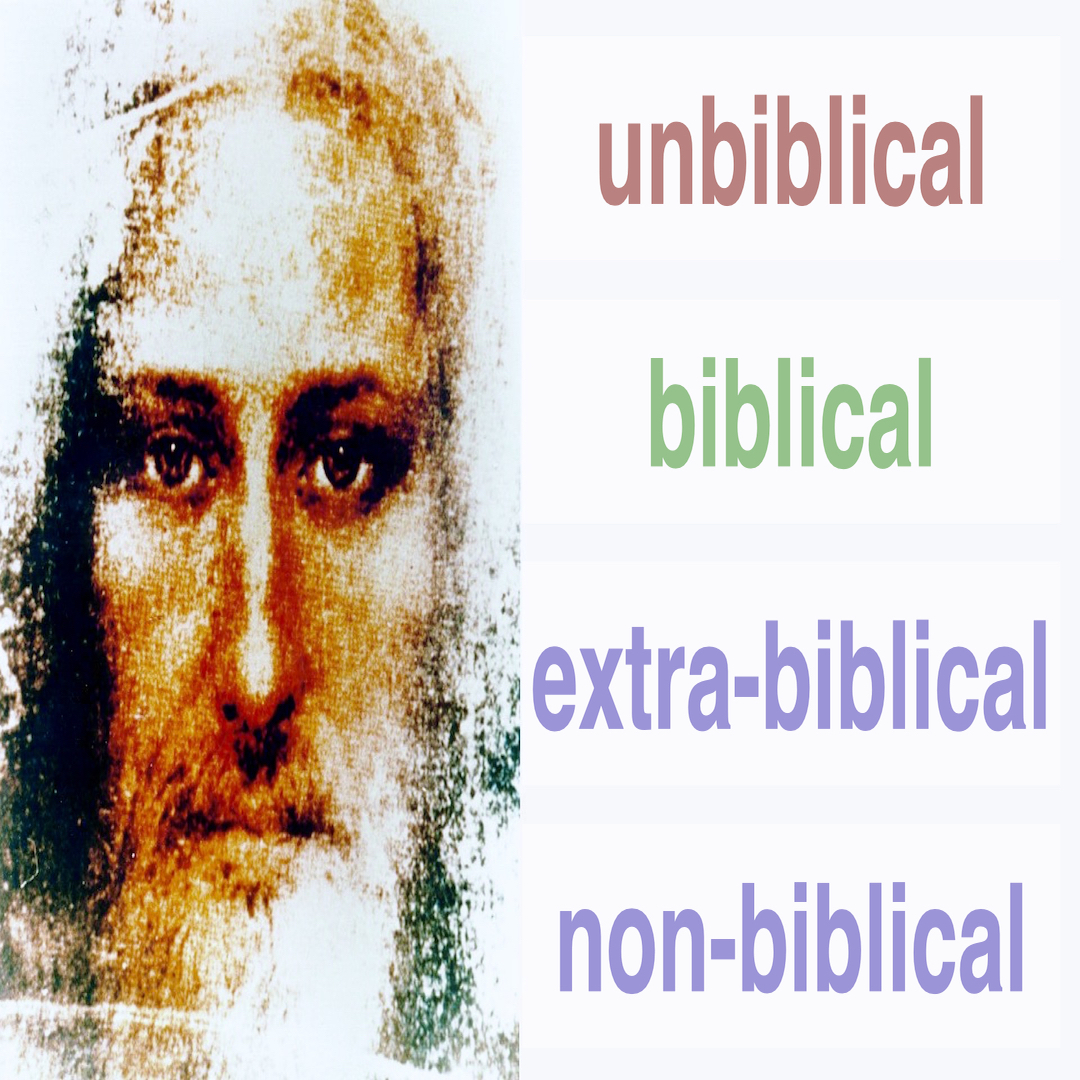
In 1 Timothy 1:3-7, Paul essentially says we have two choices: Do we want to promote controversy or do we want to promote God’s work? We have to learn to distinguish what is biblical and what is not.
Biblical things—God’s Word clearly tells us “Yes” (2 Timothy 3:14-17)
Unbiblical things—God’s Word clearly tells us “No” (like: do not murder, do not commit adultery, etc.)
These two are fairly straightforward. As Dr. Donald Stamps wrote, “The Church has the responsibility to safeguard the true and original apostolic doctrines found in Scripture and commit it to others without compromise or corruption.”
What is harder to sort out is:
Extra-biblical things—something in addition to or outside of God’s Word
Non-biblical things—something not specifically addressed in God’s Word
Passages like 1 Timothy 4:1-7 and 2 Timothy 2:14-19 help us sort out biblical and non-biblical things.
Are extra-biblical things wrong? Not necessarily. Paul quoted poets, and even uses an extra-biblical example of Jannes and Jambres [who] opposed Moses (3:8).
Are non-biblical things wrong? Not necessarily. But both extra-biblical and non-biblical things can become wrong when we give these things biblical status (Mark 7:9).
“Church” and “Christian” can completely lose their biblical meaning if we allow unbiblical, extra-biblical, or non-biblical ideas to define them. We must stand firm on God’s Word to give biblical meaning to everything we say and do.
Jesus said, “I will build MY Church.” He’s going to build it His way, not our way. We don’t want to fight the Architect, but neither do we want to fight the erring saint or the scoffing skeptic (2 Timothy 2:22-26).
Let me give you four applications for this:
Do get into God’s Word everyday.
Don’t define the words but let God define His own words.
Do gently challenge those saints who are getting caught up in non-biblical or extra-biblical things.
Don’t quarrel with those who are living an unbiblical lifestyle (Colossians 4:5; Jude 1:22).
You can find all of the other messages in this series called “I will build My Church” by clicking here.
You may also be interested in these posts and videos:
Is it possible for you to accurately judge whether or not you are being honest with yourself? Probably not. You need something or someone else to help you see yourself clearly.
“The Christian optimism is based on the fact that we do not fit in to the world. … That is what makes life at once so splendid and so strange. We are in the wrong world. When I thought that was the right town, it bored me; when I knew it was wrong, I was happy. So the false optimism, the modern happiness, tires us because it tells us we fit into this world. The true happiness is that we don’t fit. We come from somewhere else.” —G.K. Chesterton
“It is easy enough to remove the particular kinds of graft or bullying that go on under the present system: but as long as men are twisters or bullies they will find some new way of carrying on the old game under the new system. You cannot make men good by law: and without good men you cannot have a good society.” —C.S. Lewis
Del Tarr’s life “embodied a simple conviction: to preach Christ well, one must first listen and learn well.” Tarr was a missionary and a linguist. His legacy is empowering for all Christians, not just those missionaries who minister in other countries.
The ICR reports, “According to the online Smithsonian magazine, ‘The calls and songs of some species in these groups [parrots, songbirds, and hummingbirds] appear to have even more in common with human language, such as conveying information intentionally and using simple forms of some of the elements of human language such as phonology, semantics and syntax.’” There are numerous corroborating studies that tell of the complex language of birds that never could have developed by chance, but were designed by an all-wise Creator.
“In Biblical times, farmers would put olives in the trough of a stone olive press, and then roll the large, heavy circular stone over them. The enormous weight of the stone crushed the olives, allowing the oil inside to pour out through a spout cut into the stone. The first pass of the heavy stone produced the most precious, pure drops of olive oil. This oil was extremely expensive and was used to anoint kings. In Hebrew, this sort of olive press is called a ‘gat shemanim’ (גתשמנים pronounced ‘geth-sem-uh-nim’), which we translate in English as ‘gethsemane.’ Sound familiar?” —Dave Adamson [see Mark 14:32-36]
“To overcome the world takes faith and faith comes when we hear the Word quickened by the Holy Spirit. Be faithful in prayer and reading your Bible. It sounds like a Sunday school answer, but it is quite literally the application for every verse in the Bible.” —YouVersion reading plan Uncommen: Holy Connection
Listen to the podcast of this post by clicking on the player below, and you can also subscribe on Apple, Spotify, or Audible.
Consistent leaders are exemplary leaders, but consistency doesn’t happen automatically. Effective leadership of others starts with effective leadership of yourself.
Church is just a meaningless term, and a church building is merely a clubhouse in which some people occasionally gather, if the resurrection of Jesus is a myth. Even if you accept the resurrection of Jesus as a fact, unless Christ’s resurrection power is the motivating force for your life, you run the risk of living as a hypocrite.
The resurrection of Jesus is more than just a day to celebrate, it’s paradigm-shaping, life-empowering, culture-changing power for every single day that you are on earth. Unless those who call themselves Christians fully grasp this and live it out, they will be operating far below what the Bible has outlined for them.
In this series we will allow the Bible to show us what Jesus truly said about His Church and His saints, as opposed to what culture has told us these terms mean. I hope you can join me!
Listen to the podcast of this post by clicking on the player below, and you can also subscribe on Apple, Spotify, or Audible.
In 2 Timothy 2:22, the apostle Paul puts together two unlikely words: flee and pursue.
You may think those words are opposites, but actually they are partners in a leader’s effectiveness. Godly leaders have Don’ts and Dos that help them operate at their peak effectiveness. It seems to me that the Don’ts need to be attended to first, which will enable leaders to do the Dos better.
Or as Paul might say it: Flee the Don’ts to pursue the Dos.
Don’t engage in foolish arguments about meaningless things
Don’t be quarrelsome
Don’t resent others, even those who are opposing you
Pursue these Dos:
Do strive for righteousness, faith, love, and peace to be more evident in all of your relationships
Do be kind to everyone
Do learn to teach well, especially those who have been taken captive to do the devil’s will
The Dos require a full-time engagement of my time and energy, allowing me to continually grow in my faith in God and in my leadership acumen. The Don’ts will cause my growth to plateau and then to stagnate.
A mark of a godly leader is one who knows his Don’ts and Dos.
So I challenge you: don’t do the Don’ts so that you can do the Dos better, which will then allow your leadership influence to continue to grow.
This is part 87 in my series on godly leadership. You can check out all of my posts in this series by clicking here.
Listen to the podcast of this post by clicking on the player below, and you can also subscribe on Apple, Spotify, or Audible.
Recognition of the proper chain of command is drilled into every soldier, and knowing and following that chain of command is essential to success. In fact, it’s so important that violating this hierarchy could result in court martial and a dishonorable removal from military service.
This is just as true in our service in the Lord’s army.
Pastor Dan Chastain noted how similar the US Army’s Non-commissioned Officer (NCO) creed is to the way Roman centurion’s operated: “I will know my Soldiers and always place their needs above my own. I will communicate consistently with my Soldiers and I will never leave them uniformed. I will be fair and impartial when recommending both rewards and punishment.”
The centurion we meet in Luke 7:2-10 cared for his servants and understood the chain of command. He recognized the supreme authority that Jesus had, even His authority over death and disease.
Pastor Dan also noted that the backing for an NCO’s authority is fear. There is an understanding of the authority that officer has to both reward and punish.
The Romans had perfected the torturous act of crucifixion. It struck fear into the hearts of their enemies. In Mark 15:15-38 we see just how well the Romans had developed this gruesome act to keep people living in fear of them.
They knew just how much to flog their victims to demoralize them for maximum effect—just enough to take the fight out of them, but not too much that they died before being crucified.
The death of Jesus, however, was probably not what the Roman kill squad expected. It was probably a bit of a letdown for them that Jesus died rather quickly because they were used to their enemies suffering for days. But they also knew they had to ensure that their victims were truly dead (see John 19:31-34).
Governor Pontius Pilate was also surprised how quickly Joseph of Arimathea showed up to ask for the body of Jesus, so Pilate summoned the centurion who had been in charge of the crucifixions to verify that He was indeed dead (Mark 15:42-45).
Did you notice that Pilate called “the centurion”? Who is this? He’s the one who oversaw the kill squad that had crucified Jesus and the two other criminals.
This centurion was a professional soldier. He had obtained his rank by his military skill, his leadership capabilities, his bravery, and his rigidly following the chain of command. His climb through up the ranks would have had him saying over and over again, “Kyrios kaiser,” which means “Caesar is lord.”
But notice that throughout the time that the Roman soldiers gambled for Jesus’ clothes, hurled insults and Him, and thrust a spear into His side that this centurion remained silent. There was something about this Man that was different.
When Jesus breathed His last breath, this soldier didn’t say, “Kyrios kaiser,” but something entirely different—“And when the centurion, who stood there in front of Jesus, saw how He died, he said, ‘Surely this Man was the Son of God!’” (Mark 15:39). He changed from “Caesar is lord” to “Jesus is Lord”!
Just like the Romans terrified their enemies, our enemy wants to do the same thing—to steal, kill, and destroy (John 10:10); to prowl and growl like a lion (1 Peter 5:8).
Our authority comes from bowing, from giving up our way of doing things, from not trying to figure out solutions on our own. When we bow to our King, we have victory!
If you’ve missed any of the messages in this series on spiritual warfare, check them all out here.
As we mature physically we pay more attention to our physical health. Why is that people who see themselves as spiritually mature think they can do the exact opposite by taking it easy? We must pay more attention, not less.
A worldwide missions movement that was started by five college students while they were sheltering from a storm in a haystack. Appropriately enough, this is remembered as the haystack prayer meeting.
“Intangible falsehood, based upon no authority, is of all things the most difficult to fight.” —G.K. Chesterton
“In his gospel, Luke traces Jesus’ genealogy to Adam. He then says Jesus went into the desert to be tempted by satan, the same spiritual being who tempted Adam thousands of years before. The apostle Paul makes the same comparison in Romans. Adam brought death into the world; Jesus brought life. In fact, Jesus came to save us because of what Adam did. When Paul is in Athens, he explains that all people are descended from one man. When Paul writes to the Ephesians, he says marriage goes back to the first couple. And when Paul talks about roles in the church, He refers to the first temptation.” —From the ‘Is Genesis History?’ reading plan on YouVersion. Check out Luke 3:23-38, 4:1-13; Romans 5:12-15; Matthew 19:4.
Listen to the podcast of this post by clicking on the player below, and you can also subscribe on Apple, Spotify, or Audible.
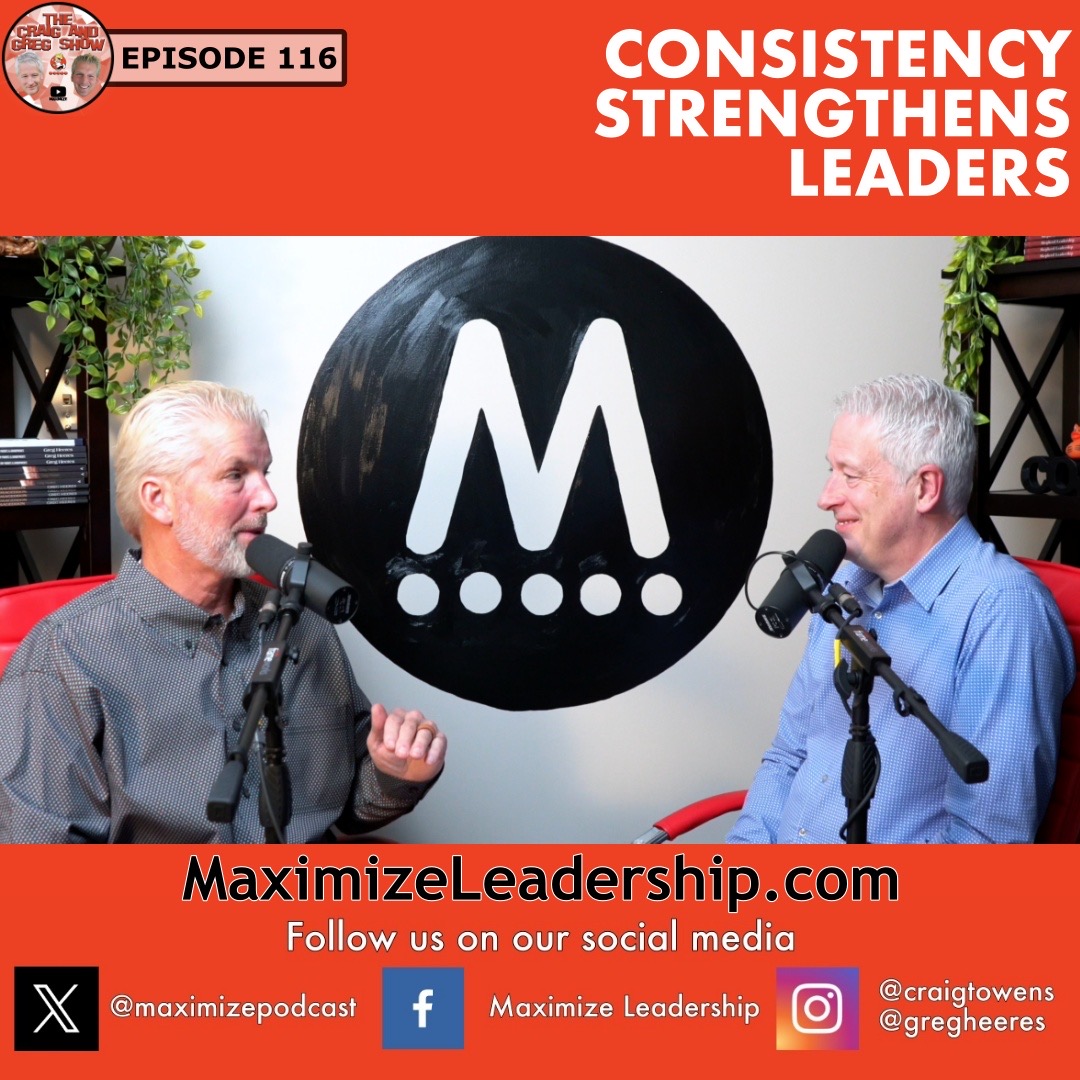
Like many popular phrases in the lexicon you’ve probably heard “consistency is key” thousands of times and rarely given it a second thought, but Greg and I want to challenge you to revisit this vital area. In today’s episode we discuss how an intentional focus on consistency will make you a better leader—which in turn will make your team more effective and productive.
[0:00] Intro
[0:30] People naturally gravitate towards certainty.
[1:20] One of a leader’s biggest goals should be to be consistent for their team.
[2:29] Greg discusses how an inconsistent leader can derail an organization.
[3:50] What is the message to your team when you’re not consistent?
[5:05] We use non-business examples to highlight the importance of consistency.
[6:44] Consistency takes effort and intentionality.
[9:03] What are people looking for from their leader to be consistent?
[10:53] Greg shares a quote from Aristotle.
[12:46] Excellence isn’t just “a habit,” it is an intentional choice of habits.
[17:42] Protect your spirit.
[18:26] I reveal what has made me the most consistent.
[22:41] Greg and I want you to be more successfully consistent as well!
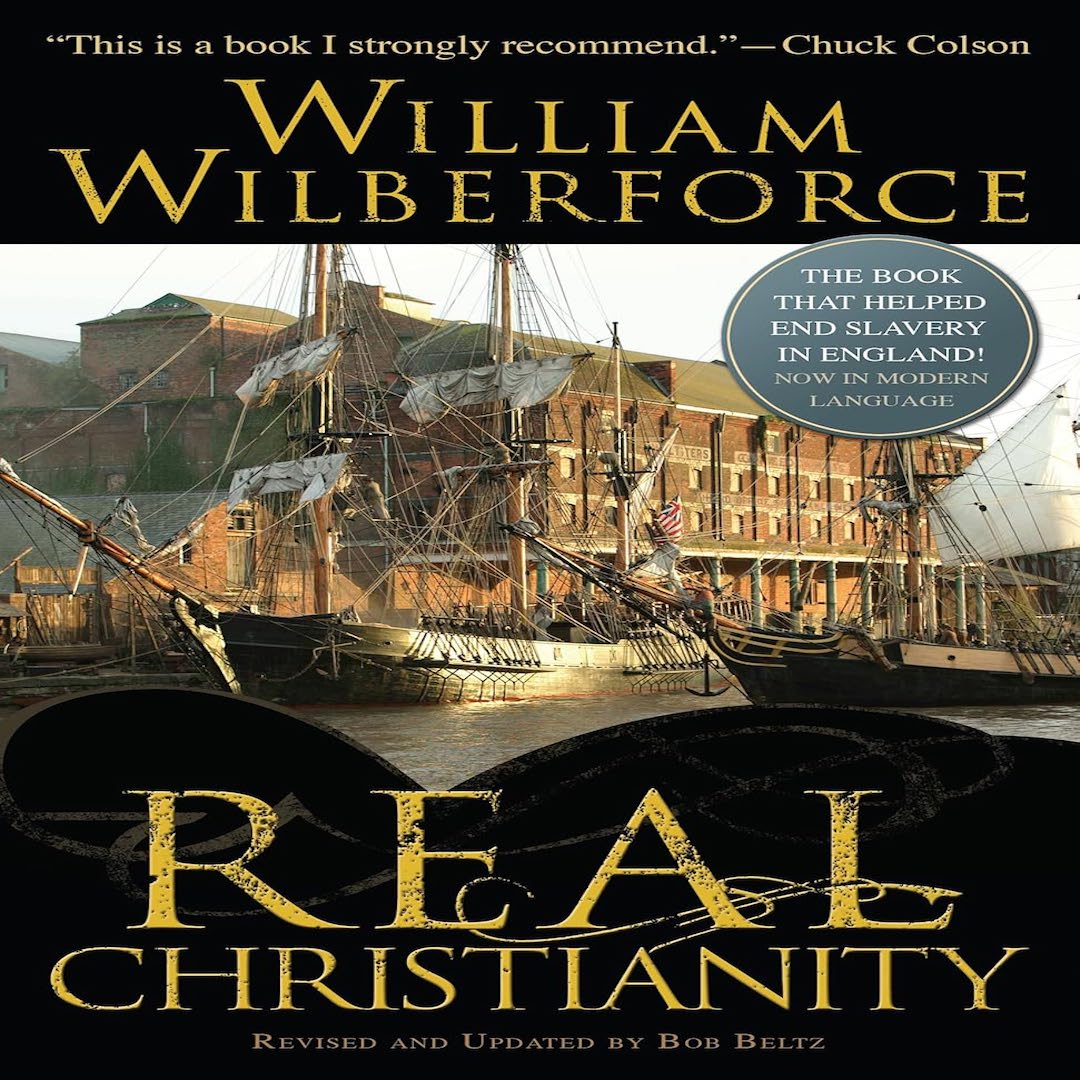
Slavery abolitionist William Wilberforce wrote a powerful book 200+ years ago that sounds like it could have been written today! Here are just a handful of the numerous passages I highlighted in Real Christianity. Be sure to check out my full book review here.
“What a difference it would be if our system of morality were based on the Bible instead of the standards devised by cultural Christians.”
“The Bible is one of God’s greatest gifts to humanity. It tells us of the greatest gift that men and women have longed for throughout the ages and of which the prophets spoke about for centuries.”
“Even the majority of professing Christians tend to think that the nature of humanity is basically good and is only thrown off course by the power of temptation. They believe that sin and evil are the exception, not the rule. The Bible paints a much different picture. The language of Scripture is not for the faint of heart. It teaches that man is an apostate creature, fallen from his original innocence, degraded in his nature, depraved in his thinking, prone toward evil, not good, and impacted by sin to the very core of his being.”
“Not that the Bible needs affirmation, but the world around us demonstrates that there is a kind of sowing and reaping that affirms the destructive nature of ignoring the things the Bible teaches.”
“When we do not take our problem seriously, we do not seek the solution God offers with the measure of sincerity and intensity that our true condition requires. If we don’t understand how seriously ill we are, we don’t pursue the remedy with the required diligence. If we are slightly ill, we take an aspirin. If we are dying, we passionately pursue a cure. The cure is not forced on us; it is offered to us.”
“The appropriate response to these facts would be one of great excitement, true humility, hatred of sin, humble hope, firm faith, heavenly joy, ardent love and unceasing gratitude! But here is where we find a problem with the experience of those who hold to a cultural Christianity. … Cultural Christians might talk about religion or church in generic terms, but you will rarely hear them use the name of Jesus or speak of His death on the cross or His resurrection. … Cultural Christians probably have no understanding of the work of the Spirit in the life of the believer. Since they do not strive for effectiveness in their own spiritual lives or attempt to live with character consistent with followers of Christ, they have no experience of their own inability to achieve such things without the Holy Spirit’s help.”
“Authentic faith will often be accompanied by an appropriate zeal. But zeal can often be devoid of any accurate understanding of authentic faith. The product of such zeal is often justified in the name of Christianity, but in reality it has virtually nothing to do with believing in Jesus Christ.”
“Our inability is our great asset; it creates a humility that becomes dependent on God’s grace working in us.”
“It is virtually impossible to get to the place where you recognize your need for the Spirit and depend upon His working when you have created a safe religiosity that is perfectly manageable by means of your own abilities.”
“Authentic Christianity is a way for the most wayward of men and women to enter into a right relationship with God based solely on the fact that ‘while we were yet sinners, Christ died for us’ (Romans 5:8, KJV). They have confused the outcome of getting right with God with the means of getting right with Him. Only when we have come empty-handed to the foot of the Cross and cried out for God’s mercy and grace, and been reborn by the indwelling of the Holy Spirit, can we even begin to live the life to which God calls us. Some seem to think that Christ has made it possible for them to be right with God because His death has somehow lowered God’s standards to the level of their performance.”
“It makes no sense to take the name of Christian and not cling to Christ. Jesus is not some magic charm to wear like a piece of jewelry we think will give us good luck.”








 Craig T. Owens