how you can get a free copy of The Shawn Effect [3:53]
Shawn’s parents set him up for success [5:15]
leaders get informed so they can interact with others and stay relevant [6:28]
Shawn demonstrated chivalry and trained young men to be gentlemen [7:53]
leaders don’t need a platform or a big following to be an influencer [8:40]
Shawn shows how leaders love [10:33]
leaders are encouragers [11:37]
leaders are readers and appliers [12:27]
Check out this episode and subscribe on YouTube so you can watch all of the upcoming episodes. You can also listen to our podcast on Spotify and Apple.
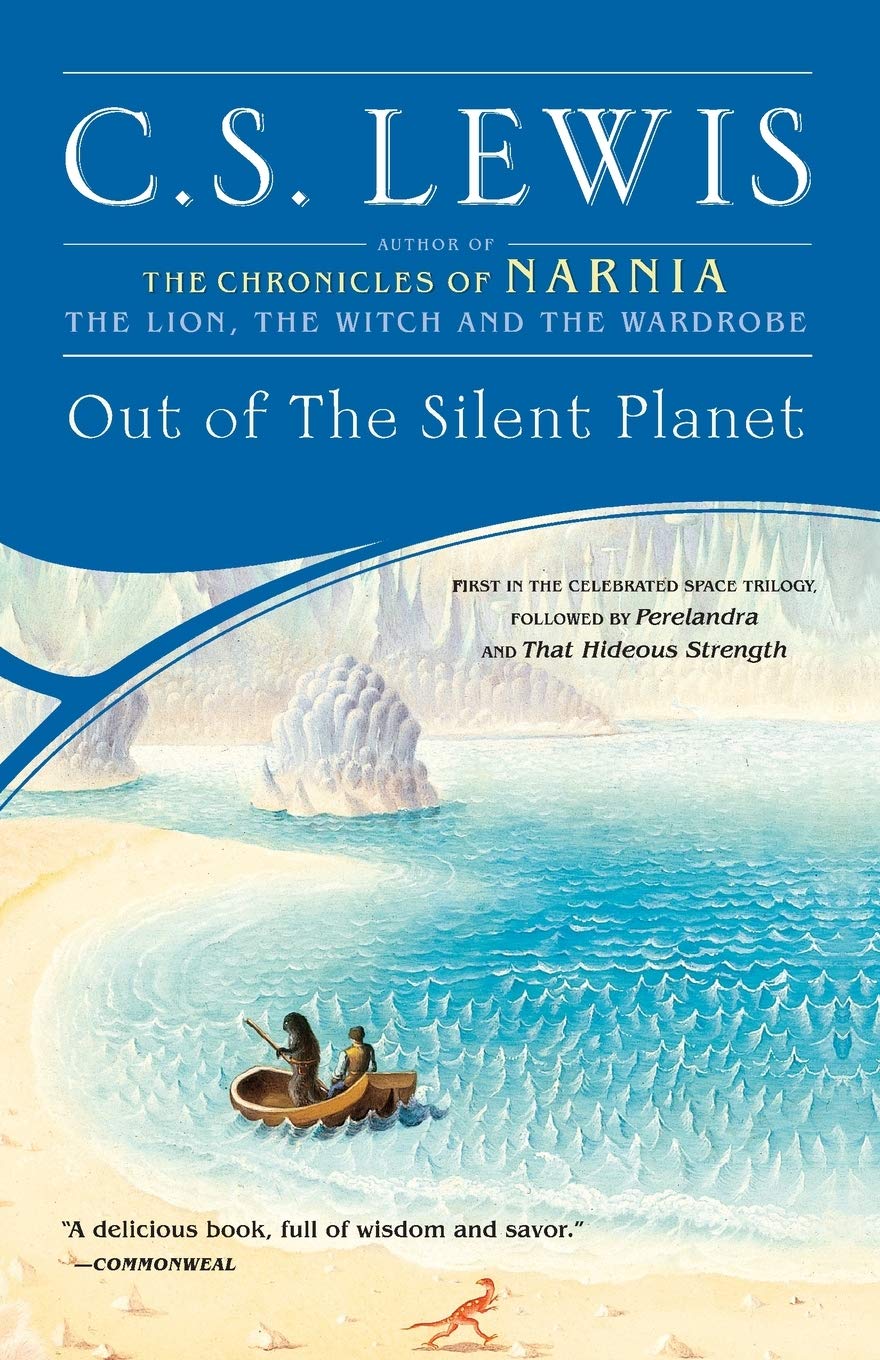
In its simplest form, this book is about a trip to Malacandra (or Mars), but as with any fantasy work written by Lewis, the story tells a far deeper and more substantial Story. In this book, we go behind the scenes to witness the aftermath of the battle in heaven when Lucifer and his fallen angels attempted to usurp God’s throne. In the Malacandrian language, Lucifer is “the bent one,” having deviated away from God’s loving design, so those who have allowed themselves to be influenced by him are also called “bent.” The three Earthlings who have arrived on Malacandra show their level of straightness or bentness as this story unfolds.
Another fascinating part of this book is the subtle change in language. The main protagonist is a philologist named Dr. Elwin Ransom. Watching how Lewis shows Dr. Ransom progressively learning the language of the inhabitants of Malacandra, contrasted with the way the bent men continue to speak it in “baby talk” is amazing. Ransom slowly learns more of the planet’s culture and the nuance of the language becomes more precise as he does so. And Lewis keeps pace by showing us the evolving vocabulary as the story moves along.
If you are already a C.S. Lewis fan, this is a great book to continue your journey into his vast mind. But if you haven’t been exposed to much of Lewis’ writings yet, I would suggest holding off on this book until you have a better grasp of his more accessible works.
Listen to the podcast of this post by clicking on the player below, and you can also subscribe on Apple or Spotify.
I was at a friend’s house and interacting with their two young children. Their son was very energetic and playful, but not very talkative. When the tikes climbed up to the kitchen counter for lunch, their mom asked them what they wanted to eat. The little girl placed her lunch order and then said, “He wants PB&J with milk.” I asked him, “Is that really what you want?” He smiled a big grin and nodded his head. Isn’t nice to have someone give us words when we are lacking in our own vocabulary?
Last week we learned how the Spirit of Truth would help us speak truthful words to those who were antagonistic to the Good News of Jesus. If the Holy Spirit will do this when we are speaking to people who are enemies of the Cross of Christ, how much more so will He help us when we are speaking to our loving Heavenly Father!
Here’s something we never have to doubt: God’s love for us. We don’t have to try to get our Father’s attention because He wants to lavish His love on us (Matthew 6:7-8; Luke 11:9-13; Ephesians 1:5).
Jesus likens our coming to God as a child coming to its father. Sometimes we come with fears or tears, sometimes with hunger or thirst, or sometimes just to feel His closeness. The Holy Spirit is also called the Spirit of Adoption, and He loves to keep on reminding us how much our Father loves us (Romans 8:14-17).
“When our perplexed spirit is so befogged and beclouded that it cannot see its own need and cannot find out the appropriate promise in the Scriptures, the Spirit of God comes in and teaches us all things and brings all things to our remembrance whatever our Lord has told us. He guides us in prayer and thus He helps our infirmity. … He will write the prayers that I ought to offer upon the tablets of my heart, and I will see them there and so I will be taught how to plead! It will be the Spirit’s own Self pleading in me and by me and through me before the throne of grace!” —Charles Spurgeon
Our loving Father is not looking for well-polished prayers; He’s looking for real, childlike prayers. Let’s be honest: Not even the most educated person in the world has a vocabulary sufficient enough to accurately communicate with The Almighty God! So He wants us to come to Him in simple, childlike anticipation. Jesus reminded us, “Your Father knows the things you have need of before you ask Him.” Our Father wants to answer our prayers, and He has given us His Holy Spirit to help us pray in a way that He can answer (Romans 8:26-27).
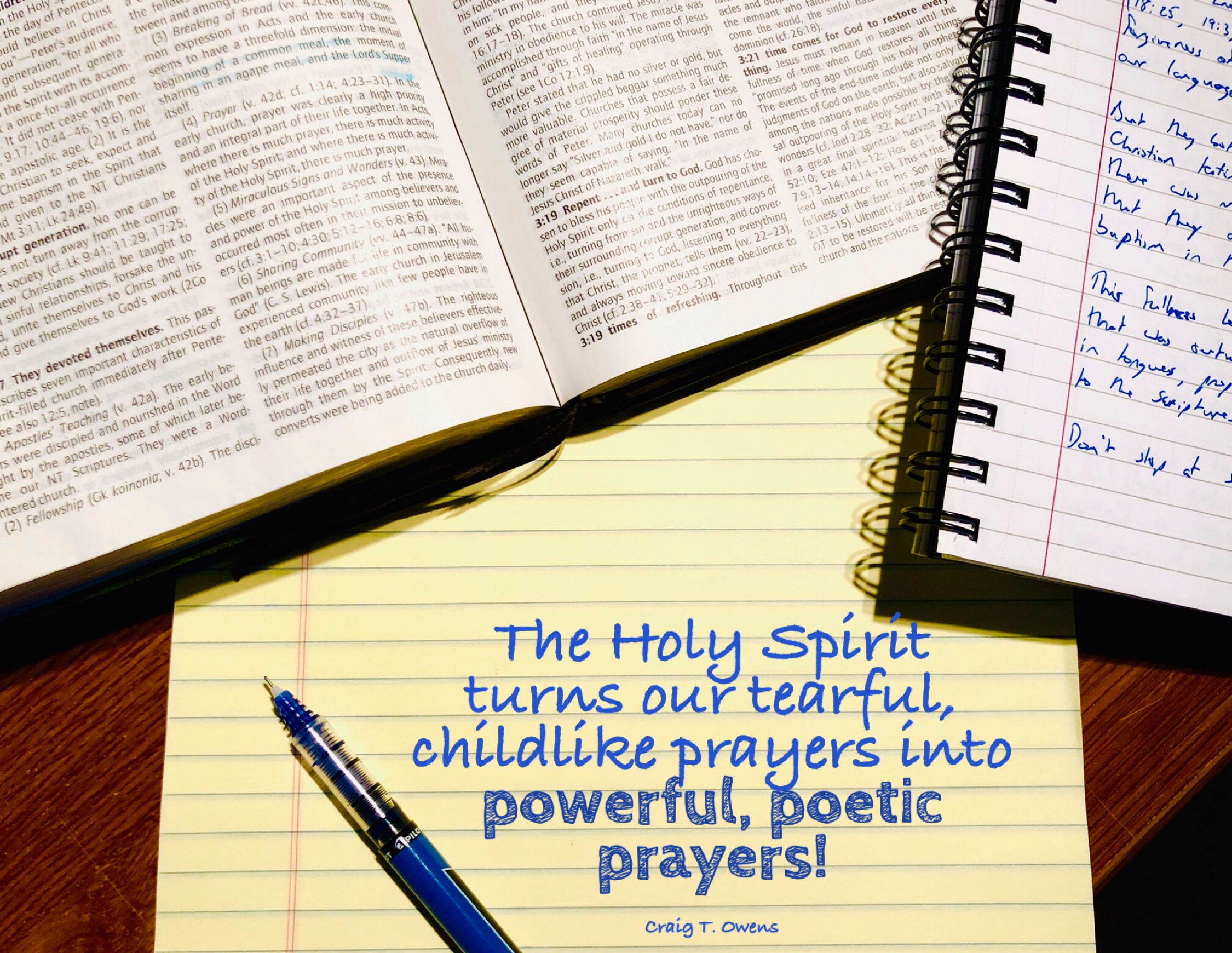
The Holy Spirit turns our tearful, childlike prayers into powerful, poetic prayers!
Don’t try to spruce up your vocabulary before you come to God in prayer. Just come to God in prayer, trusting that the Holy Spirit will make a beautiful prayer even out of your childlike groanings! The Holy Spirit turns our groans into prayerful poetry in our Father’s ears!
This is a weekly series with things I’m reading and pondering from Charles Spurgeon. You can read the original seed thought here, or type “Thursdays With Spurgeon” in the search box to read more entries.
Listen to the podcast of this post by clicking on the player below, and you can also subscribe on iTunes or Spotify.
Stop Arguing
Our religion is not based upon opinions, but upon facts. We hear persons sometimes saying, ‘Those are your views, and these are ours.’ Whatever your views may be is a small matter; what are the facts of the case? We must, after all, if we want a firm foundation, come down to matters of fact. …
Beloved friends, let us never tamper with the truth of God. I find it is as much as I can do to enjoy the comfort of the truth and to learn the spiritual lessons of God’s Word without setting up to be a critic upon it. And I find it immeasurably more profitable to my own soul to believingly adore than unbelievingly to invent objections, or even industriously to try to meet them. The meeting of objections is an endless work. When you have killed one regiment of them, there is another regiment coming on, and when you have put to the sword whole legions of doubts, doubters still swarm upon you like the frogs of Egypt! It is a poor business. It answers no practical end. It is far better to firmly believe what you profess to believe and to follow out to all the blessed consequences all of the truths of God that, in your own heart and soul, you have received of the Lord.
From If There Is No Resurrection
I have presented evidence numerous times that makes it reasonable to believe that the Bible is God’s inspired Word (check out my posts here, here, here, and here). And yet there are still people who stubbornly want to argue that the Bible is made-up stories, or that there was no such person as Jesus, or that if there were a Jesus, He was just a good man but not God Himself who was raised from the dead. These arguments are nothing new. Paul had to address them just a few years after Jesus had ascended back to heaven, so what would make us think that we would escape those doubters?
As Spurgeon says, there is so much more joy when we simply “believingly adore” the God who is revealed to us on the pages of Scripture than it is to address such flimsy arguments. So that is what I typically do. Trying to debate with someone who won’t even accept basic facts is typically an unprofitable use of my efforts because they usually aren’t open to listening to what I have to say.
Instead, I simply remember this: The one with a personal experience of a life-changing encounter with a risen Savior is never at the mercy of the critic with only a handful of arguments! So you can simply say to that argumentative critic, “I know how different my life is because Jesus is in me and I am in Him.”
Stop arguing with close-minded critics and start adoring the God who loves you!
Listen to the podcast of this post by clicking on the player below, and you can also subscribe on Apple or Spotify.
Seeing Beauty And Saying Beautifully is, in my mind, a grand slam! It features one of my favorite poets (George Herbert), possibly the most prolific evangelist of history (George Whitefield), my all-time favorite author (C.S. Lewis), all tied together by my go-to theologian (John Piper). Seeing Beauty And Saying Beautifully is part 6 in Piper’s series called “The Swans Are Not Silent.”
George Herbert was a pastor of a small country church and a prolific poet who wrote almost all of his poems uniquely. “Of the 167 poems in The Temple, 116 are written with meters that are not repeated,” which even modern poets find astounding. George Whitefield spent more hours of his life preaching than he did sleeping, and he spoke with such a captivating style that he was quite possibly the first celebrity of the American colonies. C.S. Lewis wrote everything from history to fantasy, autobiography to poetry, theology to children’s novels. Peter Kreeft says of him, he “was not a man: he was a world.”
John Piper finds in all three of these men a common thread: They all were able to not only see the beauty of God in everything, but they were able to express it in a beautiful way that drew in others to see the beauty of God for themselves. Pastor John calls this “poetic effort.”
Pastor John also wrestles with how the profound creativity and eloquence of his three subjects meshes with the apostle Paul’s admonition that human eloquence could drain the Cross of Jesus of its power (see 1 Corinthians 1:17-2:5). He concludes that poetic effort for the sake of exalting the speaker or poet does turn people’s eyes to man and away from God. But that poet, evangelist, or author that uses the beauty in God’s creation to point people to the Creator is doing so in a way in which God is supremely exalted. This, Pastor John says, is exactly what Herbert, Whitefield, and Lewis have done, and done so well that their poetic efforts are still fruitful and God-glorifying long after their deaths.
Seeing Beauty And Saying Beautifully is a wonderful book for those who enjoy biographies, theology, or the craft of skilled artisans. If you don’t know about the poems of George Herbert, the preaching of George Whitefield, or the vast library of literature of C.S. Lewis, let this book be your doorway to a rich new world of discovery, enjoyment, and God-glorification.
Listen to the podcast of this post by clicking on the player below, and you can also subscribe on Apple or Spotify.
When I was 4 years old, I heard my echo for the first time as I yelled “Hello!” to a barn on the other side of a pasture. I was totally convinced that I had a friend in that barn yelling back to me, and I ended up being a bit disappointed later when I discovered that it was just my own sound waves bouncing back to me.
To my 4-year-old brain, a little friend yelling back from the barn was absolutely true. It was maturity and new information that taught me differently. Isn’t this an ongoing story for all of us? Many things seem true from our current perspective, but then as we get older or smarter we realize that our original belief—what we really believed to be true—is now invalidated.
Rarely does anyone admit, “I was immature back then,” but we usually try to justify ourselves by saying, “If I would have known back then what I know now….” But the fact is it will always be an impossibility for you to know then what you know now.
In 1880, Edwin A. Abbott wrote Flatland, a favorite book of Albert Einstein. Abbott was a college-trained mathematician and theologian; in fact, he was actually better known for his theological writings than for this book. In this fabulous little book, Square, who lives in two-dimensional Flatland, cannot perceive height or depth. So what appears to him to be a wall, would merely be a line to you and me. One day Sphere from three-dimensional Spaceland visits Flatland, trying to explain to Square what his world was really like, but Square and his other Flatlanders could never fully grasp the idea.
When Jesus was interviewed by Pilate, it sounds as though Pilate is missing a “dimension.” Pilate tries to state things the way that he understands them, but Jesus is revealing to him a whole new dimension (see John 18:33-38). The word Jesus uses for “truth” in this conversation means objective truth: something that is always true, regardless of where or when we live. Jesus explained that He as God IS objective truth. Any of our truth statements that aren’t grounded in God are subjective truth statements at best.
Listen to how John describes Jesus: In the beginning—before all time—was the Word (Christ), and the Word was with God, and the Word was God Himself. He was continually existing in the beginning co-eternally with God. All things were made and came into existence through Him; and without Him not even one thing was made that has come into being. In Him was life and the power to bestow life, and the life was the Light of men. The Light shines on in the darkness, and the darkness did not understand it or overpower it or appropriate it or absorb it and is unreceptive to it. (John 1:1-5 AMP)
Here’s the absolutely amazing thing: Jesus wants us to have this same insight into heavenly dimensions! Jesus said He would ask the Father to send us the Holy Spirit, Whom He called “the Spirit of Truth” (John 14:6, 16-17; 15:26; 16:12-13).
The Spirit of Truth…
…reminds us of the words of Jesus—John 14:26
…helps us testify to others about the Truth—John 15:26-27
…continually reveals objective truth to us—John 16:12-13
…gives us truthful words to share with other “Flatlanders” who doubt the words of God—Matthew 10:16-20
I love the King James Version of 1 John 2:20—But ye have an unction from the Holy One, and ye know all things. Being baptized in the Spirit of Truth means that you have access to an eternal perspective. You are no longer bound by the dimensions and paradigms of this “Flatland” but you are seeing things from God’s transcendent perspective.
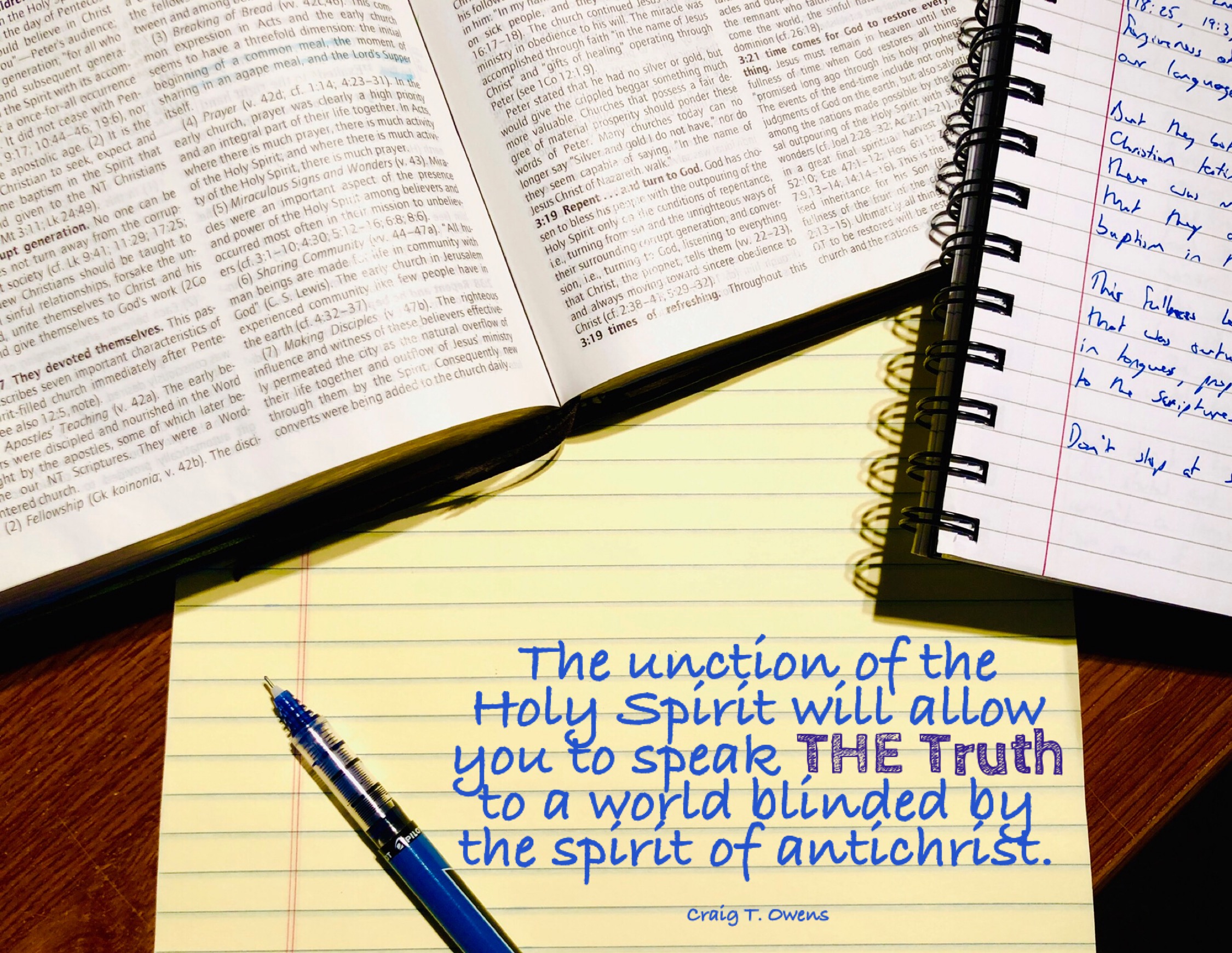
The unction of the Holy Spirit will allow you to speak THETruth to a world blinded by the spirit of the antichrist.
This is a weekly series with things I’m reading and pondering from Charles Spurgeon. You can read the original seed thought here, or type “Thursdays With Spurgeon” in the search box to read more entries.
Listen to the podcast of this post by clicking on the player below, and you can also subscribe on iTunes or Spotify.
An Assured Eternity
The life of God in the soul is not transient but abiding. Not temporary but eternal. Some think that the life of God in the believer’s soul may die out. But how then could it be eternal? If it dies, it is not eternal life. If it is eternal life, it cannot die. … We are said to have been made ‘partakers of the divine nature’ (2 Peter 1:4). Surely this means, among other things, that we receive an undying life. …
If our life is Christ’s life, we will not die until Christ dies. …
This is John’s desire for you: that you would believe with all your heart and soul and strength. He would have you believe more constantly, so that you may say, ‘My heart is steadfast, O God, my heart is steadfast; I will sing and give praise’ (Psalm 57:7). It is not always so with us. We are at times chicken-hearted. We play the man today and the mouse tomorrow. Lord, have mercy upon us. We are an inconsistent people, fickle as the wind. The Lord would have us abide always in Him with strong and mighty confidence, being rooted and built up in Him. He would have us trust courageously.
From The Blessing Of Full Assurance
John the Beloved wrapped up his Gospel with this statement: “But these are written that you may believe that Jesus is the Messiah, the Son of God, and that by believing you may have life in His name” (John 20:31). The word John uses for “life” is the Greek word zoe. This is how zoe is defined—
Life real and genuine, a life active and vigorous, devoted to God, blessed, in the portion even in this world of those who put their trust in Christ, but after the resurrection to be consummated by new accessions…and to last for ever. (Strong’s Greek dictionary)
Do you believe Jesus died and rose again? Based on that faith, have you asked the Father to forgive you of your sins? If so, then listen for the voice of the Holy Spirit in your heart that is giving you full assurance of promises like these:
Everyone who believes may have eternal life in [Jesus] (John 3:15)
Whoever believes in [Jesus] shall not perish but have eternal life (John 3:16)
Now this is eternal life: that they know You, the only true God, and Jesus Christ, whom You have sent (John 17:3)
Whoever believes in the Son has eternal life (John 3:36)
Whoever drinks the water I give them will never thirst. Indeed, the water I give them will become in them a spring of water welling up to eternal life (John 4:14)
Because I live, you also will live (John 14:9)
Whoever hears My word and believes Him who sent Me has eternal life and will not be judged but has crossed over from death to life (John 5:24)
My Father’s will is that everyone who looks to the Son and believes in Him shall have eternal life, and I will raise them up at the last day (John 6:40)
When Christ, who is your life, appears, then you also will appear with Him in glory (Colossians 3:4)
Resting in the hope of eternal life, life which the ever truthful God Who cannot deceive promised before the world or the ages of time began (Titus 1:2)
I write these things to you who believe in the name of the Son of God so that you may know that you have eternal life (1 John 5:13)
Friend, this is why it’s so important for us to regularly read the Bible. We need to have our faith bolstered by hearing these rock-solid, unchanging, eternal words of God so that we can live each day in full assurance of our salvation and eternal life.
Listen to the podcast of this post by clicking on the player below, and you can also subscribe on Apple or Spotify.
Have you ever read the children’s book Alexander and the Terrible, Horrible, No Good, Very Bad Day? Poor Alexander, his day just seemed to get worse—nothing was going right. He wakes up with gum in his hair, trips on his skateboard, and drops his favorite sweater in the sink filled with water. Breakfast doesn’t get any better, things go sideways at school, his least-favorite food is served for dinner, his nightlight burns out. And if all that’s not bad enough, the cat decides to sleep with his brother instead of with him.
Can you relate to Alexander?
Doesn’t it seem like when one thing goes wrong, everything goes wrong? And if things go wrong for too many days in a row, it seems like the bad times are lasting forever! All of us have a tendency to exaggerate during the dark days.
A psalmist named Asaph seemed to be having a terrible, horrible, no good, very bad day of his own. Listen to some of his words, including the exaggerations of how bad he thought everything was:
Why have You rejected us forever, O God? … Your foes roared in the place where You met us… They said in their hearts, “We will crush them completely!” They burned everyplace where God was worshiped in the land. … How long will the enemy mock you, O God? Will the foe revile Your name forever? Why do You hold back Your hand? (Psalm 74:1, 4, 8, 10, 11)
In the middle of the storm, we tend to not only exaggerate how bad things are but we also seem to lose our bearings and we can even lose sight of God. I think that’s what was happening to Asaph in the first half of his lament. But then we come to the middle verse of this psalm and we notice the beginning of a change in perspective: “But You, O God, are my King from of old; You bring salvation upon the earth” (v. 12).
Aha! In the middle of his terrible, horrible, no good, very bad day, Asaph stopped looking at all the bad things around him and turned his gaze upward. “Look,” he tells himself, “there is God still reigning as the Supreme King!” Asaph begins to recount all that God has done, using the phrase “It was You” who did these miraculous things five times in the next five verses.
In the middle of the storm, Asaph has to remind himself…
God existed before time began
He is still the sovereign ruler in this present moment
He gets the final and decisive word at the end
He never forgets His covenant of love with His people
He defends His cause and His people
His desires can never be thwarted or even delayed a single moment
He is the only One who exists as the Eternal I AM
His love and His power are unmatched and unrivaled anywhere in the universe
He will rise up to save me
My friend, I implore you to remember these words of Asaph. Commit them to your memory now, so that when your terrible, horrible, no good, very bad day happens—when it seems like everything is going to go wrong forever—that you can spot those lying exaggerations, you can turn your gaze upward, and you can find hope in knowing your God not only has all power to save you in the storm, but He has unlimited love that wants to save you through the storm.
Look up, look up, look up and see your God reigning supremely over even the worst terrible, horrible, no good, very bad day.



 Greg’s booked called The Shawn Effect








 Craig T. Owens