Impertinent Poems (book review)

Impertinent PoemsImpertinent Poems is a lovely collection of poetry from Edmund Vance Cooke. In case you left your dictionary at home, “impertinent” implies someone is a bit brash and out of line, so you might almost think that these poems are a bit cheeky.

And they are. Sort of.

Cooke does poke and prod his readers to take a good, long, honest look in the mirror in a way that’s almost too pointed. But then you realize that his finger is pointed squarely at his own reflection in the mirror, and we are almost listening in as he talks to himself.

Some of the poems are fun, some make you laugh, some seem a bit out of date (remember: these poems were written nearly 100 years ago), but all of them will make you think. And that is the beauty of well-written poetry.

Links & Quotes

link quote

Some great reading I found today.

God has sought us out: let us have good hope for those who are laid upon our hearts in prayer, for He will find them out also. … It is a point of honor with Jesus to seek and to save all the flock, without a single exception. What a promise to plead!” —Charles Spurgeon

Where is the outrage?! Christian Girls Abducted & Raped In Egypt.

[INFOGRAPHI] Right on the heels of Easter, Bible Overview has a great infographic of everyone in the Bible who was raised from the dead.

The apostles had this instinct: When in trouble, pray. When intimidated, pray. When challenged, pray. When persecuted, pray!” —Jim Cymbala. Read more from Pastor Cymbala’s great post on prayer.

“Throughout our history Americans have put their faith in God and no one can doubt that we have been blessed for it. The earliest settlers of this land came in search of religious freedom. Landing on a desolate shoreline, they established a spiritual foundation that has served us ever since.” —Ronald Reagan

“Nobody ever got anything from God on the grounds that he deserved it. Having fallen, man deserves only punishment and death. So if God answers prayer it’s because God is good.” —A.W. Tozer

Sacrifice is not giving up things, but giving to God with joy the best we have.” —Oswald Chambers

10 Quotes On Humility From “Humility”

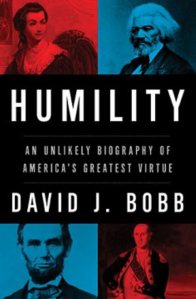
HumilityI thoroughly enjoyed Dr. David Bobb’s book Humility (you can read my full book review by clicking here). The book was partially a challenge for us to cultivate this virtue in our individual lives and in the fabric of our nation. So Dr. Bobb uses several biographies of notable Americans to illustrate the power of humility. These are some of the best quotes in the book on humility.

“Healthy pride is tied to truth, and pride devoid of merit is arrogance. Humility’s opposite that is arrogance, not pride. … The personal significance of this idea is radical: to be truly great, one has to be humble. The political significance of this idea is profound: to be truly and enduringly great, a nation’s hallmark must be humility.” 

“In reality, humility is strength, not weakness. It is the crown of the virtues. Humility enables courage and points wisdom in the right direction. It is the backbone of temperance, and it makes love possible.”

“Humility offers the promise of excellence, but it does not guarantee power when power is the proud domination of human beings. The power promised by humility is power over oneself in self-government. It is much harder to achieve. Humility’s strength is hidden, obscured by our blindness in the age of arrogance in which we live.” 

“Instead of responding to God’s love and drawing closer to Him, the first human beings retreated into the recesses of their hearts. In so doing they became less themselves—less like God created them to be. They departed from their nature, which was perfect until they turned from God. Unhealthy pride pushes man away from God; it destroys his ability to cling to his Creator as he should, not in miserable self-debasement, but in worshipful humility.”

“True humility enables true compassion.” 

“The key was not creating a government in which a leader could feign goodness and get away with it, but rather in creating one in which goodness could not be counted on, but was nevertheless sought. … America’s Founders knew the importance of humility and desired to be humble, but they also wished to make their mark. They were ambitious. They wanted to be great, but only if greatness came not at the expense of goodness.”

“The truly great person will be a servant. No less committed to excellence in everything, and still as dedicated to the highest achievements, the magnanimous man as servant can accomplish even more than when he tries to do it alone. Service is not servility. Meekness is not weakness. Humility is an essential part of true greatness of soul.”

“Contrary to popular misconceptions, modesty is not the underestimation of one’s worth. Rather, it acts as a restraint against the inordinate desire for recognition. While everyone desires recognition, a modest person quells the longing for fleeting fame. Modesty checks the impulse to claim credit and crave praise. It is the anti-vanity.”

“As a virtue, humility has an ordering quality to it. Arrogance has the opposite effect, as it loosens the grip of self-control and throws a human soul into disorder. … Ambition is not evil itself, but when an individual lets ambition run wild, it has the tendency to take over his soul. When this happens, a person loses sight of limitations. He is deluded into thinking himself unbeatable. Arrogance gives rise to unchecked ambition and begins a vicious cycle. Unchecked ambition leads to make those in its thrall more and more arrogant. And the arrogant continue to grow in misdirected ambition. This cycle—arrogance feeding ambition, and ambition giving way to more arrogance—can produce a tyrant. … Ambition is like pride in one decisive respect. Held in check, it is immensely important to the accomplishment of high and difficult tasks. Left unchecked, it is a debilitating force. Pride in check can be balanced with humility. One can be properly proud of some accomplishment and at the same time humble. … Like healthy pride, there is also worthy ambition.”

“Humility is a virtue prerequisite to prudence. If one lacks humility, the advancement of self or the substitution of an immoral end can overwhelm the pursuit of a just end. … Prudence allows the statesman to consider all alternatives and to make a decision not based upon who garners glory but upon the proper demands of the situation at hand. Prudence requires the submersion of one’s ego.”

Do You Smell Like Jesus?

Christ's aromaScientists tell us that the sense of smell contributes to more vivid and clear memory recall than any of the other human senses. Have you ever thought about the things Jesus smelled? Or about the memories others recalled about Jesus because of the way He smelled?

Less than a week before His crucifixion, Mary anointed Jesus with a highly-scented spice called spikenard (see John 12:1-8; Mark 14:3-9; and Matthew 26:6-13). Let me rephrase that: Mary didn’t just “anoint” Jesus as we think about that word today, she doused Him in a lifetime supply of this fragrance. Some people complained, but Jesus told those sour people that it was absolutely beautiful what she had done, as Jesus carried this aroma with Him to the Cross.

After He died on the Cross, Joseph and Nicodemus prepared Jesus for burial with 75 pounds of myrrh and aloes (see John 19:38-40). Think about that: seventy-five pounds! In doing so they actually fulfilled a prophesy from the Old Testament about King Jesus’ triumphal return to life—

Your throne, O God, will last for ever and ever; a scepter of justice will be the scepter of Your kingdom. You love righteousness and hate wickedness; therefore God, Your God, has set You above Your companions by anointing You with the oil of joy. All Your robes are fragrant with myrrh and aloes and cassia… (Psalm 45:6-8).

Jesus carried a powerful aroma with Him all the way to the Cross, into the tomb, and when He burst forth alive from the tomb! 

Without Christ, our lives carry the stench of death. We cannot come into our Heavenly Father’s presence because of that putrid smell clinging to us. But when God forgives us of our sins as we place our faith in Jesus, we are wrapped in the robes of Christ: we smell like Him and are welcomed into the Father’s presence.

Easter is a reminder of how a forgiven Christian should now live—

Live a life filled with love, following the example of Christ. He loved us and offered Himself as a sacrifice for us, a pleasing aroma to God (Ephesians 5:2).

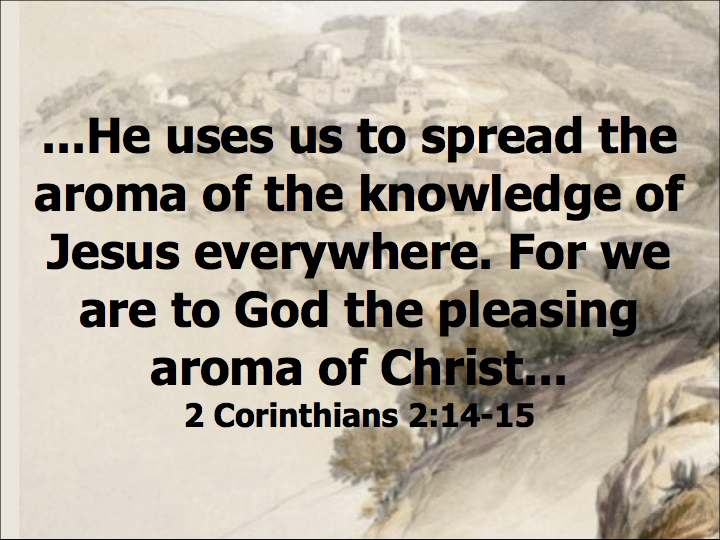
…Now [God] uses us to spread the knowledge of Christ everywhere, like a sweet perfume. Our lives are a Christ-like fragrance rising up to God (2 Corinthians 2:14-15).

How do you smell? Do you smell like Jesus? Are others attracted to the aroma of Christ because of what they smell in you? Smelling good honors the work Jesus did on the Cross and in overcoming the grave.

Poetry Saturday—When I Survey The Wondrous Cross

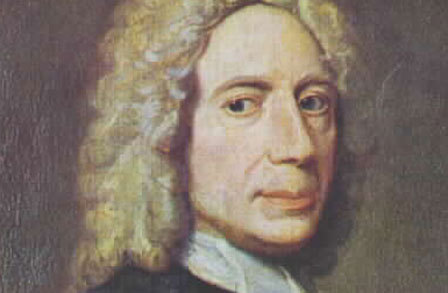
Isaac WattsWhen I survey the wondrous Cross
On which the Prince of glory died,
My richest gain I count but loss,
And pour contempt on all my pride.

Forbid it, Lord, that I should boast,
Save in the death of Christ my God!
All the vain things that charm me most,
I sacrifice them to His blood.

See from His head, His hands, His feet,
Sorrow and love flow mingled down!
Did e’er such love and sorrow meet,
Or thorns compose so rich a Crown?

Were the whole realm of nature mine,
That were a present far too small;
Love so amazing, so divine,
Demands my soul, my life, my all. —Isaac Watts


Links & Quotes

link quote

Some great reading (and watching) from the past couple of days.

“This generation has yet to prove all that prayer can do for believing men and women.” —A.W. Tozer

Come, my heart, be calm and hopeful today. Clouds together, but the Lord can blow them away. Since God will not fail me, my faith shall not fail; and as He will not forsake me, neither will I forsake Him.” —Charles Spurgeon

[VIDEO] This is priceless! Watch as a young man with Down Syndrome reads a special letter.

John Piper shares The Greatest Prayer In The World.

Tim Elmore discussing Generation Y: The Inverse Relationship Between Empathy And Narcissism.

This is why I love loving on our missionaries: Home Without A Home.

Some powerful Good Friday quotes compiled by Chilly Chilton in his post Cross Walk.

“Right now you may feel abused and unloved. The devil would have you believe that God has left you to your own devices—that you deserve to suffer, that it’s all over for you, that there is no hope. Beloved, those are lies from hell. God wants more than anything else to rid you of your perverted concept of Him.” —David Wilkerson

The Horrors Of Crucifixion

Good FridayWilliam Barclay, in his commentary on the Gospel of John, wrote graphically about the horrors of crucifixion—

   There was no more terrible death than death by crucifixion. Even the Romans themselves regarded it with a shudder of horror. Cicero declared that it was “the most cruel and horrifying death.” Tacitus said that it was a “despicable death.” It was originally a Persian method of execution. It may have been used because, to the Persians, the earth was sacred, and they wished to avoid defiling it with the body of an evil-doer. So they nailed him to a cross and left him to die there, looking to the vultures and the carrion crows to complete the work. The Carthaginians took over crucifixion from the Persians; and the Romans learned it from the Carthaginians.

   Crucifixion was never used as a method of execution in the homeland, but only in the provinces, and there only in the case of slaves. It was unthinkable that a Roman citizen should die such a death. Cicero says: “It is a crime for a Roman citizen to be bound; it is a worse crime for him to be beaten; it is well nigh parricide for him to be killed; what am I to say if he be killed on a cross? A nefarious action such as that is incapable of description by any word, for there is none fit to describe it.” It was that death, the most dreaded in the ancient world, the death of slaves and criminals, that Jesus died.

   The routine of crucifixion was always the same. When the case had been heard and the criminal condemned, the judge uttered the fateful sentence: Ibis ad crucem, “You will go to the cross.” The verdict was carried out there and then. The condemned man was placed in the centre of a quaternion, a company of four Roman soldiers. His own cross was placed upon his shoulders. Scourging always preceded crucifixion and it is to be remembered how terrible scourging was. Often the criminal had to be lashed and goaded along the road, to keep him on his feet, as he staggered to the place of crucifixion. Before him walked an officer with a placard on which was written the crime for which he was to die and he was led through as many streets as possible on the way to execution. There was a double reason for that. There was the grim reason that as many as possible should see and take warning from his fate. But there was a merciful reason. The placard was carried before the condemned man and the long route was chosen, so that if anyone could still bear witness in his favor, he might come forward and do so. In such a case, the procession was halted and the case retried. (emphasis added)

Always remember that Jesus willingly went through this for you and me.

Surely He took up our pain
    and bore our suffering,
yet we considered Him punished by God,
    stricken by Him, and afflicted.
But He was pierced for our transgressions,
    He was crushed for our iniquities;
the punishment that brought us peace was on Him,
    and by His wounds we are healed. (Isaiah 53:4-5, emphasis added)

Thursdays With Oswald—The Historicity Of The Cross

This is a weekly series with things I’m reading and pondering from Oswald Chambers. You can read the original seed thought here, or type “Thursdays With Oswald” in the search box to read more entries.

The Historicity Of The Cross 

     It is essential to have an historic basis for our Christian faith: our faith must be centered in the Life and Death of the historic Jesus. Why is it that that Life and Death have an importance out of all proportion to every other historic fact? Because there the Redemption is brought to a focus. 

     Jesus Christ was not a Man who twenty centuries ago lived on this earth for thirty-three years and was crucified; He was God Incarnate, manifested at one point of history. All before look forward to that point; all since look back to it. The presentation of this fact produces what no other fact in the whole of history ever could produce, viz.: the miracle of God at work in human souls. The death of Jesus was not the death of a martyr, it was the revelation of the Eternal heart of God. That is why the Cross is God’s last word.

From Conformed To His Image

This is THE Fact of history—

For God loved the world so much that He gave His One and Only Son, so that everyone who believes in Him will not perish but have eternal life. God sent His Son into the world not to judge the world, but to save the world through Him. (John 3:16-17)

Links & Quotes

link quoteSome cool reading I came across today.

“We simply can’t change ourselves. Only the Spirit of God can conform us to the glorious image of Christ.” —David Wilkerson

Oh, that today my clothes may be vestments, my meals sacraments, my house a temple, my table an alter, my speech incense, and myself a priest!” —Charles Spurgeon

I like this: 8 Things Healthy Couples Don’t Do.

“Sound biblical and theological learning is useful for building the church when it is delivered with patience and gentleness by a loving shepherd.” —T.M. Moore

Earth Day And The Christian

Earth Day 2013Some Christians I know shy away from being involved with anything that’s even remotely related to Earth Day. They tell me that Earth Day seems too “earthy” or even “worldly” for them. I disagree. For the Christian, I believe there are a couple of principles that converge and therefore compel us to be involved.

The first principle is mankind’s original mandate. When God created Adam and Eve and placed them in His garden, He gave them the responsibility and privilege of caring for His creation. They were to care for both the plants and animals, making sure a healthy environment was maintained for them to be fruitful (see Genesis 1:26-28 and 2:15).

The second principle is Christ’s directive. Jesus told Christians to shine like lights and season like salt, “that they may see your good deeds and praise your Father in heaven” (Matthew 5:14-16). Even Jesus Himself “went around doing good” (Acts 10:38).

So when there’s an opportunity to care for our environment by doing “good deeds,” I’m going to take advantage of that every single time!

Saturday, April 26, beginning at 10am, is the annual Earth Day and Cedar Creek cleanup in Cedar Springs. I will be there along with a number of other folks from Calvary Assembly of God. I encourage others in Cedar Springs to join us. If you live in a different community, find an activity in which you can get involved and let your light shine brightly and lovingly in your city.