Listen to the podcast of this post by clicking on the player below, and you can also subscribe on Apple, Spotify, or Audible.
I had a great time on the Ailbe Podcast with Rusty Rabon.
Rusty noted how I had used the description of the early life of Jesus from Luke’s Gospel—And Jesus grew in wisdom and stature, and in favor with God and man (Luke 2:52)—and then how I created a pyramid of health for shepherd leaders to follow.
I think that Dr. Luke, under the inspiration of the Holy Spirit, listed those four items in a very specific order. It begins with the growth of our mind, which helps us make healthy choices for our physical body, which allows us to concentrate on our spiritual growth. But ultimately the real proof of our God-honoring healthiness is seem in how we interact and react with other people.
In my book Shepherd Leadership: The Metrics That Really Matter I take five chapters to unpack the various aspects of a leader’s health, and I offer some practical first steps for anyone to address areas where their health is not at its best.
I’ll be sharing more clips from this interview soon, so please stay tuned. Shepherd Leadership: The Metrics That Really Matter is now available in print or ebook, and in audiobook through either Audible or Apple.
Check out this episode and subscribe on YouTube so you can watch all of the upcoming episodes. You can also listen to our podcast on Spotify and Apple.
Listen to the podcast of this post by clicking on the player below, and you can also subscribe on Apple, Spotify, or Audible.
It is quite disheartening for me to hear how many pastors contemplate their resignation on Monday morning. Just one day after pouring out their heart to their congregation, they are thinking about throwing in the towel.
I think one of the major contributing factors to this is our inaccurate measurements of success.
Far too many pastors measure success by noses and nickels: what was the attendance and what was the offering? When either of these dip, pastors tend to feel unsuccessful.
But no where in the Bible do we see these metrics of success.
I wrote Shepherd Leadership: The Metrics That Really Matter to help ministry leaders refocus on what God calls success. If you are a pastor—or if you love your pastor—please pick up a copy today.
Listen to the podcast of this post by clicking on the player below, and you can also subscribe on Apple, Spotify, or Audible.
C.S. Lewis, like many atheists, wondered if the God of the Bible might be an egomaniac because He is always encouraging people to praise Him. In his book Reflections on the Psalms, Lewis wrote a thoughtful response to this after he had become a Christian:
“Just as men spontaneously praise whatever they value, so they spontaneously urge us to join them in praising it. ‘Isn’t she lovely? Wasn’t it glorious? Don’t you think that magnificent?’ … I think we delight to praise what we enjoy because the praise not merely expresses but completes the enjoyment; it is its appointed consummation. It is not out of compliment that lovers keep on telling one another how beautiful they are; the delight is incomplete till it is expressed. … This is so even when our expressions are inadequate, as of course they usually are. But how if one could really and fully praise even such things to perfection—utterly ‘get out’ in poetry or music or pain the upsurge of appreciation which almost bursts you? Then indeed the object would be fully appreciated and our delight would have attained perfect development. The worthier the object, the more intense this delight would be.”
His phrase, “our expressions are inadequate” is especially true when we are attempting to appreciate and praise the Infinite, the Eternal, the Omnipresence, the Omnipotence of our God and Savior! But the biblical authors call for Christians to mature in this—we want to keep praising, keep expressing, until we finally find the perfect fulfillment in His presence.
Paul talks about the maturing nature of love—when I was a child, I talked like a child, I thought like a child, I reasoned like a child (1 Corinthians 13:11)—but then he prays for us to grow in both our understanding and our expressions of our Savior’s love (Ephesians 1:17-19).
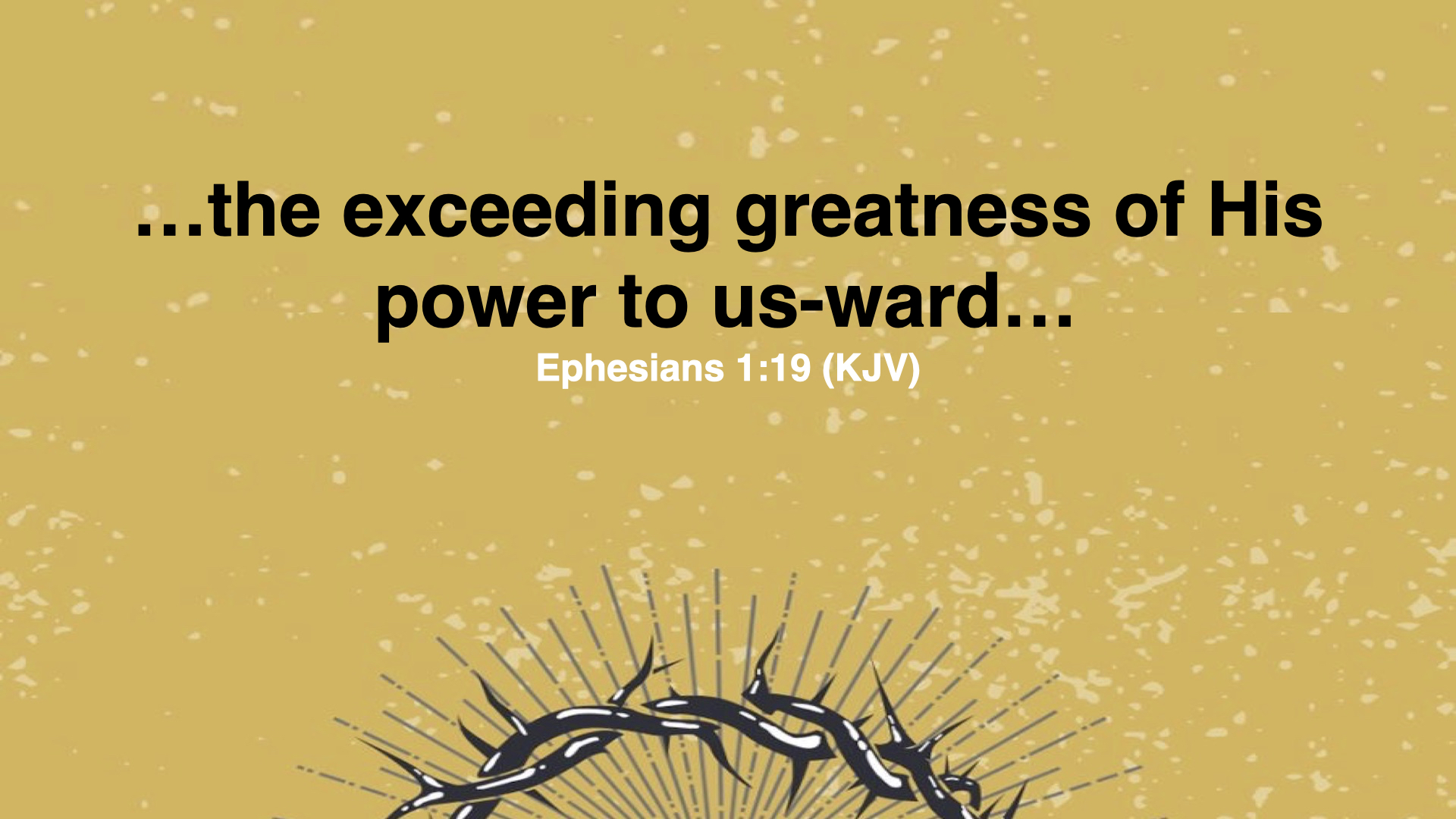
I like the wording of Ephesians 1:19 in the King James Version: the exceeding greatness of His power to us-ward. The word “exceeding” means God pours out in a way that is beyond human imagining. The Greek word that Paul uses for “greatness” is only used here, and it reinforces the truth that God is beyond our full comprehension. And then Paul adds that this overflowing, incomparable power is directed “to us-ward”!
Paul then prays for us to be able to understand ever-increasing new dimensions of this transcendent power and ability that God directs to us through His Son Jesus, and for us to be able to express it (Ephesians 3:14-19). In other words, we are to grow in our experience of Jesus so that we can grow in our praise to Jesus.
The incomparable Jesus means at least four things for us. It means Jesus is…
…beyond comparison. Isaiah, God Himself, and the psalmists ask rhetorically, “Who is like God? Who could ever compare to Him?” (Isaiah 40:13-14, 18, 25; Psalm 89:5-8).
…matchless in His power. Isaiah 40:12 says God holds the waters of the world in the hollow of His hand. How much water is this? Scientists estimate the Earth’s water supply to be 326 quintillion gallons of water (that’s 326 followed by 18 zeros)! Not only does God hold all of the water, but He directs its activities on behalf of His children (Exodus 15:11-13).
…unequaled in knowledge.Isaiah 40:12, 26 tell us that all of the stars in our universe fit onto God’s outstretched hand, and that He knows all of the stars by name. How many stars is this? Astronomers calculate the heavens to contain 10 septillion stars (that’s 10 followed by 24 zeros)! Not only does God know each star by name, He knows each human by name, and thesmallest of details about each of them (Isaiah 49:16; Matthew 10:29-31).
…inimitable in His care. We humans can get to the end of our strength, but God never does. He cares for us unlike anyone else or anything else ever can (Isaiah 40:28-31). The Lord hears His people when they call to Him for help. He rescues them from all their troubles (Psalm 34:17).
Knowing we have a Savior like this, why would you ever settle for anything less The Genuine?!
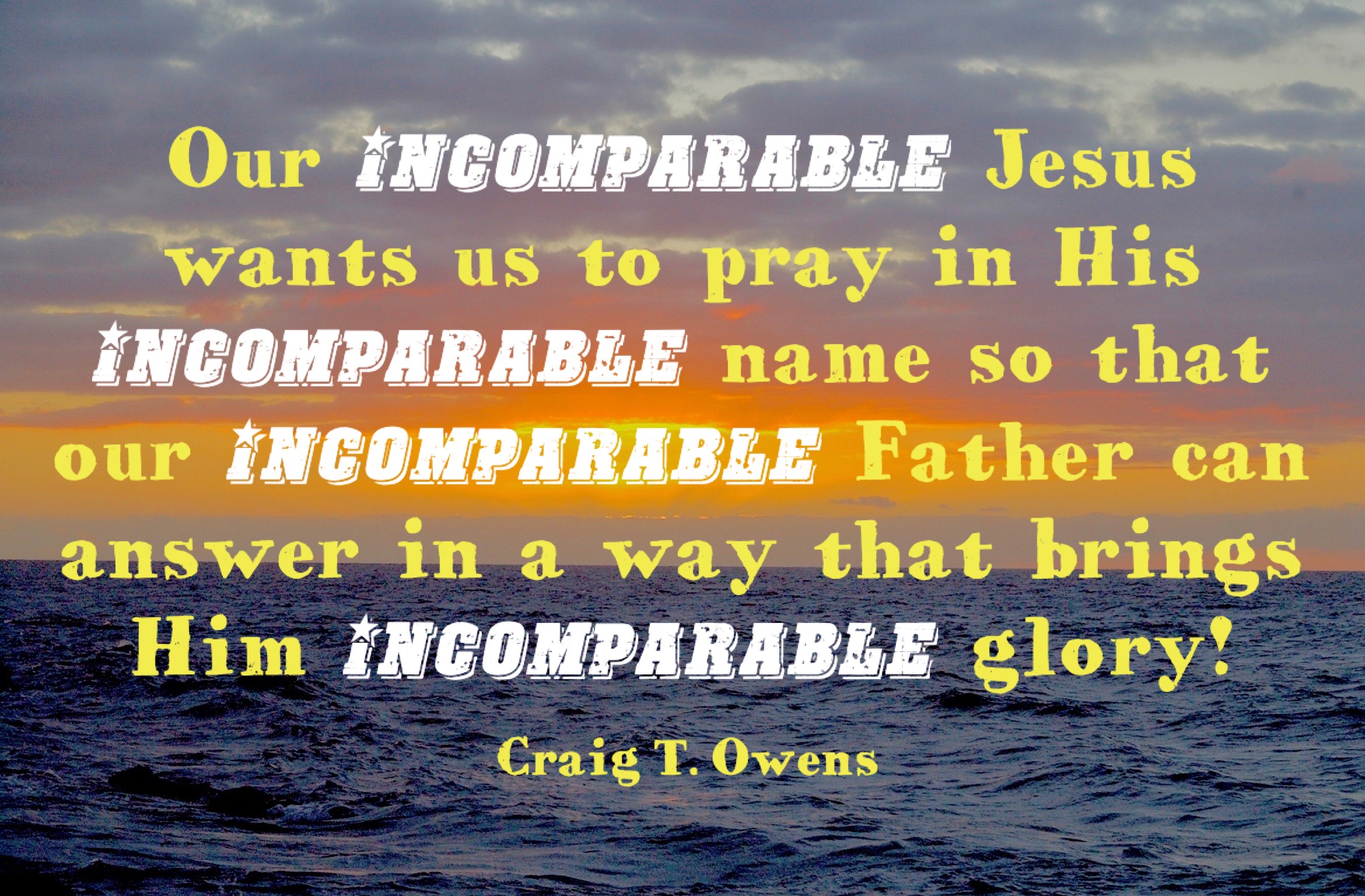
Our incomparable Jesus wants us to pray in His incomparable name so that our incomparable Father can answer in a way that brings Him incomparable glory! We’re helped, He’s lifted up, and others are drawn to Him.
Listen to the podcast of this post by clicking on the player below, and you can also subscribe on Apple, Spotify, or Audible.
At a Q&A event for my my book Shepherd Leadership: The Metrics That Really Matter, I explained how I started writing this book. The bottom line is you learn to write by writing!
Check it out…
In all seriousness, the process of writing goes something this:
Start writing.
Write something every day.
Read your work to others who really care about you.
Listen to the podcast of this post by clicking on the player below, and you can also subscribe on Apple, Spotify, or Audible.
Josh had just graduated from high school when I came to pastor in Cedar Springs. As I sat with this outstanding young man I asked him what he wanted to do next.
“I’m not exactly sure,” he told me, “but I really feel like it’s something involved with ministry.”
“Great!” I responded. “Let’s start experimenting.”
I told Josh that our church was going to be a safe place to experiment: to plan new things, to try new things, to prayerfully evaluate the results, and then to use those results to plan new things. Josh jumped in right away, and over a short period of time we were eventually able to ascertain just how God had wired Josh for his niche of ministry.
But this would have never happened without some missteps along the way.
That’s okay.
Leaders need to create an environment where it’s safe to make mistakes, because mistakes are a vital component of learning.
Leaders can help those around them grow through their mistakes by constantly reinforcing these six principles:
When someone complains, “This is too hard,” remind them, “This may take some time and effort.”
When someone says, “I’m not good at this,” prompt them to ask, “What am I missing?” and then encourage them to add, “I’m not good at this yet.”
When someone wants to settle with, “It’s good enough,” challenge them to ask themselves, “Have I given this my best effort?”
When someone wants to throw in the towel by saying, “I made a mistake,” remind them, “I failed is not the same thing as I am a failure,” and then remind them, “Mistakes help me learn.”
When someone is exasperated and says, “I give up,” come alongside them with, “Let’s try a strategy we’ve already learned.”
When someone says, “I can’t do this,” you need to lovingly encourage them with, “You can do this!”
These responses will help foster an abundance-mindset environment where people aren’t defeated by their mistakes, but they’re energized to reengage and try again. As the brilliant inventor Thomas Edison quipped, “I’ve had a lot of success with failure.”
Leaders, let’s make our spaces the safest places for the mistakes that lead to discovery, growth, and success.
Listen to the podcast of this post by clicking on the player below, and you can also subscribe on Apple, Spotify, or Audible.
There is only one Jesus, but He is presented to us in the Bible with many facets, and we get to pray in all of those facets of His name!
One of the facets of Jesus is His preeminence. The dictionary defines preeminent as “above and before others; superior; surpassing.”
The Bible uses the word preeminence to mean “holding the first place.” The apostle Paul uses this idea of Christ’s supremacy when He describes Him this way—
The Son is the image of the invisible God, the FIRSTBORN over all creation. For in Him ALL things were created: things in heaven and on earth, visible and invisible, whether thrones or powers or rulers or authorities; ALL things have been created through Him and for Him. He is BEFOREALL things, and in Him ALL things hold together. And He is the HEAD of the body, the church; He is the BEGINNING and the FIRSTBORN from among the dead, so that in EVERYTHING He might have the SUPREMACY. For God was pleased to have ALL His fullness dwell in Him. (Colossians 1:15-19, emphasis mine)
Therefore God exalted Him to THE HIGHEST PLACE and gave Him the name that is above EVERY name,that at the name of Jesus EVERY knee should bow, in heaven and on earth and under the earth,and EVERY tongue acknowledge that Jesus Christ is Lord, to the glory of God the Father. (Philippians 2:9-11, emphasis mine)
Praying in Christ’s preeminence means that we never have to settle for less than God’s best!
When we began this series, I mentioned that there were some people who misuse the words of Jesus. Specifically the phrase where Jesus says, “I will do whatever you ask in My name” (John 14:13, 15:16, 16:23). They have taken this as license to ask for things for their own comfort, or claiming that praying “in the name of Jesus” means that we never have to experience pain, poverty, or any setbacks.
But preeminence ≠ prosperity!
Prosperity wrongly says Christians will never have trouble, never experience poverty or lack, and can claim and obtain lavish things just by invoking “in the name of Jesus.”
Jesus didn’t pray to be removed from trials. The godly apostle Paul experienced ample trouble, and so did the heroes of faith (John 12:27-28; 2 Corinthians 11:23-27; Hebrews 11:35-38). Yet even in all of these troubles and pain and hardship, Christ’s preeminence prevails!
As Paul said in Colossians 1, Jesus was the “firstborn from among the dead,” meaning that He is now preeminent even over death! Jesus said that His followers will—not “may”—experience persecution here, just as those heroes of the faith listed in Hebrews 11 did, but that the rewards in eternity are beyond compare (see 1 Corinthians 15:55, 57-58; Matthew 5:11-12; Hebrews 11:39-40).
Horatio Spafford wrote the hymn It Is Well With My Soul. One of the stanzas reminds us:
Though satan should buffet though trials should come
Let this blest assurance control
That Christ has regarded my helpless estate
And has shed His own blood for my soul
Praying in the name of the preeminent Jesus does at least four things for us:
Gives us a surpassing victory—Romans 8:31-32, 37
Keeps us humble and God glorified—2 Corinthians 4:7
Detaches us from earthly things that would take our eyes off of Jesus—Philippians 3:8
Let me say it again: Praying in Christ’s preeminence means that we never have to settle for less than God’s best!
God’s best is not awaiting us here on earth, but it is our promised eternal reward for persevering to the end. It may seem tough at times, but our preeminent Savior walks with us every step of the way!
John Piper wrote to pastors, “That is the main task of preaching, and the main purpose of small groups and all the ministries of the church: helping people see the greatness of what Christ has purchased for everyone who will value it above the world. Helping people see it and savor it, so that God’s superior worth shines in their satisfaction and in the sacrifices that come from such a heart.”
“The gospel of Christ, what is it? We look at the last two words, ‘of Christ.’ Indeed, if you understand Christ, you understand the gospel. Christ is the Author of it. He, in the council chamber of eternity, proposed to become the Surety for poor fallen man! He, in the fullness of time, worked out eternal redemption for as many as His Father had given Him. He is the Author of it as its Architect and Builder. We see in Christ Jesus the Alpha and the Omega of the gospel. He has provided in the treasury of grace all that is necessary to make the gospel the gospel of our salvation. And as He is the Author of it, so He is the matter of it. It is impossible to preach the gospel without preaching the Person, the work, the office, and the character of Christ. If Christ is preached, the gospel is promulgated, and if Christ is put in the background, then there is no gospel declared.” —Charles Spurgeon
Would you prayerfully consider supporting my Patreon page at only $5 per month?
Marshall Seagal wrote an insightful article about patience. He notes, “Patience exists only in a world of disruption, delays, and disappointment. It grows only on the battlefield. We cannot practice patience unless our circumstances call for it—and the circumstances that call for it are the kinds of circumstances we wouldn’t choose for ourselves.”
The Biblical Archeological Report has a history of Egyptian Pharaoh Hophra that is quite fascinating. It’s always so interesting to me to watch how these archeological finds square with the historical records contained in the Bible.
Listen to the podcast of this post by clicking on the player below, and you can also subscribe on Apple, Spotify, or Audible.
Why is it that so many people have a worst-case mindset as their guiding factor?
As a leader responsible for programs, and large groups of people, and the financial well-being of organizations, I know that I frequently fell into this trap. When we began making plans for the future, I wanted to keep a “fallback plan” in place. I frequently found myself saying to our leadership team, “Even in the worst case scenario we can….”
But then I realized how much vitality this was sapping from our team.
If we as leaders want to infuse more energy and excitement in our teams it may take some paradigm shifts on our part. Here are three shifts that I have endeavored to implement in my life:
Shift scarcity to abundance.
Shift fear to hope.
Shift worst-case to best-case.
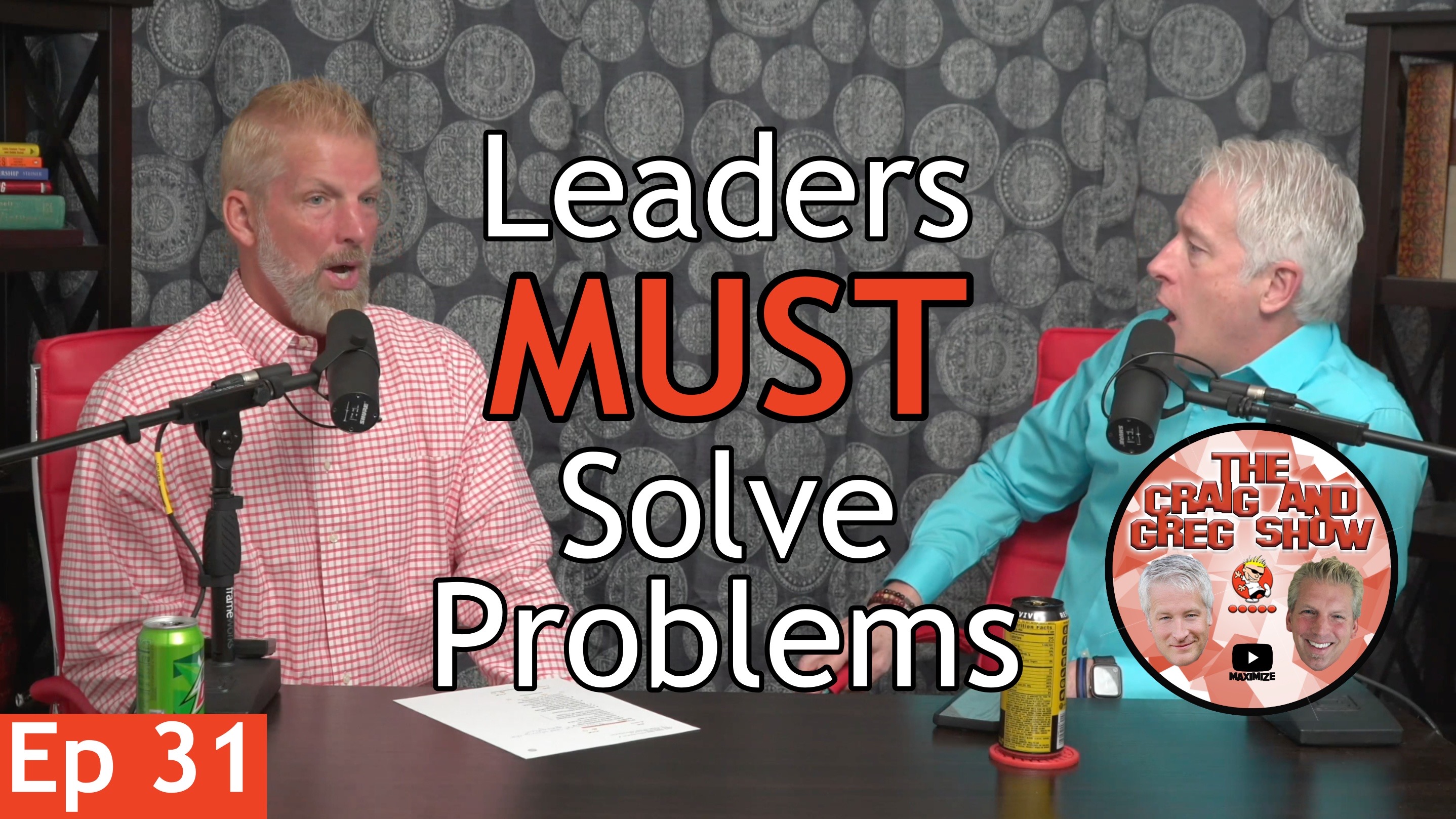
On a recent episode of our leadership podcast, my friend Greg Heeres and I discussed the limitations that come as a result of a leader’s limiting fears.
As a Christian, I believe the greatest Helper in these three paradigm shifts is the Holy Spirit. When I take time to pray about the big decisions for my personal life and for the organizations I lead, I find that His guidance helps me tap into God’s abundance, which gives me hope for the best-case scenarios to be realized. This hope in me quickly translates to hope and expectation in my team.
Leaders, start with prayer and then try these three paradigm shifts. As the Holy Spirit transforms your heart and mind, I believe you will begin to see a greater energy and excitement in the organizations that you lead.
Let’s stop asking, “What’s the worst thing that could happen?” and shift to asking, “What’s the best thing that could happen?”
[12:42] How can leaders use the priority vs. priorities paradigm to create margin in their life?
[14:36] We throw out the “Not-To-Do List Challenge” for leaders.
Check out this episode and subscribe on YouTube so you can watch all of the upcoming episodes. You can also listen to our podcast on Spotify and Apple.



 I had a great time on the Ailbe Podcast with Rusty Rabon.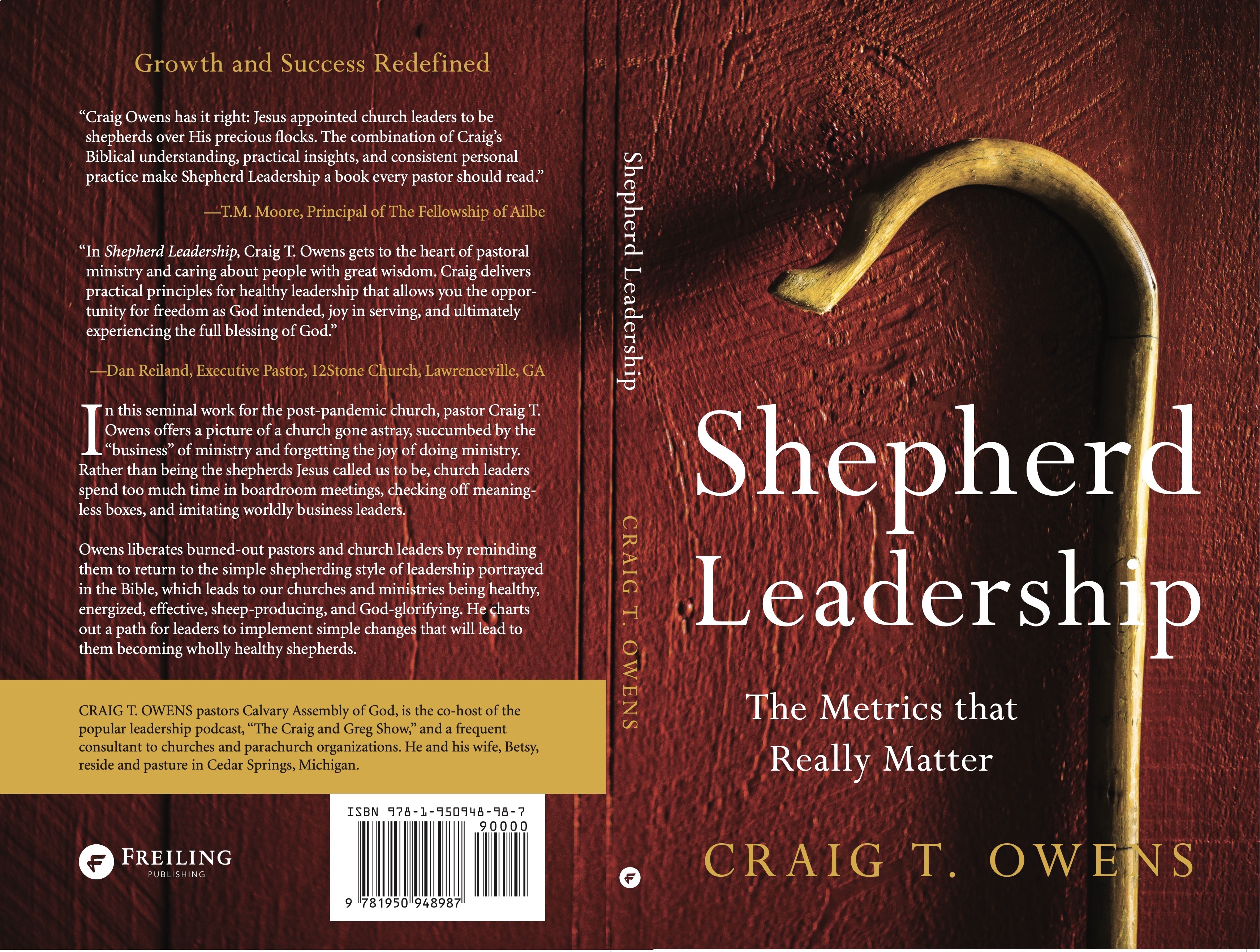











 Craig T. Owens