Although most nativity scenes show the wise men visiting Jesus alongside the shepherds the night He was born, in reality the Magi showed up much later.
They came first to Israel’s capital city—Jerusalem—and went to the man who currently bore the title King of the Jews—Herod—with an odd question, “Where is He who has been born King of the Jews? We’ve come to worship Him.”
The call to come to worship the Christ has always stirred different responses in people’s hearts. But I have noticed that the responses today aren’t any different than they were over 2000 years ago at Christ’s first Advent.
Notice these four responses in the Gospel of Matthew:
The word disturbed means an inward commotion, someone robbed of any calmness; someone who has become restless and agitated.
King Herod wasn’t all that different from a lot of people today who have their personal lives organized according to their own plans. They have everything figured out. They are masters of their own fate. They know how everything is supposed to work. They are god of their own world.
But inside it’s a different story. They may not acknowledge it to anyone else, but they are uneasy. King Herod was political, not religious. He knew how to play the games with the right Jewish leaders and Roman politicians to get and keep his throne. So when he hears, “Where is He who is born KING OF THE JEWS?” you can understand why he instantly becomes so agitated! He feels like his well-ordered world and best-laid plans are about to crash in on him!
The people of Jerusalem had a love-hate relationship with King Herod. If you were on his side, he could be quite generous with his gifts and favorable with his influence. But if you were against him, he could be incredibly cruel (just take a look at verse 16!).
So when Herod got upset, you can imagine why the citizens of Jerusalem were as well. They all longed for the Messiah—the Christ—to come and set them free, but in the meantime they were trying to keep their options open. They wanted the Messiah, if they could have Him, but they didn’t want to abandon Herod yet, just in case the Messiah couldn’t follow through.
Of all the people looking for the Christ, you would think the chief priests and teachers of the law would be the most excited! When Herod asked them for the birthplace of the Messiah, they immediately knew the answer, but after they delivered this information to King Herod they aren’t mentioned again in this narrative. Bethlehem was only 6 miles away, but they didn’t do a single thing! The Messiah being born in such a lowly manner didn’t fit the image they had concocted in their minds. Later on, Jesus would challenge them on this (see John 5:38-40).
Whereas the Jewish religious leaders were only 6 miles away, the Magi that came from the east might have been anywhere from 400-800 miles away. They left the comforts of their home to travel perhaps as long as 4 months. But, Oh! the journey was so worth the effort! They got to see the Christ with their very own eyes! We read that they were overjoyed, and that they bowed down and worshiped Him and opened their treasures.
What’s your idea about Jesus?
What about you? What’s your idea about Jesus? He isn’t just a Baby in a manger; He’s also King and Judge and Ruler and Lord. When you hear the call to come worship Him, what will your response be?
Listen to the podcast of this post by clicking on the player below, and you can also subscribe on Apple, Spotify, or Audible.
A “mondegreen” is a misunderstood word or phrase usually because it’s in a song lyric that is misunderstood. In Christmas carols, many mondegreens come from the fact that the Old English lyrics are sometimes up to 200 years old and simply aren’t the way Americans talk today. One of my favorite mondegreens comes from I Heard The Bells On Christmas Day where people say “the bell freeze up all Christians dumb” instead of “the belfries of all Christendom”!
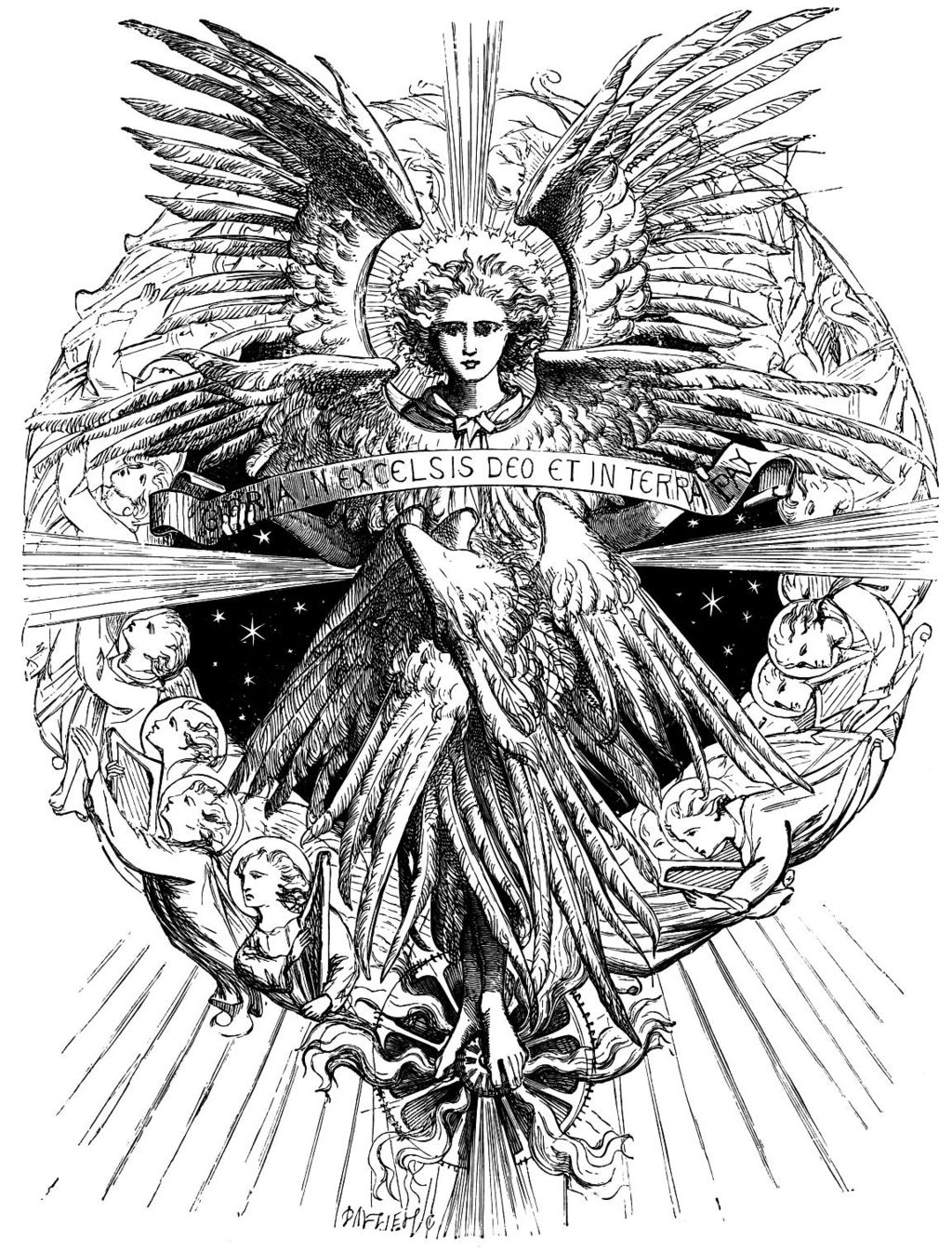
If this happens to 200-year-old songs written in English, can you imagine what happens to a song that is 1700 years old and was originally written in Latin?! I’m talking about the chorus from Angels We Have Heard On High which simply says, “Gloria in excelsis Deo.”
That Latin phrase means Glory to God in the highest! The idea is that our praise of God is both excellent and increasing in its level of adoration. The Latin phrase is shorthand for a doxology that is traced back to 300 AD.
The angels aren’t the subject of this carol, but the focal point is to Whom their song is being raised—“Come to Bethlehem and see Him Whose birth the angels sing; come adore on bended knee Christ the Lord, the newborn King.”
The idea of gloria in excelsis is to keep making our praise bigger and more magnificent. We are to MAGNIFY what God has done for us through the advent of Jesus.
In Hebrew, the word gadal is usually translated as “magnify” or “glorify” in English, and it means something that is growing and becoming more powerful. David uses gadal as he not only praises God from deep within his soul but encourages others to join in his song (Psalm 34:1-3).
In Greek, the word megalynō is also translated “magnify,” and means to make something great, make it obvious, declare it to be great, celebrate it. Mary’s song called The Magnificat begins with this word (Luke 1:46).
Just like a magnifying glass doesn’t make an object bigger, it just helps us see it better. So, too, our praise and adoration don’t make God bigger, it just helps others see Him better.
So I have a question to ask you—which I’ve already been asking myself:
►► Would you please prayerfully consider supporting this ministry? ◀︎◀︎
If you’ve missed any of the message in this series, you can check them out by clicking here.
“…May we also unite in most humbly offering our prayers and supplications to the great Lord and Ruler of Nations and beseech Him—To pardon our national and other transgressions, To enable us all, whether in public or private stations, to perform our several and relative duties properly and punctually, To render our national government a blessing to all the people, by constantly being a government of wise, just, and constitutional laws, discreetly and faithfully executed and obeyed, To protect and guide all nations and to bless them with good government, peace, and concord, To promote the knowledge and practice of true religion and virtue, and the increase of science, And generally to grant unto all mankind such a degree of temporal prosperity as He alone knows to be best.” —George Washington’s Thanksgiving Proclamation in 1789
“Let your soul lose itself in wonder, for wonder is in this way a very practical emotion. Holy wonder will lead you to grateful worship and heartfelt thanksgiving. It will cause within you godly watchfulness; you will be afraid to sin against such a love as this.” —C.H. Spurgeon
“As flowers carry dewdrops trembling on the edge of the petals, and ready to fall at the first waft of wind or brush of bird, so the heart should carry its beaded works of thanksgiving, and, at the first breath of heavenly flavor, let down the shower perfumed with the heart’s gratitude.” —Henry Ward Beecher
“Thanksgiving will draw our hearts toward God and keep us in fellowship with Him; it will take our attention from ourselves and give the Spirit room in our hearts.” —Andrew Murray
“If we pray without ceasing, we shall not want matter for thanksgiving in everything. We shall see cause to give thanks for sparing and preventing, for common and uncommon, past and present, temporal and spiritual mercies. Not only for prosperous and pleasing, but also for afflicting providences, for chastisements and corrections; for God designs all for our good, though we at present see not how they tend to it.” —Matthew Henry
“Blessed is that home which has in it an altar of sacrifice and of prayer, where daily thanksgivings ascend to heaven and where morning and night praying is done.” —E.M. Bounds
“Not to lose myself and reader in this digression, the sum is, the unspeakable blessings which the priesthood of Christ hath obtained for us are a strong obligation for the duty of praise and thanksgiving; of which that in some measure we may discharge ourselves, He hath furnished us with sacrifices of that kind to be offered unto God.” —John Owen
“Gratitude is from the same root word as ‘grace,’ which signifies the free and boundless mercy of God. Thanksgiving is from the same root word as ‘think,’ so that to think is to thank.” —Willis P. King