The poet creates so many analogies from the building of the perfect ship. The loving Master knew exactly what he was doing. But the poem closes with this analogy to the United States of America…
“There are nine requisites for contented living:
* The quote is from Wolfgang Goethe, but I added the Scripture references.
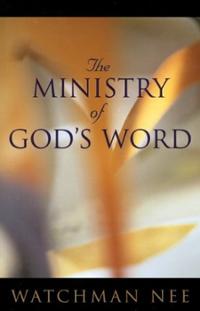
What a fascinating book Watchman Nee wrote in The Ministry Of God’s Word. In fact, it’s one of the rare books that I called a must read for pastors (you can read my book review by clicking here). To whet your appetite I’ve been sharing some quotes from this book.
“This is an enormous task, a task which far surpasses human ability. Every servant of God must realize his incompetency. He should prostrate himself before God, knowing how incompetent he is in supplying Christ, even though he may be well able to speak on the doctrines or teachings of the Bible. Let us look to God’s mercy today. We need to reevaluate everything. We must see how absolutely useless we are. We are utterly helpless without His mercy. To be a minister of the Word is too serious a matter to be taken lightly. It is not an easy task which can be fulfilled just by reading the Bible so many times. A minister of the Word must be able to supply Christ and help people to touch Christ by his words.”
“To obtain a pure minister of the Word God has to so work in a person that his outward man is broken. Hence it is necessary for a minister of the Word to accept the discipline and control of God; otherwise he will surely destroy God’s Word by the mingling in of his own undealt flesh. … The Holy Spirit has been able to work to such a depth that when that man stands to speak, people hear the Lord speaking.”
“Ministry requires our seeing something before God and in freshness presenting this thing to the church. … Each time I minister I need to receive special revelation for the occasion. … Continuous revelation begets continual ministry.”
“The same message with the same delivery may not produce the same result; only the same anointing will.”
“God never intends to give us small revelations. If He grants revelation, His revelation is big; its scope and content is rich. How can anything inglorious come forth from the God of glory? The normal portion God gives man is a cup running over. God is forever rich, great, and all-inclusive.”
“Man’s mental strength acts like his physical strength. If his arm can only lift fifty pounds of weight, then he cannot handle anything heavier, not even one additional pound. So is our mental strength limited. If we exhaust its energy on other things we will have nothing left with which to spend on the things of God; and hence we will not be able to translate God’s light into thought.”
“In the things spiritual, natural eloquence is useless. God must give words. … Hence we must wait on God and read the Bible, asking Him to grant us the words. When the words do come, we are instantly assured of what we should speak today. … The greater the lack of revealed words the longer should be the waiting before God. Pray, commune, wait, and lay the Bible before God. This is not an ordinary waiting, nor ordinary prayer and communion. This is waiting before God with the Bible, praying to God with the Bible, and communing with God over the Bible.”
You can read the other quotes I’ve posted by clicking here, here, here, and here.
Some good reading (and watching) I found today.
“Humility is strong—not bold; quiet—not speechless; sure—not arrogant.” —Estelle Smith
[VIDEO] Ken Davis always cracks me up! When the doctor says, “Don’t drive” … don’t drive!
Feeling beat-up? Max Lucado reminds us to rest in Christ’s finished work.
[VIDEO] Greg Koukl answers the question: What Is Marriage Anyway?
Tim Elmore discusses communicating with youth using pictures, stories and steps.
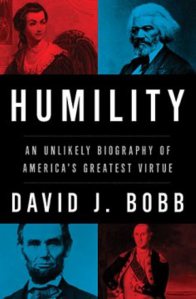
I thoroughly enjoyed Dr. David Bobb’s book Humility (you can read my full book review by clicking here). The book was partially a challenge for us to cultivate this virtue in our individual lives and in the fabric of our nation. So Dr. Bobb uses several biographies of notable Americans to illustrate the power of humility. These are some of the best quotes in the book on humility.
“Healthy pride is tied to truth, and pride devoid of merit is arrogance. Humility’s opposite that is arrogance, not pride. … The personal significance of this idea is radical: to be truly great, one has to be humble. The political significance of this idea is profound: to be truly and enduringly great, a nation’s hallmark must be humility.”
“In reality, humility is strength, not weakness. It is the crown of the virtues. Humility enables courage and points wisdom in the right direction. It is the backbone of temperance, and it makes love possible.”
“Humility offers the promise of excellence, but it does not guarantee power when power is the proud domination of human beings. The power promised by humility is power over oneself in self-government. It is much harder to achieve. Humility’s strength is hidden, obscured by our blindness in the age of arrogance in which we live.”
“Instead of responding to God’s love and drawing closer to Him, the first human beings retreated into the recesses of their hearts. In so doing they became less themselves—less like God created them to be. They departed from their nature, which was perfect until they turned from God. Unhealthy pride pushes man away from God; it destroys his ability to cling to his Creator as he should, not in miserable self-debasement, but in worshipful humility.”
“True humility enables true compassion.”
“The key was not creating a government in which a leader could feign goodness and get away with it, but rather in creating one in which goodness could not be counted on, but was nevertheless sought. … America’s Founders knew the importance of humility and desired to be humble, but they also wished to make their mark. They were ambitious. They wanted to be great, but only if greatness came not at the expense of goodness.”
“The truly great person will be a servant. No less committed to excellence in everything, and still as dedicated to the highest achievements, the magnanimous man as servant can accomplish even more than when he tries to do it alone. Service is not servility. Meekness is not weakness. Humility is an essential part of true greatness of soul.”
“Contrary to popular misconceptions, modesty is not the underestimation of one’s worth. Rather, it acts as a restraint against the inordinate desire for recognition. While everyone desires recognition, a modest person quells the longing for fleeting fame. Modesty checks the impulse to claim credit and crave praise. It is the anti-vanity.”
“As a virtue, humility has an ordering quality to it. Arrogance has the opposite effect, as it loosens the grip of self-control and throws a human soul into disorder. … Ambition is not evil itself, but when an individual lets ambition run wild, it has the tendency to take over his soul. When this happens, a person loses sight of limitations. He is deluded into thinking himself unbeatable. Arrogance gives rise to unchecked ambition and begins a vicious cycle. Unchecked ambition leads to make those in its thrall more and more arrogant. And the arrogant continue to grow in misdirected ambition. This cycle—arrogance feeding ambition, and ambition giving way to more arrogance—can produce a tyrant. … Ambition is like pride in one decisive respect. Held in check, it is immensely important to the accomplishment of high and difficult tasks. Left unchecked, it is a debilitating force. Pride in check can be balanced with humility. One can be properly proud of some accomplishment and at the same time humble. … Like healthy pride, there is also worthy ambition.”
“Humility is a virtue prerequisite to prudence. If one lacks humility, the advancement of self or the substitution of an immoral end can overwhelm the pursuit of a just end. … Prudence allows the statesman to consider all alternatives and to make a decision not based upon who garners glory but upon the proper demands of the situation at hand. Prudence requires the submersion of one’s ego.”
Guys, it’s time to unleash the godly warrior inside of you, and Fight by Craig Groeschel can help you do just that (you can read my full book review by clicking here). These are some of my favorite quotes from Fight—
“The virtue of strength is determined by how it’s used. If it’s used to love and to protect, it’s good. Unfortunately, it can also be used to inflict harm, and that’s not consistent with what we see of God’s character in the Bible. He calls us to fight for what’s right. And a worthy is only as worthy as his cause.”
“Gentleman, God created you with the heart of a warrior. Until there’s something you’re willing to die for, you can’t truly live.”
“Men don’t plan to destroy themselves. The problem is that we have an enemy who does.”
“You have to stop trying to do it in your own strength. Because our spiritual enemy, satan, is an expert at making strong men weak. Fortunately, and don’t miss this, our God specializes in making weak men strong.”
“Lust says, ‘I want it.’ Entitlement says, ‘I deserve it.’ And pride says, ‘I can handle it.’ … You can fight using your own limited power. Or you can tap into the all-powerful, limitless God who wants to help you win every battle for His causes. Here’s how:
“Pride is always born of our insecurities. When we don’t know who we are in Christ, we use pride to try to fill that void. … So many of us try to define ourselves by our accomplishments, to find worth in what we’ve done, instead of in Whom we belong to. We want to rely on our achievements, our victories, our trophies, our wins to define us instead of acknowledging God as the source of all good things in our lives.”
“If there’s one thing you can count on self-pity for, it’s exaggeration. Every time you start thinking about how bad things are, it’s like a game to make sure everything is as bad as it could be. You’ll catch yourself using extreme words like never, always, and forever.”
“We get stuck in these negative loops of self-judgment and condemnation that are not from God. His Spirit always leads us to confession, to changing directions and going God’s way, to a fresh start, to grace. Often God has forgiven us, but our emotions haven’t caught up. I’m convinced this is just another form of our pride—wanting to be in control of ourselves and not rely on God. We’d rather hate ourselves than risk the vulnerability and humility required to depend on Him. It seems easier to expect the worst than to put our hope in God.”
“If you let your need drive you to God, God will meet your deepest need. … When you return to God and give your weakness to Him, only then will your strength return. But it’s ultimately not your strength; it’s His strength.”
“If you’re a ‘real’ guy, then you’re supposed to be a sexual beast, a stud, a leader of the pack, a stallion the ladies can’t resist—right? Wrong. You’re supposed to be a man stronger than his physical urges or emotional responses. You’re supposed to be a warrior who’s willing to fight for something more important. And that’s a battle that’s fought one temptation at a time.”
“Don’t dare be strong in just business or at your job. Don’t dare be strong just in your hobbies or at some sport. Don’t dare settle for being strong just physically. Focus your strength on leading those around you into righteousness. … Don’t settle for being strong at what doesn’t last and weak at what does. Tap into the warrior within Don’t fight just the meaningless battles. Fight for what matters most. And fight for your life.”
“If you’re going the wrong way, stop. Stop now. Fall on your knees and fight like a man.”
“When we strip men of permission to fight back at the appropriate time, we emasculate them. We stifle the spirit of the warrior that God placed within them, the spirit that yearns to fight for what’s right. When men feel stripped of power, it’s that much easier to give in to temptation. If they’ve never learned to fight, then it’s hard to know how to fight the deadliest enemy of all.”
“Remorse is a common response to failure, but there’s a much better one: repentance. Instead of turning inward or deflecting outward, you turn upward. Instead of allowing yourself to get stuck, you stop and then let God move you through it. You drop the guilt, the regret, the anger, and the self-pity and return to the Lord. Repentance means owning up to your mistakes and accepting responsibility. … Remorse is a feeling based primarily on guilt (a selfish emotion), keeping our attention on the past. Repentance is turning away from that wrong, turning away from the past, and turning our attention to changing our future. Remorse builds an emotional monument to our sin, then stands there gazing at it while we feel bad. Repentance is turning one hundred eighty degrees away from our sin and then walking away from it. With each step, repentance moves farther away from that sin. And it doesn’t look back.”
“You are not what you did; you are who God says you are.”
“Giving your life one time is easy. You know what’s hard? Giving your life daily. Paul said, ‘I die every day’ (1 Corinthians 15:31). Real men give their lives daily.”
God wants you to be yourself, but not as you can make you. But to be the “you” He created you to be. Part of what He implanted in you was certain gifts, talents, and abilities. To the extent that you allow the Holy Spirit to (1) reveal these gifts to you, and (2) turn these gifts into strengths, you will find more joy in being “you” as your “you” builds up the Body of Christ.
Just before listing some of the innumerable spiritual gifts God reveals in humanity, the apostle Paul says this:
For by the grace given me I say to every one of you: Do not think of yourself more highly than you ought, but rather think of yourself with sober judgment, in accordance with the measure of faith God has given you. (Romans 12:3)
Does that sound contradictory at all: Do not think…but rather think?
The root word is the same in each usage (phroneo in the Greek), but the prefix is what sets them apart from each other.
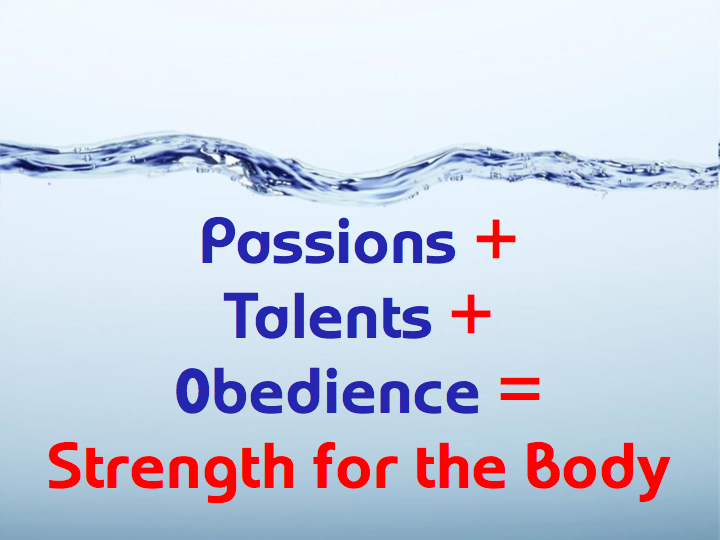
The Holy Spirit gives you sophroneo thinking to reveal your God-implanted gifts and talents to benefit others—to benefit the whole Body of Christ. He helps us turn our talents into strengths by using a formula like this:
Pay attention to your passionate responses to situations, as they will reveal to you some of your gifts.
Listen to areas where others say you are talented. This will help you know how God has wired you.
Then you must be obedient to the prompting of the Holy Spirit in how to use your talents. If you let them sit on the shelf, they will never become strengths. Strengths develop when you passionately and obediently use your God-given talents for God’s glory.
The Holy Spirit wants to help you in all of these areas. Will you let Him?
If you’ve missed any of the messages in the Immersed series, you can find them all here.
I truly believe that God directs our steps. I like Jeremiah’s prayer:
I know, O Lord, that a man’s life is not his own; it is not for man to direct his steps. (Jeremiah 10:23)
I also believe that God gives us talents and strengths, and then puts us in settings where we can use those strengths to glorify Him. Moving to Cedar Springs was truly a God-directed step for my family, and doing so has put us in so many settings where we can all use our talents.
My latest opportunity to use my God-given strengths is as the interim director of the En Gedi Youth Center. This is an outstanding program that provides a safe and constructive environment for students after school. In just a couple of weeks in this new assignment, I’ve already met so many new people and I’ve seen so much more potential. I cannot wait to see what will happen next!
The Cedar Springs Post has an article in this week’s edition about my new temporary assignment (read the full article here). I love this forward-looking quote from the En Gedi Board chair Sue Wolfe:
“Craig is a wonderful gift to En Gedi, our students, and community. He is already involved with many local organizations. The transition from Tom [the first director and current Board member] to Craig has gone well and the board is enthusiastically moving forward in securing a permanent Executive Director,” said Wolfe. “En Gedi is ready to take a leap of faith into the next phase of organization’s goal to open a youth center room in the high school and middle school. We see the need and believe we should now move forward in expanding programs, services, and special events to our community’s youth and families.”
I’m thrilled to be a part of this leap of faith that En Gedi is about to take!
UPDATE: My assignment as “interim” director of this ministry turned into a 10-year-long ministry position!
This is a weekly series with things I’m reading and pondering from Oswald Chambers. You can read the original seed thought here, or type “Thursdays With Oswald” in the search box to read more entries.
Are not my days few? cease then, and let me alone, that I may take comfort a little, before I go whence I shall not return, even to the land of darkness and the shadow of death. (Job 10:20-21)
“I see no way out,” says Job. He lies down, not in weakness, but in absolute exhaustion. Job is not talking in a petted mood, but saying that unless God will be a Refuge for him, there is no way out, death is the only thing. In every crisis of life, as represented in the Old Testament as well as in the teaching of Our Lord, this aspect of God is emphasized—“God is our Refuge”; yet until we are hit by sorrow, it is the last thing we seek for God to be. There is a difference between the weakness of refusing to think and the weakness that comes from facing facts as they really are. Job is seeing for the first time that God is the only Refuge, the only way out for him; yet he cannot get at Him through his creed, it is all confusion; the only thing to do is to fling himself on God.
From Baffled To Fight Better
“The only thing to do is to fling [myself] on God.”
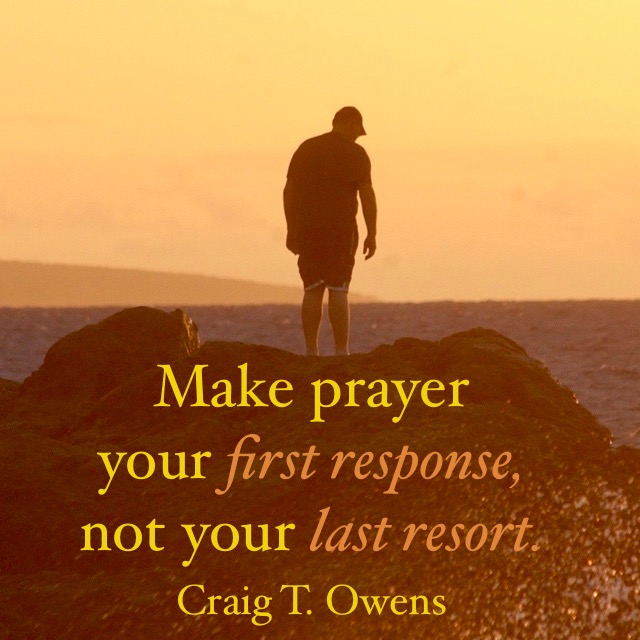
Alas, how many times does this become my last resort! Why don’t I learn to fling myself on God my Refuge as my first resort? I must remember this: For when I am weak, then I am strong. (2 Corinthians 12:10)