Thursdays With Oswald—Conscience

Oswald ChambersThis is a weekly series with things I’m reading and pondering from Oswald Chambers. You can read the original seed thought here, or type “Thursdays With Oswald” in the search box to read more entries.

Conscience 

     Conscience is that innate faculty in a man’s spirit that attaches itself to the highest the man knows, whether he be an atheist or a Christian. The highest the Christian knows is God: the highest the atheist knows is his principles. … 

     When conscience begins to be awakened by God, we either become subtle hypocrites or saints, that is, either we let God’s law working through conscience bring us to the place where we can be put right, or we begin to hoodwink ourselves, to affect a religious pose, not before other people, but before ourselves, in order to appease conscience—anything to be kept out of the real presence of God because where ever He comes, He disturbs. … 

     The majority of us have caught on the jargon of holiness without the tremendous panging pain that follows the awakening to holiness. The Spirit of God brings us to face ourselves steadily in the light of God until sin is seen in its true nature. If you want to know what sin is, don’t ask the convicted sinner, ask the saint, the one who has been awakened to the holiness of God through the Atonement; he is the one who can begin to tell you what sin is. … It is only as we walk in the light as God is in the light that we begin to understand the unfathomable depths of cleansing to which the blood of Jesus Christ goes (1 John 1:7). … 

     When a man begins his life with God there are great tracts of his life that he never bothers his head about, but slowly and surely the Spirit of God educates him down to the tiny little scruple. Every crook and cranny of the physical life, every imagination and emotion is perfectly known to God, and He demands that all these be blameless. … The marvel of the Atonement is just this very thing, that the perfect Savior imparts His perfections to me, and as I walk in the light as God is in the light, every part of bodily life, of affectionate life and of spirit life are kept unblameable in holiness; my duty is to keep in the light, God does all the rest.

From The Philosophy Of Sin

Quick question: What are you going to do the next time the Holy Spirit disturbs your conscience?
Thursdays With Oswald—The Value Of Temptation

Oswald ChambersThis is a weekly series with things I’m reading and pondering from Oswald Chambers. You can read the original seed thought here, or type “Thursdays With Oswald” in the search box to read more entries.

The Value Of Temptation

     Temptation is not sin…. Temptation is something that exactly fits the nature of the one tempted, and is therefore a great revealer of the possibilities of the nature. … A good illustration of temptation is the way steel is tested. Steel can be “tired” in the process of testing, and in this way its strength is measured. … Temptation trains innocence into character or else into corruption. … 

     If the power to disobey were removed, our obedience would be of no value, for we should cease to be morally responsible. It is gloriously possible not to sin, but never impossible to sin, because we are moral agents. Morality must be militant in this order of things, but we can be “more than conquerors” every time. …

     Spiritual life is attained…by moral choices, whereby we test the thing that presents itself to us as being good. … Health is the balance between my physical life and external nature. If the fighting force on the inside begins to dwindle or is impaired, I get diseased, things outside begin to disintegrate my vital force. … The same is true spiritually; if I have enough spiritual fighting capacity, I will produce a character like Jesus Christ’s. Character must be attained, it is never given to us.

From The Philosophy Of Sin

It is interesting to think that what tempts us is a revealer of what’s really inside of us. We need to watch carefully what is enticing us toward sin, because that will help us see the areas of weakness in our lives.

God allows temptation to occur as a means of helping us submit that area of revealed weakness to His control. Lust is wanting something my way, and sin is when I give in to that lust. What I should do instead of giving in is submit that area of weakness to Christ’s Lordship.

I can develop the same character that Jesus Christ exhibited on earth, IF I will allow the Holy Spirit to develop that “vital force” in me. The Holy Spirit doesn’t give me character, but He gives me strength to overcome temptation and thus develop that Christ-like character.

Don’t confuse temptation with sin. But don’t treat temptation lightly either. See temptation for what it really is: (1) a revealer of an area of weakness in your heart, and (2) an opportunity for you to develop Christ-like character.

10 Quotes From “The Psychology Of Redemption”

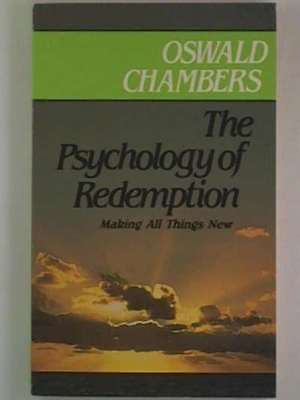
The Psychology Of RedemptionOswald Chambers always gives me a paradigm-expanding look at the Bible and Christianity. In The Psychology Of Redemption (see my book review here), he does so in a unique way, by joining psychology and theology. Here are just a few of the many, many passages I highlighted in this fascinating book.

“Christian Psychology is the study of a supernatural life made natural in our human life by the Redemption.” 

“Sin dwells in human nature, but the Bible makes it very clear that it is an abnormal thing, it has no right there, it does not belong to human nature as God designed it. Sin has come into human nature and perverted and twisted it. The Redemption of God through our Lord Jesus Christ delivers human nature from sin, and then begins the possibility of the manifestation of the life of Jesus in our mortal flesh. We are saved by God’s grace, but, thank God, we have something to do. We must take care to meet God’s supernatural work of grace by our human obedience.”

“The vital relationship which the Christian has to the Bible is not that he worships the letter, but that the Holy Spirit makes the words of the Bible spirit and life to him.” 

“The practicing is ours, not God’s. God regenerates us and puts us in contact with all His divine resources, but He cannot make us walk according to His will. If we will obey the Spirit of God and practice through our physical life all that God has put in our hearts by His Spirit, then when the crisis comes we shall find that we have not only God’s grace to stand by us but our own nature also, and the crisis is passed without any disaster, but exactly the opposite happens, the soul is build up into a stronger attitude towards God.”

“Jesus Christ sets the standard of God’s life in us. We have not to ask what good men have experienced, but to go direct to the Lord Jesus Christ and study His exhibition of the character of God’s normal man.”

“When Christ is formed in us, we are a satisfaction to our Lord and Master wherever He places us. The point of importance is to know that we are just exactly where He has engineered our circumstances. There is no ‘foreign field’ to our Lord.”

“Another evidence of new birth is that we see the rule of God. We no longer see the haphazard of chance for fate, but by the experience of new birth we are in able to see the rule of God everywhere. … We all see the common occurrences of our daily life, but who amongst us can perceive the arm of the Lord behind them? The saint recognizes in all the ordinary circumstances of his life the hand of God and the rule of God, and Jesus says we cannot do that unless we are born from above. … Nothing happens by chance to a saint, no matter how haphazard it seems. It is the order of God.”

“The Sermon on the Mount is a statement of the life we will live when the Holy Spirit is getting His way with us.”

“We have to nourish the life of the Son of God in us, and we do it by obedience, that is, by bringing our natural life into accordance with His life and transforming it into a spiritual life.”

“The curse of much modern religion is that it makes us so desperately interested in ourselves, so overweeningly concerned about our own whiteness. Jesus Christ was absolutely interested in God, and the saint is to be a simple, unaffected, natural human being in dwelt by the Spirit of God. If the saint is paying attention to the Source, Jesus Christ, out of him and unconsciously to him are flowing the rivers of living water wherever he goes (John 7:37-39). Men are either getting better or worse because of us.”

To read more Oswald Chambers quotes, you may want to subscribe to my blog. Every Thursday I publish a lengthy passage from the current Chambers book I am reading. You can subscribe by simply filling in your email address in the blank on the right side of the screen.

I also share Oswald Chambers quotes frequently on both Twitter and Tumblr.

The Psychology Of Redemption (book review)

The Psychology Of RedemptionTo put psychology (a social science) and redemption (a decidedly theological term) together in the same title seems a bit paradoxical. Yet Oswald Chambers was such a well-rounded, well-studied man, that The Psychology Of Redemption seems like a perfect topic for him to tackle!

Chambers himself described these collection of thoughts this way: “Christian Psychology is based on the knowledge of the Lord Jesus Christ, not on the knowledge of ourselves. It is not the study of human nature analyzed and expounded, but the study of the new life that is born in us through the Redemption of our Lord, and the only standard of that new life is our Lord Himself.”

Chambers goes on to explain in this outstanding work that our true self was marred when Adam sinned. We were made by God, so we can best understand ourselves (psychology) when we are reestablished in our original relationship with God (redemption). So the topics that Oswald Chambers goes into in this book are some of the deepest topics of any I have read to-date in his books. But he does it in such an accessible way, that anyone from a novice, to a trained psychologist, to a trained theologian will find value in his thoughts.

Editor David Lambert further advises us: “To profit by this book demands concentrated thought, with Bible in hand, and with a humble eagerness to ‘act on the Word, instead of merely listening to it and deluding yourselves’ (James 1:22).’”

6 Quotes From “The Fi5th Gospel”

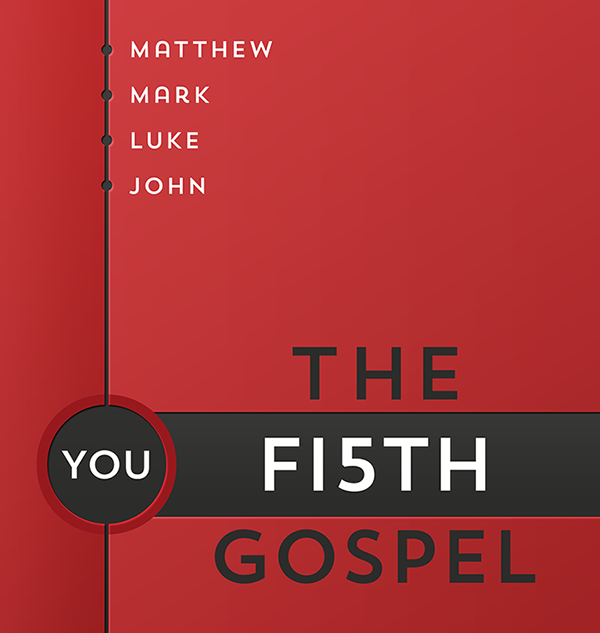
The Fi5th GospelI have been watching the One Minute Apologist videos from Bobby Conway for quite awhile, and find them very helpful. Recently I finished a reading plan in YouVersion based on Bobby’s book The Fi5th Gospel. Here are a few quotes that especially caught my attention.

“If I am the only Gospel people will ever experience are they experiencing the true Gospel?”

“At no other time in human history has God so plainly and blatantly revealed Himself than at Calvary. At no point has He so graphically uncovered His heart for mankind. It was there, on a hill outside Jerusalem, the Messiah bled for us, suffering hellish agony and sin-induced banishment, all the while enduring the brutal wrath of a holy and righteous God.”

“The exclamation point to this graphic love letter to us was the resurrection—Jesus’ conquering moment of triumph over sin, satan, and the grave. This is what Christians are all about right? It’s how we are saved. Take away the Cross and we’re no different from any other religious idea. It’s Jesus Christ, His death and resurrection. Strip away all the modern church fluff and this is what you find at the core of our faith. It’s essential. Nonnegotiable. Undeniable. It’s what makes us who we are. It’s what makes Christians ‘Christian.’ And it’s why Jesus is the answer to all of life’s deepest issues.”

“The sacrifice [God] requires isn’t death on a cross, but rather death to our pride and fear of what other might think. God just wants us to be proud of Jesus and what He has done for us. He wants us to be unashamed of His Son.”

“Though we were originally created in God’s image, God’s reflection in us was marred in the Garden of Eden when Adam and Eve sinned. And though His image wasn’t completely erased, it was defaced and tarnished. When you trusted in Christ, the Holy Spirit began a beautiful work of ‘image restoration’ in you; masterfully remaking you to more accurately reflect God’s virtue. He began sculpting, forming, and transforming your character to better display Christ to the world. You become His image-bearer, and His ongoing work in your life distinguishes you from the world. This is a lifelong process, by the way, and one God is committed to completing.”

“None of us will ever perfectly represent God’s character. As long as we’re on this earth, we’ll have imperfections. And it’s these imperfections that some unbelievers are quick (and happy) to point out and expose. But there is value in listening to what others say, of taking an honest look in the mirror, of stepping into an unbeliever’s shoes to see what they perceive about Jesus and His bride. Think of it as a spiritual awareness-building exercise.”

12 Quotes From “I Stand At The Door And Knock”

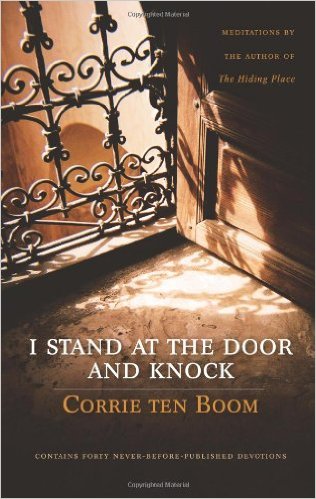
I Stand At The Door And KnockCorrie ten Boom was an amazing woman! To experience the horrors of a Nazi concentration camp, and still retain such a sweet, godly spirit is indeed a miracle of God’s grace. This beautiful spirit of hers come through loud and clear in her book I Stand At The Door And Knock (you may read my book review here). Below are just a few of the many quotes which I highlighted as I read.

“You see, if you and I want to be used, we needn’t rely on ourselves, because it is the Holy Spirit who does it. And that is why we can be at peace in our day-to-day lives. The fact that we wish to be used is a gift from the Holy Spirit in itself.”

“A piece of good advice is to forgive anyone immediately—and I mean immediately— if they say or do something against you. Then the devil won’t have a chance to keep a shadow in your heart.”

“Holiness can bring about a new conflict. We need to take care. The devil wants to lead us into the energy of our inner selves. Preaching yourself, relying on yourself, boasting about your faith, taking pride in your own experiences. And then the devil will say, ‘Revel in your own experiences.’ But that is not right. You should not rely on your past experiences. It may strengthen your faith, but holiness is living out the Jesus Christ living in you.” 

“Imagine, when I had a watchmaker’s shop, you came to me and you bought a gold watch with a gold strap. Imagine that when I wrapped it up for you, I removed the gold strap and hid it. When you came home, you saw that you only had a watch. What would you do? You would say to everybody, ‘Don’t ever buy something from Corrie ten Boom; she doesn’t give you value for money.’ If you and I do not give ourselves entirely to the Lord, we do not give Him the value He has paid for us on the Cross. We were bought at a very high price. That Cross was horrendous. It was an extremely high price to pay for you and me.”

“In my short-sightedness, I thought I had to do everything with my own power, according to my abilities. But everything depends on Hisability, Hispower.”

“The devil may laugh at our plans. He smiles when we are up to our eyes in work. But he quakes when we pray. When we are faithful intercessors he often says to us, ‘Shouldn’t you stop? You have been doing this for such a long time, and can’t you see, the Lord doesn’t listen.’ But he is a liar. Not one of our prayers is lost. … satan laughs when we try hard. He mocks our wisdom, but he trembles when we pray.”

“While I was imprisoned during the war, I knew the Morse code, but it didn’t really help me. What actually supported me was every text and every Christian song I knew by heart. Learning Bible texts and Christian songs by heart is a preparation which we can all do today.”

“Lord Jesus, please forgive us that we so often live a life poor in You, while You suffered so heavily on the Cross so that we would become the King’s rich children. Holy Spirit, open our eyes. Give us a vision, an understanding of our wealth.”

“Religion is no security. The Antichrist will be very religious. A world religion will develop, and he himself will become its god.” 

“Jesus said, ‘Do not let your hearts be troubled.’ Our citizenship is in heaven. We are heaven dwellers. Our home is there.”

“The Bible says, ‘Be filled with the Spirit’ (Ephesians 5:18), which means not only do I have the Holy Spirit, but also does the Holy Spirit have me?”

“We should not rely on our capacities, but on God’s capacities. We shouldn’t draw from our limited resources, but from His immense power.”

I will also be sharing some of Corrie’s quotes on Twitter and Tumblr, so follow me there for more great content.

5 Quotes On Mercy From “The Blessing Of Humility”

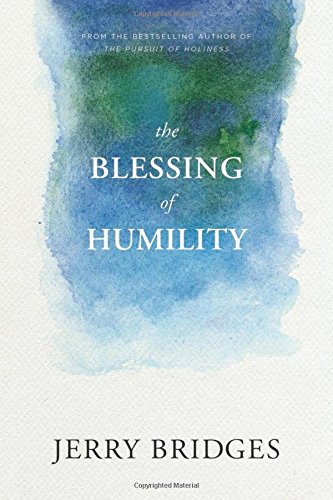
The Blessing Of HumilityAs I stated in my review of Jerry Bridges’ book The Blessing Of Humility, reading through these thoughts slowly—Beatitude by Beatitude—would bring about the most life-changing impact. In that spirit, I will be sharing some noteworthy quotes one Beatitude at a time. Here are some quotes on blessed are the merciful (Matthew 5:7)…

“The first four character traits of the Beatitudes…all address our internal character and our relationship to God. Here in this Beatitude, ‘Blessed are the merciful,’ Jesus begins to address our relationship with other people.”

“Note the subtle distinction between compassion and mercy. The Samaritan had compassion [Luke 10:33] and then showed mercy [v. 34-35].”

“Mercy expresses itself in two general areas: In the temporal sense, mercy seeks to meet the physical needs of others, as the Good Samaritan did in Jesus’ parable. The second way mercy expresses itself is granting forgiveness to those who have sinned against us.”

“The magnitude of our sin is not measured by its effects on other people but by its assault upon the infinite majesty and holiness of God.”

“To forgive others means we regard ourselves as ten-thousand-talent debtors [Matthew 18:23-35].” 

 I have previously shared quotes on:

Quotes on the next Beatitude will be posted soon. Stay tuned…

6 Quotes On Mourning From “The Blessing Of Humility”

The Blessing Of HumilityAs I stated in my review of Jerry Bridges’ book The Blessing Of Humility, reading through these thoughts slowly—Beatitude by Beatitude—would bring about the most life-changing impact. In that spirit, I will be sharing some noteworthy quotes one Beatitude at a time. Here are some quotes on blessed are those who mourn (Matthew 5:4)…

“The word that Jesus used in this Beatitude is the strongest word in the Greek language for mourning. It is the word for Jacob’s morning over what he thought was the death of Joseph (Genesis 37:35). … Jesus uses this word to show the intensity of mourning He blesses here. He is, however, actually talking about mourning not over death but over our sin.”

“To be ‘poor in spirit’ is to be convicted of one’s sin, whereas to ‘mourn’ is to be contrite for it.” —John Blanchard

“King David committed two sins: first adultery, and then (essentially) murder to try to cover up his adultery. God sent the prophet Nathan to confront him, and in his skillful accusation of David, Nathan twice used the word despised (2 Samuel 12:7-11). First, David despised the Word of the Lord—that is, he despised the law of God (verse 9). In so doing, he also despised the Person of God (verse 10). Why is this true? Despising the law of God is not only an expression of rebellion. It is also a despising of His very character, since His law is a reflection of His character. This is true not only of such heinous sins as adultery and murder, but also of our more refined sins: pride, selfishness, gossip, and the like. So let us pray that God will indeed allow us to see our sin as rebellion against the rule of God—a despising of God’s law and even of His character.”

“Failure to see our sin as primarily against God is, I believe, the reason we experience so little heartfelt grief over it. … But be it ever so small in our own eyes, whenever we sin we also break God’s law. And Scripture says, ‘Whoever keeps the whole law but fails in one point has become accountable for all of it’ (James 2:10). God’s law is seamless, one complete whole. So when we break any of it, we break the whole law.”

“Is mourning over sin just for those first coming to Christ? No, Jesus’ words are in the present active tense. We could literally translate them as ‘blessed are those who continue to mourn.’ He is pronouncing a blessing on those whose attitude toward their sin is characterized by mourning. One mark of a growing Christian, then, is a growing sense of his or her sin, and an attitude of mourning over it.”

“So mourning over our sin is truly a display of humility in action. We cannot be proud and mourn over sin at the same time. We cannot be judgmental toward other believers, or even toward unbelievers, if we are truly contrite and brokenhearted over our own sin.”

I just shared quotes on blessed are the poor in spirit. Quotes on the next Beatitude will be posted soon. Stay tuned…

Thursdays With Oswald—Is It Human Or Divine?

Oswald ChambersThis is a weekly series with things I’m reading and pondering from Oswald Chambers. You can read the original seed thought here, or type “Thursdays With Oswald” in the search box to read more entries.

Is It Human Or Divine? 

     It is easy to say that human love and Divine love are one and the same thing; actually they are very far from being the same. It is also easy to say that human virtues and God’s nature are one and the same thing; but this, too, is actually far from the truth. We must square our thinking with facts. Sin has come in and made a hiatus between human and Divine love, between human virtues and God’s nature, and what we see now in human nature is only the remnant and refraction of the Divine. Human virtues according to the Bible are not promises of what human nature is going to be, but remnants of what human nature once was. … 

     As Christians we must learn to trace things to their right source. God makes very distinct the difference between the qualities that are Divine and those that are human. John 15:13 has reference to human love, which lays down its life for its friends. Romans 5:8 has reference to the Divine love, which lays down its life for its enemies, a thing human nature can never do.

From The Psychology Of Redemption

We must be very careful about looking at our life, and then trying to match it up with something we see in Scripture. It should always be the other way around—look at Scripture first, and then see if my life squares with what I see in God’s Word.

Even harder: see if my life squares with what I see in the life of Jesus as presented to me in God’s Word.

In Psalm 139 David began His prayer by saying, “God, You have searched me thoroughly, and You know me completely.” Then he ended his prayer by inviting God to search him yet again. This should be the ongoing posture and attitude of a Christian: asking the Holy Spirit to constantly show us where our lives fall short of the Christian lifestyle presented in the Bible.

6 Quotes On Being Poor In Spirit From “The Blessing Of Humility”

The Blessing Of HumilityAs I stated in my review of Jerry Bridges’ book The Blessing Of Humility, reading through these thoughts slowly—Beatitude by Beatitude—would bring about the most life-changing impact. In that spirit, I will be sharing some noteworthy quotes one Beatitude at a time. Here are some quotes on blessed are the poor in spirit (Matthew 5:3)…

“The Greek word that Jesus used for ‘poor’ is the word ptochos. It is used to describe not ordinary poverty but abject poverty. Ptochos is not like my parents struggling to make ends meet [during the Great Depression]. Rather it describes a person who is completely destitute and helpless to do anything about it.”

Spirit refers to one’s inner being, our self-awareness. Specifically here it means how we evaluate ourselves with regard to our own spiritual condition. This abject poverty of spirit comes from our awareness of our own dreadfully sinful condition.”

“In the Beatitudes Jesus is talking about the character traits of those already in the kingdom. And He says we should be poor in spirit. It should be the ongoing daily attitude of one who is growing spiritually. Believers who are growing continue to see more sin in their lives. It is not that they are sinning more; rather they are becoming more aware of and more sensitive to the sin that has been there all along. … And it is the realization that even the sins, which seems so minor in our eyes, would bring us under the wrath of God, were it not for the atoning blood of Christ shed for us on the Cross, that should cause us to be poor in spirit.”

“Those who are poor in spirit…see Christ’s blood and righteousness as their hope not only for eternity but for God’s favor each day. They groan over their sin and earnestly pursue holiness but they do not trust in their holiness. Instead they say, ‘We are unworthy servants; we have only done what was our duty’ (Luke 17:10).”

“The person who is poor in spirit has a deep, awe-filled reverence for God and His Word.”

“We live in a culture that promotes self-esteem. And I am concerned that this attitude has permeated the body of Christ. We see ourselves as better than we are. We look at sinful society around us, and we can be like the Pharisee who prayed, ‘God, I think You that I am not like other men’ (Luke 18:11).”

Quotes on the next Beatitude will be posted soon. Stay tuned…