Quality Over Quantity

Listen to the podcast of this post by clicking on the player below, and you can also subscribe on AppleSpotify, or Audible. 

I had a great time on the Ailbe Podcast with Rusty Rabon. 

Rusty referred to the opening chapter of my book Shepherd Leadership: The Metrics That Really Matter where I talk about how many of our churches and church leaders are attempting to climb the wrong ladder of success. Rusty noted how many people become frustrated because they are not seeing the success the way that so many people define it.

Before addressing frustrated pastors, I first spoke to the board members that are supporting that pastor. 

In Shepherd Leadership I wrote,

“Businesses think in terms of quantitative gains—things they can count—but churches and nonprofits should be thinking in terms of qualitative gains—a quality improvement that isn’t as easily counted. I think we all know this, and yet we still persist in wanting to define success in a church or a nonprofit by those quantitative standards such as attendance growth, donations, and the like. When we think qualitative over quantitative, suddenly what seemed “small” is so significant and so valuable that it cannot be calculated!”

I’ll be sharing more clips from this interview soon, so please stay tuned. If you would like to check out the other clips I have already shared from this podcast, please check them out here. Shepherd Leadership: The Metrics That Really Matter is available in print or ebook, and in audiobook through either Audible or Apple. 

►► Would you please prayerfully consider supporting this ministry? My Patreon supporters get behind-the-scenes access to exclusive materials. ◀︎◀︎
“Doing” Church

Listen to the podcast of this post by clicking on the player below, and you can also subscribe on AppleSpotify, or Audible. 

I had a great time on the 200churches podcast with Jeff Keady. 

Jeff and I talked about some of the changes pastors and churches were forced to confront during the COVID shutdowns. For me, this was a time for my leadership team to examine why we “do church” the way we do. These shutdowns helped us identify the things that were biblical and non-biblical. 

One of the reasons I gave the subtitle “The Metrics That Really Matter” to my book was because of the frustration I saw in so many pastors who were feeling unsuccessful. I discovered that their frustration was largely due to trying to live up to metrics that simply aren’t found in the pages of Scripture. As I wrote in the preface of my book—

My larger concern is that churches, parachurch organizations, and nonprofit ministries that are largely founded to fulfill a biblical mandate are straying from the simple, freeing truths found in the Bible. Or maybe I should say that they are adding things to their ministries that aren’t in the pages of Scripture. Whichever way you want to say it, the result is the same: We are using the wrong metrics to define “success” for our ministries. I fear that in our focus on unbiblical practices, we are missing the joy of really doing ministry. 

Our ministry should be joyful to us as leaders and joy-giving to those to whom we are ministering. If it’s draining instead of fulfilling, that may be an indication that we are trying to gauge success by monitoring non-biblical metrics. 

If you want to dig into this a bit more, check out two previous posts I wrote: 

I’ll be sharing more clips from this 200churches interview soon, so please stay tuned. Shepherd Leadership: The Metrics That Really Matter is available in print or ebook, and in audiobook through either Audible or Apple. 

►► Would you please prayerfully consider supporting this ministry? My Patreon supporters get behind-the-scenes access to exclusive materials. ◀︎◀︎
Links & Quotes

Dan Reiland shares 5 reasons leaders stumble and fall.

Max Lucado addresses the sickening news of sexual abuse coverups in the church. He wrote, “[Jesus] defended the weak, stood up for the forgotten. The idea that His church would be unsafe for His sons and daughters disturbs Him deeply. And you can bet your Bible that He’ll turn a few tables. If history teaches us anything it is this: Jesus will not sit idle while His church drifts from His cause. ‘I will rescue My flock from their mouths,” He declared through a prophet. ‘It will no longer be food for them’ (Ezekiel 34:10). 

“Repentance is necessary; heartfelt, tear-stained, face-on-the floor repentance. By all of us in positions of leadership. Will we see it? I pray so. Regardless, I pray that you will pursue the difficult path of seeking Christ in spite of Christians who have let you down. His pastors have failed to pastor. But when they don’t, He still does. Let Him pastor you.”

Darren Carlson wrote, “Healthy pastors experience the fullness and complexity of their emotions, and then hold them up against the sinlessness of Christ. How might Jesus respond to the pain and loss and victory and neediness in front of me? We grow emotionally as leaders by studying the heart of Jesus as he walks among sinners and sufferers.” His post ‘Healthy Pastors Have Emotions: How to Test and Cultivate Your Feelings’ is an excellent read. I explore the emotional health of shepherd pastors in my book.

Nicky Cruz’s story is a fascinating one. His message for America today should be heeded!

My friend Greg Heeres and I had a helpful discussion about leaders and forgiveness on our Craig And Greg Show podcast. Here is a brief snippet:

How Godly Leaders Prosper

Listen to the podcast of this post by clicking on the player below, and you can also subscribe on AppleSpotify, or Audible. 

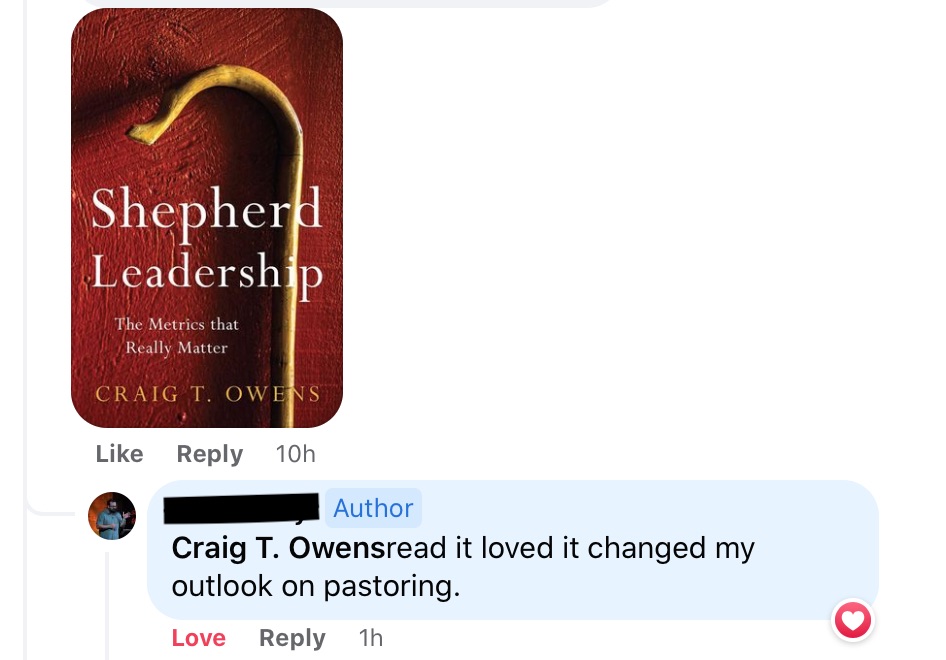
I’ve been presenting a series of exclusive leadership lessons to my Patreon supporters, but I wanted to make this particular lesson available to everyone because of its overlap with my book Shepherd Leadership: The Metrics That Really Matter.

I would be honored if you would support this ministry through your support on Patreon. Your gift of just $5/month helps me to keep providing all of the free content that’s on my blog and my YouTube channel. In addition to these leadership lessons from Daniel, you will also receive book quotes, Bible study tools, and a whole host of other helpful items. 

You can check out more information about my book Shepherd Leadership by clicking here. 

Soul Friends

Listen to the podcast of this post by clicking on the player below, and you can also subscribe on AppleSpotify, or Audible. 

I had a great time on the Ailbe Podcast with Rusty Rabon. 

Rusty referred to a chapter in my book called ‘Going Farther,’ where I talk about the importance of a shepherd leader having strong, godly friends close by.  

I learned a long time ago that there is a reason that the word “saints” is always in the plural—never in the singular—throughout the New Testament. I also share a couple of notable Old Testament examples of leaders who stumbled when they tried to go alone. 

In Shepherd Leadership: The Metrics That Really Matter I wrote, “You will not only extend your leadership by having other servant-hearted shepherds around you, but you will also have a guard against the aloneness that led to such ugly warts on the biography of otherwise powerful leaders such as David, Elijah, and Peter.” 

I’ll be sharing more clips from this interview soon, so please stay tuned. If you would like to check out the other clips I have already shared from this podcast, please check them out here. Shepherd Leadership: The Metrics That Really Matter is available in print or ebook, and in audiobook through either Audible or Apple. 

►► Would you please prayerfully consider supporting this ministry? My Patreon supporters get behind-the-scenes access to exclusive materials. ◀︎◀︎

Links & Quotes

“Ministers should be persons of the same quiet, lamb-like spirit that Christ was of, the same spirit of submission to God’s will, and patience under afflictions, and meekness towards men; of the same calmness and composure of spirit under reproaches and sufferings from the malignity of evil men; of the same spirit of forgiveness of injuries; of the same spirit of charity, of fervent love and extensive benevolence; the same disposition to pity the miserable, to weep with those who weep, to help men under their calamities of both soul and body, to hear and grant the requests of the needy, and relieve the afflicted; the same spirit of condescension to the poor and mean, tenderness and gentleness towards the weak, and great and effectual love to enemies.” —Jonathan Edwards

“God has promised to supply all our needs. What we don’t have now, we don’t need now.” —Elizabeth Elliot

In my book Shepherd Leadership: The Metrics That Really Matter, I talk about how important it is for us to get a good night’s sleep to keep our leadership skills sharp. Sleep is also vitally important to help in the battle against overcoming temptations.

A groundbreaking paper was released this year that appears to debunk evolutionary theories once again. Check out this commentary from John Stonestreet’s podcast.

“There’s no such thing as a spiritual vacuum in the cosmos. Whatever of our time, attention, interest, or strength is not devoted to the Lord, and His Kingdom and glory, will become susceptible to being taken over by contrary interests. These often take the form of false teachers who appeal to our selfish interests and encourage us to make of the faith of Jesus Christ a kind of spiritual smorgasbord for whatever we think we need. We leave off the solid food of sound doctrine and dabble in the sweets and crunchies of mere self-interest—if we spend any time in the Word of God at all. Our mind enters a period of arrested development which will become permanent atrophy unless serious measures are engaged.” —T.M. Moore

“Always make your gratitude greater than your success.” —Dan Sullivan & Catherine Nomura

What Do We Mean By “Grow”?

Listen to the podcast of this post by clicking on the player below, and you can also subscribe on AppleSpotify, or Audible. 

I had a great time on the 200churches podcast with Jeff Keady. 

Jeff asked me how the challenges of the last couple of years affected the thoughts that went into writing my book Shepherd Leadership. I explained to him how my conversation with a local pastor actually created the subtitle of the book: The Metrics That Really Matter.  

In another recent conversation on The Craig And Greg Show, I talked about a comical conversation I had with a church board about their definition of the word “grow.”

In Shepherd Leadership, I wrote, 

Growth and success may need to be redefined in your church or ministry. If you’ve been thinking that success is a steadily upward climb in attendance or donations, or a bigger facility, or more people on staff, then it would appear that the ministries of Philip, Paul, and even Jesus were highly unsuccessful. We’ve already seen that Philip went from a large revival in Samaria to one person in the desert. Paul came to the end of his life telling Timothy how many of his companions had abandoned him. And Jesus started His public ministry with twelve emerging leaders, only to see one betray Him, nine run away when He was arrested, and one deny that he even knew Him. When we come up with our plans to “grow” our ministry, or we say “success” is all about what we can count, aren’t we really just self-promoting? 

Godly shepherd leaders need to make sure that they are concentrating not on more sheep, but on greater health. Remember: the shepherd doesn’t give birth to sheep, but the shepherd creates a healthy environment for the sheep to reproduce.

I’ll be sharing more clips from this 200churches interview soon, so please stay tuned. Shepherd Leadership: The Metrics That Really Matter is available in print or ebook, and in audiobook through either Audible or Apple. 

►► Would you please prayerfully consider supporting this ministry? My Patreon supporters get behind-the-scenes access to exclusive materials. ◀︎◀︎
Stop Self-Promoting

Listen to the podcast of this post by clicking on the player below, and you can also subscribe on AppleSpotify, or Audible. 

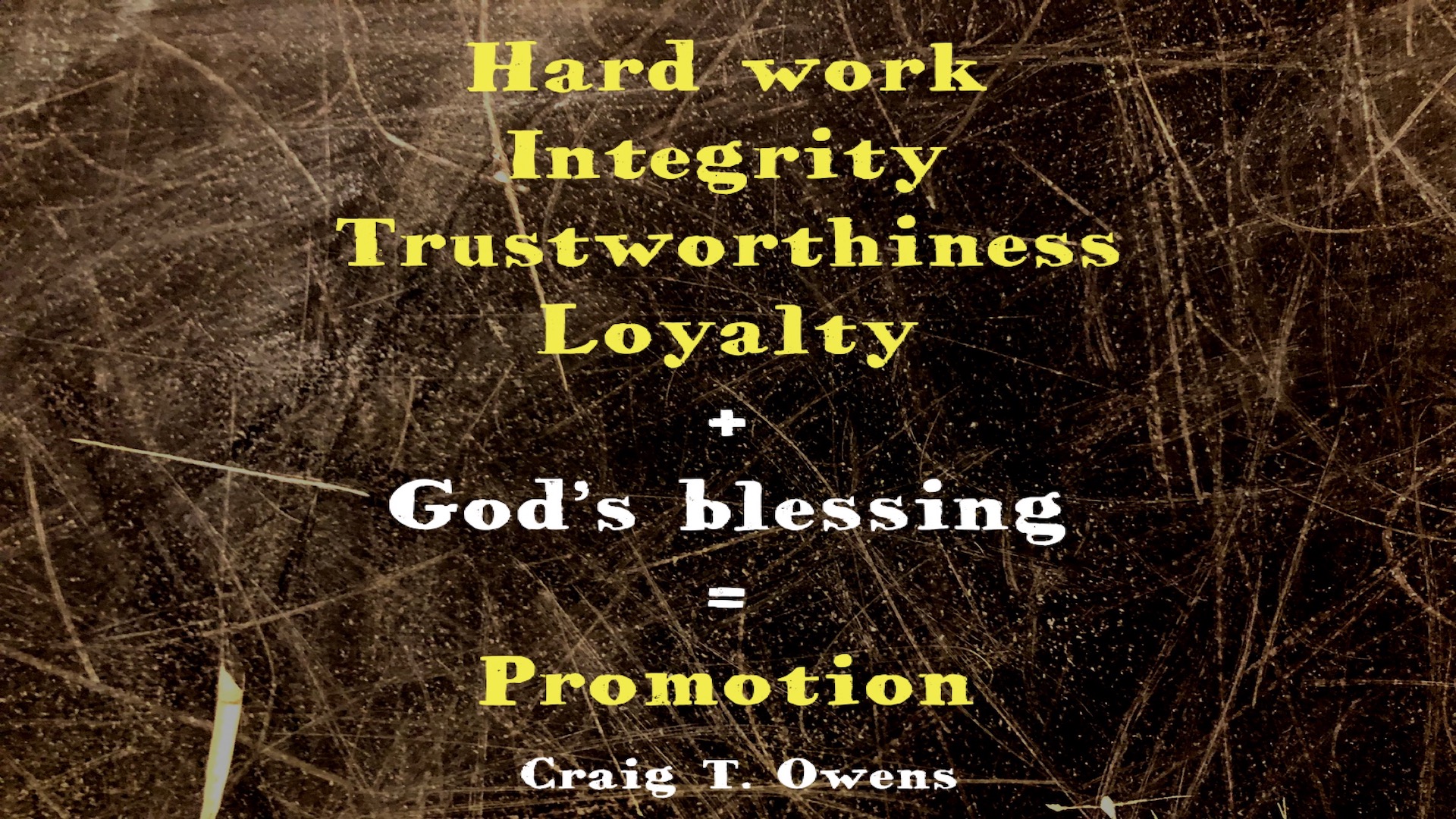
My book Shepherd Leadership: The Metrics That Really Matter opens with a chapter ‘The Wrong Ladder.’ This chapter is a reminder that we don’t have to figure out which ladder to climb in order to be successful. The last chapter of my book is entitled ‘Applause,’ which begins with the words, “Self-promotion is an anti-God attitude.” 

Throughout the Bible we never see people polishing up their résumés. There is no angling among godly leaders for who should get the prominent position. When some of the disciples of Jesus momentarily engaged in this kind of thinking, Jesus quickly corrected them. 

Often we see God taking obscure people and vaulting them to a position of prominence. Sometimes they will remain in that position until the day they die, and sometimes God will remove them after a rather short period of time. 

God prepares people, God promotes people, and God removes people as He sees best.

This is never more true than in the story of Daniel. “So Daniel prospered during the reign of Darius and the reign of Cyrus the Persian” (Daniel 6:28). In fact, for most of Daniel’s life, he is in a prominent leadership position. Daniel prospered, but he did so because God promoted him. Daniel never sought a position, and even if he was removed from a position, he didn’t try to retain it nor regain it.

Daniel knew God was in control, and he trusted His timing.

I’ve been sharing a series of leadership lessons from the life of Daniel with my Patreon supporters. Check out this brief clip from a lesson I entitled “No Self-Promotion.” 

If you are a Christian leader, I challenge you to stop polishing up your résumé. Whether you have a résumé that looks great or not, God will still place you where He needs you, when He needs you to be there. Remember: “Self-promotion is an anti-God attitude.” 

I would also ask you to consider becoming one of my Patreon supporters. For just $5 per month, you will have access to my exclusive content, and you will be helping to support the free side of this ministry.

Shepherd Leadership: The Metrics That Really Matter is available in print or ebook, and in audiobook through either Audible or Apple.

Sabbathing For Health

Listen to the podcast of this post by clicking on the player below, and you can also subscribe on AppleSpotify, or Audible. 

I had a great time on the Ailbe Podcast with Rusty Rabon. 

Rusty wanted to dig a little deeper into the five chapters I wrote about a shepherd’s health. Quite simply, we cannot give to others what we do not possess ourselves, so if the shepherd isn’t mentally, physically, spiritually, and emotionally healthy, he cannot give health to the sheep under his care. 

Rusty and I specifically chatted about what Jesus did to remain at optimal physical health, because as I point out, without physical health it’s hard to be healthy in any of the other areas.  

As I mentioned, in Shepherd Leadership: The Metrics That Really Matter I take five chapters to unpack all of the various aspects of a leader’s health, along with some practical steps anyone can take. I’d also encourage you to check out this post on how Jesus practiced sabbathing during His earthly ministry. 

I’ll be sharing more clips from this interview soon, so please stay tuned. If you would like to check out the other clips I have already shared, they are located here, here, here, and here. Shepherd Leadership: The Metrics That Really Matter is available in print or ebook, and in audiobook through either Audible or Apple. 

►► Would you please prayerfully consider supporting this ministry? My Patreon supporters get behind-the-scenes access to exclusive materials. ◀︎◀︎

Links & Quotes

I came across a passage from a blog post I wrote 10 years ago, but it is still so timely for today: “Pastors, we can become so focused on the next sermon, the next appointment, the next Board meeting, the next outreach that we are actually worshiping the ministry instead of worshiping God through our ministry. When we are more focused on the work than on God, we can easily begin to feel over-worked and under-appreciated.”

“Stay with your Lord, however long the night, for only in Him have you hope of the morning!” —Charles Spurgeon

“I shall not demean my own uniqueness by envy of others. I shall stop boring into myself to discover what psychological or social categories I might belong to. Mostly I shall simply forget about myself and do my work.” —Clyde Kilby

Sean McDowell has an informative conversation with Titus Kennedy on the archeological evidence for the people and places in the Bible.

Jonathan Edwards wrote words that resonate with my message about pastors following the example of the Great Shepherd Jesus. “The ministers of Christ should be persons of the same spirit that their Lord was of: the same spirit of humility and lowliness of heart; for the servant is not greater than his Lord. They should be of the same spirit of heavenly-mindedness and contempt of the glory, wealth, and pleasures of this world: they should be of the same spirit of devotion and fervent love to God: they should follow the example of His prayerfulness; of whom we read from time to time of His retiring from the world, away from the noise and applauses of the multitudes, into mountains and solitary places, for secret prayer, and holy converse with his Father….” —Jonathan Edwards

“Wonderful things are told in this book [Daniel]. To those who find it difficult to believe these things, we say: let us remember that for one thousand years God had been nurturing the Hebrew nation for the purpose of establishing, through that nation, in a world of idol-worshiping nations, the idea that God is God. Now God’s nation had been destroyed by a nation that worshiped idols. That was plain evidence to all the world that the gods of Babylon were more powerful than the God of the Jews. It was a crisis in God’s struggle with idolatry. If ever there was a time when God needed to do something to show who He is, it was during the Babylonian exile. Strange indeed it would have been if nothing unusual had happened. Hard as it may be to believe these miracles, it would be harder to believe the rest of the story without them.

“At least the Jews, who from the very beginning had always been falling into idolatry, were now at last, in the Babylonian exile, convinced that their own God was the true God. These miracles also had a powerful influence on both Nebuchadnezzar and Darius (3:29; 6:26).” —Halley’s Study Bible