Thursdays With Oswald—Knowledge And Innocence

This is a weekly series with things I’m reading and pondering from Oswald Chambers. You can read the original seed thought here, or type “Thursdays With Oswald” in the search box to read more entries.

Knowledge And Innocence 

     Knowledge of evil broadens a man’s mind, makes him tolerant, but paralyzes his action. Knowledge of good broadens a man’s mind, makes him intolerant of all sin, and shows itself in intense action. 

From Biblical Psychology

The Apostle Paul said it this way, “I want you to be wise about what is good, and innocent about what is evil” (Romans 16:19).

I love how Secret Service agents are trained to spot counterfeit money. They don’t study the fake, but they study the real. They learn everything there is to know about genuine, authentic currency so that they are able to spot counterfeit currency easily.

I need to put this into practice in my own life. I don’t need to study evil; I just need to be thoroughly immersed in the truth of Scripture. That will broaden my mind, help me to spot all counterfeit ideas, and prepare me to take intense action.

Be knowledgeable about what is good. Be innocent about what is evil.

Getting Out Of The Hole

Yesterday in part two of our Immersed series, we looked at how helpless we are in trying to break free from sin’s pull on our lives. That is, we are helpless to help ourselves.

But with the Holy Spirit’s help, we go from helpless to hopeful!

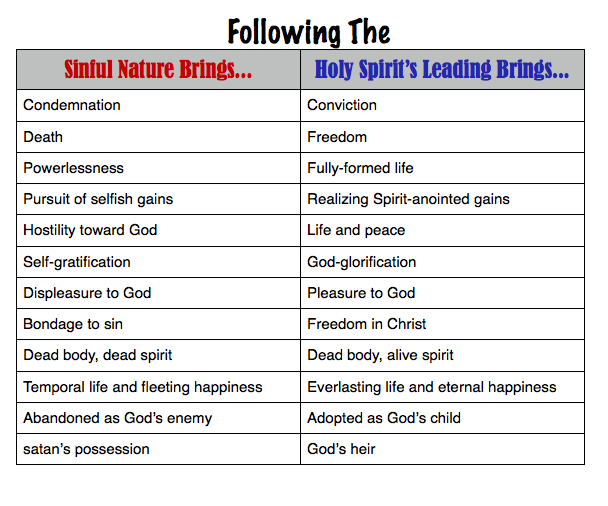
In Romans 8, there are all of these contrasting statements about the sinful life versus the Spirit-led life. Our hope to move into the Spirit-led life turns on this phrase in verse 15: but by the Spirit. It is only by God’s Spirit that we can break free. To help illustrate this point, I read a rather long passage from C.S. Lewis’ Mere Christianity. Several people have asked to see this, so here it is—

“Now what was the sort of ‘hole’ man had got himself into? He had tried to set up on his own, to behave as if he belonged to himself. In other words, fallen man is not simply an imperfect creature who need improvement: he is a rebel who must lay down his arms. Laying down your arms, surrendering, saying you are sorry, realizing that you have been on the wrong track and getting ready to start life over again from the ground floor—that is the only way out of a ‘hole.’ This process of surrender—this movement full speed astern—is what Christians call repentance. Now repentance is no fun at all. It is something much harder than merely eating humble pie. It mean unlearning all the self-conceit and self-will that we have been training ourselves into for thousands of years. It means killing a part of yourself, undergoing a kind of death. In fact, it needs a good man to repent. And here comes the catch. Only a bad needs to repent: only a good man can repent perfectly. The worse you are the more you need it and the less you can do it. The only person who could do it perfectly would be a perfect person—and he would not need it.

“Remember, this repentance, this willing submission to humiliation and a kind of death, is not something God demands of you before He will take you back and which He could let you off is He chose: it is simply a description of what going back to Him is like. If you ask God to take you back without it, you are really asking Him to let you go back without going back. It cannot happen. Very well, then, we must go through with it. But the same badness which makes us need it, makes us unable to do it. Can we do it if God helps us? Yes, but what do we mean when we talk of God helping us? We mean God putting into us a bit of Himself.

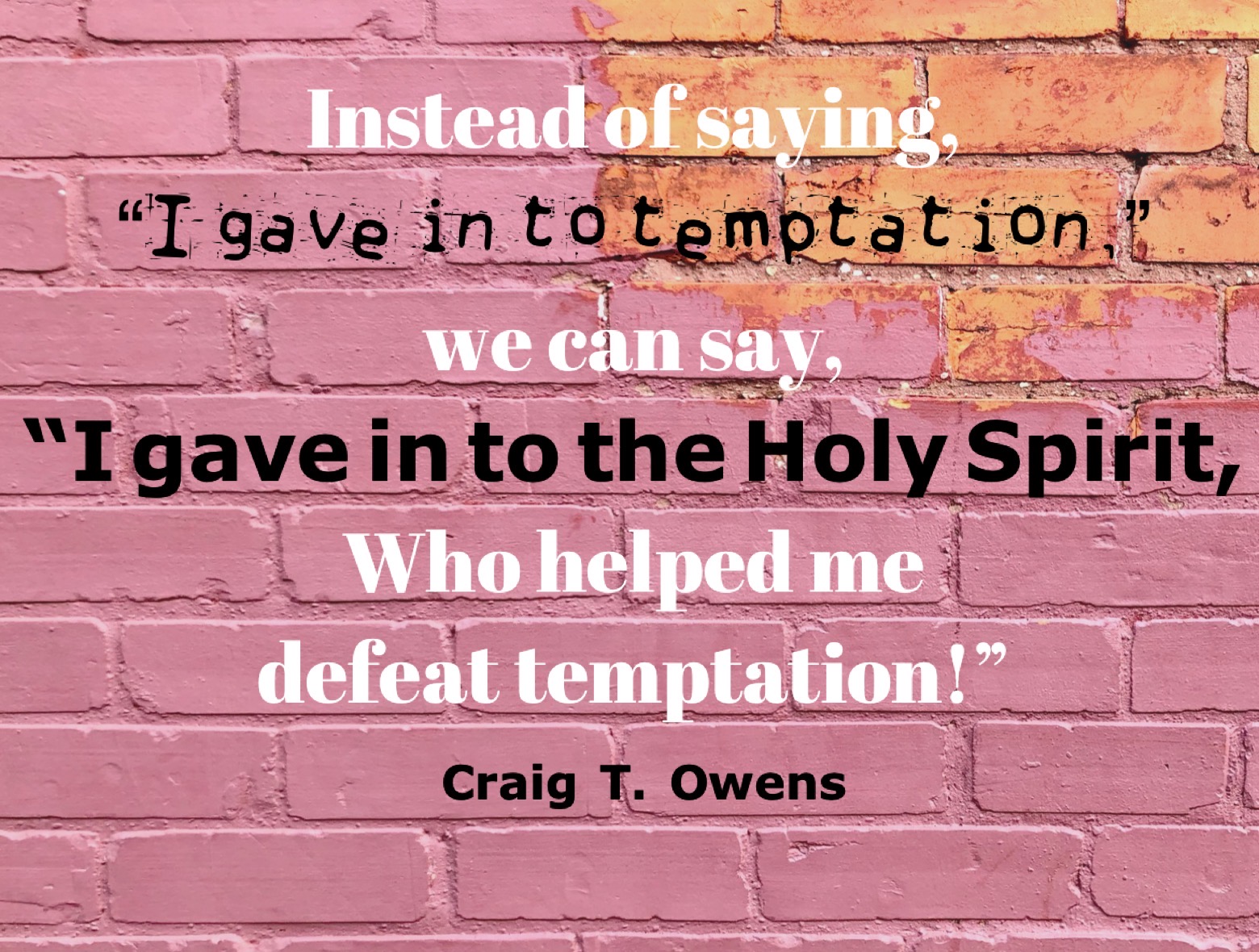
When we invite Christ into our lives, He places “a bit of Himself” in us: the Holy Spirit. That enables us to be perfectly forgiven.

But then when we allow the Holy Spirit to immerse us in Himself, it’s not just “a bit of Himself” we get, but all of Him. This opens the door to deeper intimacy, greater closeness, and a more God-glorifying life!

I want to live immersed!

If you’ve missed any of the messages in the Immersed series, you can find them all here.
Do You LOVE Your Church?

Okay, pastors, here are some tough questions:

  • Do you love your congregation?
  • Do you think they’re some of the greatest people on earth?
  • If you didn’t pastor your church, would you attend your church?
  • Do you enjoy recreating with your church family?

This is an important principle: You cannot treat someone differently than you think about them.

Listen to what Paul said about the church in Rome:

I myself am convinced, my brothers, that you yourselves are full of goodness, complete in knowledge and competent to instruct one another. (Romans 15:14)

Do you hear what high regard Paul had for them? He told them that they were good people, growing in their relationship with Christ, and were competent to be teachers themselves!

Not only did Paul write this to them, but he bragged about them to others too:

Everyone has heard about your obedience, so I am full of joy over you. (Romans 16:19)

Pastor, Jesus called us to feed and care for His sheep. We can do this so much more effectively if we think so highly of those precious people.

I pray that you can answer a resounding, whole-hearted “YES!” to those four opening questions. I think that’s what Jesus would want.

If I Only Would Have Thought That Through…

These words are usually said after we have messed up something. We look back and say, “What was I thinking?!”

The truth is: you were thinking, it was just wrong thinking.

The Apostle Paul writes this:

Clothe yourselves with the Lord Jesus Christ, and do not think about how to gratify the desires of the sinful nature. (Romans 13:14)

The King James Version, instead of do not think, says, “make no provision for the flesh.” In other words, the idea here is forethought.

We have a filter at the base of our brains called the reticular activating system (or R.A.S.). This is what lets in the important things, and keeps out the unimportant things. But here is the vital issue—

YOU CAN PROGRAM YOUR R.A.S.!

You tell your RAS what’s important and what’s unimportant. Paul says that if we use our forethought to consciously decide to clothe ourselves with Christ, we are programming our RAS to spot the things that glorify Him and ignore the things that gratify our fleshly desires.

A phrase that I use often (hat tip to Dr. Richard Dobbins) is: I need to think about what I’m thinking about.

By doing this, I’m able to see how I’ve programmed my RAS. It’s either programmed to look for God-honoring things or flesh-gratifying things.

Try it for yourself. Make the conscious decision to read the Bible every day. Then in your prayer time, ask the Holy Spirit to help you think about God-honoring things. If you will do this, you will notice that you are noticing more things that please God, and that you are ignoring more things that please your sinful nature.

The Hard Word

As a pastor, you are going to have to deliver the hard word from time to time. You will have to address touchy subjects, both corporately and privately. It is very instructive to see how the apostle Paul approached the hard word.

In Romans 9, Paul is getting ready to address one of the most sensitive subjects of his day. The Jews felt they were “in” with God just because they were Jews, and the Gentiles were “out” with God just because they weren’t Jews. Paul is going to have to deliver the word that both Jews and Gentiles can be accepted by God because of what Jesus did on the Cross.

So notice how he begins:

I speak the truth in Christ—I am not lying, my conscience confirms it in the Holy Spirit—I have great sorrow and unceasing anguish in my heart.

1. I speak the truth in Christ. It wasn’t his opinion, but the word from God. I must settle this matter before delivering the hard word. Far too often we can put our preferences on par with God’s Word. I cannot do this!

2. My conscience confirms it in the Holy Spirit. Before I speak a hard word that people may not like to hear, I need to make sure my conscience is right before the Holy Spirit. He alone confirms His Word. The reaction of the audience, however, may or may not confirm what God says.

3. I have great sorrow and unceasing anguish in my heart. It should be a major red flag if I looked forward to delivering a painful/challenging/correcting word. I need to put myself in their place, not try to put someone else in their place!

My job as a pastor is not to condemn, nor even to convict; the Holy Spirit will do that. My job is to (a) hear God’s truth, (b) get my conscience right with the Spirit, and (c) empathize with people as I lovingly speak the truth to them.

Getting A Checkup

Probably almost everyone has heard the so-called Golden Rule that Jesus gave us:

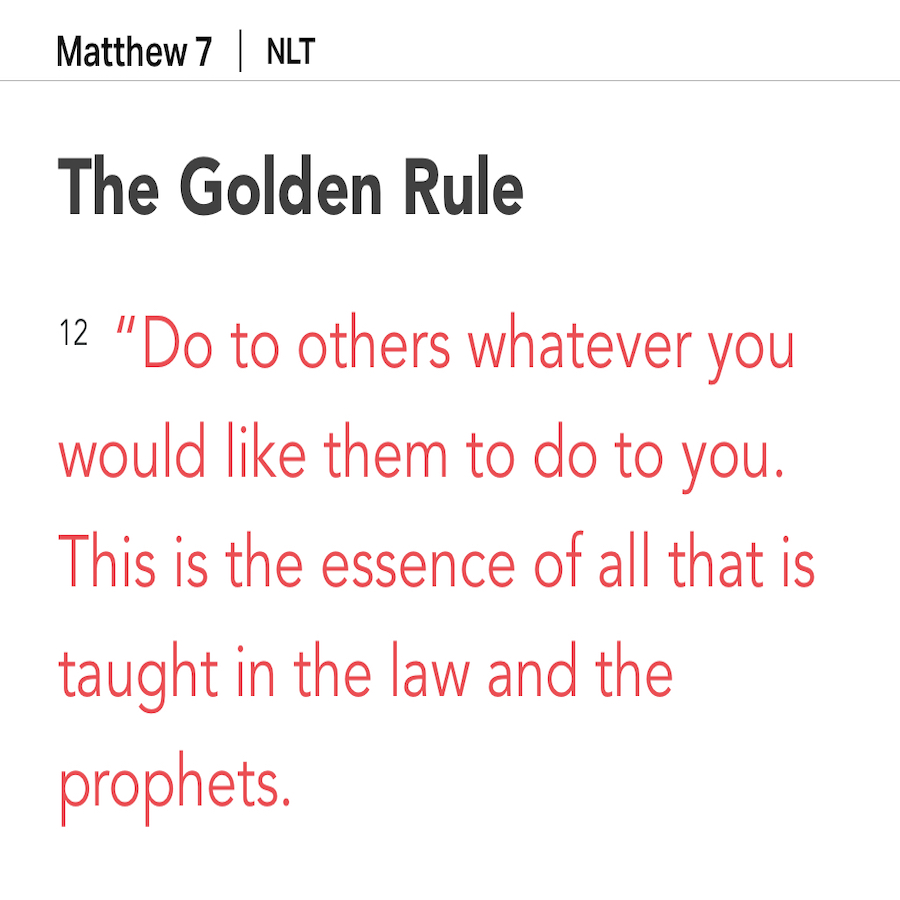
So in everything, do to others what you would have them do to you, for this sums up the Law and the Prophets. (Matthew 7:12)

Most of the time we apply this verse from an I-perspective. That is, we ask, “How would I want to be treated in this situation,” and then we treat others like that.

What about if we switch it? What if we took the time to find out how the other person wanted to be treated?

In Romans 12, Paul says we are all interdependent on one another (v. 6). And he gives us some ways to live out the Golden Rule from an others-perspective. So from his teaching, here’s a checkup I’m giving myself:

  • Am I truly devoted to others, like I would be to my own family members (v. 10a)?
  • Do I honor others’ wishes ahead of my own (v. 10b)?
  • Do I work to find harmony (v. 16)?
  • Am I willing to do what others think is right (v. 17)?
  • Do I work hard to find a peaceful solution for everyone involved (v. 18)?

Now here’s the real test:

  • How would others answer the above questions about me?
  • How would someone who doesn’t like me answer those questions about me (v. 20)?

This checkup is making me think. How about you?

God Is For You!

I cross paths with far too many people who think God is unapproachable, distant, or—perhaps worst of all—angry with them.

But listen to this good news: God is for you! 

God created you to be in relationship with Him.

When Paul writes in Romans 8:31, “If God is for us, who can be against us,” it’s not a wondering, uncertain “if” (as in, “I wonder if this is true?”). No! What Paul is saying is, “If you already know that God is for you, why are you wondering about who or what is against you?”

Here are the facts (all from Romans 8):

  • The Holy Spirit is interceding for you (vv. 26, 27)
  • God is working out all things for your good (v. 28)
  • God justifies you (vv. 30, 33)
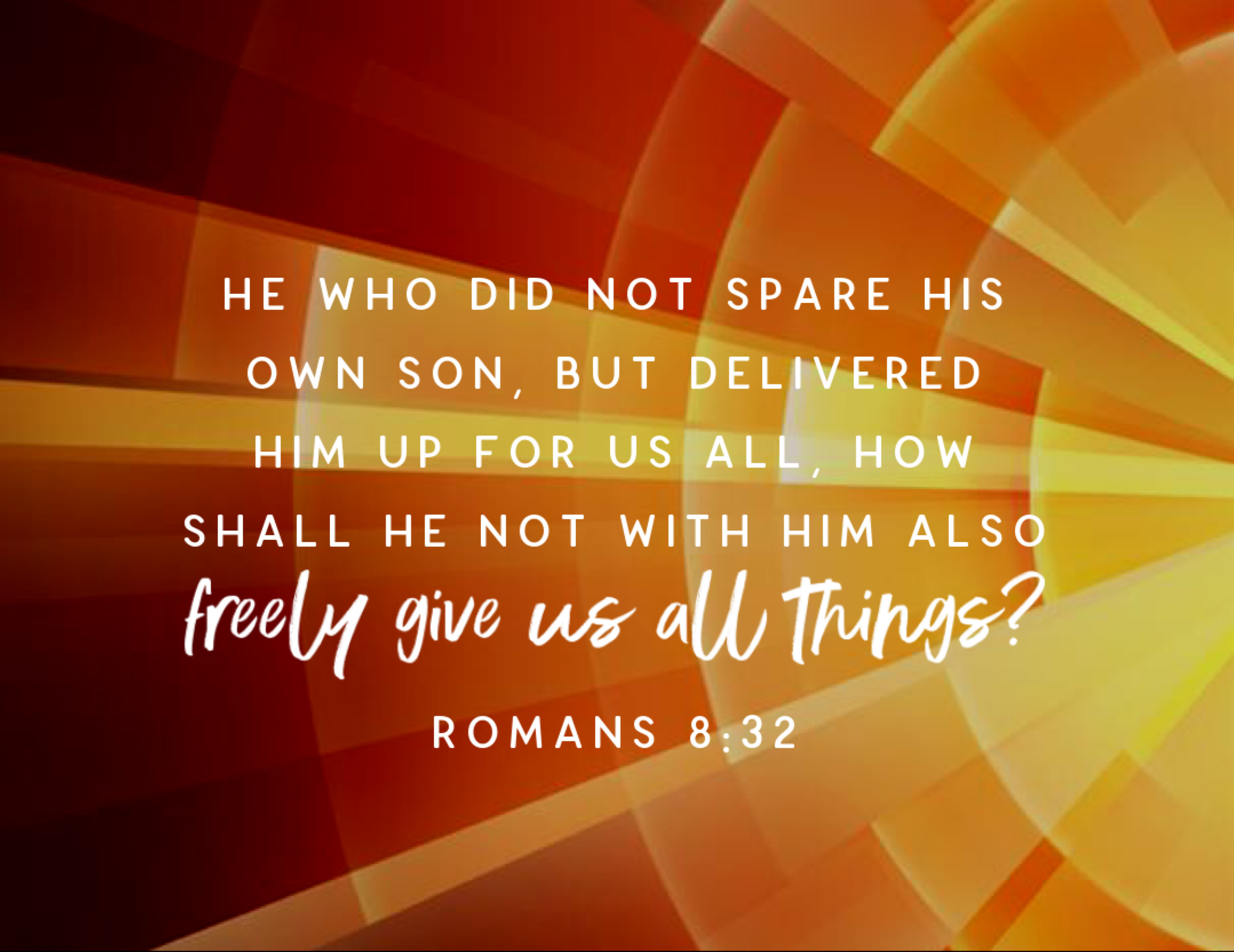
  • God will give you everything He gave Jesus (v. 32)
  • Jesus is interceding for you (v. 34)
  • Nothing and no one can ever separate you from God’s love (vv. 35-39)

Let me state it again—

God is for you!

Nothing can stand between you and God!

Victory!

Twice in Romans 7, the Apostle Paul uses the phrase “but sin, seizing the opportunity” (vv. 8, 11).

Sin always seizes any opportunity it gets. The devil always prowls around looking for an opportunity to tempt and destroy. And my flesh is always only too eager to give in to the pull of sin and the devil (v. 25).

If we want victory over sin and the devil, we have to be AWARE and be PREPARED.

When the devil had finished all this tempting, he left Jesus until an opportune time” (Luke 4:13).

The devil will bide his time.

“…satan has asked to sift you as wheat…” (Luke 22:31).

It’s not always the big shakings that will cause us to sin, but the little siftings can wear us down.

Stay alert! Watch out for your great enemy, the devil, prowls around like a roaring lion, looking for someone to devour. Resist him, standing firm in the faith” (1 Peter 5:8-9).

Keep awake and watch and pray constantly, that you may not enter into temptation; the spirit indeed is willing, but the flesh is weak” (Mark 14:38).

If you haven’t been tempted lately, or if you’ve recently overcome a temptation, stay humble. “So, if you think you are standing firm, be careful that you don’t fall!” (1 Corinthians 10:12).

And then stay ready: “Put on all of God’s armor so that you will be able to stand firm against all strategies of the devil” (Ephesians 6:11).

A warrior in a combat zone never has a single day he is without his armor.

There’s a time to take a stand against the devil: “So be subject to God. Resist the devil [stand firm against him], and he will flee from you” (James 4:7).

And there’s a time to run toward something else: “Shun youthful lusts and flee from them, and aim at and pursue righteousness…” (2 Timothy 2:22).

Victory is yours IF you will be aware and be prepared. You don’t have to give in to the devil’s temptation to sin! Fight victoriously today!

Keep On Asking

We finished The Q Series yesterday morning, but I hope the questions keep on coming. I always love answering questions, and doing it in the open forum like we did was both challenging and fun (at least I had a good time!).

But I also encouraged the Calvary Assembly of God family to keep on asking questions. It’s fine if the questions are directed to me, but the most important questions are the ones we ask of ourselves.

The Holy Spirit makes all of our lives a work-in-progress. This is what is called sanctification. That word really means to make a saint out of us (think of it as saint-ification).

That means He will constantly challenge us with questions that we are wise to answer. Things like:

  • Why are you thinking that?
  • What does the Bible say about that?
  • Is doing that for your comfort or for God’s glory?
  • Is that the wise thing to do?
  • How would Jesus handle that situation?

Over time the answers to these questions will change, as we should all be growing up in our relationship with God (1 Corinthians 13:11; Ephesians 4:15).

The Apostle Paul tells us that we should take every thought captive (2 Corinthians 10:5), because our minds will either be set on natural desires or set on spiritual truths (Romans 8:5).

So don’t tune out the Holy Spirit. Don’t stop asking those maturing questions. Don’t stop growing in your relationship with your Heavenly Father.

Keep on asking, and you’ll keep on growing!

Free To Be A Slave

I just love the oxymorons in the Bible! Without the spiritual component, these statements appear to make no sense at all. But through the lens of God’s Word, they are energizing!

Like this one: I can be free to be a slave.

Usually we think of freedom in terms of, “I’m free to do whatever I want to do.” In the natural this is freedom; but in the spiritual it’s slavery.

Think of it this way. When I say, “I’m free to do whatever I want to do,” I’m saying that I am in charge. But I am sinful … selfish … envious … short-sighted … petty … vengeful … and a whole laundry list of other nasty things. So when I want to do what I want to do—when I think I’m free to control my own life—I’m still a slave. A slave to sin.

There’s a price for this “freedom” to be my own boss. The price is death (see Romans 6:23).

But because of what Jesus did for me on the Cross, I don’t have to have this “freedom” that leads to death. I can be free to be a slave. Check this out:

But now you are free from the power of sin and have become slaves of God. Now you do those things that lead to holiness and result in eternal life. (Romans 6:22)

I have a choice to make:

  1. I can choose to call my own shots (so-called “freedom”), and have to pay the penalty of death; or,
  2. I can choose to be a slave of God, and receive His gifts of holiness and eternal life.

I’m choosing option #2!

How about you?