20 Quotes From “The Highest Good”

The Highest GoodSome of my most highlighted books are Oswald Chambers’ books, so The Highest Good was no exception. It was difficult to narrow down, but here are 20 of my favorite quotes from this book. (If you would like to read my book review of The Highest Good, click here).

“If I am a child of God, distress will lead me to Him for direction. The distress comes not because I have done wrong, it is part of the inevitable results of not being at home in the world, of being in contact with those who reason and live from a different standpoint.” 

“Spiritual insight is not for the purpose of making us realize we are better than other people, but in order that our responsibility might be added to.”

“God expects us to be intercessors, not dogmatic fault-finders, but vicarious intercessors, until other lives come up to the same standard.” 

“In times of prosperity we are apt to forget God, we imagine it does not matter whether we recognize Him or not. As long as we are comfortably clothed and fed and looked after, our civilization becomes an elaborate means of ignoring God. … But remember God’s blessing may mean God’s blasting. If God is going to bless me, He must condemn and blast out of my being what He cannot bless. ‘Our God is a consuming fire.’ When we ask God to bless, we sometimes pray terrible havoc upon the things that are not of God. God will shake all that can be shaken, and He is doing it just now.”

“God intends our attention to be arrested, He does not arrest it for us. … We are apt to pay more attention to our newspaper than to God’s Book, and spiritual leakage begins because we do not make the effort to lift up our eyes to God.” 

“The majority of us do not enthrone God, we enthrone common-sense. We make our decisions and then ask the real God to bless our god’s decision.”

“When I wish I was somewhere else I am not doing my duty to God where I am.” 

“Let us not be so careful as to how we offend or please human ears, but let us never offend God’s ears.”

“We have not only lost Jesus Christ’s idea of righteousness, but we laugh at the Bible idea of righteousness; our god is the conventional righteousness of the society to which we belong.” 

“It is so absurd to put our Lord as Teacher first, He is not first a Teacher, He is a Savior first. He did not come to give us a new code of morals: He came to enable us to keep a moral code we had not been able to fulfill. … If He is a Teacher only, then He is a most cruel Teacher, for He puts ideals before us that blanch us white to the lips and lead us to a hell of despair. But if He came to do something else as well as teach—if He came to re-make us on the inside and put within us His own disposition of unsullied holiness, then we can understand why He taught like He did.”

“The only way to get out of our smiling complacency about salvation and sanctification is to look at Jesus Christ for two minutes and then read Matthew 5:43-48 and see Who He tells us we are to be like, God Almighty, and every piece of smiling spiritual conceit will be knocked out of us for ever, and the one dominant note of the life will be Jesus Christ first, Jesus Christ second, and Jesus Christ third, and our own whiteness nowhere. Never look to your own whiteness; look to Jesus and get power to live as He wants; look away for one second and all goes wrong.”

“For the past three hundred years men have been pointing out how similar Jesus Christ’s teachings are to other good teachings. We have to remember that Christianity, if it is not a  supernatural miracle, is a sham.”

“The point is that Jesus saw life from God’s standpoint, and we don’t. We won’t accept the responsibility of life as God gives it to us, we only accept responsibility as we wish to take it, and the responsibility we wish to take is to save our own skins, make comfortable positions for ourselves and those we are related to, exert ourselves a little to keep ourselves clean and vigorous and upright; but when it comes to following out what Jesus says, His sayings are nothing but jargon. We name the Name of Christ but we are not based on His one issue of life, and Jesus says, ‘What shall it profit a man, if he shall gain the whole world’—and he can easily do it—‘and lose his own soul.’” 

“It is remarkable how little Jesus directed His speech against carnal and public sins, though He showed plenty of prophetic indignation against the sins of a wholly different class, He preached His grandest sermon to a bad, ignorant woman (John 4:10-14), and one of His most prominent disciples was a publican named Matthew. The one man He ever said He wanted to stay with was another publican called Zaccheus, and some of the most fathomless things He said were in connection with a notoriously bad woman (Luke 7:36-50). … Jesus aroused the conscience of the very worst of them by presenting the highest good.”

“Ask yourself, then, what is it that awakens indignation in your heart? Is it the same kind of thing that awakened indignation in Jesus Christ? The thing that awakens indignation in us is the thing that upsets our present state of comfort and society. The thing that made Jesus Christ blaze was pride that defied God and prevented Him from having His right with human hearts.” 

“If we know that we have received the unmerited favor of God and we do not give unmerited favor to other people, we are damned in that degree.”

“‘If ye then, being evil…’ (Luke 11:13). Jesus Christ is made to teach the opposite of this by modern teachers; they make out that He taught the goodness of human nature. Jesus Christ revealed that men were evil, and that He came that He might plant in them the very nature that was in Himself. He cannot, however, begin to do this until a man recognizes himself as Jesus sees him.” 

“The holiest person is not the one who is not conscious of sin, but the one is more conscious of what sin is. … The purer we are through God’s sovereign grace, the more terribly poignant is our sense of sin. … Sin destroys the capacity of knowing what sin is. … We shall find over and over again that God will send us shuddering to our knees every time we realize what sin is, and instead of increasing hardness in us towards the men and women who are living in sin, the Spirit of God will use it as a means of bringing us to the dust before Him in vicarious intercession that God will save them as He has saved us.”

“‘God is able to make all grace abound toward you.’ Have you been saying, ‘I cannot expect God to do that for me’? Why cannot you? Is God Almighty impoverished by your circumstances? Is His hand shortened that it cannot save? Are your particular circumstances so peculiar, so remote from the circumstances of every son and daughter of Adam, that the Atonement and the grace of God are not sufficient for you? Immediately we ask ourselves these things, we get shaken out of our sulks into a simple trust in God. When we have the simple, childlike trust in God that Jesus exhibited, the overflowing grace of God will have no limits, and we must set no limits to is.” 

“The love of God rakes the very bottom of hell, and from the depths of sin and suffering brings sons and daughters to God.”

Plastic Donuts (video review)

Plastic DonutsHere is a video review Waterbrook Multnomah Press asked me to do on Plastic Donuts. This review is especially for other pastors, but I think you’ll see how much I liked this book. If you would like to read my full book review, you may do so by clicking here, you may also read some of my favorite quotes from the book by clicking here.

Calvary Assembly of God, get ready … you’re going to hear more about Plastic Donuts soon. And I’ve got a special gift for you too! Stay tuned.

The Holy Spirit’s Power

Holy Spirit as powerHere are some of the quotes I used in my message this morning…

“The Holy Spirit is not a luxury, not something added now and again to produce a deluxe type of Christian once in a generation. No, He is for every child of God a vital necessity, and that He fill and indwell His people is more than a languid hope. It is rather an inescapable imperative.” —A.W. Tozer

“There is nothing so still and gentle as the checks of the Holy Spirit if they are yielded to, emancipation is the result; but let them be trifled with, and there will come a hardening of the life away from God. Don’t quench the Spirit. … Guard as your greatest gift the anointing of the Holy Spirit.” —Oswald Chambers

“Jesus doesn’t say we will baptized with the Holy Spirit and power (see Acts 1:8), but that we will be baptized with the Holy Spirit AS power. There’s a huge difference! It means we will have everything we need to always overcome, to never be at a loss!” —CTO

Politics In The Pulpit

John Witherspoon

John Witherspoon

Is there right time to address politicized topics from the pulpit? I believe there is, but I believe we must make sure we’re not promoting our opinion but standing up for biblical principles.

Pastors were pivotal in swaying public opinion prior to the American Revolution and in the abolition of slavery in the United States. One pastor that spoke forcefully and biblically about the independence of the thirteen colonies was John Witherspoon—

“If your cause is just—you may look with confidence to the Lord and intreat [sic] Him to plead it as His own. You are all my witnesses, that this is the first time of my introducing any political subject into the pulpit. At this season however, it is not only lawful but necessary, and I willingly embrace the opportunity of declaring my opinion without hesitation, that the cause in which America is now in arms, is the cause of justice, of liberty, and of human nature.”

Commenting on the decision of Rev. Witherspoon to address this topic from the pulpit, theologian T.M. Moore wrote—

“Preachers tend to stay away from sticky moral and political issues, simply because they know it riles up certain folks for them to do so. Witherspoon spoke out in his day because the cause of the nation was just. But so many unjust causes are afoot in our nation at the moment, that for pastors not to speak up and equip their people to understand the times and know what we as communities should do, is not only a betrayal of our Founders, but a betrayal of their calling and of the Word of God (Ezekiel 33).”

That’s a strong statement: Pastors that don’t speak out on the immoral issues of our time are betraying their calling. I tend to agree with him. What do you think? Is there a time and place for politics in the pulpit?

You may also want to check out my videos How Christians can live biblically in an election season and The Church should be pre-political

10 Quotes From “Plastic Donuts”

Plastic DonutsPlastic Donuts is a fresh look at the biblical concepts of tithing and giving offerings. You can read my full book review by clicking here. These are some of the quotes that caught my eye—

“What I didn’t realize was that my lifestyle had frozen my giving at the 10 percent level. When it came to my finances, my lifestyle had all the influence. The issue is not about my needing to sacrifice my lifestyle. The issue is about my giving a gift that is connected to my heart.”

“In His Sermon on the Mount, Jesus provided instructions on giving, praying, and fasting. For each, He focused on the heart standard but did not provide an amount standard (see Matthew 6:1-18).”

“David praised God seven times a day. Daniel prayed to God three times a day. Moses fasted from food and water twice, for forty days straight. Daniel fasted twenty-one days from rich foods and wine. Where did these faith heroes get their standards? They determined them. It’s human nature to seek something that is concrete, an inviolable guideline, clear marching orders. … But let’s be honest. Are we looking for a rule to follow so we can check it off the list? Or does a strict rule help to soothe a sense of guilt and confusion? It’s always easier to follow rules than to follow a living God. The absence of rules can cause tension in determining the amount of our gifts. Shouldn’t there at least be a minimum? If not, suddenly it’s wide open. Multiple options appear.”

“God is not looking for the same gift from all His children. He wants a personal gift.”

“You may not think you have the ability to give. But if you pay attention, you’ll be surprised at just what abilities you really do have.”

“Tapping your true giving ability will require countercultural lifestyle choices—such as debt-free living or a reduction in your spending.”

“If you want to grow your faith, grow your gratitude. To grow your gratitude, take time to count your blessings.”

“No matter what your ability or inability, God can be pleased with your gift.”

“Could it be that a giving lifestyle apart from love and obedience to God is simply philanthropy?”

“In the end, it is the condition of the giver’s heart that makes the gift pleasing to God.”

14 Quotes From “It Is Finished”

It Is FinishedIt Is Finished was an amazingly confronting and encouraging book. You can read my full book review by clicking here, but below are some of the quotes from David Wilkerson that especially caught my attention…

“Jesus was speaking as co-signer of the covenant. He said, ‘Now I am no longer in the world, but these are in the world, and I come to You. Holy Father, keep through Your name those whom You have given Me, that they may be one as We are’ (John 17:11). He was saying to the Father, ‘We agreed that I could bring into Our covenant everyone who trusts in Me. Now, Father, I ask You to bring these beloved ones under the same covenant promises You made to Me.”

“The covenant, cut before the world was formed, has in it the sworn oath of almighty God to save and deliver His people from the power and dominion of satan. Faith in Christ brings us into God’s covenant oath to keep us as faithfully as He kept His own Son.”

“This is an ongoing problem with many Christians. We look to the Holy Spirit as some kind of booster shot to empower or energize our human will. We expect Him to build up our supply of grit and determination, so we can stand up to temptation the next time it comes. We cry, ‘Make me strong, Lord! Give me an iron will, so I can withstand all sin.’ But God knows this would only make our flesh stronger, enabling it to boast. … Scripture says the Spirit of God actually ‘subdues’ our sins and turns us from them: ‘He will again have compassion on us, and will subdue our iniquities. You will cast our sins into the depths of the sea’ (Micah 7:19). Think of it! Not I, but my God, will subdue and conquer all my sins, by the inner working of the Holy Spirit.”

“God’s Spirit will accomplish in us what our flesh never has been able to do. How? By indwelling us. The New Covenant is all about the Holy Spirit coming to live and work in us, by promise in answer to faith.”

“It is vital for every follower of Jesus not to judge God’s New Covenant promises according to past experiences.”

“God says, ‘There is one work the Spirit must perform in you before any of these others. He is going to put in you the true fear of God concerning sin. He will implant in you a profound awe of My holiness so you will not depart from My commands. Otherwise, your sin will always lead you away from Me.’ Very simply, the Holy Spirit changes the way we look at our sin. … So He shows us how deeply it grieves and provokes Him.”

“Many flesh-driven Christians try to shake off the guilt that God’s convicting arrows produce. They do not want to feel the dread of their sin, so they constantly claim the verse, ‘There is therefore now no condemnation to those who are in Christ Jesus’ (Romans 8:1). But they neglect to read the last part of this verse: ‘who do not walk according to the flesh, but according to the Spirit.’ If you continue in sin, you are walking in the flesh—and you have no claim on God’s promise of ‘no condemnation.’ The guilt we feel under Holy Spirit conviction is actually a work of God’s grace. It is meant to expose the deceitfulness of sin in us.”

“Ask the Holy Spirit to accomplish in you the precedent work of instilling godly fear in you, to keep your heart open and accepting of God’s Word. When you do, the Spirit promises to give you a soft heart, one that is pliable in His hand. … The implantation of godly fear by the Holy Spirit is designed to produce obedience through surrender, rather than through discipline.”

“God the Father gave His Son, Jesus, access to all of His own riches and wealth. In other words, He invested in Him all the wisdom, knowledge, power and glory of Heaven. And by being made wealthy in all these things, Jesus became the only One worthy to be co-signer of the covenant. ‘By so much more Jesus has become a surety [guarantor, sponsor, co-signer] of a better covenant’ (Hebrews 7:22). Could there be any greater mercy than this? God so loved us that He made His Son rich beyond all comprehension. Then He made Him both our kinsman and our co-signer. He has become the person responsible to settle all our debts. He pays when we cannot.”

“In this covenant, God pledges to do the following four things:

  1. He swears to write His law on our hearts and minds.
  2. He takes an oath that He will be God to us, and that we will be His children.
  3. He promises we will know Him and His ways because we will be taught by the Holy Spirit.
  4. He pledges to be merciful to our unrighteousness, forgiving all our sins and iniquities.”

“A stronghold is an accusation planted firmly in your mind. satan establishes strongholds in God’s people by implanting in their minds falsehoods and misconceptions, especially regarding God’s nature.”

“The only weapon that scares the devil and his armies is the same one that scared him in the wilderness temptation of Jesus. That weapon is the truth of the New Covenant—the living Word of God. Only the Lord’s truth can set us free.”

“This is the doctrine of God’s preventing goodness: He has anticipated all our struggles—all our battles with sin, flesh and the devil—and in His mercy and goodness, He has paid our debt before it can even come due. Through the covenant, He has prepaid for all our failures and relapses. His covenant oath assures us of His preventing goodness in our lives.”

“In God’s eyes, our problem is not sin, it is trust. Jesus settled our sin problem once and for all at Calvary. He does not constantly harp on us now, barking, ‘What have you done this time?’ or ‘Now you’ve gone too far,’ or ‘This time you’ve crossed the line.’ No, never! Our Lord’s attitude toward us is just the opposite. His Spirit is constantly wooing us, reminding us of the Father’s lovingkindness—even in the midst of failure.”

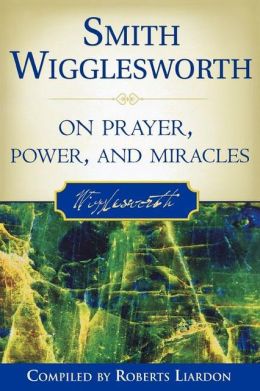
14 Quotes From “Smith Wigglesworth On Healing”

Wigglesworth HealingI hope these quotes from Smith Wigglesworth On Healing will excite you to read this book. If you’d like to read my book review, please click here.

“Never listen to human plans. God can work mightily when you persist in believing Him in spite of discouragement from the human standpoint. … I am moved by what I believe. I know this: no man looks at the circumstances if he believes.”  

“There are times when there seems to be a stone wall in front of us. There are times when there are no feelings. There are times when everything seems as black as midnight, and there is nothing left by confidence in God. What you must do is have the devotion and confidence to believe that He will not fail, and cannot fail. You will never get anywhere if you depend on your feelings. There is something a thousand times better than feelings, and it is the powerful Word of God. There is a divine revelation within you that came when you were born from above, and this is real faith. To be born into the new kingdom is to be born into a new faith.”

“You must be yielded to the Word of God. The Word will work out love in our hearts, and when practical love is in our hearts, there is no room to boast about ourselves. We see ourselves as nothing when we get lost in this divine love.”

“You can never pray ‘the prayer of faith’ (James 5:15) if you look at the person who is needing it; there is only one place to look, and that is to Jesus.”

“Hard things are always opportunities to gain more glory for the Lord as He manifests His power. Every trial is a blessing. … The hardest things are just lifting places into the grace of God.”

“The Master does not want us to reason things out, for carnal reasoning will always land us in a bog of unbelief. He wants us simply to obey.”

“You must come to see how wonderful you are in God and how helpless you are in yourself.”

“May God help us to see this truth. We cannot be ‘to the praise of His glory’ (Ephesians 1:12) until we are ready for trials and are able to triumph in them.”

“God is never tightfisted with any of His blessings.”

“Jesus was manifested in the flesh to destroy the power of the devil (1 John 3:8). What does that mean? It means this: He is God’s example to show us that what God did for and in Jesus, He can do for and in us.”

“The reason the world is not seeing Jesus is that Christian people are not filled with Jesus. They are satisfied with attending meetings weekly, reading the Bible occasionally, and praying sometimes. … It is an awful thing for me to see people who profess to be Christians lifeless, powerless, and in a place where their lives are so parallel to unbelievers’ lives that it is difficult to tell which place they are in, whether in the flesh or in the Spirit.”

“There is no such thing as the Lord’s not meeting your need. There are no ifs or mays; His promises are all shalls. ‘All things are possible to him who believes’ (Mark 9:23).”

“Faith is just the open door through which the Lord comes. Do not say, ‘I was saved by faith’ or ‘I was healed by faith.’ Faith does not save and heal. God saves and heals through that open door. You believe, and the power of Christ comes.” 

“I clearly see that we ought to have spiritual giants in the earth, mighty in understanding, amazing in activity, always having a wonderful testimony because of their faith-filled activity. I find instead that there are many people who perhaps have better discernment than the average believer, better knowledge of the Word the the average believer, but they have failed to put their discernment and knowledge into practice, so the gifts lie dormant.”

7 Quotes from “The Baptism With The Holy Spirit”

Baptism with the Holy SpiritR.A. Torrey’s book The Baptism With The Holy Spirit is a great study on this often overlooked member of the Trinity. You can read my full book review by clicking here. Below are some quotes that especially caught my eye…

“The baptism of the Holy Spirit is not for the purpose of cleansing from sin, but for the purpose of empowering for service.” 

“I fell into another error, namely, that anyone who received the baptism with the Holy Spirit would receive power as an evangelist or as a preacher of the Word. … There are three evils arising from the mistake just mentioned. First, disappointment. Many will seek the baptism with the Holy Spirit, expecting power as an evangelist, but God has not called them to that work and the power that comes from the baptism with the Holy Spirit manifests itself in another way in them. … The second evil is graver than the first, presumption. A man whom God has not called to the work of an evangelist or minister rushes into it because he has received, or thinks he has received, the baptism with the Holy Spirit. … The third evil is still greater, indifference.”

“While the baptism with the Spirit imparts power, the way in which that power will be manifested depends upon the work to which God has called us, and that no efficient work can be done without it. … It is not for us to select some field of service and then look to the Holy Spirit to impart to us power in that field which have chosen. It is rather for us to recognize the divinity and sovereignty of the Spirit, and to put ourselves unreservedly at His disposal.” 

“There are certainly few greater mistakes that we are making today, than that of setting men to teach Sunday school classes, and do personal work, and even to preach the Gospel, simply because they have been converted and received a certain amount of education—perhaps including a college and seminary course—but have not as yet been baptized with the Holy Spirit. Any man who is in Christian work, who has not received the baptism with the Holy Spirit, ought to stop his work right where he is, and not go on with it until he has been ‘clothed with power from on high.’”

“There are many who hold back from this total surrender because they fear God’s will. They are afraid God’s will may be something dreadful. Remember who God is. He is our Father. Never an earthly father had so loving and tender a will regarding his children as He has toward us. ‘No good thing will He withhold from them that walk uprightly’ (Ps. 84:11). ‘He that spared not His own Son, but delivered Him up for us all, how shall He not with Him also freely give us all things?’ There is nothing to be feared in God’s will. God’s will will always prove in the final outcome the best and sweetest thing in all God’s universe.” 

“One of the subtlest and most dangerous snares into which satan leads us is seeking the Holy Spirit, this most solemn of all gifts, for our own ends.”

“If we would continuously know the power of God, we should go often alone with Him, at the close of each day at least, and ask Him to show us if any sin, anything displeasing in His sight, has crept in that day; and if He shows us that there has, we should confess it and put it away then and there.” 

16 Quotes From “Firsthand”

FirsthandI strongly encourage Christian parents to put a copy of Firsthand into the hands of their children, high school age and older. This book will help them think through making their faith in Jesus something personal to them. You can read my book review by clicking here. Below are some quotes that stood out to me. All of these quotes are by the authors, unless otherwise noted.

“You must be emptied of that of which you are full, so that you may be filled with that of which you are empty.” —Augustine

“One of the most liberating and powerful statements of all time comes from the lips of Jesus: ‘You will know the truth, and the truth will set you free’ (John 8:32). And we’re writing this chapter to tell you something that will set you free. The only way we’ve been able to experience freedom is by making the choice to get completely gut-level honest with God and others.

“God can use you and me through our brokenness, but first we have to get real and vulnerable with Him and with others. I think this powerful ‘get real’ dynamic works for a few reasons. First of all, being real with God and those around us invites us to drop the pride and pretense and to walk in humility. Second, honesty invites us to live every day in gratitude for the incredible grace that Lord has shown us. And third, since now we know we can’t make it on our own—and that’s okay—we’re ready to invite God’s power to do for us what we can’t do for ourselves. Paul said in 2 Corinthians 12:9, ‘I will boast all the more gladly about my weaknesses, so that Christ’s power may rest on me.’ This turns the concept of weakness and vulnerability on its head. We are saying that God makes up for our weaknesses. We are admitting that He is ready to work through them. Our weaknesses can actually become our greatest assets because they draw us closer to the Lord. And once we see how God can use them, we have all the more reason to be open about our struggles.”

“When all you see is a life in pieces, remember: the Remodeler wants to change you from the inside out. And He’s at work building your character to match His great calling and purpose for your life.”

“We have to decide, moment by moment, if we want to act changed or be changed.”

“It is more important to live one word of Scripture than it is to memorize volumes.” —Tim Hansel

“When our faith looks like a long list of things we should do, it’s usually a sign we’re not really focused on knowing God today for ourselves. Firsthand faith is all about a relationship with the God who is always faithful.”

“God is no less with you in your doubts that He is with you in your certainties.”

“Firsthand faith means we’re not afraid to bring our burning questions directly to God. But it also means that we’re not afraid to simply relax in His love. Even when all our questions haven’t yet been answered.”

“The needs of this world are endless. So whenever we feel a divine disturbance, it’s essential that we respond with firsthand action. If we don’t, it will quickly turn into secondhand bitterness.”

“James tells us that faith without works is dead (James 2:26). The most certain way to go back to living a secondhand faith is to refuse to act upon the Holy Spirit’s movement in your heart…. When you do not respond to a divine disturbance of the Holy Spirit, you get bitter and you criticize. That helps no one. … When you don’t respond to a divine disturbance in your life, you become the greatest obstacle between an unbelieving world and a loving God—a judgmental Christian.”

“Your eternal footprint—the impact you make on this earth—will be determined by whether you respond to the calling of the Spirit of the Lord in your heart to love a broken world, to step into the gifts and passions the Lord has blessed you with yo meet the needs that others overlook.”

“When we set out to discover our own firsthand faith, we were disillusioned with church. We had seen how imperfect the church could be, and we were certain that church was the problem. Coming full circle with our firsthand faith, we now realize that church was not the problem. The problem was out view and definition of the church itself. It took us a long time to understand that church wasn’t a building or a pastor or a sermon series. It’s easy to point out everything wrong with the church when you stand outside it and approach it with a consumer mentality. We thought the church had given us a secondhand faith, when in reality we had chosen to avoid a firsthand relationship with the community of Christ follower we claimed to care about.”

“The church is messy and imperfect because it is made up of broken and imperfect people. Are you sitting on the sidelines because the people in your church are imperfect or ‘just not like you’? … God designed you to be in community with your local church. He designed you to have firsthand relationships not only with Him but also with the people in your church. You can come up with plenty of excuses not to get involved and reasons that your church has it wrong, but when was the lat time you looked inside yourself and really searched your own heart for issues?”

“You can try to live out a firsthand faith on your own for as long as you want, but until you live out that faith in a community, you will never realize your full potential in Christ.”

“As a Christian, you are part of a movement that will outlast you, and you are part of the Firsthand Generation. As communities of believers rise up, we will gain momentum and create a movement that is stronger than anything we could ever accomplish on our own. Perhaps God is calling you to gather people and become a leader in the Firsthand Generation. Take up the challenge.”

Holocaust Remembrance Week

Reagan quote at Holocaust MuseumOne of the more sobering times of my week in Washington, D.C., was the afternoon we spent at the Holocaust Museum. The dehumanizing atrocities perpetrated by one group of people on another group of people is almost unimaginable.

And yet there it was—all the nauseating evidence of man’s evil right before my eyes. It was so overwhelming that I had to hurry past the final exhibits.

Commander of the Allied Forces Dwight Eisenhower wrote to George C. Marshall, the chairman of the U.S. Joint Chief Of Staff—

“…the most interesting—although horrible—sight that I encountered during the trip was a visit to a German internment camp near Gotha. The things I saw beggar description. While I was touring the camp I encountered three men who had been inmates and by one ruse or another had made their escape. I interviewed them through an interpreter. The visual evidence and the verbal testimony of starvation, cruelty and bestiality were so overpowering as to leave me a bit sick. In one room, where they were piled up twenty or thirty naked men, killed by starvation, George Patton would not even enter. He said that he would get sick if he did so. I made the visit deliberately, in order to be in a position to give first-hand evidence of these things if ever, in the future, there develops a tendency to charge these allegations merely to ‘propaganda.’” (emphasis added)

A statement from President Ronald Reagan, from 1988, is etched on the wall of the Holocaust Museum—

“We who did not go their way owe them this: We must make sure that their deaths have posthumous meaning. We must make sure that from now until the end of days all humankind stares this evil in the face … and only then can we be sure that it will never arise again.” (emphasis added)

The rise to power of the Nazis was swift. Their evil was initially unopposed. Few voices spoke out, and even few were heeded. We must never allow this to happen again!

As George Santayana said, “Those who do not learn from history are doomed to repeat it.” As revolting as it is, we must learn from this lesson. You must look this evil in the face. You must allow your children to look this evil in the face. If we don’t, we will be doomed to live through these unthinkable atrocities all over again.