Links & Quotes

link quote

“Search the Scriptures. Do not merely read them—search them; look up the parallel passages; collate them; try to get the meaning of the Spirit upon any one truth by looking to all the texts which refer to it. Read the Bible consecutively: do not merely read a verse here and there—that is not fair.” —Charles Spurgeon

“How does the Lord reward His diligent ones? It has been my experience that when I walk arm in arm with Jesus, so in love with Him, rewards break out on all sides. Everything I do or have is blessed: my wife, children, friends, ministry. There comes a life of Christ within that flows like a mighty river. Yes, we’ll have trials and tribulations. But through it all He rewards us with manifestations of His presence. … Those who neglect the Lord soon spin out of control as the devil moves in and takes over. Such a person has a devastated self-image. His or her feelings and thoughts cannot be curbed, and their tongue wags and moves under the power of bitterness and anger.” —David Wilkerson

Small problems can become huge problems if they are not addressed early on. Max Lucado has a great reminder in his post Go After The Small Drips.

Here is a great way to check out lots of books. Frank Viola has a link to a special offer from Leaders Book Summaries.

“If the Holy Spirit is obeyed the stubbornness is blown out, the dynamite of the Holy Ghost blows it out.” ―Oswald Chambers

[VIDEO] John Maxwell reminds us that only mature people can compromise to make relationships successful. Check this out―

Links & Quotes

link quote

Sheriff David Clarke has a great take on what is behind so many of the protests against the police. Be sure to watch the video of his CNN interview too.

“The fullest obedience and the smallest faith obtain the same thing from God: mercy. A mere mustard seed of faith taps into the mercy of tree-moving power. And flawless obedience leaves us utterly dependent on mercy. The point is this: Whatever the timing or form of God’s mercy, we never rise above the status of beneficiaries of mercy. We are always utterly dependent on the undeserved. Therefore let us humble ourselves and rejoice and ‘glorify God for His mercy!’” —John Piper

“Isn’t it kind of silly to think that tearing someone else down builds you up?” —Sean Covey. Read more of the post The Year Of Speaking Kindly.

Are you single? Check out Being The Third Wheel Is Underrated.

Are you ready to be disgusted? Last year Planned Parenthood not only ended 327,653 lives through abortion, but they also were given $528 million of your tax dollars!

Links & Quotes

link quote

Some good reading from today…

This is tough reading, but very vital: How the normalization of pornography fuels the rape culture.

“What a gracious thing for us that Jesus Christ never thinks about what we have been! He always thinks about what we are going to be.” —A.W. Tozer

“So seldom does God find a Christian whose only goal in life is to know and to do His will—as Jesus did—and who never says, ‘God, where are You?’ but instead prays, ‘God, where am I in this matter of obedience and dependence?’” —David Wilkerson

“Remember Luther, Knox, Calvin, Wycliffe, Bradford, Latimer, and many others! Under God these men owed their liberty of speech and liberty of conscience to the fact that the world thrust them out from all hope of its favor, and so loosed their bonds.” —Charles Spurgeon

“Lay not fast hold upon the things of earth. He who is but a lodger in an inn must not live as though he were at home.” —Charles Spurgeon

Desiring God has released an updated version of The Pilgrim’s Progress with some cool features. If you download the ebook version, it’s free!

5 Quotes On Law & Grace From “Transforming Grace”

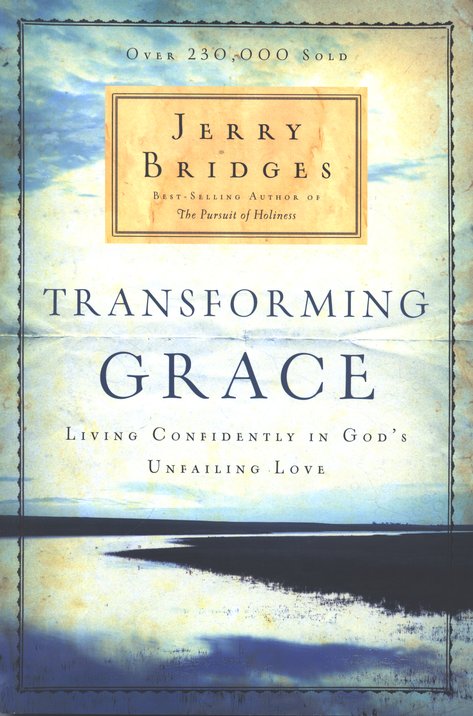
Transforming GraceJerry Bridges wrote a book that was an eye-opener for me called Transforming Grace. I’ve shared a couple of other posts with quotes from this book (you can read them by clicking here and here), but these quotes zero-in on the battle some people have in their minds between law and grace.

“Under a sense of legalism, obedience is done with a view to meriting salvation or God’s blessing on our lives. Under grace, obedience is a loving response to salvation already provided in Christ, and the assurance that, having provided salvation, God will also through Christ provide all else that we need.”

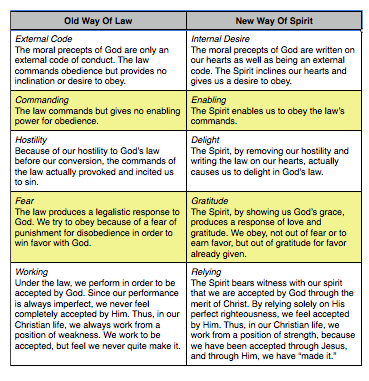
(click for a larger view)

(click for a larger view)

You can download a PDF version of this chart here → Law and Grace  ←

“Do you view God’s moral precepts as a source of bondage and condemnation for failure to obey them, or do you sense the Spirit producing within you an inclination and desire to obey out of gratitude and love? Do you try to obey by your own sheer will and determination, or do you rely on the Spirit daily for His power to enable you to obey? Do you view God as an ogre who has set before you an impossible code of conduct you cannot keep, or do you view Him as your divine Heavenly Father who has accepted you and loves you on the basis of the merit of Christ? In other words, in terms of your acceptance with God, are you willing to rely solely on the finished perfect work of Jesus, instead of your own pitifully imperfect performance?”

“We are much more concerned about someone abusing his freedom than we are about his guarding it. We are more afraid of indulging the sinful nature than we are of falling into legalism. Yet legalism does indulge the sinful nature because it fosters self-righteousness and religious pride. It also diverts us from the real issues of Christian life by focusing on external and sometimes trivial rules.” 

“That is the way a lot of manmade ‘dos and don’ts’ originate. They begin as a sincere effort to deal with real sin issues. But very often we begin to focus on the fence we’ve built instead of the sin it was designed to guard against. We fight our battles in the wrong places; we deal with externals instead of the heart. … For all of us, it may be good to have some fences, but we have to work at keeping them as just that—fences, helpful to us but not necessarily applicable to others. … I’m not suggesting you jump over fences just to thumb your nose at the people who hold on to them so dearly. We are to ‘make every effort to do what leads to peace and mutual edification’ (Romans 14:19). Use discretion in embracing or rejecting a particular fence. But don’t let others coerce you with manmade rules. And ask God to help you see if you are subtly coercing or judging others with your own fences.”

“Spiritual disciplines are provided for our good, not for our bondage. They are privileges to be used, not duties to be performed. … I do think we should actively promote spiritual disciplines. They are absolutely necessary for growth in our Christian lives. And since ours is a largely undisciplined age, many believers are losing out on the benefits of those disciplines that could help them grow to maturity in Christ. But we should promote them as benefits, not as duties.” 

You can read my full book review of Transforming Grace by clicking here.

Smashing Idols

Puny idolsWhen looking at God’s commandments, we must look at them through a lens of love. If God—the Lawgiver—is love, then all of His laws must be saturated in His love.

So what happens when we look at the Second Commandment through this lens? The wording is simple: “You shall not make for yourself an idol…” (Exodus 20:4-6). If the First Commandment says, “I love you so much that I want to be the One and Only God you have a relationship with” then the Second Commandment says, “Because of this loving relationship, don’t try to make Me smaller to fit your worldview, but let Me by fully Me!

This idolatry starts in our minds, long before we ever create anything with our hands. Idolatry is a mental state that says, “I can define the Creator. I can figure out all of His dimensions. I can predict what He’s going to do. God operates just as I expect Him to.”

But God says, “My thoughts are nothing like your thoughts. And My ways are far beyond anything you could imagine” (Isaiah 55:8).

The Apostle Paul warned us of exchanging God’s uncontainable glory and majesty for something that we can neatly contain in our box: …they exchanged the glory of the immortal God for images … they exchanged the truth of God for a lie, and worshiped and served created things rather than the Creator… (Romans 1:21-25).

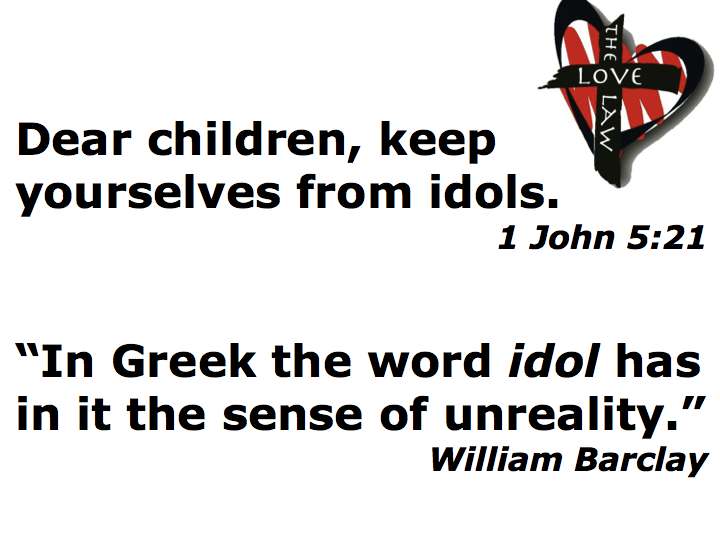
William Barclay offers this commentary about the flimsiness of idols: “In Greek the word idol has in it the sense of unreality. Plato used it for the illusions of this world as opposed to the unchangeable realities of eternity.” Our puny thoughts about God can create the idols that keep us from the reality of God. 

So how do we avoid this idolatry? Quite simply: we smash every mental idol!

…We refute arguments and theories and reasonings and every proud and lofty thing that sets itself up against the true knowledge of God; and we lead every thought and purpose away captive into the obedience of Christ… (2 Corinthians 10:5).

So… what idols do you need to smash?

If you have missed any of the messages in our series The Love In The Law, you can find them all by clicking here.

Poetry Saturday—Thou Sweet, Beloved Will Of God

Gerhard TersteegenThe Will of God
Thou sweet, beloved Will of God,
   My anchor ground, my fortress hill,
My spirit’s silent, fair abode,
   In Thee I hide me, and am still.

O Will, that willest good alone,
   Lead Thou the way, Thou guidest best;
A little child I follow on,
   And trusting lean upon Thy breast.

Thy beautiful, sweet Will, my God,
   Holds fast in Its sublime embrace
My captive will, a gladsome bird,
   Prisoned in such a realm of grace.

Within this place of certain good,
   Love ever more expands her wings;
Or, nestling in Thy perfect choice,
   Abides content with what it brings.

Oh, sweetest burden, lightest yoke,
   It lifts, it bears my happy soul,
It giveth wings to this poor heart:
   My freedom is Thy grand control.

Upon God’s Will I lay me down,
   As child upon its mother’s breast;
No silken couch, nor softest bed,
   Could ever give me such sweet rest.

Thy wonderful, grand Will, my God
   With triumph now I make It mine,
And Love shall cry a jealous Yes,
   To every dear command of Thine. —Gerhard Tersteegen


Links & Quotes

link quote

Some good reading from today…

A good laugh— Al and Lois go to a counselor after fifteen years of marriage. The counselor asks them what the problem is. Lois goes into a tirade, listing every problem they’ve ever had in their years of marriage. She goes on and on and on. Finally, the counselor gets up, embraces the surprised Lois, and kisses her passionately. Lois shuts up and sits quietly in a daze. The counselor turns to Al and says, “That is what your wife needs at least three times a week. Can you do that?” Al thinks for a moment and replies, “Well, I can get her here Mondays and Wednesdays, but Fridays I play golf.”

“It becomes every man who purposes to give himself to the care of others, seriously to consider the four following things: First, that he must one day give an account to the Supreme Judge of all the lives entrusted to his care. Secondly, that all his skill, and knowledge, and energy as they have been given him by God, so they should be exercised for his glory, and the good of mankind, and not for mere gain or ambition. Thirdly, and not more beautifully than truly, let him reflect that he has undertaken the care of no mean creature, for, in order that he may estimate the value, the greatness of the human race, the only begotten Son of God became himself a man, and thus ennobled it with his divine dignity, and far more than this, died to redeem it. And fourthly, that the doctor being himself a mortal man, should be diligent and tender in relieving his suffering patients, inasmuch as he himself must one day be a like sufferer.” —Dr. Thomas Sydenham, known as the father of English medicine

“It is a poor thing to strike our colors to God when the ship is going down under us; a poor thing to come to Him as a last resort, to offer up ‘our own’ when it is no longer worth keeping. If God were proud He would hardly have us on such terms: but He is not proud, He stoops to conquer, He will have us even though we have shown that we prefer everything else to Him.” —C.S. Lewis

“Prayer is never an acceptable substitute for obedience. The sovereign Lord accepts no offering from His creatures that is not accompanied by obedience. To pray for revival while ignoring or actually flouting the plain precept laid down in the Scriptures is to waste a lot of words and get nothing for our trouble.” —A.W. Tozer

These articles aren’t just for coaches, but for anyone who works with youth: Jameis Winston & The Fine Art Of Enabling from Mark Atteberry, and The Secret To Hard Conversations With Today’s Athletes by Tim Elmore.

A great question: Where Do Others Fit In Your Schedule?

Thursdays With Oswald—New Healthy Habits

Oswald ChambersThis is a periodic series with things I’m reading and pondering from Oswald Chambers. You can read the original seed thought here, or type “Thursdays With Oswald” in the search box to read more entries.

New Healthy Habits

When the Spirit of God brings a Word of God to us, are we going to wake up and lay hold [Ephesians 5:14-18] of it, or remain in the condition St. Augustine was in—“a little more worldliness; a little less intensity”? … When God tells us to do a thing He empowers us to do it, only we must do the doing. … All we need is grit and gumption and reliance on the Holy Spirit. We must bring the same determined energy to the revelations in God’s Book as we bring to earthly professions. Most of us leave the sweat of brain outside when we come to deal with the Bible. …

When in your soul’s vision you see clearly what God wants, let me advise you to do something physical immediately. If you accompany a moral or spiritual decision with a physical effort you give the necessary initiative to form the new habit. …

How are we going to find out the will of God? “God will communicate it to us.” He will not. His will is there all the time, but we have to discover it by being renewed in our minds, by taking heed to His Word and obeying it. If we are not going to be “conformed to this world; but transformed,” we must use our brains. God does the spiritual, powerful part we cannot do; but we have to work it out, and as we do the obeying we prove… “what is that good, and acceptable, and perfect, will of God” [Romans 12:1-2].

From The Moral Foundations Of Life

Everything we need to form new, healthy, God-pleasing habits has already been given to us in the Bible. Now we need to put our brains and our bodies to work—

God’s Word + Holy Spirit revelation + Concentration + Physical obedience = 

New God-honoring habits

Great-heart & Christiana From “Pilgrim’s Progress”

Pilgrim's ProgressI love Pilgrim’s Progress! You can read my full book review by clicking here. I’m sharing some of my favorite passages from this classic.

This is part of a dialogue between Great-heart and Christiana—

Great-heart: “He [Christ] has more righteousness than you have need of, or than He needeth Himself.”

Christiana: “Pray make that appear.”

Great-heart: “With all my heart: but first I must premise, that He of whom we are now about to speak, is one that has not His fellow. He has two natures in one person, plain to be distinguished, impossible to be divided. Unto each of these natures a righteousness belongeth, and each righteousness is essential to that nature; so that one may as easily cause the nature to be extinct, as to separate its justice or righteousness from it. Of these righteousnesses therefore we are not made partakers, so as that they, or any of them, should be put upon us, that we might be made just, and live thereby. Besides these, there is a righteousness, which this person has, as these two natures are joined in one. And this is not the righteousness of the Godhead, as distinguished from the manhood; nor the righteousness of the manhood, as distinguished from the Godhead; but a righteousness which standeth in the union of both natures, and may properly be called the righteousness that is essential to His being prepared of God to the capacity of the mediatory office, which He was to be intrusted with. If He parts with His first righteousness, He parts with His Godhead; if He parts with His second righteousness, He parts with the purity of His manhood; if He parts with this third, He parts with that perfection which capacitates Him for the office of mediation. He has therefore another righteousness, which standeth in performance, or obedience to a revealed will; and that is it that He puts upon sinners, and that by which their sins are covered. Wherefore He saith, As by one man’s disobedience many were made sinners, so by the obedience of One shall many be made righteous.”

Christiana: “But are the other righteousnesses of no use to us?”

Great-heart: “Yes; for though they are essential to His natures and office, and so cannot be communicated unto another; yet it is by virtue of them that the righteousness that justifies is for that purpose efficacious. The righteousness of His Godhead gives virtue to His obedience; the righteousness of His manhood giveth capability to His obedience to justify; and the righteousness that standeth in the union of these two natures to His office, giveth authority to that righteousness to do the work for which it is ordained.

“So then here is a righteousness that Christ, as God, has no need of; for He is God without it. Here is a righteousness that Christ, as man, has no need of to make Him so; for He is perfect man without it. Again, here is a righteousness that Christ, as God-man, has no need of; for He is perfectly so without it. Here then is a righteousness that Christ, as God, as man, as God-man, has no need of with reference to Himself, and therefore He can spare it; a justifying righteousness, that He for Himself wanteth not, and therefore He giveth it away. Hence ’tis called the gift of righteousness. This righteousness, since Christ Jesus the Lord has made Himself under the law, must be given away; for the law doth not only bind him that is under it, to do justly, but to use charity. Wherefore he must, he ought by the law, if he hath two coats, to give one to him that has none. Now our Lord indeed hath two coats, one for Himself, and one to spare; wherefore He freely bestows one upon those that have none.”

Read a dialogue between Faithful, Christian, and Talkative by clicking here.

And a dialogue between Christian and Hopeful by clicking here.

Ask & Act

Pastor Josh and Pastor Tom kicked off a 3-week series yesterday with Pastor Tom sharing part one in Boating Lessons. I loved his message! Here are my “raw notes” just as I took them during Pastor Tom’s message.

Boating Lessons—part 1 (Matthew 14:22-33)

When Jesus spoke to the disciples in the boat He literally said, “Don’t be afraid. I AM” (Matthew 14:27; also see Exodus 3:146:12).

Peter replies, “If You are the I AM, command me to come out on the water to You” (v. 28). Peter counts on the Word of God and experiences the supernatural.

The 11 other disciples in the boat didn’t have Jesus speak directly to them at all. They were content with their boat, so He let them have their boat.

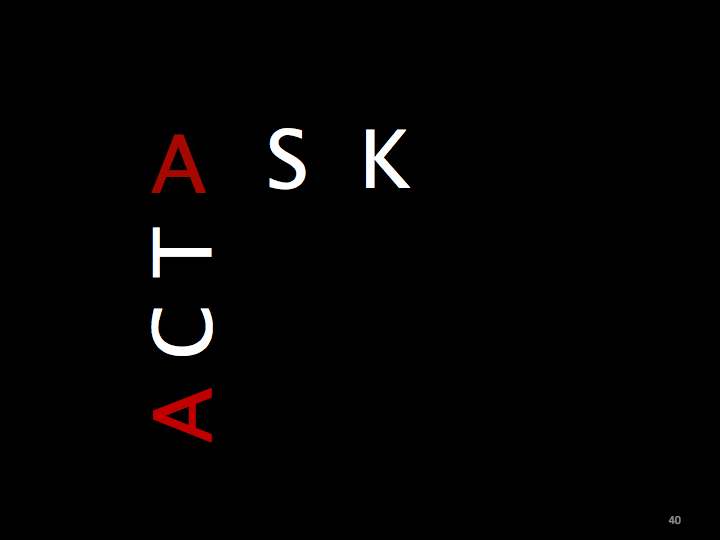
Ask & ActAll 12 could have walked on water. The two differences:

(1) ASK—Peter asked for it.

(2) ACT—Peter obeyed when Jesus said, “Come.” [The word ‘come’ used here only occurs in the Greek in the present imperfect tense … Peter has to complete the action now.]

The supernatural with Jesus wasn’t just for Peter; it can be for me as well…

Very truly I tell you, WHOEVER believes in Me will do the works I have been doing, and they will do even greater things than these, because I am going to the Father. And I will do WHATEVER you ask in My name, so that the Father may be glorified in the Son. You may ask Me for ANYTHING in My name, and I will do it. (John 14:12-14)

“Christians are more afraid of messing up than they are of missing out.” —Mark Batterson

I don’t want to miss out on what God has for me! So I am going to ask Jesus to let me be used for Him, and I am going to be quickly obedient when He says, “Come.”

Join us next Sunday as Pastor Josh continues this series.