Jesus asks us to proclaim the message about Him, not argue about Him. The best witness is one who truthfully shares his or her personal life-changing experience with Jesus. There is never a reason to quarrel about this! Check out this whole message here. I have lots of new content every week, which you can check out on my YouTube channel.
“In 1977, 40 years after arriving in Guatemala, the Franklins retired from full-time ministry, returning to the United States. They made numerous short-term trips back to Guatemala to rejoice with the people who had become their family. From the five small groups of believers they found in 1937, God had blessed them with 600 established churches, 700 licensed ministers, and 55,000 Assemblies of God believers.” What an amazing testimony of faithful, Christ-honoring ministry!
“Enduring peace cannot be bought at the cost of other people’s freedom.” —Franklin D. Roosevelt
“When we are out of the way of duty, we are in the way of temptation.” —Matthew Henry
“Work of the enemy! Such deeds he loves: friend at war with friend, loyalty divided, and confusion of hearts.” —Gandalf, in J.R.R. Tolkien’s Return of the King
I absolutely love the leadership insights I discover during my daily Bible reading. I have turned many of these insights into an ongoing series called Godly Leadership.
“Before one can correctly understand the work of the Holy Spirit, he must first of all know the Spirit Himself. A frequent source of error and fanaticism about the work of the Holy Spirit is the attempt to study and understand His work without first of all coming to know Him as a Person. … If we think of the Holy Spirit as so many do as merely a power or influence, our constant thought will be, ‘How can I get more of the Holy Spirit,’ but if we think of Him in the Biblical way as a Divine Person, our thought will rather be, ‘How can the Holy Spirit have more of me?’” —R.A. Torrey, The Person and Work of the Holy Spirit
Unforgiveness keeps our eyes on our offenders and off our God. Free yourself by forgiving those who have hurt you. You can check out this full sermon here. I have lots of new content every week, which you can check out on my YouTube channel.
“At the moment of truth, there are either reasons or results.” —Chuck Yeager
As I have shared before, I am so impressed with the He Gets Us social media campaign! Some people are still trying to figure out exactly what this campaign is. Sean McDowell and his podcast partner Scott Ray had a great conversation with Ed Stetzer about this. Check out the video!
Some people have been critical of the He Gets Us commercials that aired during the Super Bowl, but I thought they were outstanding! This is a social media outreach designed and funded by some of the most biblically-grounded, evangelistically-minded people I know. It is a social media campaign. It is not designed as a sermon (which is why there are no Bible verses shown in the commercial). The idea is to get past the barriers and misconceptions skeptics have come to believe about Jesus, and then be enticed to go to the hegetsus.com website. It is at this site that the Gospel message is introduced and visitors are given Bible verses and other materials to go deeper.
John Stonestreet wrote, “Before it was the corporate creation of greeting card companies, it was a day to remember third-century Christian martyr Valentinus of Rome.” This post is a good reminder of what Christians really should be remembering on Valentine’s Day, as well as the higher definition of love.
“The important thing is to learn a lesson every time you lose.” —John McEnroe
Listen to the podcast of this post by clicking on the player below, and you can also subscribe on Apple, Spotify, or Audible.

Jesus is teaching us to pray as citizens of the Kingdom of Heaven, and each phrase of this prayer is a reminder of how we interact with the King of Heaven—Our Father in Heaven, hallowed be Your name. Your Kingdom come, Your will be done on earth as it is in Heaven.
We all have a desire to feel secure—to feel our needs are going to be met. In fact, our anxiety level is usually tied directly to how insecure we may feel. The problem for many of us, however, is that we have mistaken wants for needs, and when those aren’t met as we think they should be, we again experience increasing levels of anxiety.
We see this on full display in Luke 12. First, Jesus addresses a man who is greedily desiring his share of his father’s inheritance. Jesus says, “Life does not consist in an abundance of possessions.”
To illustrate this point, Jesus tells a parable of a rich landowner who harvested more crops than he knew what to do with—a harvest which he calls “plenty.” His solution was to build bigger barns for his abundant harvest, to which God announced, “You fool” (Luke 12:13-21).
This man was not called a fool because he was successful. He was not called a fool because he had plenty. Rather, he was called a fool because his “plenty” caused him to forget his heavenly Father.
This is an invaluable lesson. Sadly, we tend to be a very forgetful people!
After God delivered His people from their bondage in Egypt, and they almost immediately start worrying and then complaining about whether their needs will be supplied. God tells them that He will supply every day exactly what they need (Exodus 16:1-35).
This provision of manna every single morning when they got up was intended to keep them reliant on God and thankful for His provision. But after a while they thought they deserved more—they wanted plenty (Numbers 11:4-6). Later on, Asaph would pinpoints the main culprit of the Israelites’ stumbled throughout their history: forgetfulness (Psalm 78:11, 22-25).
Jesus taught us to come to God in prayer as Our Father. Just as Jesus was daily dependent on His Father, so He teaches us to have that same level of daily abiding.
Jesus reminds us what the daily supply of manna really signified; namely, that He would be our Bread from Heaven for all of eternity (John 6:28-40)!
So that’s why we pray, “Give us today our daily bread.” Once again, this is an acknowledgement that no one else can provide for us, and it is a request that we would stay daily dependent on Him. It’s not, “Give us today our weekly bread.” Or, “Give us today our daily wants.” Or even, “Give us today plenty of things.”
We need our Father for daily bread so that we never, ever forget or vital, indispensable connection to Him!
Even when we don’t have plenty, we are told not to worry but instead to look to our Heavenly Father for His daily supply (Luke 12:22; Philippians 4:6-7).
There are two invaluable resources for Christians to process difficult situations the right way: the prayers in the Psalms and journaling. I have lots of new content every week, which you can check out on my YouTube channel.
“…[T]here is an enabling grace from God to endure in the strength he supplies and to do what ought to be done. Call it leadership for the long haul. And since great leadership serves the people, great leadership is servanthood, so we could also call it servanthood for the long haul. Meanwhile, merely enduring falls short. There’s something better. Great servants don’t endure merely. They endure by ‘being strengthened with all power, according to his glorious might, for all endurance and patience with joy’ (Colossians 1:11).” —Sam Crabtree
I love the priestly blessing found in Numbers 6:24-26. This post dives deep into this blessing, and as an added bonus also tells of an archeological discovery that marks these verses as “the earliest biblical verses” for which we have archeological evidence.
…and an extensive study of a species of octopi also demonstrates the genius of our Creator. “For an animal to adapt to its environment, evolution requires that animal’s DNA to mutate, giving the animal some new ability that helps them survive better. Mutations are permanent. According to evolutionary theory, over long periods of time and after several DNA mutations, a new animal arises that’s better adapted to its environment. But that is not how the octopus adapts to its environment. The changes in the created proteins are made by RNA, not DNA. These changes are not permanent and the DNA remains the same….” Check out the rest of this post.
Listen to the podcast of this post by clicking on the player below, and you can also subscribe on Apple, Spotify, or Audible.
I’ve talked before about the benefits of calling the Old and New Testaments the First and Second Testaments. This helps me not to subconsciously slip into the thought that “old” means outdated or that “new” means a replacement of what came before it. When I say First and Second I remember that there cannot be a Second without a First, that the First anticipates the Second and the Second fulfills the First.
The people of the First Testament experienced the Spirit of God in an often-repeated phrase: “the Spirit of the Lord came on” someone. It usually came on them for a specific task or season. For instance…
70 leaders to help Moses (Numbers 11:25)
the judges that delivered Israel from their enemies (Judges 3:10, 6:34, 11:29, 14:6, 15:14)
the anointing for Israel’s king (1 Samuel 16:13)
empowerment for prophets to prophesy (Ezekiel 11:5)
When the Holy Spirit came on these men, there was a noticeable supernatural anointing and empowerment, but more times than not these men also had visible and sometimes crippling stumbles.
What happens on the outside often stays on the outside. Sort of like the little boy whose mom brought him to church one Sunday. The little boy was constantly standing up on his chair and disturbing everyone around him. Finally, the exasperated mother whispered, “If you don’t sit down I’m going to take you to the restroom and spank you.” The little boy immediately sat down with his arms tightly crossed. He looked at his mom and said, “Outside I may be sitting down but inside I’m standing up!”
God looks at the heart. He told the Israelites that their inward defiance didn’t outweigh their outward religious practices. And Jesus said that people who prophesied, cast out demons, and performed miracles, but still had an unrepentant heart, would hear Him say, “I never knew you” (Isaiah 1:12-13; Matthew 7:21-23).
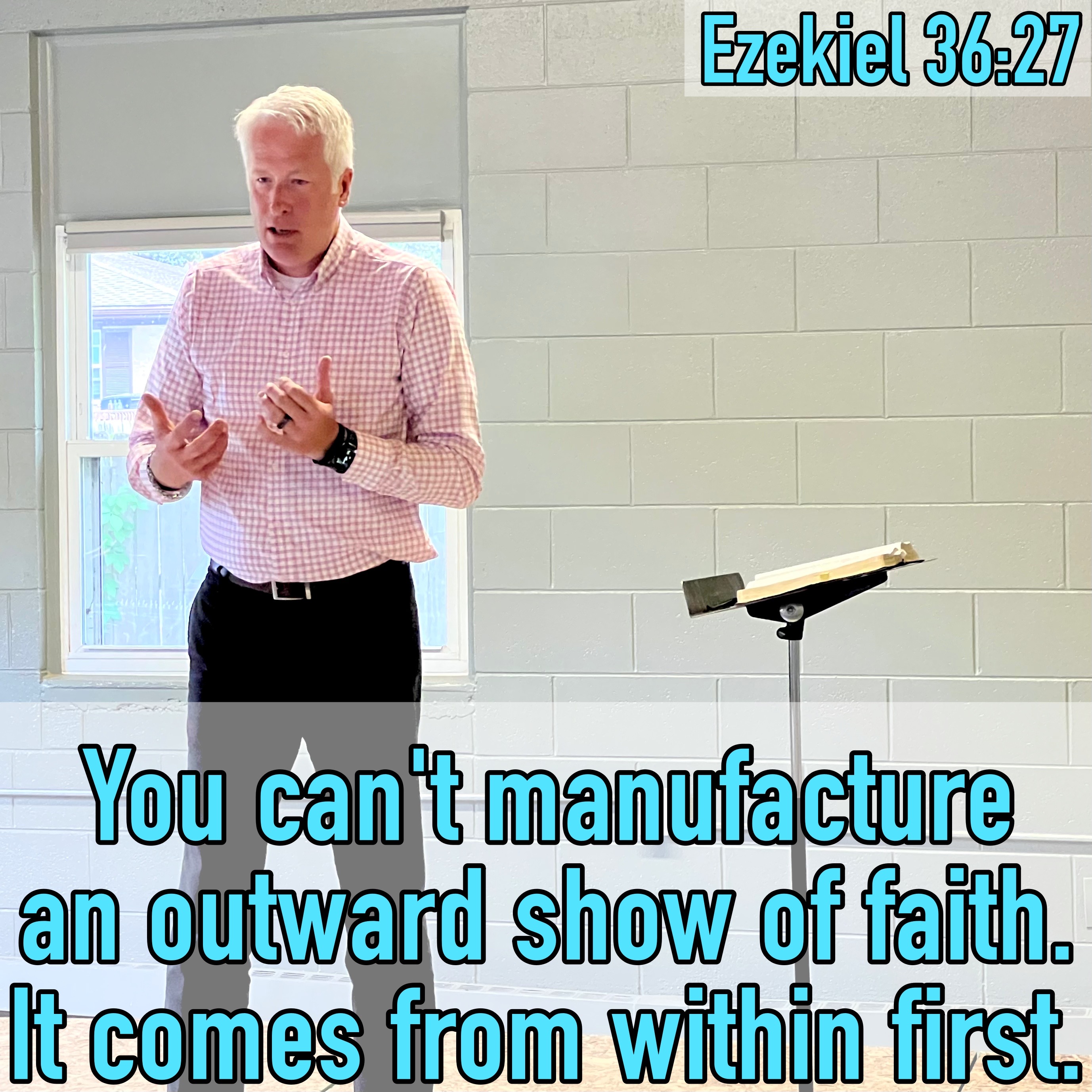
In the First Testament, we see a desire for the Holy Spirit to be more than on—a desire for Him to come in.David prayed, “Create in me a pure heart, O God, and renew a steadfast spirit within me” (Psalm 51:10). And God promised His people, “I will give them an undivided heart and put a new spirit in them … And I will put My Spirit in you and move you to follow my decrees and be careful to keep My laws” (Ezekiel 11:19, 36:27).
Paul identified this fruit of the Spirit as “love, joy, peace, forbearance, kindness, goodness, faithfulness, gentleness and self-control,” and he concluded with the phrase, “against such things there is no law” (Galatians 5:22-23). The law always sets limits, but when the Holy Spirit abides in us, the production of fruit is limitless!
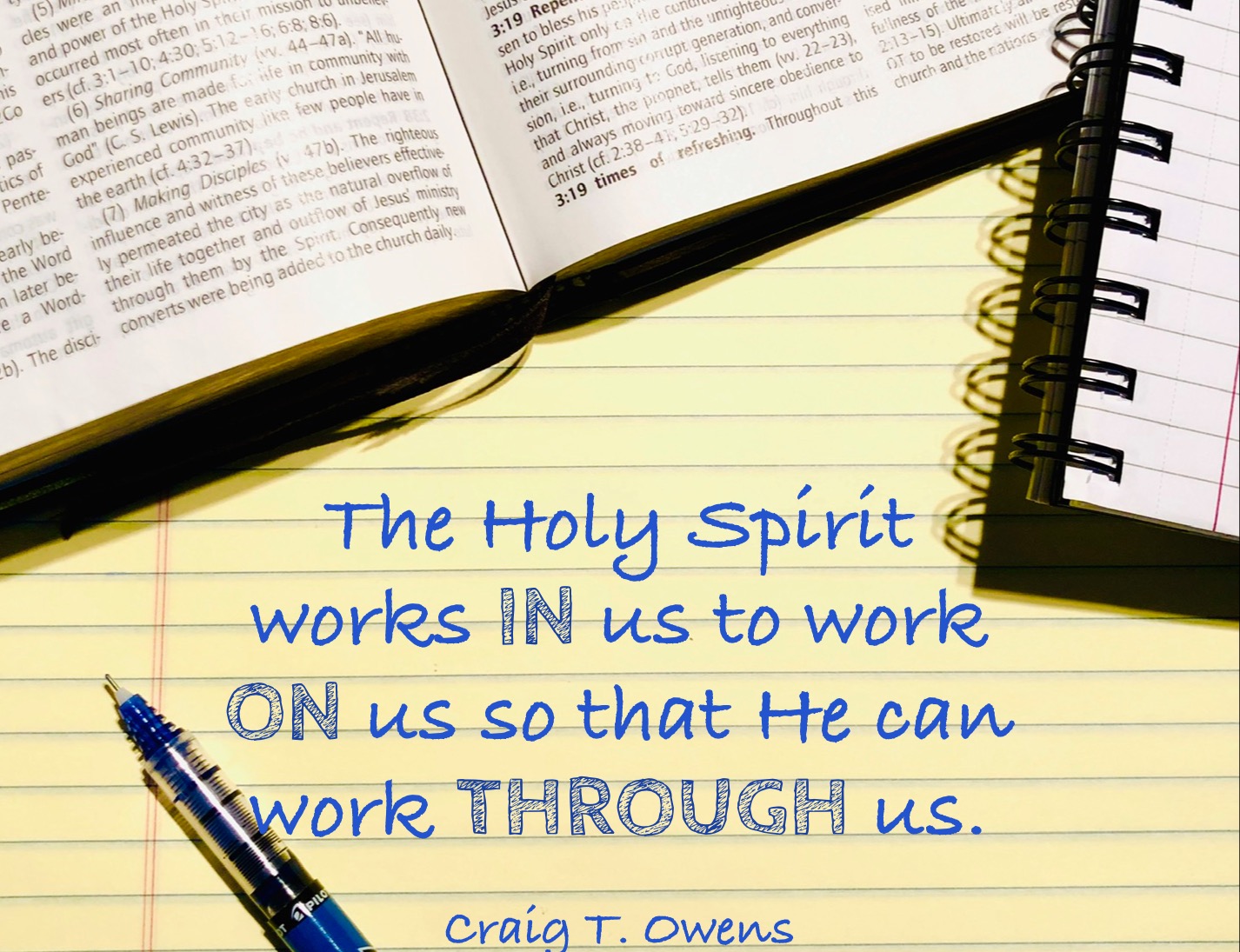
Being baptized in the Holy Spirit means that we allow Him to come in us and then to work on us. It’s only when the Holy Spirit has worked in us that can He flow through us to others. Jesus said that we would receive the Spirit’s empowerment to be witnesses—that’s an inward change that produces an outward fruit.
Listen to the podcast of this post by clicking on the player below, and you can also subscribe on Apple, Spotify, or Audible.
Last week we learned that we have a job to do. If we want to see Jesus come back to take us Home, we need to share the Good News with everyone. Jesus said that we didn’t have to obey Him in this Great Commission by ourselves, but we can go in His authority and with the empowerment of the Holy Spirit (Matthew 24:14; 28:18-20; Acts 1:8).
In Acts 1:8 notice that Jesus said we are “be My witnesses.” This isn’t an action first, but they are actions that spring out of who we are. So we need to ask: How are we to be His witnesses? Answer: By being blessed by God!
God has desired that we know the blessing of His presence since the very beginning. He instructed the priests to bless the people with these words:
The Lord bless you and keep you; the Lord make His face shine on you and be gracious to you; the Lord turn His face toward you and give you peace. (Numbers 6:24-26)
The Hebrew word for “peace” in this passage is shalom. One of the most basic definitions for shalom is “nothing missing.” In other words, we are blessed people when we realize there is nothing keeping us back from God’s presence.
If you asked someone in the Old Testament where they thought God’s presence was, they would probably point you to the Tent of Meeting or the Tabernacle in Jerusalem. But that was merely a foreshadowing of what God truly desired for His relationship with us. Jesus promised His followers, “On that day you will realize that I am in My Father, and you are in Me, and I am in you” (John 14:20). So if Jesus is in the Father, and we are in Him, that means we are also in the Father. In this position, we can experience the nearness to the Father that Jesus knows (see Ephesians 1:3-8).
This nearness is our source of peace: Now may the Lord of peace Himself give you peace at all times and in every way. The Lord be with all of you (2 Thessalonians 3:16). In this verse, the Greek word for “peace” is eirene, which means a soul at utter peace with God because it is assured of its eternal Home in God’s presence.
Blessed people are abundance people. Blessed people have all their needs supplied so that they can be a conduit of blessing to others. Our increasing awareness of God’s blessing empowers us to be witnesses for Him.
Let me take you back to the Book of Psalms. In Psalm 67, the psalmist asks for God’s blessing on his life four times in just seven short verses. Why does he desire this blessing? It’s not for himself but for others. Look at just the first two verses of this psalm:
May God be gracious to us and bless us and make His face shine on usTHAT Your ways may be known on earth, Your salvation among all nations.
Recall that Jesus commissioned us to go to all nations and that the Holy Spirit empowers our witness to all peoples. This psalmist is asking for God’s blessing so that he can be a witness to everyone. Nine times he says that he desires that all nations or all peoples will know and worship the Most High God.
God’s blessing on His people is really SO THAT all peoples and nations can see His blessing and turn to Him. One of the roles of the Holy Spirit in a believer’s life is to remind us that we are indeed blessed in Jesus, and that we have a mission to fulfill in taking that blessing to others.
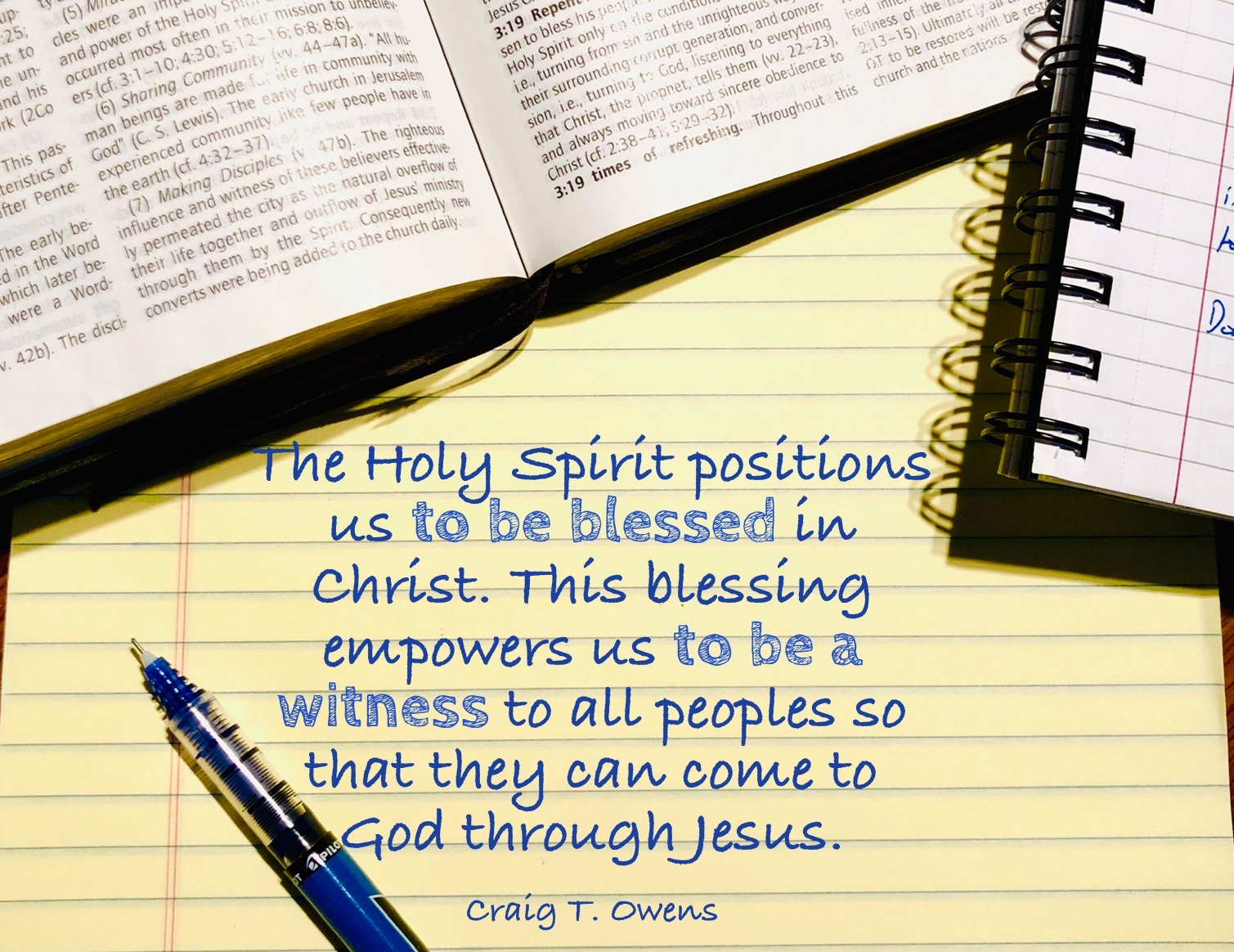
The Holy Spirit positions us to be blessed in Christ. This blessing empowers us to be a witness to all peoples so that they can come to God through Jesus.
It is good for us to pray for the Spirit’s blessing on our lives so that we can BE a blessing to all nations and peoples.
If you would like to check out all of the other messages in our series called We Are: Pentecostal, please click here.
Listen to the podcast of this post by clicking on the player below, and you can also subscribe on Apple, Spotify, or Audible.
We’ve all heard people make some audacious claims. But the real power is in being able to back up those claims. Without any proof, it’s all talk! As things were coming to a conclusion for Christ’s ministry—at least in the world’s eyes—there were some bold claims being made. Some were made by Jesus Himself, some by His rivals, and some by His supporters.
The first bold claim we’re going to consider was made by the high priest: a man named Joseph Caiaphas.
The Sanhedrin was the highest court in the land and was made up of 70 + 1 men. This comes from Numbers 11:16-17 (seventy leaders) plus Moses. After Moses, another person was always appointed to serve as the leader, which was usually the high priest.
By the time of Jesus, this ruling body had become more political than religious. Very frequently, leadership would change because of the whims of the Romans or their puppet leaders (someone like a King Herod). The high priest in Christ’s early years was a man named Annas, who served from AD 6-15. During all of the public ministry of Jesus, the high priesthood had transferred to Caiaphas (AD 18-36), who was Annas’ son-in-law. Yet both of them still shared considerable influence (see Luke 3:2; John 18:13, 24; Acts 4:6).
Caiaphas and his family were Sadducees. They didn’t hold to any beliefs of the supernatural—no angels or demons, no resurrection, no afterlife. Partly because of these unscriptural beliefs, the Jewish Qumran, who safeguarded the careful copying of the Scriptures, called Caiaphas “the wicked priest.”
Annas, Caiaphas, and their family member were the ruling party that wanted to stay in power. So their activities were always a balancing act: Trying to keep the Jewish community happy on one hand, while not offending the Romans or other political leaders on the other hand.
It’s with this backdrop that we read the story of Lazarus’ resurrection in John 11. Jesus knew this miracle would validate His ministry, and sure enough, after the resurrection of Lazarus, more and more people put their faith in Jesus. So much so that the religious leaders wanted to kill both Jesus and Lazarus (11:53; 12:9-11).
Ironically, these same religious leaders had previously asked Jesus for a sign to prove He was who He made the bold claim to be. To this demand, Jesus said that He would give them “the sign of Jonah” who was considered dead in the belly of the fish before he was “resurrected” to complete his mission (Matthew 12:38-40, 16:1-4).
Since the religious leaders viewed everything through a political lens, they thought Jesus was also going to instigate a political or military uprising. The following that Jesus would gather would challenge the Sanhedrin’s hold on power, so Caiaphas proposed a political solution disguised as a prophecy (John 11:49-53).
Caiaphas meant it like this: “We’re trying to keep the balance between the Jewish people and the powerful Romans. If we kill one Man (Jesus) in time, we may be a little out of favor with the Jews but we will save our position with the Romans. Later on, we’ll make things right with the common people.”
Even to this day, people are trying to balance, juggle, control, appease, and bargain their way to get or keep the life they want to live. They will use religious dressing to do political things, thinking they will “make it right” later on.
Caiaphas made this bold claim: “If Jesus dies, our position will be saved for us and our children.” But he had no power to back up his bold claim, so it was just talk.
But Jesus made this bold claim: “I will die so that your souls can be saved for eternity.” He, on the other hand, had the power to back up His bold claim (John 10:17-18).
Caiaphas’ plan sounded like it would be the end of Jesus and His mission, but “the end” was really just another step in fulfilling what God had already planned!
Let me say it again: God’s plan always prevails. The bold claims of powerful evil people may make it seem like the end is near, but don’t fret because their “end” is only fulfilling God’s plan!
Listen to the podcast of this post by clicking on the player below, and you can also subscribe on Apple, Spotify, or Audible.
When I was younger—and so much more immature—I thought it would diminish my leadership if I ever answered, “I don’t know” to any question. As a result, I fired off very self-assured answers that probably weren’t well thought-out.
They probably weren’t very God-honoring answers either.
Once a leader is “on the record” with an answer, they will usually defend their stance even if it appears to be wrong. After all, they must save face at all costs.
A downward slide continues when a leader then uses their position of authority to say something like, “Because I’m the leader and I said so!” With this stance, people are often repelled from that leader.
How much better to to wait before giving an answer—to give up the need to always be “The Answer Man”!
And better yet, let’s not give anyone our answer, but let’s seek God for HIS answer! Not only will this be the best answer, but God will defend Himself without us having to step in to “help” Him.
With this stance, the people are not only drawn to this godly leader but they are drawn to God as well.
Consider these examples from Moses:
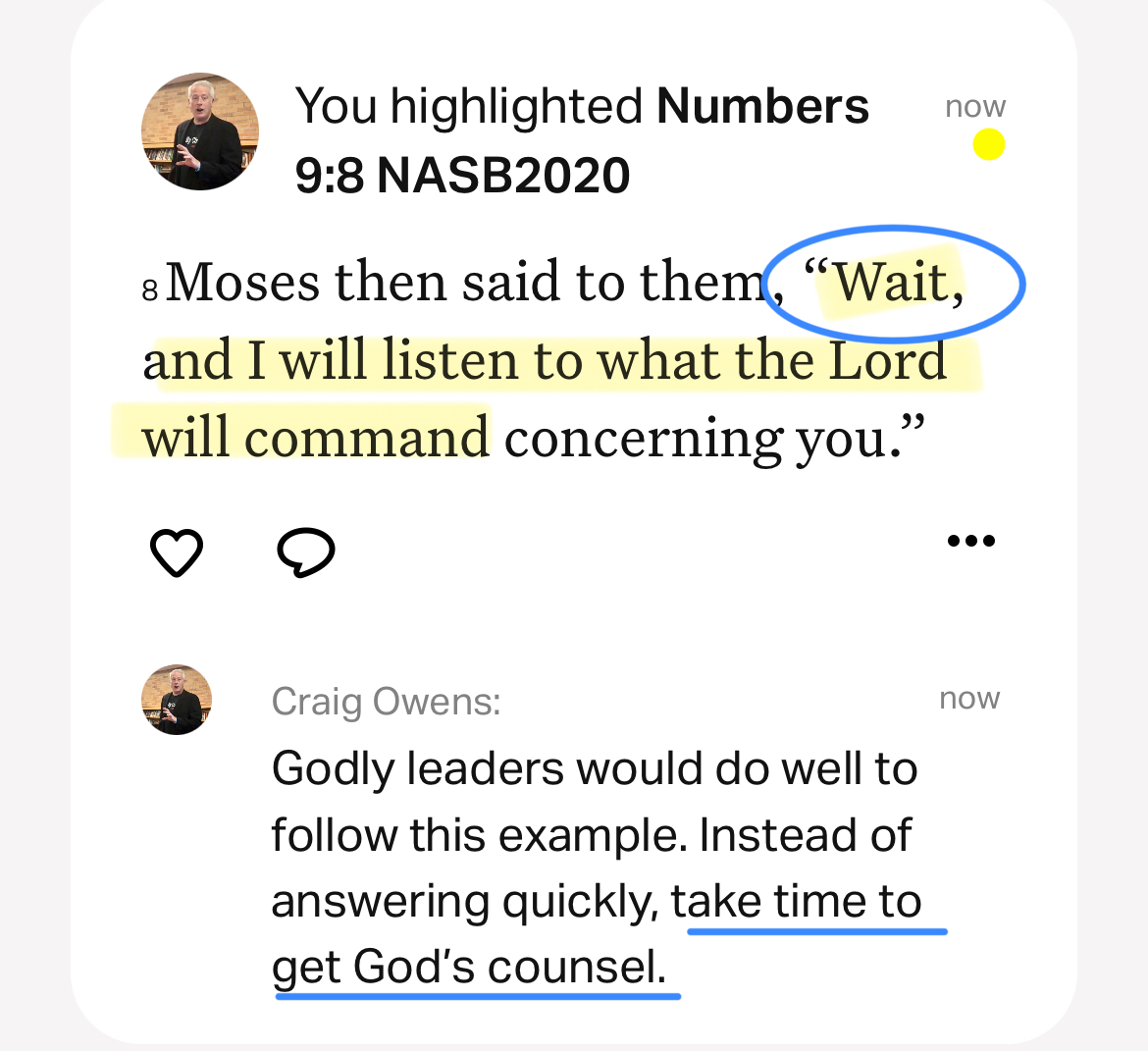
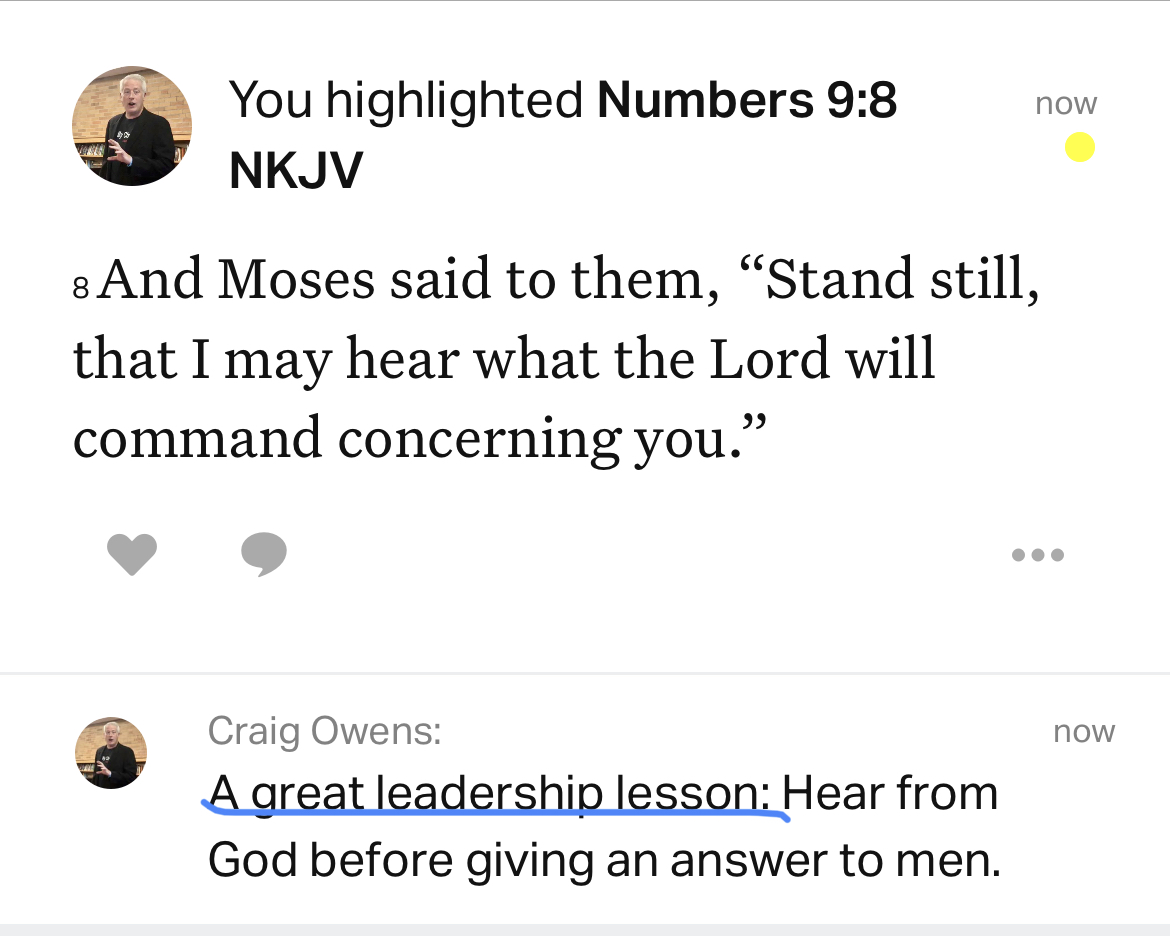
Stand still, that I may hear what the Lord will command concerning you. (Numbers 9:8)
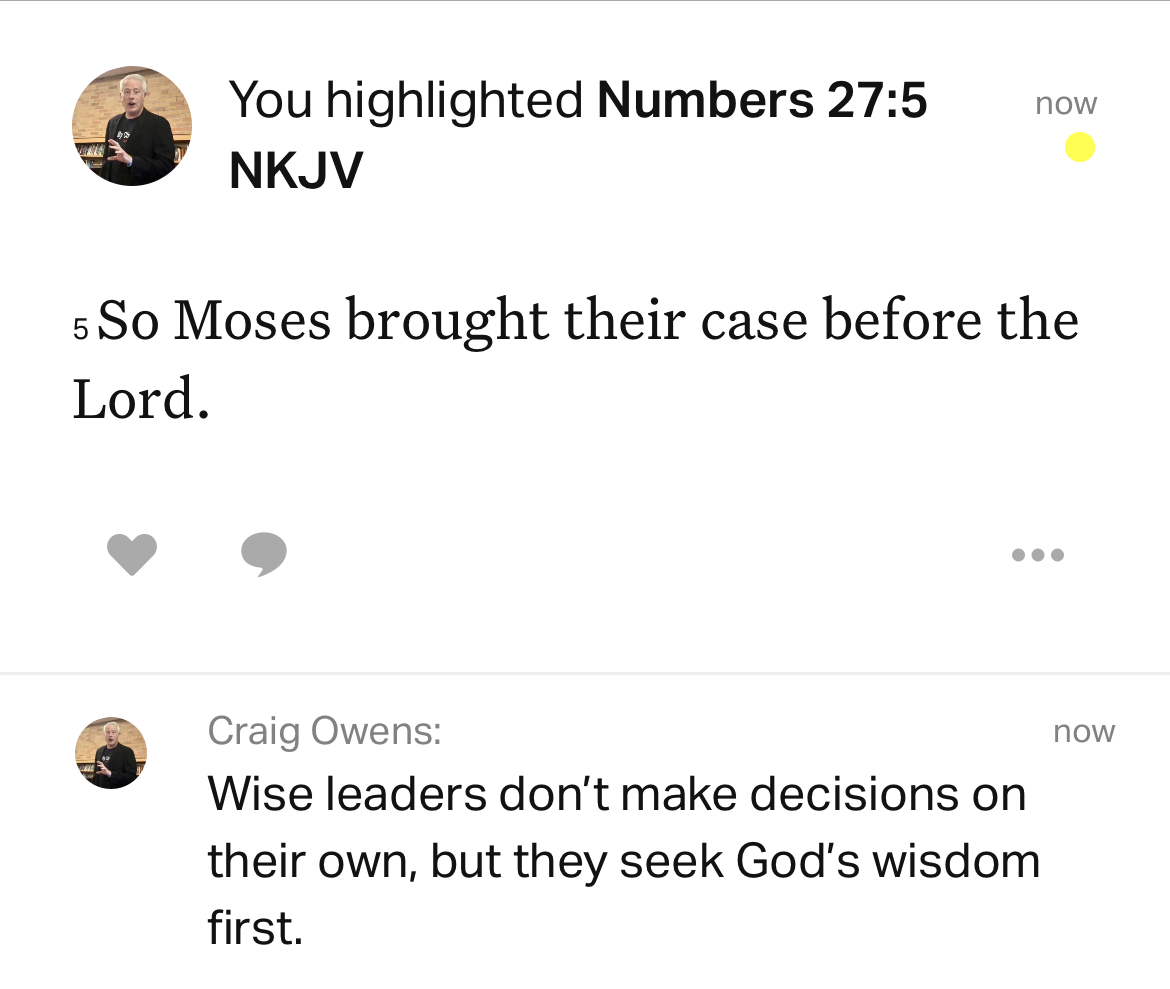
So Moses brought their case before the Lord. (Numbers 27:5)
A mark of a godly leader is one who hears from God before answering men.
So the next time someone asks your opinion, pause. Remember that it’s okay to say, “I’m not sure how to answer you on that one. I need to hear what God has to say about this.” Let’s give up the desire to be “The Answer Man” for everything. Instead we can simply announce the answer that God has given.
This is part 69 in my series on godly leadership. You can check out all of my posts in this series by clicking here.
Listen to the podcast of this post by clicking on the player below, and you can also subscribe on Apple, Spotify, or Audible.
No one likes to be around a complainer!
Complainers, ironically, find things wrong everywhere else but with themselves. Complainers know how everyone else should raise their kids, run their businesses, operate their government, lead their sports teams to victory, but they seldom apply their so-called wisdom to their own lives. Complainers find the one thing that’s wrong in an otherwise perfect situation.
Complaining is easy because it comes so naturally. What do I mean by that? Take a look at the magazine covers at your grocery store—do they have good news or complaints? Take a look at the lead news stories—are they celebrations or complaints? Those magazines want to sell copies. Those news stations want viewers. Those websites want clicks. They wouldn’t promote the complaints if they didn’t get them the attention (and the advertising revenue) they desire!
Let me see a show of hands on this: How many of you want to be around complainers?
I noticed no one raised their hand, so I need to ask a follow-up question: Why do you complain? If you don’t like to be around a complainer, why do you do what others obviously don’t like either?
I think we complain because we think our situation is unique—no one has experienced anything quite like what we’re going through. We often make a list to “prove” to everyone that we have earned the right to complain. This is what Job did. Check out his list in Job 7:1-11, and then notice his conclusion where he says, “Therefore I will not keep silent; I will speak out in the anguish of my spirit, I will complain in the bitterness of my soul.”
But we need to be careful because the Bible makes it clear that complainers make God angry (see Numbers 11:1; 1 Corinthians 10:10-11). Why? I think there are two reasons.
First, I think God gets angry about complaints because of how quickly they spread to everyone around them—like cancer cells they destroy the whole body.
Second, complainers take everyone’s eyes off God and point their attention to the lousy situation about which they are complaining.
On the other hand, grateful people stand out because they can find the one thing worthwhile in an otherwise lousy situation. Being a grateful person takes discipline to overcome the downward pull of everyone else’s complaints.
Paul wrote a letter to the church at Philippi that is bursting with thankfulness! We only have to get three verses in when he says, “I thank my God every time I remember you” (Philippians 1:3).
Paul stood out because of his great attitude of gratitude. Consider what happened the very first time he visited the city of Philippi. He and Silas were wrongly accused, beaten, and locked in prison. Paul didn’t start a petition, he didn’t give the jailer a bad review on Yelp, he didn’t organize a rally, he didn’t call the Roman governor. Instead, Paul and Silas were praying and singing hymns to God while the other prisoners listened in (Acts 16:16-25).
In a lousy, unfair, dark situation, Gratitude says, “God is still God, and He is still worthy of abundant praise!”
So in the middle of his letter to the Philippians, Paul instructs these Christians to: Do all things without murmurings and disputings (Philippians 2:14 KJV). Murmurings are the vocalizing of the faults we have found.Disputings, though, are internal. In the Greek, this word almost always refers to complaining and grumbling thoughts, and many times it’s translated as “evil thoughts.”
When the complaining comes out of our mouths, that is just the ugly weed. The root of that complaint is in our hearts. We don’t need a vocabulary change, we need a heart change.
When we praise God, we magnify Him. That doesn’t make God bigger because He is infinite. But it does put a “telescope” on Him. Telescopes bypass everything that is close by and focus on something majestic. Our praise—like Paul and Silas’ song from prison—invites others to look through our telescope to see the God we are magnifying.
Gratitude can start with one person, and then it can spread. Gratitude can counteract the cancerous complaints. Will you be that one grateful person at this Thanksgiving season and beyond? Will you be the one that says, “No matter what, God is still God, and He is still worthy of abundant praise”? Will you be that one that sings praise at the exact moment everyone else expects complaints? If you do, your gratitude will entice others to want to worship this all-good God too!
Follow along with all of the messages in our series called The Great Attitude Of Gratitude by clicking here.
Listen to the podcast of this post by clicking on the player below, and you can also subscribe on Apple, Spotify, or Audible.
A couple of weeks ago I asked a question about a fictitious job. Which job would you rather have: a job that’s (a) boring, not utilizing your skills, where you’re treated as a cog in the wheel, or (b) energizing, calling out your best talents, a place where you are making a difference?
As a follow up I asked, “Which of those jobs are you more likely to be happy to go to? Which job is going to inspire you to give your best work ethic?”
We all want that ideal job, but the reality is that in this fallen world there are no perfect jobs, so it’s very likely that we’re going to have the challenging jobs. Even when we have that kind of job, Christians are called to work with excellence and to find joy in that work (Colossians 3:23).
Work originated with God. At the conclusion of every day of Creation, God looked at His magnificent handiwork and pronounced it good. When God placed Adam and Eve in the Garden of Eden, He gave them instructions to work, and even after their sin, He repeated the call to work (Genesis 2:15, 3:17-19).
Whether we are called to be gardeners or evangelists, plumbers or salespeople, teachers or doctors, we are to work well. William Tyndale wrote, “There is no work better than to please God; to pour water, to wash dishes, to be a cobbler, or an apostle, all are one; to wash dishes and to preach are all one, as touching the deed, to please God.”
Let me give you two examples of good workers.
The first is Joseph whom we meet in the first book of the Bible. Out of their jealousy of their father’s preferential treatment of Joseph, his brothers sold him into slavery. Joseph ended up in Egypt working for a man named Potiphar. I don’t think anyone would have blamed Joseph for grumbling about his condition and giving the least effort possible, but instead, Joseph so excelled in his work that Potiphar promoted him over all his household.
After being framed for a crime he didn’t commit, Joseph found himself in prison. Once again, this innocent man could have sulked and complained and shirked his work responsibility. But once again, Joseph did such excellent work that the warden promoted him to a trustee position over all the other prisoners.
Eventually, Joseph was promoted to second in command in all of Egypt, where he continued to do excellent and innovative work. Joseph’s good attitude and impeccable work ethic allowed God to place him in a position where he could save his people from starvation (see Genesis 39-50).
What about the example of Jesus? He was fully God, yet He gave up His divine prerogatives to work as a carpenter and to eventually perform the most important work of all: the willing sacrifice for the sins of all humankind. Paul describes the servanthood and willing attitude of Jesus in Philippians 2, adding an important “therefore” when he tells us that the excellent work of Jesus allowed God to place Him in a position where He could save His people from eternal separation from God (Philippians 2:6-11).
But Paul also has an important word for us in the verse preceding this passage: “Let this same attitude and purpose and humble mind be in you which was in Christ Jesus” (v. 5 AMP).
I may not be able to choose my job, but I can always choose to have a God-glorifying attitude about my job. When I choose this attitude and live it out with an excellent work ethic, God is pleased.
So allow me to give you four attitude-checking questions about your own work ethic:
Do I feel like I have to go to work? I should so crave God’s glory and God’s rewards that I have a get to attitude about my work.
Am I living for T.G.I.F.? We shouldn’t be focused on just getting things done, but we should make the most of every day of work that we have been given. We should be living out T.G.I.T.—Thank God It’s Today (Psalm 90:12, 17)!
Let me repeat an important principle: I may not be able to choose my job, but I can always choose to have a God-glorifying attitude about my job. When you have this kind of attitude, you will experience the joy of a fulfilled craving that God has put in all of us—the desire to do meaningful and God-honoring work. This is the attitude and work ethic God delights to reward.
Links & Quotes
February 17, 2024 — Craig T. OwensUnforgiveness keeps our eyes on our offenders and off our God. Free yourself by forgiving those who have hurt you. You can check out this full sermon here. I have lots of new content every week, which you can check out on my YouTube channel.
“At the moment of truth, there are either reasons or results.” —Chuck Yeager
As I have shared before, I am so impressed with the He Gets Us social media campaign! Some people are still trying to figure out exactly what this campaign is. Sean McDowell and his podcast partner Scott Ray had a great conversation with Ed Stetzer about this. Check out the video!
Some people have been critical of the He Gets Us commercials that aired during the Super Bowl, but I thought they were outstanding! This is a social media outreach designed and funded by some of the most biblically-grounded, evangelistically-minded people I know. It is a social media campaign. It is not designed as a sermon (which is why there are no Bible verses shown in the commercial). The idea is to get past the barriers and misconceptions skeptics have come to believe about Jesus, and then be enticed to go to the hegetsus.com website. It is at this site that the Gospel message is introduced and visitors are given Bible verses and other materials to go deeper.
“The important thing is to learn a lesson every time you lose.” —John McEnroe
Share this: