An old Sunday School song had kids joyfully singing, “I’m in the Lord’s army!” Children who enjoyed playing “Army” with their friends loved this song and the idea behind it, but it seems like many seasoned saints get a little uncomfortable with the idea of a militant Church.
But from God’s well-ordered instructions in the Old Testament of how the tribes of Israel were to move out with military precision, to the New Testament’s directions on how Christians are to wear their spiritual army to fight their battles, it’s clear that saints are indeed a part of the Lord’s Army.
On the pages of Scripture, we are introduced to military leaders—some who are among God’s people and some who are outsiders. From each of these leaders we can learn invaluable lessons for our lives. I hope you will join us for this informative and applicable series of messages.
Listen to the podcast of this post by clicking on the player below, and you can also subscribe on Apple, Spotify, or Audible.

The 12th Song of Ascent (Psalm 131) was written by David to remind us to rely on God’s help even more as we progress on the journey (or mature in our faith). In the 13th Song (Psalm 132), the psalmist says, “Remember David” and his passion for God’s people to experience God’s righteousness and joy. In order for us to know that, we have to remember Jesus.
Those who put this collection of Songs of Ascent together now include David’s fourth song (Psalm 133) in this collection which expresses his desire for unity among God’s people.
Can you imagine the pilgrims starting out from their individual villages? Maybe there’s not very many of them to begin with and traveling is pretty easy, but they do have to be vigilant against dangers on the road.
As they progress, they begin to join with pilgrims from other villages. Maybe these are from the same tribe, perhaps even distant relatives. The journey may go a bit slower now that there are more people to keep track of, and some complications of personality may start to arise. But the level of safety and assistance also increases.
Soon the group is getting larger as they now join with pilgrims from other tribes. These aren’t near relatives at this point, so there may be more complications, but there is even greater encouragement, safety, and potential.
Aha! Potential.
We’ve gone singing with a small ensemble to singing in a choir. And David is anticipating us singing in an even larger, majestic choir! There will undoubtedly be more problems, but there is also assuredly so much more potential, beauty, and strength in their combined worship.
My friend Dan Chastain has over 20 years of experience in the United States Army. He points out that the Army did the same things in his day as we read in the Old Testament.
The unity of a fighting force, Dan said, is a blessing. David was a professional soldier. Many people today join the military because of this professional, unity, and camaraderie. Maintaining this unity is the responsibility of everyone, because disunity leads to mistrust, chaos, and defeat.
David says this choir paints a picture—“it is like” (v. 2) and “it is as if” (v. 3). He is saying that God desires overflowing blessings on His people (v. 2), and that God desires saturating blessings on His people (v. 3). Why? Because God wants to give us more than enough for our needs so that there is plenty left for those who aren’t brothers and sisters yet. He longs for our choir to include people from every tribe, race, and nation.
Just as we said last week that a Christian’s joy is a testimony, a choir of Christians is an even more compelling testimony!
David calls this unity “good” which really means so much better than the alternative. And he calls this unity “pleasant.” The Hebrew word literally means singing a sweet sound!
The Hebrew word for “unity” here is also instructive. It means to be together in the same place—not just in spirit and desire—but in physical proximity. This is exactly the picture we see in the first Church (Acts 2:44, 46-47), as well as the picture of the choir from every nation, tribe, people, and language singing around God’s throne in Heaven (Revelation 7:9-10).
In order to navigate all of the differences of personality that could keep us from this unity, we have to work at. We need the attitude of Jesus (Philippians 2:1-5). This requires a daily transformation of our minds (Romans 12:1-3), and this transformed mind is what helps us move from a small ensemble to a majestic choir (Romans 12:4-5, 16-18).
Listen to the podcast of this post by clicking on the player below, and you can also subscribe on Apple, Spotify, or Audible.
Sometimes you might hear it said of someone’s leadership mettle or leadership philosophies that they are “battle-tested.” In the case of Hal Moore On Leadership, this is literally true!
Perhaps you’ve seen the movie “We Were Soldiers Once…And Young,” which recounts the first full-scale military battle in Vietnam between Moore’s 450-man force and the 2000 soldiers of the North Vietnamese Army. Despite being completely surrounded and severely out-gunned, Moore’s First Cavalry decisively defeated the NVA.
General Moore’s leadership principles won the day for his men in that battle. But even then, his principles had already been battle-tested under fire in the Korean War, and put to the test in the various assignments that Hal Moore faced in his highly-decorated military career. Moore was continually tasked by superior officers to re-tool underperforming units, or step in where tensions were high, or help reorganize when the Army was experiencing some growing pains.
Moore not only excelled at every assignment, but he kept meticulous notes that are now available to any leader in this excellent book.
Hal Moore On Leadership is partially a biography, but mostly his story is told as the backdrop for the leadership principles that were proven to be correct time and time again.
Students of both leadership and military history will find this book enjoyable and practical.
st of this post by clicking on the player below, and you can also subscribe on Apple, Spotify, or Audible.
There’s an old proverb that says,
For want of a nail the shoe was lost,
for want of a shoe the horse was lost,
for want of a horse the knight was lost,
for want of a knight the battle was lost,
for want of a battle the kingdom was lost.
So a kingdom was lost—all for want of a nail.
I thought of this proverb as I began reading Washington’s Immortals by Patrick K. O’Donnell, which recounts the history of a regiment from Maryland that not only turned the tide of a crucial battle in the American Revolutionary War, but who were at the center of nearly every vital battle throughout the war.
At the outset of the war, the British army and navy nearly overwhelmed George Washington’s forces in New York. One regiment from Maryland stood their ground, keeping the British bottled up for just one hour. But that one hour allowed General Washington precious time to get his retreating army to safety. Without the bravery and tenacity of these Marylanders, the war could have been over almost before it started. So to paraphrase the old proverb above, for want of the brave stand of the Marylanders, the American cause could have been lost!
As General Washington watched those brave men not only stand their ground, but repeatedly counterattack the far superior British forces, he said, “Good God! What brave fellows I must this day lose!”
If that were the only service to the American colonies that this elite group had supplied, it would have been enough. But time and time again, General Washington and General Nathaniel Green placed the Marylanders in the most vulnerable or the most crucial places on the battlefield, knowing that these men would not fail to come through.
O’Donnell follows the movements of the Marylanders from the beginning of the war all the way through to its conclusion in a very readable manner. He shares just enough of the details of the battle for us to get a feel for the gravity of the situation, but not so many details that it becomes laborious reading.
Any students of American history, military history, or leadership-under-fire will appreciate reading Washington’s Immortals.
Listen to the podcast of this post by clicking on the player below, and you can also subscribe on Apple or Spotify.
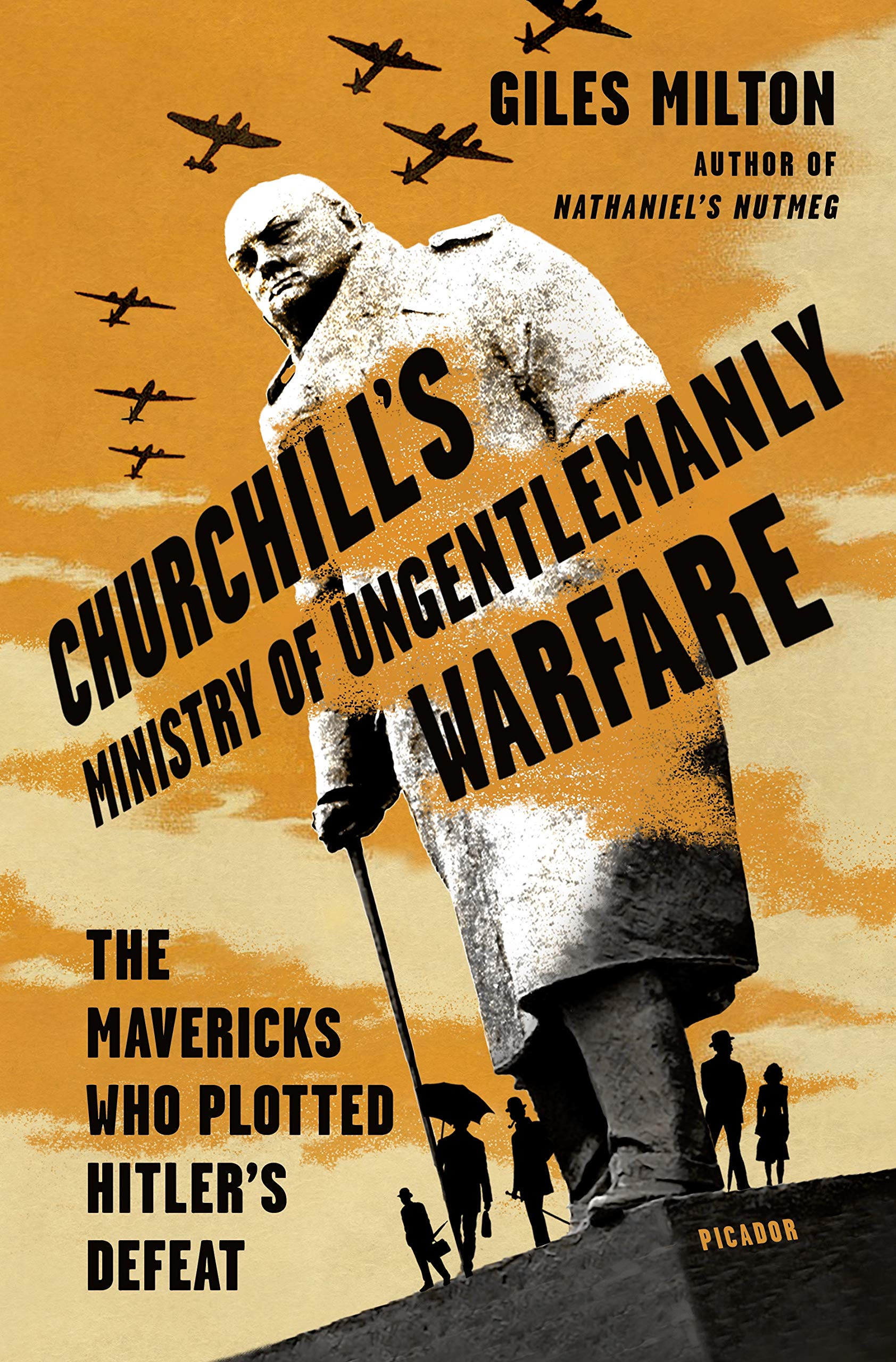
This book was a complete and pleasant surprise! I have read so many books about Winston Churchill, including a number of books that Churchill himself wrote, and I never knew about the prime minister’s special group that played such havoc with the Nazi war machine. Giles Milton unpacks the fascinating tale in Churchill’s Ministry Of Ungentlemanly Warfare.
This book reads like a classic spy novel, but it is the actual historic record of saboteurs, weapons makers, and out-of-the-box plotters who absolutely frustrated Adolph Hitler’s war plans at nearly every turn. The start of World War II caught so many by surprise that they were woefully unprepared to confront what appeared to be the invincible German military. Some in the British government hit upon the idea of fighting a guerrilla-style war to slow down the Germans’ advance.
Mr. Milton does a marvelous job of following six key gentlemen in the way they created new weapons, new training regimens, and new fighting styles. Everything they did was so unconventional that the traditional leaders in the British government and military hesitated to give their support to this special ministry, and even went out of their way to thwart their efforts. Fortunately, Mr. Churchill was all-in on this group and cleared out the roadblocks for them.
Whether you enjoy fictional spy novels or non-fictional accounts of historical events, I’m confident you will thoroughly enjoy Churchill’s Ministry Of Ungentlemanly Warfare.
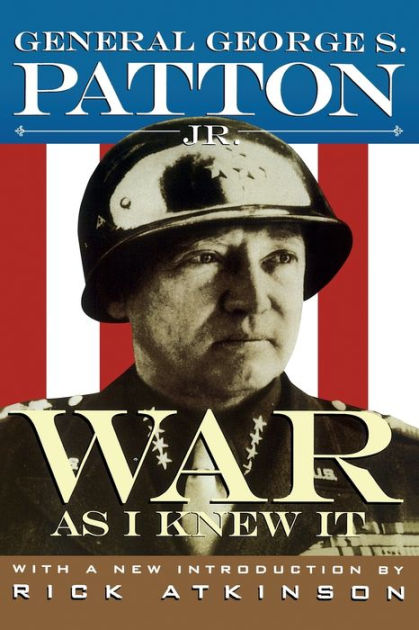
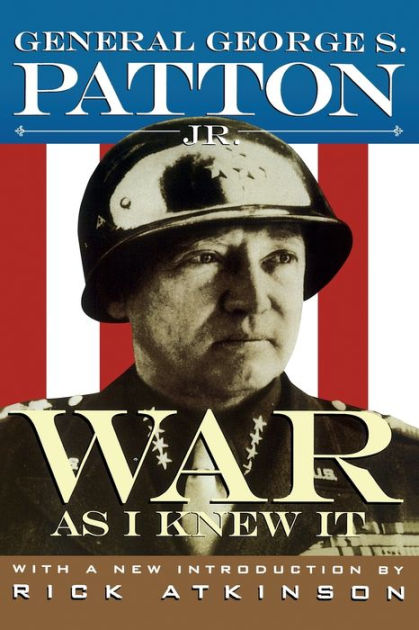
General George Patton gives us an insightful leadership look into how his army was able to accomplish so much during such a short time in World War II. Check out my full book review by clicking here.
“An ounce of sweat saves a gallon of blood.”
“This is another example of the many I’ve encountered in life where great disappointments have proven to be the road to future success.”
“Successful generals make plans to fit the circumstances, but do not try to create circumstances to fit plans.”
“The 8th of May, 1945, marked exactly two-and-a-half years since we had landed in Africa. During all that time we had been in practically continuous battle, and when not in battle had been under the strain of continuous criticism, which I believe is harder to bear.”
“It is unfortunate and to me a tragic fact, that in our attempts to prevent war we have taught our people to belittle the heroic qualities of the solider.”
“Wars are not won by defensive tactics. … The best armor and the best defense is a rapid and well-directed fire.”
“An army commander does what is necessary to accomplish his mission, and that nearly eighty percent of his mission is to arouse morale in his men.”
“Don’t delay. The best is the enemy of the good. By this, I mean that a good plan violently executed now is better than a perfect plan next week.”
Throughout my life, I’ve had the privilege of meeting World War II soldiers who fought in the Third Army in Europe. I’ve said to them, “Oh, so you were Patton’s man.” And the response is always the same, “Yes sir!” they proudly respond with a smile. General George Patton was a unique military leader, and his memoirs called War As I Knew It capture his uniqueness.
George Patton lived as if he were always in pursuit of something big. He always pushed himself, those under his command, and even those in leadership over him, to keep moving forward. His memoirs cover the final 2+ years of World War II, from the time he landed his troops in Africa until Germany surrendered.
Patton’s Third Army was an unstoppable force! They covered more ground, took more territory, captured or killed more enemy combatants, liberated more cities, and destroyed more enemy material than any other army in US history! This was because of Patton’s drive, and because of his strenuous personal preparation before the war even started.
These memoirs record Patton’s successes, but he also is transparent enough to list where he miscalculated and where he was simply a beneficiary of good fortune.
For students of leadership, US history, or military history, War As I Knew It is a very insightful book.
The whole army then returned safely to Joshua… (Joshua 10:21).
The only time any deaths in battle are mentioned in the whole military campaign of Israel conquering Canaan is at Ai when 36 men died (7:1-5). Other than that, zero casualties.
A massive Israelite army, waging war against huge armies “as numerous as the sand on the seashore” (11:4), many of them entrenched in fortified cities, several of the warriors are giants, fighting on terrain that is unfamiliar to them—zero casualties!
But why should this surprise us?
God doesn’t see masses of people; He sees individuals. He knows how many hairs are on each soldier’s head! He is able to keep alive all His children despite the rigors of warfare.
Total victory. Zero casualties!
The casualties at Ai were due to Israel’s disobedience. The ongoing victories were due to Israel’s total obedience: “As the Lord commanded His servant Moses, so Moses commanded Joshua, and Joshua did it; he left nothing undone of all that the Lord commanded Moses” (11:15).
“All these kings and their lands Joshua conquered in one campaign, because the Lord, the God of Israel, fights for Israel” (10:42), with zero casualties!
We wage a spiritual warfare today that is no less rigorous or dangerous than the military campaign the Israelite army fought. God is still able to keep those who are His until He calls them home.
Missionary John Paton, while surrounded by hostile cannibals, said, “I realized that my life was immortal till my Master’s work with me was done.”
The same is true for you. Don’t fear the enemy. Don’t shrink from the battle. Obey God, and trust Him to bring you safely home to Heaven. Then you can say with the apostle Paul, as he neared the end of his campaign—
“I have fought the good fight, I have finished the race, I have kept the faith. Now there is in store for me the crown of righteousness, which the Lord, the righteous Judge, will award to me on that day—and not only to me, but also to all who have longed for His appearing” (2 Timothy 4:7-8).
You don’t have to be a military officer to appreciate some of the timeless and widely applicable lessons in the classic text from Sun Tzu called The Art Of War.
The Art Of War was written in roughly the fifth century BC in China. Just by knowing those brief facts, many people might dismiss the book from their potential reading list because it doesn’t appear to “fit” where they are. Granted, Sun Tzu’s thrust is to help military generals win the battles against their enemies, but I found many of his strategies and observations helpful to other areas of life.
… business leaders can glean strategies for marketing victories
… sports coaches can learn how to motivate their teams during training
… pastors can see spiritual warfare tactics
… teachers could learn the best times and ways to motivate students for academic success
… even those who want to be lifelong learners can discover how to self-motivate and organize their daily lives
The Art Of War is a fairly short read, and each of the chapters are presented in bite-size verses (almost like the biblical book of Proverbs), so it is a book you can read in short bursts in between other tasks.
If you really want to “shake up” your regular reading routines, this little classic might be just the thing for you!
I love to read stories that take me “behind the scenes.” Which is one of the reasons I enjoy reading autobiographies, where the author is candid and transparent, and gives me the scoop on things I wouldn’t have experienced myself. That’s exactly what I got in One Of The Few by Jason Ladd.
Jason takes us inside the United States Marine Corp, specifically into the seat of a Marine pilot. We get to see firsthand the grit, intelligence, and perseverance it takes to be one of the few, the proud, the Marines. Learning a little more about what it takes to attain this elite status, increased my respect for our men and women in military service even more.
But as I read Jason’s story, I quickly learned that he was learning from his own life experiences as well. As he pursues his dream, as he learns new skills, as he is confronted with the harsh realities of wartime situations, Jason must also come to grips with his beliefs about spiritual matters. His journey is uniquely his, but he shares his story in a way that will benefit anyone who is either wrestling with spiritual questions, or anyone who is trying to befriend someone who is skeptical about the Christian faith.
One Of The Few resonated with me on many levels: a great personal story, excellent leadership lessons, new military insights, and great Christian apologetic skills. Definitely put this book on your “to be read” list.