True Beauty vs. Pornography

God’s design for sex is truly the most beautiful thing that exists between two people. Its counterfeit is called pornography. Porn is simulated, imitated, and purchased; but no price tag can ever buy true beauty.

God demonstrates the purest love in Himself, when one part of the Godhead is the Lover and the other parts of the Godhead are the Beloved. The Lover is constantly discovering the beauty in the Beloved, and then praising that beauty. The Beloved then reciprocates back to the Lover. It’s a love dance! 

Humans are created in God’s image. We are first created to be God’s beloved. Then we are designed to be both lover and beloved in the bonds of marriage. True beauty—real, lasting beauty that pleases God—is discovered. It’s something that starts inside and radiates outside. A true lover takes the time to discover who the beloved truly is.

To see this in action, just look at some of the compliments between husband and wife in the Song of Songs—How beautiful you are, my darling! Oh, how beautiful! … How handsome you are, my lover! Oh, how charming! … Like a lily among thorns is my darling among the maidens. … My lover is mine and I am his. … All beautiful you are, my darling; there is no flaw in you.

True love that sees this kind of beauty cannot be imitated, purchased or simulated. If someone attempts to, it’s called pornography.

The dictionary gives this definition of pornography: sexually explicit materials whose purpose is to elicit sexual arousal. In other words, porn tries to imitate and simulate true beauty at a purchase price.

Jesus identified this sell-out of true love with the Greek word porneia (see Mark 7:14-23). This word means any sexual involvement outside the marriage between a husband and wife. Porneia comes from words that fill out its definition: things like prostitution, idolatry, and slavery.

Your body was not made for porneia but for God (1 Corinthians 6:13). You were made in His image: to be His Beloved, and He your Lover, and then to have a marriage relationship with another image-bearer of God, where you are both lover and beloved, and where you focus on true beauty.

Anything else is imitated, purchased, and simulated. It’s pornography. It’s idolatry.

Christians are told to fight many temptations, but there are only two that we are told not to fight, but to flee: pornography (1 Corinthians 6:18) and idolatry (1 Corinthians 10:14). So our prayer for the purity and enjoyment of God’s true beauty should be: Turn my eyes away from worthless things (Psalm 119:37).

Don’t sell out to the fake beauty in pornography. Discover true beauty exclusively in your spouse!

We’ll be looking at more relationship builders and killers, and I’d love to have you along for this journey of discovery.
Love Beyond Imagining!

God has always been revealing Himself. Sometimes it’s in His Creation, or the conscience He placed inside every human, or the prophets who remind us of God’s ways. But ultimately God revealed His fullness in the Person of Jesus.

Nancy Guthrie wrote

“God has always wanted His people to know Him—not in a generic or shallow way, but personally, as He truly is. So He revealed Himself in a progressive way, not only through His name, but also through His glorious presence that dwelt in the Temple, through the Law, and through His mighty deeds on behalf of His people. But these revelations all led up to a definitive revelation in the Person of Jesus.

One of the ways the love of Jesus was revealed to us is in the story of Ruth and Boaz. This is one of my favorite Bible stories. It’s a short story, so please check it out when you have 10 minutes to read it.

Here’s the part of the story I want to share today. Ruth is…

  • a foreigner in Israel (she has no citizenship)
  • a widowed woman (she has no legal standing)
  • without money and no way to earn money, which means she is merely in survival mode
  • so far in debt that creditors are about to foreclose on the one remaining asset she and her mother-in-law have.

Ruth meets a man named Boaz, who is…

  • a rich land owner;
  • a “man of standing,” which can mean hero
  • well respected by the city leaders
  • a popular and successful employer
  • God-fearing and above-and-beyond obedient to God’s laws

Ruth, in an unexpected twist, asks Boaz to marry her!

Boaz has nothing to gain and everything to lose by agreeing to this marriage proposal, but he does it anyway!

In the language of the day, Ruth asks Boaz to “cover me with the corner of your robe.” This becomes the picture that Jesus will ultimately fulfill.

Not only does the corner of Christ’s robe heal people physically (Matthew 9:20-22; 14:34-36), but it also signifies His willingness to take in marriage anyone who is as utterly helpless as Ruth was.

Ruth had nothing but debts; we have nothing but debts. Ruth was barely surviving unless help came; we are headed for death without Jesus.

Boaz took Ruth as she was and gave her citizenship, legal standing, and riches. He covered her shame and allowed her to stand boldly in the city square.

Jesus takes us as we are and gives us citizenship in Heaven, a legal standing before Almighty God, all of His riches, and then…

All who are victorious will be clothed in white. I will never erase their names from the Book of Life, but I will announce before My Father and His angels that THEY ARE MINE! (Revelation 3:5)

Oh, how Jesus loves us!!

10 Quotes From “Cherish”

As I said in my book review of Gary Thomas’s Cherish, this is a must-read for married couples, those about to be married, and those who counsel married couples. Please check out my review, and then enjoy a few quotes from this book.

“Learning to truly cherish each other turns marriage from an obligation into a delight. It lifts marriage above a commitment to a precious priority.”

“In one sense, love is the nurturing aspect of marriage, while cherish is the ‘tasting’ aspect of marriage. Love meets the need; cherish tickles the tongue.”

“If you want to be fully satisfied in your marriage, if you want your wife to feel cherished, then mentally treat your wife like Eve. Let her be, in your mind, in that way, the only woman in the world. Say with King Solomon, ‘My dove, my perfect one, is the only one’ (Song of Songs 6:9 ESV).” 

“You’ve already made your choice. In your ideal world, you have no intention of ever starting over with someone else, so why not put your energy into and your focus on guarding that choice, building on the strengths of that choice, and making yourself ever more grateful that you made that choice?”

“At some point, if you want marital happiness, if you want to learn how to cherish a real man instead of longing for an imaginary composite, some ‘Frankenstein’ husband who somehow has it all, then you have to own your choice and even learn to cherish your choice. ‘My vineyard, my very own, is for myself’ (Song of Songs 8:12 NRSV).”

“The call to cherish isn’t to appreciate being pleasured by your spouse but to take pleasure in the pleasure of your spouse.”

“If we want to cherish our spouses, we must learn to take an active interest in what interests them.”

“Cherishing is expressed, or it’s not. Intimacy is built, or it is assaulted, even in the most mundane marital conversations.”

“The act of consistently noticing and honoring our spouses cultivates and maintains a certain kind of relationship, and it shapes our hearts. Noticing and honoring sustain the force and power of cherishing. When we stop noticing and stop honoring our spouses in the little things, the relationship starves.”

“Active cherishing—noticing and then expressing the excellence you see—is a way to shape our attitudes and to generate feelings of closeness and well-being. When we do what the Bible tells us to do, we will be doubly blessed—our spouses will be happier, increasing the joy in our marriages, and we’ll become happier psychologically as well. Cherishing our spouses literally makes us feel better. So cherishing means waging war on contempt and going on the offense with gratitude.”

I will be sharing more quotes from Cherish soon. If you’d like to be notified when these quotes are posted, simply enter your email address in the field in the right column and click “Sign me up!” You may also want to follow me on Twitter and Tumblr for other quality quotes I post every day.

Cherish (book review)

Gary Thomas notes something rather peculiar: Many wedding vows contain the promise “to love and cherish” our spouse, and many pastors spend quite a bit of time promoting love, but often the concept of cherishing our spouse gets overlooked. Gary is out to correct that in his aptly-titled book Cherish.

Learning the value of cherishing our spouse pays enormous benefits. In fact, near the beginning of the book Gary says, “Cultivating a cherishing attitude toward your spouse will elevate your marriage relationally, emotionally, spiritually, and even physically.” That sounds to me like something we would all want in our marriages!

So Gary begins unpacking and defining the idea of marriage in practical terms that any married person (or soon to be married person) can grasp. He uses examples from the first marriage in history between Adam and Eve, shows some of the principles Solomon outlines in his Song of Songs, shines a light on the many passages in the New Testament that address marriage, and even shows the ultimate picture of Jesus cherishing His bride. Throughout all of these, Gary gives us modern-day examples from couples he has known and counseled, and even lessons learned from his own marriage.

Each chapter concludes with some bullet points summarizing the main themes, and some questions to help couples grow in their cherishing of one another.

If you are married, about to be married, or a pastor or counselor who works with married couples, Cherish is a book you need to read and be ready to share with others. Such an outstanding read!

I am a Zondervan book reviewer.

5 More Quotes + 2 Graphics From “The Beauty Of Intolerance”

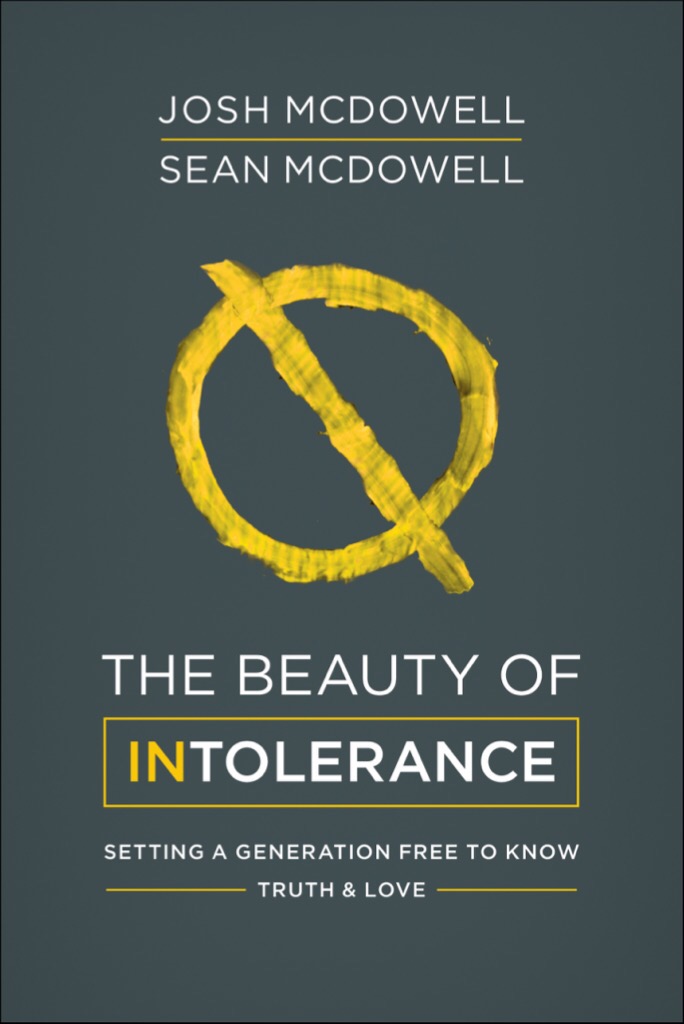
This is the fourth set of quotes I’ve shared from Josh McDowell and Sean McDowell’s book The Beauty Of Intolerance. You can check out the other quotes here, here, and here; and if you missed my review of this book, please click here to read that.

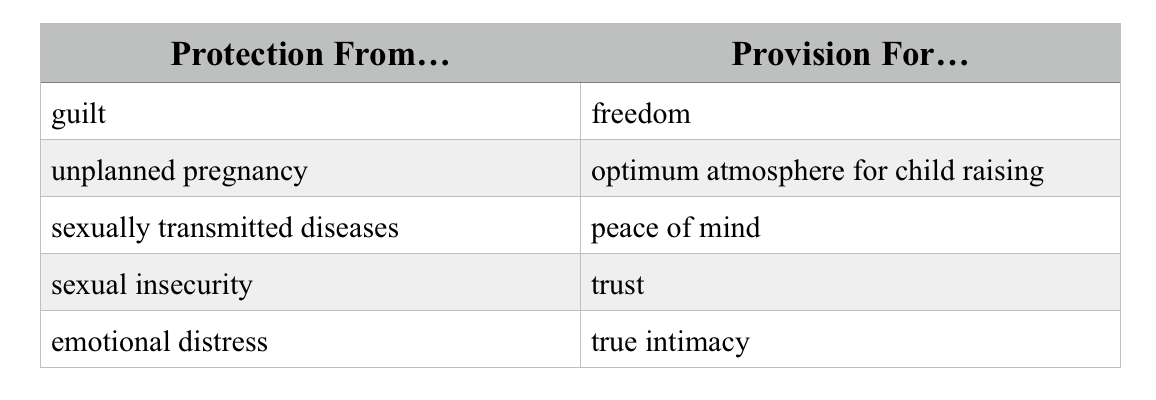
“Respecting the boundaries of sexual morality and prohibitions for extramarital and premarital sex does bring protection and provision. Here are just a few ways it does this:

boi-protection-and-provision

“Although sin has separated us from God, His original intent for us and the reality that we were created in His image have not changed. What we do or don’t do may distort that image, but our worth to God as human beings never changes.”

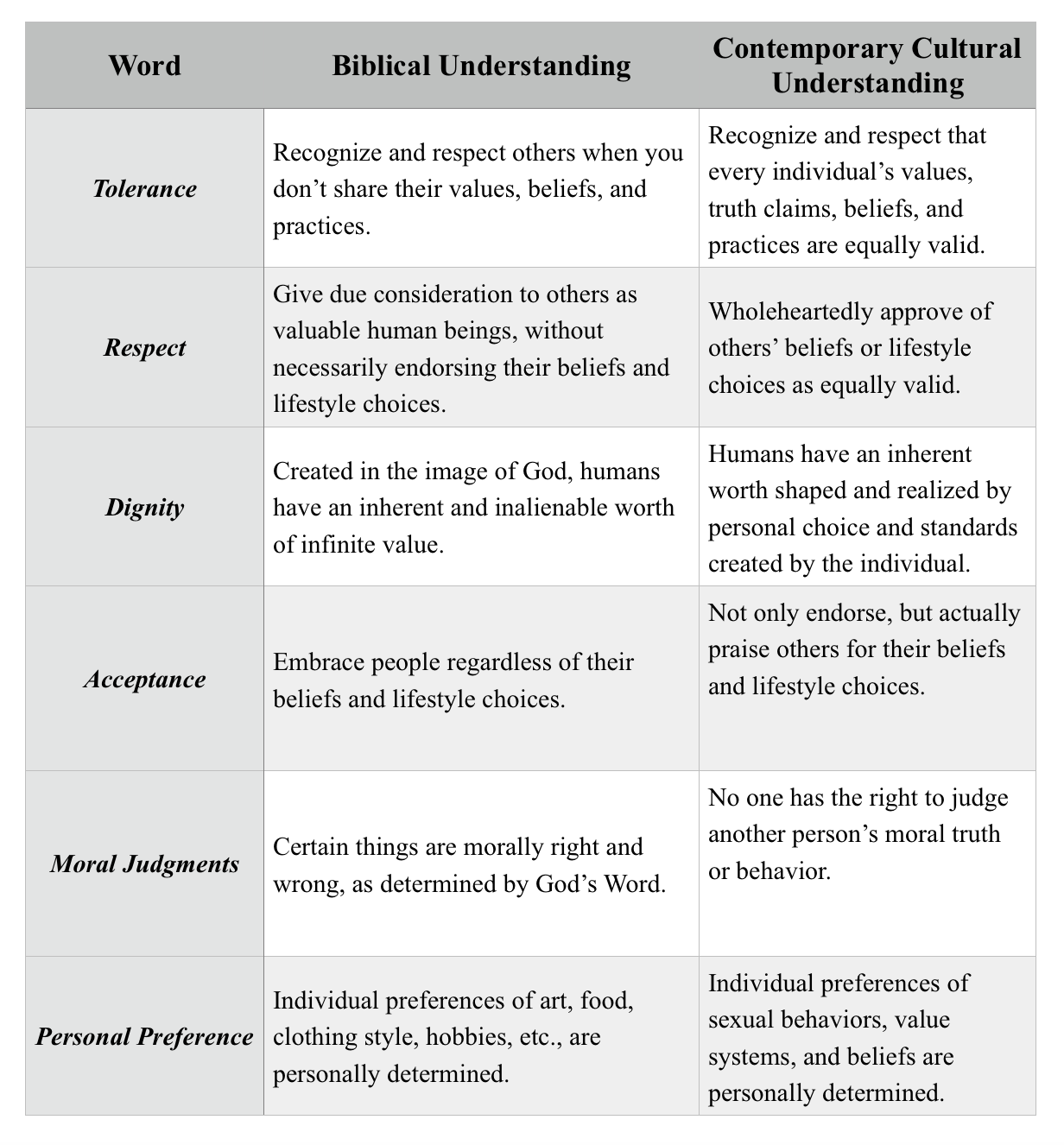
 “So how has Christ loved you? He values all people for their inherent worth and offers grace freely to all people without exception. Cultural tolerance, on the other hand, claims to accept everyone’s differing beliefs, values, and lifestyles, yet it qualifies that acceptance. …  What distinguishes God’s unconditional acceptance from that of our culture is authentic love. His love is intended to make the security, happiness, and welfare of another as important as His own. It is other-focused, not performance-focused. … Real valuing of another’s personhood expressed in the context of authentic love separates doing from being and sees the acts of sin distinct from the sinner (which, by the way, is all of us).”

“The beauty of intolerance is its opposition to wrong and evil in the world—in alignment with God’s righteous and perfect standard of justice, equality, human rights, and caring for others. Intolerance of evil is not mean-spirited and condemnatory; it is actually the only way to be loving and caring. Far from being judgmental, it advances God’s righteous kingdom.”

“Most people in America subscribe to a view of morality called ‘cultural ethics.’ In other words, they believe that whatever is acceptable in that culture is moral; if the majority of people say a thing is right, then it is right. … But there’s a problem with that. If that is true, then how can we say the ‘aborting’ of six million Jews in the Holocaust was wrong? In fact, the Nazis offered that very argument as a defense at the Nuremberg Trials. They argued, ‘How can you come from another culture and condemn what we did when we acted according to what our culture said was acceptable?’ In condemning them, the tribunal said that there is something beyond culture, above culture, that determines right and wrong.”

“We are all entitled to our own beliefs, but this doesn’t mean each of us has our own truths. Our beliefs describe the way we think the world is. Truth describes the objective state of the world regardless of how we take it to be. Beliefs can be relative, but truth cannot. … Moral truth was never meant to be spoken or understood outside of a loving relationship. Being like Christ and speaking the truth in love are synonymous.”

boi-definitions

5 Quotes On Love, Sex & Marriage From “The Beauty Of Intolerance”

Beauty Of IntoleranceIn any modern-day discussion on the topic of “tolerance” the conversation is sure to come around to sexual dos and don’ts. Josh McDowell and Sean McDowell speak to this subject so well in their book The Beauty Of Intolerance.

“The reason we think there are such concepts as ‘fair’ and ‘unfair’ is because our Maker is a just God and we have been made in His image (Genesis 1:27). The reason love is a virtue and hatred a vice is because the God of relationships who formed us is a God of love. The reason honesty is right and deceit is wrong is because God is true. The reason fidelity in marriage is honorable and infidelity is not is because God is faithful. The reason chastity is moral and promiscuity is immoral is because God is pure. … All truth claims cannot be equal because Jesus didn’t claim to be ‘a’ truth—one among viable others. His claim was exclusive.”

“True love commits wholeheartedly. … When two lovers marry, they are making a public vow committing to provide for and protect each other through thick or thin. That kind of committed love compels a couple to wait to engage in sex until after marriage—which is the context in which love makes it right.”

“Purity is God’s boundary that provides for a maximum sex life and protects us from the negative consequences of sexual immorality.”

“What your children hear about the ‘gay versus Christian’ morality debate is often centered on how Christians allegedly discriminate against same-sex marriages and wrongfully label the gay community as sinful. We need to help them refocus the argument. It needs to shift away from who is accusing whom of judging or whether it’s right to legislate morality. We must focus our young peoples’ discussion on who has the right to define morality in the first place. … Be a student of God’s Word. Know why you believe sexual immorality is wrong—know the positive provision and protection that comes by following God’s instructions on morality. And then seek to speak the truth in love. Capture God’s heart, knowing that He wants only what is best for us. Share how your own obedience to God’s Word has brought you protection and provision.”

First, marriage is two human beings becoming one in every way possible. . . In marriage, two become one, united in mind and body and purpose. 

“Second, marriage is oriented toward procreation. The act of two becoming one flesh makes God’s intent, that humans should ‘fill’ and ‘form’ His world, possible. … Scripture sees marriage as being closely tied to procreation. . . . 

“Third, marriage comes with an expectation of permanence. The Genesis account implies marriage is a permanent relationship, [but] Jesus’ words are explicit: ‘What therefore God has joined together, let not man separate’ (Matthew 19:6). . . . 

“Therefore we shouldn’t think of marriage as a political institution that belongs to the state. It is a pre-political institution. The state doesn’t create marriage; it can only recognize it. The state, despite all its efforts, will never be able to redefine marriage. Marriage will always be what marriage was created to be, no matter what activist judges, runaway legislatures or majority of voters decide.” —John Stonestreet & Sean McDowell 

If you haven’t read my review of The Beauty Of Intolerance, you can read it here. I have also shared some other quotes from this book here and here.

Christlike Wives And Husbands

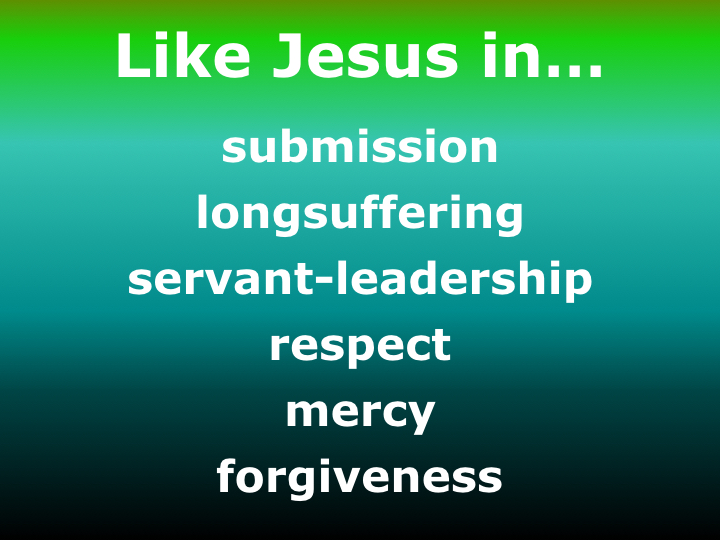
like-jesusTime after time Peter calls Christians to live a counter-cultural lifestyle. The most countercultural example we have ever seen is Jesus Christ.

Peter shows us how Jesus—in the most excruciating situation possible—lived. Heading into the torture of crucifixion

  • He was submissive to His Father’s will
  • He remained focused on the future glory, not just the immediate pain
  • He continued to be a servant-hearted leader
  • He spoke to those around Him respectfully
  • He extended mercy to His tormentors
  • He prayed for (and purchased with His blood) His tormentors’ forgiveness

Peter then tells Christian wives and husbands they are to behave in the same way as Jesus. Wow!

More specifically Peter challenges Christlike wives to be:

  1. Submissive to their husbands—I like how the Amplified Bible says this in verse 1: “subordinate, not as inferior, but out of respect for the responsibilities entrusted to husbands and their accountability to God, and so partnering with them.
  2. Christlike in their behavior.
  3. Distinctive by their purity.
  4. Reverent to God, by honoring the image of God in their husbands.
  5. Beautiful from the inside out.
  6. Consistently doing what is right
  7. Not swayed by fear—“do what is right without being frightened by any fear [that is, being respectful toward your husband but not giving in to intimidation, nor allowing yourself to be led into sin, nor to be harmed]” (v. 6 AMP).

Likewise Peter challenges Christlike husbands to be:

  1. Submissive to their wives—remember the in the same way phrase? That applies to the men too. Submit to one another out of reverence for Christ. … Husbands, love your wives, just as Christ loved the church and gave Himself up for her (Ephesians 5:21, 24).
  2. Considerate of her—the King James Version says, “dwell with them according to knowledge.” That word for knowledge means to study your wife and know what she likes and doesn’t like.
  3. Respectful in the way he treats his wife.
  4. Treating her as a partner and heir in your spiritual heritage.
  5. Understanding the part she plays in your spiritual development—“The same goes for you husbands: Be good husbands to your wives. Honor them, delight in them. As women they lack some of your advantages. But in the new life of God’s grace, you’re equals. Treat your wives, then, as equals so your prayers don’t run a ground” (v. 7 MSG).

Here are two questions I think Christian wives and husbands need to seriously consider: Are you thinking about your role as a husband or wife in biblical terms or cultural terms? If you are thinking in cultural terms, are you willing to try it God’s way?

Our Christian marriages should be “alien” to the way the world operates; they should be counter-cultural. That kind of marriage is what points people to a relationship with Jesus!

If you’ve missed any messages in this series, you may find the complete list by clicking here.

God’s Design For Sex

gods-design-for-sexI recently completed a reading plan on YouVersion called God’s Design For Sex. This plan was put together by the staff at Focus On The Family, and was an excellent study! Here are six quotes that caught my attention.

“Pornography represents a departure from God’s design for sex in that it depersonalizes real people, strips them of their dignity, and turns them into sexual objects.”

“Sexual immorality inhibits us from focusing on our truest Lover, the Lord. … Chastity, then, is first and foremost a spiritual discipline. Like prayer, fasting, study, silence, charity, and giving, it’s something God asks us to practice, not because it will get us into heaven, but because it will help transform us into new creatures.This kind of purity is not the mere absence of illicit sex, but an active conforming of one’s body, soul, and mind to the image of Christ.”

“As theologian George Weigel explains, when we view God’s directives for our sexuality in this way, ‘the first moral question shifts from ‘What am I forbidden to do?’ to ‘How do I live a life of sexual love that conforms to my dignity as a human person?’ Sex, then, rightly understood and practiced, is in a very real sense fundamental to mankind’s function, purpose, and destiny within the miracle of God’s creation.” 

“Most critics and skeptics of Christian chastity argue that the Bible has ‘nothing to say’ about pre-marital sex. The problem, they say, is nothing negative is ever mentioned ‘condemning’ the practice or suggesting a ‘thou shalt not.’ But the Bible expresses its perspective on this matter primarily in positive terms.”

“It’s vital to add that God wants us to reserve sex for marriage not because it’s ‘bad’ or ‘dirty,’ but precisely because it’s such a unique, exclusive, and wonderful thing. Sex is a holy mystery. It’s a powerful bonding agent that shapes and affects the relationship between a man and a woman as nothing else can. To take sex outside of marriage is like taking the wine consecrated for Holy Communion and using it for a drinking party at a frat house. This is why the writers of Scripture so often compare idolatry to the sin of fornication or adultery.”

“All the best research indicates that the most sexually satisfied people in modern society are not the adventurous swingers, but rather faithful, monogamous married couples.”

Countercultural Marriage

my-thoughts-or-gods-thoughtsThe Apostle Peter uses an appropriate term for Christians living on Earth: “Aliens and strangers.” This means that those who call Jesus their Lord are to live a counter-cultural lifestyle. Not a lifestyle that changes with the popular culture, but one that stays true to God’s Word.

There probably has never been a more controversial subject in any day or culture than marriage and the relationship between the sexes. Why are these terms “controversial”? I suspect it is because we are naturally bent toward being pragmatic people.

In pragmatism, the outcome determines meaning. If I find something easy to do, convenient for me, and I seem to get applause from those around me, then what I did must be right. However, if it’s challenging to stick with something, and seemingly only a few people approve of how I do it, then it must be wrong. That is letting culture determine morality, instead of letting God determine it.

As Peter begins to address the topic of marriage, and the interaction between spouses, he uses two similar phrases—“Wives, in the same way … Husbands, in the same way (vv. 1, 7).”

In the same way as what? Actually, if you look at the five verses that come before this you will see that it’s not what but Whom. Those verses are talking about our example in Jesus. Peter points out that Jesus showed:

  • submission to God’s purpose—His prayer was, “Not My will, but Yours be done.
  • longsuffering—He did not retaliate nor threaten His persecutors, but for the joy set before Him, He endured the shame of the Cross.
  • servant-leadership—At the last meal He had with His followers before being crucified, He washed their feet, and told them He had given them an example of how they were to serve others.
  • respectful behavior—Jesus willingly suffered the penalty for the world’s sin. He fulfilled the prophecy of Isaiah which said He remained silent before His accusers.
  • mercy—This always means not getting the penalty we deserve. Jesus came to save us when we were the least worthy of His love.
  • forgiveness—As the spikes were being driven through His wrists, Jesus said, “Father, forgive them for they don’t know what they’re doing.

Pragmatism looks at God’s design and says, “Yes, I understand that, but….” Pragmatism tries to find an “out” or a “loophole” that let’s someone change a definition or skip out on doing something God’s way.

If anyone ever had the authority to say, “Yes, Father, I know what You want Me to do, but look how they’re treating Me” it was Jesus.

A wife with a difficult husband may want to say, “Yes, I know I’m supposed to submit to my husband, but….” A husband with a nagging wife may say, “Yes, I know I’m supposed to treat my wife with consideration and respect, but….”

But Peter says, “Wives and husbands, exhibit the same submission, longsuffering, servant-leadership, respectful behavior, mercy and forgiveness toward your spouse as Jesus exhibited toward you!” 

So the question we need to ask is: Am I thinking about marriage—a husband’s role, a wife’s role—in counter-cultural biblical terms or in popular cultural terms?

If I find I am thinking culture’s thoughts, am I willing to try God’s way?

Join me next Sunday as we look at this passage again, and see how a wife and husband can love and serve each other in a God-honoring, counter-cultural way. If you’ve missed any messages in this series, you may find the complete list by clicking here.

3 Quotes For Uncommen Husbands

Uncommen HusbandsI recently finished a reading plan on YouVersion called Uncommen Husbands. Here are some quotes that I especially appreciated from Brian Goins’ insights.

“Paul indicates there a came a time in his life when he grew out of an immature, boyish love and embraced a more mature, and dare we say, manly love [1 Corinthians 13:11]. If we’re going to love our wives like Christ loved the church, we must let the boy die. And in marriage, that’s far easier said than done. Check out the comparisons below:

  • Boys retaliate quickly when hurt; manly love is patient and kind.
  • Boys require constant affirmation; manly love is not arrogant or rude.
  • Boys stew, stammer, and hold grudges when they don’t get their way; manly love does not insist on its own way; it is not irritable or resentful.
  • Boys try to win every argument; manly love does not rejoice at wrongdoing, but rejoices with the truth.
  • Boys have a short fuse; manly love bears all things.
  • Boys write people off when wronged; manly love believes God’s best for the relationship.
  • Boys lose hope after they’re hurt; manly love always hopes for reconciliation regardless of the pain.
  • Boys expect to be served; manly love endures all things.”

“Paul says, ‘cherish’ our bride like we cherish our own bodies. The word means, ‘bring warmth to,’ and from which we derive our words, thermal and thermostat. … When Paul tells us to love our wives as we love our own bodies, he’s encouraging us to cherish their emotional needs in the same way we cherish our own physical needs. If she’s chilly, it’s our job to warm her up. If she’s steaming, then we help lower the mercury. In other words, the call to cherish means we have to engage when we’d rather shrink back.”

“I’m not sure Paul was the most popular men’s retreat speaker. When he spoke, some fell asleep…and then fell out a window (Acts 20:9). He admitted to the church at Corinth his messages were a bit convoluted (1 Corinthians 2:3-5). Even his buddy Peter threw him under the bus for his ivory tower verbiage (2 Peter 3:15-16).

“Then there was his unfortunate use of the word nourish in Ephesians 5:28. I’m pretty sure every guy in the audience cringed a bit when Paul said to husbands, ‘nourish’ your wife. We may think of nutritious foods, but in Paul’s day, the word often referred to nursing moms. Try and get that picture out of your head.

“When my wife used her God-given equipment to nourish our children I don’t ever remember a time when I asked her, ‘Honey, when was the last time you fed the baby?’ and she responded, ‘Oh, I don’t know, it’s been a few days.’ Because instinctively a mom knows her baby’s nourishment has to be consistent, catered to their tastes, and is crucial for their survival. In the same way, Paul calls husbands to nourish their brides. Is your love consistent? I don’t know about you, but I rarely miss a meal. Unless I’m fasting (for a very short time!), about every 4-5 hours I feed the beast. It’s all too common for our wives to go months between meals: a date night, taking a walk, go on an adventure, a simple text saying, ‘are you tired? You should be because you’ve been running through my mind all day long,’ or a well thought out letter. Nourishment must be ongoing. Is your love catered to her tastes? You’re not going to catch me at the all-you-can-eat tofu bar. Unless I’m on the mission field, I generally nourish my body with stuff I like. It’s common to give love the way we want to receive love. But your love language probably doesn’t match hers. Want to know if you are catering to her ‘love’ taste buds, ask this UNCOMMEN question: ‘Honey, do you feel the depth of my love? Not do you know it, but do you feel it? If not, how can I nourish your soul?’ Do you realize your love is crucial to her survival?”