Thursdays With Spurgeon—What God Is Doing In Depression

This is a weekly series with things I’m reading and pondering from Charles Spurgeon. You can read the original seed thought here, or type “Thursdays With Spurgeon” in the search box to read more entries.

What God Is Doing In Depression

     This depression comes over me whenever the Lord is preparing a larger blessing for my ministry; the cloud is black before it breaks, and overshadows before it yields its deluge of mercy. Depression has now become to me as a prophet in rough clothing, a John the Baptist, heralding the nearer coming of my Lord’s richer benison. So have far better men found it. The scouring of the vessel has fitted it for the Master’s use. Immersion in suffering has preceded the baptism of the Holy Spirit. Fasting gives an appetite for the banquet. The Lord is revealed in the back side of the desert, while His servant keeps the sheep and waits in solitary awe. The wilderness is the way to Canaan. The low valley leads to the towering mountain. Defeat prepares for victory. The raven is sent forth before the dove. The darkest hour of the night precedes the day-dawn.

From The Autobiography of Charles Spurgeon

Spurgeon was known to have wrestled under the dark clouds of depression frequently throughout his life. As he noted above, “So have better men found it.” Many of us battle the dark waves of depression, myself included. 

But look at how Spurgeon came to see depression in a new light. He began to note that depression was actually the forerunner of a dawn of breakthrough. Think about how many notable people in the Scriptures went through dark valleys prior to God using them in previously unimaginable ways—men like Joseph, Moses, David, Elijah, Jeremiah, Peter, Saul (who would become Paul), and even Jesus Himself. 

The writer of Hebrews records that Jesus learned something during the dark night of His soul that He wouldn’t have learned any other way. Jesus saw God’s dawn coming, so He was able to continue to go through the darksome valley. 

Depression is a serious thing. If you are battling this darkness, there is freedom in admitting it. Spurgeon did, I have, and so have many others. Admit you need help, and then get help. Talking to your doctor or a Christian counselor may be a necessary component toward your healing. 

But in all that you do, please learn to do what these notable folks in the Bible did—and what Charles Spurgeon did: begin to see depression not as your permanent residence, but merely as a dark night that is preceding a glorious dawn! 
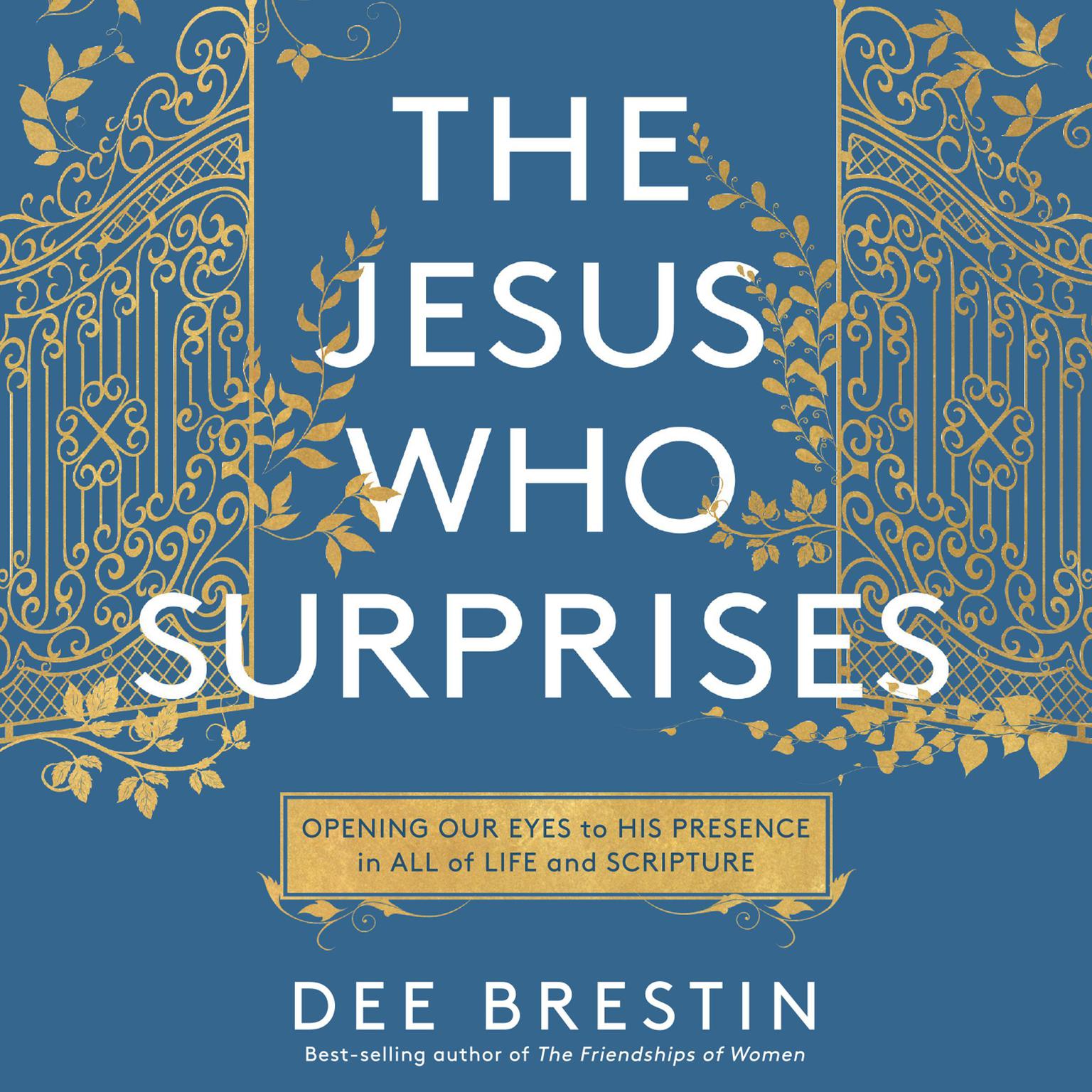
The Jesus Who Surprises (book review)

Oswald Chambers wisely noted, “God did not give a progressive revelation of Himself through the Old Testament: the people progressively grasped the revelation, which is very different.” Jesus is all throughout the Old Testament, giving us ample opportunity to discover Him on every page. A helpful guide to get you started on this journey of discovery is The Jesus Who Surprises by Dee Brestin. 

Dee wrote that she was intrigued by Christ’s words to the questioning disciples walking the road to Emmaus on the morning of His resurrection. These men were having a hard time wrapping their minds around the report from eyewitnesses who said Jesus was alive! As Jesus walked with them (although unrecognized by them for the moment), Luke records, “And beginning with Moses and all the Prophets, He explained to them what was said in all the Scriptures concerning Himself” (Luke 24:27). 

The Jews divided their Scripture—the part we now refer to as the Old Testament—into three sections: the Law, the Writings (the poetic books), and the Prophets. In The Jesus Who Surprises, Dee divides her book into the same three sections, giving us samples of how Jesus surprises us in the pages of each section of the Old Testament Scripture. Each chapter concludes with a Bible study that can be done on your own, or in a small group setting. 

The two disciples on the road Jesus commented to each other later that they felt their hearts burning as Jesus revealed Himself all throughout the Scriptures. I pray that as you read The Jesus Who Surprises you will experience the same burning. Then I believe this book will start you on your own lifelong journey to read the Scriptures for yourself and see Jesus on every single page! 

I am a Multnomah book reviewer. 

Thursdays With Spurgeon—Evidence Of Christian Maturity

This is a weekly series with things I’m reading and pondering from Charles Spurgeon. You can read the original seed thought here, or type “Thursdays With Spurgeon” in the search box to read more entries.

Evidence Of Christian Maturity

     One of the first evidences that anyone is a child of God is that he hates with a perfect hatred and seeks to live a holy, Christlike life. … 

     I bless God that I have learned to have very little respect for the vision of the man with the measuring line. When I see an angel with it, I am glad enough; but when I see a man with it, I tell him that he must give me a warrant from God and show me how he is to know the elect by any other method than that laid down by our Lord Jesus Christ: “Ye shall know them by their fruits” (Matthew 7:16). … 

     He who truly grows in grace does not say, “Dear me! I can feel that I am growing; bless the Lord! Let’s sing a hymn. ‘I’m a-growing! I’m a-growing!’” I have often felt that I was growing smaller; I think that is very probable, and a good thing, too. If we are very great in our own estimation, it is because we have a number of cancers, or foul gatherings, that need to be lanced, so as to let out the bad matter that causes us to boast of our bigness. 

From The Autobiography Of Charles Spurgeon 

Some Dos and Don’ts for Christian growth:

Do—hate those things that keep you from God’s presence
Do—seek to be conformed to the image of Jesus

Don’t—look at other people as your measuring line
Do—make sure your life is fruitful according to God’s standards

Don’t—brag about your growth
Do—humbly thank God for your growth
Do—be quick to repent of un-Christlike things the Holy Spirit reveals to you


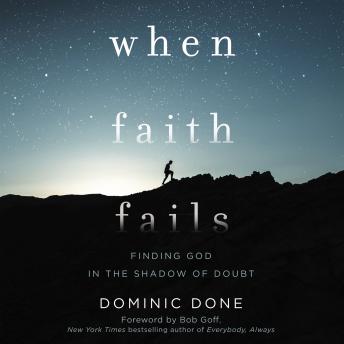
8 Quotes From “When Faith Fails”

We’ve all been there: an unexpected calamity has rocked our faith, making us question what we previously believed to be true. What do we do with these times of doubt? Dominic Done has given us a helpful resource in his book When Faith Fails. Please check out my full book review by clicking here. 

“An anonymous fourteenth-century mystic once said that we find ourselves ‘in a cloud of unknowing.’ That is why we doubt. We don’t always see the sky. However, what we have to be reminded of here is that all of this was part of God’s design. He purposefully made it like this. He built limits into the system. It wasn’t an accident. He knew we would have to live with so many unknowns. And yet He chose for the human story to look this way. … When God decided to create, He could have said yes to a thousand other possibilities. But He didn’t. He chose this world. He chose you. He chose me. Limits and all. And still, He called it ‘good.’ All of this means that doubts are normal. They’re a natural consequence of living in this world.” 

“If all we care about is certainty, we lose the beauty of mystery. If all we value is explanation, we lose the joy of exploration.” 

“We need to stop vilifying those who live in the tension of conflicted faith. Doubt isn’t a malevolent demon that we need to exorcise out of our brothers and sisters with sanctimonious words. It’s part of their story. It’s part of my story. Jude 22 says, ‘Be merciful to those who doubt.’” 

“What if God made the world like this to push us to deeper faith? … Doubts aren’t just an obstacle; they’re an opportunity. Uncertainty can lead us into the beautiful mystery we call God.” 

“What’s vital to note here is that when the Bible uses the word doubt it’s different from the word unbelief (Matthew 14:31 and Hebrews 3:19). This is important because some Christians assume that doubt and unbelief are synonymous. They’re not. Doubt can lead to unbelief, just as doubt can lead to faith. But the two are not the same. Doubt says, ‘I am unsure of what is right.’ Unbelief says, ‘I don’t care about what is right.’ Doubt is searching for the light. Unbelief is choosing to gouge out your eyes. Doubt is pursuing truth, wherever it may lead. Unbelief is content with a lie. Doubt exists somewhere between belief and unbelief. Doubt is the moment of tension, which in and of itself isn’t good or bad. It’s somewhere in between. … Doubt isn’t the end of the story; it’s the suspense within it.” 

“Doubt’s greatest strength is secrecy.… But if we name our doubts and drag them into the light, we may find resolution, or we may discover the tension of authentically living in a doubt-filled faith.” 

“Abraham and Sarah doubted God’s promise (Genesis 17:17-22; 18:10-15). Gideon doubted his calling (Judges 6:36). Job doubted God’s character (Job 7:20-21). John the Baptist, whom Jesus called ‘the greatest of all the prophets,’ doubted if Jesus was the Messiah (Matthew 11:1-6). Peter doubted his faith (Mark 14:66-72). Thomas doubted the resurrection (John 20:24-29). The list goes on. Scripture doesn’t edit out the stories of those who struggled to believe. It weaves their heart-rending struggles into the narrative.” 

“If your faith is being shaken by the suffering you see, don’t be content with cheesy Christian truisms or Facebook clichés. … Lean into the chaos. Cry out to God. Talk to people who have gone through pain and have come out on the other side awash with hope. Immerse yourself in Scripture’s lament and redemption. Dare to say, ‘I will not let You go until You bless me.’” 

Is That In The Bible?

A meme that makes me chuckle every time I see it is a “quote” attributed to Abraham Lincoln in which he says, “The problem with quotes found on the internet is that they are often not true.” 

(Not to spoil the joke for you, but unless Lincoln knew how to time travel to the future, I don’t think he knew about the modern internet! 😂) 

I love this meme because it captures something that so many people fall into: a quick acceptance of a statement without verifying its source or thinking through the implications of the statement’s truthfulness. 

Some insightful comments sound Shakespearean, but William never wrote them. 

Some pieces of wisdom sound Socratic, but Socrates never taught them. 

Some religious maxims sound godly, but the Bible never recorded them. 

I would like to invite you to join me in a new series we are beginning this Sunday called Is That In The Bible? I think you may be surprised to discover just how many phrases we call biblical aren’t, and how many phrases there are that we never realized are actually in the Bible. 

By the way, if you have a phrase that you would like to have us explore in this series, please leave it in a comment below. 

In this installment of this series, we asked: Is this in the Bible…

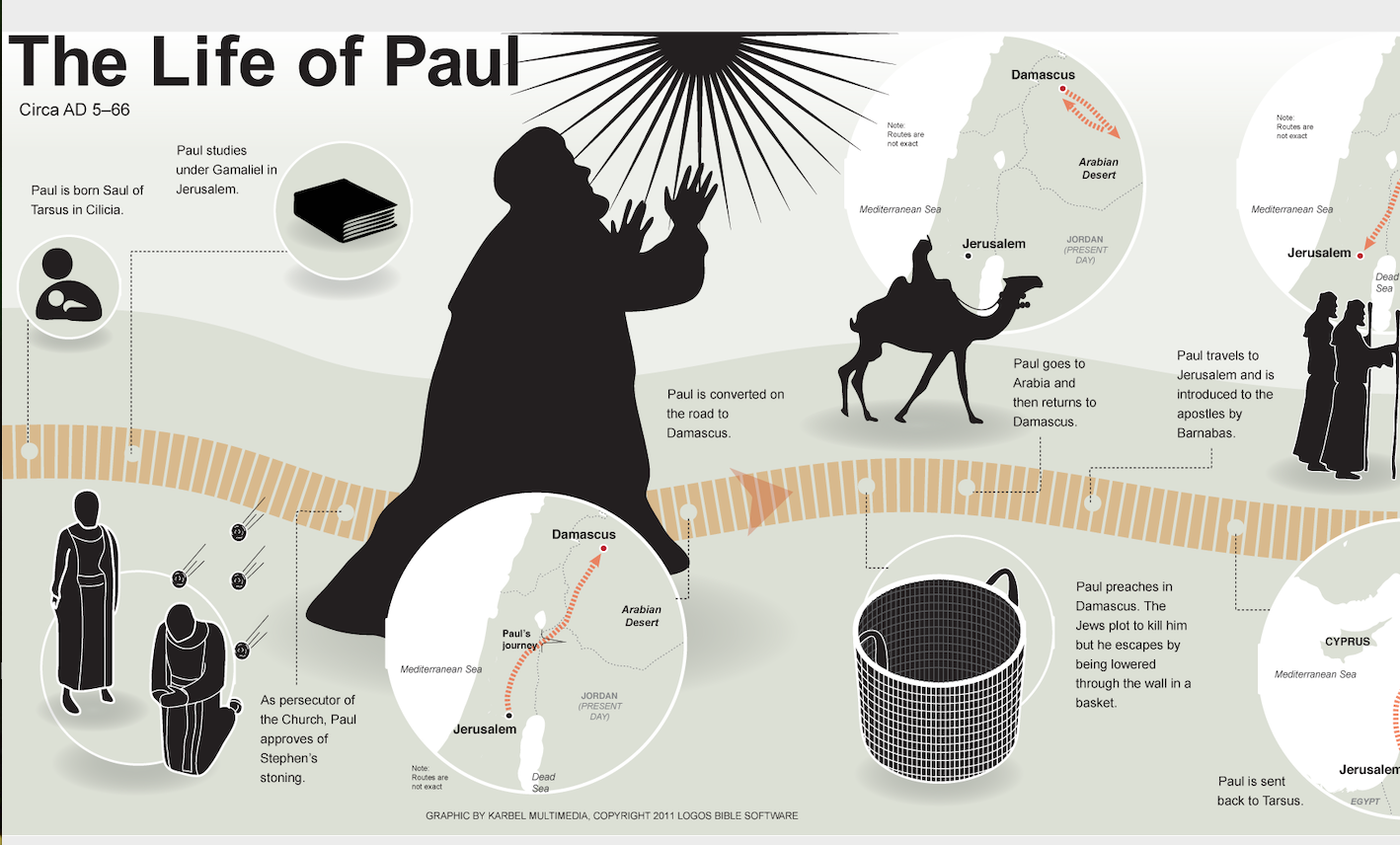
A Chronology Of The Life Of Paul

The Apostle Paul is a fascinating figure that looms so large across the New Testament and beyond.

I recently came across these amazingly helpful study tools to put the life of Paul into perspective. These are both from the Faithlife Illustrated Study Bible, which I highly recommend to you for adding a new depth to your Bible study time.

This is an illustrated timeline of the key dates and events of Paul’s life. Click on the graphic to view it better, or check it out on the Biblia website.

If you would like to research both the biblical texts and the attestations of Paul’s ministry outside of the New Testament, you may want to download this PDF chart → Apostle Paul Chronology

And it’s worth repeating: get a copy of the Faithlife Illustrated Study Bible for yourself as soon as you can!

Thursdays With Spurgeon—A Firm Doctrine

This is a weekly series with things I’m reading and pondering from Charles Spurgeon. You can read the original seed thought here, or type “Thursdays With Spurgeon” in the search box to read more entries.

A Firm Doctrine

     If a tree has to be taken up two or three times a year, you will not need to build a very large loft in which to store the apples. When people are always shifting their doctrinal principles, they are not likely to bring forth much fruit to the glory of God. It is good for young believers to begin with a firm hold upon those great fundamental doctrines that the Lord has taught in His Word.

From The Autobiography Of Charles Spurgeon 

This is true of any endeavor—can you imagine constantly shifting the way you learn math, or biology, or cooking, or anything else? There’s always a “learning curve” in every new endeavor that brings a momentary setback before there are new gains.

Thankfully, the Bible has a consistent message from Genesis to Revelation. Getting into the Word regularly and attending a Bible-preaching church will help you immensely. 

There is no “right way” to read the Bible. In fact, Spurgeon had a great response to a man who told him that he “read my Bible on my knees.” Spurgeon said—

“I think you read the Bible in a very uncomfortable posture, and if you had read it in your easy chair, you would have been more likely to understand it. Pray, by all means, and the more, the better, but it is a piece of superstition to think there is anything in the posture in which a man puts himself for reading.”

The point is not in what posture you read the Bible, or in what translation, or at what time of day, but the point is that you are regularly reading God’s Word. Get into the Word, and let the Holy Spirit get the Word into you. 

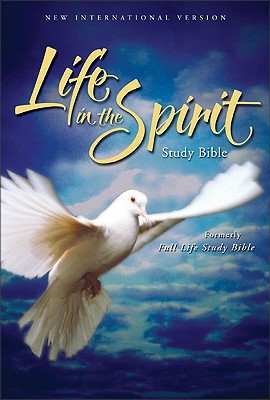
Life In The Spirit Study Bible (book review)

I love to read, averaging about 30 books per year. In addition to books, I have a lot of news feeds that I check daily. But hands down, everything else comes in a distant second place to my number-one read: the Bible. 

I read the Bible for myself. I read the Bible to prepare my Sunday messages. I read the Bible to teach classes. I read the Bible to confirm or refute what I am reading in other books and news feeds. And with all that Bible reading, I have also gravitated toward my favorite study Bible—The Life In The Spirit Study Bible. 

At one time people referred to this Bible as “the fire Bible” because of the graphic on the front cover depicting the fire that fell on praying Christians at the Pentecost celebration immediately following Christ’s ascension into heaven. That fire still falls in my heart every time I read God’s Word!

The study notes in this Bible are fantastic! But don’t be deceived by the name: these are not study notes that focus on the Holy Spirit out of proportion; rather, the role of the Spirit is merely noted where others have ignored it. Far too many people don’t ponder very much about the Holy Spirit’s involvement, except for perhaps the Book of Acts and maybe Paul’s instruction on the operational gifts of the Spirit in 1 Corinthians. The Life In The Spirit Study Bible simply seeks to make us aware of the Spirit’s involvement. 

In addition to the short commentary notes at the bottom of each page, there are several insightful and scholarly articles throughout this whole book that will make the Scripture come alive in new ways. 

This is my “preaching Bible” that I take with me for every sermon I deliver, which means it is the Bible I am diving deep into each day as I study. I cannot recommend this Bible to you highly enough. 

Thursdays With Spurgeon—The Life-Changing Power In The Bible

This is a weekly series with things I’m reading and pondering from Charles Spurgeon. You can read the original seed thought here, or type “Thursdays With Spurgeon” in the search box to read more entries.

The Life-Changing Power In The Bible

     When the Spirit came with His divine life and quickened the entire Book to my newly enlightened soul, the inner meaning shone forth with wondrous glory. … Whatever I found to be in His Word, I received with intense joy. … Moreover, I have found that those points of my character that were most weak have been strengthened, while strong passions have been subdued, evil propensities have been kept under, and new principles have been implanted. I am changed; I am as different from what I was as a man could be who had been annihilated and had then been made over again. Nor do I claim any of the credit for this change—far from it. God has done great things for me, but He has done the same for others and is willing to do it for any soul who seeks His face through Jesus Christ and His great atoning sacrifice. …  

     An idea has long possessed the public mind that a religious man can scarcely be a wise man. It has been the custom to talk of infidels, atheists, and deists as men of deep thought and comprehensive intellect, and to tremble for the Christian controversialist as if he must surely fall by the hand of his enemy. But this is purely a mistake, for the gospel is the sum of wisdom, an epitome of knowledge, a treasure house of truth, and a revelation of mysterious secrets. In it we see how justice and mercy may be married; here we behold inexorable law entirely satisfied and sovereign love bearing away the sinner in triumph. Our meditation upon it enlarges the mind, and as it opens to our soul in successive flashes of glory, we stand astonished at the profound wisdom manifest in it.

From The Autobiography Of Charles Spurgeon 

As Spurgeon experienced, all Christians can experience. Think about this—the same Holy Spirit that inspired the written words of the Bible is the same Holy Spirit in you that can illuminate and apply the words of the Bible to your life! 

Bible-reading, Spirit-empowered Christians should be the most informed, creative, wise people you will ever meet. Not because they have studied nature, but because they are getting to know Nature’s God intimately. The Creator can open up the mysteries of creation better than any scientist or philosopher. 

But we don’t read the Bible just to know God’s Word, but we read the Bible to get to know the God revealed in the Word. He said He would reveal Himself to those who earnestly seek for Him. Ask the Holy Spirit to open your eyes, your mind, your heart as you read your Bible. 

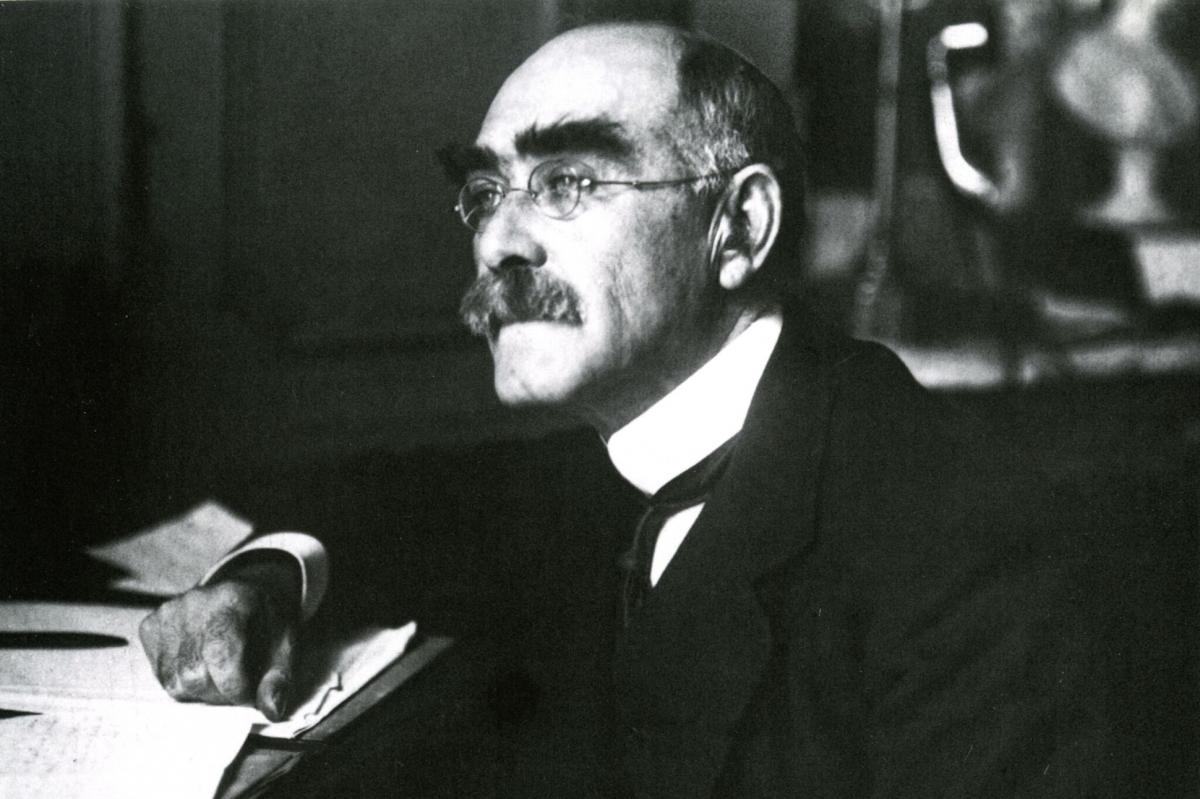
Poetry Saturday—If

If you can keep your head when all about you   
    Are losing theirs and blaming it on you,   
If you can trust yourself when all men doubt you,
    But make allowance for their doubting too;   
If you can wait and not be tired by waiting,
    Or being lied about, don’t deal in lies,
Or being hated, don’t give way to hating,
    And yet don’t look too good, nor talk too wise:

If you can dream—and not make dreams your master;   
    If you can think—and not make thoughts your aim;   
If you can meet with Triumph and Disaster
    And treat those two impostors just the same;   
If you can bear to hear the truth you’ve spoken
    Twisted by knaves to make a trap for fools,
Or watch the things you gave your life to, broken,
    And stoop and build ’em up with worn-out tools:

If you can make one heap of all your winnings
    And risk it on one turn of pitch-and-toss,
And lose, and start again at your beginnings
    And never breathe a word about your loss;
If you can force your heart and nerve and sinew
    To serve your turn long after they are gone,   
And so hold on when there is nothing in you
    Except the Will which says to them: ‘Hold on!’

If you can talk with crowds and keep your virtue,   
    Or walk with Kings—nor lose the common touch,
If neither foes nor loving friends can hurt you,
    If all men count with you, but none too much;
If you can fill the unforgiving minute
    With sixty seconds’ worth of distance run,   
Yours is the Earth and everything that’s in it,   
    And—which is more—you’ll be a Man, my son! —Rudyard Kipling