Saturday In The Proverbs—What A Waste! (Proverbs 29)

[Each chapter in the Book of Proverbs contains thoughts that fit into a theme; they are not just random thoughts gathered together. In this “Saturday In The Proverbs” series, I will share a theme that I see in each chapter. But the cool thing about God’s Word is that you may see an entirely different theme. That’s great! If you do, I would love for you to share it in the comments below.]

He who is often rebuked, and hardens his neck, will suddenly be destroyed, and that without remedy (Proverbs 29:1).

God gives us SO MANY opportunities to experience His blessings, but when we continually flout His laws, we squander what we could have enjoyed. 

We waste things like…

  • …personal growth (vv. 1, 19)
  • …nurturing relationships (vv. 2, 5, 8-11, 24, 27)
  • …wealth (v. 3)
  • …leadership opportunities (vv. 4, 12, 14, 18, 26)
  • …escape from heartache (vv. 6, 15, 17, 20, 21)
  • …relieving others’ suffering (v. 7)
  • …revelation / insight (vv. 13, 19)
  • …growing in righteousness (v. 16)
  • …lasting peace (vv. 22, 23, 25)

Don’t waste what God wants to give you! 

Fight Or Flee?

But you, man of God, flee from all this, and pursue righteousness, godliness, faith, love, endurance and gentleness. Fight the good fight of the faith… (1 Timothy 6:11-12). 

Psychologists tell us that when faced with certain situations our bodies instinctively prepared to fight or flight. Knowing which situations to fight and which to run from are crucial for living a long and productive life. 

It’s no different in the spiritual realm. 

Christian leaders must know which things are worth the fight, and which things they simply must flee. To flee from things we should fight shows a lack of courage. But to try to fight the things we should run from shows a lack of wisdom. 

A mark of a godly leader is one who knows what to fight and what to flee.

Three things you must FIGHT for…

  1. …the purity of the true faith (1 Timothy 6:12; Jude 1:3)
  2. …the disempowered (Proverbs 31:8-9; Matthew 21:12-13)
  3. …the devil (1 Peter 5:9; James 4:7; Ephesians 6:11) 

Three things you must FLEE from…

  1. …idolatry (1 Corinthians 10:14)
  2. …sexual sin (1 Corinthians 6:18; Genesis 39:12)
  3. …earthly riches (1 Timothy 6:9-11)

Don’t try to fight the things you must flee from, and don’t run away from the things you must fight for. Pray for God’s wisdom to know which is which. 

This is part 29 in my series on godly leadership. You can check out all of my posts in this series by clicking here.

Power Abuse

Then Zedekiah the king said, “Look, he is in your hand. For the king can do nothing against you” (Jeremiah 38:5).

Some schemers wanted to put Jeremiah the prophet to death (v. 4) and the king basically said, “Well, I have no power to stop you.”

What?! Isn’t Zedekiah the king?

Zedekiah was afraid of “bad press.” His officials said, “Jeremiah’s message is making us look bad,” so Zedekiah went along with them. Fortunately, Ebed-Melech wisely used the same tactic to rescue Jeremiah. He said, “King Zedekiah, if word gets out that Jeremiah has been so shamefully treated, you will look bad” (vv. 8, 9). So the king relented.

Even when Zedekiah wanted to talk to Jeremiah, he did so secretly (v. 16), and he even gave Jeremiah the “talking points” to say if anyone asked what they talked about (vv. 24-26).

What a spineless “leader”! 

Zedekiah was a position-only leader. John Maxwell rightly pointed out, “Power abuse occurs not only when evil leaders act out of selfishness, but when good leaders neglect to do what they should.” 

A mark of a godly leader is one who doesn’t abuse his power.

This is part 28 in my series on godly leadership. You can check out all of my posts in this series by clicking here.

A Leader’s Broken Heart

My heart will cry out for Moab … Therefore my heart shall resound like a harp for Moab, and my inner being for Kir Heres (Isaiah 15:5; 16:11). 

Judgment from God falls on Israel’s enemy and Moab is inconsolable (Isaiah 15:2-4, 5-9; 16:7-8, 10). And yet Isaiah weeps for them!

No gloating.

No “I told you so.”

No smug self-righteousness.

A mark of a godly leader is one whose heart is broken by what breaks God’s heart.

“Do not gloat when your enemy falls; when he stumbles, do not let your heart rejoice” (Proverbs 24:17).

Remember—there, but for the grace of God, go I. 

It is actually God’s mercy that His throne is established and judgment can bring an end to the suffering of punishment (Isaiah 16:5). But in the meantime, we should rescue those careening toward God’s punishment, watering our testimony with our tears.

This is part 27 in my series on godly leadership. You can check out all of my posts in this series by clicking here.

Simpatico

Have you ever heard the word simpatico? It means to be like-minded. The idea is being on the same page with someone else, ideally someone that is a positive role model. Peter calls himself a leader in the church (Greek word presbyteros) but then says he is simpatico with us (sympresbyteros). 

And this isn’t just for leaders in the church, because the same appeal he makes to leaders is the same appeal he makes to both young men and to all of you. 

Although Peter didn’t use the phrase servant-leader, that’s exactly what he describes. In fact, for Christians, the words servant and leader are really one-and-the-same idea! Peter says God’s leaders are:

  • shepherds (those who nurture, guide, and guard) 
  • serving leaders
  • serving not because you must, but because you are willing (it’s “want to” not “have to”)
  • eager to serve with a great attitude 
  • not lording it over others
  • realizing people have been entrusted into their care
  • being examples to the flock that are follow-worthy
  • being submissive to others
  • clothing themselves with humility 

Three key concepts that Peter brings out are all seen in the life of Jesus: clothing, example, and humility

Jesus set the example for us when He said the Son of Man did not come to be served, but to serve (Matthew 20:25-28). 

When Jesus was incarnated in human flesh, He literally made Himself nothing, taking the very nature of a servant, which means He put on the clothing of a servant. He completely humbled Himself (Philippians 2:3-8). 

Jesus most clearly demonstrated this when at the last supper He wrapped a towel around His waist (i.e. clothed Himself as a servant) to wash His disciples’ feet, and then told us to follow His example (John 13:2-5; 13-17).

That’s why Peter tells us all of you, clothe yourselves with humility toward one another. The word Peter uses for “clothe” means keep on doing this every single day. 

God opposes the proud [those unwilling to be simpatico with Jesus] but gives grace to the humble [those choose to be simpatico with Jesus].

So here are two questions I’m asking myself—

Q: How do I know when I’m a servant?
A: When someone treats me like one. 

Q: How do I know I have a servant’s attitude? 
A: When I don’t mind being treated like a servant.

If you’ve missed any messages in this series, you may find the complete list by clicking here.

13 Quotes From Others In “Developing The Leader Within You 2.0”

John Maxwell does an excellent job of including insightful words from other authors—past and present—in his books. Developing The Leader Within You 2.0 is no exception. Here are a few of the quotes he shared. 

“There have been meetings of only a moment which have left impressions for life, for eternity. No one of us can understand that mysterious thing we call influence… Yet out of everyone of us continually virtual goes, either to heal, to bless, to leave marks of beauty; or to wound, to hurt, to poison, to stain other lives.” — J.R. Miller 

“The art of being wise is knowing what to overlook.” — William James 

“A man of character will make himself worthy of any position he is given.” —Mahatma Gandhi 

“Nothing is easier than saying words. Nothing is harder than living them, day after day.” —Arthur Gordon 

“We set young leaders up for a fall if we encourage them to envision what they can do before they consider the kind of person they should be.” —Ruth Haley Barton 

“What we achieve inwardly will change outward reality.” — Plutarch 

“Success leads to the greatest failure, which is pride. Failure leads to the greatest success, which is humility and learning.” — David Brooks 

“Our world has replaced the word soul with the word self, and they are not the same thing. The more we focus on our selves, the more we neglect our souls.” — John Ortberg 

“The most effective leaders approach problems through a lens of opportunity.” —Glenn Llopis 

“Face reality, and let your first loss become your last loss.” —Larry Maxwell 

“If we learn to appreciate more of what we already have, we’ll find ourselves having even more to appreciate.” —Michael Angier 

“No one is useless in this world who lightens the burden of it for someone else.” —Benjamin Franklin 

“Everybody can be great, because everybody can serve.” —Martin Luther King Jr 

You can check out my full book review of Developing The Leader Within You 2.0 by clicking here. And you can also read some John Maxwell quotes from this book here. 

The Nehemiah Code (book review)

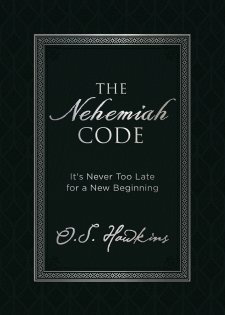
I love studying biblical leadership principles, the people who follow or violate those principles, the outcomes of their decisions, and the lessons that we can apply today from those stories. Probably everyone has had something fall apart in their lives that needed to be rebuilt. If so, you will love the biblical leadership principles that O.S. Hawkins reveals in The Nehemiah Code. 

Nehemiah comes on the scene after the Jewish people have been in exile for 70 years, but they are now allowed to return to their homeland. However, there’s an embarrassing problem: the walls around Jerusalem are in utter disrepair and the city gates have been burned away to ash. The returning exiles are wringing their hands over this sorry state of affairs for a long time until a rebuilding leader named Nehemiah comes on the scene. 

O.S. Hawkins shares the leadership principles Nehemiah employs to get the walls rebuilt and the gates rehung—a massive project that he was able to accomplish in just 52 days! But the powerful thing about the way Rev. Hawkins shares these principles is that they are all applicable to rebuilding projects we face today. 

Maybe you don’t have city walls to rebuild, but perhaps your marriage has crumbled, or your status at work has fallen apart, or you’ve done damage to your integrity. Whatever rebuilding project you need to undertake, you will find principles in The Nehemiah Project that you will be able to put into practice today! As Rev. Hawkins says over and over: It’s never too late for a new beginning. 

Whether you have a rebuilding project of your own, you would like to come alongside a friend who is rebuilding something in their own life, or you are simply a God-honoring leader that wants to expand your leadership capacity, this book will help you soar. 

I am a Thomas Nelson book reviewer. 

12 Quotes From “Developing The Leader Within You 2.0”

Whether you’re a novice or a veteran leader, there’s so much to learn from John Maxwell in his book Developing The Leader Within You 2.0! Check out my full book review by clicking here, and stay tuned for even more quotes coming soon. 

“Developing yourself to become the leader you have the potential to be will change everything for you. It will add to your effectiveness, subtract from your weaknesses, divide your workload, and multiply your impact.” 

“You have influence in this world, but realizing your potential as a leader is your responsibility. If you put effort into developing yourself as a leader, you have the potential to influence more people and to do so in more significant ways.” 

“When you say everything is a high priority, then nothing is a high priority. It really indicates that you’re unwilling or unable to make a decision, which means you won’t get anything done.” 

“Instead of filling every space in my calendar, what I needed to do was create some white space. If I didn’t, nobody else was going to. People who keep burning the candle at both ends aren’t as bright as they think they are.”

“People cannot climb beyond the limitations of their character. Leaders cannot succeed beyond the depth of their character.” 

“Instead of wanting to point to my breakthroughs, I want to direct people to the brokenness that has led to my breakthroughs.” 

“When it comes to character, I believe the best guardrails are the decisions you make before you face high-pressure situations.” 

“People do not naturally resist change; they resist being changed.” 

“If life is tough for individuals, its difficulty is multiplied for leaders. Individuals can think me, but leaders must think we. A leader’s life is not his or her own. Thinking we means other people are included, and that means their problems are also yours to deal with.” 

“You can’t solve problems for others. If you do, you’ll be forever solving their problems. You must solve problems with them—at least until they get the hang of it.” 

“Good leaders don’t just resolve the issue to get it off their plates quickly for the sake of their own comfort. They help create solutions that take their people and their organization forward and put them in a better position than they were in before they experienced the problem.” 

“As a leader, you need to see opportunities differently than most people. They are a chance for you to learn about yourself, your team, and your opportunities. They provide you a way to improve your own life, improve the lives of others, and gaining influence.”

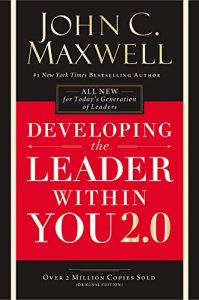
Developing The Leader Within You 2.0 (book review)

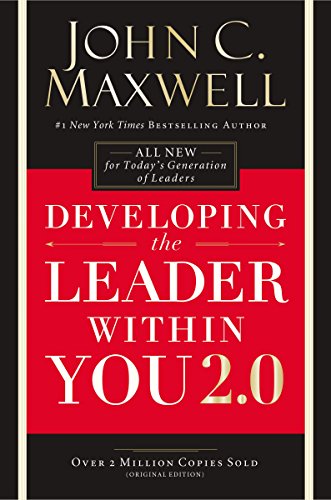
I not only read John Maxwell’s Developing The Leader Within You for myself many years ago, but I have used the content from this book in numerous teaching settings. When I heard that a 25th-anniversary edition of the book was being published, I originally thought of young people to whom I could introduce this helpful book. 

But I was totally blown away to discover that although Dr. Maxwell had promised his publisher that he would revise 15 percent of the book, he actually revised 89 percent of the book! So not only am I excited to get this book in front of people who haven’t read it previously, I’m also encouraging those who read the first edition to get a copy of Developing The Leader Within You 2.0.

In leadership it’s quite simple—you cannot teach accurately what you haven’t internalized yourself, or else risk being called a hypocrite. So any leadership teaching must start with the leader being educated and expanded as a leader himself or herself. I can think of no better resource on the market than this book. 

In typical fashion, Dr. Maxwell masterfully weaves together leadership principles, supporting quotes, transparently personal stories of how he has—sometimes painfully—learned the principles he is teaching, historical and contemporary examples of those who followed or violated these principles, and up-to-date findings from researchers and other front-lines leaders. 

Bottom line: this is a book that is loaded with content but is also very easy to read and apply. At the end of each chapter, you will find some very helpful application ideas for each of the ten principles Dr. Maxwell presents in this book. 

If you’ve already read 1.0, I encourage you to get a copy of 2.0. John Maxwell has learned so much since the first edition and he liberally shares it with us here. 

And if you’re an emerging leader, or simply want to take your leadership to a higher level, this is an excellent foundational book for you to digest and apply.

Thursdays With Oswald—Jeremiah 19

Oswald ChambersThis is a weekly series with things I’m reading and pondering from Oswald Chambers. You can read the original seed thought here, or type “Thursdays With Oswald” in the search box to read more entries.

Jeremiah 19

[These are notes from Oswald Chambers’ lecture on Jeremiah 19.] 

     In the temple precincts judicious minds were without excuse, because they understood what Our Lord was doing. Outside Jerusalem, Our Lord always said, “Don’t tell anyone Who I am”; every time He went to Jerusalem He made it clear who He was. 

The presentation of the Gospel of God to sinners is one of love and mercy, but to the house of God one of judgment and truth. When we preach to the crowd outside we lambast drunkenness and other things, Jesus never did. The stern messages of the Bible are never given to sinners, but to God’s people.

From Notes On Jeremiah

Hmmm, are we doing this the right way? It seems like many times we get this reversed—we rebuke those outside because of their sin, and we speak tenderly to those on the inside. Definitely something for Christian leaders to consider carefully.