


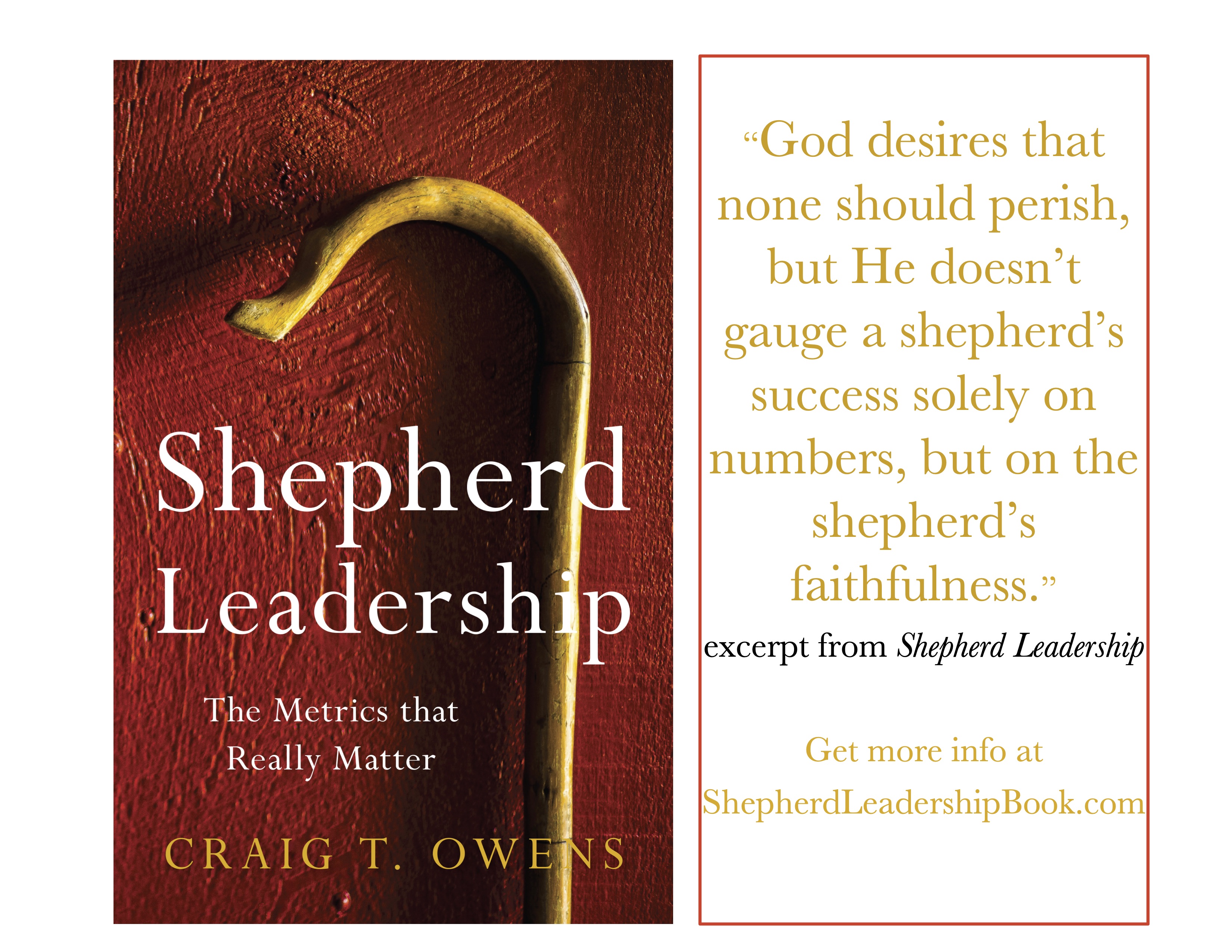
My book Shepherd Leadership: The Metrics That Really Matter releases September 28, 2021. This is just one of the topic I address…
My book Shepherd Leadership: The Metrics That Really Matter releases September 28, 2021. This is just one of the topic I address…
On this episode of “The Craig And Greg Show” we talk about:
 “burning the midnight oil” is not healthy for a leader [0:45]
Check out this episode and subscribe on YouTube so you can watch all of the upcoming episodes. You can also listen to our podcast on Spotify and Apple.
On this episode of “The Craig And Greg Show” we talk about:
 some people wear the cliche “It’s lonely at the top” like a badge of honor, but it’s not [0:40]
 Check out this episode and subscribe on YouTube so you can watch all of the upcoming episodes. You can also listen to our podcast on Spotify and Apple.
Listen to the podcast of this post by clicking on the player below, and you can also subscribe on Apple, Spotify, or Audible.
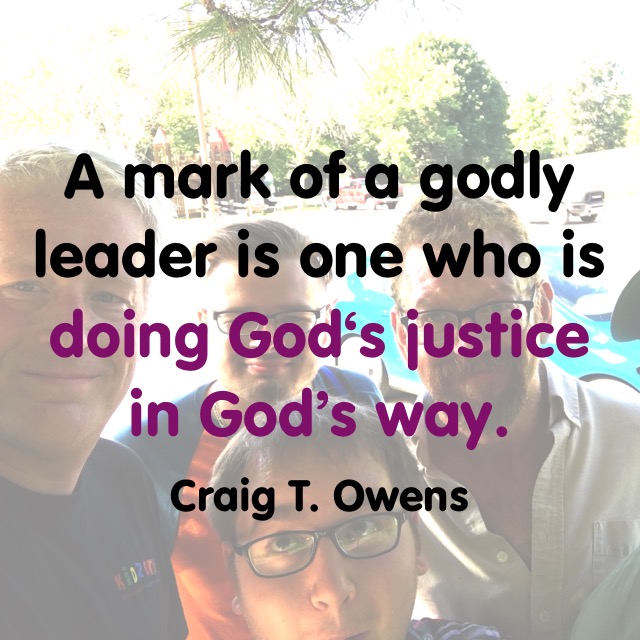 How long will you judge unjustly, and show partiality to the wicked? (Psalm 82:2)
It’s been said that those who attain a position of authority or leadership will make it their sole focus to retain that position of leadership, even to the point of judging unjustly or showing partiality to the wicked.
In my book Shepherd Leadership: The Metrics That Really Matter, I wrote, “When God uses the word ‘Woe!’ we should definitely take that seriously. He uses that very word to warn shepherd leaders who were shirking their responsibility when He said, ‘Woe to those shepherds who only take care of themselves’ (Ezekiel 34:2).”
God is the Ultimate Judge, yet while we are here on earth He chooses to allow men and women to be leaders and judges. We can do this in a God-honoring way only when we lead and judge like God.
In this psalm, God Himself calls out the ungodly practices that self-serving leaders employ to keep themselves popular and in their positions of leadership:
Instead, God calls on leaders to lead according to the principles He both exhibits Himself and lists for us in the Bible. Things like…
I must always remember why I am in any position of leadership: God chose me for that position and placed me there to do His justice in the world.
This is part 57 in my series on godly leadership. You can check out all of my posts in this series by clicking here.
►► Would you please prayerfully consider supporting this ministry? ◀︎◀︎
Listen to the podcast of this post by clicking on the player below, and you can also subscribe on Apple, Spotify, or Audible.
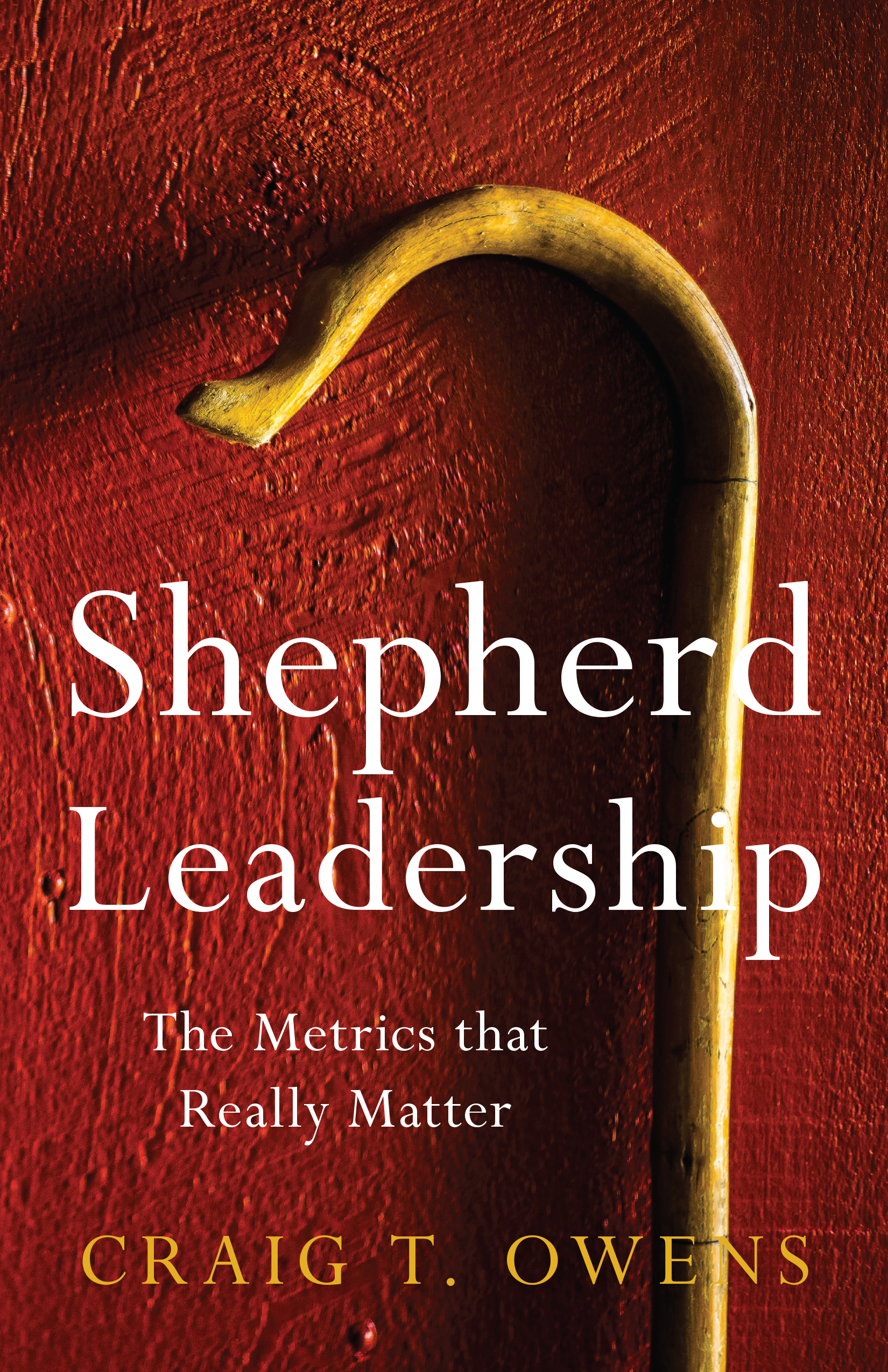 Check out this excerpt from chapter 13 of my book Shepherd Leadership: The Metrics That Really Matter—
David was the gold standard for every king of Israel who followed him. Numerous times throughout the history of Israel, we will see a note that a certain king either followed God like David, or turned from God unlike David. Yet there exists a wart on David’s portrait: an adultrous affair with the wife of a man in his inner circle, and then subsequent lies and a murder to cover up the affair. “The thing David had done displeased the Lord” (see 2 Samuel 11).
But I’d like to turn your attention to when this affair occurred: “In the spring, at the time when kings go off to war … David remained in Jerusalem” (2 Samuel 11:1). He was without his usual comrades. The men who knew David best, who could probably sense if something was amiss, weren’t around to warn him. When David tried to find out the identity of the bathing beauty on the roof next door to his palace, an unnamed attendant tried to remind him, “Isn’t that Bathsheba, the wife of Uriah?” but David dismissed him.
Elijah was arguably the most forceful and fearless prophet in Israel’s history. Not only did he stand up to the evil kings of Israel, but he spoke out against the kings of surrounding nations, too. In answer to Elijah’s prayer, God brought a drought on the land, and again in answer to Elijah’s prayer, God sent rain. Elijah challenged the 450 prophets of the god Baal and the 400 prophets of the goddess Asherah to a duel to the death, which ended up in a decisive victory for Yahweh. Yet, shortly after this massive victory, Elijah was depressed to the point that he wanted to die.
What led to Elijah’s depression? Something very similar to David’s slide into adultery: He was alone. Elijah ran away from Queen Jezebel’s death threat, left his servant behind, and proceeded all by himself into the desert. It was when he was without a comrade that he prayed to God, “I’ve had enough. Take my life” (see 2 Kings 17–19).
And what about Peter? He boldly claimed his loyalty to Jesus, even to the point of wielding a sword at the guards who came to arrest his Master. But when Peter was alone, after the other disciples fled, he denied three times that he knew Jesus (Matthew 26:33, 51, 69–75).
God designed us to be in relationship with others. His statement to Adam in some of the earliest words of the Bible—“It is not good for you to be alone”—are words for us still today.
In a recent episode of “The Craig And Greg Show,” Greg and I discussed one of our favorite verses in the Bible: Wounds from a friend can be trusted, but an enemy multiplies kisses (Proverbs 27:6).
If you want to go far, don’t try to go alone. If you want an accountability partner that can keep warts away from your leadership legacy, don’t go alone. If you want to extend your leadership influence, don’t go alone. If you want to honor God’s investment in you, don’t go alone. Get those friends around you who love you enough to speak the truth!
►► Would you please prayerfully consider supporting this ministry? ◀︎◀︎
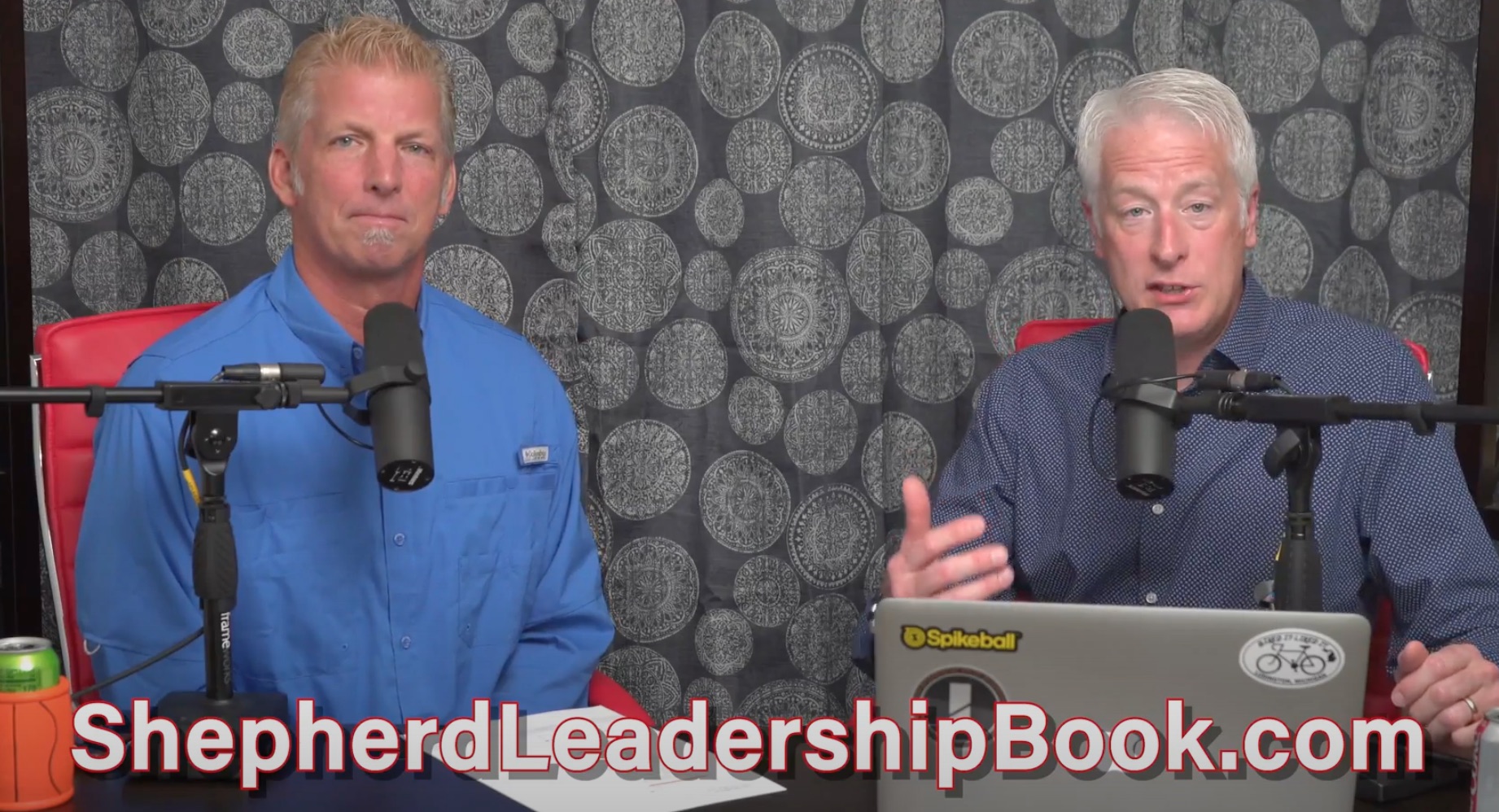 I have known Greg Heeres for almost 30 years. During that time we have grown as close as brothers, partnering on numerous projects, both personally and professionally. One of our shared passions is developing leaders. Out of this passion we began a video and audio podcast called The Craig And Greg Show.
We switched up our format just a bit in a recent episode so that Greg could interview me about my book Shepherd Leadership: The Metrics That Really Matter.
I was also thrilled to receive an endorsement from another church leadership blogger that I greatly admire:
“In his new book, Shepherd Leadership, Craig T. Owens gets to the heart of pastoral ministry and caring about people with great wisdom. Jesus sets the example for us as the good shepherd, and Craig delivers practical principles for healthy leadership that allows you the opportunity for freedom as God intended, joy in serving, and ultimately experiencing the full blessing of God.” —Dan Reiland, Executive Pastor, 12Stone Church, Lawrenceville, GA
You may listen to the audio-version of Greg’s interview of me on the player below, and I’ve also shared the link to watch the video of this interview.
On this episode of “The Craig And Greg Show” we talk about:
 Greg toots my horn for me! [1:00]
Check out this episode and subscribe on YouTube so you can watch all of the upcoming episodes. You can also listen to our podcast on Spotify and Apple.
This is a weekly series with things I’m reading and pondering from Charles Spurgeon. You can read the original seed thought here, or type “Thursdays With Spurgeon” in the search box to read more entries.
Listen to the podcast of this post by clicking on the player below, and you can also subscribe on iTunes or Spotify.

God Is The Great Worker
I planted, Apollos watered, but God gave the increase. So then neither he who plants is anything, nor he who waters, but God who gives the increase. Now he who plants and he who waters are one, and each one will receive his own reward according to his own labor. For we are God’s fellow workers; you are God’s field, you are God’s building. (1 Corinthians 3:6-9)
God Himself is the Great Worker. He may use what laborers He pleases, but the increase comes only from Him. Brothers, you know it is so in natural things—the most skillful farmer cannot make the wheat germinate, grow, and ripen. … And in the spiritual farm it is even more so, for what can man do in this business? … We can tell out the truth of God, but to apply the truth to the heart and conscience is quite another thing. …
Well said our Lord, ‘Without Me you can do nothing’ (John 15:5). What is the effect of all this upon your minds? Briefly I would draw certain practical lessons out of this important truth of God. (1) The first is, if the whole farm of the church belongs exclusively to the great Master Worker and the laborers are worth nothing without Him, let this promote unity among all whom He employs. …
(2) Next, notice that this fact ennobles everybody who labors in God’s husbandry. …
(3) But lastly, how this should drive us to our knees! Since we are nothing without God, let us cry mightily to Him for help in this, our holy service!
From Farm Laborers
I learned long ago of both the confidence and the humility in reminding myself that God chose me to work in His field. Here’s how I describe that in my book Shepherd Leadership: The Metrics That Really Matter—
There is nothing wrong about aspiring to a leadership position. The apostle Paul wrote to his young protégé Timothy, “This is a trustworthy saying: ‘If someone aspires to be a church leader, he desires an honorable position’” (1 Timothy 3:1 nlt). Yet this desire needs to be tempered by Jeremiah’s words to his scribe Baruch, “Should you then seek great things for yourself? Do not seek them” (Jeremiah 45:5). Taken together, a shepherd leader’s passion for greater leadership should be to gain greater things not for himself but for others.
Shepherd leaders need to remind themselves frequently of this simple statement: God chose me. The confidence comes from remembering “God chose.” If God has chosen me, then He has also equipped me. He foresaw the needs of this organization, and He has prepared me to step into this role for such a time as this. The humility comes from remembering “God chose me.” Who am I that God would think so highly of me? Of all the people on Earth that God could have placed here, why did He pick me? This confident humility will do two things for us: keep us confident to continue to lead when doubts or naysayers arise, and keep us humble to continue to serve people when pride or applause arises. (except from chapter 2 “Secure To Serve”)
How important it is to remind ourselves that God makes things grow—not us. Our role is to perform the highest-quality labor possible, and to remain faithful at our post until God gives us a new assignment.
This isn’t true just for church leaders, but for every member of the Body of Christ.
►► Would you please prayerfully consider supporting this ministry? ◀︎◀︎
My book Shepherd Leadership: The Metrics That Really Matter releases September 28, 2021, and I am looking for some of my fellow bloggers to read an advanced copy of this book and post a book review. You can watch a trailer video we recorded for this book by clicking here.
This book was written to help pastors and leaders of non-profit organizations reevaluate their definitions of “success” in light of the principles seen in the Bible. I also share helpful strategies for these leaders to care for themselves, care for the flocks under their care, and raise up the next generation of shepherd leaders for their organizations. If you feel like you and your blogging audience would be interested in an advanced look at this book, let’s talk!
Obviously, I cannot send out an advanced reader’s copy to everyone, so please email me with your name and your blog’s URL, and I’ll get back in touch with you.
I’m just looking for an honest review and some insightful feedback on what you read. I would like to request that you post your review sometime during the month of September 2021.
I look forward to hearing from you!
This is a weekly series with things I’m reading and pondering from Charles Spurgeon. You can read the original seed thought here, or type “Thursdays With Spurgeon” in the search box to read more entries.
Listen to the podcast of this post by clicking on the player below, and you can also subscribe on iTunes or Spotify.
A Word To Preachers
I planted, Apollos watered, but God gave the increase. So then neither he who plants is anything, nor he who waters, but God who gives the increase. Now he who plants and he who waters are one, and each one will receive his own reward according to his own labor. For we are God’s fellow workers; you are God’s field, you are God’s building. (1 Corinthians 3:6-9)
Paul is a laborer, Apollos is a laborer, Cephas is a laborer, but not so much as a foot of the farm is Paul’s, nor does a single parcel of land belong to Apollos, or the smallest allotment to Cephas. ‘You are Christ’s, and Christ is God’s’ (1 Corinthians 3:23). The fact is that in this case the laborers belong to the land and not the land to the laborers, ‘for all things are yours: whether Paul or Apollos or Cephas’ (3:21-22). …
Brothers, a laborer may work very hard at a whim of his own and waste his labor, but this is folly! Some discourses do a little more than show the difference between a Tweedledum and Tweedledee, and what is the use of that? …
All God’s laborers must go to Him for their seed, or else they will scatter tares. All good seed comes out of God’s granary. If we preach, it must be the true word of God or nothing can come of it. … A sermon is vain talk and dreary word spinning unless the Holy Spirit enlivens it. …
Here we have mention of a personal service and a personal reward: ‘Each one will receive his own reward according to his own labor.’ The reward is proportionate, not to the success, but to the labor! Many discouraged workers may be comforted with that expression. You are not to be paid by results, but by endeavors.
From Farm Laborers
My dear preacher friend, God sees you. He has placed you in the field where He needs you to be, and He has given you the skills you need to have to labor for Him. Never doubt that!
You may be the one breaking up hard ground, or the one sowing seed, or the one watering, or the one bringing in the harvest. Wherever you are and whatever you are doing, rely on the strength God gives you. He will illuminate His Word to your heart first so that you can share a timely word with those under your care. Then He will send the Holy Spirit to enliven all that you preach.
God has given you the tools and skills, now you must diligently supply the effort. Don’t become discouraged by what seems to be a lack of “success.” As God tells us through Paul, He will reward your faithful labor in His field.
My book Shepherd Leadership: The Metrics That Really Matter elaborates on this point. The thoughts in this book will remove from you the burden of trying to live up to any unbiblical metric of “success” in your ministry. I hope you will get a copy of this book! Check out ShepherdLeadershipBook.com for more details.
►► Would you please prayerfully consider supporting this ministry? ◀︎◀︎


 Craig T. Owens