Listen to the podcast of this post by clicking on the player below, and you can also subscribe on Apple, Spotify, or Audible.
Sometimes you might hear it said of someone’s leadership mettle or leadership philosophies that they are “battle-tested.” In the case of Hal Moore On Leadership, this is literally true!
Perhaps you’ve seen the movie “We Were Soldiers Once…And Young,” which recounts the first full-scale military battle in Vietnam between Moore’s 450-man force and the 2000 soldiers of the North Vietnamese Army. Despite being completely surrounded and severely out-gunned, Moore’s First Cavalry decisively defeated the NVA.
General Moore’s leadership principles won the day for his men in that battle. But even then, his principles had already been battle-tested under fire in the Korean War, and put to the test in the various assignments that Hal Moore faced in his highly-decorated military career. Moore was continually tasked by superior officers to re-tool underperforming units, or step in where tensions were high, or help reorganize when the Army was experiencing some growing pains.
Moore not only excelled at every assignment, but he kept meticulous notes that are now available to any leader in this excellent book.
Hal Moore On Leadership is partially a biography, but mostly his story is told as the backdrop for the leadership principles that were proven to be correct time and time again.
Students of both leadership and military history will find this book enjoyable and practical.
Listen to the podcast of this post by clicking on the player below, and you can also subscribe on Apple, Spotify, or Audible.
I’m a huge fan of NFL football. Growing up in the 1970s, ‘80s, and ‘90s it was fascinating to watch the “changing of the guard” among the dominate NFL teams—especially the Cowboys, Steelers, and 49ers. Right in the center of all of this was a legendary quarterback battle in San Francisco between Joe Montana and Steve Young. Steve Young gives us an inside look at this era in his autobiography QB: My Life Behind the Spiral.
As a student of leadership, I love reading biographies and autobiographies with an eye toward understanding what goes into the making of a leader: Is it genetics? Temperament? Hard work? Lucky breaks? The answer is a resounding “yes” to all of the above. In the case of Steve Young, his football-playing father played a factor, as well as Steve’s relentless drive to play quarterback in the NFL. His work ethic made his lucky breaks happen.
But what often is missed in the lives of overcoming leaders is the role challenges or limitations play. In Steve’s case, his lifelong battle against anxiety propelled him to many of his exceptional achievements. Steve is quite candid about the pull between his anxiety over failing and his nonstop pursuit of being the absolute best quarterback ever. The source of his anxiety was unknown to him for most of his career, until a counselor finally was able to help Steve both diagnose and address the underlying causes. It was after this discovery that Steve could finally find a place of satisfaction in his football pursuits.
QB is a very enjoyable read for football fans and students of leadership, but I think those who grew up watching these epic battles on the football field at such a pivotal time in the NFL’s history will really appreciate this front-row view from Steve Young.
Listen to the podcast of this post by clicking on the player below, and you can also subscribe on Apple, Spotify, or Audible.
In Proverbs 25–26 Solomon uses the word “like” 18 times. This small word gives leaders a huge teaching lesson.
Good leaders are constantly conveying to their team the vision that God has given them. We see this throughout the Bible, where past history is connected to the future promise God has given. Unless leaders are able to consistently, and frequently, refocus their people on the vision, the people “cast off restraint” and go their own way (Proverbs 29:18).
Leaders need to find fresh ways to make their messages stick. All of the Proverbs, but especially these two chapters, give us excellent lessons for this. Solomon makes memorable connections by starting with something that most people have experienced. Things like…
a beautiful piece of jewelry
a refreshingly cool drink on a hot day
an injured body part
the actions of nature and animals
Then Solomon connects these observations to a timely piece of wisdom…
The right words, delivered at the right time, in the right way are LIKE a beautiful piece of jewelry.
One who delivers timely and helpful words is LIKE a refreshingly cool drink on a hot day.
Trying to move around on an injured foot is LIKE having to rely on someone inconsistent during times of trouble.
Just LIKE honey is good for you in moderation, too much honey—and too much of any good thing—can make you sick.
This is a great teaching lesson for every leader. We need to continually find new and memorable ways to help our people grasp the vision, mission, and values of the organization. This teaching tip from King Solomon can go a long way in helping our messages stick.
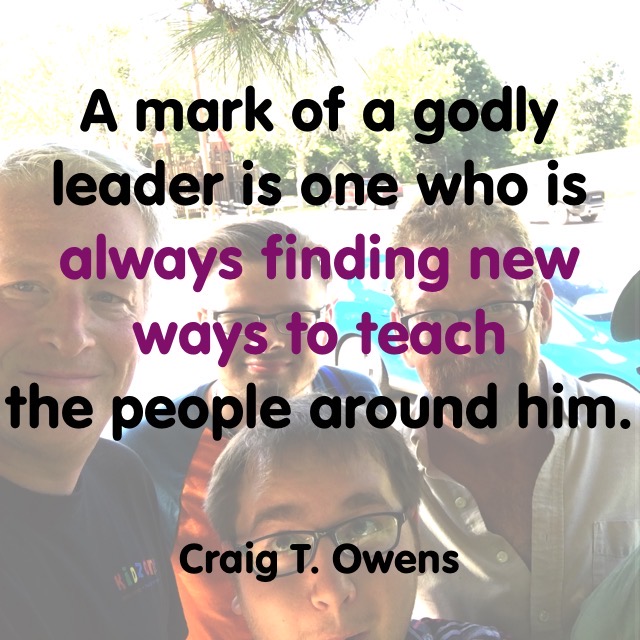
A mark of a godly leader is one who is always finding new ways to teach the people around him.
This is part 59 in my series on godly leadership. You can check out all of my posts in this series by clicking here.
[0:36] One thing I have learned about veterans that I have appreciated.
[1:35] Giving a shout-out to our favorite veterans.
[2:35] We wonder how many current leaders would agree to step into tough roles if they weren’t getting paid to do so.
[3:35] What intrigues us about volunteers.
[5:15] What else motivates people beside getting a paycheck?
[6:35] Leaders help their people get involved in a bigger cause—they help them see beyond the organization’s “bottom line” as a way to energize their team.
[8:29] Some leadership examples from our military personnel.
[9:18] What any leader should be able to learn from veterans: respect, understanding of the chain of command, innovation while follow the mission plan.
[11:13] How having veterans on your team can benefit your organization.
[13:41] What we can learn from our veterans about defending our values.
[14:00] Greg shares a great quote on defining true heroes.
[15:20] Find a way to invest in your people and unleash their potential.
Check out this episode and subscribe on YouTube so you can watch all of the upcoming episodes. You can also listen to our podcast on Spotify and Apple.
Listen to the podcast of this post by clicking on the player below, and you can also subscribe on Apple, Spotify, or Audible.
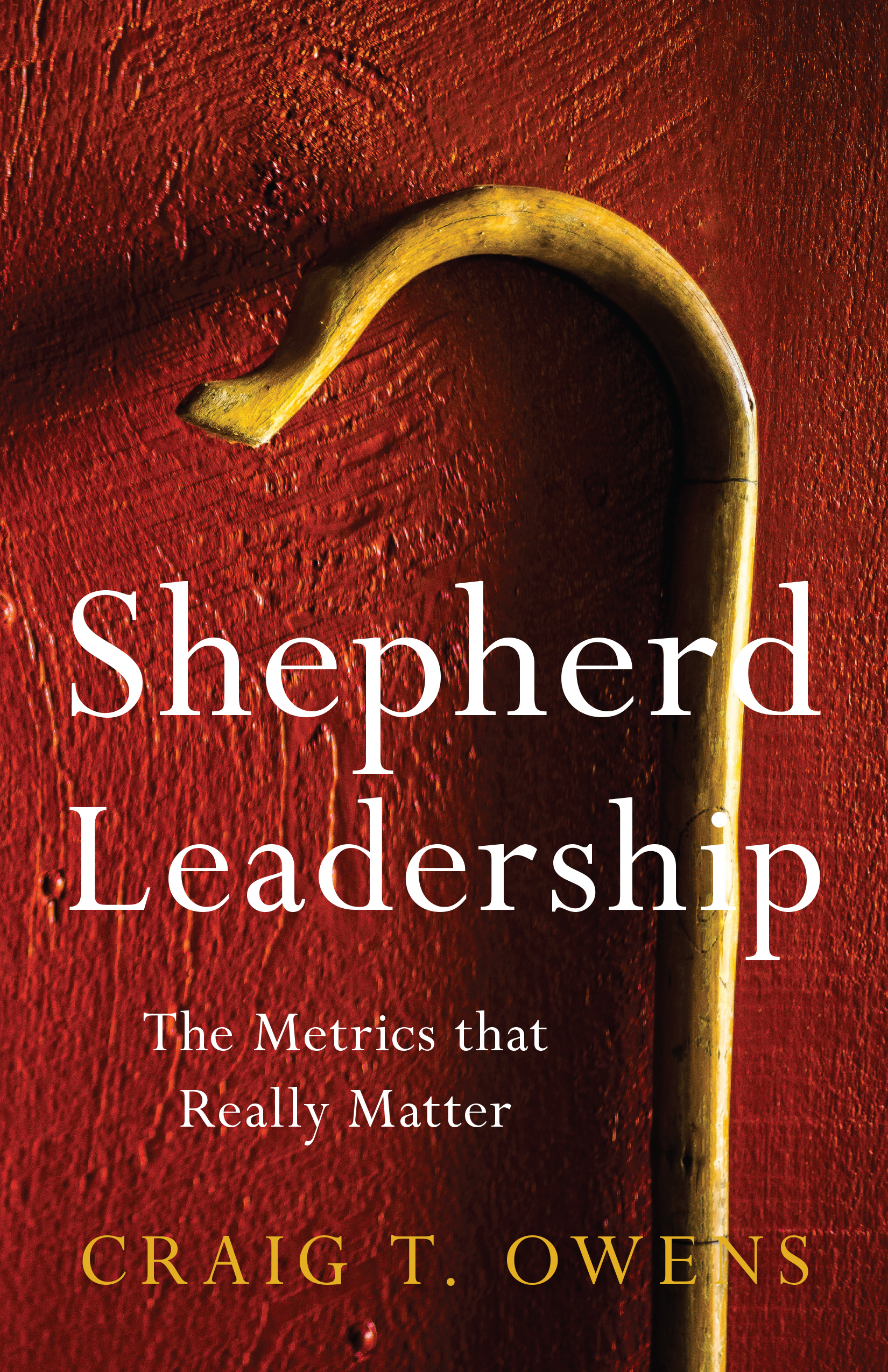
In my book Shepherd Leadership: The Metrics That Really Matter I take two chapters to talk about how confident leaders need to add humility to their confidence, and how humble leaders need to add confidence to their humility.
For me, I created and became a character named Plungerman to help me learn some humility.
At a recent Q&A and book signing event I was asked about the origins of Plungerman. Take a listen to my explanation of how Plungerman came to be, and then stay tuned to hear the epic adventure of Plungerman himself!
Shepherd Leadership: The Metrics That Really Matter is available in print or ebook, and in audiobook through either Audible or Apple.
Leaders need to give their teammates permission to try some things, to take some chances.
If they are just standing still, doing nothing, that means there is nothing for you to coach. Let them take some chances and see what happens! You never know when their big swing is going to result in something amazing!
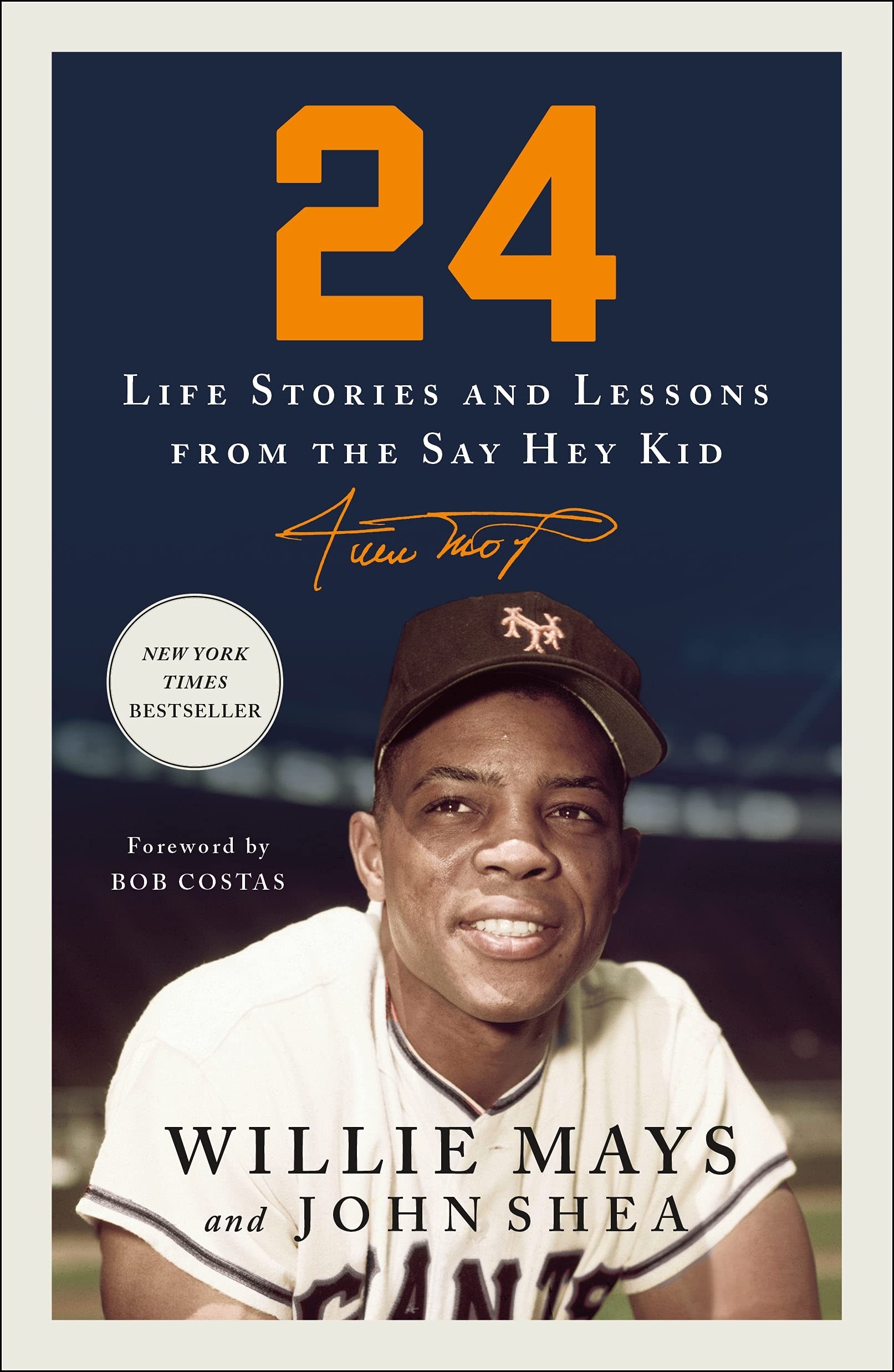
Willie Mays is arguably the best all-around player in baseball history. There’s only a few that surpass him in individual statistics like home runs, stolen bases, and fielding prowess, but combining all of his stats puts the Say Hey Kid into a rarefied category!
Willie overcame such huge obstacles and racism, took time away from baseball to serve his country during the Korean War and still racked up mind-boggling statistics, and exhibited a loyalty to both teammates and opposing players that make hardly anyone a comparable peer. He played the game competitively, seldom took a day off, always had time for the fans (especially the kids), and has remained an integral part of his beloved San Francisco Giants for more years in retirement than he even did as a player.
He accomplished all of this with class and professionalism.
John Shey compiled twenty-four life lessons from Willie Mays’ life, to match his iconic jersey number. Each chapter tells the story of his life before, during, and after baseball while elaborating on that particular leadership lesson. This book is extremely well written.
Both baseball fans and students of leadership will find many rich lessons in 24, all presented in a very enjoyable format.
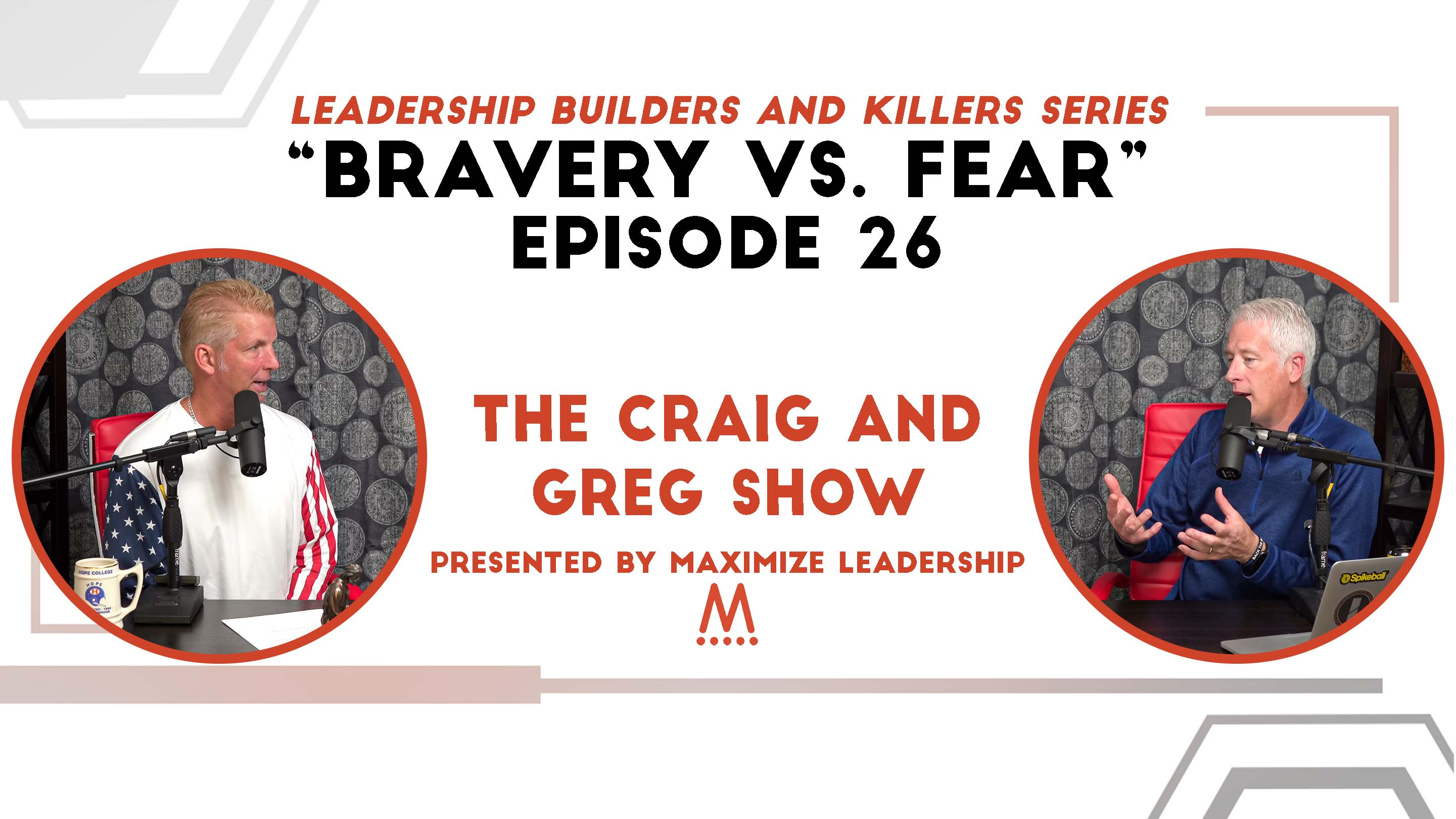
[0:58] Our empowerment comes from facing our fears.
[1:35] How does fear paralyze a leader?
[2:14] One fear leaders need to address in themselves and others: The fear of dropping the ball.
[3:00] Leaders need to be aware that confidence can ebb and flow.
[3:50] How we lead through fear.
[4:27] Transparency in a leader empowers the team to greatness. On the other hand, blaming is a defense mechanism that disempowers the team.
[5:49] Greg shares how we lead by example and with transparency.
[7:25] I address the fear that blocks leaders from giving authority to others.
[8:15] Greg suggests we switch our mindset from fear to learning opportunities.
[9:21] I share a Little League lesson that served me well into adulthood.
[10:50] How Greg and I help coach people through their fears.
[11:34] What other fears to leaders face?
[12:50] Creating a culture of safety helps our teammates confront their fears.
[14:03] How can leaders encourage people who are trapped by their fears?
[15:41] Leaders have to go first. I said, “Sometimes bravery is just going one step farther than you went before.”
[16:50] Greg shares a brave moment in his adoption process.
[18:18] We need to assess the gifts that others on our team possess.
[19:20] Greg unpacks a great quote about bravery.
[20:03] I share about the moment when I think bravery begins.
Check out this episode and subscribe on YouTube so you can watch all of the upcoming episodes. You can also listen to our podcast on Spotify and Apple.
A recent article called “Soul Watchers” really caught my attention. Here are a few excerpts to whet your appetite…
Elders are called “overseers” and “shepherds” in their relationship to the congregations of the Lord (1 Peter 5:1-3). … Elders were charged with the responsibility of watching over the flocks of the Lord (Acts 20:28), preserving sound doctrine and right practice in the churches (Acts 15:1-6; Titus 1), and, in particular, keeping watch over the souls of God’s people (2 Corinthians 12:15; Hebrews 13:17). …
The elders appointed to serve the churches of the New Testament were called to be shepherds, leading the Lord’s flocks into fuller realization of His Kingdom and promises. In fact, so vital were elders to the churches of the New Testament that Paul insisted that any church that didn’t have elders was to that extent not “in order” (Titus 1:3).
(Check out the bible verses T.M. references in this piece by clicking here.)
Actually, I want to share with you what others have said about my book:
“If one is searching for an easily understandable road map to biblical leadership, you have an excellent resource in Pastor Craig’s new offering. … Pastor Craig translates deep spiritual truths to simple, attainable processes which will certainly achieve desired results and personal growth.” —Kurt
“Owens has created a concise guide for pastors that will model how Jesus wants them to lead and serve. I highly recommend this book for not only pastors but those attending seminary.” —Anonymous
“After 23 years of Army service, and 17 of those years in a leadership role, I can tell you that this book would have helped me be a better leader back then. It is geared to help the Ministry Leadership; however, after reading it, I believe will help everyone.” —Daniel
“This book is such a good resource, not only for leaders in ministry but any person who wants a refreshing look at leadership relationships in general.” —Anonymous
“This is a great addition to the leadership library and is a must for those in nonprofit, ministry leadership, or considering going into those fields. … Having been led as a layperson in a church that had leaders who lacked humility and security in serving, and seeing the damage they did to people and the Church, this book really spoke to me.” —Steven
“I am so thankful to Craig for cutting through all the delusion and confusion of what ministry and leadership has become and taking us back to the simple reality of laying down our lives for others. Crucified shepherds are neither popular nor common, but they do look and live like Jesus.” —Dick
“Craig does a great job of reminding us of some simple truths that far too often get lost in the world of leadership. As he calls us back to model our leadership after Jesus, he does so with practical advise and a shepherd’s heart.” —Kevin
“Having served in executive leadership positions on two large church staffs and also on a non-profit paraministry, I can tell you from experience this book is a must-read.” —Steve
“Craig provides a much needed guide, based on biblical principles, on how the church can regain its impact on the culture through more effective leadership.” —Stuart
“Craig Owens describes his Biblical understanding of how leaders serve through humility and confidence, utilizing their mental, physical, spiritual, and emotional health. It is through this balance that effective leaders can honor God with their servanthood.” —Denise
“This book is filled with practical ideas that challenge me to check my priorities. In a world that screams for more, more, more, this book asks me to identify what I want more of.” —Faye
The reviews on Amazon currently have this book rated at 4.9 stars.
I’m so humbled that this book is connecting with so many people! I loved writing it, and I still love talking to people about it.
My book is available in print, ebook, and audiobook. If you’d like to know more about Shepherd Leadership: The Metrics That Really Matter, or to pick up a copy for yourself, please go to ShepherdLeadershipBook.com.



 Sometimes you might hear it said of someone’s leadership mettle or leadership philosophies that they are “battle-tested.” In the case of Hal Moore On Leadership, this is literally true!