Light In The Darkest Of Times

Listen to the podcast of this post by clicking on the player below, and you can also subscribe on AppleSpotify, or Audible. 

One of the reasons I appreciate the Bible—in fact, one of the main reasons that continually convinces me of the truthfulness of the Bible—is the way it portrays life as it really is. It doesn’t avoid the difficult subjects, nor does it sugarcoat the bitterness of life. The Bible tells it as it is. 

The songs that have us singing praises to God “when the sun’s shining down on me and the world’s all as it should be” are great, but when we can also find hope when we’re “found in the desert place” is the real test. 

Dark times come to all of us. 

David is anointed king of Israel and given a promise by God for a lasting legacy (2 Samuel 7:8-9, 16, 27-29; Psalm 110:1). And yet David cried out one of the most painful phrases ever uttered in Psalm 22:1-2, “My God, my God, why have You forsaken me?”  

(Check out all of the Scriptures in this post by clicking here.) 

Despite the promises that God gave David, when any of us are in a dark place, there is a natural human tendency to focus on the darkness around us and second-guess what is happening to us. You know the questions:

  • How did I get here? 
  • How will I get out of here? 
  • When will I get out of here? 
  • Have I offended God and perhaps missed out on His promise? 
  • Has He forgotten me? 

The Bible does tell us, “If You, Lord, kept a record of sins, Lord, who could stand?” and we also know it’s true that “all have sinned and fall short of the glory of God” (Psalm 130:3; Romans 3:23). 

That’s for us, not for Jesus. He is the sinless One. He obediently became human to rescue us, knowing full well that He was the fulfillment of the promise God made to David (Matthew 1:1; 22:41-44). Yet He ended up uttering the same painful words David did (Matthew 27:41-46). 

Remember I said that King David was a visible picture to help us see the coming King of kings. David was inspired by the Holy Spirit with this knowledge (Acts 2:29-30, 25-28). 

The old hymn says, “When darkness veils His lovely face, I rest on His unchanging grace” and “When all around my soul gives way, He then is all my hope and stay.” Look at David’s preaching to himself:

  • I am feeling forsaken (Psalm 22:1-2) … YET You are on Your throne (vv. 3-5) 
  • I am scorned by others (vv. 6-8) … YET You are closer than my scorners (vv. 9-11) 
  • I am completely cut off (vv. 12-18) … BUT You are my rescue (vv. 19-24) 

What did Jesus know:

  • He would sit on the throne of Heaven—Matthew 26:62-64 
  • His Father was completing everything—John 19:30; Psalm 22:25-31 
  • He would conquer every enemy—Revelation 1:8, 18 

Jeremiah cries out about his dark time, and then like David he says, “YET this I call to mind and have hope.” Jeremiah then talks about the never-ending love and mercy of God, and concludes by preaching to himself, “I say to myself, ‘The Lord is my portion; therefore I will wait for Him’” (Lamentations 3:19-24). 

The Lord is my portion” means the Lord is my King who declares promises and fulfills promises. 

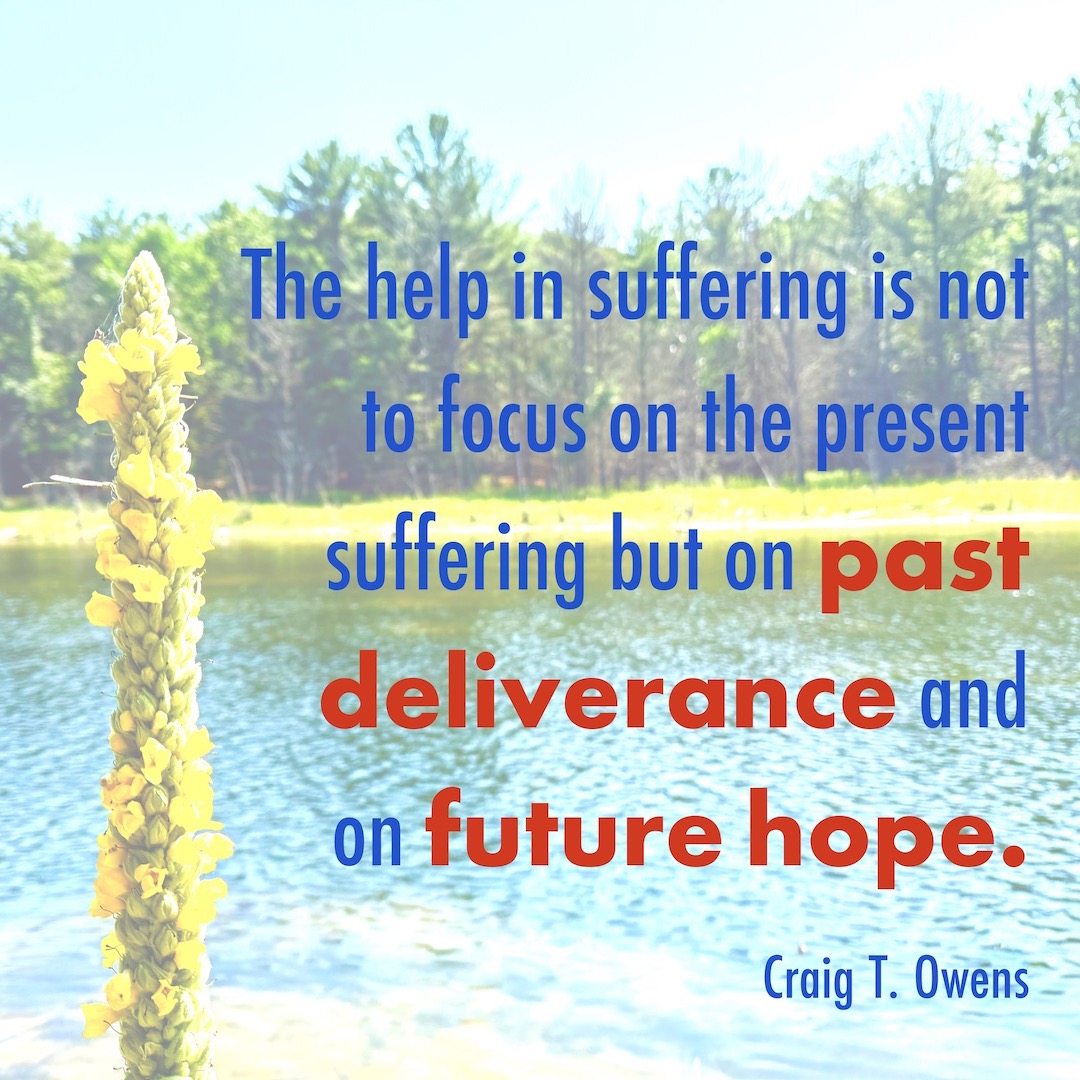
The help in suffering is not found in focusing on the present darkness—and all the questions—but to focus on God’s promises. Like David’s “yet” and “but” we need to preach to ourselves about God’s past deliverance and then be assured of our future hope. 

Just assuredly as our King of kings said, “I will be resurrected from the dead to sit on the throne of Heaven,” He also said, “I will come to take you where I am”! 

Take your eyes off the present, temporary darkness and put them on the eternal King! 

If you have missed any of the messages in this series on the Royal Psalms, you can find them all here. 

►► Would you please prayerfully consider supporting this ministry? My Patreon supporters get behind-the-scenes access to exclusive materials. ◀︎◀︎

How Do We Wait Expectantly?

Listen to the podcast of this post by clicking on the player below, and you can also subscribe on AppleSpotify, or Audible. 

Last week I asked, “How long do we keep praying?” Answer: Until God answers or until He lifts our burden. In the meantime, the Bible encourages us to…

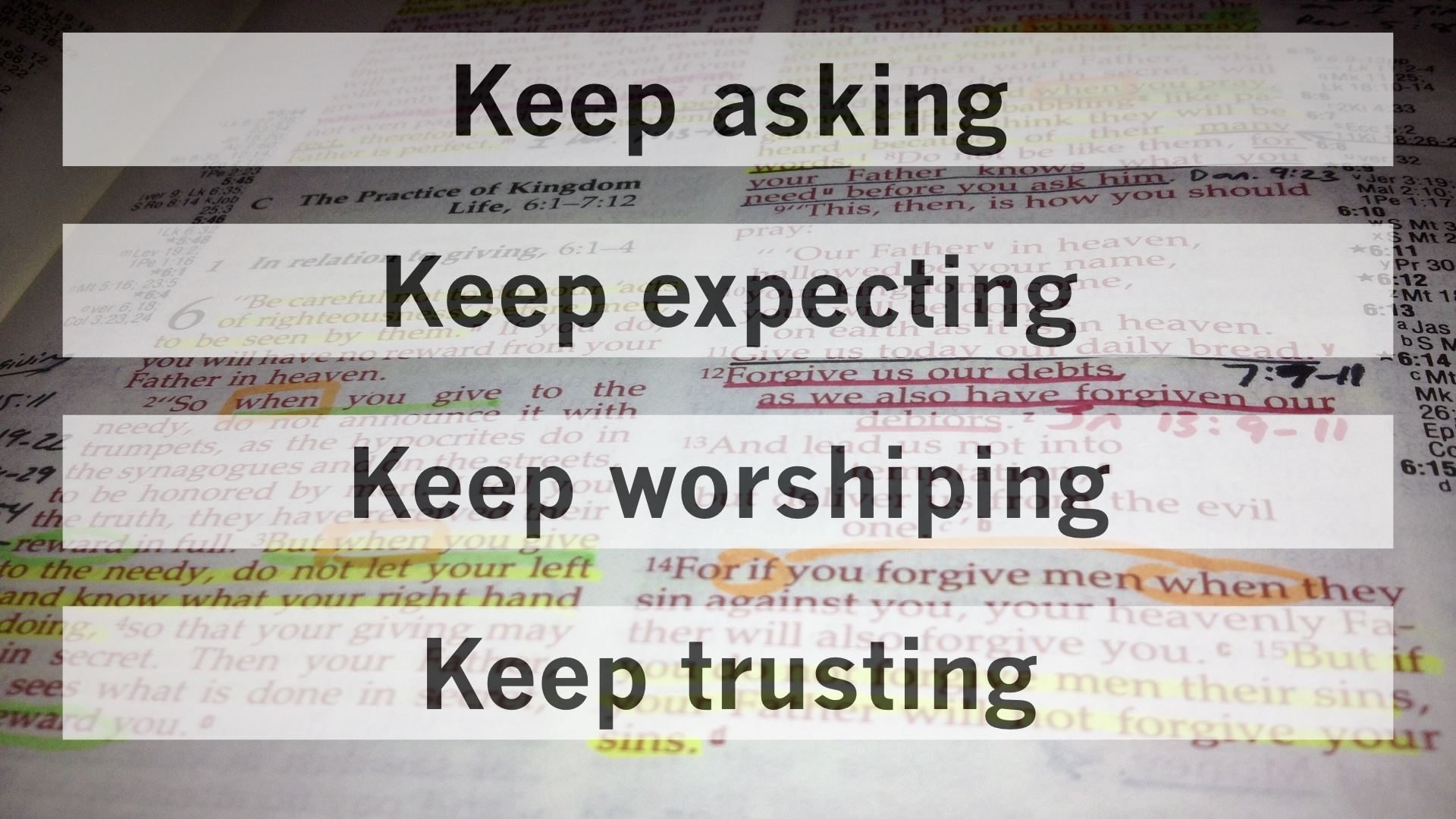
  1. Keep asking with full confidence that God hears you 
  2. Keep expecting an answer 
  3. Keep worshiping God for Who He is 
  4. Keep trusting that your Heavenly Father wants to give you the very best! 

With that in mind, let me ask you another question: What does this look like? How do we wait expectantly for God to answer? I’ve got three thoughts from the Scripture.

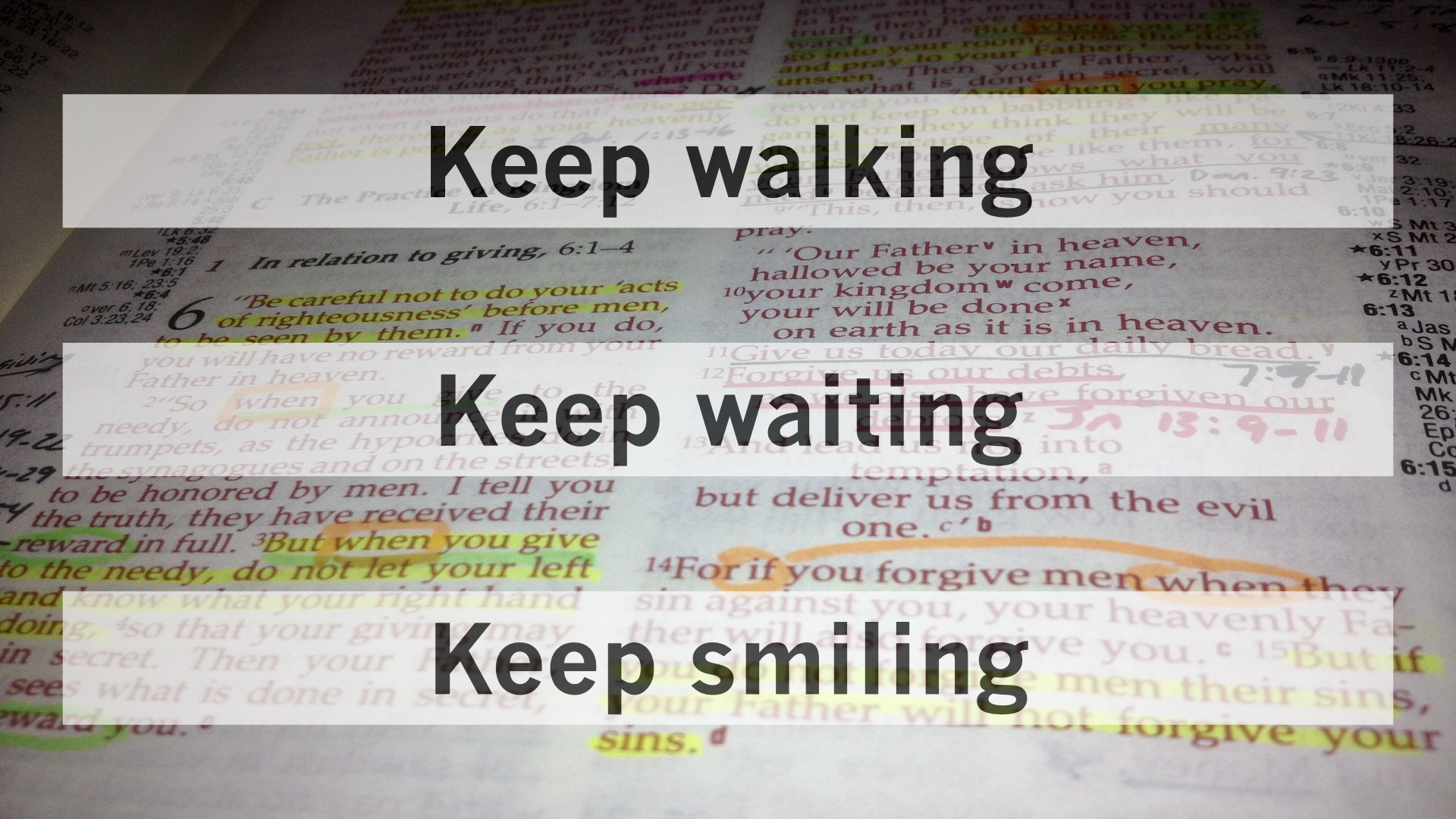
(1) Keep walking

Eliezer had a 300-mile journey which would have taken him about 10 days. Abraham prayed for him before he left and Eliezer prayed when he arrived (Genesis 24:7, 12, 15). His expectation that God would answer him kept him walking. The answer came after 10 days—before he even finished praying! 

(Check out all of the Scriptures in this post by clicking here.)

Nehemiah prayed for God’s favor with King Artaxerxes (Nehemiah 1:11) but then he had to keep walking to work every single day for at least 4 months (2:4). All the while he was praying, expecting, and planning, so when the king asked him what he wanted, Nehemiah was ready to answer. 

A royal official met Jesus in Cana and asked Him to heal his son who was was sick in Capernaum. Jesus said, “Go! Your son will live,” and that father began walking his 20-mile journey home. Along the way, his servants met him to deliver the good news of the boy’s full recovery. When the father asked, he found out it was at the very moment Jesus had said, “Go” (John 4:46-53). 

Faith takes Jesus at His word and starts walking toward the approaching miracle! 

(2) Keep waiting

There are two Hebrew words in the Old Testament that frequently are translated “wait”: 

  • qava = expecting in hope 
  • yahal = guarding that hope    

Check out how one psalmist linked hoping and waiting—

Out of the depths I cry to You, LORD; Lord, hear my voice. Let Your ears be attentive to my cry for mercy. … I wait for the LORD, my whole being waits, and in His Word I put my hope. I wait for the Lord more than watchmen wait for the morning, more than watchmen wait for the morning. (Psalm 130:1-2, 5-6) 

And David wrote how he had learned to quiet himself in God’s loving presence: But I have calmed and quieted myself, I am like a weaned child with its mother; like a weaned child I am content (Psalm 131:2). 

Then listen to the wait-hope-quiet link in Jeremiah’s prayer—

I say to myself, “The LORD is my portion; therefore I will wait for Him.” The LORD is good to those whose hope is in Him, to the one who seeks Him; it is good to wait quietly for the salvation of the LORD. (Lamentation 3:24-26) 

In the New Testament, the idea is patience for an expected result is like a farmer who had prepared his field, planted good seed, watered it with his prayers, and is now assured of an abundant harvest (James 5:7-8; Galatians 6:9). 

(3) Keep smiling

We put on a smile, not a show! 

Contrast what Jesus said about the wrong way to pray and fast…

And when you pray, do not be like the hypocrites, for they love to pray standing in the synagogues and on the street corners to be seen by others. … And when you pray, do not keep on babbling like pagans … When you fast, do not look somber as the hypocrites do, for they disfigure their faces to show others they are fasting… (Matthew 6:5, 7, 16) 

…with the God-honoring, God-trusting way—

But when you pray, go into your room, close the door and pray to your Father, who is unseen … But when you fast, put oil on your head and wash your face. (Matthew 6:6, 17) 

It’s not a fake smile, but a smile that comes from the joy in our rock-solid expectation in God’s reply to our prayer (Psalm 28:6-7; 38:15) 

Pray—then keep walking, keep waiting, and keep smiling in anticipation of what your Heavenly Father is doing on your behalf. 

If you want to check out the other messages in this prayer series, please click here. 

►► Would you please prayerfully consider supporting this ministry? My Patreon supporters get behind-the-scenes access to exclusive materials. ◀︎◀︎
How Long?

Listen to the podcast of this post by clicking on the player below, and you can also subscribe on AppleSpotify, or Audible. 

Last week we saw that if we make prayer our priority, we can expect that our eyes will be opened to the answers that God has for us. Hagar and Eliezer seemed to get pretty quick answers. Nehemiah had to wait four months for the answer to his prayer. 

We saw in Psalm 5 that David laid his requests before God first thing in the morning, and then he went out of his prayer closet in expectation of an answer (Psalm 5:1-3). But how long did he wait? 

(Check out all of the Scriptures in this post by clicking here.) 

Psalm 6 may not happen historically right after Psalm 5, but listen to David’s heart, “Have mercy on me, LORD, for I am faint; heal me, LORD, for my bones are in agony. My soul is in deep anguish. How long, LORD, how long? (Psalm 6:2-3). And then again in Psalm 13:1-3, David asks, “How long?” four times in the first two verses! 

When we read the training Jesus gave His disciples about prayer in Luke 11:9-10, we see how He implores them (and us) to keep on praying. It becomes even more emphatic in the Amplified Bible—

So I say to you, ask and keep on asking and it shall be given you; seek and keep on seeking and you shall find; knock and keep on knocking and the door shall be opened to you. For everyone who asks and keeps on asking receives; and he who seeks and keeps on seeking finds; and to him who knocks and keeps on knocking, the door shall be opened. 

But once again we have to ask: how long are we to continue asking, seeking, and knocking? This is what Job asked in the middle of his trial (Job 6:8, 11-13). 

Charles Spurgeon said, “God has measured the crosses of all His children: Israel in Egypt, 430 years; Joseph in prison, 3 years; Judah in Babylon, 70 years.” That means that God knows what He is doing, God knows His timing for answering, and that our part is to simply to continue to ask, seek, and knock as we throw our total trust on Him! 

I remember my affliction and my wandering, the bitterness and the gall. I well remember them, and my soul is downcast within me. Yet this I call to mind and therefore I have hope. Because of the LORD’s great love we are not consumed, for His compassions never fail. They are new every morning; great is Your faithfulness. I say to myself, “The LORD is my portion; therefore I will wait for Him.” (Lamentations 3:19-24) 

During these times of waiting, we need to keep recalling what we know:

  1. God’s love is unfathomable—Romans 5:5, 8:38-39 
  2. God’s timing is perfect—Deuteronomy 32:4 
  3. God’s method is flawless—Romans 8:28 
  4. God’s gifts are good—Luke 11:11-13, 12:32  

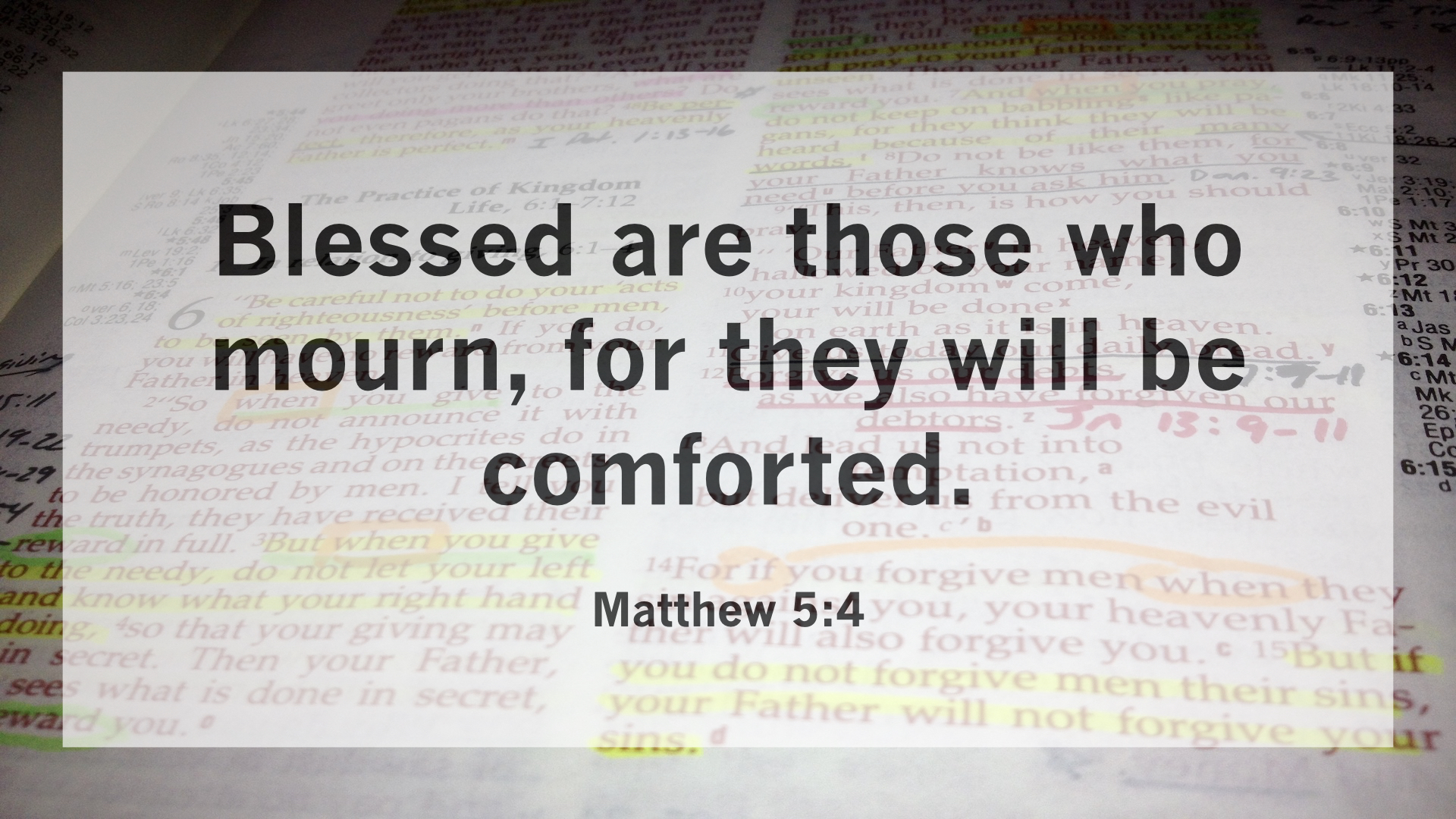
In Psalms 6 & 13, David doesn’t record any answers from God, but listen to this assurance from Jesus, “Blessed are those who mourn, for they will be comforted” (Matthew 5:4). 

Jesus doesn’t tell us how or when God will bring us comfort, but He does assure us that we will be comforted! 

In a couple of the examples from David, you can see this assurance as he continues his prayers (Psalm 6:2-4, 8-10; 13:1-6). Paul also experienced this confidence (2 Corinthians 12:7-10), and so did Jesus (Matthew 26:38-39, 50-54). 

The writer of Hebrews assures us that Jesus was heard in His, “How long?” cries, and therefore He knows exactly how to intercede for us today as we lift up the same cry (Hebrews 5:7-8; 2:10, 14, 17-18)! 

How long? Quite simply stated: Until God answers or until He lifts our burden. 

In the meantime, the examples in Scripture and the assurance of Christ’s intercession for us us encourages us to…

  1. Keep asking with full confidence that God hears you 
  2. Keep expecting an answer 
  3. Keep worshiping God for Who He is 
  4. Keep trusting that your Heavenly Father wants to give you the very best!  

If you have missed any of the other messages in our prayer series, you can find them all here. 

►► Would you please prayerfully consider supporting this ministry? My Patreon supporters get behind-the-scenes access to exclusive materials. ◀︎◀︎
Our Musical Testimony

Listen to the podcast of this post by clicking on the player below, and you can also subscribe on AppleSpotify, or Audible.  

As these songs of ascent are reminding us, we’re trying to ascend into God’s presence. But it seems like the forces pulling us back downward are so strong! The lyrics in the most popular songs are getting more and more raunchy, the blockbuster movies routinely celebrate sin, TV shows increasingly push a decidedly unbiblical agenda, government leaders are caught in scandals, and church leaders are “de-transitioning” from their Christian testimony. 

It doesn’t seem like there is much to celebrate. 

Just like the Jews who found themselves defeated and living in a foreign land, or fighting opposition to rebuild their way of life, or contending with occupying forces that were hostile to their religion, we, too, find ourselves in a very similar place—even in a country that was supposedly built on godly principles. 

The worldly-minded and irreligious have always tried to pull down the godly. When they do, it makes it hard to even worship God (Psalm 137:1-4). 

I’ve been reminding you that in Hebrew literature we can usually get our perspective from the middle of the story. So before we look at this next song of ascent, let’s look at the middle of the Jewish story—the middle of their time of exile, when things seemed darkest. 

Jeremiah wrote a book of Lamentations which was in the middle of the exile. In the middle of his tears and gall and bitterness he wrote this—

I remember my affliction and my wandering, the bitterness and the gall. I well remember them, and my soul is downcast within me. Yet this I call to mind and therefore I have hope: Because of the Lord’s great love we are not consumed, for His compassions never fail. They are new every morning; great is Your faithfulness. I say to myself, “The Lord is my portion; therefore I will wait for Him.” … I called on Your name, Lord, from the depths of the pit. You heard my plea: “Do not close your ears to my cry for relief.” You came near when I called You, and You said, “Do not fear.” (Lamentations 3:19-24, 55-57) 

Jeremiah said when he called God, He came near. He’s not saying that God had left him, but instead, Jeremiah is saying that he got his eyes off the ever-present God. As soon as he put his eyes back on God, he could feel His nearness. 

Our next song of ascent (Psalm 126) opens with the word “when.” This is a celebration of how God kept His word that the exiles would be released from Babylon and return to Jerusalem. As the Jews praised God for keeping His Word, then the surrounding nations saw and heard the testimony in the songs of joy that were being sung. 

God’s people were both singing for joy for God’s deliverance AND they were singing in joyful anticipation of what was still to come. 

They make a request in prayer for God to “restore our fortunes” (v. 4). This phrase always means that God is going to bring back everything that was taken away and then some. 

We have a promise two times in the next two verses that God will (not might) bring in these restored fortunes. In the midst of darkness or drought, it may seem hopeless to keep sowing seed. God sees your tears, and He will use your tears to water that seed and He will bring a harvest. 

The New Testament assures us of the same promise: “Let us not become weary in doing good, for at the proper time we will reap a harvest if we do not give up” (Galatians 6:9). 

We show our faith in God’s eternal victory by lifting up our voices in song today. That song is a testimony to the nations around us and an encouragement to other saints who may be struggling with weariness (see Ephesians 5:18-20). We keep on singing these songs of joy in anticipation of the final and eternal song we will sing in Heaven. 

God is near. He hears your sighs. He sees your tears. He is watering the seeds you are sowing, and He will bring a harvest. As you sow in tears, sow also with songs of joy! 

If you’ve missed any of the other messages in our Ascending series, you can find them all here. 

►► Would you please prayerfully consider supporting this ministry? My Patreon supporters get behind-the-scenes access to exclusive materials. ◀︎◀︎
Unexpected Praise

Well, this isn’t what I expected! David says his song in Psalm 9 is supposed to be sung to the tune of “Death Of The Son,” so I’m expecting a prayer that is loaded with minor notes. But instead, David gives us … this! 

The opening verses show us David exploding in praise to God. Check out his vocabulary—

  • I will praise You—this literally means David is pumping his hands in the air
  • I will tell of all Your wonders—David is not doing this just one time but is ticking off a long list of God’s praiseworthy deeds and attributes
  • I will be glad—his face lights up with joy 
  • I will rejoice—this word means a roar of praise (see 1 Chronicles 16:32)
  • I will sing praise—there is a new melody with every praise David lifts to God

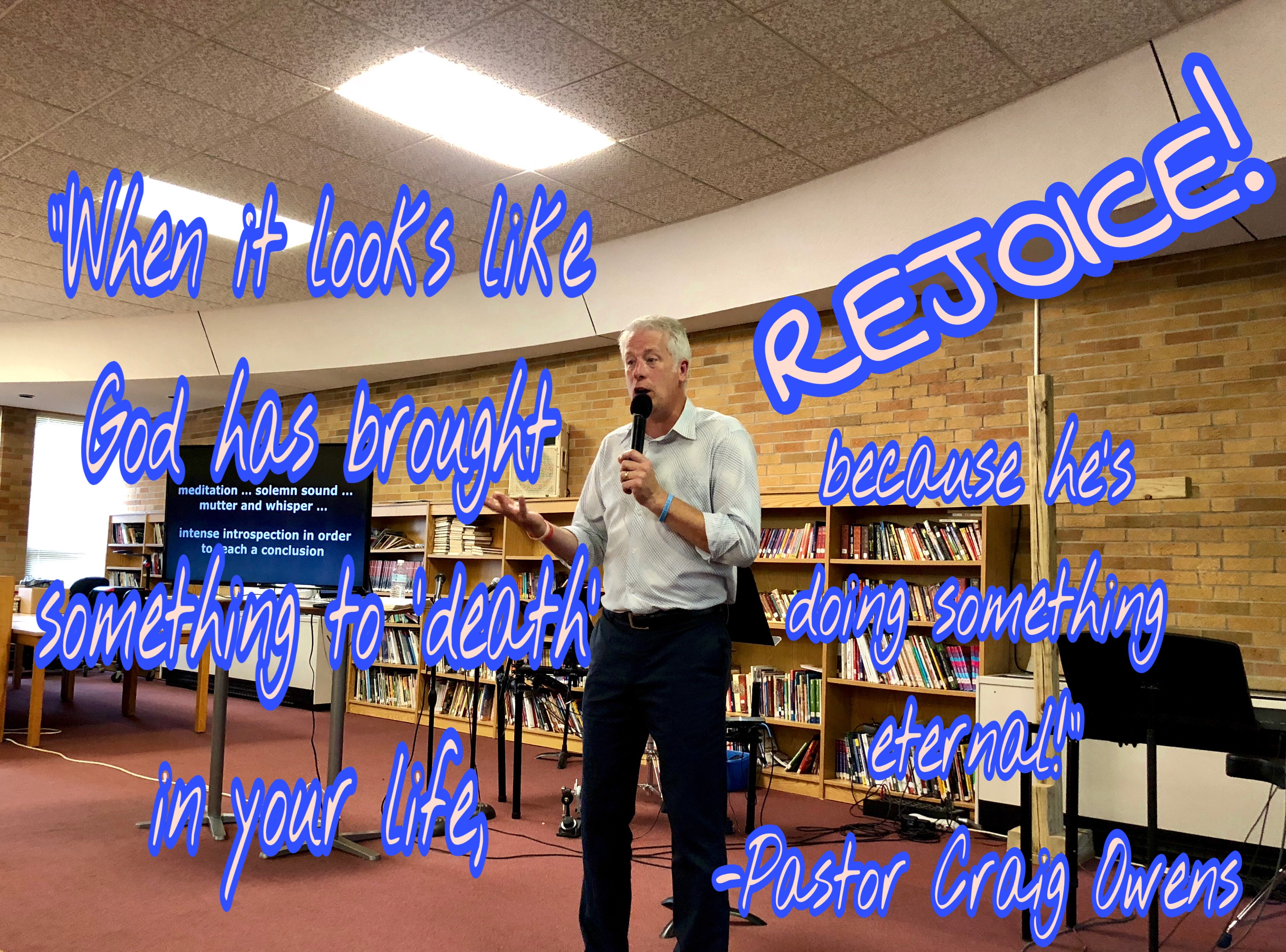
Why this loud, exuberant, unexpected praise? Because David has noticed that whatever has “died” on earth is only a temporary loss, but God is forever! 

There is an unusual word pairing at the end of verse 16: Haggaion and Selah. This is the only time these two words appear like this in all of Scripture, and it’s also the only time Haggaion is used without being translated. 

Haggaion appears just four times in the Bible—(a) in Psalm 19:14 where it is translated meditation; (b) in Psalm 92:3 where it is translated solemn sound; (c) in Lamentations 3:62 where it is translated whisper and mutter; and (d) here in Psalm 9 where it is untranslated. 

By combining Haggaion and Selah, David is wanting us to solemnly meditate on an important contrast: God’s way vs. man’s way. In verses 3-16, David uses huge and eternal terms for God like righteous Judge, reigns forever, refuge, stronghold, merciful, and prayer-answerer. 

Side-by-side with these eternal terms for God, David lists the temporary terms for man like stumble, perish, ruined, forgotten, and trapped. In fact, David ends this Psalm by reminding us evil men who do evil things are “mere men.” Other translations fill in the details: 

  • make them realize their frail nature (AMP)
  • show them how silly they look (MSG)
  • merely human (NLT) 
  • puny men (TLB)

Then David ends with a final Selah—one more call for us to allow this message to resonate with us, especially during the times others may call dark, depressing times. The message that should resonate in our hearts and cause us to throw our hands up in joyful celebration of God is…

these earthly things are temporary and God is eternal. He has never forsaken those who seek Him, and He has never forgotten those who call on Him for help. 

When a dark time—a “death of a son”—tries to rock your world, don’t do what puny mortals expect, but throw your hands up in the air, and sing and roar a praise to the Almighty God Who cares for you! 

Join me this coming Sunday as we continue our looks at the Selahs in the Book of Psalms. You can join me in person or on Facebook Live.

Help!

David and his men are on the run from King Saul, but they hear that the small town of Keilah is being harassed by the Philistines. The bad guys are stealing the harvest from the people of Keilah, making it a very real possibility that they would starve during the upcoming winter. In his usual habit, David prays and asks God if he should help the people of Keilah, and God gives him the go-ahead to attack.

David and his men defeat the Philistines, not only returning the crops that had been stolen but also delivering some livestock that they took from the defeated Philistines. You might expect that David and his men were given a ticker-tape parade. Instead, as soon as David was within the city’s walls, he finds out that the people of Keilah are planning to sell him out to King Saul. Talk about ingratitude!

David and his men flee to the Desert of Ziph, where they won’t be a bother to anyone. Except the Ziphites get word to King Saul that they will gladly turn him over to the King whenever he asks for it.

What is David’s response? As usual, it’s prayer. His prayer is short and straight to the point—

Help, Lord, for the godly are no more; the faithful have vanished from among men.

In other words, David asks God, “Where have all the decent people gone?” It’s no different in our day, as Paul told his friend Timothy that people will only become more hypocritical liars, with their conscience not bothering them a bit!

What I love about David’s prayer is that he quotes God back to God. Check out the quotation mark: “Because of the oppression of the weak and the groaning of the needy, I will now arise. I will protect them from those who malign them.” And then David is quick to add that God’s words never fail! 

I am convinced that our spiritual battles are largely lost or won in our minds. We need to recall God’s Word—Yet this I call to mind and therefore I have hope: Because of the Lord’s great love we are not consumed, for His compassions never fail (Lamentation 3:21-22).

So we cry, “Help!” to God because He is the only One who can help us: The Lord is my Helper; I will not be afraid. What can man do to me? (Hebrews 13:6).

But David has an important question to ask: “How long do we continue to call for help?” Have you ever asked God that?

Jesus said that the key to our successful praying is for us to remain in Him and for His Words to remain in us, like a branch remains connected to the vine (John 15:7). So let me ask you a question: How long should the branch remain connected to the vine before it’s ready to go off on its own?

The answer is simple—if the branch wants to remain alive and fruitful, it must stay in relationship with the vine forever!

So once again, look at how Jesus answers the “How long?” question—Keep on asking and it will be given you; keep on seeking and you will find; keep on knocking reverently and the door will be opened to you. (Matthew 7:7)

“Help!” is a great prayer that God loves to answer. “How long” do we pray that prayer? Until it’s answered … keep on, keep on, KEEP ON!

Worry Unlearned

We started a new series yesterday called The Stranglehold Of Worry. The word worry originated with shepherds. When a wild dog or a wolf had killed a sheep by grabbing it by its throat and choking it to death, the shepherds said that sheep had been worried to death.

In modern times, researchers at Purdue University found that worrying can chop 16 years off of someone’s life. Not only does worry rob your life of years, but it can also rob your years of life.

What exactly is worry? Fear is our natural response to real threats, like a car heading toward you in your lane of traffic. Worry is our response to perceived threats (to unseen things), like the car that may head toward your kids’ car when they are driving.

Get this clear: worry is being fearful of the unseen.

Compare that to the Bible’s definition of faithNow faith is being sure of what we hope for and certain of what we do not see. Worry and faith both operate in the unseen dimension.

Fear is innate, but worry is learned.

Faith is worry unlearned.

Worry tells your brain a story about bad things that may happen.

Faith tells your brain a story about good things that should happen. Based on what you’ve already experienced of God’s power, what you’ve already seen in God’s provision, or what you already know of God’s promises, your faith in God can help you unlearn your worry.

The prophet Jeremiah tended to be a worrywart. Maybe that’s why he’s been called the “weeping prophet.” But in the middle of his worrying, he unlearns his worry by using his faith to tell a different story about God’s provision, power, and promises:

I well remember [the bad things], and my soul is downcast within me. Yet this I call to mind and therefore I have hope: Because of the LORD’s great love we are not consumed, for His compassions never fail. They are new every morning; great is Your faithfulness. I say to myself, “The LORD is my portion; therefore I will wait for Him.”

Did you notice that Jeremiah talked to himself? He wrote, “I say to myself.” If you have a tendency to worry, it’s time to start talking to yourself and telling yourself a different story. Instead of being fearful of the bad things you cannot see, why not be hopeful of the good things of God you can see?

Let your faith in God help you unlearn your worry. You can overcome worry and anxiety by telling yourself a new faith-filled, hope-oriented story. You can recall God’s faithfulness in the past, and apply it to your current circumstance.

What stories are you telling yourself today? Share with others how you overcame, or are in the process of overcoming worry now. Your faith story will help others overcome and unlearn their worry too.