We are to love the sinner but hate the sin. This is hard to do, especially when the sin they are doing is directed at us and making us angry! Jesus gave us a great example in these times of high anger: withdraw. Check out my full message “A Christlike Response to Skeptics.” I have lots of new content every week, which you can check out on my YouTube channel.
“In many pagan religions the purpose of worship is to placate the gods—to keep them happy and to stay on their good side, lest they mess with, you know, the harvest or procreation or whatever. Worship is thus a work pagans do to earn or keep the favor of their deity. Christians don’t worship to placate God or earn His favor. We don’t worship to make God happy or bring Him pleasure. God is all-satisfied, all-happy, and all-pleased in Himself alone. We add nothing to Him when we come together to worship. At the same time, as we worship, God adds Himself to us. He deigns to commune with us, inhabits our praises, and brings us into His presence and joy in ways that transform all we are, think, feel, value, say, and do. … In worship, rightly conceived and conducted, our minds and imaginations expand beyond their everyday thoughts and dreams, stretched and molded to fill up with the glory of the heavenly throne room, to be conformed to the mind of Christ, and to see the world as He does (1 Corinthians 2:16).” —T.M. Moore
J. Warner Wallace shares two reasons why we can still consider the Bible relevant today.
My grandpa had honey bees on his farm, and I’ve been intrigued by them ever since that time. In fact, honey bees were subject of my semester-long research project in my ecology class. So I’m always fascinated to read more discoveries about these amazing insects!
The level of a leader’s strength and courage is directly tied to the leader’s meditation upon God’s word. God’s wisdom transforms a leader’s heart and sharpens his thoughts. This is what gives the leader the necessary courage to lead people in a God-honoring way. I have a whole series of posts on godly leadership where I expand more on these thoughts.
Listen to the podcast of this post by clicking on the player below, and you can also subscribe on Apple, Spotify, or Audible.
Without a doubt, Jesus had the most robust mental health of anyone who has ever walked planet Earth! Dr. Luke, a trained physician, captures this in just one verse (Luke 2:52) where he talks about how Jesus grew in a wholly healthy way, and Luke lists Christ’s mental health as the first priority.
I’m sure there have been plenty of times when someone asks you about something you like or dislike or why you do something the way you do, you probably don’t tell them the facts but you tell them a story. We have a story for everything we like, everything we do, and everything we avoid.
It’s good to rehearse these stories and to really listen to them. If we don’t really listen to them, we cannot learn from them; if we don’t learn from them, we rob ourselves of robust mental health.
From some of our stories, there is a regret that comes from three enemies. These enemies are all tied to our stories about our past and they are would’ve, could’ve, and should’ve—“If only I would’ve…” and “Things would be different today if I could’ve…” and “I should’ve known….”
One of the ways we need to talk back to those thoughts is like this, “I only know the would’ve, could’ve, and should’ve now because I’m older and more experienced. I didn’t know those things in the past so it was impossible for me to have done something differently.” Even the apostle Paul noted, “When I was a child, I talked like a child, I thought like a child, I reasoned like a child. When I became a man, I put the ways of childhood behind me” (1 Corinthians 13:11).
If we don’t talk back to those regrets of yesterday, we will have doubts about today: Will I make another mistake today? Do I have what it takes to meet today’s challenges? What will others think of me if I mess up? If we don’t address those doubts we have today, that will cause us worry and stress about tomorrow.
Regret … doubt … worry … stress. Those don’t really sound like words that contribute to positive mental health, do they?
Here’s the thing we need to remember—Learning from our yesterdays is healthy, but trying to relive our yesterdays is both unhealthy and unproductive!
Dr. William Osler said, “If the load of tomorrow is added to that of yesterday and carried today, it will make the strongest falter.”
Four times in just ten verses, Jesus told His followers not to worry about tomorrow (Matthew 6:25-34). He ties that worry about tomorrow to having little faith. That lack of faith comes from our doubts, and those doubts come from our past regrets.
T.G.I.F.—thank God it’s Friday!—is an escapism. It’s not wanting to deal with the regrets, doubts, and worry by trying to push them to some distant time. It doesn’t allow us to really concentrate on today. The Bible constantly brings us back to the present.
Today is used 203 times in the NIV Bible
Tomorrow is mentioned 56 times
Yesterday is only used 8 times
Jesus taught us to pray, “Give us today our daily bread” (Matthew 6:11) so that we won’t let past regrets spiral downward into daily doubts and then anxiety about tomorrow. Elizabeth Elliot wisely counseled, “One reason we are so harried and hurried is that we make yesterday and tomorrow our business, when all that legitimately concerns us is today.”
Christians that want to be mentally healthy should continually replace a T.G.I.F. mindset with T.G.I.T.—thank God it’s today!
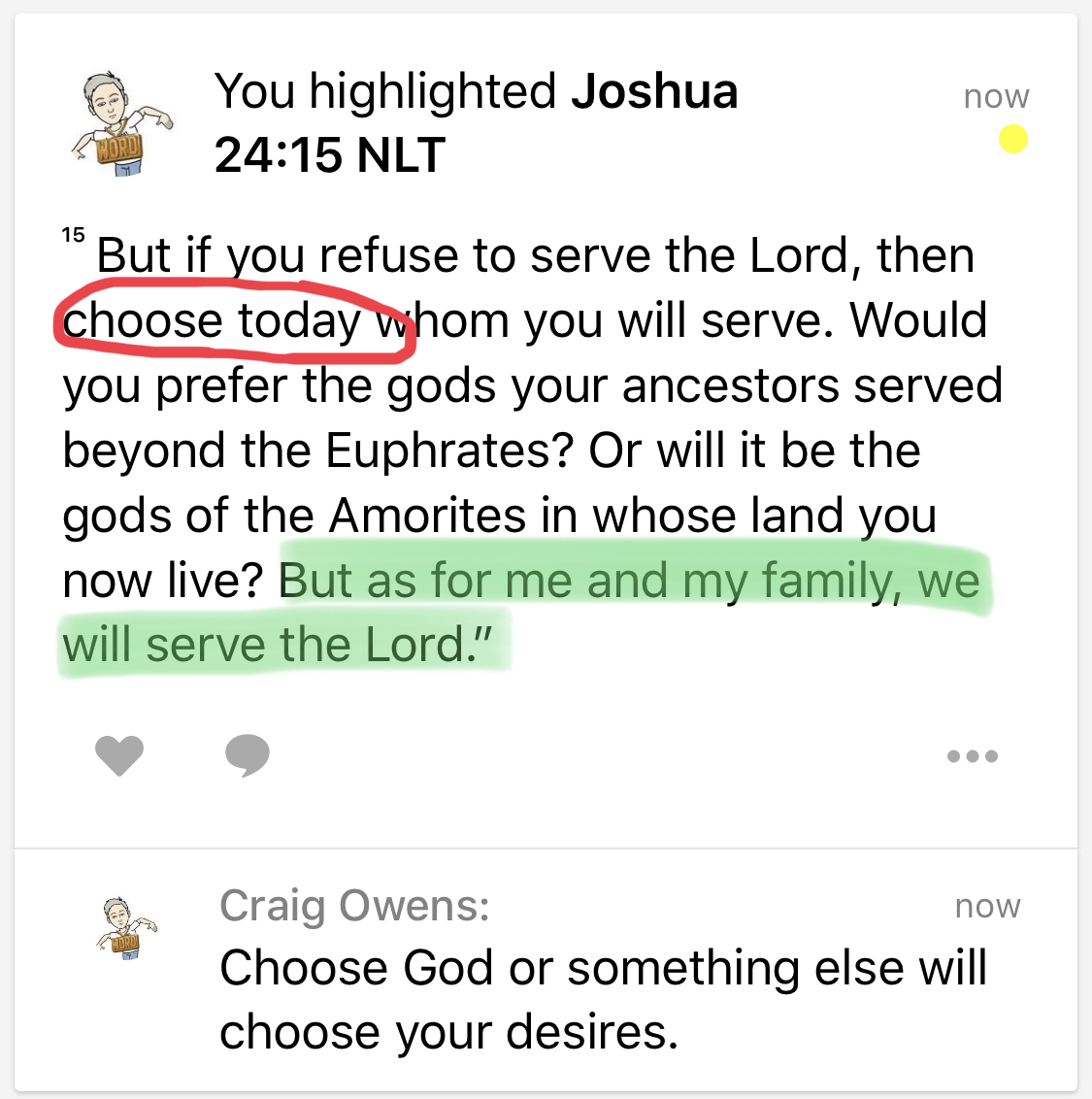
Taking a line from Joshua who said, “Choose for yourselves this day whom you will serve” (Joshua 24:15), here are four things we need to choose to remember each day.
Choose to remember that God uses all things—even our would’ve, could’ve, and should’ves—for our good and for His glory (Romans 8:28).
Choose to forget those old, self-limiting, stress-causing stories (Philippians 3:13).
Choose to believe that God is doing something new—something I never could have planned (Isaiah 43:18-19).
Choose to believe that God can help you tell a new story about your past (Genesis 41:51).
You have to choose each day to say “Thank God it’s today! Thank God that I’m not who I was yesterday! Thank God that He is using my would’ve-could’ve-should’ve moments from yesterday to prepare me for today! Thank God that He is teaching me a new story!”
If you’ve missed any of the previous messages in our series on a Christian’s mental health, you can find them all here.
My courage and my success are directly tied to my obedience of God’s Word. The life of Joshua is just one example. Check out this full message here. I have lots of new content every week, which you can check out on my YouTube channel.
“Christ is more of an Artist than the artists. He works in the living spirit and the living flesh; He makes men instead of statues.” —Vincent van Gogh
Bryan Windel echoes something I’ve frequently said on this blog, “The Bible is rooted in real history. This is why archaeology is such a valuable tool; it helps us uncover the biblical world and provides us with important background knowledge about the people, places, and events described in the text.” Bryan was a part of a dig at Shiloh (where Joshua and Samuel play key roles) and he shares some of his observations and discoveries.
“I trained four years to run nine seconds, and people give up when they don’t see results in two months.” —Usain Bolt
“Those who have turned the tide of history have turned it by means of prayer. This should be the motto of every follower of Jesus Christ. Never stop praying, no matter how dark and hopeless it may seem.” —Billy Graham
I love these stories of hope from To Write Love On Her Arms. They have lots of great words of encouragement for you to share with others.
Listen to the podcast of this post by clicking on the player below, and you can also subscribe on Apple, Spotify, or Audible.
When we hear the word “if” we hear something that is uncertain: “If only I get that job” or “If I have enough money at the end of the month” or “If we get there in enough time.”
The dictionary tells us “if” has an element of uncertainty. Like when King George III said of George Washington’s decision to step down as the president, “If he does that, he will be the greatest man in the world.”
Sometimes we think of “if” as a condition to receive some sort of award or recognition. Like Rudyard Kipling’s famous poem If—
If you can keep your head when all about you are losing theirs and blaming it on you … [then] Yours is the Earth and everything that’s in it, and—which is more—you’ll be a Man, my son!
We need to be careful of those paradigms when we come to the next song of ascent in Psalm 124, since the word “if” appears twice in the opening two verses.
David is not saying, “Weren’t we lucky that God was there for us” or “I wonder if He will be for us again in the future.” I like how the New Living Translation renders this verse: “What if the Lord had not been on our side?” In other words, He was on our side, therefore look what we avoided!
Far from being a statement of uncertainty, this is a statement of total assurance: It’s saying, “I’m confident of what would have happened if God wasn’t there, and I’m assured of what will happen in the future.” This is why in the next verses David calls on us to praise God in the present tense.
Every one of these songs of ascent can be sung as stand-alone songs, but the Jewish sages believed that these 15 songs are like the 15 steps that go up to the center of the courtyard. No one climbs the steps from their basement, stops after three or four steps, and says, “I was lucky that the first steps held me! Now I’m wondering if the next step is going to fail me or not.” No, the fact that we have already climbed some steps gives us assurance of the stability of the next step.
Look at a quick review of the previous steps:
in Psalm 120 pilgrims climb away from the pull of the dark valleys
in Psalm 121 we read the phrase, “I lift my eyes up to the One who is watching over me”
in Psalm 122 we climb the steps knowing that we aren’t climbing to a throne of judgment but a throne of shalom because of the peace Jesus purchased for us
in Psalm 123 we are called to only have eyes for our Savior who has lavished His grace on us, and who continues to lavish His grace on us
now in Psalm 124 we continue to climb up in growing assurance
The devil loves to use “if” as a weapon to keep us from this confidence. Perhaps the doubt comes like this, “This song was written by David. If I’m not King David—or even a part of the Jewish nation—can I be assured that God is on my side?”
Or perhaps the devil’s doubt comes like this, “If I sin, will God no longer be on my side?”
No, neither our efforts nor our shortcomings increase nor decrease God’s love for us. He loved us before we even knew we needed Him, and our sin cannot diminish His love one iota (Romans 5:20-21; 2 Corinthians 5:21; Ephesians 2:4-5).
When the devil confronted Jesus, he used that little weapon “if” with all three of his temptations. Jesus dismantled those temptations to doubt God by quoting Scripture. So too with Joshua. As he contemplated leading the Israelites into the Promised Land, he may have felt a bit insecure. God told Joshua to continue to meditate on His Word and as a result, Joshua would be strong and courageous.
David’s closing words in Psalm 124:8 is the Source of our doubt-destroying confidence: “Our help is in the name of the Lord, the Maker of heaven and earth!”
Whenever the devil plagues you with doubts, keep your eyes on your Maker, keep His Word in your mouth, and then feel His confidence grow in your heart.
Listen to the podcast of this post by clicking on the player below, and you can also subscribe on Apple or Spotify.
When I am afraid, I put my trust in You. In God, whose word I praise, in God I trust; I will not be afraid. … In God, whose word I praise, in the Lord whose word I praise—in God I trust; I will not be afraid. What can man do to me? (Psalm 56:3-4, 10-11).
Have you ever been afraid of someone? Have you ever experienced the fear of God?
Interestingly, it’s the same Hebrew word (yaré) for both. This word can mean either something that causes me to fight or flight, or it can mean reverential respect. David is saying, “When I begin to feel the fear of man, I instead turn to the fear of God, and I am no longer afraid.”
Or to put it another way: “When I think I have to fight or flight on my own, I instead choose to reverence God and He takes care of my fear.”
In both verses 4 and 10, the word “praise” is the Hebrew word for “Hallelujah!” When David feels fear of man creeping in, he looks to God’s Word, finds a promise on which to stand, and reverentially begins to worship God: “Hallelujah! With this promise, I no longer need to fear man!” The Amplified Bible says, “On God I lean, rely, and confidently put my trust; I will not fear.”
There is one other difference in the Hebrew language that is not readily apparent in the English translation. In verse 4, David uses the name Elohiym for God. This means the Mighty God who is Supreme over all. In verse 10, he uses God’s covenant name Yahweh or Jehovah. To me, this sounds like David knew that the fear of God could combat everything from general fears of human philosophies to a specific fear of a specific mortal. His conclusion is a good one: What can man—a mere mortal—or any of his worldly philosophies do to rattle me? Absolutely nothing because I am secure in God!”
We all become fearful at times. If we choose to fight or flight the fear, we do it in our own strength. This may result in temporary relief, but the fear will come back around again. However, if we decide to fear God—to say “Hallelujah!” to His promises—He is able to completely remove our fear.
The choice is ours: fear man or fear God.
To paraphrase the declaration of Joshua: “Choose this day whom you will fear. As for me, I choose to fear God!”
Listen to the podcast of this post by clicking on the player below, and you can also subscribe on Apple, Spotify, or Audible.
…oh no… (2 Kings 6:5, 15).
The words “Oh no!” are actually a single word in the Hebrew language (Hebrew: ‘ahahh) that has been transliterated into English as “Aha!”
But I think the old English translation is better in this context: ALAS!
ALAS is usually a painful realization of the situation, not a cry of enlightened discovery. Here are the other times that this Hebrew/English word for ALAS! is used:
Joshua said it after his army was defeated at Ai
Gideon said it after realizing he had been face-to-face with God
Jephtha cried it out after he knew that his daughter would have to be sacrificed
King Joram uttered this when he realized his troops and animals had no water in the desert
Jeremiah said this to God after he was called to be a prophet, and after he was asked by God to speak countercultural words (he actually said ALAS! four times!)
Ezekiel also cried out ALAS! four times when God asked him to do or to watch difficult things
Joel cried it out when he saw the Day of the Lord quickly approaching
In all of these ALAS! painful moments, these men were at their wits’ end, at the end of their own abilities—they couldn’t do anything to help themselves.
In all of these ALAS! moments, they came to just one important realization: Only Yahweh can help me. That realization is truly the AHA! of an enlightened discovery!
Calling on God turns a painful ALAS! moment into a God-glorifying AHA! moment. God alone can provide where no one else can.
Don’t despair in the ALAS! times, but cry it out loud to the only One who can help you, and then watch to see how He alone will turn your situation into a defining, God-glorifying AHA! testimony.
…all of them were leaders of the Israelites (Numbers 13:3).
Caleb and Joshua were two of the ten leaders who were sent out to explore the land of Canaan in advance of the Israelites’ crossing the Jordan River.
One of their areas of exploration was Hebron, the city where God first promised this land to Abraham and his descendants. It was here that the explorers saw the giants of Anak. Next, they went to the Valley of Eschol and took a sample of the gigantic-sized fruit. The explorers all experienced the same journey, but they did not all come to the same conclusion.
Ten of the explorer said, “The food is gigantic but so are the people. We cannot defeat them!” (13:26-29)
“Then Caleb silenced” those naysayers and said, “We can do it!” And Joshua joined Caleb in declaring, “Their protection is gone, but the Lord is with us. Do not be afraid of them” (13:30; 14:6-9).
The majority rules, right?
No! God did not send them in as a committee to vote on His plan. God had already said, “Take possession of the land”—that wasn’t up for debate or vote!
The naysayers said, “It looks like a good land, but….”
Caleb and Joshua said, “They look like giants, but….”
The majority saw the negatives and made excuses. They saw their situation as bigger than God.
The minority saw God as bigger than the giants. God by Himself is always the Majority. Always. My vote doesn’t change a thing. In fact, I don’t even get a vote! My only decision is whether or not to trust God and obey Him. Obedience—faithful, trusting obedience in God’s word—puts me on God’s side.
A mark of a godly leader is one who makes sure he is always on God’s side.
This is part 48 in my series on godly leadership. You can check out all of my posts in this series by clicking here.
Sadly, the were no other leaders that came immediately after Joshua who were called “servant of the Lord.” Israel failed primarily because they violated the the very first principle—they had no first-hand, personal experience of God’s miracles. They lived off the miracles of their parents’ age: it was for them “the Lord your God” and never “the Lord my God” (see Joshua 24:31; Judges 21:25).
May our prayer today be: Heavenly Father, I want to be a legacy leader. Jesus, I want to be a servant of God just like You were. Holy Spirit, I invite you into my life to empower me to live this servant lifestyle every single day.
The whole army then returned safely to Joshua… (Joshua 10:21).
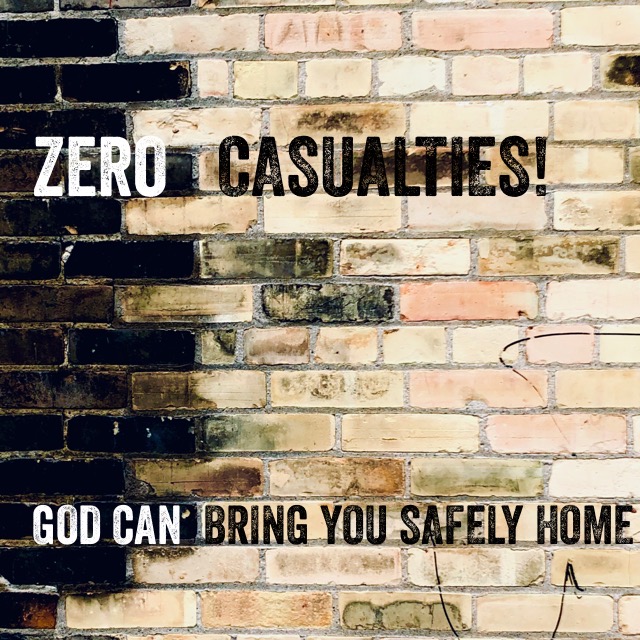
The only time any deaths in battle are mentioned in the whole military campaign of Israel conquering Canaan is at Ai when 36 men died (7:1-5). Other than that, zero casualties.
A massive Israelite army, waging war against huge armies “as numerous as the sand on the seashore” (11:4), many of them entrenched in fortified cities, several of the warriors are giants, fighting on terrain that is unfamiliar to them—zero casualties!
But why should this surprise us?
God doesn’t see masses of people; He sees individuals. He knows how many hairs are on each soldier’s head! He is able to keep alive all His children despite the rigors of warfare.
Total victory. Zero casualties!
The casualties at Ai were due to Israel’s disobedience. The ongoing victories were due to Israel’s total obedience: “As the Lord commanded His servant Moses, so Moses commanded Joshua, and Joshua did it; he left nothing undone of all that the Lord commanded Moses” (11:15).
“All these kings and their lands Joshua conquered in one campaign, because the Lord, the God of Israel, fights for Israel” (10:42), with zero casualties!
We wage a spiritual warfare today that is no less rigorous or dangerous than the military campaign the Israelite army fought. God is still able to keep those who are His until He calls them home.
Missionary John Paton, while surrounded by hostile cannibals, said, “I realized that my life was immortal till my Master’s work with me was done.”
The same is true for you. Don’t fear the enemy. Don’t shrink from the battle. Obey God, and trust Him to bring you safely home to Heaven. Then you can say with the apostle Paul, as he neared the end of his campaign—
“I have fought the good fight, I have finished the race, I have kept the faith. Now there is in store for me the crown of righteousness, which the Lord, the righteous Judge, will award to me on that day—and not only to me, but also to all who have longed for His appearing” (2 Timothy 4:7-8).




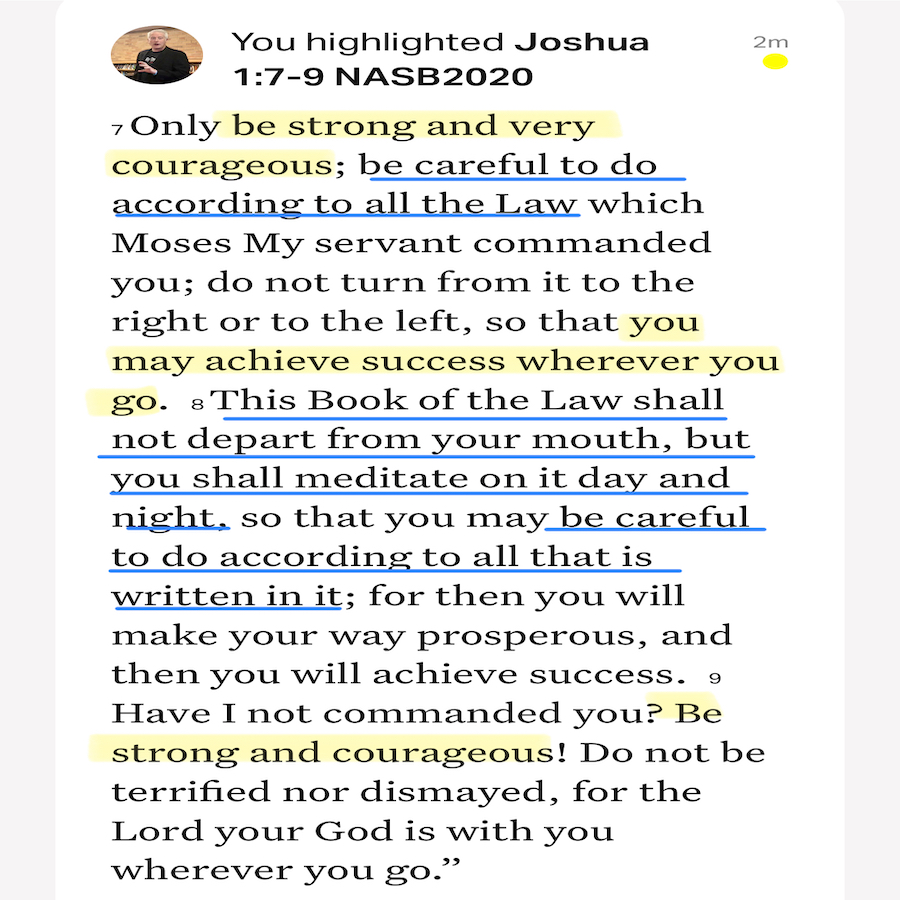 The level of a leader’s strength and courage is directly tied to the leader’s meditation upon God’s word. God’s wisdom transforms a leader’s heart and sharpens his thoughts. This is what gives the leader the necessary courage to lead people in a God-honoring way. I have a whole series of posts on godly leadership where I expand more on these thoughts.









 Craig T. Owens