This is a weekly series with things I’m reading and pondering from Charles Spurgeon. You can read the original seed thought here, or type “Thursdays With Spurgeon” in the search box to read more entries.
Listen to the podcast of this post by clicking on the player below, and you can also subscribe on Apple, Spotify, or Audible.
No Other Name
But our citizenship is in heaven. And we eagerly await a Savior from there, the Lord Jesus Christ, Who, by the power that enables Him to bring everything under His control, will transform our lowly bodies so that they will be like His glorious body. Therefore, my brothers and sisters, you whom I love and long for, my joy and crown, stand firm in the Lord in this way, dear friends! (Philippians 3:20—4:1).
What is it to be in the Lord? Well, brothers and sisters, we are in the Lord vitally and evidently when we fly to the Lord Jesus by repentance and faith and make Him to be our refuge and hiding place. Is it so with you? Have you fled out of self? Are you trusting in the Lord alone? Have you come to Calvary and beheld your Savior? … There is no shelter for a guilty soul but in His wounded side! Have you come there? Are you in Him? Then stay there. You will never have a better refuge! In fact, there is no other. No other name is given under heaven among men whereby we must be saved [Acts 4:12]. I cannot tell you to stand fast in the Lord unless you are there. Hence my first inquiry is, are you in Christ? Is He your only confidence? In His life, His death, and His resurrection, do you find the grounds of your hope? Is He Himself all your salvation and all your desire? If so, stand fast in Him.
From The Watchword For Today: “Stand Fast”
I am reminded of two of the stanzas from a Charles Wesley hymn:
This Gift was not an after-thought. God didn’t say, “I’ve tried everything else and nothing has worked so I guess I have to send My Son.” NO! The Gift was foretold right from the very moment Adam and Eve sinned (Genesis 3:15, 21). In fact, we can even say it was planned before the beginning of Time, as John describes Jesus as “the Lamb who was slaughtered before the world was made” (Revelation 13:8).
John also writes for us one of the most beautiful and succinct statements of God: God IS Love (1 John 4:8).
Paul wrote an inspired definition of love. Check out what happens when we put “God” in place of “love” in 1 Corinthians 13:4-8—
God is patient, God is kind. God does not envy, God does not boast, God is not proud. God does not dishonor others, God is not self-seeking, God is not easily angered, God keeps no record of wrongs. God does not delight in evil but rejoices with the truth. God always protects, God always trusts, God always hopes, God always perseveres. God’s love never fails.
This description of God means that He wasn’t forced to send Jesus as the ransom for our sins, but rather that His love foreknew the perfect moment to send this Gift for us.
Neither did Jesus feel trapped by this plan His Father made. Calvary didn’t happen to Jesus, but Jesus came to make Calvary happen (John 17:24; Hebrews 12:2; John 10:17-18).
Jesus made His Gift unmistakable:
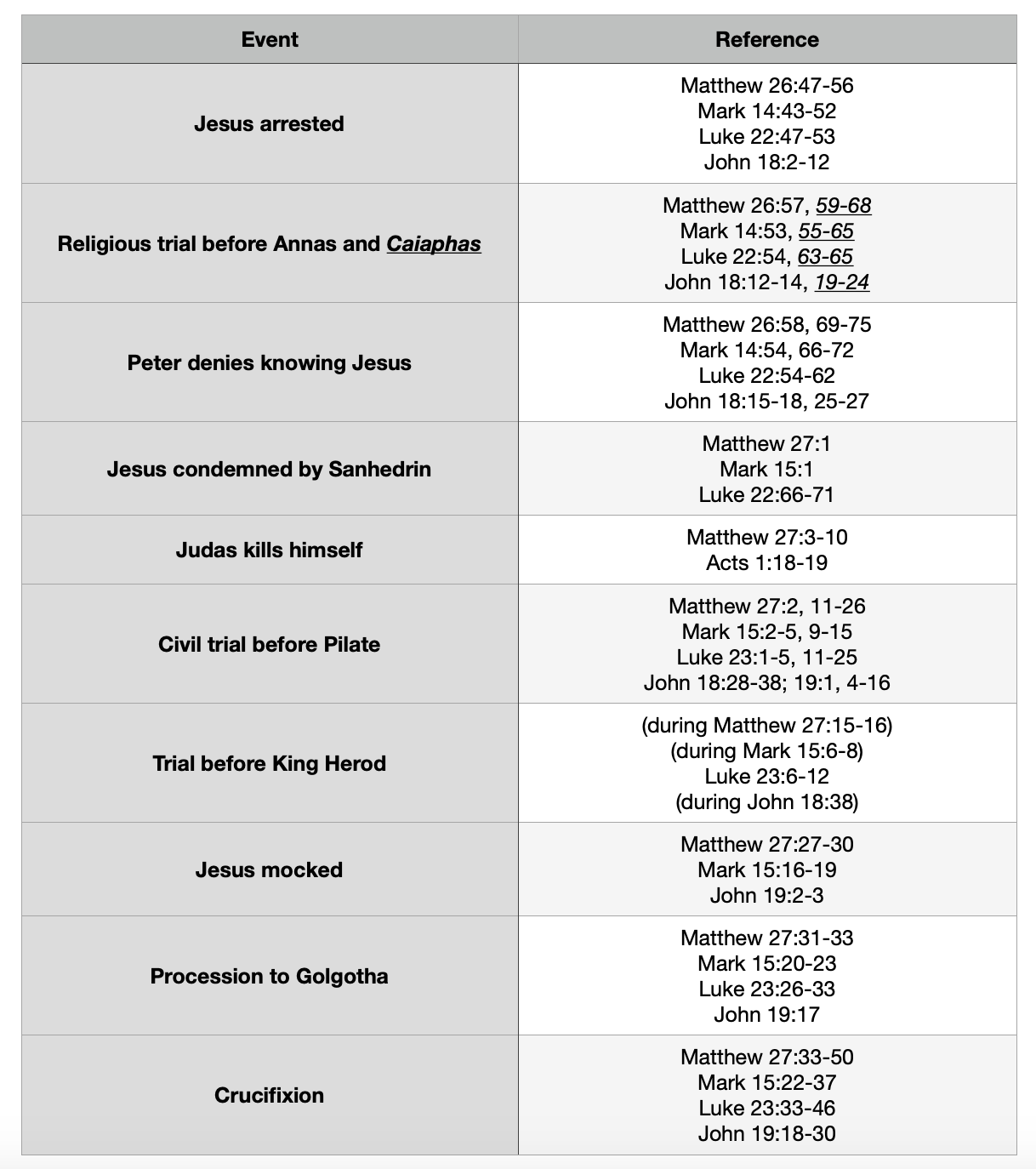
He predicted the unmistakable events leading up to Calvary—Matthew 20:17-19, 26:2; Mark 10:32-34; Luke 18:31-33; John 13:19
He predicted the unmistakable way He would die—John 3:14, 12:32-33
And His Father unmistakably confirmed all of this—John 12:27-28
Just before His crucifixion, Jesus gave His followers an unmistakableexample of love to follow. He said that His love radiating out of His followers would show the world an unmistakable picture of His love (see John 13:3-5, 12-17, 34-35).
I may say, “Thank you so much” when I open someone’s gift, but my true gratitude is seen in what I do with their gift after that. Do I put it on a shelf and forget about it? Or do I cherish it, use it, and tell others all about the one who gave the gift to me? This is just as true with how I treat the Love Gift that I was given in Jesus.
Q: How unmistakable is my gratitude for the Gift of Jesus?
A: It is unmistakably seen in how I love others.
Here’s the test: Can I put my name in 1 Corinthians 13:4-8—
Craig is patient, Craig is kind. Craig does not envy, Craig does not boast, Craig is not proud. Craig does not dishonor others, Craig is not self-seeking, Craig is not easily angered, Craig keeps no record of wrongs. Craig does not delight in evil but rejoices with the truth. Craig always protects, Craig always trusts, Craig always hopes, Craig always perseveres. Craig’s love never fails.
The Holy Spirit wants all Christians to be able to truthfully insert their names in that statement. He wants to help us make necessary changes that will allow the amazing Gift of Jesus to be unmistakably seen by everyone.
God’s plan is unmistakable. The death of Jesus is unmistakable proof of God’s love. Now, let’s make sure that our love is also empowered by the love of God shining unmistakably out of everything we say and do.
This is a weekly series with things I’m reading and pondering from Charles Spurgeon. You can read the original seed thought here, or type “Thursdays With Spurgeon” in the search box to read more entries.
Listen to the podcast of this post by clicking on the player below, and you can also subscribe on Apple, Spotify, or Audible.
Don’t Let Your ‘Well Begun’ Be Only ‘Half Done’
But our citizenship is in heaven. And we eagerly await a Savior from there, the Lord Jesus Christ, Who, by the power that enables Him to bring everything under His control, will transform our lowly bodies so that they will be like His glorious body. Therefore, my brothers and sisters, you whom I love and long for, my joy and crown, stand firm in the Lord in this way, dear friends! (Philippians 3:20—4:1).
The start is not everything, but it is a great deal. It has been said by the old proverb that ‘well begun is half done,’ and it is certainly so in the things of God. … See to it that you lay a good foundation. It is better to have no repentance than a repentance that needs to be repented of! It is better to have no faith than a false faith! It is better to make no profession of religion than to make an untruthful one! … We should learn early on the difference between grace and merit, between the purpose of God and the will of man, between trust in God and confidence in the flesh. If we do not start aright, the further we go, the further we will be from our desired end and the more thoroughly in the wrong we will find ourselves.
In the biblical passage Spurgeon used as his text, we read some important words. First of all, we need to live as citizens of Heaven, not as citizens of Earth. That means we need to always follow God’s laws, not the passing fads of culture.
Second, the apostle Paul calls Jesus both Savior and Lord. We don’t get to choose one and ignore the other. We cannot say, “Thank You, Jesus, for saving me, but I’ll take it from here.”
Finally, we need to not only stand firm, but as Paul also says in another letter, “So, if you think you are standing firm, be careful that you don’t fall!” (1 Corinthians 10:12). No assumptions. No coasting. No merely going through the motions of Christianity, but keeping a humble heart that responds to the correcting word from the Holy Spirit.
Let’s make sure that our walk with Jesus is never described as only “half done.” But instead, let’s begin well, walk well, and rejoice to hear our Savior say, “Well done, good and faithful servant!”
“In what year was Jesus born, and when was He crucified? These are long-standing historical questions. The seemingly obvious answer to the first—that He was born in A.D. 1 (there is no year 0)—is incorrect, however, since the calculations on which our modern calendar is based were faulty. …
“The chronology of Jesus’ life, though clear in outline, cannot be fixed with absolute precision. Matthew and Luke both inform us that Jesus was born before the death of Herod (4 B.C.), though it would appear that His birth occurred toward the final years of Herod’s reign, suggesting an approximate date of 6-4 B.C. The next chronological marker comes from Luke 3:1, where we learn that John the Baptist’s ministry began during the fifteenth year of the reign of the emperor Tiberius. Since A.D. 14 is the generally accepted date for Tiberius’ accession to the throne, John’s ministry would have commenced between August A.D. 28 and December of 29. Jesus began His own ministry shortly after John had embarked on his, at some point in A.D. 28 or 29, making Jesus about 32 or 33 years old at the time. This fits well with Luke’s statement that Jesus was ‘about 30 years old’ (Luke 3:23).
“The duration of Jesus’ public ministry was approximately three years. While the exact chronology of this period is difficult to ascertain, the final phase of His ministry allows for closer scrutiny. It is clear that Jesus was crucified under Pontius Pilate, who governed Judea from A.D. 26-36. …
“Taking Friday, Nisan 14, as the day of the crucifixion, astronomical data informs us that the only years from A.D. 29-36 that could have seen Nisan 14 on a Friday are A.D. 30, 33 and 36. A.D. 36 is easily dismissed as too late, while A.D. 30 seems too early (although some who begin Jesus’ ministry in A.D. 28 and shorten His public ministry find it acceptable). This leaves A.D. 33 as the most likely date for the year of Jesus’ death and resurrection.”
As you celebrate the victory over sin and death that Jesus won by His sacrificial death on the Cross, rejoice also that this is an actual historical event that bought your freedom from your sin. It is indeed miraculous, but it is also historic. Let’s never lose sight of either of those facets.
Remember as a kid when you would unwrap a gift and discover it wasn’t something you really wanted, but then your parents explained that it was something you needed? The birth of Jesus in Bethlehem was a little like that—it wasn’t exactly what people were hoping for, but it was exactly what they needed.
The real meaning of that Christmas gift wasn’t realized until after Jesus was crucified and resurrected back to life.
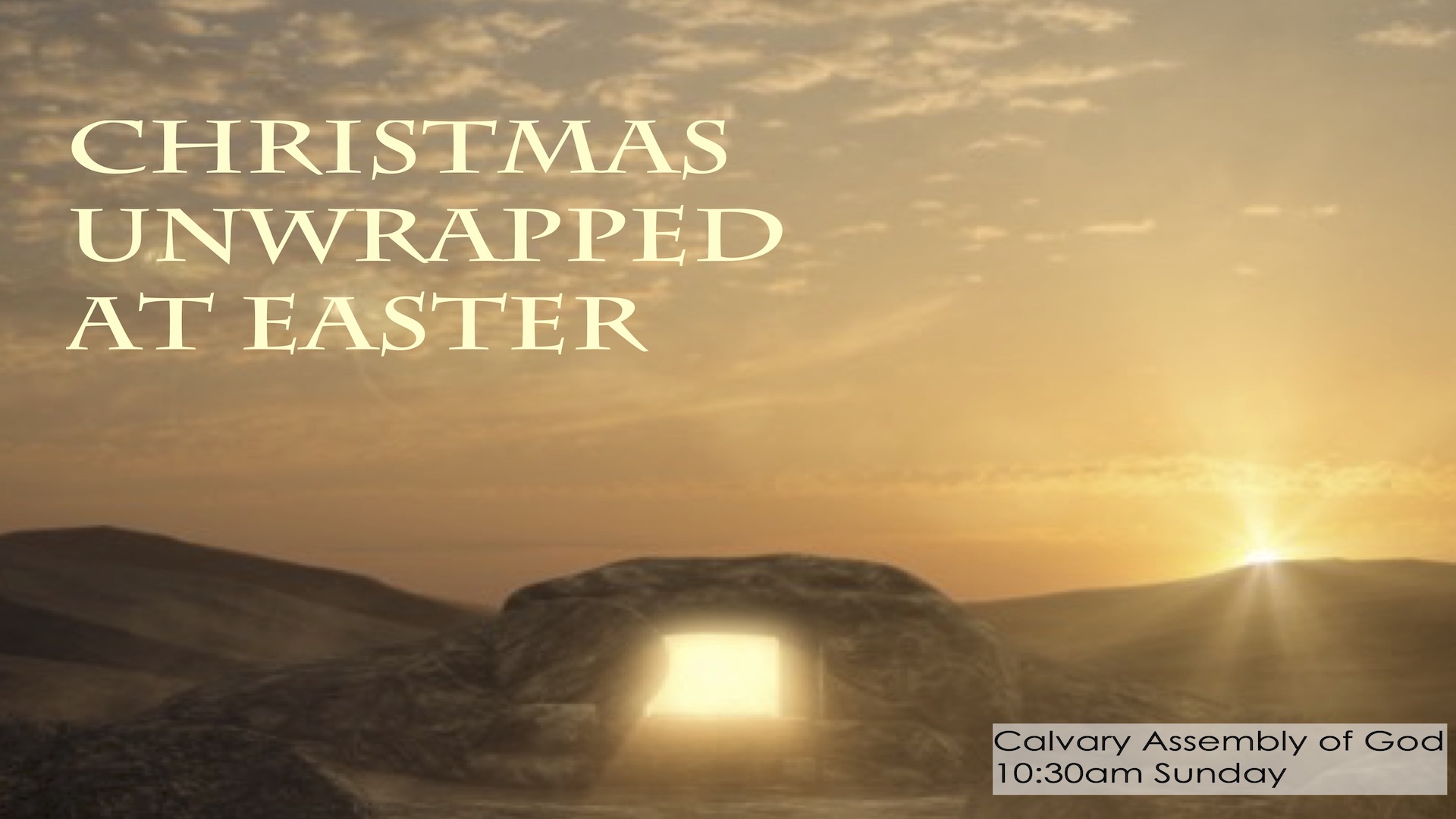
Join us this Sunday as we begin a 4-part series called Christmas Unwrapped At Easter. We would love to have you join us either in person or online for this eye-opening time together.
If you’ve missed any of the messages in this series, you can check them out here:
This is a weekly series with things I’m reading and pondering from Charles Spurgeon. You can read the original seed thought here, or type “Thursdays With Spurgeon” in the search box to read more entries.
Listen to the podcast of this post by clicking on the player below, and you can also subscribe on Apple, Spotify, or Audible.
Three Keys To Effective Prayer
Why is this extraordinary power of prayer given to those who abide in Christ? May what I have to say encourage you to make the glorious attempt to win this pearl of great price! Why is it, that by abiding in Christ and having His words abide in us, we get to this liberty and prevalence in prayer? …
I answer, first, because of the fullness of Christ. … I see clearly enough why the branch gets all it wants while it abides in the stem, since all it wants is already in the stem and is placed there for the sake of the branch. What does the branch want more than the stem can give it? If it did want more, it could not get it. For it has no other means of living but by sucking its life out of the stem. O my precious Lord, if I want anything that is not in You, I desire always to be without it. I desire to be denied a wish that wanders outside of You. But if the supply of my desire is already in You for me, why should I go elsewhere? You are my all, where else should I look? …
The next reason for this is the richness of the Word of God. … The best praying man is the man who is most believingly familiar with the promises of God. After all, prayer is nothing but taking God’s promises to Him and saying to Him, ‘Do as You have said.’ … If the Word of God abides in you, you are the man who can pray because you meet the great God with His own words….
A man will succeed in prayer when his faith is strong. And this is the case with those who abide in Jesus. It is faith that prevails in prayer. The real eloquence of prayer is a believing desire. ‘All things are possible to him who believes’ (Mark 9:23). A man abiding in Christ, with Christ’s words abiding in him, is eminently a believer and consequently eminently successful in prayer.
From The Secret Of Power In Prayer
God Himself has told us, “Call to Me and I will answer you and tell you great and unsearchable things you do not know” (Jeremiah 33:3). Not “I might answer you,” but “I will answer you.”
God also tells us how to receive what we ask in prayer:
Abide in Jesus. Desire nothing else but to know His heart more intimately.
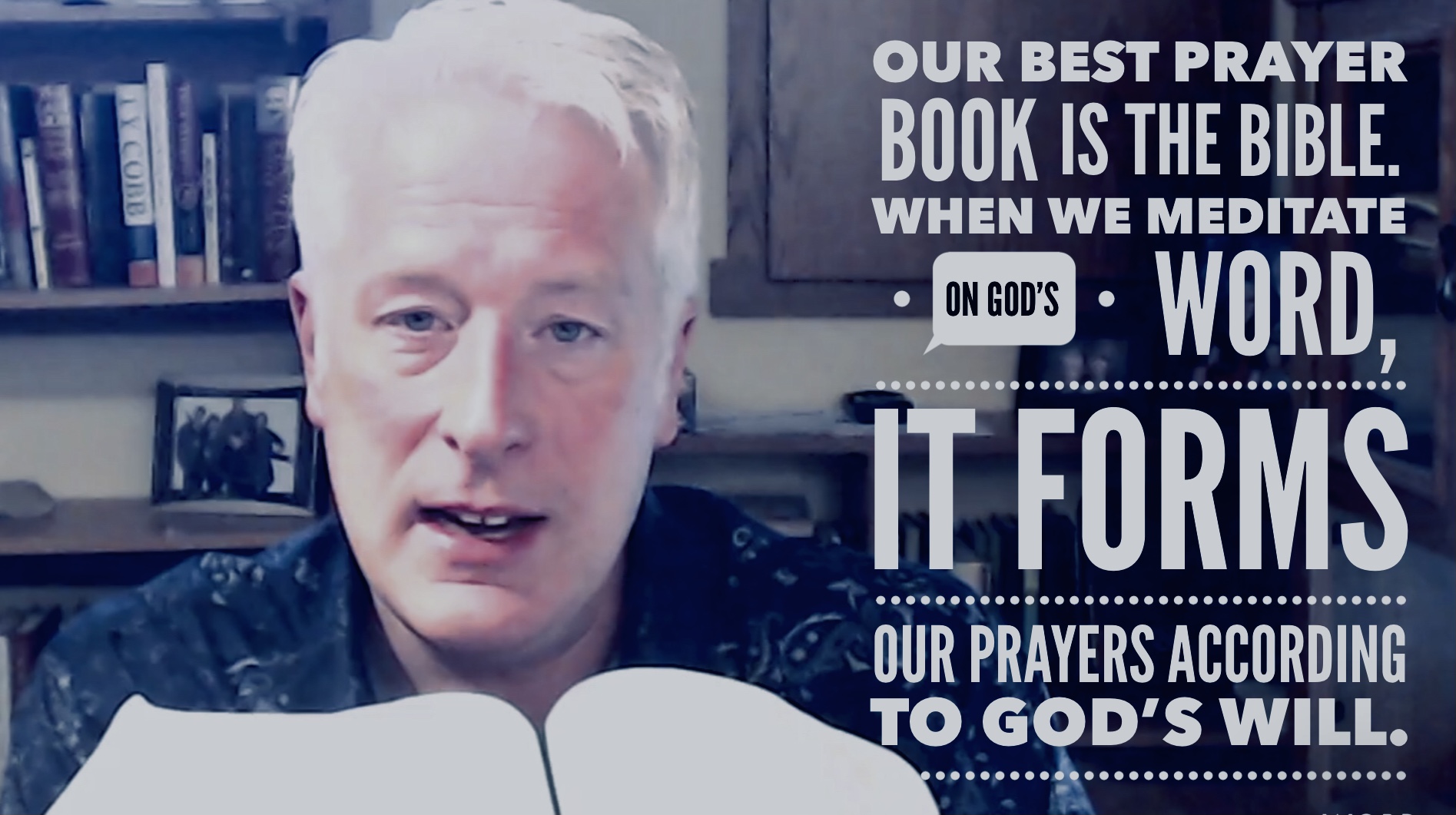
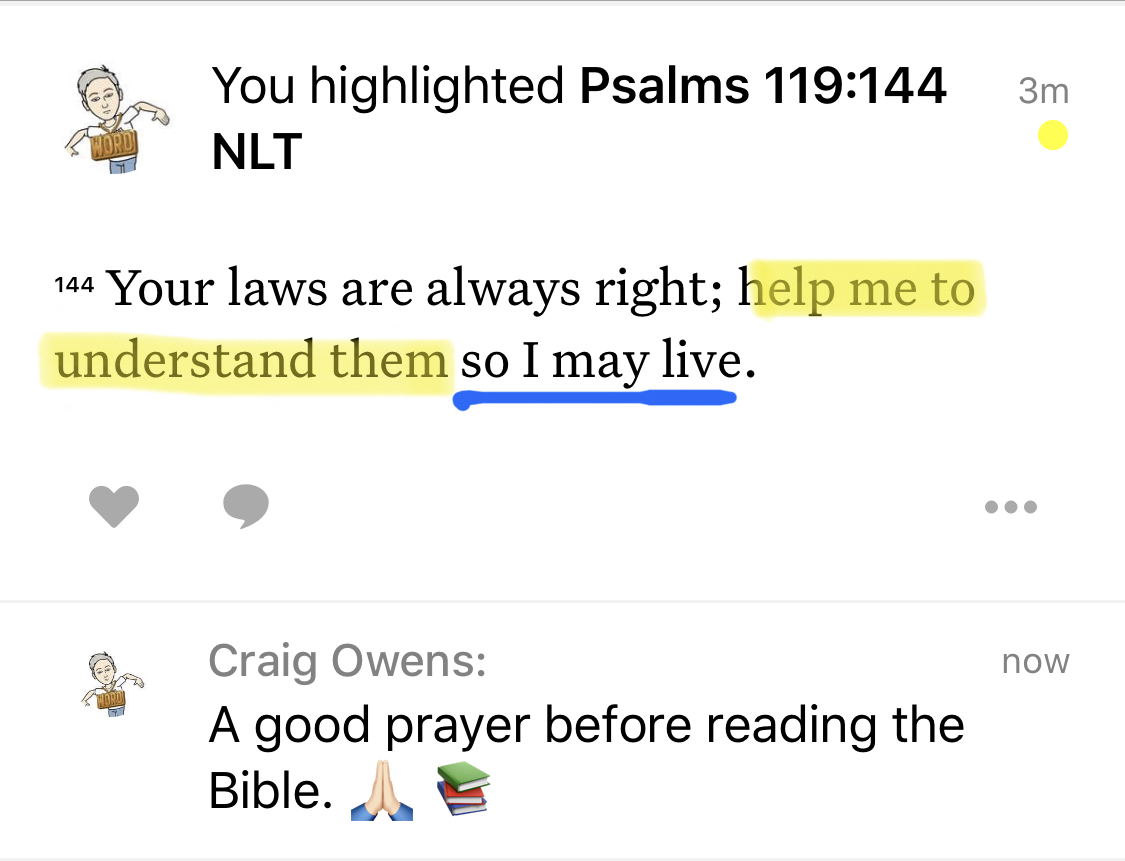
Know God’s Word. The Bible isn’t just a Book to be read through, but it’s a Book to be prayed through.
Stretch your faith. A desperate father said to Jesus, “If You can, please help us.” Jesus admonished that father—and all of us too—to believe that Jesus is able to accomplish what we ask of Him. And then comes this great exclamation from that same desperate father: “I do believe; help me overcome my unbelief!” The God that wants us to have faith in Him for answered prayers is the same God Who imparts that faith to us. How? By abiding in Jesus and taking God at His Word.
Don’t give up, my friend. Keep praying. There is no other way to learn to pray more effectively than to keep on abiding in Jesus, keep on claiming the biblical promises, and keep on stretching your faith to present your prayer request to Him again.
Listen to the podcast of this post by clicking on the player below, and you can also subscribe on Apple, Spotify, or Audible.
I’ve noticed that when people want to sound super-spiritual that they like to use King James Version phrases. Sometimes I hear people speaking in normal, everyday English until they begin praying and then I hear, “Thy servant … Thou O Most High … we beseech Thee … Thou knowest Thine children….”
Statement #6 in our series “Is that in the Bible” also sounds more powerful when people quote it in King James English—Shun the very appearance of evil or sometimes Wherefore come out from among them, and be ye separate, saith the Lord. Are those in the Bible? Yes, they are!
We don’t use the word “shun” very often today, but in what was probably the first written book of the Bible we read that not only did Job shun evil, but God commended him for shunning evil too. And wise King Solomon advocated for his readers to shun evil (Job 1:1, 8; 2:3; Proverbs 3:7, 14:16).
Yes, those phrases that I quoted earlier come right from the King James Version of the Bible in 1 Thessalonians 5:22 and 2 Corinthians 6:17, but does this mean that we are to stay away from anything that is “unChristian”? Does it mean that we are to shun sinners?
There is a story that is told in the synoptic Gospels, but I especially like it in Matthew’s Gospel for one specific reason (which I’ll share with you in a moment). Jesus has just called Matthew to be His disciple, and several of Matthew’s coworkers appear to be having a going-away dinner for him which Jesus attended.
Then comes the “911” call from the Pharisees (this statement is in Matthew 9:11): “Gasp! Jesus is eating with sinners! He’s not shunning them! Call in the sin police!” The New Living Translation is even more harsh, with the Pharisees asking, “Why does your Teacher eat with such scum?” (v. 13 NLT).
In Luke’s Gospel we read another story where Jesus eating with “such scum” turned another tax collector’s life around. In Luke 19:1-10, we read of Zaccheus experiencing a complete life change because of His encounter with Jesus.
Listen to Christ’s words in both Matthew and Luke: “It is not the healthy who need a doctor, but the sick. … I have not come to call the righteous, but sinners. … The Son of Man came to seek and to save what was lost” (Matthew 9:12-13; Luke 19:10).
This doesn’t sound like Jesus shunned sinners.
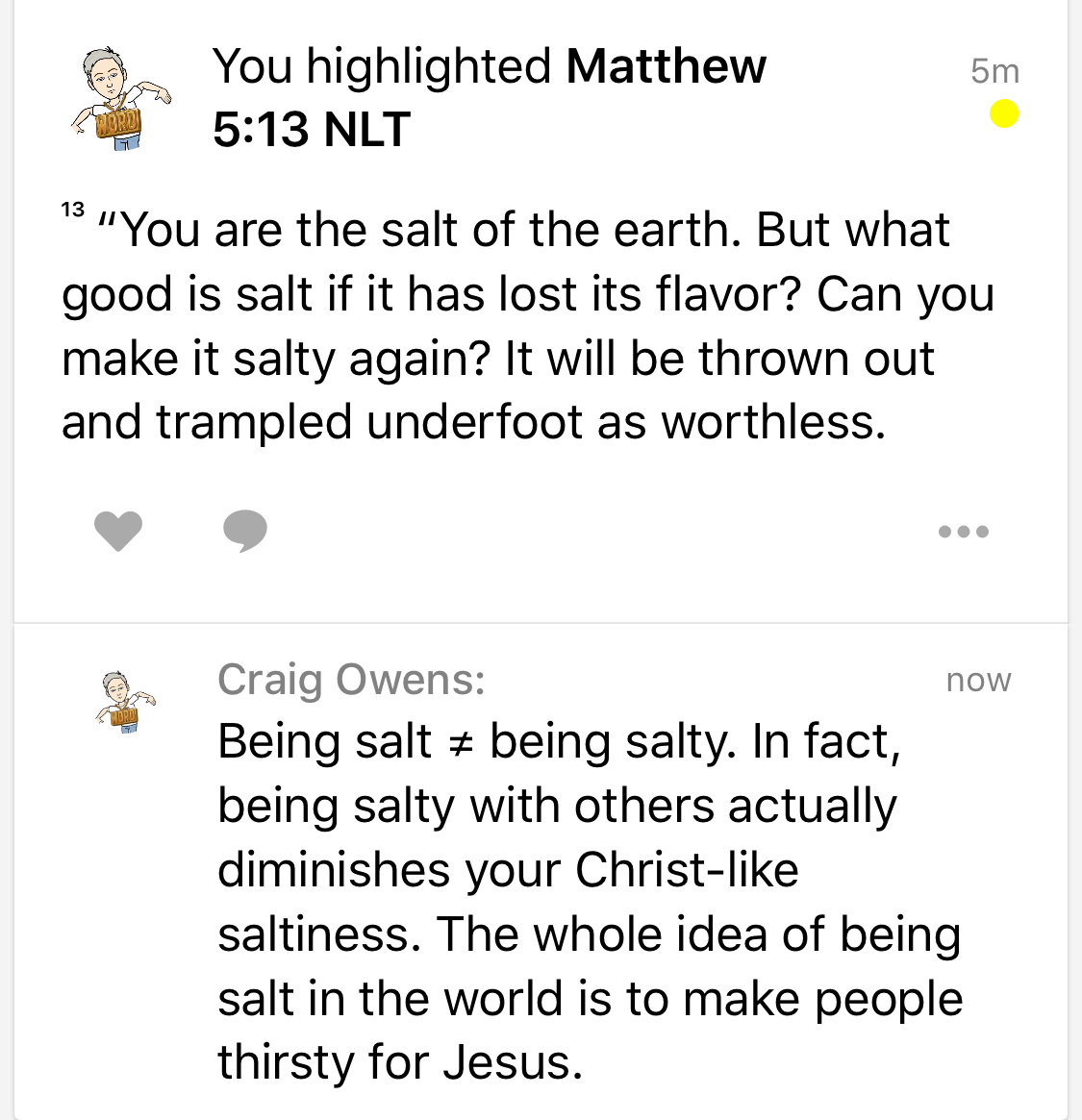
Likewise, Jesus called us to be His salt and light in the world (Matthew 5:13-14). No matter how beneficial the salt of my life is, it doesn’t help anyone if it stays in the saltshaker, shunning the food. No matter how bright the lantern of my life is, it doesn’t help anyone in a closed closet, shunning the darkness.
Notice what Jesus didn’t do. He didn’t go to Matthew’s house or Zaccheus’ house for a good time, or for a good meal, or for a time of entertainment. He was on mission. So too for Christians: We go into dark places not for our pleasure or entertainment, but because we’re on a rescue mission!
In both the Old Testament Hebrew and the New Testament Greek, the words for “shun” point at our own hearts. The words mean: You walk away from things that will pull you down, or you hold yourself back from the places and things that will lead you to sin.
So look at the phrase “Shun the very appearance of evil” in its context: “Do not quench the Spirit. Do not treat prophecies with contempt but test them all; hold on to what is good, reject [or shun] every kind of evil” (1 Thessalonians 5:19-22).
Paul is calling us to shun the things that drown out the voice of the Holy Spirit. Listen to two of those verses in another translation: “But test and prove all things until you can recognize what is good; to that hold fast. Abstain from evil” (vv. 21-22 AMP).
In 2 Corinthians 6 the phrase “Be ye separate” is in the context about being “unequally yoked” with unbelievers. This is what happened to King Solomon when he married women who were idolaters, and they pulled his heart away from God.
“Shun” means to keep away from those things that would pull you down. How do I know if a certain environment or activity or person is pulling me down? I need to check my thoughts, attitudes, and actions. If I find they are becoming un-Christlike, then that is an indication of a place or person that I need to limit my exposure.
As long as my thoughts, attitudes, and actions remain Christlike, I should keep on seasoning and shining in dark places so that I can draw others to Jesus. “Do everything without complaining and arguing, so that no one can criticize you. Live clean, innocent lives as children of God, shining like bright lights in a world full of crooked and perverse people” (Philippians 2:14-15 NLT).
Don’t shun people that Jesus dearly loves, but don’t put yourself in a position where your devotion to God is compromised either. Listen to the voice of the Holy Spirit giving you the wisdom you need to be both on-mission for Jesus and shining a bright, innocent light!
Listen to the podcast of this post by clicking on the player below, and you can also subscribe on Apple, Spotify, or Audible.
There’s a little song that makes me chuckle every time I hear it, and I may have even sung this song a couple of times myself. It goes like this, “I had a lot to do today, but you know what I did instead? I took a nap. It was a very good nap.”
We’ve all been there. There are things we know that we should do, but we simply don’t feel like doing them. We let our feelings drive our actions. There are several seemingly innocent things that we can handle this way, with no apparent problems created for ourselves.
The real problem comes in when our feelings continually drive our actions. Because the caboose which must follow that engine can easily become “my truth.” It goes like this:
I let my feelings take the lead
I act on my feelings
I now believe what I felt was truthful
This could be called pragmatism—allowing a positive outcome to determine what I believe to be truth.
But our feelings may lie to us. Our feelings can make us believe something is harmless, when in fact it may be putting us on a path from which it may be extremely difficult to recover.
Jesus taught us a different way. He prayed this way to His Father, “Your Word is truth” (John 17:17). He may have had in mind these words from the psalmist:
The sum of Your word is truth—the total of the full meaning of all Your individual precepts; and every one of Your righteous decrees endures forever. (Psalm 119:160 AMP)
When we let truth drive our actions, we are performing those actions in faith that good feelings will follow. Now the progression goes like this:
I let what I know to be true take the lead
I act on that truth
I feel good for doing the right thing
I may not feel like exercising, but I know it’s good for me. So I do it and then I feel good for doing it, and my body is healthier for doing it.
I may not feel like forgiving the one who wronged me, but I know God says I should. So I do it and then I feel good for doing it, and my emotions are healthier for doing it.
I may not feel like speaking the tough word in love to my friend, but I know the Bible says I should. So I do it and then I feel good for doing it, and my relationship is healthier for doing it.
Letting God’s truth be the engine that drives our actions will result in healthiness and good feelings. But letting my emotions be the engine that drives my actions may sometimes result in temporary good feelings, but the longterm consequences may not be healthy or God-honoring.
We should not say, “God, please bless what I’m doing so that I can feel good about it,” but instead we should say, “God please help me to do what You say is right, and I know I will feel good because Your blessing will be on it.”










 Craig T. Owens