About 14 years ago I wrote a blog post called “More and More” in which I was challenging myself and other Christians to keep setting the bar higher.
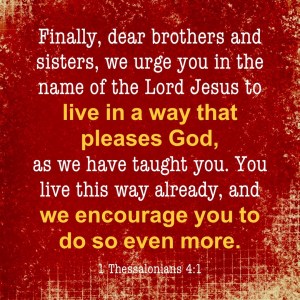
As for other matters, brothers and sisters, we instructed you how to live in order to please God, as in fact you are living. Now we ask you and urge you in the Lord Jesus to do this more and more. (1 Thessalonians 4:1)
I pointed out that in the Greek language the phrase “more and more” in 1 & 2 Thessalonians is just one word. It means…
More willingly
More readily
Sooner
I asked, “When the Holy Spirit speaks to me, do I respond and obey more willingly? more readily? sooner?”
So here I am again looking back—all these years later—and asking myself: Am I still wanting more and more? Am I growing more and still more? Am I loving more and still more? Am I leading more and still more?
It’s a lifelong pursuit chasing after more and still more.
When we ready the Bible and it confronts us, the first place we need to look is in the mirror. The Bible is speaking first to me about changes I need to make. It’s only after I have applied God’s Word to my own life that I can talk about it authentically to others.
“Righteousness is nothing more or less than the character of Jesus Himself, manifesting in and through us into all our relationships, roles, and responsibilities.” —T.M. Moore
“At one time in Earth’s recent past people and all animals, including crocodiles, lions, T. rex, sharks, spiders, alligators, etc., were vegetarian. It is not known exactly when the transition to carnivorous and predatory behavior occurred, but we do know it happened after Adam and Eve sinned and did not involve evolution.” A recent analysis of a pterosaur’s stomach contents shows this vegetarian diet.
Cold-case detective J. Warner Wallace explains why the different accounts of the ministry of Jesus (as recorded in the four Gospels) actually bolster the case for their accuracy and historicity.
“It is when the thoughts of heaven are long out of the Christian’s sight, that he forgets his hope of that glorious place, that he begins to set up some idol…. Keeping the joy of heaven always before you will help you to run your race with patience. It will help you endure your short scuffles with temptation and affliction.” —William Gurnall, The Christian In Complete Armor
T.M. Moore wrote these sober words to the church: “The Lord sees His Church as the joy and beauty of the earth (Psalm 48:1-2), reflecting His splendor and goodness to the watching world. But when churches spend the bulk of their budgets and energies on themselves, it’s hard to see how they can be of much good in their local communities.”
Keep me from lying to myself; give me the privilege of knowing your instructions. (Psalm 119:29 NLT)
We all have a tendency to judge others by what they said or did, but we usually judge ourselves by what we intended to say or do. This is the essence of self-deception: lying to ourselves.
In verse 18, the psalmist asks for his eyes to be open to the truth in God’s Word; in verse 29 the prayer is for him to see if he is truly applying that truth. We could personalize this prayer: “Give me the privilege of knowing that I am really applying Your instructions to my life.”
Give me understanding and I will obey Your instructions; I will put them into practice with all my heart (v. 34). May the Holy Spirit prompt me to do this today. Amen!
Listen to the podcast of this post by clicking on the player below, and you can also subscribe on Apple, Spotify, or Audible.
Confuse them, Lord, and frustrate their plans, for I see violence and conflict in the city. Its walls are patrolled day and night against invaders, but the real danger is wickedness within the city… (Psalm 55:9-14 NLT)
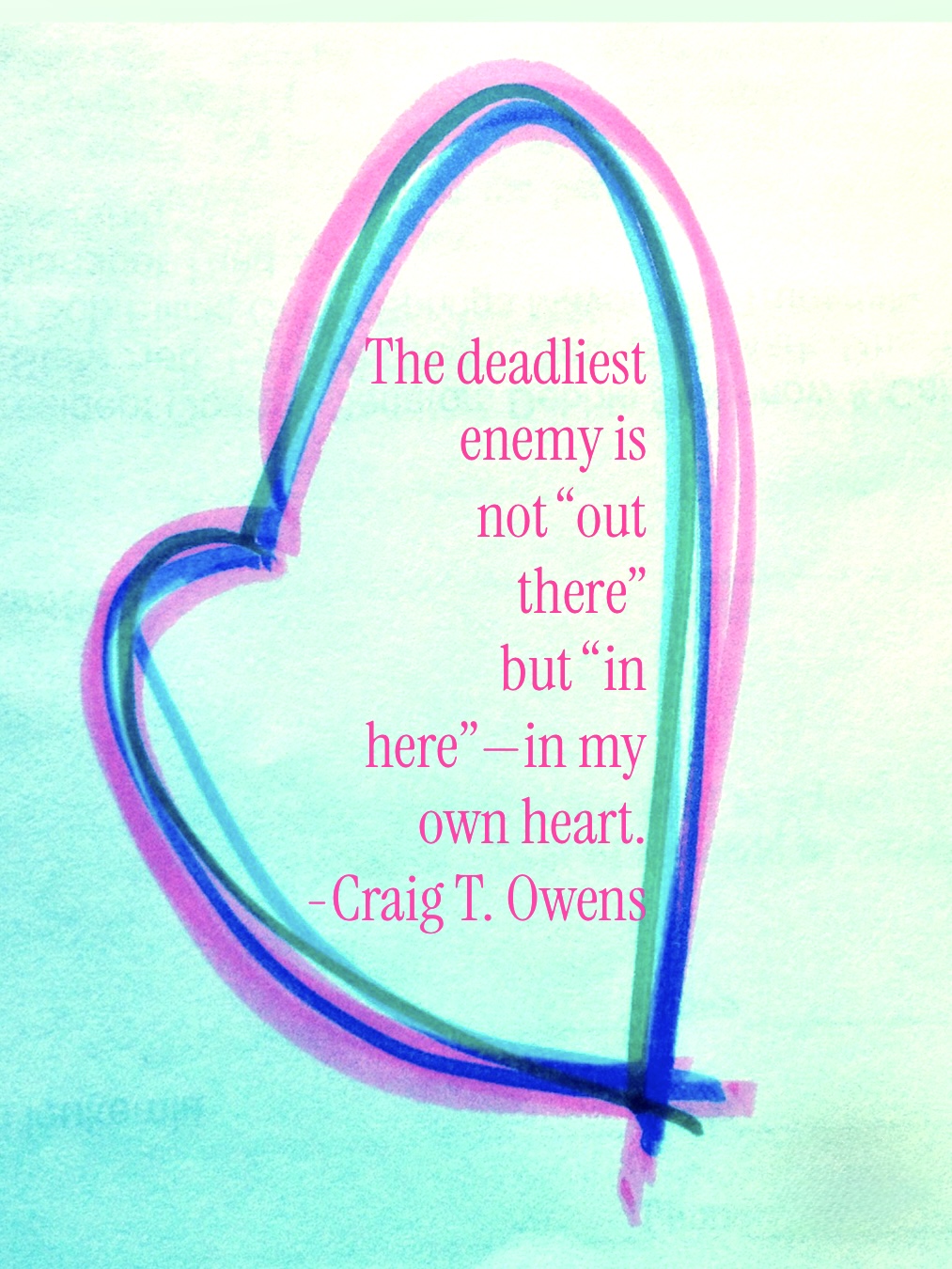
David sees violence and conflict, but he is quick to conclude that the enemy is not “out there” but “in here.” Notice the phrases “in the city” and “within the city.”
This is why Jesus tells us to deal with the plank in our own eye first (the things in here), and then I can see clearly to address what may be out there (see Matthew 7:1-5). He also tells us to pay attention to the clear indicators that something is wrong “in here” in Matthew 15:18-20.
Yes, we should address false gods and evil practices. But G.K. Chesterton warns us to make sure we are addressing the right things—
“Idolatry is committed, not merely by setting up false gods, but also by setting up false devils; by making men afraid of war or alcohol, or economic law, when they should be afraid of spiritual corruption and cowardice.”
God-fearing leaders must always address their own areas of corruption as the first and highest priority. It’s only after this heart-check that we can truly lead people away from things which are holding them back from fully following God.
Holy Spirit, if I feel the need to point my finger at what’s wrong “out there,” may I first yield to Your finger pointing out what’s wrong “in here” in my own heart. Once I have recognized, confessed, and corrected what’s wrong in me, equip me to be a lovingly-strong and empathetic guide to help others around me.
Listen to the podcast of this post by clicking on the player below, and you can also subscribe on Apple, Spotify, or Audible.
When people lash out at us—when they bite us—they could be giving us invaluable insight into what is truly in our heart. Before we respond too quickly, we need to take some time for introspection.
Check out this part of my conversation with John Opalewski and Jim Wiegand on the Leading From Alignment podcast.
Chapter 2 of When Sheep Bite is entitled ‘Is God Trying to Get My Attention?’ I tell a story about two similar bites I received from two totally different people who didn’t even know each other. I wrote—
As I drove back across the state, I kept the radio off and my ears open. I could feel the Holy Spirit asking me, “Why do you think two different people have called you the same nasty word?” The only honest answer I could give was, “Because it’s true.”
I wasn’t wrong in the way I held to the rules, but my overly-confident attitude had definitely crossed the line to become an in-your-face arrogance. I learned two lessons from this experience. First, if I do the right thing the wrong way, I’ve really done the wrong thing. Second, when similar attacks come, I need to pay attention.
Now, when a painful attack suddenly confronts me, I go to the mirror. Instead of asking, “What’s wrong with them that they would bite me like this?” I go to prayer to ask, “Did I do something that provoked this?” Sometimes I have literally gone into my bathroom, closed the door, and gotten nose-to-nose with myself to ask this question, and then listened for the Holy Spirit to speak to my heart.
My cousin Dick Brogden wrote, “Critics and skeptics are gifts to us, for in their aspersions they often bring to light a brokenness or a liability early on in its development in us. If we are secure enough to ferret out the truth through the condemnation of others, we remain healthy in the long term as our malady is exposed and dealt with before it becomes too serious.”
Remember that we are naturally self-protective, so this time of introspection will need to be supernaturally empowered by the Holy Spirit if we are going to see the true prompter of the attack.
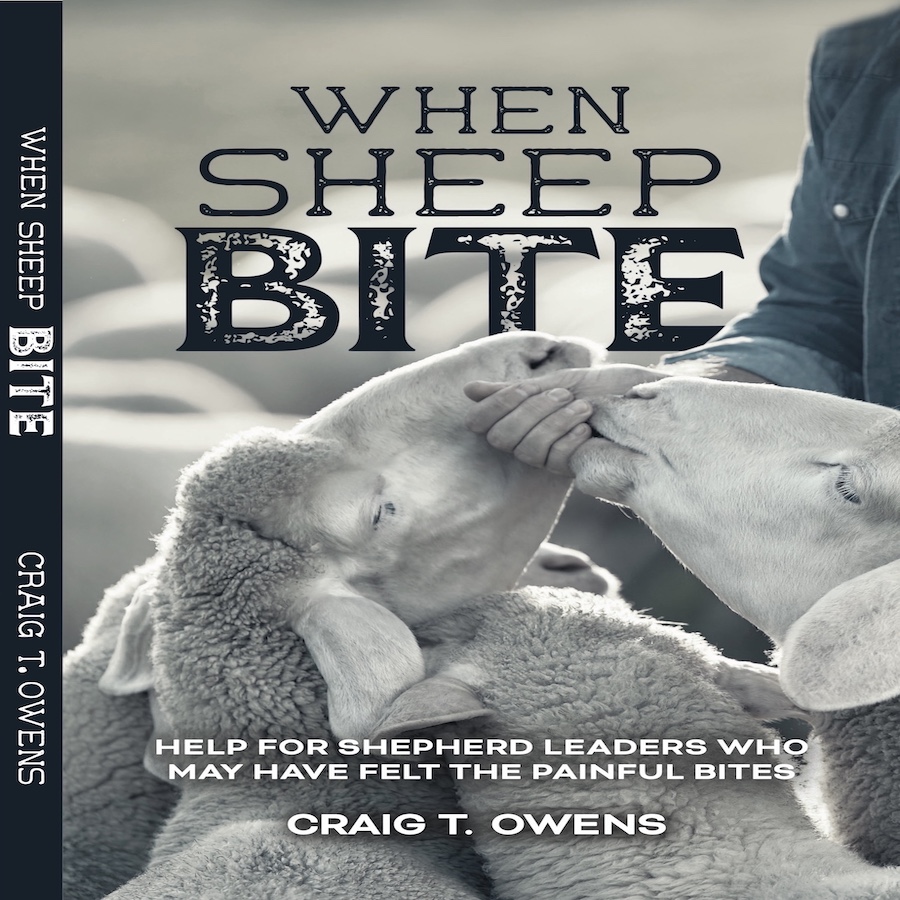
Please check out my book When Sheep Bite to both heal from past bites and prepare yourself for the bites which are inevitably coming in the future.
Listen to the podcast of this post by clicking on the player below, and you can also subscribe on Apple, Spotify, or Audible.
As Paul is coming to the close of his letter to the believers in Rome, he writes these beautiful words, “I myself am convinced, my brothers and sisters, that you yourselves are full of goodness, filled with knowledge and competent to instruct one another” (Romans 15:14).
I love the high esteem Paul has for the Christians in Rome. He’s not looking for what’s wrong with them, but for what’s praiseworthy in them.
A mark of a godly leader is one who is always looking for the best in the people around him.
Leaders see the best in people—even if the people don’t see it in themselves yet.(Check out this short video.)
Leaders point out the specific qualities they see in their people—virtues like goodness, knowledge, and competence.
Leaders continue to sharpen their people, challenging them to excel even more. “Yet I have written you quite boldly on some points to remind you of them again” (v. 15).
Leaders enjoy spending time with their people and are refreshed by them.
But now that there is no more place for me to work in these regions, and since I have been longing for many years to visit you, I plan to do so when I go to Spain. I hope to see you while passing through and to have you assist me on my journey there, after I have enjoyed your companyfor a while. … So that I may come to you with joy, by God’s will, andin your company be refreshed (vv. 23-24, 32).
Leaders pray for their people and ask their people to pray for them. “I urge you, brothers and sisters, by our Lord Jesus Christ and by the love of the Spirit, tojoin me in my struggle by praying to God for me. Pray that I may be kept safe from the unbelievers in Judea and that the contribution I take to Jerusalem may be favorably received by the Lord’s people there” (vv. 30-31; see Paul’s prayer for them in 16:25-27).
Leaders publicly compliment their people (16:1-15).
And leaders protect and empower their people. “I urge you, brothers and sisters, to watch out for those who cause divisions and put obstacles in your way that are contrary to the teaching you have learned. Keep away from them. … The God of peace will soon crush satan under your feet. The grace of our Lord Jesus be with you” (16:17, 20).
I want to be this kind of leader. In order to do that, I need the help of the Holy Spirit. I must listen to His voice in order to make the changes I need to make so that I may lead in the most Christ-glorifying way possible, and help those around me live even more in their God-given gift zone.
This is part 85 in my series on godly leadership. You can check out all of my posts in this series by clicking here.
Unhappy Christians rob God of glory because unhappy Christians don’t point people to God. Grateful Christians are happy and satisfied in God. Let your smile be your testimony of an all-good God.
Summer break is upon us! Jean Holthaus writes, “During the school year, your child’s entire day is structured. This can leave you feeling the need to schedule every minute of the summer as well … and quickly becoming overwhelmed by both the cost and logistics of trying to do so.” Check out Jean’s tips.
“Comradeship and serious joy are not interludes in our travel; but that rather our travels are interludes in comradeship and joy, which through God shall endure for ever.” —G.K. Chesterton
A neuroscientist explains how our left and right brain hear language differently, and how early childhood experiences can impact the way we hear and process language for the rest of our life.
“Does Christianity encourage morbid introspection? The alternative is much more morbid. Those who do not think about their own sins make up for it by thinking incessantly about the sins of others. It is healthier to think of one’s own. It is the reverse of morbid. It is not even, in the long run, very gloomy. A serious attempt to repent and really to know one’s own sins is in the long run a lightening and relieving process.” —C.S. Lewis
Listen to the podcast of this post by clicking on the player below, and you can also subscribe on Apple, Spotify, or Audible.
Have you ever heard this little saying: “To live above with saints we love, oh, that will be glory. But to live below with saints we know, well, that’s a different story”? I’ve found that it’s sometimes true!
We love Psalm 133:1-3 when the saints are all together. What a great “selling point” to invite someone to be a part of the Christian community! But Psalm 41:7-9 is kind of embarrassing as David talks about former friends who have hurt him deeply.
But being bitten by a fellow sheep is a reality we all have experienced, and, sadly, we will probably have to deal with again in the future. There is a natural way we tend to react when we’ve been bitten, but there is also a supernatural response that the Bible consistently calls us to. This is the God-glorifying way we all need to strive for.
In Acts 23, Paul is standing before the Sanhedrin. He opens his remarks by simply saying he has a clear conscience before God, and the high priest immediately orders that Paul be smacked on the mouth! That seems like a bit of an over-reaction on the part of the high priest, but maybe it was a bit of show of force to let Paul know who was really in charge. Paul responded with an immediate—and natural—reaction when he says, “God will slap you!”
Paul is an old man by this time. He’s been through shipwrecks, beatings, imprisonments, gone without food, traveled more miles than he can count, and preached more sermons than he can remember. His body was giving out on him, and his eyesight was especially weak. Clearly, Paul didn’t realize to whom we was addressing his remarks. But when he became aware, he immediately owned up to his mistake. Paul offered no excuses or justifications, just a quick, simple, sincere apology.
When you have been bitten (slapped) by another sheep, you should ask:
Could I have provoked them by something I said or did?
Could I have hurt them by something I didn’t say or do?
David prayed a great prayer in Psalm 139:23. But this prayer is only effective if we are willing to accept that we may have been the agitator that led to the bite. In the last words that Job speaks in the Book of Job, he is very introspective. Check out all of the “If I have” statements throughout Job 31.
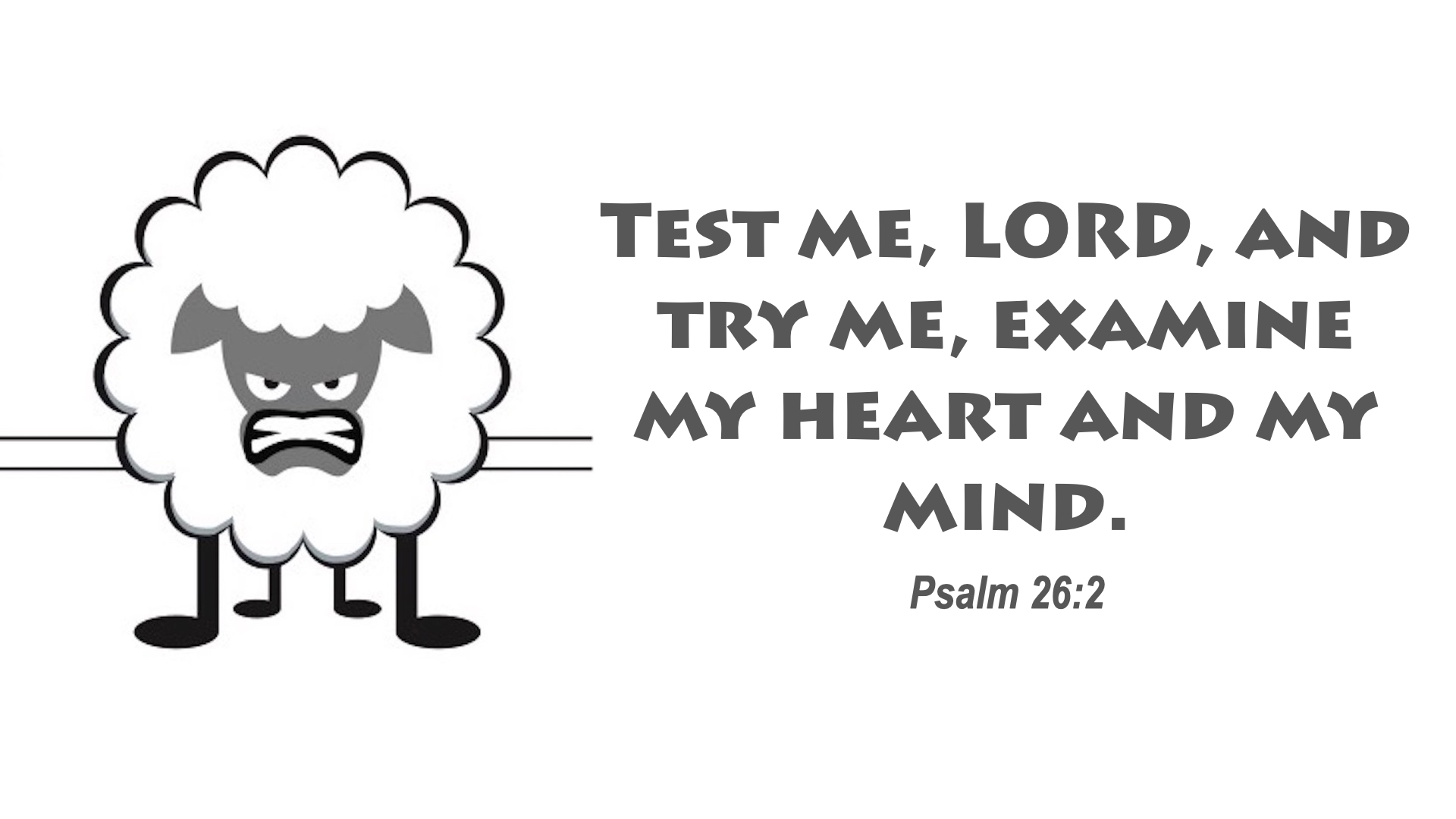
In Psalm 26:2, David invites the Holy Spirit to check him three times!
test me = scrutinize me
try me = assay me
examine me = refine me in the fire
When we are bitten, we should be open to the possiblity that God is using this bite to get my attention—to make me aware of a fault in my life or something that’s been in a blind spot.
So we should consider the following:
Has this kind of bite happened more than once? From different sheep?
Has a spiritually wise person attempted to address this with me before?
Do I ever admit that I’m at fault, or is it always the other person’s fault?
Do I find myself making a list of why they should apologize to me?
When was the last time I apologized to someone else?
If the Holy Spirit reveals something in us, He will also empower us to make the change and make amends. The natural response is to place all the blame on others. The supernatural response to pray Psalm 26:2 before responding.
If we react only the natural way, it is a lose-lose for us and for the whole pasture. But if we learn to respond in a supernatural way, it becomes a win-win for everyone. Listen to the wise words of King Solomon—
He who heeds instruction and correction is not only himself in the way of life but also is a way of life for others. And he who neglects or refuses reproof not only himself goes astray but also causes to err and is a path toward ruin for others. (Proverbs 10:17 AMPC)
Let’s all strive for the supernatural response that is a win-win for the whole Kingdom of God!
Please follow along with all of the messages in this series by clicking here.
P.S. If you are a pastor, you may want to check out my book When Sheep Bite.
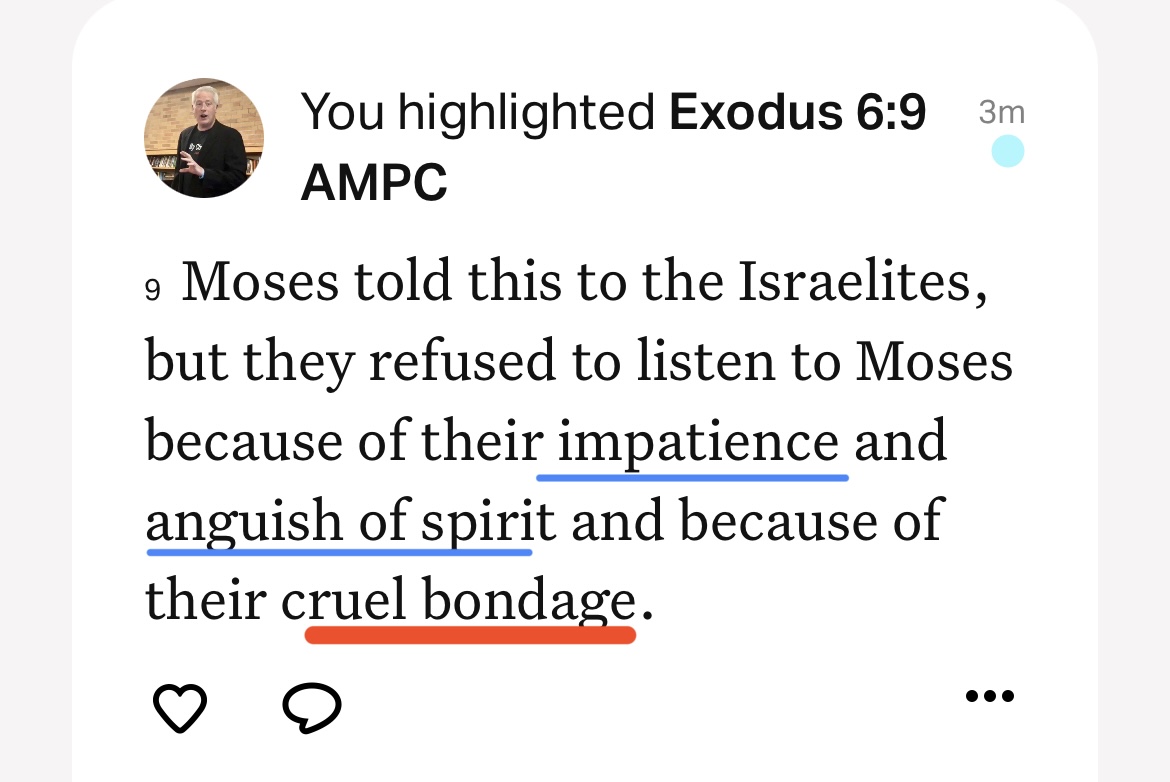
And I will take you to Me for a people, and I will be to you a God; and you shall know that it is I, the Lord your God, Who brings you out from under the burdens of the Egyptians. And I will bring you into the land concerning which I lifted up My hand and swore that I would give it to Abraham, Isaac, and Jacob; and I will give it to you for a heritage. I am the Lord [you have the pledge of My changeless omnipotence and faithfulness]. Moses told this to the Israelites, but they refused to listen to Moses because of their impatience and anguish of spirit and because of their cruel bondage. (Exodus 6:7-9)
We may not be able to do anything about our external circumstances (“cruel bondage”), but can make sure that we are addressing what we can control. Both “impatience and anguish of spirit” are internal attitudes that we can change.
If we don’t remove these impediments, we will not be able to hear the message God is trying to speak to give us encouragement.
Listen to the podcast of this post by clicking on the player below, and you can also subscribe on Apple, Spotify, or Audible.
When a shepherd leader is bitten by a sheep under their care, it’s quite natural to say, “What’s wrong with them?” Let me highlight that word: natural.
In my book When Sheep Bite, I contrast the natural response with the supernatural response. It takes a lot of work because “natural” comes just so, well, naturally. But to respond supernaturally is going to take some re-training.
We need to be able to reflect after we’ve interacted with a biting sheep. If we reacted in an inappropriate way, we need to ask forgiveness and attempt to make things right. Then we need to engage in some Holy Spirit-led introspection to switch the natural question of, “What’s wrong with them” to the supernaturally-led question, “What can I change in myself?”
In a recent interview with Karl Vaters on his Church Lobby Podcast, we talked a bit about this topic.
One chapter in my book is titled ‘Is God Trying to Get My Attention?’ Here’s an excerpt—
Pain always takes priority. It always gets our attention and demands to be attended to immediately. We don’t schedule painful things on our daily “To Do” list, but that painful item will become the one and only thing which clamors to be addressed.
The same thing is true when the sheep bite and kick their shepherd. It hurts, it demands an immediate response, and it seems to become the only item on our agenda. But I would like to advocate that we don’t respond immediately. Why? Because our primal, gut-level response is almost always very shortsighted, and frequently, upon reflection, we later end up second-guessing what we said or did.
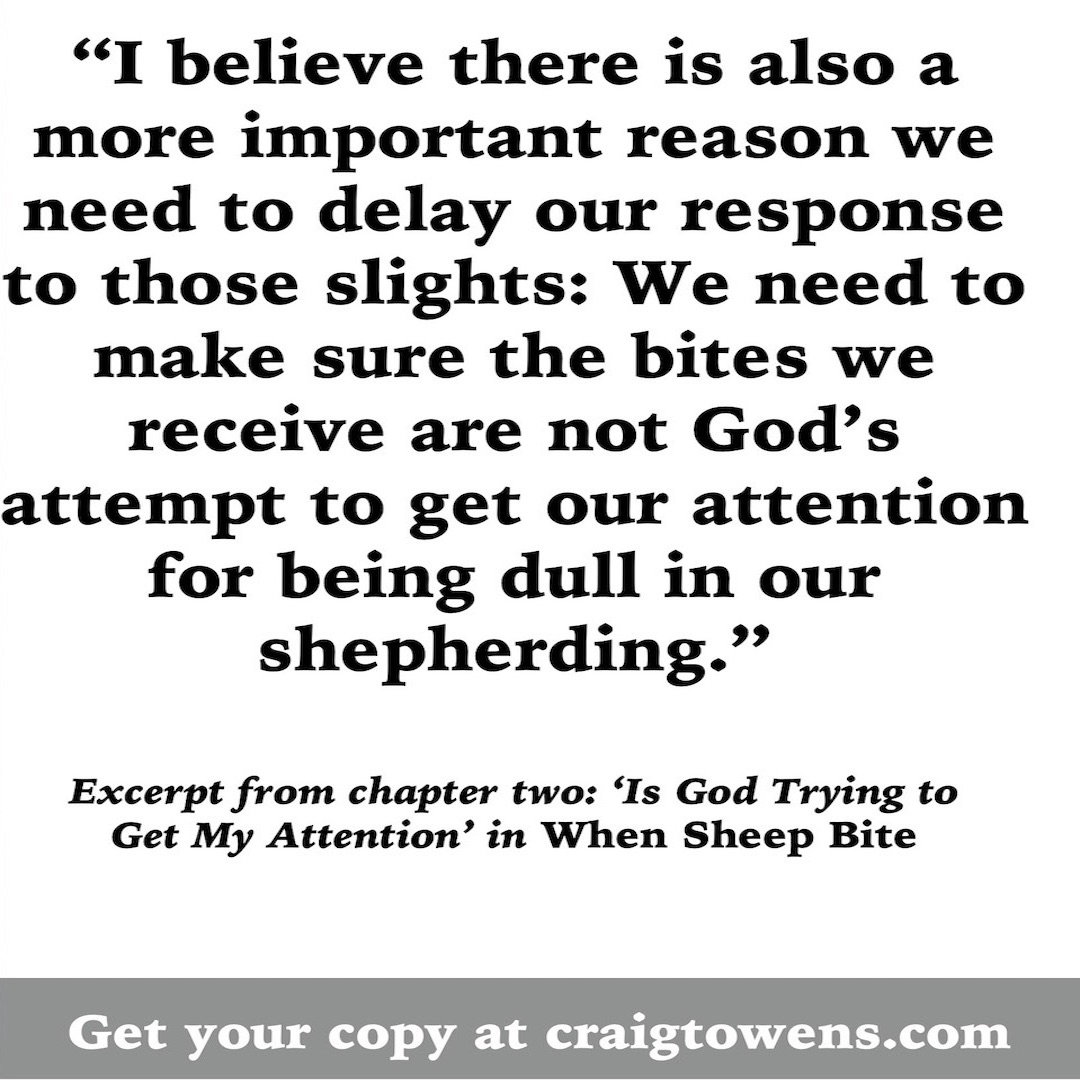
I believe there is also a more important reason we need to delay our response to those slights: We need to make sure the bites we receive are not God’s attempt to get our attention for being dull in our shepherding. God told Jeremiah, “For the shepherds have become dull-hearted, and have not sought the Lord” (Jeremiah 10:21 NKJV). As a result, God had to send something painful to those religious leaders to make them aware of the dullness that had set in.
I conclude this chapter with a prayer for shepherds who have been bitten—
Father, Your sheep continued to wallow in the unhealthy habit of biting the hand that fed them and cared for them. In Your perfect love, You knew just how to discipline them, always with a heart of drawing these wayward sheep back to You. I ask You to please cultivate this loving heart in me.
Jesus, even as You were nailed to the Cross by the very sheep You came to save, You didn’t lash out in anger but lovingly prayed, “Father, forgive them for they don’t know what they are doing.” You know how much it hurts when my loving shepherding of these flock under my care is repaid with bites and kicks and abandonment. Jesus, help me to learn to respond in loving forgiveness as You did.
Holy Spirit, as David prayed, so I pray, “Search me.” As I do, please show me where my words, actions, or attitudes have rubbed the sheep under my care the wrong way and prompted them to lash out. Help me to repent, forgive, and ask forgiveness. Even if the attack was unprovoked by anything I have done, my heart’s desire is for none to be lost so please help me learn how to bring about restoration.
I pray this in the name of my Good Shepherd, Jesus. Amen.
To find out more about When Sheep Bite, or to pick up a copy for yourself, please click here.











 Craig T. Owens