Thursdays With Oswald—Guard Your Heart With Your Head

This is a weekly series with things I’m reading and pondering from Oswald Chambers. You can read the original seed thought here, or type “Thursdays With Oswald” in the search box to read more entries.

Guard Your Heart With Your Head

     The Bible puts the head in the prominent position, not the central position; the head is the “finish off,” the manifestation of what the heart is like; the outward expression of the heart, as a tree is the outward expression of the root. This is the relationship between the head and the heart which the Bible reveals. …

     In dealing with the Bible the danger is to come to it with a preconceived idea, to exploit it, and take out of it only what agrees with that idea. If we try, as has been tried by psychologists, to take out of the Bible something that agrees with modern science, we shall have to omit many things the Bible says about the heart. According to the Bible the heart is the center: the center of physical life, the center of memory, the center of damnation and of salvation, the center of God’s working and the center of the devil’s working, the center from which everything works which molds the human mechanism. 

From Biblical Psychology

Oswald Chambers was a holistic thinker: he knew the role of the Holy Spirit and the role of psychologists; he saw how the mind, spirit, and soul worked interdependently with each other. He never suggested that psychological issues be repaired with spiritual methods, nor that spiritual concerns be addressed by psychology.

But he also saw how easy it was to make heart matters (spiritual) concerns which should be addressed as head matters (psychological). The Bible says, “Above all else guard your heart, for from it flow all of the issues of life” (Proverbs 4:23).

So how do I guard my heart? Part of guarding my heart does start with my head: I need to think about what’s going into my heart. But, as Oswald Chambers says, the head is just the “finish off” of what is happening in the heart. So ultimately, to keep my head in the right place, I need to guard my heart. I need to make my heart exclusively the home of the Holy Spirit, and allow Him free access to all of the concerns in my heart.

This is the only way I can “finish off” the right way.

Do You Want To Be A (Better) People Pleaser?

I know a lot of people who want to please others. This pursuit, however, can get you into hot water. For instance, when you need to confront a friend on their poor behavior. Or when someone doesn’t properly express their appreciation to you for appreciating them.

The Bible gives us a better way to be a people pleaser. 

Paul wrote: So we make it our goal to please [God]… (2 Corinthians 5:9).

Instead of goal, the King James Version says, “we labor.” If it is labor, then it truly is a labor of love: work that is challenging, but rewarding. In fact, the rewards are so overwhelming, that the sweat of labor is quickly forgotten.

The Greek word for labor/goal means work that is activated by the love of honor, and so it brings forth our very best effort.

I desire to honor God and please Him, and I desire to be honored by God and find my full pleasure in Him. After all, as the Westminster Catechism says, “The chief end of man is to glorify God and enjoy Him forever.”

So my labor of love is activated first by my love for God; and secondarily by my love for others. Isn’t this what Jesus gave us as the Great Commandment (see Luke 10:27)?

It is God Who has made us for this very purpose [to enjoy Him forever] and has given us the Spirit as a deposit, guaranteeing what is to come [honor and eternal pleasure]. (2 Corinthians 5:5)

The Holy Spirit helps activate and direct my labor of love. The Spirit uses my labor of love to draw others to Christ; the Spirit assures me that my labor of love is bringing honor and pleasure to the Father. And in that knowledge, I find my pleasure to continue to labor in love.

So if I want to please people, my goal must be a labor in love that pleases God. Out of the knowledge of His pleasure and honor, I am better prepared to present a labor of love to others.

God pleaser (first) → People pleaser (as an overflow) 

The better we please God, the better we’ll please people.

Thursdays With Oswald—Examination

This is a weekly series with things I’m reading and pondering from Oswald Chambers. You can read the original seed thought here, or type “Thursdays With Oswald” in the search box to read more entries.

Examination 

     Sin destroys the power of the soul to know its sin, punishment brings awakening, self-examination brings chastisement and saves the soul from sleeping sickness, and brings it into a healthy satisfaction. 

From Biblical Psychology

There’s so much to unpack in this single sentence…

  • We are very good at self-medicating away any pain (even spiritual pain), so that we never address the source of the pain (Ephesians 4:18).
  • I can be “sin sick” and not even know it because I’m not allowing the Holy Spirit to examine me (1 Corinthians 10:12).
  • The pain of punishment and chastisement is for my eternal benefit (Hebrews 12:5-11).

What do I need to do? Invite the examination of the Spirit:

Search me, O God, and know my heart; test me and know my anxious thoughts. Point out anything in me that offends You, and lead me along the path of everlasting life. (Psalm 139:23-24)

So let a person examine himself first, and then he may eat of the bread and drink from the cup; for a person who eats and drinks without recognizing the body eats and drinks judgment upon himself. This is why many among you are weak and sick, and some have died! If we would examine ourselves, we would not come under judgment. But when we are judged by the Lord, we are being disciplined, so that we will not be condemned along with the world. (1 Corinthians 11:28-32)

Perfect? Yes!

The opening words of Psalm 119 describe the end result of going through what I’m calling the P119 Spiritual Workout. In a word: Blessed.

In fact, this word is so exciting that the Hebrew language uses the emphatic thought here. Bringing that into English means that the first two verses of this chapter both begin…

O!! How blessed!!

That’s a wonderful goal, but the next two verses seem to bring us crashing back to earth. In order to enjoy these heights of blessing we are asked to live like this:

  • They do nothing wrong as they walk in His ways (v. 3).
  • God’s precepts are to be fully obeyed (v. 4).

Yikes! Nothing wrong?! Full obedience?! No mistakes?!

Even Jesus said, “Be perfect, therefore, as your Heavenly Father is perfect” (Matthew 5:48).

But pay attention to this: The sign of a maturing Christian is not one who never sins; the sign of a maturing Christian is one who is closing the gap between sin and repentance.

How does that work? Here’s the progression…

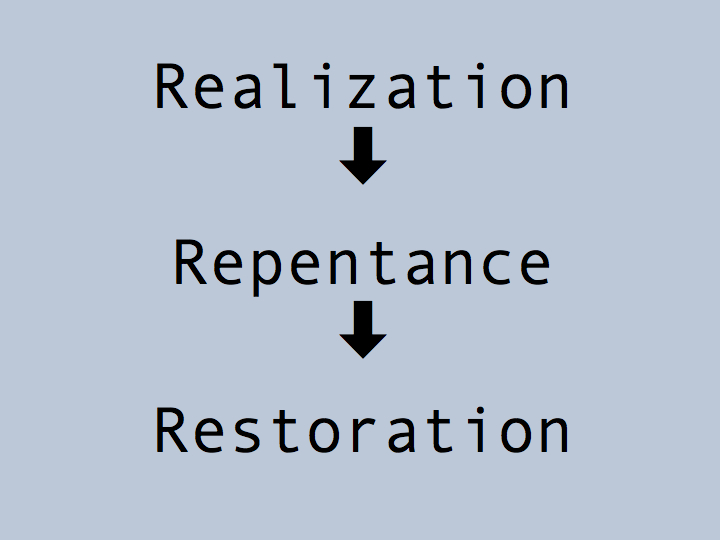
Realization of sinRepentance of sin → Restoration of God’s blessing

The time gap between our repentance and God’s restoration is faster than the blink of an eye—faster than you can even comprehend. What often takes us a while is moving from realization to repentance. Instead, we explain, and justify, and make excuses, and drag our feet.

But a maturing Christian invites the inspection of the Holy Spirit through the reading of God’s Word and then is quick to realize sin and repent from it. When God restores us, do you know how we appear to Him? PERFECT!!

So realizing our sin, repenting of that sin, and experiencing God’s restoration is the fastest way to live as those who do nothing wrong and who are fully obeying God’s precepts.

Don’t wait any longer: realize and repent, and then experience God’s restoration as you stand perfect in His presence!

If you have missed any of the messages in our P119 series, you can access them all by clicking here.

Be Pleased To Visit Your Church

Several folks have asked me to share the prayer from Charles Spurgeon that I used to open our service this morning.

Dear God, 

Be pleased to visit Your Church with the Holy Spirit.

Renew the day of Pentecost in our midst, and in the midst of all gatherings of Your people, may there come the downfall of the holy fire, and the uprising of the heavenly wind. 

May matters that are now slow and dead become quick and full of life, and may the Lord Jesus Christ be exalted in the midst of His Church which is His fullness.

May multitudes be converted; may they come flocking to Christ with holy eagerness to find in Him a refuge as the doves fly to their dovecotes. 

Amen!

Be Your Sermon

Listen to the podcast of this post by clicking on the player below, and you can also subscribe on AppleSpotify, or Audible.

Pastor, what’s God been speaking to you personally?

How has the Holy Spirit been working your sermon on your heart this week?

What has Scripture shown you about you (not just about your congregation)?

When you tell your congregation how God has been working on you, the Word comes alive. Because now they don’t see you as a perfect person preaching at them, but as a fellow traveler who’s hearing from God and learning on the journey just as they are.

“The preacher must throw his thought into his teaching. He must not weary the people by telling them the truth in a stale and unprofitable manner with nothing fresh from his own soul to give it force. Above all he must put heart work into preaching. He must feel what he preaches. It must be with him. It is never an easy thing. He must feel as if he could preach his very life away before the sermon is done.” ―Charles Spurgeon

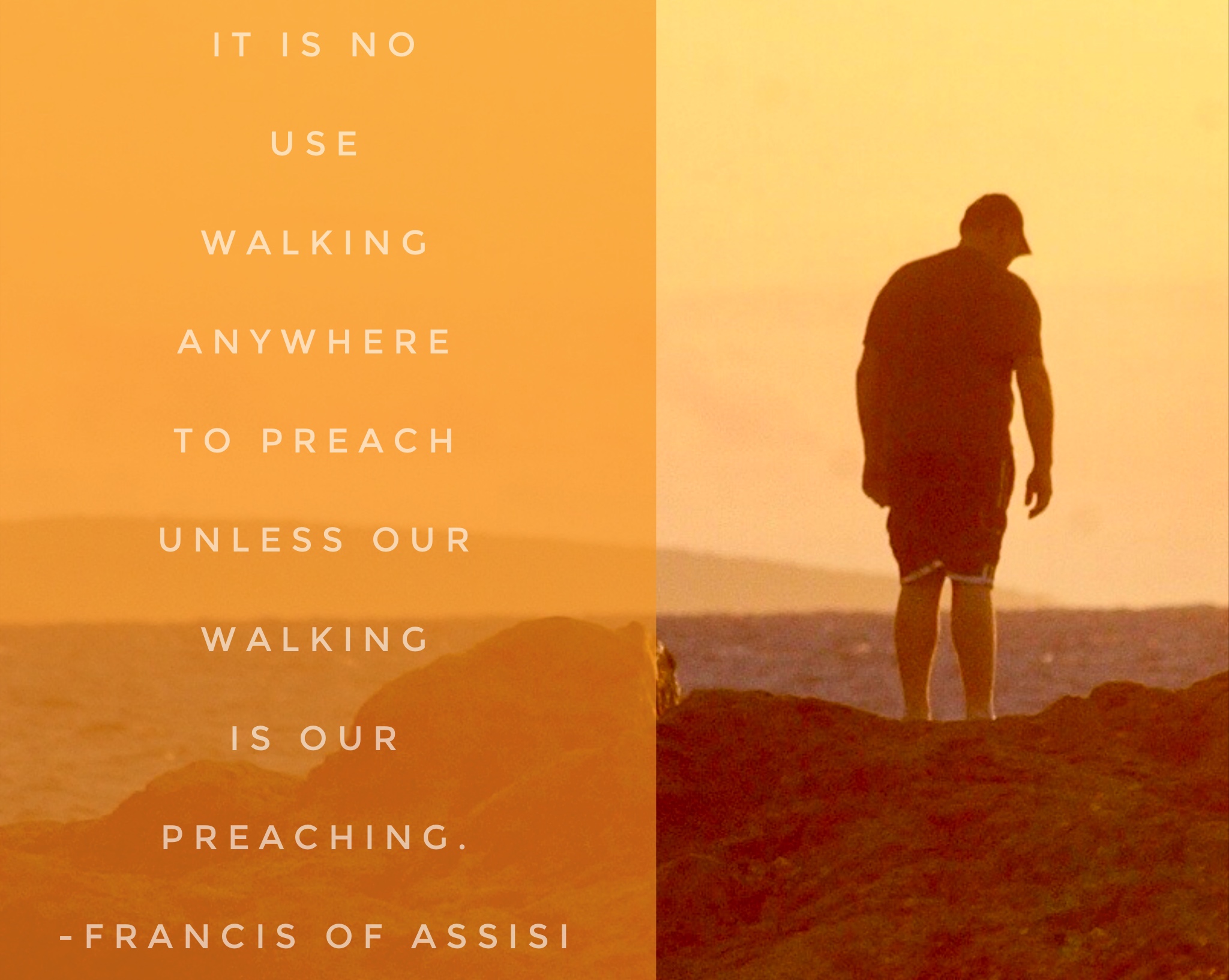
I’d rather see a sermon than hear one any day;
I’d rather one should walk with me than merely show the way.
The eye’s a better pupil and more willing than the ear;
Fine counsel is confusing, but example’s always clear.
And the best of all preachers are the men who live their creeds.
For to see the good in action is what everybody needs.
I can soon learn how to do it if you’ll let me see it done;
I can watch your hands in actions, but your tongue too fast may run.
And the lectures you deliver may be very wise and true,
But I’d rather get my lesson by observing what you do.
For I may misunderstand you and the high advice you give,
But there’s no misunderstanding how you act and how you live. (Edgar A. Guest) 
 

C’mon, pastor, let us SEE your sermon!

►► Would you please prayerfully consider supporting this ministry? My Patreon supporters get behind-the-scenes access to exclusive materials. ◀︎◀︎

Thursdays With Oswald—Jesus Can Satisfy

This is a weekly series with things I’m reading and pondering from Oswald Chambers. You can read the original seed thought here, or type “Thursdays With Oswald” in the search box to read more entries.

Jesus Can Satisfy 

     [There] are indications from innumerable passages in God’s Book which prove that this complex soul which we have been examining can be satisfied and placed in perfect harmony with itself and with God in its present existence. The thought that a human soul can fulfill the predestined purpose of God is a great one. The human soul, however, can also be stagnated by ignorance. In the beginning, we do not know the capabilities of our souls and are content to be ignorant; but when we come under the conviction of sin, we begin to understand the awful, unfathomable depths of our nature and the claim of Jesus Christ that He can satisfy this abyss. Every man who knows what his soul is capable of, knows its possibilities and terrors, but knows also the salvation of God, will bear equal testimony with the written Word of God that Jesus Christ can satisfy the living soul. 

From Biblical Psychology

I think Chambers explains why some people don’t read the Bible regularly. Because when we read the Word, the Holy Spirit does show us the abyss between where we are and where God wants our souls to be. Then we are convicted and restless. And, as Augustine said, “Our souls are restless until they find their rest in You.”

But with that realization of the separation—the abyss—also comes the recognition that Jesus paid the price for our atonement (our at one-ment). Our souls can find their full satisfaction here and now if we will just turn from the thoughts and practices that are separating us from God.

Don’t wait for the “sweet by and by” to find satisfaction with God:

  1. Read the Word
  2. Let the Holy Spirit convict you of the abyss in your soul
  3. Obey the Spirit’s prompting so you can repent
  4. Experience the at one-ment with God that Jesus paid for!

Be A Foolish Preacher

Pastor, do you realize how clever we try to be?

  • We come up with a catchy sermon series and add some stylish graphics.
  • Then we labor over sermon titles that sound so compelling.
  • As we write our sermons we try to dream up memorable patterns, like all three of our main points start with “S,” or we spell out the word “P.E.A.C.E.”

When the truth of the matter is, what we’re saying is foolishness.

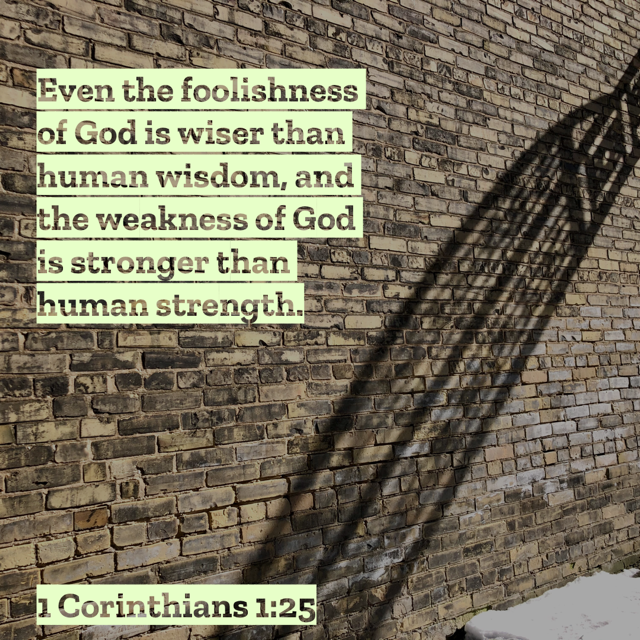
Where is the wise man? Where is the scholar? Where is the philosopher of this age? Has not God made foolish the wisdom of the world? For since in the wisdom of God the world through its wisdom did not know Him, God was pleased through the foolishness of what was preached to save those who believe. Jews demand miraculous signs and Greeks look for wisdom, but we preach Christ crucified: a stumbling block to Jews and foolishness to Gentiles, but to those whom God has called, both Jews and Greeks, Christ the power of God and the wisdom of God. For the foolishness of God is wiser than man’s wisdom, and the weakness of God is stronger than man’s strength. (1 Corinthians 1:20-25)

You don’t have to try to make God’s Word clever. It is already profound!

You don’t have to try to make it memorable. The Holy Spirit makes it memorable (John 14:26)!

You don’t have to make the Bible relevant. It is the most relevant, applicable wisdom that humanity has ever known! 

D.L. Moody said it this way:

“If God has given you a message, go and give it to the people as God has given it to you. It is a stupid thing for a man to try to be eloquent. Make your message, and not yourself, the most prominent thing. Don’t be self-conscious. Set your heart on what God has given you to do, and don’t be so foolish as to let your own difficulties or your own abilities stand in the way.”

Don’t try to be clever. Just be Spirit-led and you will utter the most profound, compelling, and memorable words ever spoken by a preacher!

Thursdays With Oswald—Seeing And Hearing “Holy”

This is a weekly series with things I’m reading and pondering from Oswald Chambers. You can read the original seed thought here, or type “Thursdays With Oswald” in the search box to read more entries.

Seeing And Hearing “Holy” 

     The Bible places in the heart everything that the modern psychologist places in the head. … 

     God does alter the desire to look at the things we used to look at; and we find our eyes are guarded because He has altered the disposition of our soul life. …I will always hear what I listen for, and the ruling disposition of the soul determines what I listen for, just as the ruling disposition either keeps the eyes from beholding vanity or makes them behold nothing else. 

From Biblical Psychology

Solomon wrote, “Above all else, guard your heart, for it is the wellspring of life” (Proverbs 4:23). This is where Chambers gets the thought about our hearts doing what psychologists want our heads to do.

The more I fill my heart with God’s Word (Psalm 119:11), the more the Holy Spirit can remind me of that Word (John 14:26). The more I am tuned in to that sanctifying instruction of the Holy Spirit (Ephesians 5:26), the more holy I will live (Romans 8:4; Galatians 5:16; 1 Thessalonians 4:7).

This “tuning in” in the spiritual realm (the heart) absolutely affects the physical realm (the head). I have written before about the reticular activating system (RAS) in our brains (you can read about this here and here). The combination of the Word and the Spirit reprograms our RAS so that our eyes and ears are looking and listening for what pleases and glorifies God.

Do you want to live a holy life? Start by guarding your heart. You do this by filling your heart with the Word of God.

Strengths Formula

God wants you to be yourself, but not as you can make you. But to be the “you” He created you to be. Part of what He implanted in you was certain gifts, talents, and abilities. To the extent that you allow the Holy Spirit to (1) reveal these gifts to you, and (2) turn these gifts into strengths, you will find more joy in being “you” as your “you” builds up the Body of Christ.

Just before listing some of the innumerable spiritual gifts God reveals in humanity, the apostle Paul says this:

For by the grace given me I say to every one of you: Do not think of yourself more highly than you ought, but rather think of yourself with sober judgment, in accordance with the measure of faith God has given you. (Romans 12:3)

Does that sound contradictory at all: Do not think…but rather think?

The root word is the same in each usage (phroneo in the Greek), but the prefix is what sets them apart from each other.

  • The first has the prefix hyper-. That means it’s overly analyzed, overly concerned = self-focused. 
  • The second time the prefix is soph- (meaning “wise”). This is sound thinking, big-picture thinking = others-focused.

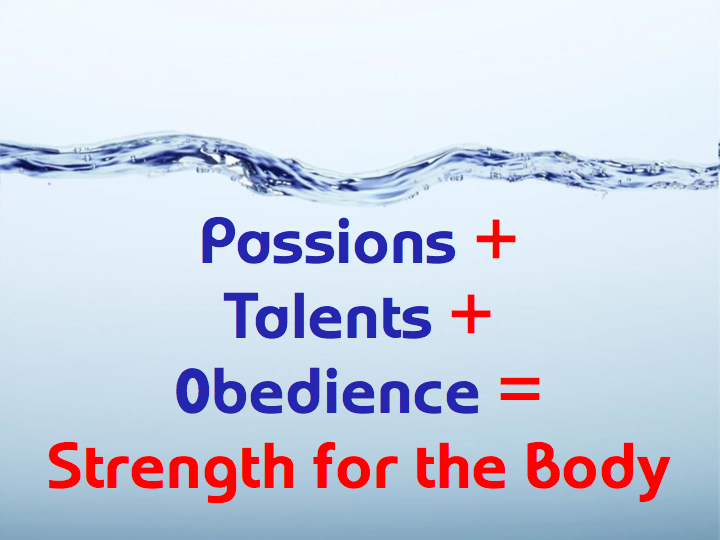
The Holy Spirit gives you sophroneo thinking to reveal your God-implanted gifts and talents to benefit others—to benefit the whole Body of Christ. He helps us turn our talents into strengths by using a formula like this:

Passions + Talents + Your Obedience = Strength for the Body

Pay attention to your passionate responses to situations, as they will reveal to you some of your gifts.

Listen to areas where others say you are talented. This will help you know how God has wired you.

Then you must be obedient to the prompting of the Holy Spirit in how to use your talents. If you let them sit on the shelf, they will never become strengths. Strengths develop when you passionately and obediently use your God-given talents for God’s glory.

The Holy Spirit wants to help you in all of these areas. Will you let Him?

If you’ve missed any of the messages in the Immersed series, you can find them all here.