Got Problems? Good!

The absence of problems in a church does not mean that everything is fine. It might mean that the church is dead.

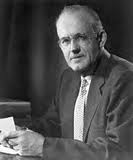
Check out these words from A.W. Tozer—

Tozer“Some misguided Christian leaders feel that they must preserve harmony at any cost, so they do everything possible to reduce friction. They should remember that there is no friction in a machine that has been shut down for the night. Turn off the power, and you will have no problem with moving parts. Also remember that there is a human society where there are no problems—the cemetery. The dead have no differences of opinion. They generate no heat, because they have no energy and no motion. But their penalty is sterility and complete lack of achievement. What then is the conclusion of the matter? That problems are the price of progress, that friction is the concomitant of motion, that a live and expanding church will have a certain quota of difficulties as a result of its life and activity. A Spirit-filled church will invite the anger of the enemy.” (emphasis added)

What do you think?

15 Quotes From “Stopping Words That Hurt”

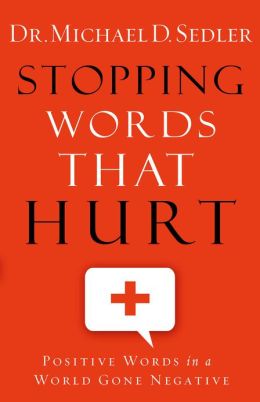
Stopping Words That HurtThere was so much for me to process in Stopping Words That Hurt by Dr. Michael Sedler (you can read my full book review by clicking here). If you’ve ever been hurt by someone else’s words about you, there is help for you in this book. If you’ve ever hurt someone else with the words you’ve spoken, there is help for you in this book.

Bottom line: this book can help cut-off hurtful words and evil reports before they gain momentum. Please read this book!

Here are just a few quotes that stood out to me—

“We are so brainwashed into believing that it is permissible to violate one another verbally that it takes a concentrated effort to begin to have a new thought pattern.”

“It is imperative that you understand this truth: Just listening to an evil report can do tremendous damage to your perspective, viewpoint and overall spirit. … Joining in a negatively-driven conversation, no matter how small the participation, may destroy the testimony of a life. Listening to grumbling and ungodly attitudes eventually contaminates the spirit. The more we allow discontent to be taken in by our spirits, the greater the tendency to compromise our own speech patterns. We are being called to a high standard of living where the rewards for our faithfulness are eternal.”

“It is usual for most of us to listen without questioning. We oftentimes want to support a friend, supervisor or person of influence. In fact, a messenger may single us out because she knows we will not disagree with or question her. Are we being used because of our own gullibility and blindness to negative speech patterns?”

“We must have our antennas up and be prepared when we hear negative comments and subtle innuendos about others.”

“If we are unable to recognize the potential destruction caused by negative words, we will eventually cause injury to those around us. And, sadly, we often deceive ourselves into believing there was justification for our actions.”

“It is rude to knowingly be a part of gossip. It is not good manners to listen to verbal assaults and blatant character assassinations of people who are not present to defend themselves. It is foolishness and ignorance. We must open our eyes and discern when we are listening to evil reports in order to be accepted by the crowd.”

“A bold positive response can put out the fire.”

“Learn to avoid the trap of falling into emotional identification by getting information for yourself. Compare your feelings and thoughts with the Bible’s guidelines. Look for corroboration or contradictions as you assess the situation. And, finally, give a little more weight to the perspective of those who have been faithful, trustworthy and proven people of integrity than the words of a stranger or ‘expert’ who has no track record of honesty.”

“Fear can draw us toward God or pull us away. It can create a desire in us to cling to the truth or alter our perception of the truth. While satan wants to use fear to rob us of our faith in God, we need to continue to speak words of truth and confidence regarding our place with Christ.”

“Impurity occurs when we hear evil reports with our natural ears and minds without seeking spiritual wisdom and understanding. If we accept the words of others as truth, we will become filled with a mixture of philosophies, attitudes and beliefs.”

“A person who has responsibility over others also has great influence. If he or she shares a negative report with the general population, those with unguarded spirits will become contaminated.”

“I speak a strong word of caution to husbands and wives, significant others and close family members. We often take on the offense when a loved one is wronged or slighted. And though they may work through the issue, we still hold on to the anger and bitterness.”

“It is difficult to ‘have ears that hear’ at this point in the process. First of all, we do not see ourselves as defiled or polluted. We think we are right and can handle everything ourselves. We are suspicious about counsel. We question the motives of those giving it. We actually fight the process of cleansing using words such as manipulating, self-centered and controlling to describe the interventions of others. We accuse even our closest friends and supporters of being insensitive and uncaring. Whereas once we received challenges and guidance from others, now we meet each comment or suggestion with disdain and animosity. It is during this phase that people have a tendency to reject the process of cleansing, choosing instead to walk away from purity and to blame and curse others for their lack of support and love.”

“In order to heal with words, we must be willing to be persistent with them. Jesus frequently verbalized His love for His disciples. Once is not enough! Encouragement, praise and positive words continue to feed the soul in the same way water moistures the soil. Soil will eventually dry out and need another dose of fresh water.”

“Great people of God find a way to speak hope into others. They give a sense of purpose, of calling, of future, of destiny to those around them.”

Sunday Morning Prayer

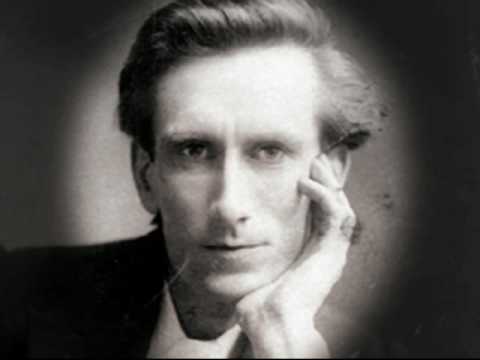
Pastor, perhaps this prayer from Oswald Chambers should be one we pray each time we prepare to deliver a message…

Chambers“O Lord, that I might be brought into Your presence, and to see things from Your standpoint. I have to speak to Your people this morning, anoint me afresh, O Lord, with Your gracious Spirit. … O Lord, as we consider the  ___ chapter of _______ this morning, light it up with Your glory; soften and subdue, inspire and thrill, and raise us on to the level of such glorious service that we may catch Your likeness.”

Amen!

20 Quotes From “The Highest Good”

The Highest GoodSome of my most highlighted books are Oswald Chambers’ books, so The Highest Good was no exception. It was difficult to narrow down, but here are 20 of my favorite quotes from this book. (If you would like to read my book review of The Highest Good, click here).

“If I am a child of God, distress will lead me to Him for direction. The distress comes not because I have done wrong, it is part of the inevitable results of not being at home in the world, of being in contact with those who reason and live from a different standpoint.” 

“Spiritual insight is not for the purpose of making us realize we are better than other people, but in order that our responsibility might be added to.”

“God expects us to be intercessors, not dogmatic fault-finders, but vicarious intercessors, until other lives come up to the same standard.” 

“In times of prosperity we are apt to forget God, we imagine it does not matter whether we recognize Him or not. As long as we are comfortably clothed and fed and looked after, our civilization becomes an elaborate means of ignoring God. … But remember God’s blessing may mean God’s blasting. If God is going to bless me, He must condemn and blast out of my being what He cannot bless. ‘Our God is a consuming fire.’ When we ask God to bless, we sometimes pray terrible havoc upon the things that are not of God. God will shake all that can be shaken, and He is doing it just now.”

“God intends our attention to be arrested, He does not arrest it for us. … We are apt to pay more attention to our newspaper than to God’s Book, and spiritual leakage begins because we do not make the effort to lift up our eyes to God.” 

“The majority of us do not enthrone God, we enthrone common-sense. We make our decisions and then ask the real God to bless our god’s decision.”

“When I wish I was somewhere else I am not doing my duty to God where I am.” 

“Let us not be so careful as to how we offend or please human ears, but let us never offend God’s ears.”

“We have not only lost Jesus Christ’s idea of righteousness, but we laugh at the Bible idea of righteousness; our god is the conventional righteousness of the society to which we belong.” 

“It is so absurd to put our Lord as Teacher first, He is not first a Teacher, He is a Savior first. He did not come to give us a new code of morals: He came to enable us to keep a moral code we had not been able to fulfill. … If He is a Teacher only, then He is a most cruel Teacher, for He puts ideals before us that blanch us white to the lips and lead us to a hell of despair. But if He came to do something else as well as teach—if He came to re-make us on the inside and put within us His own disposition of unsullied holiness, then we can understand why He taught like He did.”

“The only way to get out of our smiling complacency about salvation and sanctification is to look at Jesus Christ for two minutes and then read Matthew 5:43-48 and see Who He tells us we are to be like, God Almighty, and every piece of smiling spiritual conceit will be knocked out of us for ever, and the one dominant note of the life will be Jesus Christ first, Jesus Christ second, and Jesus Christ third, and our own whiteness nowhere. Never look to your own whiteness; look to Jesus and get power to live as He wants; look away for one second and all goes wrong.”

“For the past three hundred years men have been pointing out how similar Jesus Christ’s teachings are to other good teachings. We have to remember that Christianity, if it is not a  supernatural miracle, is a sham.”

“The point is that Jesus saw life from God’s standpoint, and we don’t. We won’t accept the responsibility of life as God gives it to us, we only accept responsibility as we wish to take it, and the responsibility we wish to take is to save our own skins, make comfortable positions for ourselves and those we are related to, exert ourselves a little to keep ourselves clean and vigorous and upright; but when it comes to following out what Jesus says, His sayings are nothing but jargon. We name the Name of Christ but we are not based on His one issue of life, and Jesus says, ‘What shall it profit a man, if he shall gain the whole world’—and he can easily do it—‘and lose his own soul.’” 

“It is remarkable how little Jesus directed His speech against carnal and public sins, though He showed plenty of prophetic indignation against the sins of a wholly different class, He preached His grandest sermon to a bad, ignorant woman (John 4:10-14), and one of His most prominent disciples was a publican named Matthew. The one man He ever said He wanted to stay with was another publican called Zaccheus, and some of the most fathomless things He said were in connection with a notoriously bad woman (Luke 7:36-50). … Jesus aroused the conscience of the very worst of them by presenting the highest good.”

“Ask yourself, then, what is it that awakens indignation in your heart? Is it the same kind of thing that awakened indignation in Jesus Christ? The thing that awakens indignation in us is the thing that upsets our present state of comfort and society. The thing that made Jesus Christ blaze was pride that defied God and prevented Him from having His right with human hearts.” 

“If we know that we have received the unmerited favor of God and we do not give unmerited favor to other people, we are damned in that degree.”

“‘If ye then, being evil…’ (Luke 11:13). Jesus Christ is made to teach the opposite of this by modern teachers; they make out that He taught the goodness of human nature. Jesus Christ revealed that men were evil, and that He came that He might plant in them the very nature that was in Himself. He cannot, however, begin to do this until a man recognizes himself as Jesus sees him.” 

“The holiest person is not the one who is not conscious of sin, but the one is more conscious of what sin is. … The purer we are through God’s sovereign grace, the more terribly poignant is our sense of sin. … Sin destroys the capacity of knowing what sin is. … We shall find over and over again that God will send us shuddering to our knees every time we realize what sin is, and instead of increasing hardness in us towards the men and women who are living in sin, the Spirit of God will use it as a means of bringing us to the dust before Him in vicarious intercession that God will save them as He has saved us.”

“‘God is able to make all grace abound toward you.’ Have you been saying, ‘I cannot expect God to do that for me’? Why cannot you? Is God Almighty impoverished by your circumstances? Is His hand shortened that it cannot save? Are your particular circumstances so peculiar, so remote from the circumstances of every son and daughter of Adam, that the Atonement and the grace of God are not sufficient for you? Immediately we ask ourselves these things, we get shaken out of our sulks into a simple trust in God. When we have the simple, childlike trust in God that Jesus exhibited, the overflowing grace of God will have no limits, and we must set no limits to is.” 

“The love of God rakes the very bottom of hell, and from the depths of sin and suffering brings sons and daughters to God.”

The Preacher’s Power

Andrew Murray“There are many who think they must only preach the Word, and that the Spirit will make the Word fruitful. They do not understand that it is the Spirit, in and through the preacher, who will bring the Word to the heart of the listeners. I must not be satisfied with praying to God to bless through the operation of His Spirit the Word that I preach. The Lord wants me to be filled with the Spirit; then I will speak as I should and my preaching will be in the manifestation of the Spirit and power.

—Andrew Murray

Oxymoron

John of the CrossNo, an oxymoron is not the big oaf sitting next to you! An oxymoron is a literary term where two seemingly contradictory things are put together to make a new item. For instance, jumbo shrimp isn’t something that is big smallness, but a tasty seafood dish. A girl who is awfully pretty isn’t a beautiful jerk, but someone remarkably cute.

I love the oxymoron that appears in the section of Psalm 119 called Tethgood pain. In just eight verses the word good appears six times, right alongside the word afflicted, which appears twice.

How in the world can pain be good?!?

To be sure there is bad pain, but where does good pain come in? Bad pain is the pain that sends you to the doctor, perhaps the pain that means you need to have surgery. There is still pain after the surgery, but that’s a good pain because it reminds you that what was wrong has been fixed. But if what was wrong has now been fixed, wouldn’t we say that the initial pain was really good pain all along?

That’s what the writer of the 119th Psalm thought. He said, “It was good for me to be afflicted so that I might learn Your decrees” (v. 71). Do you see the good pain there? How about in verse 67: “Before I was afflicted I went astray, but now I obey Your Word.”

A 16th-century monk named John of the Cross described good pain this way—

“Thou hast wounded me, oh, hand Divine, in order to heal me, and Thou hast slain in me that which would have slain me but for the life of God wherein now I see that I live.” (emphasis added)

We’re really good at dulling physical pain with aspirin, Motrin and Tylenol. We try to chase away emotional pain with anti-depressants. And, to our own harm, we try to excuse or mask our spiritual pain too. But that spiritual pain is GOOD pain … if we will listen to it.

The psalmist knew good pain that came from the Holy Spirit’s illumination of God’s Word was something to pay attention to and obey quickly. The writer of Hebrews knew it too—

For the Word that God speaks is alive and full of power, making it active, operative, energizing, and effective; it is sharper than any two-edged sword, penetrating to the dividing line of the breath of life (soul) and the immortal spirit, and of joints and marrow of the deepest parts of our nature, exposing and sifting and analyzing and judging the very thoughts and purposes of the heart. (Hebrews 4:12, Amplified Bible)

Don’t ignore that spiritual pain. It’s good pain for those who will listen.

If you have missed any of the messages in our P119 series, you can access them all by clicking here.

Give An Account

Bob Klingenberg

Bob Klingenberg

Pastor, let this sink in…

“Someday I will stand before The Word to give an account for every word I’ve preached.” —Rev. Bob Klingenberg

How does that make you feel?

It makes me realize how much more I need the Holy Spirit’s help in my study time! And I pray this prayer from Oswald Chambers almost weekly before I deliver the message God has laid on my heart—

In my preaching, cause Thy glorious voice to be heard, Thy lovely face to be seen, Thy pervasive Spirit felt. 


Keep It Closed!

Keep it closedJesus told us that the Holy Spirit would help us reply the right way when someone questioned us about our faith in God. But Jesus showed us, that sometimes no reply is the best reply.

After Jesus was arrested, He was first sent to Pilate:

So again Pilate asked Jesus, “Aren’t You going to answer? See how many things they are accusing You of.” But Jesus still made no reply (Mark 15:4-5).

Then Pilate sent Jesus to King Herod:

When Herod saw Jesus, he was greatly pleased, because for a long time he had been wanting to see Him. From what he had heard about Him, he hoped to see Him perform a sign of some sort. He plied Him with many questions, but Jesus gave him no answer (Luke 23:8-9).

So Herod sent Jesus back to Pilate. And what was the bottom line? Mark 15:5 adds this important phrase about the Roman governor: “…and Pilate was amazed.”

Our ability to remain silent when the Holy Spirit bids us to be silent speaks volumes to those who witness our silence. Be careful. Be sensitive to the Holy Spirit. Sometimes keeping your mouth closed may be the best testimony for God that you can give.

Thursdays With Oswald—The Right Context For Scripture

This is a weekly series with things I’m reading and pondering from Oswald Chambers. You can read the original seed thought here, or type “Thursdays With Oswald” in the search box to read more entries.

Oswald Chambers

The Right Context For Scripture 

     You study the Scriptures diligently because you think that in them you have eternal life. … Yet you refuse to come to Me to have life. (John 5:39-40) 

     These verses reveal how a knowledge of the Scriptures may distort the mind away from Jesus Christ. Unless we know the Living Word personally first, the literal words may lead us astray. The only way we can understand the Bible is by personal contact with the Living Word, then the Holy Spirit expounds the literal words to us along the line of personal experience. 

     … There is a context to the Bible, and Jesus Christ is that Context. The right order is personal relationship to Him first, then the interpretation of the Scriptures according to His Spirit. 

From Bringing Sons Until Glory 

Amen! Chambers is precisely on target with this.

Altared To Be Altered

Altared and AlteredI love this verse from Isaiah: Whether you turn to the right or to the left, your ears will hear a Voice behind you, saying, “This is the way; walk in it” (Isaiah 30:21). This foreshadowing of the Holy Spirit in the life of a Christian is powerful.

The Voice can be an audible voice, but not always. Sometimes the Holy Spirit says, “This is the way” through different modes. Things like:

  • Discernment. This is the Spirit’s help when we would normally rely on our own common sense (see Acts 5:3 and Acts 16:6-7).
  • Prompts. These motivate us to do something productive (Acts 8:29).
  • Checks. The flip side of promptings, these checks are to stop us from doing something unproductive (Acts 10:9-20).

But here’s an important thing to remember: The Voice of the Holy Spirit is not perceived by those people intent on doing things their own way. The Voice may be speaking, but those people are simply not tuned-in. The individuals that hear the Voice saying, “This is the way” are those who are determined to obey what the Voice says to them.

In Romans 12, Paul says that as our act of spiritual worship we lay our lives on the altar: we give up trying to control our own lives. He goes on to say that when we do this, we will quickly discover what God’s good, perfect and pleasing will is. In other words, we will be receptive to His Voice leading us into His perfect plan for us. So the Holy Spirit can direct us only after we’ve given up trying to direct our own affairs. Or said another way—

I altar my life, and the Holy Spirit will alter my life

“Oh, this baptism of the Holy Spirit is an inward presence of the personality of God that lifts, prays, takes hold, and lives in us with a tranquility of peace and power that rests and says, ‘It is all right.’ …Oh, this God of grace! Oh, this willingness for God to let us see His face! Oh, this longing of my soul that cannot be satisfied without more of God!” —Smith Wigglesworth