Listen to the podcast of this post by clicking on the player below, and you can also subscribe on Apple, Spotify, or Audible.
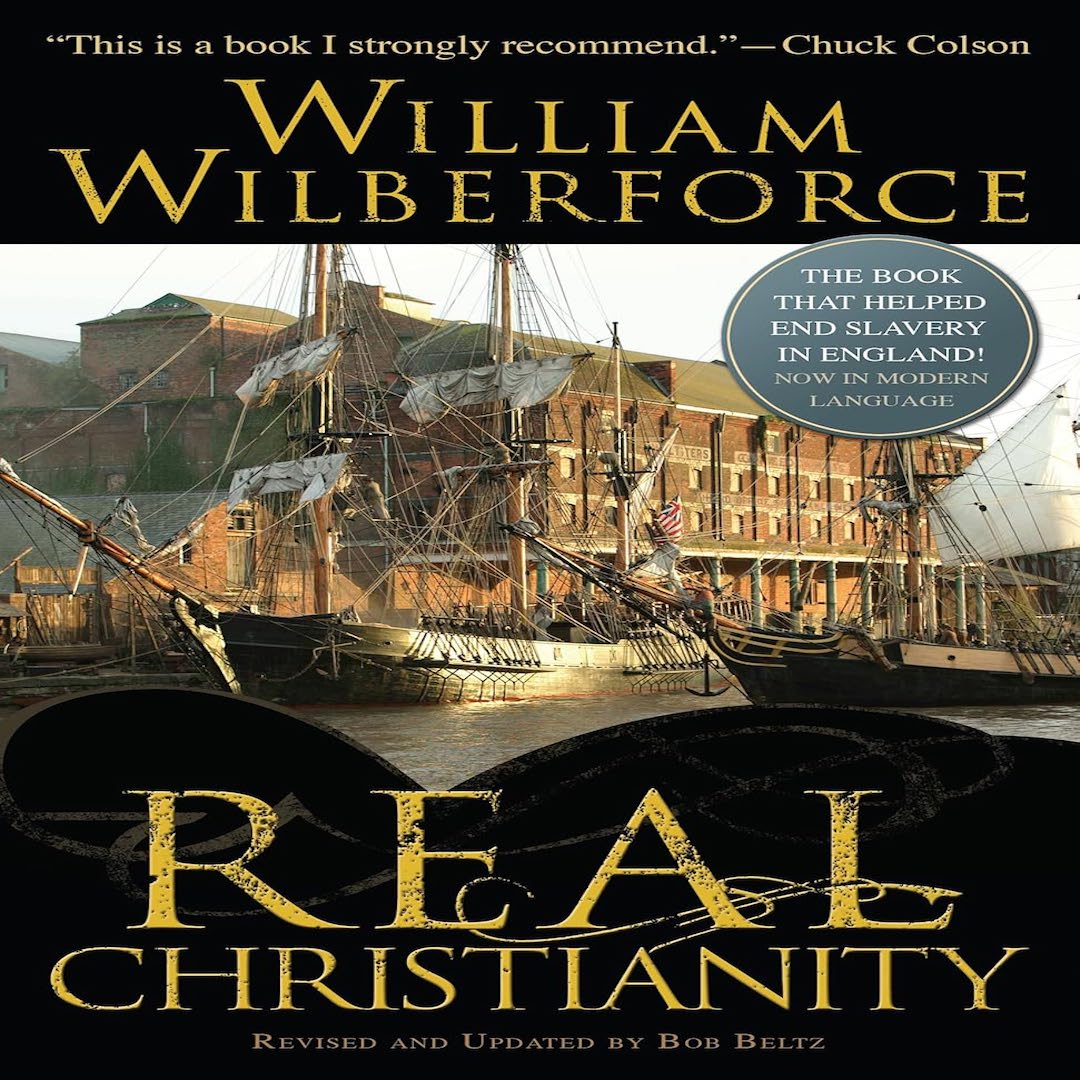
Does this sound familiar? “We live in difficult times. Pray for this nation. We have all the marks of a declining civilization. Pray that the God who hears and answers the prayers of His people might intervene on behalf of our country and bring a spiritual renewal that might save the nation.”
What if I told you that an esteemed and influential politician wrote this?
What if I told you that he wrote this in 1797?
The politician was England’s William Wilberforce, the man who tirelessly led the crusade to abolish the British slave trade, but the topics he addressed in Real Christianity sound as though they are topics that we are still wrestling with today.
Throughout this book, Wilberforce contrasts the many ways that cultural Christianity—or people who are Christian in name only—differ from the real Christianity that is outlined in the pages of the Bible. Wilberforce wrote, “I find it necessary to affirm that the problems we face nationally and internationally are a direct result of the decline of faith and morality in our nation. My only hope of a prosperous future for this country rests not on the size and firepower of our military, nor on the wisdom of its leaders, nor on the spirit of her people, but only on the love and obedience of the people who name themselves after Christ, that their prayers might be heard and for the sake of these, God might look upon us with favor.”
I found this book encouraging, in that I can see how human nature has remained the same and that the answers we so desperately seek are still found in the Holy Bible.
I also found this book convicting, as Wilberforce continually challenged me to review my own life to ensure I wasn’t unknowingly slipping into a cultural Christian mindset. I was also confronted by the numerous calls to prayer that Wilberforce made throughout this book.
It’s a relatively short read, but it is power-packed. I recommend Real Christianity to anyone who is frustrated by the state of affairs in our nation, and is desperate to see a true return to the biblical values of Christianity.
Greg and I unpack a quote from Andy Murray which says, “Culture happens through crisis. Unfortunately, many team environments have structured the crisis out.” We make the case that your team needs some tough times to bring them together and bring out their best.
Earlier this week I shared some thoughts about childlikeness, and then I read this insight from the ‘What is Greatness?’ reading plan on YouVersion: “Children approach life with genuine curiosity and authenticity. They haven’t learned to filter their joy or calculate their responses for maximum social or career advantage. They’re fully present in each moment, eager to learn, and unafraid to show their need for help. Jesus’ teaching wasn’t about being childish or wild; it was about recapturing the genuine, open, vulnerable approach to life, embodied by kids, that so many of us often lose in our rush toward our own ideas of success and greatness.”
“We live in difficult times. Pray for this nation. We have all the marks of a declining civilization. Pray that the God who hears and answers the prayers of His people might intervene on behalf of our country and bring a spiritual renewal that might save the nation. People of unbelief might think you are kidding yourself to think that prayer can make a difference. They might think you are like some superstitious pagan who depends on God because you are weak. They might compare you to those who really are a bit out of touch. The fact is that God cares for the nations in which His servants live and serve Him. He favors and blesses the land of the righteous (see Proverbs 3:33).I find it necessary to affirm that the problems we face nationally and internationally are a direct result of the decline of faith and morality in our nation. My only hope of a prosperous future for this country rests not on the size and firepower of our military, nor on the wisdom of its leaders, nor on the sprit of her people, but only on the love and obedience of the people who name themselves after Christ, that their prayers might be heard and for the sake of these, God might look upon us with favor.” —William Wilberforce
“A new discovery of 18,000 individual dinosaur tracks in the Bolivian El Molino Formation contains the highest number of theropod dinosaur tracks in the world.” These tracks also show dinosaurs heading for what may have been the last high ground during the global Flood recorded in the Bible.
Adolofo Kaminsky may have kept upwards of 10,000 Jews alive during Wold War II by his masterful forgeries.
Listen to the podcast of this post by clicking on the player below, and you can also subscribe on Apple, Spotify, or Audible.
You probably know the story of Daniel in the lion’s den, but I want to highlight a couple of really important things, so let me share this story with you from the Amplified Bible.
First of, remember how Daniel distinguished himself above all of the other governmental leaders: “Then this Daniel was distinguished above the presidents and the satraps because an excellent spirit was in him, and the king thought to set him over the whole realm” (Daniel 6:3).
Daniel’s rivals knew that they could never discredit him because of a lack of integrity or his shoddy work ethic. So they concocted a plan that played on King Darius’ pride. They got Darius to sign a law into effect that said no one could pray to anyone except Darius for the next month. Daniel, however, continued to pray to Jehovah three times a day, every single day.
Then they said before the king, “That Daniel, who is one of the exiles from Judah, does not regard or pay any attention to you, O king, or to the decree that you have signed, but makes his petition three times a day.” Then the king, when he heard these words, was much distressed over what he had done and set his mind on Daniel to deliver him; and he labored until the sun went down to rescue him. (Daniel 6:13-14)
Unable to find any loopholes in the law he had signed, Darius had to subject Daniel to the punishment for breaking this law—
Then the king commanded, and Daniel was brought and cast into the den of lions. The king said to Daniel, “May your God, Whom you are serving continually, deliver you!” Then the king went to his palace and passed the night fasting, neither were instruments of music or dancing girls brought before him; and his sleep fled from him. Then the king arose very early in the morning and went in haste to the den of lions. And when he came to the den and to Daniel, he cried out in a voice of anguish.
The king said to Daniel, “O Daniel, servant of the living God, is your God, Whom you serve continually, able to deliver you from the lions?”
Then Daniel said to the king, “O king, live forever! My God has sent His angel and has shut the lions’ mouths so that they have not hurt me, because I was found innocent and blameless before Him; and also before you, O king, as you very well know I have done no harm or wrong.”(Daniel 6:16, 18-22)
Daniel’s lifestyle—not his religion—first got the attention of King Darius, which led to Daniel’s promotion in the kingdom. But over time, Darius began to realize that Daniel’s faith in God is what fashioned Daniel’s lifestyle.
Notice that the Bible doesn’t say Daniel was praying in the lion’s den, but it does say that Darius was fasting while Daniel was in the lion’s den.
Daniel’s lifestyle of prayer prompted Darius to pray!
It is quite likely that Daniel was regularly praying for all the kings of Babylon and Persia because of what God had said through Jeremiah: And seek (inquire for, require, and request) the peace and welfare of the city to which I have caused you to be carried away captive; and pray to the Lord for it, for in the welfare of the city in which you live you will have welfare (Jeremiah 29:7 AMPC).
Darius’ response upon seeing Daniel’s deliverance shows a complete transformation in his attitude: He is now fully persuaded that the God who Daniel serves is the one true God.
Then King Darius wrote to all peoples, nations, and languages in his realm that dwelt in all the earth: “May peace be multiplied to you! I make a decree that in all my royal dominion men must tremble and fear before the God of Daniel, for He is the living God, enduring and steadfast forever, and His kingdom shall not be destroyed and His dominion shall be even to the end of the world. He is a Savior and Deliverer, and He works signs and wonders in the heavens and on the earth—He Who has delivered Daniel from the power of the lions.” (Daniel 6:25-27)
So Daniel didn’t need prayer, but Darius did. Daniel already knew that God would take him through, but Darius had to be convinced. It was the all-night prayer that saved the king.
Perhaps our God-centered, Christ-exalting, prayer-saturated lives may be just the catalyst that leads to the salvation of one of the most unlikely world leaders. So worship God, live with integrity, keep praying for those leaders, and wait in expectation for what God is going to do. Even if God takes you into a dark lion’s den, trust His plan that He is working out to glorify His name “to the end of the world”!
Just remember: Your prayer life may cause an unlikely leader to begin to pray too.
Listen to the podcast of this post by clicking on the player below, and you can also subscribe on Apple, Spotify, or Audible.
When we talk about the Baby in the manger, there is often an aspect that we overlook, although it’s included in many of our Christmas carols—
born is the King of Israel
come and worship Christ, the newborn King
hark the herald angels sing, glory to the newborn King
joy to the world, the Lord is come, let earth receive her King
I think many of us bristle a bit at the idea of any king—especially someone claiming absolute authority as King of kings—because of our unpleasant experiences, or perhaps the stories we have heard from history. Lord Acton was right when he said, “Power tends to corrupt and absolute power corrupts absolutely.” Every monarch throughout history has established their kingdom by the strength of their sword: “Do things my way, or else!” Lord Acton went on to correctly add, “Despotic power is always accompanied by corruption of morality.”
The kings of Isaiah’s day in Israel were nothing but evil, and the kings of Judah were becoming more and more ungodly with each successive generation. What about during the time Jesus was to be born? Luke 2:1 tells of Caesar Augustus. Augustus was born Octavian and he came to power after Julius Caesar was assassinated and after fighting against Mark Anthony and Cleopatra. Augustus claimed to restore the republic, but he really kept all the power to himself.
This is why we tend to distrust those who claim authority over us and demand from us our allegiance to them. So when Isaiah begins to tell of the coming Messiah (Isaiah 9:2-5) it sounds like a warlord wielding His powerful sword.
But recall that the first time time Isaiah uses the Hebrew word shalom (peace) is in the titles of this King. Isaiah calls Him a Child and then gives Him such unexpected titles (Isaiah 9:6)!
Isaiah says “the government will be on His shoulders.” The word misra (government) is only used twice in the Old Testament, here in vv. 6-7. The root word sara is also only used twice, and both times are related to Jacob the trickster being transformed into Israel, the one in whom there is no deception. This tells us that the Messiah is going to take the burden on Himself—He flips the Kingdom upside! Instead of all of us serving Him, He comes to serve us!
This is why it’s called His government and peace and establishing and upholding it with justice and righteousness!
This King of absolute power—the One Who is also called Mighty God—could overwhelm us with His unquestioned, unrivaled, and unapproachable power, but He came to be our King who makes peace.
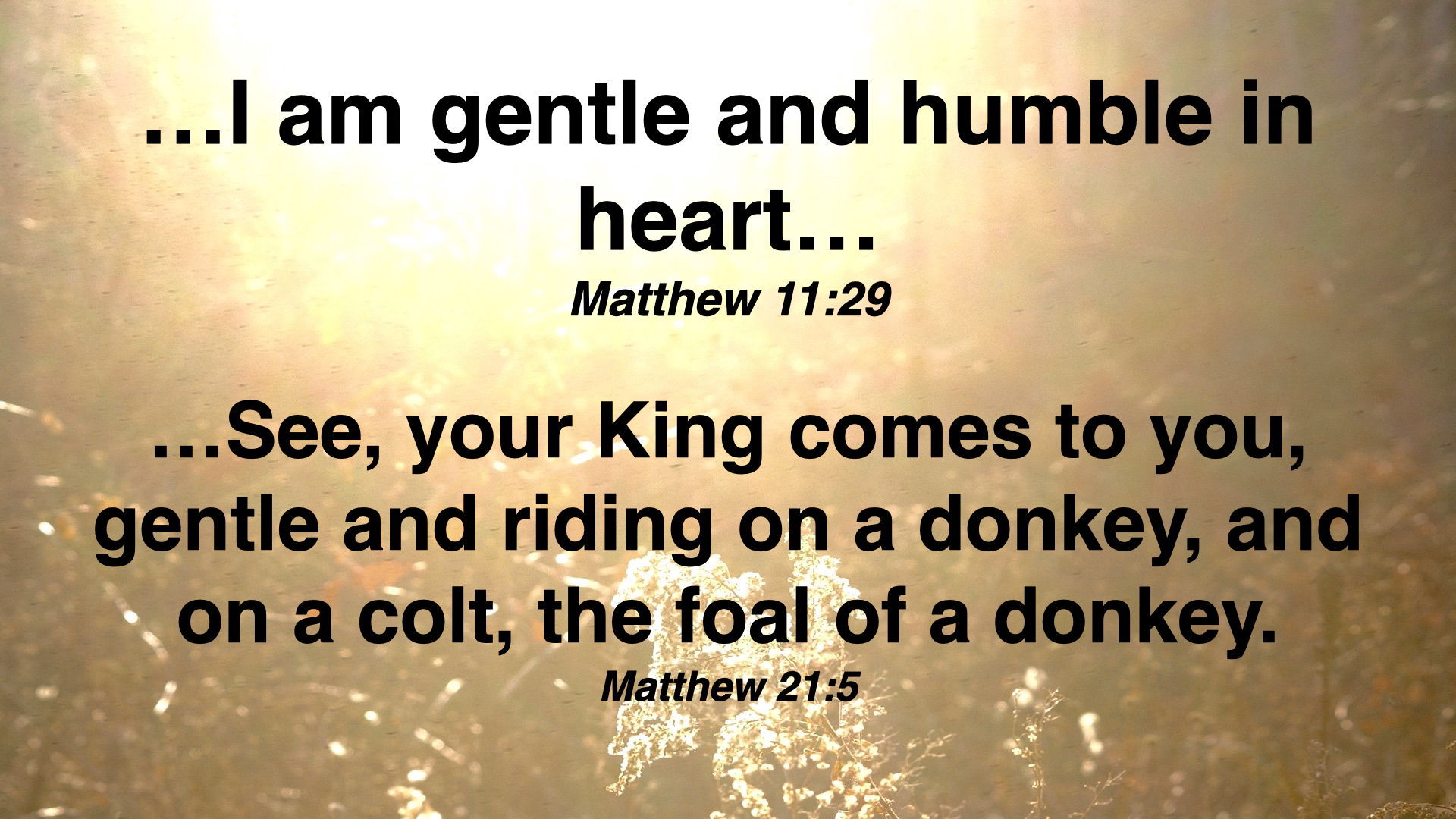
Our King is the most awesome power in the universe, but He is approachable because He is humble (Philippians 2:6-8; Isaiah 53:1-5; Matthew 11:29; Matthew 21:5).
This is exactly what the angel foretold to Mary (Luke 1:26-33), and this is what Mary grasped, as she relates it to us in her Magnificat. Listen as she expresses praise for both our King’s power and His gentleness (vv. 46-55).
Our King came to draw His sword not against us but against the enemy that kept us enslaved and separated from God (Isaiah 9:2-5; Colossians 2:13-15; Revelation 1:18).
In Isaiah 9:6 we read that the government will be on His shoulders. This is Jesus carrying the burden. This word for “shoulders” in the OT is almost always associated with the words “burden” or “yoke.”
We were born with the yoke of sin burdening us (Hebrews 2:15). Jesus took that on His shoulders when He took an old rugged Cross on His shoulders. Now He invites us to give our burden and our yoke to Him (Matthew 11:28-30).
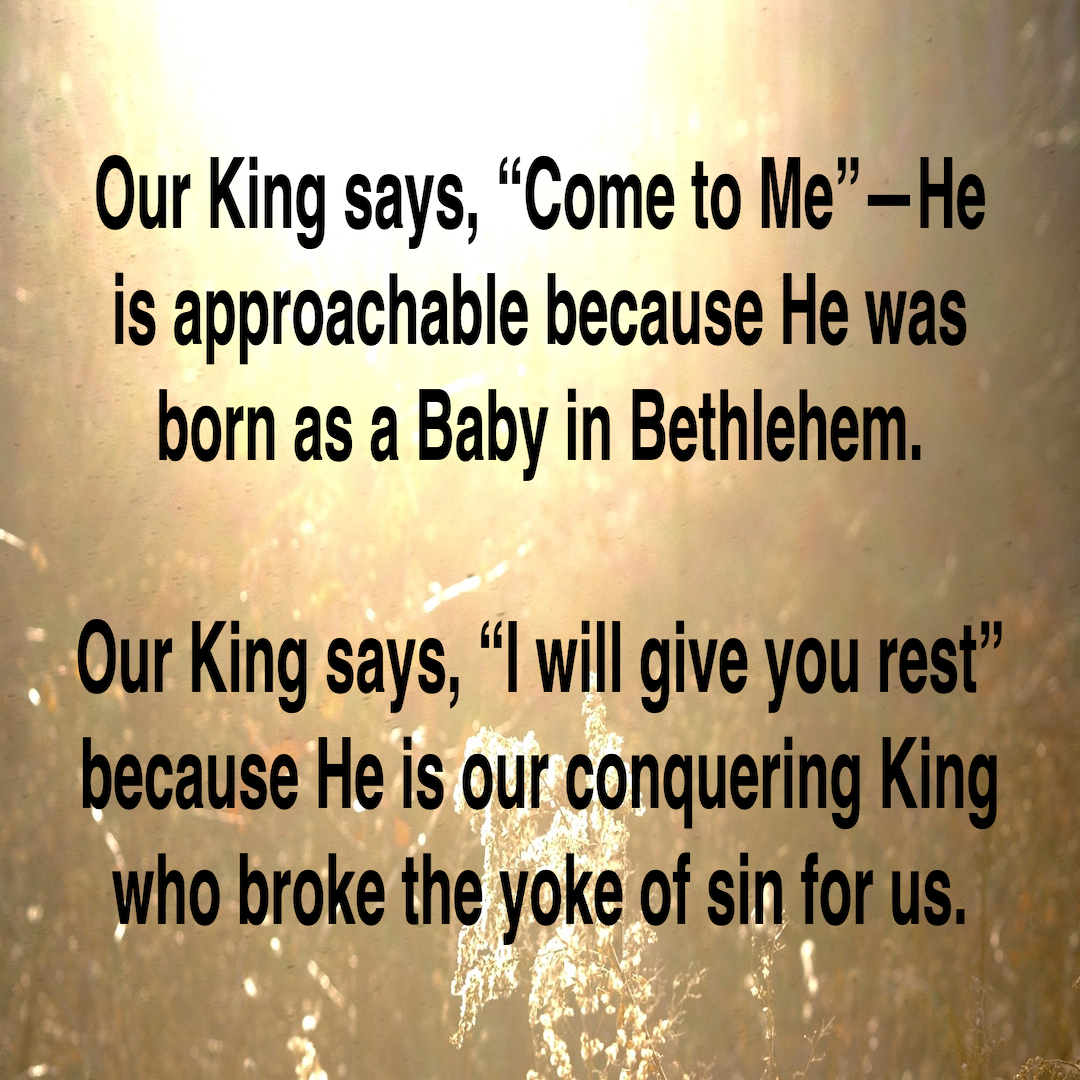
Our King says, “Come to Me”—He is approachable because He was born as a Baby in Bethlehem. Our King says, “I will give you rest” because He is our conquering King who broke the yoke of sin for us. This is what Christmas should remind us!
If you’ve missed any of the previous messages in our series looking at the titles and roles of the Messiah, you can check them all out here.
Why do Christians lift their hands to God? This is a clip from one of the sermons in our series looking at the worship songs that Israelite pilgrims sang as they ascended to Jerusalem to celebrate the feasts.
“Civil governments are established by God [Romans 13:1] to restrain the criminal elements of human society—even though these officers are often filled and run by evil people. We must divorce our feelings about the people that hold these offices from the authority of the office itself.” —Dr. Henry Halley
“Outstanding leaders go out of their way to boost the self-esteem of their personnel. If people believe in themselves, it’s amazing what they can accomplish.” —Sam Walton
This article opens with this thought: “Scientists will probably never fully understand photosynthesis as additional research uncovers even more fascinating mysteries.” It then goes on to outline how plants use quantum mechanics nearly perfectly to manage the flow of energy during photosynthesis. Truly this is more evidence of an All-Wise Creator.
In sharing a mini-biography of Henry Martyn, this article outlines how God prepares missionaries for the field to which He has called them. “God used [Martyn’s] classical education at Cambridge alongside his spiritual maturity formed by intentional mentorship to get him ready for his unique task of engaging Muslims and translating the Bible.”
T.M. Moore has an outstanding series for pastoral leaders. In a recent post, Moore wrote, “Paul’s vision was too vast, too all-encompassing, too transformative, too urgent, and too other-worldly to stop with, say, a vision that focused on more members, better facilities, larger budgets, additional staff, or regular ‘growth.’ None of these, nor any of a thousand other ways church leaders might express their hopes for their churches, is a proper vision for church leaders.” I was grateful for T.M.’s endorsement of my book Shepherd Leadership where I talk about the biblical metrics for church leaders.
“One of the dangers of having a lot of money is that you may be quite satisfied with the kinds of happiness money can give, and so fail to realize your need for God. If everything seems to come simply by signing checks, you may forget that you are at every moment totally dependent on God.” —C.S. Lewis
Listen to the podcast of this post by clicking on the player below, and you can also subscribe on Apple, Spotify, or Audible.
John Stonestreet used an interesting term (pre-political) that got me thinking about how many government programs would be unnecessary if the Church was doing what Jesus called the Church to do.
Here’s the full quote from John Stonestreet: “Christian political engagement should hit its fever pitch notduring elections. The only way to relieve the political pressures of our day is to build up the pre-political aspects of our life together, especially the family and the Church. When we care well for our children, our neighbors, and our communities, the state doesn’t have to.”
Listen to the podcast of this post by clicking on the player below, and you can also subscribe on Apple, Spotify, or Audible.
Much like Jude who had a message he wanted to deliver to the saints, but was compelled by the Holy Spirit to address something concerning him (Jude 3-4), I, too, was excited to deliver the next message in our series on discovering your gifts and then living in your gift zone. But I am deeply concerned about the words and actions of Christian saints during these past election cycles.
I recently heard John Stonestreet say, “Currently, politics is carrying far more cultural weight than it is able to bear.” I agree: Christians are putting far too much emphasis on political candidates than the Bible would suggest.
I frequently quote something from Charles Colson that always makes people smile. He said, “Salvation will never arrive in Air Force One.” The flip side is true as well: Neither will the Apocalypse arrive on Air Force One.
We have to remember that the Most High is sovereign over all the nations of the earth, and He gives them to whom He choose (Daniel 4:25, 32). When we think that our candidate or our party is the only way our nation can be saved, aren’t we elevating the political process above God’s plan?
I hope this doesn’t come as a shock to anyone, but there are no perfect candidates, perfect political parties, nor perfect party platforms. We can study our Bibles, pray, study the candidates’ lifestyle and policies, but ultimately we will have to cast a ballot for an imperfect candidate.
God doesn’t have an “R” or “D” next to His name. He has not endorsed a political candidate. You may be sitting next to someone right now that is going to vote for the opposite political party that you will be voting for. And the way we interact with those people—whether they are fellow Christians or not—is deeply concerning to me.
Moses saw a couple of fellow Israelites fighting each other, and he asked them, “Why are you hitting your fellow Hebrew” (Exodus 2:13). The Hebrew word rea means a friend who is also a fellow citizen. These Hebrews were citizens of Zion, but they were living in Egypt, and they definitely weren’t treating each other in a way that would be a testimony to the Egyptians.
When Stephen retold this portion of the story in his sermon, he phrased it this way, “Men, you are brothers” (Acts 7:25-26). Stephen used the Greek word adelphos which literally means “from the same womb.” But the Christians used this word to mean brothers and sister in Christ—people with whom we will spend eternity.
Let us always remember that others who are participating in the American political process are BOTH fellow US citizens AND brothers and sisters in Christ.
In J.R.R. Tolkien’s Return of the King, when Gandalf sees fellow citizens and friends at each other’s throats, he exclaims, “Work of the enemy! Such deeds he loves: friend at war with friend, loyalty divided, and confusion of hearts.” Indeed, the enemy of our souls would love to see the chaos of a nation at war with itself; especially to see Christians at odds with each other.
Paul said, “Therefore, as we have opportunity, let us do good to all people,especially to those who belong to the family of believers” (Galatians 6:10). On the flip side, Jesus said that when we think or speak poorly of a fellow human, we are in danger of judgment (Matthew 5:22).
Listen to Paul’s appeal to his friends at Philippi—
Therefore if you have any encouragement from being united with Christ, if any comfort from His love, if any common sharing in the Spirit, if any tenderness and compassion, then make my joy complete by being like-minded, having the same love, being one in spirit and of one mind.
I plead with Euodia and I plead with Syntyche to be of the same mind in the Lord. Yes, and I ask you, my true companion, help these women since they have contended at my side in the cause of the gospel, along with Clement and the rest of my co-workers, whose names are in the book of life. (Philippians 2:1-2, 4:2-3)
The politicians we have are always downstream from culture, which means we have allowed those sorts of politicians to be in place.
John Stonestreet used a phrase I hadn’t heard before, but I think it’s appropriate: “Christian political engagement should hit its fever pitch notduring elections. The only way to relieve the political pressures of our day is to build up the pre-political aspects of our life together, especially the family and the Church. When we care well for our children, our neighbors, and our communities, the state doesn’t have to.”How true this is!
I wrote something this summer based on Isaiah 3:4-5. In essence, I wrote that God gives nations the “leaders” they deserve. They are leaders in that they occupy an office, but they don’t lead people nor care for the citizens—they don’t have wisdom to lead nor do they care about anyone but themselves. This is the inevitable result for a nation that turns its back on God! So if we think our political and civic leaders are self-focused, unskilled, and childish, we should look in the mirror. It’s not “them,” it’s us. We have to change—turning wholeheartedly to God—and only then God can change our leadership.
We need to be praying for our governmental leaders, not vilifying them. We need to be speaking well of our fellow US citizens. We need to be especially treating our fellow brothers and sisters in Christ well.
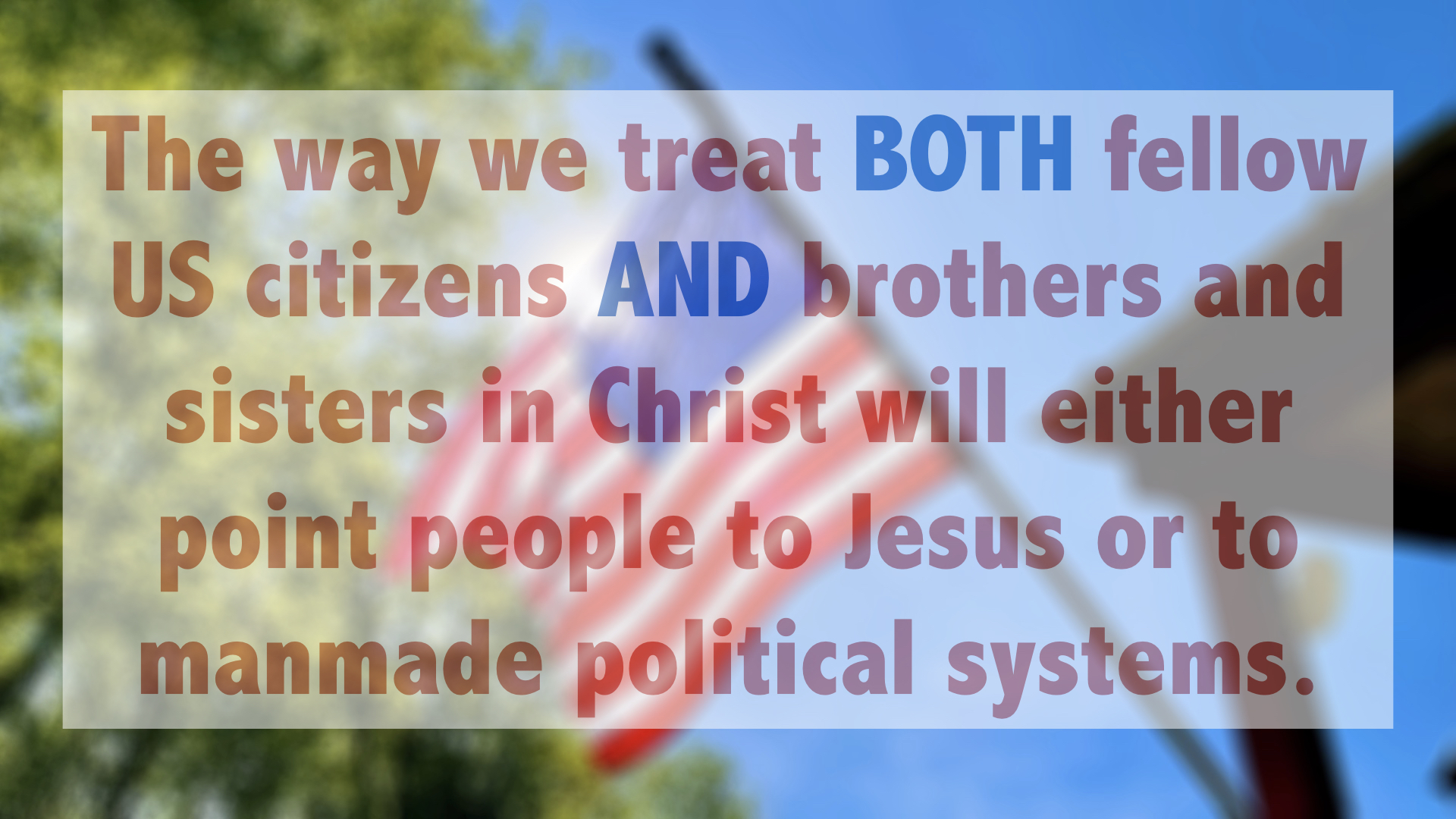
Our hope is not in the results of an election. Our hope is in Jesus. The way we treat BOTH fellow US citizens AND brothers and sisters in Christ will either point people to Jesus or to manmade political systems.
I pray we can do better at pointing people to Jesus! I pray I can do better!
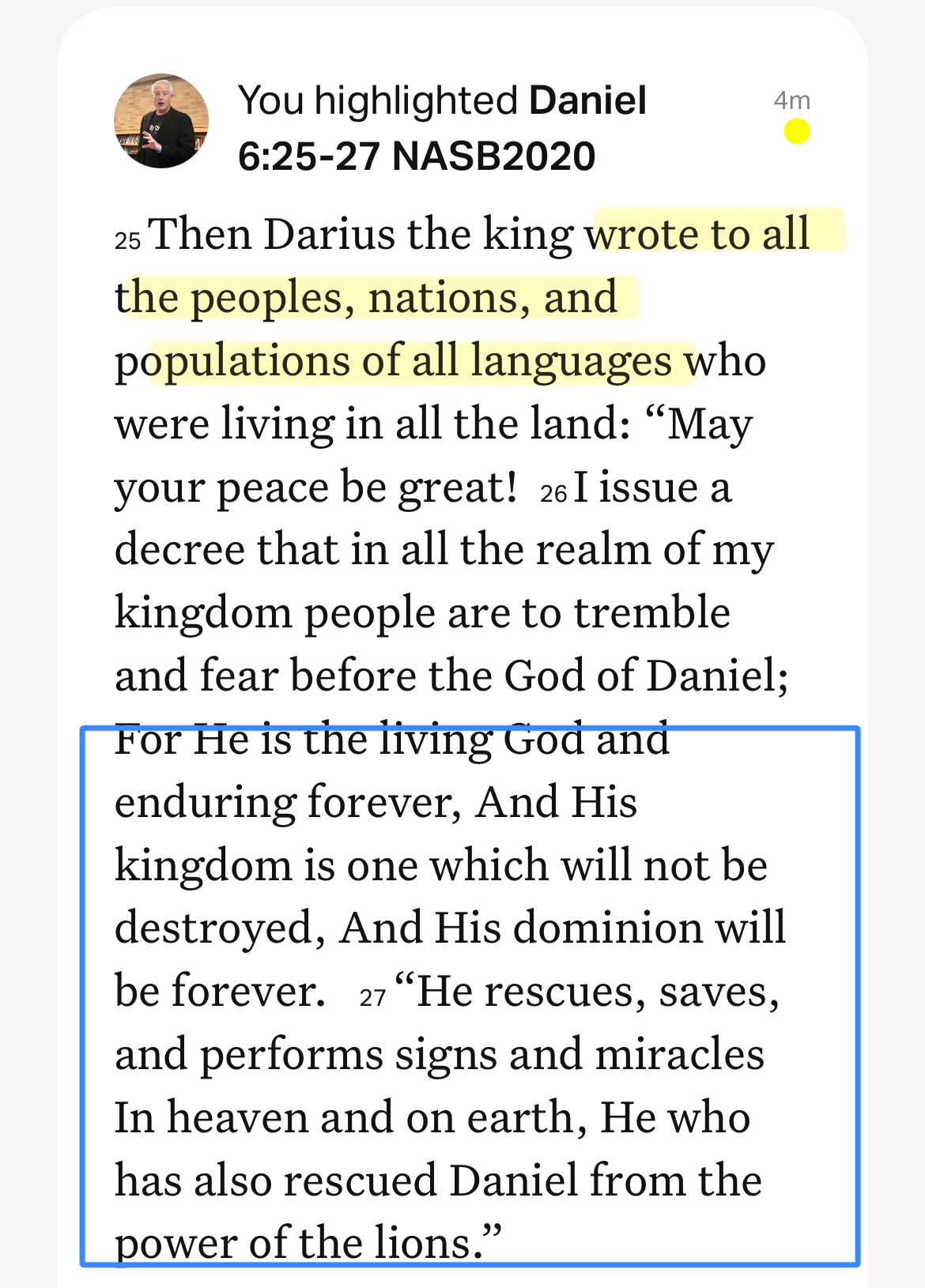
Then Darius the king wrote to all the peoples, nations, and populations of all languages who were living in all the land: “May your peace be great! I issue a decree that in all the realm of my kingdom people are to tremble and fear before the God of Daniel; for He is the living God and enduring forever, snd His kingdom is one which will not be destroyed, snd His dominion will be forever.He rescues, saves, and performs signs and miracles in heaven and on earth, He who has also rescued Daniel from the power of the lions.” (Daniel 6:25-27)
When you are facing adversity—even death threats—don’t ask, “God, why is this happening to me?” Instead you can declare, “God, You are going to be highly glorified among all the people! I will remain faithful and steadfast in my trust in You!”
The extent to which God will reveal His glory is not worthy to be compared to the single night we have to endure. “For I consider that the sufferings of this present time are not worthy to be compared with the glory that is to be revealed to us” (Romans 8:18).
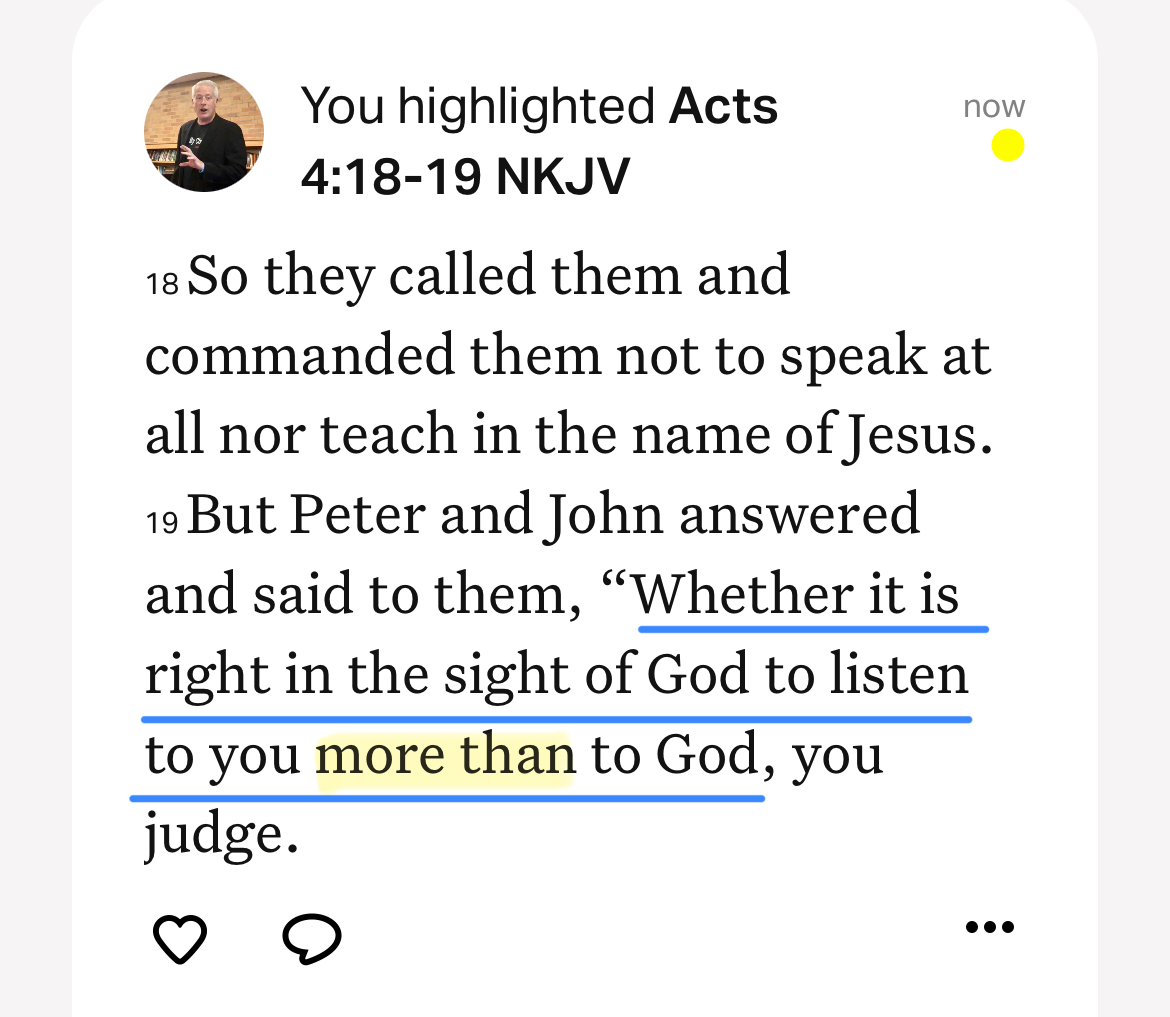
Dr. Henry Halley points out another way the eternal trumps the temporal: “There is no authority apart from God. When human authority rejects God’s authority, it becomes twisted and loses its right to demand compliance (Acts 4:19-20, 5:29). God’s people are responsible to obey the government because it has been set in place by God [Romans 13:1-2; Daniel 4:17], but when government directs against God’s will, the Giver of all authority has the higher claim on our allegiance. We must resist any command that is against God’s will (Exodus 1; Daniel 3; Hebrews 11:23).”
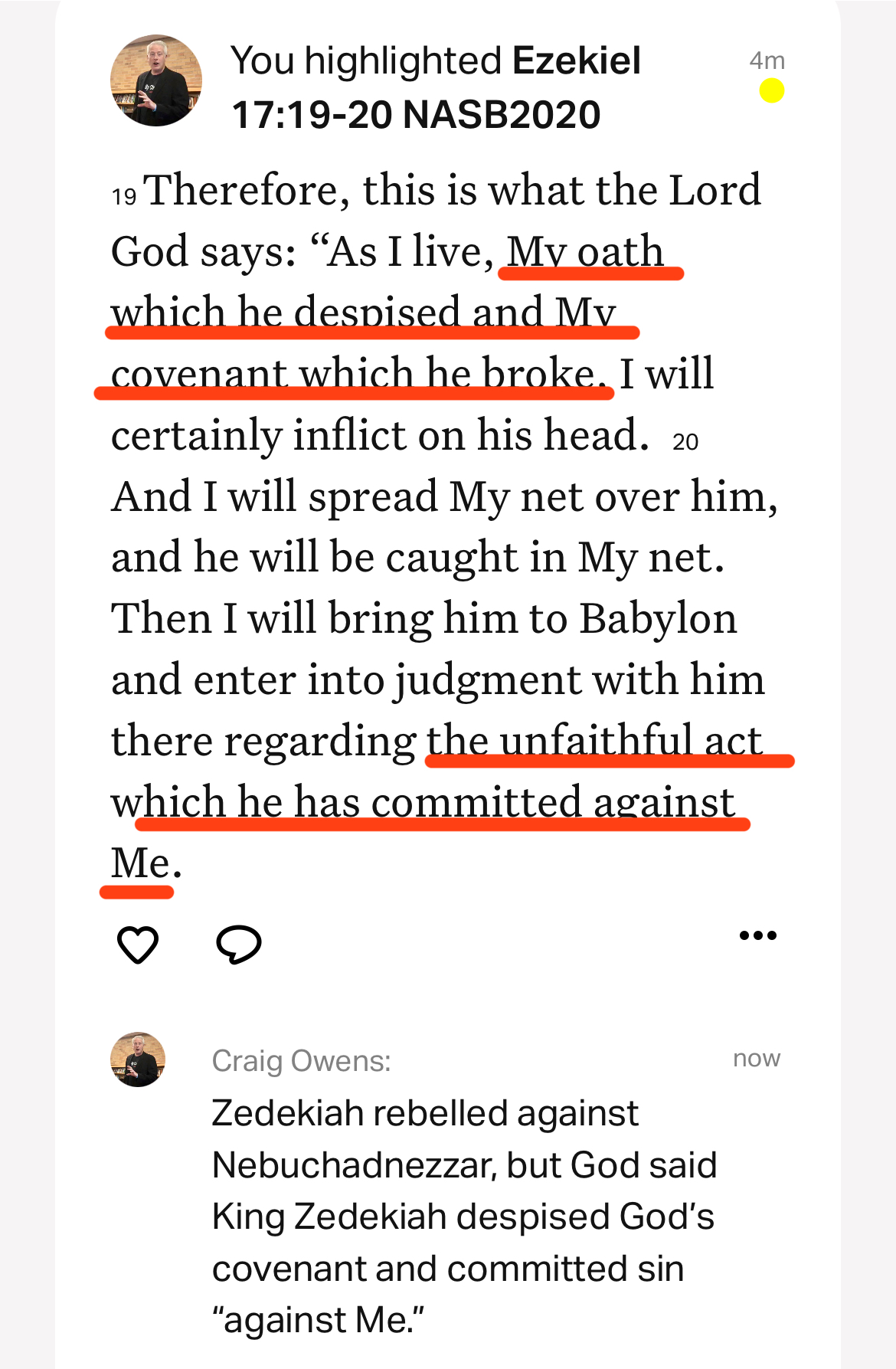
Therefore, this is what the Lord God says: “As I live, My oath which he [Zedekiah] despised and My covenant which he broke, I will certainly inflict on his head. And I will spread My net over him, and he will be caught in My net. Then I will bring him to Babylon and enter into judgment with him there regarding the unfaithful act which he has committed against Me. (Ezekiel 17:19-20)
Zedekiah rebelled against Nebuchadnezzar, but God said King Zedekiah despised God’s covenant and committed sin “against Me.”
All governing authorities on earth are God’s servants. God used Babylon as His means of punishing Judah for her sin. When King Zedekiah conspires with Pharaoh to attack Nebuchadnezzar, God says Zedekiah is really rebelling against God Himself!
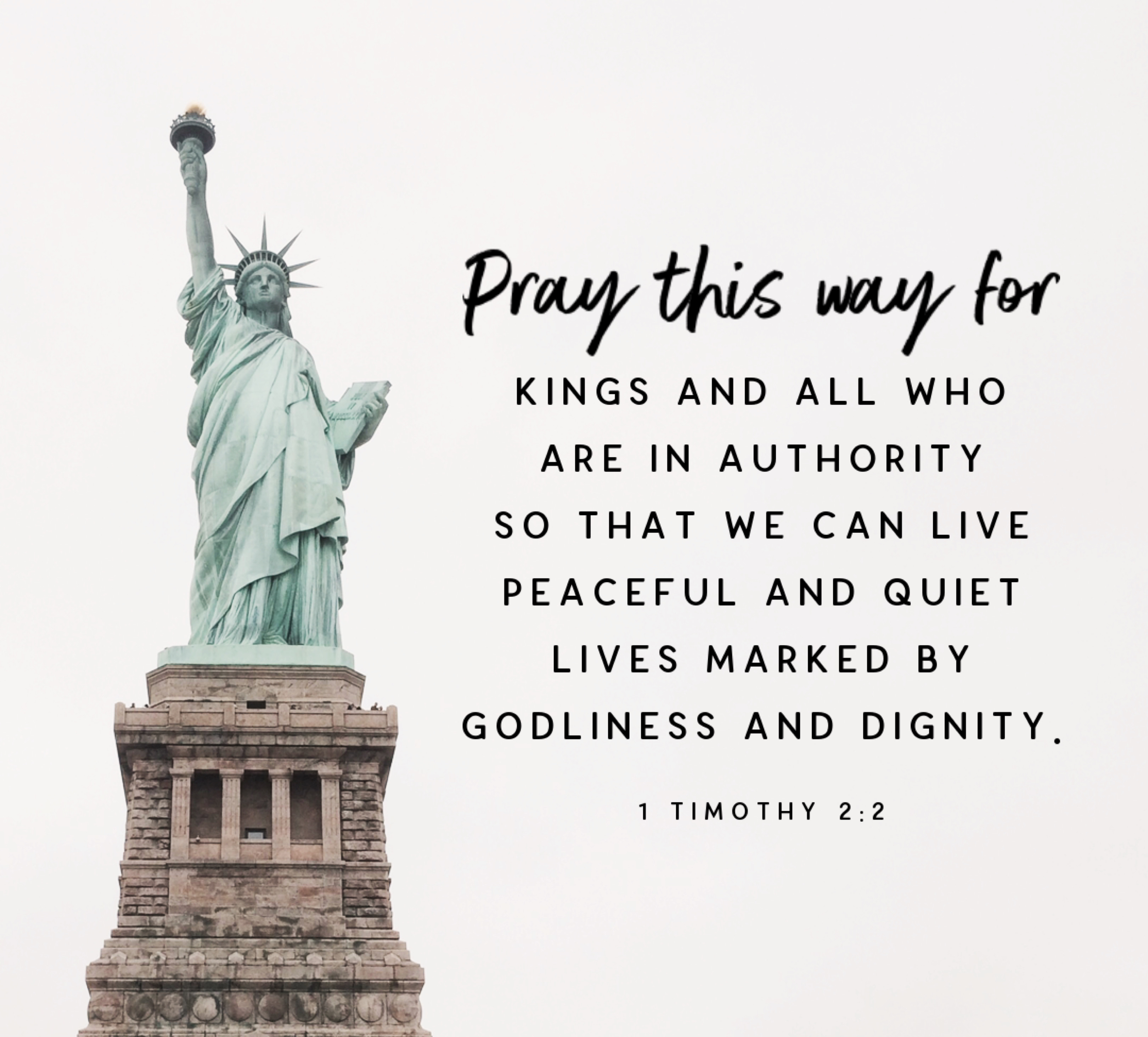
Christians are called to pray for those in governmental leadership. To dig a little deeper on this topic, check out two previous blog posts and sermon videos:



 Does this sound familiar? “We live in difficult times. Pray for this nation. We have all the marks of a declining civilization. Pray that the God who hears and answers the prayers of His people might intervene on behalf of our country and bring a spiritual renewal that might save the nation.”


 Craig T. Owens