Links & Quotes

God made you uniquely YOU on purpose. So you can ask Him to show you why He put you together as He did—with all of the gifts that make you YOU. Please subscribe to my YouTube channel.

In my Halley’s Study Bible, I read this commentary on Matthew 24-25—

“It is best not to be too dogmatic about the events surrounding [Christ’s] second coming. But if language is a vehicle of thought at all, it certainly takes a good deal of explaining and interpreting to make anything else out of Jesus’ words than that He Himself looked forward to His coming again as a definite historical event in which He will personally and literally appear to gather to Himself and to eternal glory those who have been redeemed by His blood.

“And it is best not to cloud the hope of His coming with too detailed a theory as to what is going to happen when He comes. Some people may be disappointed if Jesus does not follow the schedule they have mapped out for Him.”

“The future doesn’t belong to the fainthearted; it belongs to the brave.” —Ronald Reagan

“We are not called to punish the people for whom Jesus was already punished.” —Kevin Berry

Daniel B. Wallace, a New Testament professor at Dallas Theological Seminary, wrote, “If you could stack up all handwritten manuscripts of the New Testament—Greek, Syriac, Latin, Coptic, all languages—how tall would the stack be? … I have said in many lectures that it would be the equivalent of c. 4 & 1/2 Empire State Buildings stacked on top of each other. How did I come up with that number?” Check out his post to read how he calculated this astounding number. This is just another link in the chain of evidence for the historicity of the Bible.

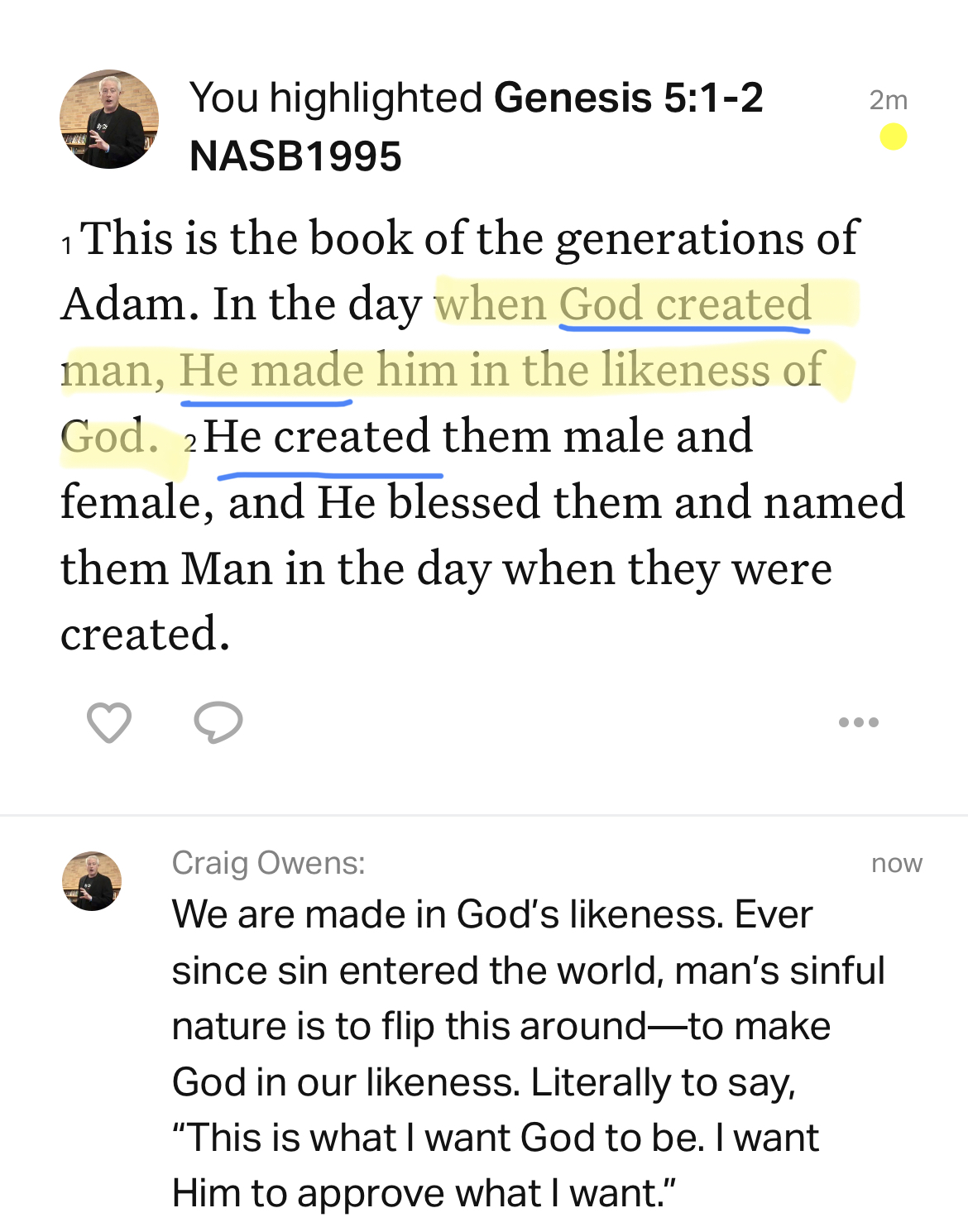
I shared this commentary on YouVersion this week: We are made in God’s likeness. Ever since sin entered the world, man’s sinful nature is to flip this around—to make God in our likeness. Literally to say, “This is what I want God to be. I want Him to approve what I want.”

“Pure humor is the most difficult of all of comedy. Late night humor is funny because it is mean. It is relatively easy to be crude, cynical, and sarcastic. It comes naturally to our fallen natures to criticize, tease, mock, and scoff. It’s much harder to make people laugh by lifting others up.” —Dick Brogden, in his book Proverbs: Amplified and Applied, commenting on Proverbs 1:22

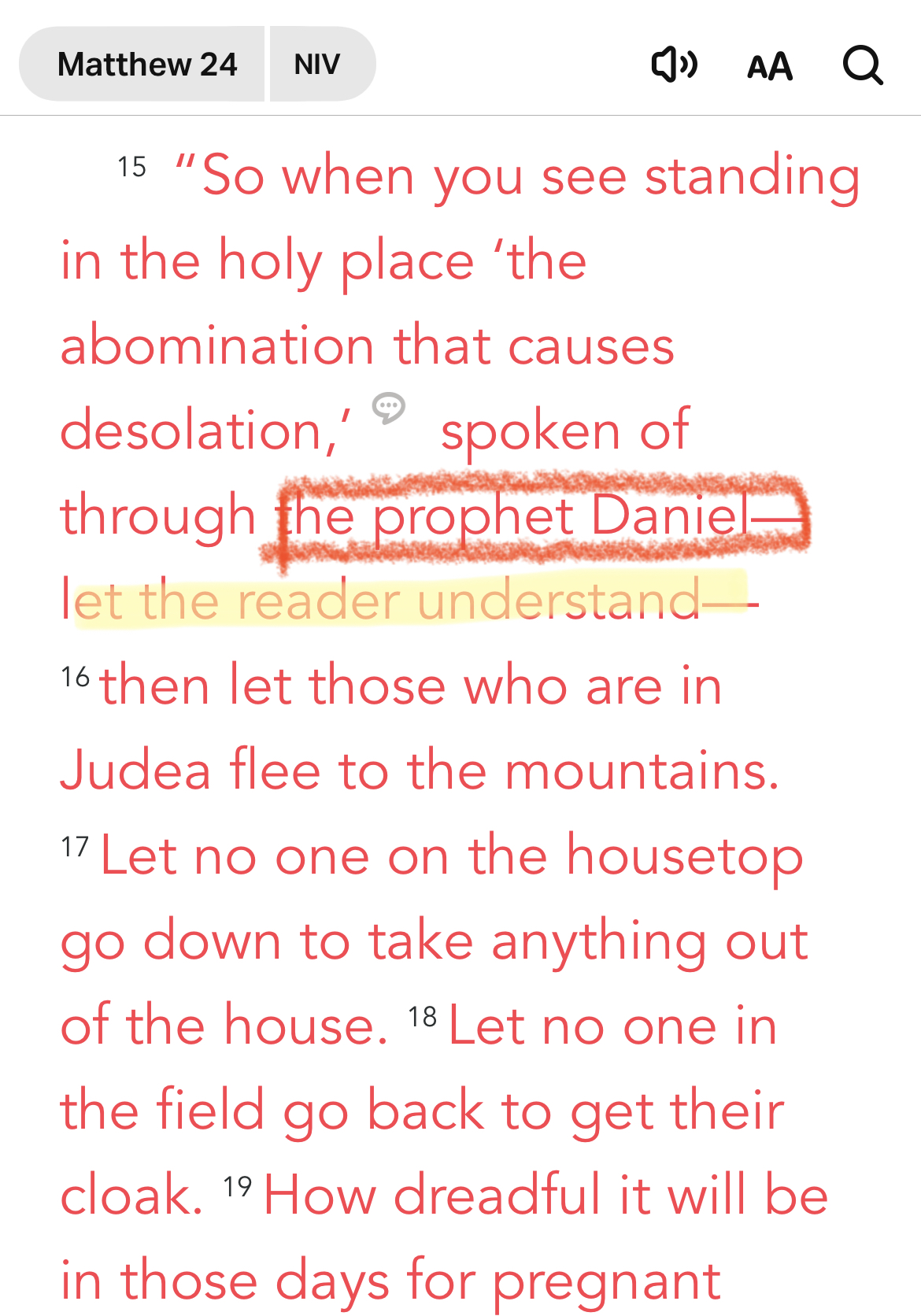
“Let The Reader Understand”

Listen to the podcast of this post by clicking on the player below, and you can also subscribe on AppleSpotify, or Audible. 

When Jesus said, “Let the reader understand,” He was saying He wants us to be able to understand and apply every Scripture we read. Check out this teaching video—

Here are the resources I mentioned in this video:

And although I didn’t mention it in the video, you can check out five different kinds of Bible studies I have shared here and here. 

I’m excited to hear about your Bible study journey. If you have questions or other resources to share, please get in touch with me or leave a comment below. 

►► Would you please prayerfully consider supporting this ministry? My Patreon supporters get behind-the-scenes access to exclusive materials. ◀︎◀︎

How To Honor Our King

Listen to the podcast of this post by clicking on the player below, and you can also subscribe on AppleSpotify, or Audible. 

Merry Christmas! 

When the Magi came to Jesus at His first advent they brought gifts. Isaiah also prophesies all peoples bringing gifts at the second advent of Jesus. Have you ever wondered what gift is appropriate for the King of kings? Fortunately, the Bible tells us the gift He is happy to receive from you! 

Check out the Bible verses I mention: 

If you’ve missed any of the messages in this Advent series, you can find a list of all of those messages by clicking here. 

►► Would you please prayerfully consider supporting this ministry? My Patreon supporters get behind-the-scenes access to exclusive materials. ◀︎◀︎
Verifiable Facts About The Birth Of Jesus

Listen to the podcast of this post by clicking on the player below, and you can also subscribe on AppleSpotify, or Audible. 

Check out the resources I mention in this video:

►► Would you please prayerfully consider supporting this ministry? My Patreon supporters get behind-the-scenes access to exclusive materials. ◀︎◀︎

Elevated To Serve

Listen to the podcast of this post by clicking on the player below, and you can also subscribe on AppleSpotify, or Audible. 

Check out the resources I mention in this video:

  • The story of the 10 disciples being upset with the other two disciples is found in Matthew 20:20-28 
  • The story of Jesus taking on the position of a servant to wash the disciples’ feet is found in John 13:3-5, 14-17 
  • The chapter I quote from in my book is called ‘The Wrong Ladder’
  • Shepherd Leadership: The Metrics That Really Matter is available in print or ebook, and in audiobook through either Audible or Apple

►► Would you please prayerfully consider supporting this ministry? My Patreon supporters get behind-the-scenes access to exclusive materials. ◀︎◀︎
The Amazement Of Jesus

Listen to the podcast of this post by clicking on the player below, and you can also subscribe on AppleSpotify, or Audible. 

The word amazement shows up numerous times throughout the Gospels. As you might expect, it’s almost always associated with something Jesus said or did. He would heal someone, calm a storm, silence His detractors, or teach persuasively, and the people stood amazed! 

But there are two instances where Jesus Himself is amazed.

The first time is when a Roman centurion sends a message to Jesus by way of a servant. This centurion asks Jesus to speak a word of healing over another one of his servants. He says that just a word from Jesus will be sufficient, and he doesn’t need Jesus to personally come to his house. 

When Jesus heard this, He was amazed. “Turning to those who were following Him, He said, ‘I tell you the truth, I haven’t seen faith like this in all Israel!’” (Matthew 8:10; Luke 7:9). 

Because of this centurion’s faith, his servant was immediately healed! 

The second time Jesus was amazed was when He was visiting His hometown. There He discovered people with whom He had grown up that refused to believe that He was who He claimed to be. As a result, Jesus “was amazed at their unbelief” (Mark 6:6). 

So either Jesus is amazed at our faith in Him, or He is amazed at our unbelief in Him. When I have faith in Jesus—when I believe He is who He says He is, and that He is willing to do what He says He will do—He is amazed at my faith and can do miracles on my behalf. But when I doubt, when I allow my unbelief to seize my heart, I exclude myself from the miracles He wants to do.

Jesus will be amazed at you. Will He be amazed at your faith in Him? Or will He be amazed at your unbelief in His power that is waiting to be released on your behalf? I pray that Jesus will always be amazed at our faith in Him.

►► Would you please prayerfully consider supporting this ministry? My Patreon supporters get behind-the-scenes access to exclusive materials. ◀︎◀︎
The Prince Of Peace

Listen to the podcast of this post by clicking on the player below, and you can also subscribe on AppleSpotify, or Audible. 

Last week we saw the dark times in which Micah lived as he prophesied the advent of the Messiah. Israel was both surrounded by enemies as well as lots of practices within their borders that were heartbreaking to God. Many times, our lives can feel the same way: enemies of God all around us and our own turmoil and doubts inside our hearts and minds.      

In this dark, hopeless time, the Messiah came as our Great Shepherd. Take a look at what this Shepherd brings us:

He will stand and shepherd His flock in the strength of the Lord, in the majesty of the name of the Lord His God. And they will live securely, for then His greatness will reach to the ends of the Earth. And He will be their peace. (Micah 5:4-5)

We see this idea of Jesus our Great Shepherd bringing peace to our hearts in the New Testament as well: 

May the God of peace, who through the blood of the eternal covenant brought back from the dead our Lord Jesus, that Great Shepherd of the sheep, equip you with everything good for doing His will, and may He work in us what is pleasing to Him, through Jesus Christ, to Whom be glory for ever and ever. Amen. (Hebrews 13:20-21) 

This peace is also implied in Psalm 23:1 when David wrote, “The Lord is my Shepherd, I shall not be in want.” That phrase “I shall not be in want” really captures the definition of peace. 

The Hebrew word for peace is shalom. An easy-to-remember definition of shalom is “nothing lost, nothing missing.” Our Great Shepherd makes sure nothing is lost or missing that would cause us anxiety or doubt, so we can have total peace—we can have shalom!

Jesus said the devil’s agenda was for everything to be lost or missing—“the thief comes only to steal and kill and destroy”—but our Great Shepherd’s agenda is for there to be nothing lost or missing—“I have come that they may have life, and have it to the full” (John 10:10). 

Isaiah, who was prophesying at the same time as Micah, sounded a similar note:

Therefore the Lord Himself will give you a sign: The virgin will conceive and give birth to a Son, and will call Him Immanuel. … And He will be called Wonderful Counselor, Mighty God, Everlasting Father, Prince of Peace. (Isaiah 7:14, 9:6) 

When this Great Shepherd was born in Bethlehem, the shepherds in the field were the first to hear the good news. Notice what the angels announced: “Glory to God in the highest heaven, and on earth peace to those on whom His favor rests” (Luke 2:14). 

Who has God’s favor? Those with faith in Him: “Without faith it is impossible to please God” (Hebrews 11:6). So those with faith in God have God’s favor. 

Faith in what? In all that Jesus purchased for us by His blood shed on the Cross: “Therefore, since we have been justified through faith, we have peace with God through our Lord Jesus Christ” (Romans 5:1). 

Check this out: The root word of shalom is a word that means, “It is finished.” These are the exact same words our Price of Peace announced from the Cross! Jesus finished the work that brings us peace from the turmoil and anxiety of sin! 

Faith comes from believing that God has made the promise of peace, that God has fulfilled the promise of peace through Jesus, and that God is bringing us to His eternal peace. So now our lives of peace in a world of turmoil can serve as a testimony to others. 

Jesus called His followers to be peacemakers (Matthew 5:9) but we cannot do this while we are experiencing anxiety or doubts. To be peacemakers we must be full of peace because of our relationship with the Prince of Peace, who has ensured that nothing is lost and nothing is missing! 

If you feel anxious, remember that Bethlehem is your proof that the Prince of Peace has come to remove doubts, anxiety, fear, and inner turmoil. Let every pang of anxiety be immediately a call to run to the Prince of Peace. He has paid an incalculable price to purchase your peace, so don’t leave this gift unopened and unused. A dark, anxious world is looking for peace. Know the author of shalom so that you can introduce others to this Prince of Peace. 

If you’ve missed any of the message in this series, please check them out by clicking here. 

►► Would you please prayerfully consider supporting this ministry? My Patreon supporters get behind-the-scenes access to exclusive materials. ◀︎◀︎
Forgive Like You’ve Been Forgiven

Listen to the podcast of this post by clicking on the player below, and you can also subscribe on AppleSpotify, or Audible. 

Jesus said that the devil’s agenda was to steal, kill, and destroy (John 10:10). We see this on full display in the aftermath of the first sin in the way relationships humans had with each other changed. 

God said to Eve, “Your desire will be for your husband, and he will rule over you” (Genesis 3:16). Dr. Henry Halley commented, “The last two lines of this verse could be paraphrased, ‘You will now have a tendency to try to dominate your husband and he will have the tendency to act as a tyrant.’” And to Adam, God said that he would now have to work harder than ever before to harvest the food he needed for survival, which undoubtedly caused stress in his relationship with Eve. In the very next chapter, the strained relationship between Cain and Able resulted in the first homicide (Genesis 3:17-19, 4:1-8). 

In these relationships, intimacy was stolen, closeness was killed, and life was destroyed. 

An irreplaceable tool for avoiding this heartache and destruction that sin causes in our relationships is forgiveness. 

Peter asked Jesus, “How many times should I forgive my brother or sister who sins against me? Up to seven times?” (Matthew 18:21). In reply, Jesus told a story about a man who owed the equivalent of 20 years of a day laborer’s wages and a man who owed about three months of a day laborer’s wages. The first man who owed so much was forgiven entirely of his debt, but he wouldn’t forgive the paltry amount that was owed to him by the second man. 

To the forgiven but unforgiving man, Jesus said, “Shouldn’t you have had mercy on your fellow servant just as I had on you?” (see Matthew 18:22-35). 

That should be our standard: Not how others treat me, but how God has treated me! Not how much others owe me, but how much God has forgiven me!

Do I want God to put a quota on how many times I can be forgiven? Do I want there to be a limit on how big of an offense God will forgive in me?

Of course not!

That’s my standard. I must show the same mercy to others as I have been shown by God. 

If my forgiven sins are forgotten sins (and they are), then I need to treat my brother and sister the same way. This is why Jesus told Peter to stop counting the number of offenses. We are to treat every offense as though it was the first and only offense.

The man who owed so much money asked for more time to repay his debt. But the master did more than that: He forgave the debt—he wiped it off the books completely, as though it had never happened! 

When God forgives our sin, He separates our sin from us as far as the east is from the west. He keeps no record of the offense ever having occurred (Psalm 103:10-12). 

This is to be our standard too. We are to forgive others as God has forgiven us. Forgiveness will restore intimacy, closeness, and life to our relationships. 

This is difficult to do. As Peter pointed out, a brother or sister—someone close to his heart—had sinned against him. But this is why Jesus taught us to pray, “Forgive us our sins, as we have forgiven those who sin against us” (Matthew 6:12). Or as Eugene Peterson paraphrases that verse in The Message, “Keep us forgiven with You and forgiving others.” 

May the Holy Spirit help us in this important work of ongoing, complete, and restoring forgiveness!

►► Would you please prayerfully consider supporting this ministry? My Patreon supporters get behind-the-scenes access to exclusive materials. ◀︎◀︎

Amazed At Jesus (Or Not)

Listen to the podcast of this post by clicking on the player below, and you can also subscribe on AppleSpotify, or Audible. 

The word “amazed” shows up numerous times throughout the Gospels, almost always associated with something Jesus said or did. He would heal someone, calm a storm, silence His detractors, or teach persuasively. And the people marveled! 

But there are two instances where Jesus Himself is amazed, where the Bible says He marveled at what someone said.

The first is when a centurion asked Jesus for help, but said he didn’t need Jesus to be personally present. He told Jesus that just a word from Him would be more than enough to heal a sick servant. Jesus was amazed at this man’s faith, and as a result, the servant was healed (Matthew 8:10; Luke 7:9)! 

The second time that Jesus was amazed was when He was visiting His hometown and the people with whom He grew up didn’t believe He was who He claimed to be. As a result, Jesus was amazed and the Bible says He was unable to do many miracles there (Mark 6:6). How sad! 

It’s still true today. Either Jesus will be amazed at our faith or He will be amazed at our unbelief. When we have faith in Him—when we stand amazed and in awe and in expectation of His power—He is amazed and can perform miracles. But when we push Jesus away and say, “We can take care of this ourselves,” Jesus is also amazed. But this type of amazement results in Jesus being unable to unleash His miraculous power on our behalf. 

Let’s learn this amazing lesson, and always stand amazed at who Jesus is and what Jesus can do. When we are amazed, and our faith grows stronger, Jesus will be amazed at our faith and will move on our behalf in amazing ways! 

►► Would you please prayerfully consider supporting this ministry? My Patreon supporters get behind-the-scenes access to exclusive materials. ◀︎◀︎
Attitude Adjustment

Listen to the podcast of this post by clicking on the player below, and you can also subscribe on AppleSpotify, or Audible. 

Imagine if 700 years before you were born there was a prophecy given about you (Matthew 3:3). Or if on the day of your birth your father said, “And you, my child, will be called a prophet of the Most High; you will go on before the Lord to prepare the way for Him” (Luke 1:76). 

This was John the Baptist.

With these kinds of announcements and the stamp of approval from God Himself, it’s really quite astounding how humble John remained:

  • “After me comes One Who is more powerful than I, Whose sandals I am not worthy to carry” (Matthew 3:11). 
  • “[Jesus] must increase, but I must decrease” (John 3:30). 

The confidence that he was God’s man for the hour gave John boldness to speak truth to religious leaders, wealthy people, and Roman soldiers (Matthew 3:7-12; Luke 3:7-20). Yet his humility was almost his undoing. 

John preached boldly, fulfilling the prophecies that were made about him. But when Jesus came to him to be baptized, John’s humility caused him to defer initially. Then Jesus reminded him that His baptism was necessary “to fulfill all righteousness. Then John consented” (Matthew 3:13-15). 

Whether I am lacking confidence to speak or lead boldly, or lacking humility to let someone else take the lead, I need to return to the Word of God—just as John did. Both his confidence and his humility were balanced by words spoken over him by God. So it must be for you and me too. 

Confidence without humility or humility without confidence can trip me up and cause me to miss out on all that God needs me to do. So my daily prayer must be: Holy Spirit, may I be sensitive to every correction and adjustment You need to make in me. Illuminate the Scriptures that I need to apply to my life that will keep me in a healthy, balanced place. 

I wrote about this tension between confidence and humility in my book Shepherd Leadership. This was also a topic of conversation in two interviews I did, which you can find here and here. Healthy leaders need the proper balance of confidence and humility to keep their leadership in a place that God can use powerfully. 

►► Would you please prayerfully consider supporting this ministry? My Patreon supporters get behind-the-scenes access to exclusive materials. ◀︎◀︎