What’s In A Name?

Leah became pregnant and gave birth to a son… (Genesis 29:32). 

Jesus said that ALL the Scripture pointed to Him (John 5:39). That means even the various names of people in the Scripture give us some insight into the nature of Jesus. 

Consider Jacob and his sons, who become the fathers of the tribes of the nation of Israel. Jacob the deceiver is transformed into Israel the guileless, and the names of his sons point to what Jesus does to transform all of us into His righteous brothers and sisters. 

[Check out the links posted below to read all the Scripture references.]

Reuben—God sees my misery and sends His Son (Genesis 29:32; John 3:16). 

Simeon—God sent His Son when I was unlovable (Genesis 29:33; Romans 5:6-8). 

Levi—after I am saved from my sins, I am joined to God (Genesis 29:34; Ephesians 2:1-5).

Judah—my salvation brings praise to God (Genesis 29:35; John 15:8).

Dan—God has vindicated me in Jesus (Genesis 30:6; John 8:11).

Naphtali—Christ’s righteousness has given me victory over my struggles (Genesis 30:8; Romans 8:1; 1 Corinthians 15:54-56). 

Gad—God’s favor now advances toward me like an unstoppable troop (Genesis 30:11; Romans 8:31-39). 

Asher—I am now able to enjoy God’s happiness (Genesis 30:13; Matthew 25:21, 34). 

Issachar—God IS my reward (Genesis 30:18; Revelation 3:20-21).

Zebulun—my Husband (Jesus) honors me (Genesis 30:20; Ephesians 5:22-23; Hebrews 2:11).

Joseph—God has taken away my disgrace and added His blessing (Genesis 30:24; Romans 8:1, 32).

Manasseh—God has made me forget my past (Genesis 41:51; Psalm 103:12).

Ephraim—God has made me abundantly fruitful (Genesis 41:52; 1 Peter 2:9-10).

Benjamin—I am God’s son (Genesis 35:18; Ephesians 2:6)! 

God has done ALL this—and more!—through Jesus! 

When you read the Bible, don’t rush through it. Slow down. Meditate on it. Soak in it. And then see how the Holy Spirit will illuminate truth to you. 

[Please check out the Bible references I’ve listed above for yourself. All of the Genesis references are here, and all of the other references are here.]
God Keeps His Word

…as He had said… (Genesis 21:1-7).

This thought—and even the phrase itself—permeates the Bible. From the very beginning of Time itself, whatever God says—happens!

His word is His bond: What He had promised (v. 1b). There are no loopholes, no equivocations. When God says it, it is signed, sealed, delivered!

When is His word accomplished? From the moment He says it. His word cannot be altered nor delayed. We simply wait for its fulfillment: At the very time God had promised (v. 2).

This also means that I must obey what God says. If His word is immutable, my faith and obedience must be just as steadfast. Just like Abraham: Abraham circumcised him, as God commanded him (v. 4).

Jesus said that the Holy Spirit would help remind us of everything God has said. The same Word that tells us God’s promises is also the same Word that sparks the faith to believe His Word (Romans 10:17). 

Get God’s Word.
Believe He will fulfill it in His timing. 
Obey everything He says.
Laugh in joy when you see His word accomplished: God has brought me laughter (v. 6)! 

Thursdays With Spurgeon—Our Father In Heaven

This is a weekly series with things I’m reading and pondering from Charles Spurgeon. You can read the original seed thought here, or type “Thursdays With Spurgeon” in the search box to read more entries.

Our Father In Heaven

     I believe that this prayer [“Our Father in heaven, hallowed be Your name”] was never intended for universal use. Jesus Christ taught it not to all men, but to His disciples, and it is a prayer adopted only to those who are the possessors of grace and are truly converted. In the lips of an ungodly man, it is entirely out of place. Does not one say, “You are of your father the devil, and the desires of your father you want to do” (John 8:44)? Why then should you mock God by saying, “Our Father in heaven”? 

     Let none despise this prayer. It is matchless, and if we must have forms of prayer, let us have this first, foremost, and chief. But let none think that Christ would tie His disciples to the constant and only use of this. Let us rather draw near to the throne of heavenly grace with boldness, as children coming to a father, and let us tell forth our wants and our sorrows in the language that the Holy Spirit teaches us. …

     If we say, “Our Father in heaven,” we must remember that our being sons involves the duty of obedience to God. When I say “my Father,” it is not for me to rise up and go in rebellion against His wishes. If He is my Father, let me note His commands and let me reverentially obey. If He has said, “Do this,” let me do it, not because I dread Him, but because I love Him. And if He forbids me to do anything, let me avoid it. …

     We are one in the family of God and no one is ahead of the other. One may have more grace than another, but God does not love one more than another. One may be an older child than another, but he is not more a child. One may do mightier works and may bring more glory to his Father, but he whose name is the least in the kingdom of heaven is as much the child of God as he who stands among the king’s mighty men. Let this cheer and comfort us when we draw near to God and say, “Our Father in heaven.” … 

     And after you have prayed that, rise up and act it. Say not “our Father” and then look upon your brethren with a sneer or frown. I beseech you, love like a brother and act like a brother. Help the needy. Cheer these sick. Comfort the fainthearted. Go about doing good; minister to the suffering people of God wherever you find them. Let the world take notice of you—that you are when you are on your feet what you are upon your knees—that you are a brother to all the brotherhood of Christ, a brother born for adversity, like your Master Himself.

From The Fatherhood of God

This kind of prayer speaks of…

  • access
  • responsibility
  • power
  • love
  • provision
  • assurance
  • protection
  • acceptance
  • joy
  • and more blessings than we can ever enumerate! 

What a blessing to pray to a Heavenly Father who is also Holy God.

Praying The Word

The more consistently we pray on the ordinary days, the more prepared we will be to pray on the extraordinary days. But some people say, “I don’t know how to pray” or “I don’t know what to ask for.” That ignorance hinders a lot of people—even someone like Peter who not only spent huge amounts of time with Jesus but was with Him when He was in one of His most glorious states (Luke 9:28-33). As Jesus is transfigured before his very eyes, both Mark and Luke say this about the statement Peter blurted out: He did not know what he was saying. 

While Peter was still speaking from his ignorance, God the Father gave him (and us) some invaluable advice: This is My Son, whom I have chosen; listen to Him. 

So when the disciples ask Jesus to teach them to pray, Jesus didn’t reprimand them for asking. In fact, He told us how much He wants us to pray and how much His Father wants to answer our prayers (Luke 11:1-13; 12:32).  

There is a consistent theme about the “name” of God that permeates all that Jesus teaches about prayer. We see Him instructing us to address our prayer to our “Heavenly Father” and to pray “in My name” (Luke 11:2; John 14:13-14; 15:7; 16:23-24). This doesn’t mean that simply saying, “Dear Heavenly Father” at the beginning of a prayer or “in the name of Jesus, amen” at the end of a prayer makes our prayer magical. 

It’s about praying in the character of Jesus, directing our prayer to the only One who can help us, all with the guidance of the Holy Spirit. 

To help us do this, we have an invaluable prayer resource preserved for us in the pages of the Bible. The Scriptures are inspired by the Holy Spirit—the same Holy Spirit that lives in a Christian and helps the Christian pray according to God’s will. The same Spirit who inspired the Word can illuminate the Word to us, so we need to get into the Word and let the Holy Spirit get the Word into us! 

No matter what you’re going through, you can apply God’s Word to your situation. Look through the prayers of the Psalms, read the prayers of other great saints throughout the Scriptures, check out the prayers the apostles prayed in the New Testament, and even read the prayers of Jesus Himself. Then make those prayers your prayers!

If you let the Holy Spirit show you how the Bible applies to your situation, you will NEVER again be at a loss of how to pray to your Heavenly Father in the name of Jesus!

Join me this Sunday as we continue to learn how to to be ready to pray by making our plan to pray. 

Our Prayer Coach

I love football! 

The plays that the quarterback calls in the huddle are very creative. It may sound something like this: “soultrain alert 13 trap on 1.” Then after the team breaks the huddle with the play that they just know will be successful, the quarterback may look over the other team’s defense and callout something like, “check” or “sally” or “Omaha.” This is called an “audible” and it’s communicating to the team how they are now going to modify the play that they just called. The quarterback calls this audible because it appears to him that the defense may know what sort of play they were planning to run. 

The teams that can adjust better on-the-fly—or call audibles—usually win the game. 

None of this happens without lots of practice! Practice builds good habits. Practice helps teams learn from their mistakes and develop even better habits. All of this practicing also requires a good coach overseeing the process, and individual team members who are willing to submit to the coach’s direction and correction. 

Have you noticed that there are some Christians who “audible” well? Unexpected things pop up that seem to throw many people off their game plan, but these Christians seem to adapt so easily. Why is that? It’s definitely not because they are wired that way, or have a higher spiritual IQ, or they can think faster. It’s because they’ve practiced good habits, they’ve learned from past experiences which have developed better “audibling” habits, all under the guidance of a perfect Coach. 

Jesus told us about the amazing prayers that we would be able to pray, and how the Holy Spirit can be our perfect Coach in this process (John 14:12-17, 26; 16:13-15). 

There are some incredible things that happen when we pray consistently, when we pray boldly, and when we pray in the character of Jesus. 

John Piper asks, “Why do God’s children so often fail to have consistent habits of happy, fruitful prayer?” He answers his own question like this: “Unless I’m badly mistaken, one of the reasons is not so much that we don’t want to, but that we don’t plan to.” 

Successful football teams don’t simply show up on game day and compete successfully. They plan to be successful. They practice and study the coach’s game plan so that they can be ready to audible when necessary. So too for Christians—we can’t just show up for spiritual battle and expect to be successful. We must also practice, and study the game plan laid out in the Bible, and listen to the Holy Spirit as He coaches us. That’s the only way we can successfully handle all that life and even the devil throws at us. 

Over the next couple of weeks, I’m going to be sharing some hindrances that I see that can derail our practice of prayer. In the meantime, I want to challenge you—as I’ve challenged myself personally—to think on three questions:

  1. Do I really want to pray effectively? 
  2. Am I willing to put in the energy necessary to pray this way?
  3. Am I willing to let the Holy Spirit coach and discipline me in my prayer practice? 

If you can, please join me at Calvary Assembly of God on Sunday as we continue our series called Prayer Plan. 

Thursdays With Spurgeon—Christ Came On Purpose

This is a weekly series with things I’m reading and pondering from Charles Spurgeon. You can read the original seed thought here, or type “Thursdays With Spurgeon” in the search box to read more entries.

Christ Came On Purpose

     This heavenly knowledge is not given to us for its own sake alone. Even the high and blessed revelation of the righteous Father is not made to us that we may know it and end in knowing. Our Lord says, “I have declared to them Your name, and will declare it, that the love with which You have loved Me may be in them, and I in them” [John 17:24-26]. The objective of the knowledge bestowed upon us is the infusion of a love unrivaled in value and extraordinary to the last degree! … 

     Therefore does Christ declare the blessed name of the righteous Father, in order that it may come home to you with an unconquerable power that the Father loves you and loves you beyond conception, seeing that not even His dear Son was so loved as to be spared, but He must die that you might live and that the justice of God might be satisfied on your account! … 

     Christ has come on purpose to declare the name of God that the love of God may be perceived by us, its power felt, its glory recognized, its greatness wondered that, its infinitude delighted in. … 

     Now, if you fully know the righteous fatherhood of God, as Christ would have you know it, you will learn that God loved you as He loved His Son. … If He had not loved you as He loved His Son, He would have said to His Son, “Son, you will never leave heaven for that polluted planet. You will never descend to poverty and suffering. You will never have Your hands and feet pierced. You will never be despised and spit upon and put to a cruel death.” But because He loved us as He loved His Son, He gave His Son! …

     Do you try, if you can, to realize this high privilege. It is true, O believer, that God, the infinite Father, takes pleasure in you!

From The Righteous Father Known And Loved

THIS is what we celebrate in remembering Christ’s First Advent! 

THIS is why forgiven sinners can eagerly long for Christ’s Second Advent!

Thursdays With Spurgeon—The Depths Of God’s Love For Us

This is a weekly series with things I’m reading and pondering from Charles Spurgeon. You can read the original seed thought here, or type “Thursdays With Spurgeon” in the search box to read more entries.

The Depths Of God’s Love For Us

I have made You known to them, and will continue to make You known in order that the love You have for Me may be in them and that I Myself may be in them. (John 17:26) 

     Is He not Himself very God of very God? … He declared the righteous Father in His life, for in His life He incarnated truth and grace. Jesus Christ on earth was without sin in thought, in word, and in deed. Point me to a sin He ever committed, inculcated, or excused. Righteousness was about Him as the atmosphere that He breathed. Well did the psalmist say of Him, “You love righteousness and hate wickedness” (Psalm 45:7). And yet what love there was in Him and pity for the wandering sheep! He mingled with sinners and yet was separate from sinners. He touched their diseases and healed them and yet was not defiled by their impurities. He took their infirmities upon Himself and yet in Him, personally, there was no trace of sin. Our Lord was so righteous that you perceived at once that He was not of this world—and yet He was so lovingly human that He was altogether a Man among men. … 

     He was man’s Brother and his physician, his Friend and his Savior! When you want to know the Father’s righteousness and love, read the history of Jesus Christ—no, know the Lord Jesus Himself and you know the Father! … 

     Beloved, when Jesus Christ died, there was a greater display of the righteousness and the fatherhood of God than could have been possible by any other means! Then the mystery was made plain and the depth opened up to its very bottom! O Lord our God, what an abyss of adorable goodness have You thus laid bare before us! … 

     And now, today, it is the business of our Lord to continue to reveal the righteous fatherhood of God, and He does so by the work of His Holy Spirit [John 14:26]. … That Spirit of God working on behalf of Christ is still declaring this among the nations! As the years roll on, He is opening the eyes of the blind and bringing His own chosen, one by one, to behold the glory of God in the face of Jesus Christ! And then they can say, “O righteous Father, I know You and rejoice in You.”

To each one of us who is saved, Jesus is declaring this righteous Father more and more.… I trust that every day we see a little more of the righteous fatherhood of God and will continue to do so, world without end!

From The Righteous Father Known And Loved

May we never, ever come to the end of learning about these depths of love that Jesus revealed in His life, death, and resurrection, and which the Holy Spirit is continuing to impart to us. 

May we add our Amen to the apostle Paul’s prayer: I keep asking that the God of our Lord Jesus Christ, the glorious Father, may give you the Spirit of wisdom and revelation, so that you may know Him better. … I pray that out of His glorious riches He may strengthen you with power through His Spirit in your inner being, so that Christ may dwell in your hearts through faith. And I pray that you, being rooted and established in love, may have power, together with all the Lord’s holy people, to grasp how wide and long and high and deep is the love of Christ, and to know this love that surpasses knowledge—that you may be filled to the measure of all the fullness of God. (Ephesians 1:17; 3:16-19)

What We Can Know

… we know … (1 John 3:16, 19, 24; 4:2, 6, 13; 5:2, 13, 19, 20).

God clearly reveals Himself to us so that it is not a mystery of how to abide with Him. 

The word John uses for “know” in the Greek is ginosko. This is a knowledge through personal, firsthand experience; not knowledge someone told us about secondhand. 

God reveals Himself in Creation, in His law, in the rituals of worship, in our conscience, and in the voice of the prophets. Ultimately—and most unmistakably of all—God reveals Himself in Jesus (John 14:9). 

So here are 8 things we can now know…

  1. We know true love because of the sacrifice of Jesus (3:16; 4:7-10).
  2. We know we have God’s love in us by the way we treat others (3:17-19; 4:11; 4:20-21).
  3. We know our hearts our confident by the inward witness of the Holy Spirit Who assures us that we abide in God and He in us (3:20-24).
  4. We know how to discern deceptive spirits (4:1-6).
  5. We know what it means to be confident on Judgment Day (4:12-19).
  6. We know that loving others fulfills God’s commands (5:1-13).
  7. We know God hears our prayers (5:14-17).
  8. We know that we can be victorious over sin (5:18-21).

WE KNOW!

No doubts, no ambiguity. It’s crystal clear, pure knowledge through Him Who loves us!  

Thursdays With Spurgeon—Righteous Father

This is a weekly series with things I’m reading and pondering from Charles Spurgeon. You can read the original seed thought here, or type “Thursdays With Spurgeon” in the search box to read more entries.

Righteous Father

O righteous Father! The world has not known You, but I have known You; and these have known that You sent Me. And I have declared to them Your name, and will declare it, that the love with which You loved Me may be in them, and I in them. (John 17:25-26)

     In the sublime transactions of Calvary, God manifests all the love of a tender Father’s heart and all the justice of an impartial Ruler’s sword! … 

     When we see in a man unconditional submission to the justice of God and yet a trustful hopefulness in His boundless love, we may be sure that he is a renewed man. He cries, “You are righteous, O my God, and if You destroy me, I can say nothing. But, Father, You will not destroy me, for I perceive that You are love. Though I see You grasp your sword of fire, yet do I trust You, for I still believe You to be gracious and loving.” … 

     They would not have come to know the righteous Father unless there had been a change in their character worked by the Spirit of God, and that once done they know Him as of necessity. … To know the only true God, and Jesus Christ whom He has sent, is the climax, the essence, the sum total of wisdom! … 

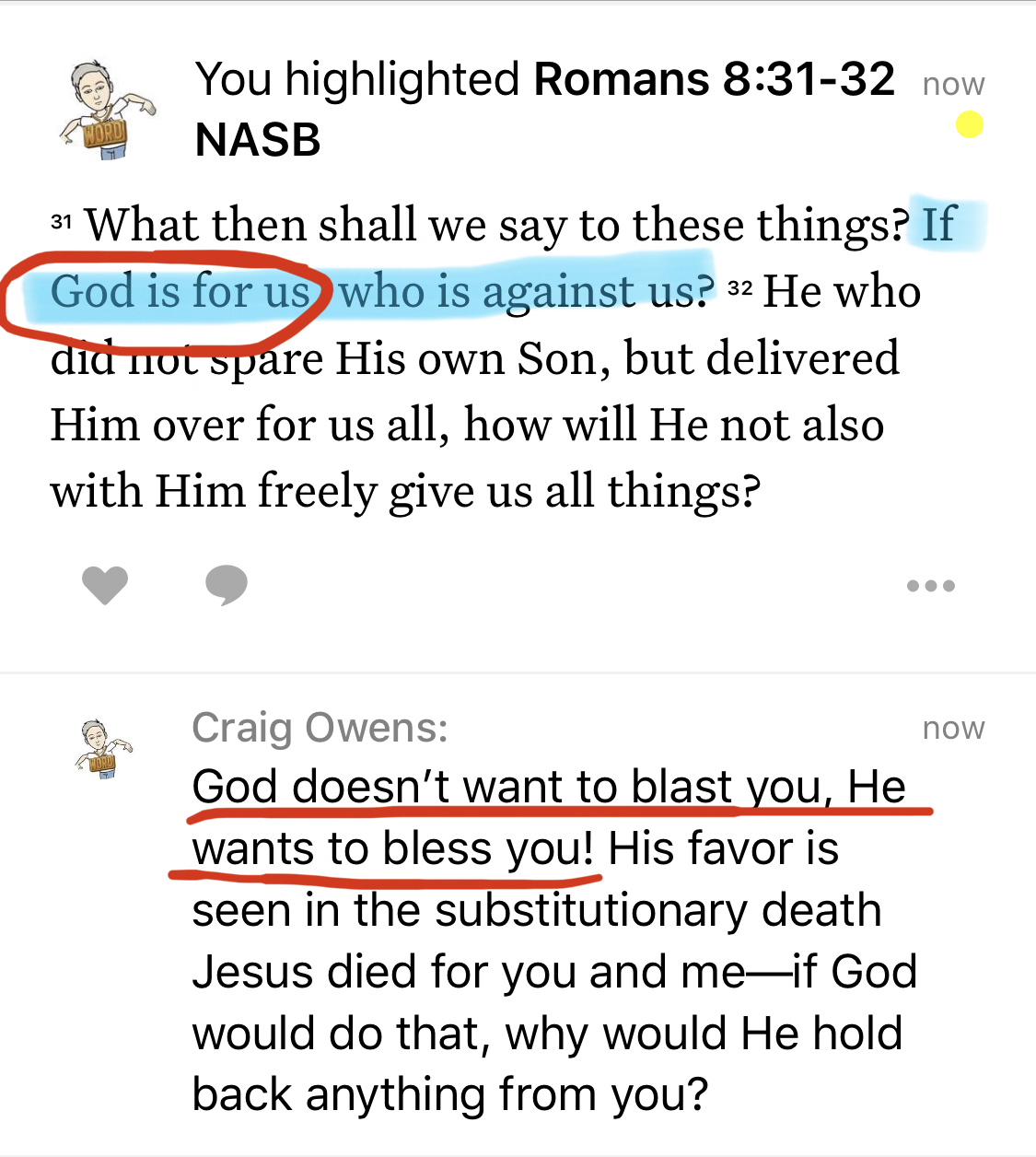
     In Christ Jesus, God is just and yet our Justifier! We are so safe that we begin to challenge opposition and cry, “Who shall bring a charge against God’s elect?” (Romans 8:33). We take up a triumphant note and sing with exceeding joy, “If God is for us, who can be against us?” (Romans 8:31). If God is righteous and yet my Father, then I am saved and saved in such a way that the attributes of God are glorified by my salvation, and therefore I am most securely and certainly saved!

From The Righteous Father Known And Loved

Jesus prayed that we might know the Father as He knew Him—both just and the Justifier. 

When we know God this way, we also know ourselves and our position in Him more clearly. We are both guilty and worthy of God’s full wrath AND justified and an object of God’s favor. We can never earn this on our own, but we stand in this precious and secure place only because we stand in the righteousness of Jesus. 

Jesus wants us to know His Father this way. Do you? 


“With-ness”

…fellowship… (four times in 1 John 1:3, 6, 7)

The word “fellowship” is the Greek word koinonia. It means intimacy of relationship.

All of the apostle John’s books carry this key theme: Jesus loves us so this is how we should live differently because of that love. 

Koinonia means giving all I’ve got to someone else, and graciously receiving all they have to give to me. This creates a… 

  • … oneness
  • … togetherness
  • … with-ness

Our with-ness creates a visible witness of God’s love. 

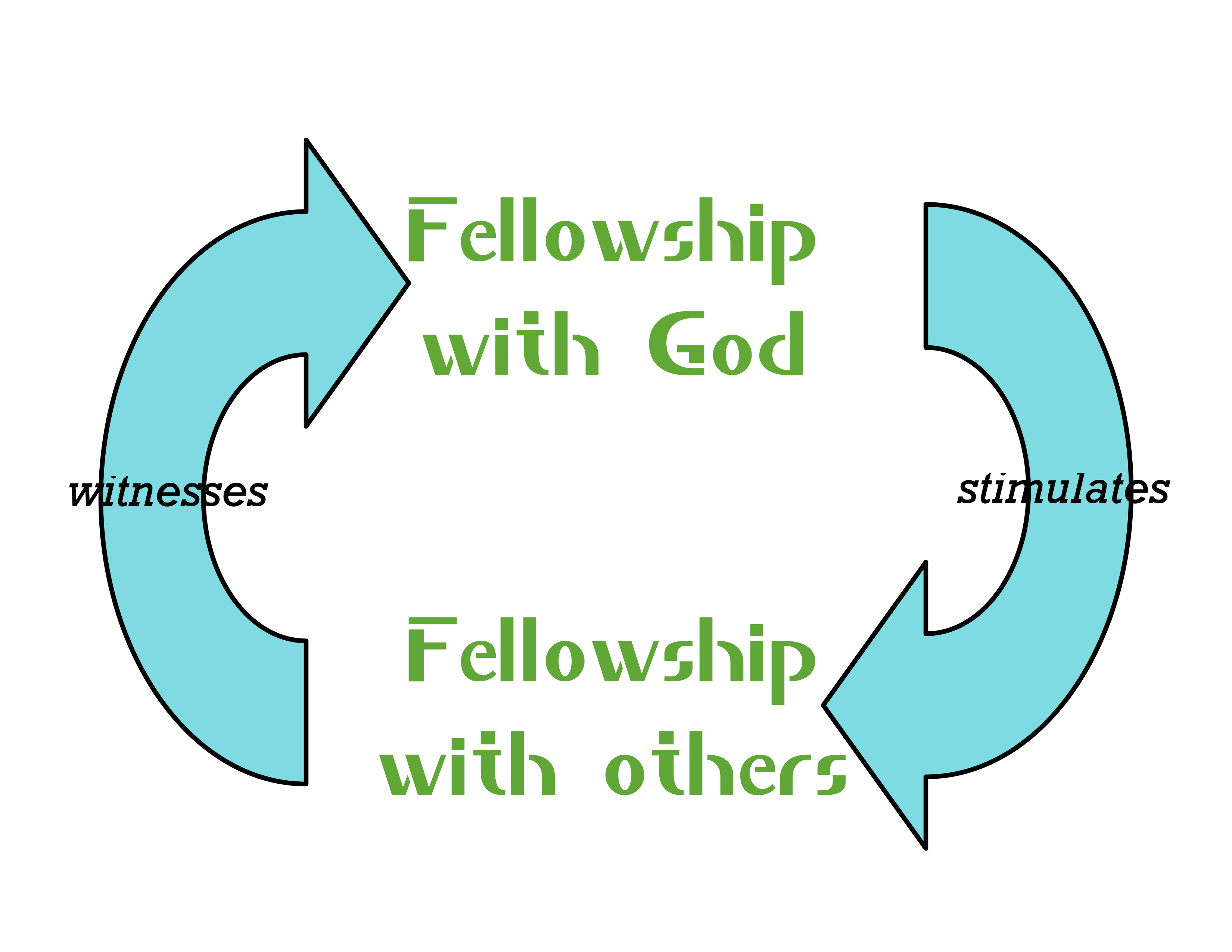
John says that fellowship with God can’t help but be expressed in fellowship with others. And then fellowship with others stimulates us to a deeper relationship with God. This love dance is itself a picture of the Ultimate Koinonia of the Trinity—“I am in You, Father, and You are in Me. These followers of Us are in Me and I in them,” said Jesus.

Don’t try to pursue a relationship with Jesus on your own, but find people that you can be in fellowship with and then watch how that deepens your fellowship with God!