Thursdays With Spurgeon—Where We Live

This is a weekly series with things I’m reading and pondering from Charles Spurgeon. You can read the original seed thought here, or type “Thursdays With Spurgeon” in the search box to read more entries.

Listen to the podcast of this post by clicking on the player below, and you can also subscribe on Apple, Spotify, or Audible. 

Where We Live

If you remain in Me and My words remain in you, ask whatever you wish, and it will be done for you. (John 15:7) 

     Believers do not enjoy the gifts of divine grace all at once. Coming to Christ, we are saved by a true union with Him. But it is by abiding in that union that we further receive the purity, the joy, the power, and the blessedness that are stored up in Him for His people. See how our Lord states this when He speaks to the believing Jews in the eighth chapter of this gospel, at the thirty-first and thirty-second verses: ‘Then Jesus said to those Jews who believed Him, “If you abide in My word, you are My disciples indeed. And you shall know the truth, and the truth shall make you free.”’ We do not know all the truth of God at once; we learn it by abiding in Jesus. 

     Perseverance in divine grace is an educational process by which we learn the truth of God fully. The emancipating power of the truth is also gradually perceived and enjoyed. The truth will make you free. One bond after another snaps, and we are free indeed. …  

     Every believer should be an abider, but many have hardly earned the name as yet. … You have to live with Christ to know Him, and the longer you live with Him, the more you will admire and adore Him, and the more you will receive from Him, even grace for grace. … Jesus, in the esteem of abiding believers, grows sweeter and dearer, fairer and lovelier each day. Not that He improves in Himself, for He is perfect. But as we increase in our knowledge of Him, we appreciate more thoroughly His matchless excellences. 

From The Secret Of Power In Prayer

All of us probably know what “house rules” are. In my home growing up, we took off our shoes when we came in the door; family members came in through the garage door, unless we were bringing a friend home, and then we came in through the front door. A casual observer may not catch these things, but the longer you were in our home, the more clearly you would see these things. 

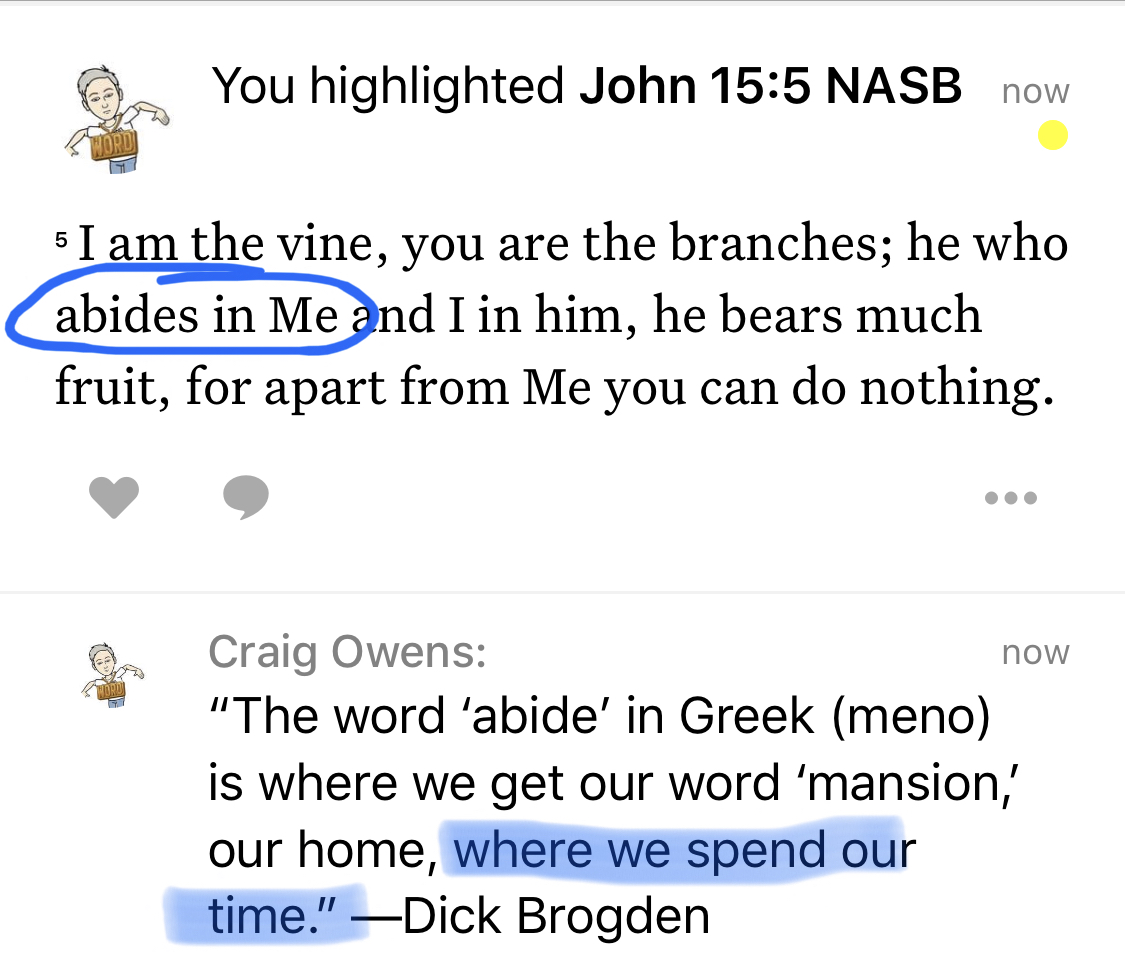
In the same way, we get more familiar with the “house rules” of our heavenly home the more time we spend there. My cousin Dick Brogden pointed out, “The word ‘abide’ in Greek (meno) is where we get our word mansion, our home, where we spend our time.” 

It’s also as we abide with Jesus that we get to know His heart. And then as we get to know Him better we can pray prayers more aligned to His will, prayers that He delights to answer. This makes our relationship with Him sweeter and sweeter. Just as the old chorus says—

He gets sweeter and sweeter as the days go by
Oh what a love between my Lord and I
I keep falling in love with Him
Over and over and over and over again

►► Would you please prayerfully consider supporting this ministry? My Patreon supporters get behind-the-scenes access to exclusive materials. ◀︎◀︎
The Preeminent Jesus

Listen to the podcast of this post by clicking on the player below, and you can also subscribe on Apple, Spotify, or Audible. 

There is only one Jesus, but He is presented to us in the Bible with many facets, and we get to pray in all of those facets of His name! 

One of the facets of Jesus is His preeminence. The dictionary defines preeminent as “above and before others; superior; surpassing.” 

The Bible uses the word preeminence to mean “holding the first place.” The apostle Paul uses this idea of Christ’s supremacy when He describes Him this way—

The Son is the image of the invisible God, the FIRSTBORN over all creation. For in Him ALL things were created: things in heaven and on earth, visible and invisible, whether thrones or powers or rulers or authorities; ALL things have been created through Him and for Him. He is BEFORE ALL things, and in Him ALL things hold together. And He is the HEAD of the body, the church; He is the BEGINNING and the FIRSTBORN from among the dead, so that in EVERYTHING He might have the SUPREMACY. For God was pleased to have ALL His fullness dwell in Him. (Colossians 1:15-19, emphasis mine) 

Therefore God exalted Him to THE HIGHEST PLACE and gave Him the name that is above EVERY name, that at the name of Jesus EVERY knee should bow, in heaven and on earth and under the earth, and EVERY tongue acknowledge that Jesus Christ is Lord, to the glory of God the Father. (Philippians 2:9-11, emphasis mine) 

Praying in Christ’s preeminence means that we never have to settle for less than God’s best! 

When we began this series, I mentioned that there were some people who misuse the words of Jesus. Specifically the phrase where Jesus says, “I will do whatever you ask in My name” (John 14:13, 15:16, 16:23). They have taken this as license to ask for things for their own comfort, or claiming that praying “in the name of Jesus” means that we never have to experience pain, poverty, or any setbacks. 

But preeminence ≠ prosperity! 

Prosperity wrongly says Christians will never have trouble, never experience poverty or lack, and can claim and obtain lavish things just by invoking “in the name of Jesus.” 

Preeminence correctly says that Christians may have trouble, or poverty, or even martyrdom, but that Christ’s preeminence gets the final word, the decisive word, and the best word! 

Jesus didn’t pray to be removed from trials. The godly apostle Paul experienced ample trouble, and so did the heroes of faith (John 12:27-28; 2 Corinthians 11:23-27; Hebrews 11:35-38). Yet even in all of these troubles and pain and hardship, Christ’s preeminence prevails! 

As Paul said in Colossians 1, Jesus was the “firstborn from among the dead,” meaning that He is now preeminent even over death! Jesus said that His followers will—not “may”—experience persecution here, just as those heroes of the faith listed in Hebrews 11 did, but that the rewards in eternity are beyond compare (see 1 Corinthians 15:55, 57-58; Matthew 5:11-12; Hebrews 11:39-40). 

Horatio Spafford wrote the hymn It Is Well With My Soul. One of the stanzas reminds us:

Though satan should buffet though trials should come
Let this blest assurance control
That Christ has regarded my helpless estate
And has shed His own blood for my soul

Praying in the name of the preeminent Jesus does at least four things for us: 

  1. Gives us a surpassing victory—Romans 8:31-32, 37 
  2. Keeps us humble and God glorified—2 Corinthians 4:7
  3. Detaches us from earthly things that would take our eyes off of Jesus—Philippians 3:8
  4. Keeps us focused on Heaven—2 Corinthians 4:17

(check out all of the verses listed above by clicking here)

Let me say it again: Praying in Christ’s preeminence means that we never have to settle for less than God’s best! 

God’s best is not awaiting us here on earth, but it is our promised eternal reward for persevering to the end. It may seem tough at times, but our preeminent Savior walks with us every step of the way! 

If you’ve missed any of the other messages in this series on prayer, you can find links to all of those messages by clicking here. 

►► Would you please prayerfully consider supporting this ministry? My Patreon supporters get behind-the-scenes access to exclusive materials. ◀︎◀︎

Thursdays With Spurgeon—The Christian Lifestyle

This is a weekly series with things I’m reading and pondering from Charles Spurgeon. You can read the original seed thought here, or type “Thursdays With Spurgeon” in the search box to read more entries.

Listen to the podcast of this post by clicking on the player below, and you can also subscribe on Apple, Spotify, or Audible. 

The Christian Lifestyle

Only let your conversation be as it becometh the gospel of Christ (Philippians 1:27 KJV). 

     The text says we are to ‘let our conversation be such as becomes the gospel.’ What sort of conversation, then, will we have? In the first place, the gospel is very simple. It is unadorned. No meretricious ornaments to clog the pile. It is simple and ‘not with persuasive words of human wisdom’ (1 Corinthians 2:4). … The Christian man ought always to be simple in all respects. I think wherever you find him, you ought not to need a key to him. He should not be like certain books that you cannot make out without having somebody tell you the hard words. He should be a transparent man like Nathaniel, who was ‘an Israelite indeed, in whom is no deceit’ (John 1:47). … 

     The Christian’s lips should speak truth when falsehood drops from the lips of all other men. A Christian man should never need to take an oath, because his word is as good as an oath. His yes should be yes, and his no, no. … 

     The gospel of Jesus Christ is a very fearless gospel. … As the gospel is very fearless in what it has to say, so let the Christian always be. It strikes me that a living that becomes the gospel of Christ is always a bold and fearless kind of living! … 

     But again, the gospel of Christ is very gentle. Hear it speak: ‘Come to Me, all you who labor and are heavy laden, and I will give you rest’ (Matthew 11:28). Here is its spirit in its Founder: ‘A bruised reed He will not break, and smoking flax He will not quench’ (Matthew 12:20). Moreover, bad temper, snapping off of people’s heads, making men offenders for a word—all this is quite contrary to the gospel. … If you have a lion’s heart, have a lady’s hand. Let there be such a gentleness about your carriage that the little children may not be afraid to come to you and the publican and harlot may not be driven away by your hostility, but invited to goodness by the gentleness of your words and acts. …  

     The world ought to point to us and say, ‘See, how these Christians love one another? Not in word only, but in deed and truth!’ … 

     The gospel of Christ is mercy, generosity, and liberality. It receives the beggar and hears his cry! It picks up even the vile and undeserving and scatters lavish blessings upon him, and it fills the bosom of the naked and of the hungry with good things. Let your conversation be such as becomes the gospel of Christ!

From The Gospel’s Power In A Christian’s Life

We’ve had a tagline at our church for years: Come and see why so many people around here say, “I ♥ my church!” I believe Christians can—and should—live in such a way that everyone in their communities would sit up and take notice of the positive changes. 

Let’s all examine our lifestyle. Is it simple, truthful, bold, gentle, loving, merciful, generous, and hospitable? If not, what changes do we need to make? But if it is all these things, God’s blessing is sure to follow this lifestyle that so clearly portrays the gospel of Jesus Christ! 

I’ve shared some other posts about a church’s reputation here, here, and here. 

►► Would you please prayerfully consider supporting this ministry? My Patreon supporters get behind-the-scenes access to exclusive materials. ◀︎◀︎

The Key To God’s Treasure

Listen to the podcast of this post by clicking on the player below, and you can also subscribe on Apple, Spotify, or Audible. 

…the fear of the Lord is the key to this treasure (Isaiah 33:6). 

What treasure is Isaiah referring to? There is an amazing list of blessings in this chapter! Things like…

  • God’s graciousness 
  • God’s strength
  • Salvation
  • God’s justice
  • God’s righteousness
  • A sure foundation
  • “A rich store of salvation and wisdom and knowledge” 
  • Eternally secure in God’s presence
  • Seeing God’s beauty 
  • Having evil people removed from my life 
  • Peace 

How do I get the key to this treasure? By placing my faith in Jesus. Jesus paid the price, so He could take the key from the devil and hold it securely. When I am in Him, I have access to this key to God’s riches! 

With all of this treasure accessible to me, how do I now live? In a word: Nobly. “But the noble make noble plans, and by noble deeds they stand” (Isaiah 32:8). I am a child of God, a joint-heir with Jesus. I lack no good thing, so I can live securely, gracefully, and nobly. I must live this way to bring glory to my Lord and my Master every single day! 

►► Would you please prayerfully consider supporting this ministry? My Patreon supporters get behind-the-scenes access to exclusive materials. ◀︎◀︎

Leading Prudently

Listen to the podcast of this post by clicking on the player below, and you can also subscribe on Apple, Spotify, or Audible. 

Isaiah 52–53 contain a description of Jesus as a servant leader. One phrase describes Him like this: “See, My Servant will act wisely” (Isaiah 52:13). 

That phrase “act wisely” is translated in some other translations of the Bible as “deal prudently.” I like that word prudently. It’s not a word that we use very often today, but it’s one that sets God’s servant leaders apart from worldly leaders. 

Prudent can be described as…

  • circumspect 
  • intelligently speaking and acting 
  • teaching skillfully 
  • having increasing understanding and insight
  • helping others grow in understanding 
  • behaving appropriately 
  • living wisely
  • guiding oneself and others willingly 

What happens to the leader who lives and leads this way? Listen to the entire verse that I only quoted a portion of earlier—

See, My Servant will act wisely; He will be raised and lifted up and highly exalted. 

Notice that this exalted person is described as a servant—not just anyone’s servant, but Jehovah’s servant. As a servant of God, Jesus becomes a servant of all. And as a servant of God, He is exalted and honored above all. 

Jesus is every leader’s Ultimate Example of this. Jesus set aside every prerogative He had that would give Him the right to do things His way, in order to make Himself a servant of God and a servant of mankind (Philippians 2:6-11; Mark 10:45). Jesus gave all of His followers this example to emulate (John 13:15-17), so Paul tells us our “mindset should be the same as that of Christ Jesus” (Philippians 2:5). 

I need to ask myself a question—and I would invite you to ask yourself this too: As a leader, am I growing in Christlike prudence? 

A mark of a godly leader is one who can see his growth in prudence. 

Jesus, may You be pleased as I follow Your example of living and leading prudently. Holy Spirit, help me see the areas in my life where I need to submit to You. Father, may You be pleased to bless my leadership as it aligns with Your heart. I want to act wisely, lead prudently, and help others to follow this example of Jesus for themselves. 

This is part 61 in my series on godly leadership. You can check out all of my posts in this series by clicking here.

►► Would you please prayerfully consider supporting this ministry? My Patreon supporters get behind-the-scenes access to exclusive materials. ◀︎◀︎
The Human Jesus

Listen to the podcast of this post by clicking on the player below, and you can also subscribe on Apple, Spotify, or Audible. 

We saw that our beautiful Jesus became grotesque—taking our ugly sin on Himself so that He could clothe us with His perfectly righteous robe. In so doing, He became even more resplendent. His friend John saw Him in such radiant beauty that he crumbled to his knees at the sight of His majesty (Revelation 1:12-16)! 

Just like John and others in the Bible, when we see ourselves in contrast to His awesome beauty, we often feel shabby and unworthy to be in His presence. Job expressed his desire to somehow get away from this Perfection (Job 7:11-21). Ultimately, in his desperation, Job utters something prophetic—

God is not a mere mortal like me that I might answer Him, that we might confront each other in court. If only there were someone to mediate between us, someone to bring us together, someone to remove God’s rod from me, so that His terror would frighten me no more. Then I would speak up without fear of Him, but as it now stands with me, I cannot. (Job 9:32-35) 

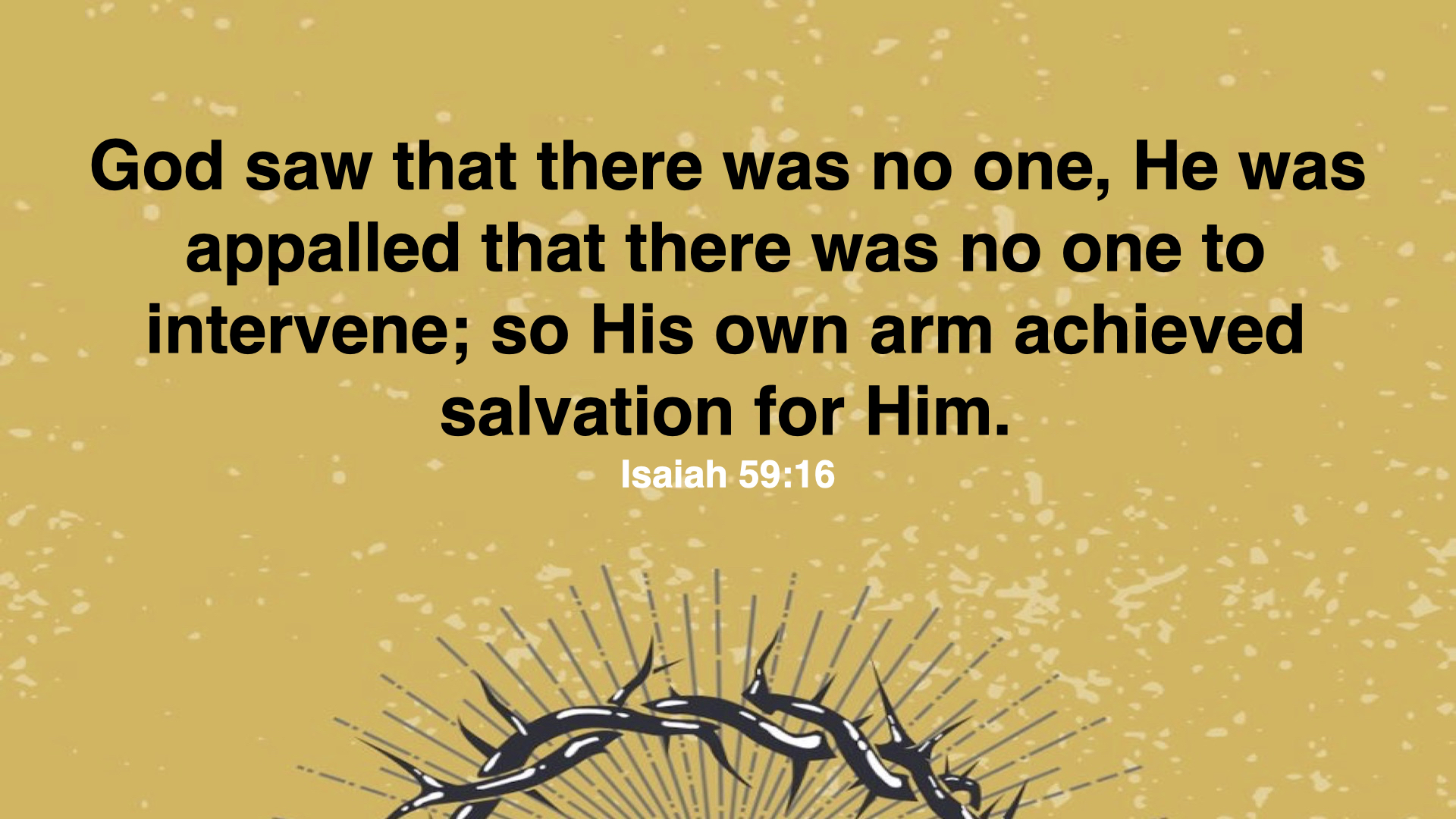
When we are confronted with the perfection of God, we all want “someone to arbitrate”—someone who will fairly represent both sides. We need someone both God and man. Since man cannot become God, only God can become man. Isaiah prophesied it this way, “God saw that there was no one, He was appalled that there was no one to intervene; so His own arm achieved salvation for Him” (Isaiah 59:16). 

This Arbitrator or Mediator is Jesus the Christ! 

Jesus means “help from Jehovah.” This is His human name given to Him at His birth (Luke 1:31; Matthew 1:21, 25; Luke 2:21). 

Christ or Messiah means “anointed by God” and is His divine title. Often His title is used with the definite article “the” to signify that Jesus is the One and Only Messiah (Luke 2:26-27; John 1:41; Matthew 16:16; Acts 10:38). 

William Barclay commented on this: “Peter states [that Jesus was a human descendent of David] in the first recorded sermon of the Christian Church (Acts 2:29-36). Paul speaks of Jesus Christ descended from David according to the flesh (Romans 1:3). The writer of the Pastoral Epistles urges men to remember that Jesus Christ, descended from David, was raised from the dead (2 Timothy 2:8). The writer of the Revelation hears the Risen Christ say: ‘I am the root and the offspring of David’ (Revelation 22:16).” 

Many times this human name and divine title are linked together. In Hebrews, the name Jesus is used more times than any other title (19x), and Christ is the second-most used title (15x).

(For my Patreon supporters, I’ve shared a list of all of the titles for Jesus used in the book of Hebrews.)

Hebrews makes it perfectly clear how important it is that Jesus was made fully human just like us. We read phrases like…

  • “made a little lower than the angels,” which was David’s way of talking about humans (see Psalm 8:4-6) 
  • “made perfect through suffering”—only humans can suffer 
  • “flesh and blood” 
  • “made like His brothers in every way” 
  • “His life on earth”

Remember that I said the most-used titles in Hebrews were Jesus and Christ. The third-most used title in Hebrews is high priest (14x). Only the Human Jesus and the Divine Jesus could be the perfect High Priest and Mediator that Job longed for, and that you and I have to have!

This post is a part of a bigger series on prayer with the subtitle: “Learning to pray in the awesome name of Jesus.” So what does it mean that we can pray in the human name of Jesus? 

It means we don’t have to pray majestic prayers in order for God to take notice. We can pray very human prayers, we can groan with real human pain, we can growl with real human anger. Our totally human Jesus understands us, and the totally divine Christ runs to help us! 

Don’t try to sanitize your prayers to make them sound acceptable. Jesus didn’t! How awesome it is to have a High Priest who is both fully human and fully divine! 

If you’ve missed any of the other messages in this series on prayer, you can find a link to all of them by clicking here. 

►► Would you please prayerfully consider supporting this ministry? My Patreon supporters get behind-the-scenes access to exclusive materials. ◀︎◀︎

Links & Quotes

I love Charle Spurgeon’s definition of godliness: “God Himself is the power of godliness. The Holy Spirit is the life and force of it. Godliness is the power that brings a man to God and bind him to Him. Godliness is that which creates repentance toward God and faith in Him. Godliness is the result of a great change of heart and reference to God and His character. Godliness looks toward God and mourns its distance from Him. Godliness hastens to draw near and rests not till it is at home with God. 

“Godliness makes a man like God. Godliness leads a man to love God and to serve God. It brings the fear of God before his eyes and the love of God into his heart. Godliness leads to consecration, to sanctification, to concentration. The godly man seeks first the kingdom of God and His righteousness and expects other things to be added to him. Godliness makes a man commune with God and gives him a partnership with God in His glorious designs. And so it prepares him to dwell with God forever.”

Viz.Bible has a great way of portraying the data of the Bible in very picturesque ways. Check out this link to see an overview of the Bible like I have bever seen before!

The folks at Axis Ministry provide some amazing insights for parents (and youth pastors) of pre-teens through the early college years. I would highly recommend subscribing to their free weekly email. Here is their Parent’s Guide To Teen Emotions, which is a free PDF for you to download.

Thursdays With Spurgeon—Do Your Own Growing

This is a weekly series with things I’m reading and pondering from Charles Spurgeon. You can read the original seed thought here, or type “Thursdays With Spurgeon” in the search box to read more entries.

Listen to the podcast of this post by clicking on the player below, and you can also subscribe on Apple, Spotify, or Audible. 

Do Your Own Growing

Having a form of godliness but denying its power. Have nothing to do with such people. (2 Timothy 3:5) 

     But now, as these people had not got the power of godliness, how did they come to hold the form of it? This needs several answers. Some come by the form of godliness in a hereditary way. Their ancestors were always godly people, and they almost naturally take up with the profession of their fathers. … 

     Not generation but regeneration makes the Christian. You are not Christians because you can trace the line of fleshly descent throughout twenty generations of children of God. … Grace does not run in the blood. If you have no better foundation for your religion than your earthly parentage, you are in a wretched case. … 

     I have seen the form of godliness taken up on account of friendships. Many a time courtship and marriage have led to a formal religiousness but a lacking heart. … Godliness should never be put on in order that we may put a wedding ring upon the finger. This is a sad abuse of religious profession. …  

     I put these things to you that there may be a great searching of hearts among us all and that we may candidly consider how we have come by our form of godliness. … 

     Let me remind you of the questionable value of that which springs out of fallen human nature. Assuredly, it brings no one into the spiritual kingdom, for ‘that which is born of the flesh is flesh.’ Only ‘that which is born of the Spirit is spirit’ (John 3:6). ‘You must be born again’ (3:7). Beware of everything that springs up in the field without the sowing of the Husbandman, for it will turn out to be a weed.

From The Form Of Godliness Without The Power

There’s an old Irish proverb that says, “You’ve got to do your own growing, no matter how tall your grandfather is.” This is equally true for Christians! 

I’m a fourth-generation Pentecostal Christian, which means I was practically raised in a church building. But still I had to come to a point in my life where I had to decide: Do I believe that Jesus is my Savior just because my parents and grandparents believed this, or because I truly believed it for myself. All of us, regardless of our parentage, have to make this choice. 

Those who simply call themselves Christian without ever examining the root of their faith are those the apostle Paul described as having a form of godliness without the power, or what Spurgeon describes as a weed. But most sobering of all are those Christians-in-name-only to whom Jesus will say, “I never knew you.” 

Please, my friend, make the choice to follow Jesus as your Lord and Savior because you have personally put your faith in Him.

►► Would you please prayerfully consider supporting this ministry? ◀︎◀︎

Sermon Prep 101

Listen to the podcast of this post by clicking on the player below, and you can also subscribe on Apple, Spotify, or Audible. 

Go down to the potter’s house, and there I will give you My message (God speaking to Jeremiah).

Jesus was masterful in using visual illustrations—common, everyday things—to illustrate the biblical truth He wanted to teach. God does the same thing with Jeremiah. 

God instructs Jeremiah to simply go to the potter’s house and watch. Jeremiah obeyed: “I went down to the potter’s house, and I saw him working” (v. 3). It was after taking in this scene that God could speak to Jeremiah a sermon illustration. Jeremiah says, “Then the word of the Lord came to me” (v. 5). 

Not only did God help Jeremiah prepare his sermon with a visual illustration, but God also prepared Jeremiah for the follow up conversation. God knew how the people would respond to Jeremiah’s message, and He again gave him the words to speak ahead of time (vv. 12-17). 

God knows His sheep better than we do. He knows what they need to hear, and how best to make His message stick. Jesus said, 

“I have never spoken on My own authority or of My own accord or as self-appointed, but the Father Who sent Me has Himself given Me orders concerning what to say and what to tell. And I know that His commandment means eternal life. So whatever I speak, I am saying exactly what My Father has told Me to say and in accordance with His instructions.” (John 12:49-50 AMP) 

We pastors and evangelists dare not try to prepare a message on our own! 

Samuel Johnson prayed something that I pray every time I sit down to prepare a sermon: “Almighty God, my Heavenly Father, without Whose help labor is useless, without Whose light search is in vain, invigorate my studies.” 

Seeking God’s help in our sermon preparation should be our very first action every single time. 

►► Would you please prayerfully consider supporting this ministry? ◀︎◀︎

The Supreme Jesus

Listen to the podcast of this post by clicking on the player below, and you can also subscribe on Apple, Spotify, or Audible.

Last week here in wintry Michigan we had a couple of snow days (for those of you in non-snow states, that means the roads were too dangerous even for us Michiganders, so the schools were closed). Students and teachers too “work” very hard for snow days. By that I mean they try a bunch of tactics that are supposed to increase the likelihood of school being called off—like flushing ice cubes down the toilet, wearing their PJs inside-out, or even sleeping with a spoon under their pillow. 

But I’ve also noticed it’s not just praying for snow days where people employ some tactics they think will help things go their way. Like saying, “Pretty please with sugar on top” when trying to get special favor, or athletes not saying anything at all to a teammate who’s on the brink of something historic, or business people saying, “Wish me luck” before going into the big meeting. And even Christians who end their prayer with, “In Jesus’ name, Amen” to help make their prayer answerable. 

In case you haven’t noticed, just saying that phrase is not some magical, abracadabra formula for success (for some very notable examples of this check out Matthew 7:21-23 and Acts 19:13-16). 

But still, Jesus does specifically say, “And I will do whatever you ask in My name, so that the Father may be glorified in the Son. You may ask Me for anything in My name, and I will do it” (John 14:13-14). 

This is where context is king. In John 13-16, Jesus is giving His final instructions to His disciples before His arrest and crucifixion. They are clearly anxious about His departure because chapter 14 opens with the words, “Do not let your hearts be troubled.” 

In this passage of John 14, Jesus is giving the disciples the basis for their confident hope in Him. He tells them that He is THE way to the Father (they don’t have to look for another path), and He is THE revelation of the Father (He will make the Father’s will crystal clear to them). 

Jesus tells them that He has been doing His Father’s work, which is verified by the evidence of the miracles—or we could say the answers to His prayers (v. 10-11). Jesus wants His followers to pray this same way, live this same way, and see even greater things done in His name (v. 12). 

So we can infer from this that praying in the name of Jesus essentially means two things:

  1. We pray in harmony with the character of Jesus. That means that we pray prayers that Jesus Himself would pray. If you cannot imagine Jesus asking for what you’re asking for, then it’s not in alignment with His character. 
  2. We pray in faith in the supreme authority of Jesus to do what we ask. Jesus is Supreme over everything else. To pray in His name means we look for answers from no other source.

I think the key to understanding this is found in the small preposition Jesus uses 12 times in this passage: IN. 

Jesus is IN the Father, the Father is IN Jesus, and the Holy Spirit is IN us. This means that we are also IN the Father with Jesus! 

Which means we don’t have to try to be like Jesus or to merely imitate Him, but we let the Holy Spirit sanctify us into the character of Jesus. 

When I talk to my Dad I don’t have to remind myself that I am his son—I just am his son. I don’t have to carefully calculate how I’m going to make requests of him. I know his heart, and I know my inseparable relationship with him, so I just talk to him. 

Have you ever noticed in the Gospels that when Jesus does a miracle, He doesn’t pray the way that we typically pray? When the man with leprosy came to Jesus, He merely said, “Be clean.” I think we might have bowed our heads, closed our eyes, placed our hands on him and said something like, “Dear heavenly Father, if it’s Your will bring Your healing touch to our dear brother. In Jesus’ name we pray, Amen.” But Jesus knew the Father’s heart was to heal this suffering man, so Jesus simply spoke the words. His statement was a prayer that resonated with the heart of His Father, and that prayer was immediately answered. 

The Holy Spirit is sanctifying you to pray this same way: 

  • He wants to mold your heart to be passionate for the things of the Father—John 5:17
  • He wants to transform your mind to think the Father’s thoughts—John 16:13-14
  • He wants to soften your will to be yielded to the will of the Father—Matthew 26:36-44 
  • He wants to settle your emotions to be at peace in the Father—John 14:1
  • He wants to even change your vocabulary to the very words Jesus would use—John 12:49

(read the above verses by clicking here)

When your heart, mind, will, and emotions are being sanctified, the supremacy of Jesus will naturally be at the forefront of everything you feel, think, do, and say. Then you will be naturally praying in the name and character of Jesus for God’s glory to be seen. 

Praying in the name of the Supreme Jesus means that we pray IN God’s will FOR God’s glory. 

To see all of the messages in our series called Awesome: Learning to pray in the awesome name of Jesus, please click here. 

►► Would you please prayerfully consider supporting this ministry? ◀︎◀︎