Thursdays With Spurgeon—How Pruning Helps Prayer

This is a weekly series with things I’m reading and pondering from Charles Spurgeon. You can read the original seed thought here, or type “Thursdays With Spurgeon” in the search box to read more entries.

Listen to the podcast of this post by clicking on the player below, and you can also subscribe on AppleSpotify, or Audible. 

How Pruning Helps Prayer 

If you remain in Me and My words remain in you, ask whatever you wish, and it will be done for you. (John 15:7)

     How is this privilege of mighty prayerfulness to be obtained? The answer is, ‘If you abide in Me and My words abide in you.’ … Beloved, the first line tells us that we are to abide in Christ Jesus our Lord. … 

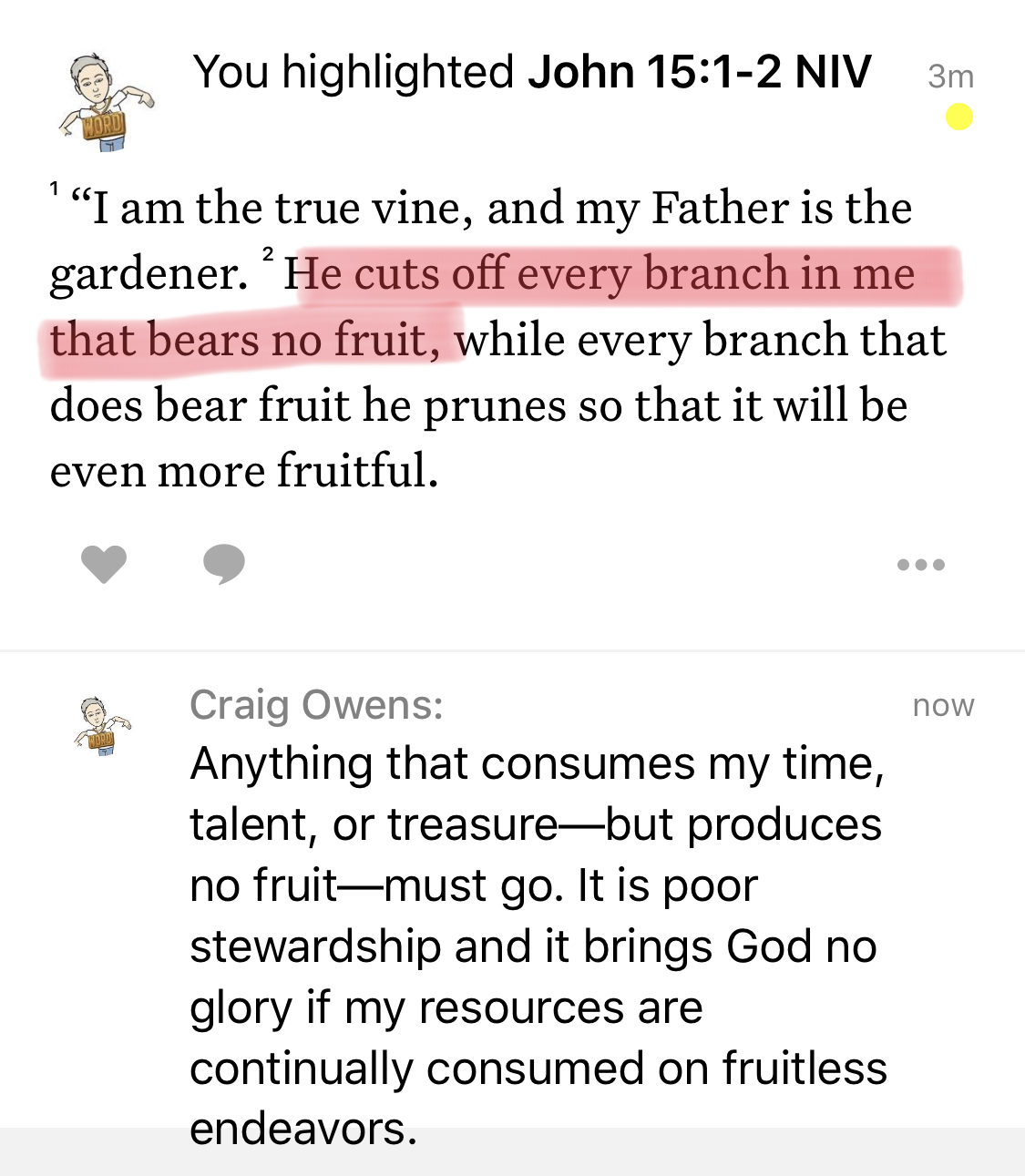
     As if to help us understand this, our gracious Lord has given us a delightful parable. Let us look through this discourse of the vine and its branches. Jesus says, ‘Every branch in Me…that bears fruit He prunes’ (John 15:2). Take care that you abide in Christ when you are being purged. ‘Oh,’ says one, ‘I thought I was a Christian. But alas! I have more troubles than ever. Men ridicule me, the devil tempts me, and my business affairs go wrong.’ Brother, if you are to have power in prayer, you must take care that you abide in Christ when the sharp knife is cutting everything away. …  

     Take care, also, that when the purging operation has been carried out you still cleave to your Lord. … When you see the work of the Spirit increasing in you, do not let the devil tempt. He will try to get you to boast that now you are somebody; you need not come to Jesus as a poor sinner and rest in His precious blood alone for salvation. Abide still in Jesus. … Your work for Christ must be Christ’s work in you or else it will be good for nothing.

 From The Secret Of Power In Prayer

Our Heavenly Father wants us to be fruitful because that brings Him glory and lifts Jesus up for others to see. 

We have to commit to abiding in Jesus despite the pruning process. It’s helpful to remember that the reason the Husbandman prunes us is because He has seen fruitfulness in us, but He wants us to be even more fruitful. When we stay in the process during the uncomfortable—and sometimes painful—pruning, more fruit will begin to appear in our lives. 

It’s at this point that we have to guard against pride. The devil loves for me to get proud of “my accomplishments.” But I have to remind myself that apart from the Vine I am worse than fruitless; I’m just a dead branch only fit for the fire. I’ve learned that there is a danger in success, so I must constantly choose humility over pride, and abiding over self-sustaining. 

As we abide, our prayers take on an ever-increasing vitality so that conversation with our Lord becomes as natural as breathing. I hope none of us will ever settle for anything less than this intimate, ongoing communion with our Master!

►► Would you please prayerfully consider supporting this ministry? My Patreon supporters get behind-the-scenes access to exclusive materials. ◀︎◀︎
Name-It-Claim-It?

Listen to the podcast of this post by clicking on the player below, and you can also subscribe on AppleSpotify, or Audible.

This is part 4 in our series “Is that in the Bible?” 

Statement #4—Name it and claim it. Is that in the Bible? No! 

But in fairness, even the proponents of this belief don’t usually say it this way. Instead they quote words from Jesus like: “I will do whatever you ask in My name” (John 14:13) or “Ask whatever you wish, and it will be given you” (John 15:7). 

They really want this to be true, I think, because in their minds happy, prosperous Christians make God look good. On the other hand, struggling Christians make God look bad. There is a whole branch of theology called theodicy which literally means: “a defense of God’s goodness and omnipotence in view of the existence of evil.” 

This is nothing new. Religious people have always tried to have pat answers. In the oldest book of the Bible, Job’s friends were convinced that suffering results from sin and blessing results from righteousness. And yet according to God, Job was a righteous man (Job 1:1, 8, 20-21). 

At the advent of Jesus, the chief priests and scribes want the Messiah to be heroic so they modified a prophecy to make Bethlehem sound more impressive (compare Micah 5:2 with Matthew 2:6). 

So it follows that this name-it-claim-it group wants God to look good because His people look good, dress well, drive nice cars, live in big homes, fly private jets, and never get sick.

But Jesus Himself told His followers to, “Sell your possessions and give to the poor” (Luke 12:33). And He said, “Blessed are you when people insult you, persecute you and falsely say all kinds of evil against you because of Me” (Matthew 5:11). And Jesus also said, “In this world you will have trouble” (John 16:33). 

This is not to say that God opposes wealth: He gave wealth to His leaders, Job was doubly-wealthy after his trial, and wealthy people funded the ministry of Jesus and the early church. But this isn’t the same as pursuing—or even demanding—wealth, or of making the erroneous connection that poor people are somehow out of favor with God. 

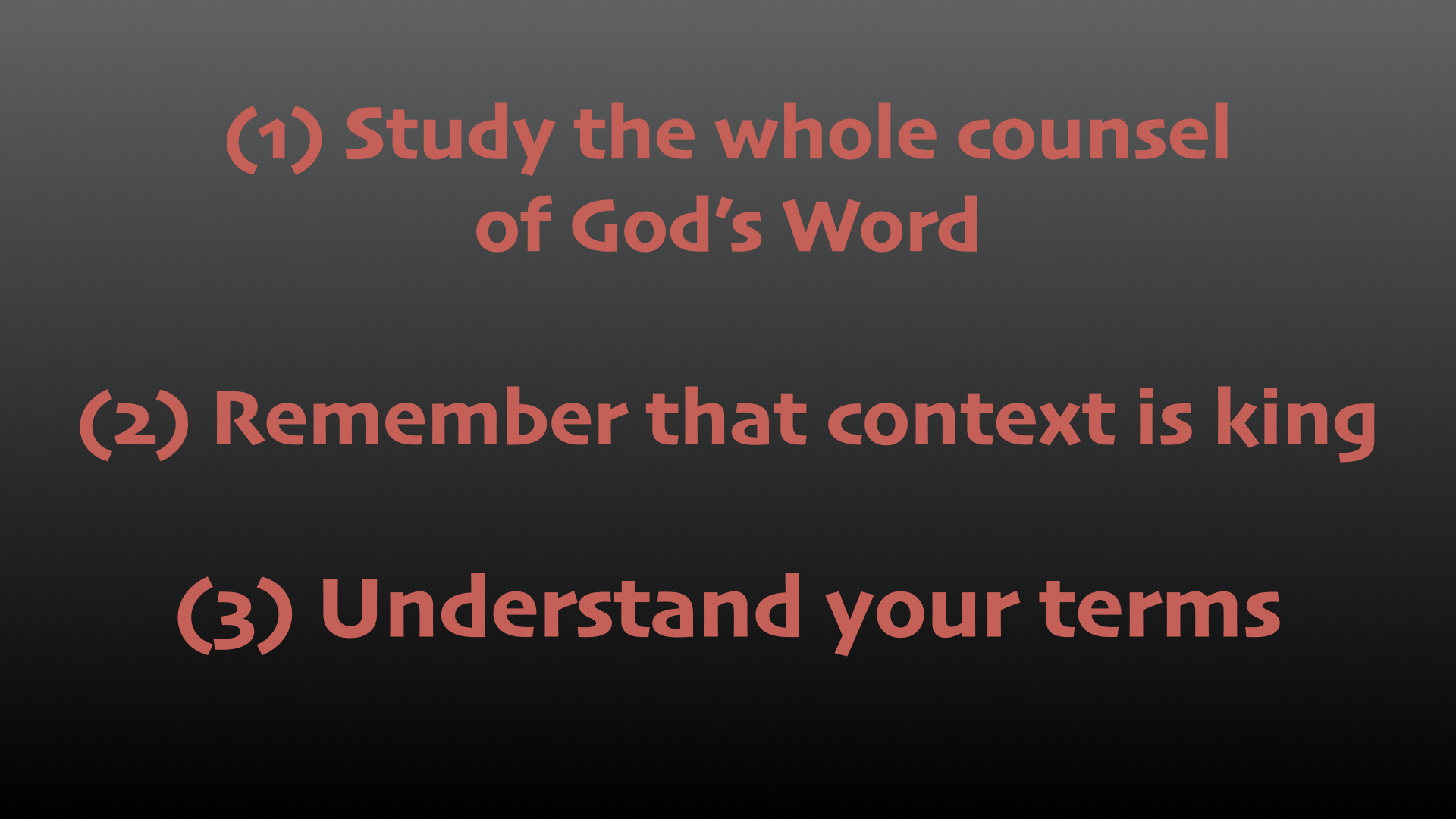
How do we avoid these errors? Here are three thoughts: 

(1) Study the whole counsel of God’s Word.  

Don’t just read your favorite passages, or the ones that make you feel good, but read all of the Bible. Jesus frequently had to correct the religious leaders’ beliefs by sending them back to the Scripture (Matthew 21:15-16; Mark 12:18-27; Luke 6:3). Jesus called the Holy Spirit the Spirit of truth (John 16:12-15). The Holy Spirit that inspired the Bible is the same Holy Spirit in a Christian that can illuminate the Bible as you read it.  

(2) Remember that context is king.  

The word “eisegesis” means to read something into the Word. But that is like creating your own beliefs and then going to the Bible to find phrases that support what you already believe. On the other hand “exegesis” is to read the Bible and have it speak to us by the Holy Spirit. 

Two of the phrases from Jesus that the name-it-and-claim-it folks use (John 14:13 and John 15:7) turn out to mean something entirely different than, “God will give me all of the things I demand from Him” when they are read within the context of the things Jesus was teaching at that time (see John 14:9-14 and 15:1-8). 

(3) Understand your terms.

If something is biblical, that is something the Bible says yes to. Unbiblical things the Bible says no to. But non-biblical are those the Bible doesn’t explicitly address. We have to be very careful of trying to make non-biblical things sound biblical or it may lead to some unbiblical attitudes and actions. 

This is exactly what the Pharisees did by giving their non-biblical traditions the weight of biblical statements, and then looking down on others in a very unbiblical way. 

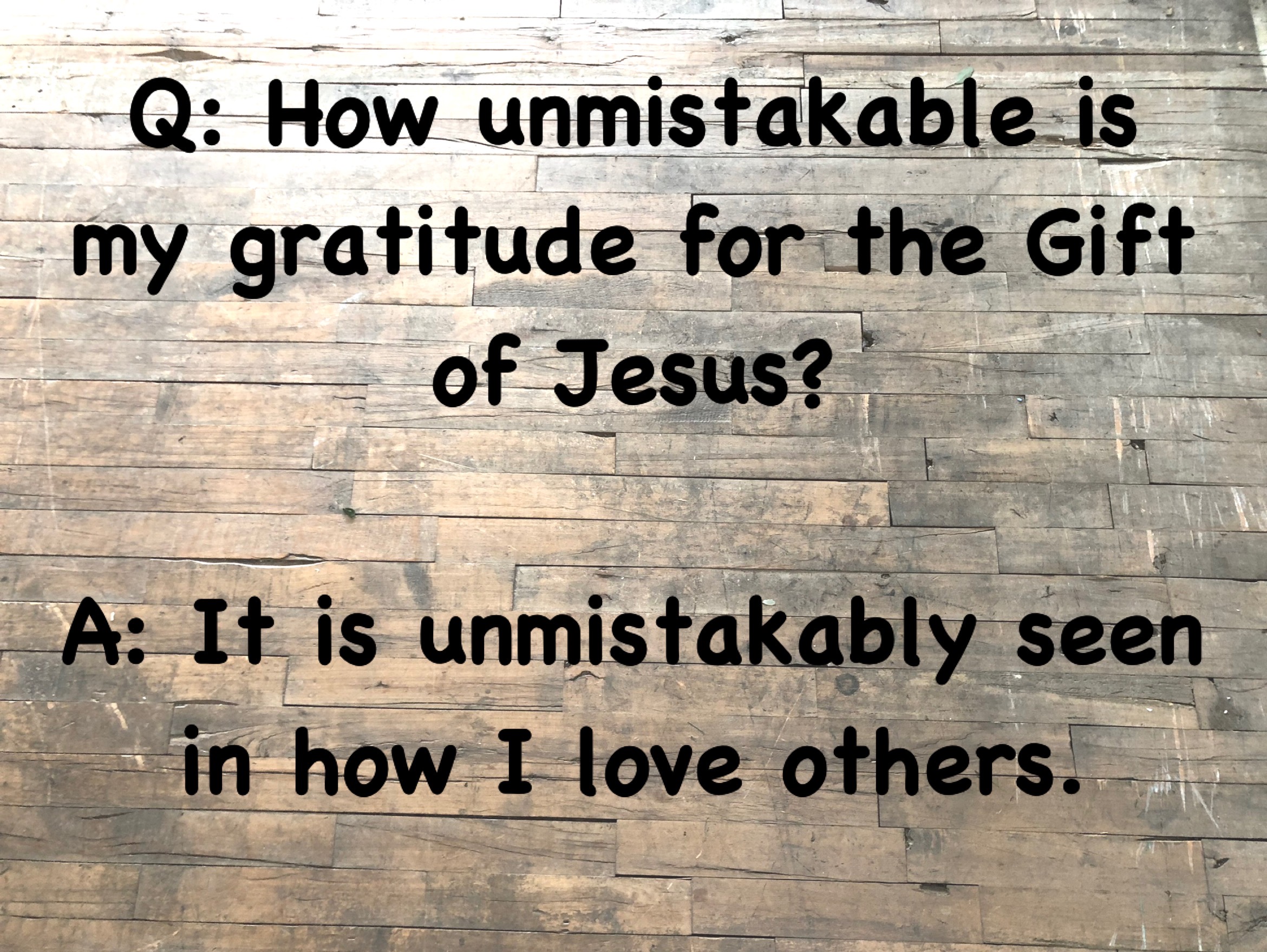
God is sovereign. We do not tell Him what to do. We do not demand Him to respond to our needs. We trust Him and and we abide in Him. Then in the abiding, asking and understanding and fruitfulness are as natural as a flower sprouting from a branch that is attached to the vine. We don’t name things and claim things for our personal comfort, but we desire solely for God’s glory to be seen—whether in wealth or poverty, health or sickness, peaceful times or tribulation. 

Evaluating all biblical sounding statements by those three items—studying the whole counsel of God’s Word, understanding the context, and knowing our terms—will guide us from going astray. 

If you’ve missed any of the messages in our series Is That In The Bible?, you can get a list of all of the messages by clicking here.

►► Would you please prayerfully consider supporting this ministry? My Patreon supporters get behind-the-scenes access to exclusive materials. ◀︎◀︎
Thursdays With Spurgeon—The Natural Out-Gushing

This is a weekly series with things I’m reading and pondering from Charles Spurgeon. You can read the original seed thought here, or type “Thursdays With Spurgeon” in the search box to read more entries.

Listen to the podcast of this post by clicking on the player below, and you can also subscribe on AppleSpotify, or Audible. 

The Natural Out-Gushing

If you remain in Me and My words remain in you, ask whatever you wish, and it will be done for you. (John 15:7) 

   He does not say, ‘If you abide in Me, and My words abide in you, you will do spiritual things,’ but ‘you will ask.’ By prayer you will be enabled to do. But before all attempts to do, you will ask. The choice privilege here given is a mighty prevailing prayerfulness. Power in prayer is very much the gauge of our spiritual condition. …  

     Prayer comes spontaneously from those who abide in Jesus. … Prayer is the natural out-gushing of a soul in communion with Jesus. Just as the leaf and the fruit will come out of the vine without any conscious effort on the part of the branch but simply because of its living union with the stem, so prayer buds and blossoms and produces fruit out of souls abiding in Jesus. … They do not say to themselves, ‘Now is the time for us to get to our task and pray.’ No, they pray as wise men eat—namely, when the desire for it is upon them. …  

     Habitual asking comes out of abiding in Christ. You will not need urging to pray when you are abiding with Jesus. … 

     ‘If you abide in Me, and My words abide in you, you will ask’—and you will not wish to cease from asking. He has said, ‘Seek My face,’ and your heart will answer, ‘Your face, Lord, I will seek’ (Psalm 27:8). … 

     This power in prayer is like the sword of Goliath. Wisely may every David say, ‘There is none like it; give it to me’ (1 Samuel 21:9). This weapon of all-prayer beats the enemy and at the same time enriches its possessor with all the wealth of God.

 From The Secret Of Power In Prayer

When I first met the beautiful young lady that would eventually become my wife, we spent hours and hours and hours talking with each other. It was how I got to know her heart, and how she got to know mine. My conversations with Betsy are still some of the most cherished times I have. 

But what if after we got married I said to Betsy, “I love you, my darling, and I’m so looking forward to a lifetime with you! I will make it a priority to give you my undivided attention for 90 minutes every Sunday morning. Other than that, I’ll be thinking about you while I go about my busy life.” How intimate is this relationship going remain? 

Sadly, this is how many Christians treat their relationship with Jesus. “Thank You for saving me from the penalty of my sin, Jesus! I love You and I’m so looking forward to an eternity with You in Heaven. I will make it a priority to give You my undivided attention every week at church. Other than that, I’ll be thinking about You while I go about my busy life.” 

This is not abiding. 

No branch can remain healthy and produce any fruit if it is only occasionally attached to the vine. In order for the branch to be fruitful, it must be continually abiding in the life-giving sap of the vine. 

Intimacy with Jesus means abiding with Him at all times. It means engaging in conversation with Him at all times. Brother Lawrence commented, “The time of business does not with me differ from the time of prayer; and in the noise and clatter of my kitchen, I possess God in as great tranquility as if I were upon my knees at the blessed sacrament.” 

My friend, let’s all seek to become more aware of the closeness of Jesus. Let us “take delight in the Lord” (Psalm 37:4) and continually engage Him in intimate conversation. As we do, the fruitfulness of our prayer life cannot help but blossom into beautiful things that give God great joy and glory.

►► Would you please prayerfully consider supporting this ministry? My Patreon supporters get behind-the-scenes access to exclusive materials. ◀︎◀︎

The Approachable Jesus

Listen to the podcast of this post by clicking on the player below, and you can also subscribe on AppleSpotify, or Audible. 

A friend of mine who was in a position of leadership in the Assemblies of God used to joke with people, “Since you’re bowing and walking backwards out of my office, would you like to kiss my ring too?” There are some people that we feel are in a special class so that we have to approach them differently. 

If we feel that way about certain people, what might we be thinking when we consider approaching the supreme, awesome, preeminent, incomparable Jesus?! It’s very likely that we could feel Him to be unapproachable, as though we aren’t worthy of His attention. 

But when Jesus Himself told us, “When [not ‘if’] you pray,” He is assuming that we will pray. And then He adds this amazing thought: “And I will do whatever you ask in My name, so that the Father may be glorified in the Son” (John 14:13)! 

Jesus loves to help us. He died a cruel death on the Cross so that He could help us! Jesus ties our trusting prayer with His willingness to serve us (Luke 12:22-37). Note this last line from our approachable Savior: 

It will be good for those servants whose Master finds them watching when He comes. Truly I tell you, He will dress Himself to serve, will have them recline at the table and will come and wait on them. (v. 37) 

Jesus serves us?! What an amazing thought! But does this make Jesus somehow less majestic? I like what John Piper has to say about this: “Does this belittle the risen Christ—to say that He was and is and will ever be the servant of His people? It would, if ‘servant’ meant ‘one who takes orders,’ or if we thought we were His masters. Yes, that would dishonor Him. But it does not dishonor Him to say that we are weak and need His help.” 

How do we not treat Jesus as an order-taking servant? First, we have to remember that approachable doesn’t mean something we do casually. I think this is discovered in our attitude—it’s the difference between being childlike and being childish. 

The childlike attitude is one of wonder and trust. One that calls God, “Daddy.” One that is lovingly dependent on Him. One that says, “I don’t understand what I’m going through right now, but I trust Your wisdom.” 

The childish attitude is one who treats majestic things flippantly. Perhaps the childish one talks about God as “the Big Guy upstairs.” Or one who remains selfishly independent, or who says, “Do it my way—now!”

The childlike attitude glorifies Jesus as our approachable Servant Savior. 

The childlike attitude also recognizes that there are more dimensions of the majesty of God to be discovered in an abiding relationship with Jesus. Our approachable Savior wants us to come to Him, to call to Him for help, and to know Him more intimately (Jeremiah 29:13-14; Matthew 11:28-30; Hebrews 4:16; 10:19, 22). 

Prayer not only unlocks deeper, proper intimacy with Jesus, but it conforms our heart more and more to His heart. As we are conformed to Him, we reflect His approachable glory to others (2 Corinthians 4:6, 3:18). 

We approach the awesome Jesus reverently in childlike faith. It’s in God’s presence that the Holy Spirit matures our faith so that we become glory-reflectors that point others to Jesus. 

If you’ve missed any of the eight messages in our series Awesome: Learning to pray in the awesome name of Jesus, you can find the list of all of the messages by clicking here. 

►► Would you please prayerfully consider supporting this ministry? My Patreon supporters get behind-the-scenes access to exclusive materials. ◀︎◀︎

Thursdays With Spurgeon—Where We Live

This is a weekly series with things I’m reading and pondering from Charles Spurgeon. You can read the original seed thought here, or type “Thursdays With Spurgeon” in the search box to read more entries.

Listen to the podcast of this post by clicking on the player below, and you can also subscribe on AppleSpotify, or Audible. 

Where We Live

If you remain in Me and My words remain in you, ask whatever you wish, and it will be done for you. (John 15:7) 

     Believers do not enjoy the gifts of divine grace all at once. Coming to Christ, we are saved by a true union with Him. But it is by abiding in that union that we further receive the purity, the joy, the power, and the blessedness that are stored up in Him for His people. See how our Lord states this when He speaks to the believing Jews in the eighth chapter of this gospel, at the thirty-first and thirty-second verses: ‘Then Jesus said to those Jews who believed Him, “If you abide in My word, you are My disciples indeed. And you shall know the truth, and the truth shall make you free.”’ We do not know all the truth of God at once; we learn it by abiding in Jesus. 

     Perseverance in divine grace is an educational process by which we learn the truth of God fully. The emancipating power of the truth is also gradually perceived and enjoyed. The truth will make you free. One bond after another snaps, and we are free indeed. …  

     Every believer should be an abider, but many have hardly earned the name as yet. … You have to live with Christ to know Him, and the longer you live with Him, the more you will admire and adore Him, and the more you will receive from Him, even grace for grace. … Jesus, in the esteem of abiding believers, grows sweeter and dearer, fairer and lovelier each day. Not that He improves in Himself, for He is perfect. But as we increase in our knowledge of Him, we appreciate more thoroughly His matchless excellences. 

From The Secret Of Power In Prayer

All of us probably know what “house rules” are. In my home growing up, we took off our shoes when we came in the door; family members came in through the garage door, unless we were bringing a friend home, and then we came in through the front door. A casual observer may not catch these things, but the longer you were in our home, the more clearly you would see these things. 

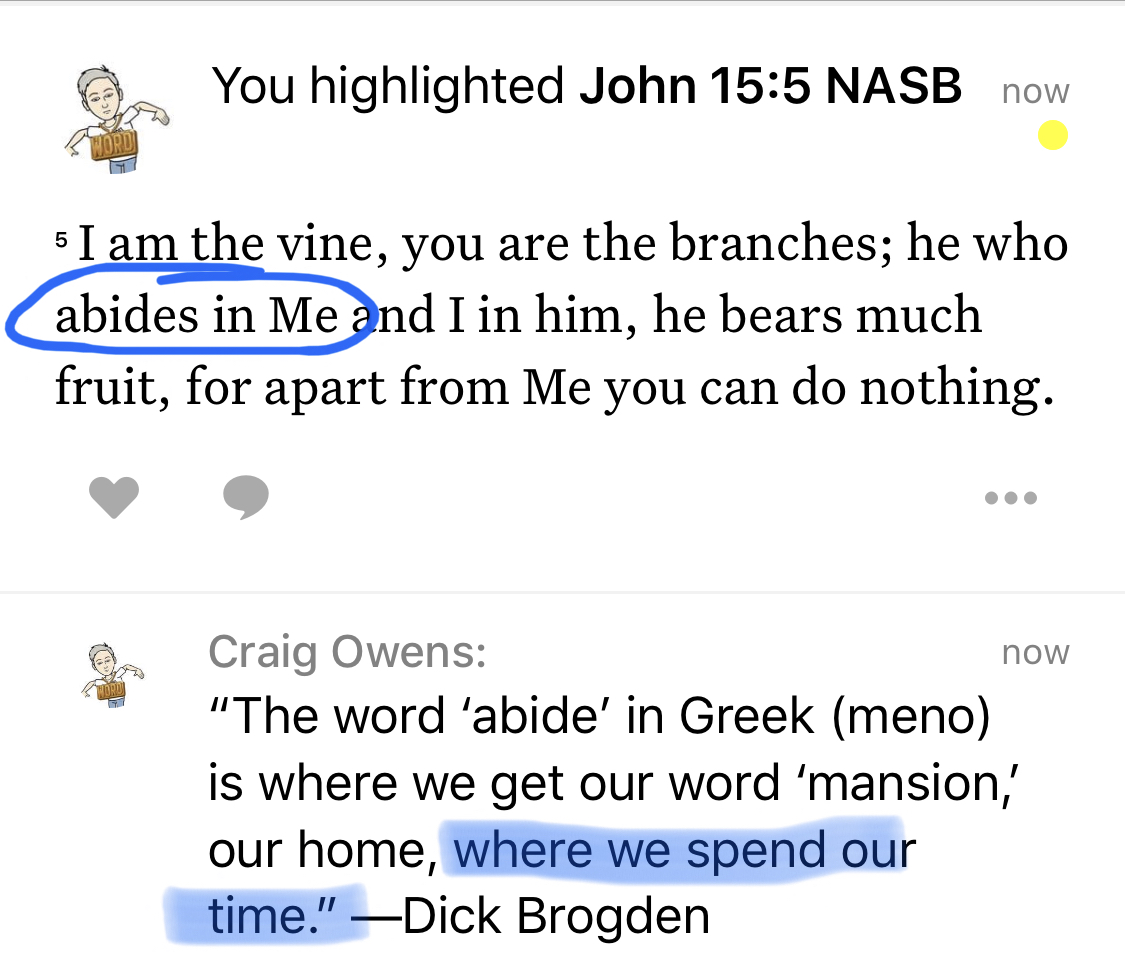
In the same way, we get more familiar with the “house rules” of our heavenly home the more time we spend there. My cousin Dick Brogden pointed out, “The word ‘abide’ in Greek (meno) is where we get our word mansion, our home, where we spend our time.” 

It’s also as we abide with Jesus that we get to know His heart. And then as we get to know Him better we can pray prayers more aligned to His will, prayers that He delights to answer. This makes our relationship with Him sweeter and sweeter. Just as the old chorus says—

He gets sweeter and sweeter as the days go by
Oh what a love between my Lord and I
I keep falling in love with Him
Over and over and over and over again

►► Would you please prayerfully consider supporting this ministry? My Patreon supporters get behind-the-scenes access to exclusive materials. ◀︎◀︎

The Preeminent Jesus

Listen to the podcast of this post by clicking on the player below, and you can also subscribe on AppleSpotify, or Audible. 

There is only one Jesus, but He is presented to us in the Bible with many facets, and we get to pray in all of those facets of His name! 

One of the facets of Jesus is His preeminence. The dictionary defines preeminent as “above and before others; superior; surpassing.” 

The Bible uses the word preeminence to mean “holding the first place.” The apostle Paul uses this idea of Christ’s supremacy when He describes Him this way—

The Son is the image of the invisible God, the FIRSTBORN over all creation. For in Him ALL things were created: things in heaven and on earth, visible and invisible, whether thrones or powers or rulers or authorities; ALL things have been created through Him and for Him. He is BEFORE ALL things, and in Him ALL things hold together. And He is the HEAD of the body, the church; He is the BEGINNING and the FIRSTBORN from among the dead, so that in EVERYTHING He might have the SUPREMACY. For God was pleased to have ALL His fullness dwell in Him. (Colossians 1:15-19, emphasis mine) 

Therefore God exalted Him to THE HIGHEST PLACE and gave Him the name that is above EVERY name, that at the name of Jesus EVERY knee should bow, in heaven and on earth and under the earth, and EVERY tongue acknowledge that Jesus Christ is Lord, to the glory of God the Father. (Philippians 2:9-11, emphasis mine) 

Praying in Christ’s preeminence means that we never have to settle for less than God’s best! 

When we began this series, I mentioned that there were some people who misuse the words of Jesus. Specifically the phrase where Jesus says, “I will do whatever you ask in My name” (John 14:13, 15:16, 16:23). They have taken this as license to ask for things for their own comfort, or claiming that praying “in the name of Jesus” means that we never have to experience pain, poverty, or any setbacks. 

But preeminence ≠ prosperity! 

Prosperity wrongly says Christians will never have trouble, never experience poverty or lack, and can claim and obtain lavish things just by invoking “in the name of Jesus.” 

Preeminence correctly says that Christians may have trouble, or poverty, or even martyrdom, but that Christ’s preeminence gets the final word, the decisive word, and the best word! 

Jesus didn’t pray to be removed from trials. The godly apostle Paul experienced ample trouble, and so did the heroes of faith (John 12:27-28; 2 Corinthians 11:23-27; Hebrews 11:35-38). Yet even in all of these troubles and pain and hardship, Christ’s preeminence prevails! 

As Paul said in Colossians 1, Jesus was the “firstborn from among the dead,” meaning that He is now preeminent even over death! Jesus said that His followers will—not “may”—experience persecution here, just as those heroes of the faith listed in Hebrews 11 did, but that the rewards in eternity are beyond compare (see 1 Corinthians 15:55, 57-58; Matthew 5:11-12; Hebrews 11:39-40). 

Horatio Spafford wrote the hymn It Is Well With My Soul. One of the stanzas reminds us:

Though satan should buffet though trials should come
Let this blest assurance control
That Christ has regarded my helpless estate
And has shed His own blood for my soul

Praying in the name of the preeminent Jesus does at least four things for us: 

  1. Gives us a surpassing victory—Romans 8:31-32, 37 
  2. Keeps us humble and God glorified—2 Corinthians 4:7
  3. Detaches us from earthly things that would take our eyes off of Jesus—Philippians 3:8
  4. Keeps us focused on Heaven—2 Corinthians 4:17

(check out all of the verses listed above by clicking here)

Let me say it again: Praying in Christ’s preeminence means that we never have to settle for less than God’s best! 

God’s best is not awaiting us here on earth, but it is our promised eternal reward for persevering to the end. It may seem tough at times, but our preeminent Savior walks with us every step of the way! 

If you’ve missed any of the other messages in this series on prayer, you can find links to all of those messages by clicking here. 

►► Would you please prayerfully consider supporting this ministry? My Patreon supporters get behind-the-scenes access to exclusive materials. ◀︎◀︎

Thursdays With Spurgeon—The Christian Lifestyle

This is a weekly series with things I’m reading and pondering from Charles Spurgeon. You can read the original seed thought here, or type “Thursdays With Spurgeon” in the search box to read more entries.

Listen to the podcast of this post by clicking on the player below, and you can also subscribe on AppleSpotify, or Audible. 

The Christian Lifestyle

Only let your conversation be as it becometh the gospel of Christ (Philippians 1:27 KJV). 

     The text says we are to ‘let our conversation be such as becomes the gospel.’ What sort of conversation, then, will we have? In the first place, the gospel is very simple. It is unadorned. No meretricious ornaments to clog the pile. It is simple and ‘not with persuasive words of human wisdom’ (1 Corinthians 2:4). … The Christian man ought always to be simple in all respects. I think wherever you find him, you ought not to need a key to him. He should not be like certain books that you cannot make out without having somebody tell you the hard words. He should be a transparent man like Nathaniel, who was ‘an Israelite indeed, in whom is no deceit’ (John 1:47). … 

     The Christian’s lips should speak truth when falsehood drops from the lips of all other men. A Christian man should never need to take an oath, because his word is as good as an oath. His yes should be yes, and his no, no. … 

     The gospel of Jesus Christ is a very fearless gospel. … As the gospel is very fearless in what it has to say, so let the Christian always be. It strikes me that a living that becomes the gospel of Christ is always a bold and fearless kind of living! … 

     But again, the gospel of Christ is very gentle. Hear it speak: ‘Come to Me, all you who labor and are heavy laden, and I will give you rest’ (Matthew 11:28). Here is its spirit in its Founder: ‘A bruised reed He will not break, and smoking flax He will not quench’ (Matthew 12:20). Moreover, bad temper, snapping off of people’s heads, making men offenders for a word—all this is quite contrary to the gospel. … If you have a lion’s heart, have a lady’s hand. Let there be such a gentleness about your carriage that the little children may not be afraid to come to you and the publican and harlot may not be driven away by your hostility, but invited to goodness by the gentleness of your words and acts. …  

     The world ought to point to us and say, ‘See, how these Christians love one another? Not in word only, but in deed and truth!’ … 

     The gospel of Christ is mercy, generosity, and liberality. It receives the beggar and hears his cry! It picks up even the vile and undeserving and scatters lavish blessings upon him, and it fills the bosom of the naked and of the hungry with good things. Let your conversation be such as becomes the gospel of Christ!

From The Gospel’s Power In A Christian’s Life

We’ve had a tagline at our church for years: Come and see why so many people around here say, “I ♥ my church!” I believe Christians can—and should—live in such a way that everyone in their communities would sit up and take notice of the positive changes. 

Let’s all examine our lifestyle. Is it simple, truthful, bold, gentle, loving, merciful, generous, and hospitable? If not, what changes do we need to make? But if it is all these things, God’s blessing is sure to follow this lifestyle that so clearly portrays the gospel of Jesus Christ! 

I’ve shared some other posts about a church’s reputation here, here, and here. 

►► Would you please prayerfully consider supporting this ministry? My Patreon supporters get behind-the-scenes access to exclusive materials. ◀︎◀︎
The Key To God’s Treasure

Listen to the podcast of this post by clicking on the player below, and you can also subscribe on AppleSpotify, or Audible. 

…the fear of the Lord is the key to this treasure (Isaiah 33:6). 

What treasure is Isaiah referring to? There is an amazing list of blessings in this chapter! Things like…

  • God’s graciousness 
  • God’s strength
  • Salvation
  • God’s justice
  • God’s righteousness
  • A sure foundation
  • “A rich store of salvation and wisdom and knowledge” 
  • Eternally secure in God’s presence
  • Seeing God’s beauty 
  • Having evil people removed from my life 
  • Peace 

How do I get the key to this treasure? By placing my faith in Jesus. Jesus paid the price, so He could take the key from the devil and hold it securely. When I am in Him, I have access to this key to God’s riches! 

With all of this treasure accessible to me, how do I now live? In a word: Nobly. “But the noble make noble plans, and by noble deeds they stand” (Isaiah 32:8). I am a child of God, a joint-heir with Jesus. I lack no good thing, so I can live securely, gracefully, and nobly. I must live this way to bring glory to my Lord and my Master every single day! 

►► Would you please prayerfully consider supporting this ministry? My Patreon supporters get behind-the-scenes access to exclusive materials. ◀︎◀︎

Leading Prudently

Listen to the podcast of this post by clicking on the player below, and you can also subscribe on AppleSpotify, or Audible. 

Isaiah 52–53 contain a description of Jesus as a servant leader. One phrase describes Him like this: “See, My Servant will act wisely” (Isaiah 52:13). 

That phrase “act wisely” is translated in some other translations of the Bible as “deal prudently.” I like that word prudently. It’s not a word that we use very often today, but it’s one that sets God’s servant leaders apart from worldly leaders. 

Prudent can be described as…

  • circumspect 
  • intelligently speaking and acting 
  • teaching skillfully 
  • having increasing understanding and insight
  • helping others grow in understanding 
  • behaving appropriately 
  • living wisely
  • guiding oneself and others willingly 

What happens to the leader who lives and leads this way? Listen to the entire verse that I only quoted a portion of earlier—

See, My Servant will act wisely; He will be raised and lifted up and highly exalted. 

Notice that this exalted person is described as a servant—not just anyone’s servant, but Jehovah’s servant. As a servant of God, Jesus becomes a servant of all. And as a servant of God, He is exalted and honored above all. 

Jesus is every leader’s Ultimate Example of this. Jesus set aside every prerogative He had that would give Him the right to do things His way, in order to make Himself a servant of God and a servant of mankind (Philippians 2:6-11; Mark 10:45). Jesus gave all of His followers this example to emulate (John 13:15-17), so Paul tells us our “mindset should be the same as that of Christ Jesus” (Philippians 2:5). 

I need to ask myself a question—and I would invite you to ask yourself this too: As a leader, am I growing in Christlike prudence? 

A mark of a godly leader is one who can see his growth in prudence. 

Jesus, may You be pleased as I follow Your example of living and leading prudently. Holy Spirit, help me see the areas in my life where I need to submit to You. Father, may You be pleased to bless my leadership as it aligns with Your heart. I want to act wisely, lead prudently, and help others to follow this example of Jesus for themselves. 

This is part 61 in my series on godly leadership. You can check out all of my posts in this series by clicking here.

►► Would you please prayerfully consider supporting this ministry? My Patreon supporters get behind-the-scenes access to exclusive materials. ◀︎◀︎
The Human Jesus

Listen to the podcast of this post by clicking on the player below, and you can also subscribe on AppleSpotify, or Audible. 

We saw that our beautiful Jesus became grotesque—taking our ugly sin on Himself so that He could clothe us with His perfectly righteous robe. In so doing, He became even more resplendent. His friend John saw Him in such radiant beauty that he crumbled to his knees at the sight of His majesty (Revelation 1:12-16)! 

Just like John and others in the Bible, when we see ourselves in contrast to His awesome beauty, we often feel shabby and unworthy to be in His presence. Job expressed his desire to somehow get away from this Perfection (Job 7:11-21). Ultimately, in his desperation, Job utters something prophetic—

God is not a mere mortal like me that I might answer Him, that we might confront each other in court. If only there were someone to mediate between us, someone to bring us together, someone to remove God’s rod from me, so that His terror would frighten me no more. Then I would speak up without fear of Him, but as it now stands with me, I cannot. (Job 9:32-35) 

When we are confronted with the perfection of God, we all want “someone to arbitrate”—someone who will fairly represent both sides. We need someone both God and man. Since man cannot become God, only God can become man. Isaiah prophesied it this way, “God saw that there was no one, He was appalled that there was no one to intervene; so His own arm achieved salvation for Him” (Isaiah 59:16). 

This Arbitrator or Mediator is Jesus the Christ! 

Jesus means “help from Jehovah.” This is His human name given to Him at His birth (Luke 1:31; Matthew 1:21, 25; Luke 2:21). 

Christ or Messiah means “anointed by God” and is His divine title. Often His title is used with the definite article “the” to signify that Jesus is the One and Only Messiah (Luke 2:26-27; John 1:41; Matthew 16:16; Acts 10:38). 

William Barclay commented on this: “Peter states [that Jesus was a human descendent of David] in the first recorded sermon of the Christian Church (Acts 2:29-36). Paul speaks of Jesus Christ descended from David according to the flesh (Romans 1:3). The writer of the Pastoral Epistles urges men to remember that Jesus Christ, descended from David, was raised from the dead (2 Timothy 2:8). The writer of the Revelation hears the Risen Christ say: ‘I am the root and the offspring of David’ (Revelation 22:16).” 

Many times this human name and divine title are linked together. In Hebrews, the name Jesus is used more times than any other title (19x), and Christ is the second-most used title (15x).

(For my Patreon supporters, I’ve shared a list of all of the titles for Jesus used in the book of Hebrews.)

Hebrews makes it perfectly clear how important it is that Jesus was made fully human just like us. We read phrases like

  • “made a little lower than the angels,” which was David’s way of talking about humans (see Psalm 8:4-6) 
  • “made perfect through suffering”—only humans can suffer 
  • “flesh and blood” 
  • “made like His brothers in every way” 
  • “His life on earth”

Remember that I said the most-used titles in Hebrews were Jesus and Christ. The third-most used title in Hebrews is high priest (14x). Only the Human Jesus and the Divine Jesus could be the perfect High Priest and Mediator that Job longed for, and that you and I have to have!

This post is a part of a bigger series on prayer with the subtitle: “Learning to pray in the awesome name of Jesus.” So what does it mean that we can pray in the human name of Jesus? 

It means we don’t have to pray majestic prayers in order for God to take notice. We can pray very human prayers, we can groan with real human pain, we can growl with real human anger. Our totally human Jesus understands us, and the totally divine Christ runs to help us! 

Don’t try to sanitize your prayers to make them sound acceptable. Jesus didn’t! How awesome it is to have a High Priest who is both fully human and fully divine! 

If you’ve missed any of the other messages in this series on prayer, you can find a link to all of them by clicking here. 

►► Would you please prayerfully consider supporting this ministry? My Patreon supporters get behind-the-scenes access to exclusive materials. ◀︎◀︎