God-ability

Listen to the podcast of this post by clicking on the player below, and you can also subscribe on AppleSpotify, or Audible. 

The last time we were together, Pastor Caleb mentioned that I was the only one he knew that put hot sauce on my eggs. But then several of you let him know that you do that too. After the service, someone told me that they like Tabasco sauce on their pizza, which isn’t something I enjoy. 

We all have different tastes. Our tastebuds are just one of the things that makes us unique creations. Unique means one-of-kind, no one else like me. We don’t need to add something like “very unique” because just by itself the word means that God made a once-in-eternity masterpiece when He made you and me. 

It’s a good thing that we are unique. I see what you don’t see, and you see what I don’t see. There are some things I know how to do well, but perhaps you struggle doing them. That’s okay because there are things you can do that I won’t have the opportunity to do. Combined together we saints make an amazing team! 

The apostle Paul understood the value of unique individuals. 

(Check out all of the Scriptures in this post by clicking here.) 

Titus was probably the one who carried Paul’s letter to the Corinthians and then had the responsibility to teach those saints how to carry out what was in the letter (2 Corinthians 2:12-13; 7:6-7, 13-15; 8:6, 16-17). Titus was the pastor that Paul sent to Crete. Paul quoted a poet who said, “Cretans are always liars, evil brutes, lazy gluttons” (Titus 1:12). Titus was confident and bold to stand his ground for what he believed (Galatians 2:1-3). 

Timothy was more soft-spoken and tenderhearted, so Paul had to encourage him more (1 Timothy 4:7, 12), but he was the one who could soothe troubled spots. Timothy stepped in to help behind the scenes (Acts 18:1-5) and he was the one Paul reached out to with his last letter form prison, asking Timothy to come to him (2 Timothy 4:12). 

What a great thing it is to have unique saints in our lives! 

One person—not matter how gifted—cannot do it all. Look at Moses in Exodus 18:13-18. Even an anointed team like the 12 apostles cannot to it all. Look at Acts 6:1-2. 

These leaders recognized the need to other uniquely gifted people to come alongside them. Moses was advised to choose capable men. In other words, those with the ability to judge disputes wisely (Exodus 18:19-25). The apostles chose those who were full of the Holy Spirit and wisdom (Acts 6:3-6). The Greek word for wisdom (sophia) means someone with heaven-sent wisdom that also has the ability to apply that wisdom effectively. 

Israel in the Old Testament and the Church in the New Testament would have been constricted if those other people hadn’t agreed to let their God-given abilities be used. 

God’s talent + My ability = God-ability

In 2 Corinthians 8-9, Paul is specifically talking about the ability of people to give their offerings to help the growing church, but there is a phrase that I think is appropriate for any application of our gifts: They gave themselves first of all to the Lord (2 Corinthians 8:5). 

When what we do is a cheerful “get to” and not an obligatory “got to” it is noticed by everyone. Those two chapters in 2 Corinthians are filled with words like cheerful, eagerness, and enthusiasm. 

In our Hand2Hand food ministry, some people have…

  • Give-ability to give financially 
  • Shop-ability to find deals
  • Organize-ability to make all the parts work
  • Strength-ability to lift and move 
  • Deliver-ability to get the needed items to those who need them

But none of these work without availability. This is the attitude that makes our God-ability a blessing and not a chore. 

There is a place in ministry for every Christian. When you are available, God will allow the talent that He has given you to be a blessing to the Church. You benefit, the other saints benefit, and the watching world sees a living witness that will draw them to Jesus. 

►► Would you please prayerfully consider supporting this ministry? My Patreon supporters get behind-the-scenes access to exclusive materials. ◀︎◀︎
The Blessing Of Being There

Listen to the podcast of this post by clicking on the player below, and you can also subscribe on AppleSpotify, or Audible. 

Luke had previously spent a little time with the apostle Paul (Acts 16:10-18), but near the end of the historical record in the Book of Acts, we see Luke with Paul almost continually. 

(Check out all of the Scriptures in this post by clicking here.)

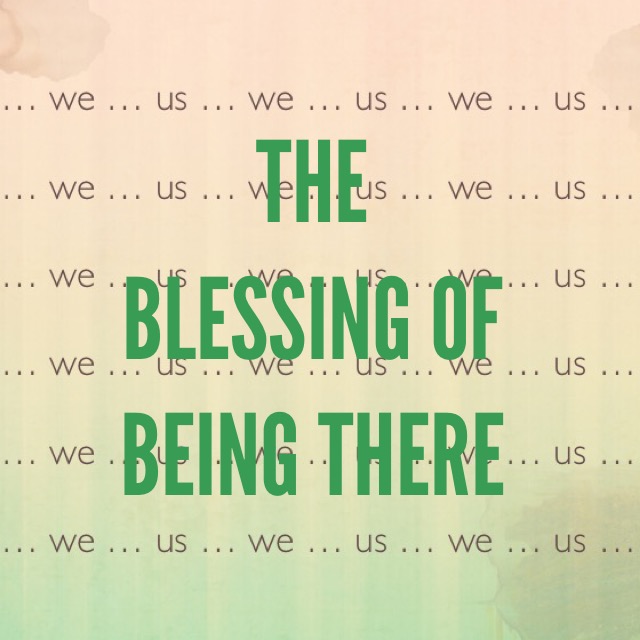
The reason we can tell this is because of the pronouns “us” and “we.” From Acts 20:5—21:18, 27:1—28:16, these two pronouns are used over 80 times! 

Luke probably joined Paul in Greece (20:2) and was with him when they arrived in Jerusalem. After Paul’s arrest, transport to Caesarea, and being bound over for his hearing before Caesar, Luke is still there (27:1). Luke remains with Paul throughout the entire journey to Rome, and is still with him as the Book of Acts closes. 

Paul calls Luke a faithful friend (2 Timothy 4:11). Today, people know this man who wrote the Gospel of Luke and the Book of Acts as a preeminent historian. It is God’s perfect provision and timing that links together the lives of Paul and Luke at such a pivotal time. 

Quite simply stated: Paul is blessed by Luke just being with him. 

Not only does Luke preserve the accurate historical record of Paul’s missionary journeys, but it appears that Luke is actively involved in Paul’s letter writing to the churches. Luke uses more unique Greek words in the New Testament than any other writer. But many of the words that appear more than once are found only in the historical works of Luke and the letters of Paul. I can almost imagine Paul dictating a letter, and then pausing to ask his educated friend Luke, “What is the Greek word that means such-and-such?” Luke’s thoughtful, Spirit-inspired reply is then included in these important letters for the early churches. 

This should be a great encouragement to us still today that God has us where we need to be, and with the people that need us in their lives. 

What skills do you have? Who has God put in your life? How can your talents be a blessing to those people? 

Simply doing what God has gifted you to do with those whom He has placed in your life is both a blessing to your companions and is pleasing to your God. 

I pray that you will find a way to use your God-given talents to be a blessing to those around you. Perhaps the blessing will simply be you being there for your friends as they journey through their life. 

►► Would you please prayerfully consider supporting this ministry? My Patreon supporters get behind-the-scenes access to exclusive materials. ◀︎◀︎

Living In Your Gift Zone

God created each and every human being uniquely. We all come in different shapes and sizes, but we all share one thing in common: He created each of us with a unique personality and a unique gift package. 

By unique, I truly mean that we are all one-of-a-kind creations that have never existed in all of history! 

Here’s another thing we all have in common: We usually live in a comfort zone that is far smaller than our gift zone. 

Living this way keeps us from soaring through life in the way that God intended. He wants each of us to know our gifts, and to use our gifts in a way that benefits our world and brings Him glory. It starts with believing that we are indeed gifted by our Creator. Then we must have the courage to step out of our comfort zone into the much larger gift zone God has given us. 

I invite you to join me at Calvary Assembly of God as we explore what God has to say about the gifts He has given us, how we recognize and leverage those gifts, and how we soar far beyond the boundaries of our comfort zone!

Check out all of the message in series:

Critics Can Be Gifts To Us

Listen to the podcast of this post by clicking on the player below, and you can also subscribe on AppleSpotify, or Audible.

I’m going to guess that I’m not alone in this: I don’t like when people criticize me. 

Especially when I’m in a leadership position, trying my best to make good decision for the entire organization, and someone comes up to me to criticize my decision-making abilities or my skill at carrying out my decisions. 

The easiest thing to do is simply dismiss their biting remarks. We can so easily say, “They have no idea what they’re talking about so I can ignore everything they’ve said to me.” 

Criticism is one of the most common bites that sheep dispense to those who are trying to shepherd them. 

But before we simply dismiss them, let me ask you to consider this: 

  • Is it possible that God is using these critics to get your attention? 
  • Is it possible that you have a flaw in a blind spot, and this critic is showing you something that you’ve been missing? 

If you can answer, “Yes” to even one of those questions, then you can also say that your critic is a God-sent gift for you to improve your leadership capacity. 

I discussed this recently on the Fellowship of Ailbe podcast.

The full quote from Dick Brogden’s book Proverbs: Amplified and Applied says: “Critics and skeptics are gifts to us, for in their aspersions they often bring to light a brokenness or a liability early on in its development in us. If we are secure enough to ferret out the truth through the condemnation of others, we remain healthy in the long term as our malady is exposed and dealt with before it becomes too serious.” 

This means that criticism should lead us to a time of honest introspection.

In the chapter “Is God Trying to Get My Attention?” in my book When Sheep Bite, I wrote—

      Remember that we are naturally self-protective, so this time of introspection will need to be supernaturally empowered by the Holy Spirit if we are going to see the true prompter of the attack. A prayer I have prayed more times than I can count is, “Search me thoroughly, O God, and know my heart! Try me and know my thoughts! And see if there is any wicked or hurtful way in me, and lead me in the way everlasting” (Psalm 139:23-24 AMPC). 

      It is only this humble reflection that can turn an experience into a lesson. If I immediately lash out at the sheep who hurt me, I may drive that sheep away from me but I won’t necessarily have learned a lesson. The one who bit me may have left my pasture, but perhaps they will never join any other pasture but may wander in the wilderness for the rest of their life. If I slow down to respond, it’s quite possible that both these biting sheep and I can grow through this valuable lesson. 

Let’e reframe the way we think about critics and their criticism. Before we simply dismiss it, let’s prayerfully consider if there is a lesson that God is trying to teach to us through this critic. 

You can check out the full conversation I had on the Ailbe podcast here. 

You can order a copy of When Sheep Bite here.

And you may be interested in two related blog posts: 20 helpful thoughts on criticism and What is valid criticism?

►► Would you please prayerfully consider supporting this ministry? My Patreon supporters get behind-the-scenes access to exclusive materials. ◀︎◀︎

The Danger Of Great Gifts

I recently posted this

“We are more vulnerable to an attack (and a temporary defeat) after a victory than after a defeat. Why is that? Because victory tends to make us self-satisfied, but defeat tends to make us God-dependent.”

The same is true with our God-given gifts. In his book on spiritual warfare, William Gurnall identifies great giftings in an individual’s life as a vulnerable place for an attack:

“Great gifts lift a saint up a little higher in the eyes of men, but they also tempt him to pride. Do not envy those with great gifts; instead, pity and pray for them. It is hard for them to escape the error of supposing that God’s grace in them is their own doing. … 

“Had God given you gifts merely for your own pleasure or edification, the sin of pride would not be quite so bad. But when you use your gifts to lift yourself up, you tear down the Body of Christ. Your gifts are necessary to the health of the whole Body, but they must be administered properly.” —William Gurnall, in The Christian In Complete Armor (emphasis mine)

Thursdays With Spurgeon—Sweeter And Sweeter

This is a weekly series with things I’m reading and pondering from Charles Spurgeon. You can read the original seed thought here, or type “Thursdays With Spurgeon” in the search box to read more entries.

Sweeter And Sweeter

Therefore, to you who believe, [Jesus] is precious. (1 Peter 2:7)

     The preciousness of Christ is connected in the Scriptures with a believing people. The Bible never expects that without faith men will glorify Christ. For, dear brothers and sisters, it is by faith that the value of Christ is perceived. You cannot see Christ by mere reason, for the natural man is blind to the things of the Spirit. You may study the evangelists themselves, but you will never get to see the real Christ who is precious to believers except by a personal act of faith in Him. …  An ounce of faith is better than a ton of learning! … 

     By faith the Lord Jesus is more and more tasted and proved and becomes more and more precious. In proportion as we taste our Lord, He will rise in our esteem. … The more afflictions a believer endures, the more he discovers the sustaining power of Christ, and therefore the more precious Christ becomes to him. … 

     Every time you give way to skepticism and critical questioning, you lose a sip of sweetness.

From Christ Precious To Believers

Oh, how sweet Jesus is! 

Have you tasted and discovered this for yourself?

I just keep falling in love with Him
Over and over and over and over again
I keep falling in love with Him
Over and over and over and over again
He gets sweeter and sweeter as the days go by
Oh what a love between my Lord and I
I keep falling in love with Him

Thursdays With Spurgeon—Unspeakable Gift

This is a weekly series with things I’m reading and pondering from Charles Spurgeon. You can read the original seed thought here, or type “Thursdays With Spurgeon” in the search box to read more entries.

Unspeakable Gift

Therefore, to you who believe, [Jesus] is precious. (1 Peter 2:7)

     We can never say enough of God’s unspeakable gift! On any other subject there is a danger of exaggeration, but it is impossible here. If you find honey, it is well to eat cautiously of it, for it may pall upon you. But when you find Christ, take in all you can and pray for an enlarged capacity, for He will never grow too sweet. …  

     Let every one of us do something fresh by which to prove the believer’s love to Christ! Let us not be satisfied with proof already given. Let us invent a new love token! Let us sing to the Lord a new song! Let not this cold world dare to doubt that to believers Christ is precious! Let us force the scoffers to believe that we are in earnest!

From Christ Precious To Believers

When was the last time you were amazed at something new you discovered about Jesus? The apostle Paul prayed that our hearts would continue to expand into the height, depth, breadth, and width of His fullness. 

When was the last time you sang a new love song to Jesus? He is singing over you, and He would love to hear your original love song to Him as well. 

Over the mountains and seas
Your river runs with love for me
And I will open up my heart
And let the Healer set me free

I’m happy to be in the Truth
And I will daily lift my voice
For I will always sing
Of when Your love came down

I could sing of Your love forever! 

Oh, I feel like dancing
It’s foolishness, I know
But when the world has seen the light
They will dance with joy
Like we’re dancing now

I could sing of Your love forever!

Thursdays With Spurgeon—Christ’s Gifts For The Rebellious

This is a weekly series with things I’m reading and pondering from Charles Spurgeon. You can read the original seed thought here, or type “Thursdays With Spurgeon” in the search box to read more entries.

Christ’s Gifts For The Rebellious

When You ascended on high, You took many captives; You received gifts from people, even from the rebellious—that You, Lord God, might dwell there. (Psalm 68:18) 

     What a strange sovereignty there is about the grace of God! Truly He will have mercy on whom He will have mercy, for in this instance He selects for special mention those whom you and I would have passed over without a word! ‘Even from the rebellious.’ … 

     ‘Even among the rebellious.’ When our Lord rode home in triumph, He had a pitying heart toward the rebellious! When He entered the highest place to which He could ascend, He was still the sinner’s friend! When all His pains and griefs were being rewarded with endless horror, He turned His eyes upon those who had crucified Him and bestowed gifts upon them! …

     When God gives gifts, will you turn them away contemptuously and say, ‘I like this one but the other I do not’? Did the Father bestow these gifts upon His Son? And has the Holy Spirit put them into different earthen vessels that the excellence of the power might be of God?

From Our Lord’s Triumphant Ascension

Jesus gave gifts to the rebellious?! 

Yes, because that’s what we all were. Not one of us was righteous (Romans 3:23) nor worthy of His love (Romans 5:6-8)—let alone any gifts from Him! But Jesus took all our punishment upon Himself (Isaiah 53:4-6). 

And not only did He take away our punishment, He gave gifts to the rebellious—to you and me! Such wondrous love! 

Friend, there is a question we must all ask ourselves: How I am treating the precious gifts my Savior purchased for me?


Thursdays With Spurgeon—Jesus Gives His Bride Good Gifts

This is a weekly series with things I’m reading and pondering from Charles Spurgeon. You can read the original seed thought here, or type “Thursdays With Spurgeon” in the search box to read more entries.

Jesus Gives His Bride Good Gifts

     Our Lord Jesus Christ has nothing that He does not give to His church. He gave Himself for us and He continues, still, to give Himself to us. He receives the gifts, but He only acts as the conduit through which the grace of God flows to us. It pleased the Father that in Him should all fullness dwell, and of His fullness have we all received. …  

     These gifts, given in the form of men, are given for men [Ephesians 4:8-13]. Churches do not exist for preachers, but preachers for churches. … My brothers and sisters in the church, we who are your pastors are your servants for Christ’s sake. Our rule is not that of lordship, but of love. …  

     See how wonderful, then, was that ascension of our Lord in which He scattered down mercies so rich and appropriate among the sons of men! From His glorious elevation above all heavens He sends forth pastors, preachers, and evangelists, through whom the Holy Spirit works mightily in those who believe. By them He gathers the redeemed together and builds them up as a church to His glory!

From Our Lord’s Triumphant Ascension

Both the apostle Paul and King David from whom he quotes (see Psalm 68:18-19) see God’s victories as our victories. In the same letter to the church at Ephesus, Paul says that Jesus gave up everything for His Bride—the Church.

To bring His Bride into the fullness of her radiance, Jesus gave gifts to the Church in the form of people—apostles, pastors, evangelists, teachers, and servants that will help build up the Church and bring her into full maturity. 

Don’t ever downplay the important role that you, dear Christian, play in His Bride. YOU are a gift from Jesus and a gift to His Bride!

Make A Big To-Do Out Of God

“God endows us with gifts so we can make Him known. Period. God endues the Olympian with speed, the salesman with savvy, the surgeon with skill. Why? For gold medals, closed sales, or healed bodies? Only partially.

“The big answer is to make a big to-do out of God. Brandish Him. Herald Him. ‘God has given gifts to each of you from His great variety of spiritual gifts. Manage them well. … Then God will be given glory’ (1 Peter 4:10-11 NLT). 

“Live so that ‘He’ll get all the credit as the One mighty in everything—encores to the end of time. Oh, yes!’ (1 Peter 4:11 MSG). Exhibit God with your uniqueness. When you magnify your Maker with your strengths, when your contribution enriches God’s reputation, your days grow suddenly sweet.” —Max Lucado, in You!