Thursdays With Oswald—Becoming Carefully Careless

Oswald ChambersThis is a weekly series with things I’m reading and pondering from Oswald Chambers. You can read the original seed thought here, or type “Thursdays With Oswald” in the search box to read more entries.

Becoming Carefully Careless

     Faith is our personal confidence in a Being Whose character we know, but Whose ways we cannot trace by common sense. … Common sense is mathematical; faith is not mathematical, faith works on illogical lines. …  

     To have faith tests a man for all he is worth, he has to stand in the common-cents universe in the midst of things which conflict with his faith, and place his confidence in the God Whose character is revealed in Jesus Christ. …  

     Most of us are pagans in a crisis; we think and act like pagans, only one out of a hundred is daring enough to bank his faith in the character of God. …  

     Jesus does not say, “Blessed is the man who does not think about anything”; that man is a fool; He says, “Be carefully careless about everything saving one thing—your relationship to God.” … Many people are careless about what they eat and drink, and they suffer for it; they are careless about what they put on, and they look as they have no right to look; they are careless over property, and God holds them responsible for it. Jesus is saying that the great care of the life is to put the relationship to God first and everything else second. Our Lord teaches a complete reversal of all our practical sensible reasonings. Do not make the ruling factor of your life what you shall eat, or what you shall drink, but make zealous concentration on God the one point of your life. … Jesus Christ says, “Reverse the order, get rightly related to Me first, see that you maintain that as the great care of your life, and never put the concentration of your care on the other things.”

From Studies In The Sermon On The Mount

It does seem illogical from our human perspective to not think about the basics of life first and foremost, but Jesus is clear and consistent in His message to us that God should be THE priority. Seek Him first and all the other things fall into place. Be “carefully careless” about everything except your relationship with Jesus! 

Don’t be a pagan atheist in a time of trial. Don’t be that 99 out of a hundred that abandons God when times are tough. Instead, be that “one out of a hundred [that] is daring enough to bank his faith in the character of God” no matter what the circumstances are! 

When Your Walking Is Your Praying

Have you ever been in the right place at the right time to experience something wonderful? Maybe you got to meet someone important, or you got the job, or you got the money, or you got to ride in that fancy car. 

Some will call you “lucky” or say you “caught a break,” but both of those statements imply that something unexpected happened to you. 

Is it still “lucky” to be in the right place at the right time if you knew ahead of time that it was coming? For praying Christians, to be in the right place at the right time when we are expecting God to provide is called “an answer to prayer.” 

David prayed, “In the morning, Lord, You hear my voice; in the morning I lay my requests before You and wait expectantly” (Psalm 5:3). The Aramaic word for prayer means “to set a trap.” If we pray, and we live in expectation, then it isn’t luck when we’re in the right place at the right time, but it’s a “trap” that caught the answer to our prayer. 

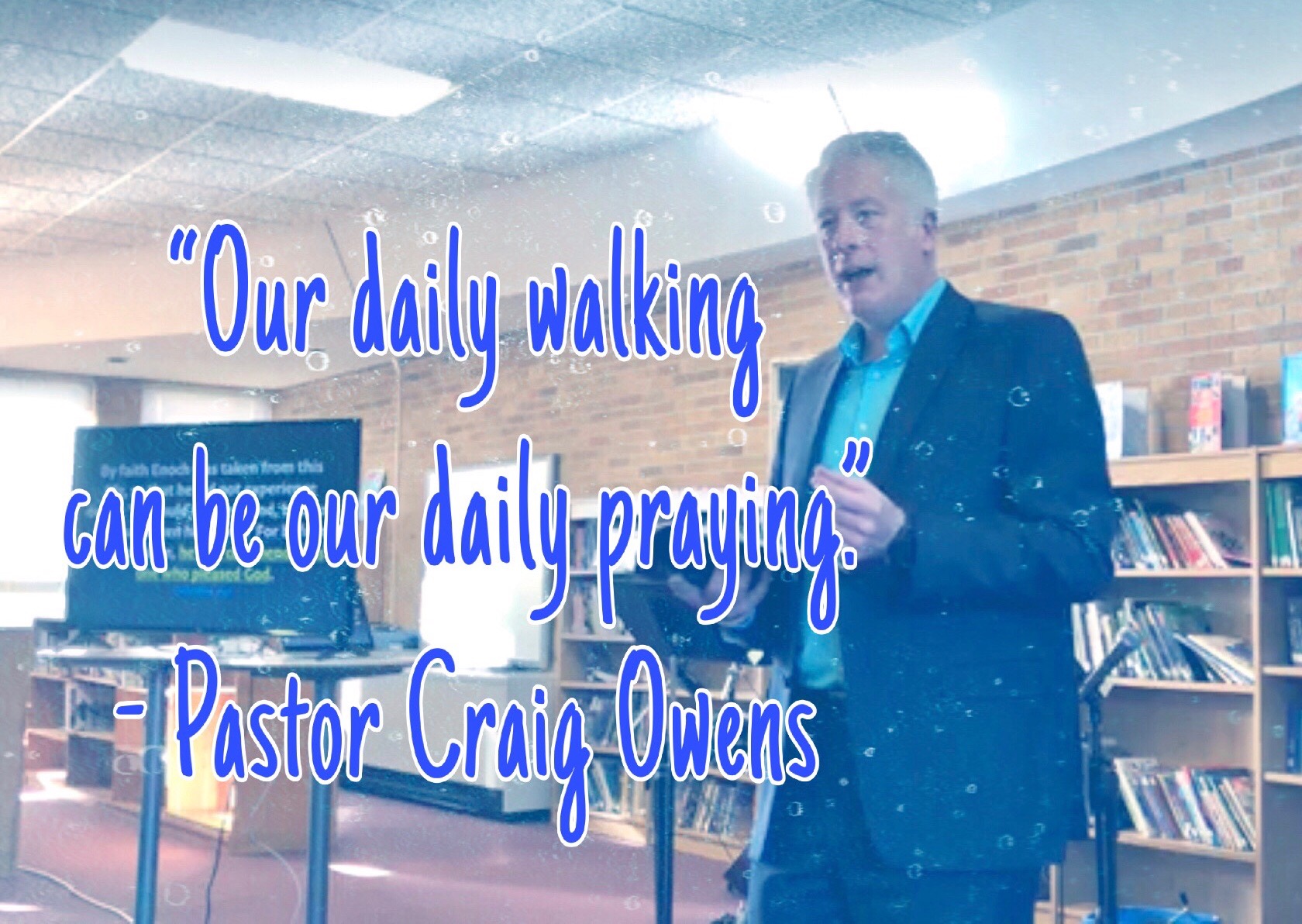
Our daily walking can be our daily praying, as long as we’re walking in faith in the direction God pointed us. 

One man who—literally!—walked this principle out was Elisha.

Before we look at Elisha’s expectant, prayerful walking, let’s look at his prayer request—

When they reached the other side, Elijah said to Elisha, “What can I do for you before I’m taken from you? Ask anything.” Elisha said, “Your life repeated in my life. I want to be a holy man just like you (2 Kings 2:9 MSG).

Elisha was essentially asking to be like Elijah’s firstborn son, to be his spiritual heir. This was the original promise God gave when He told Elijah to anoint Elisha as his successor (1 Kings 19:16). From that point onward, Elisha steadily walked in expectation of God answering this prayer. 

Elisha wouldn’t stay in a place of military victory, or in a significantly spiritual place, or even in a place surrounded by godly leaders. Elisha wouldn’t be held back by a lucrative family business, or the warning words of friends or his spiritual mentor, or even the seemingly uncrossable Jordan River. He kept on walking (see 2 Kings 2:1-15).

He kept on walking.

He kept on walking until “suddenly” God showed up and answered his prayer. 

But was it really “suddenly”? Elisha knew it was coming. He believed what God had promised. He clung to it even when Elijah told him he had asked “a difficult thing.” Elisha kept on walking until he was in the right place at the right time to receive all that God had planned. 

If you have prayed in faith, start walking. Settling anywhere else is robbing yourself of a blessing and robbing God of glory. 

Just keep walking! And let your walking be your praying. Don’t get discouraged. Don’t settle. Don’t stop eagerly expecting that the next step you took could be the “suddenly” you’ve been waiting for. Just keep walking!

Join me this Sunday as we learn a valuable lesson from another bold pray-er from the Bible. 

Boldly Praying

As a general rule, God would like us to pray much more boldly than we typically do. 

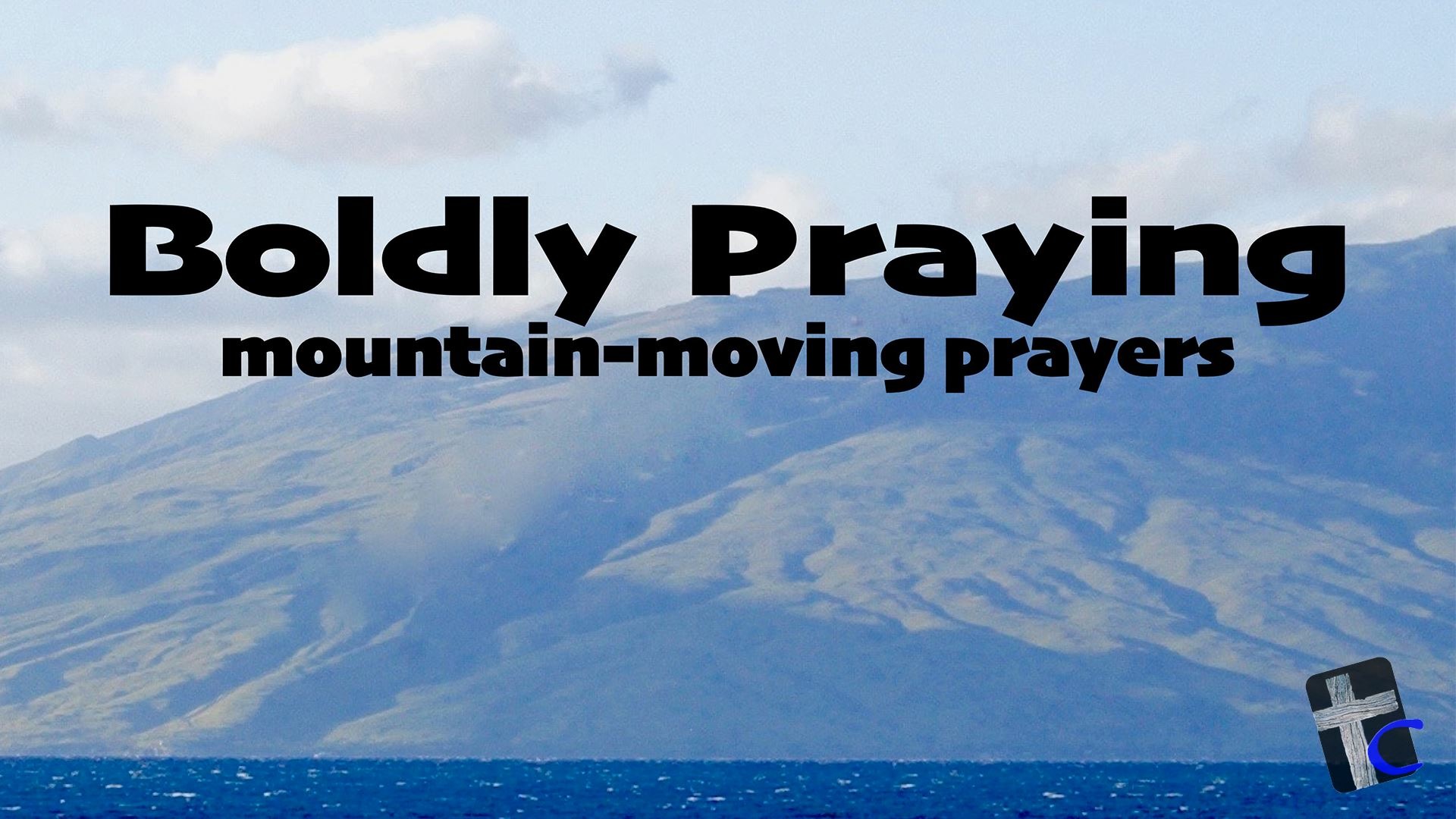
Jesus told us that we could pray mountain-moving prayers! But C.S. Lewis rightly observed, “If we consider the unblushing promises of reward and the staggering nature of the rewards promised in the Gospels, it would seem that our Lord finds our desires, not too strong, but too weak.” 

This Sunday we begin a new series of messages called Boldly Praying, in which we are going to consider how we can replace our weak prayers with bold prayers. We’ll be looking at the requests of four bold pray-ers that we meet in the pages of Scripture, and each one of them will teach us a new aspect of bold praying. 

Join us either in person or on Facebook Live. 

If you have missed any of the messages in this series, check out these recaps—

Get Up And Get Moving

When Joseph woke up, he did what the angel of the Lord had commanded him… (Matthew 1:24). 

I was reading an article posted on WebMD about how much damage we can do to our hearts by spending more time in front of the TV or computer than we do exercising. You’re probably thinking, “Well, duh! isn’t that obvious?!” It should be, and yet all of us still have a natural tendency to just sit there.

One quote especially stood out to me —

“It’s not even about the exercise. It’s about not sitting,” says Suzanne Steinbaum, DO, a preventive cardiologist at Lenox Hill Hospital in New York City. “I think that sort of points us in a little different direction. In order for you not to cause harm to yourself, you really need to focus on getting up and moving.”

This reminds me of Joseph (Mary’s husband) in the Bible. God spoke to him three times in dreams. After Joseph woke up, instead of just sitting there contemplating the vision, there’s a phrase that shows up after every single vision—“Joseph got up and did.” 

A mark of a godly leader is one who obeys God quickly.

I’m convinced that if Joseph had not obeyed the first God-given vision, he wouldn’t have been given anymore. 

Has God given you a vision for your life? If so, just sitting there may do damage to your heart and limit any other visions from God. So follow Joseph’s example and get up and get moving!

This is part 32 in my series on godly leadership. You can check out all of my posts in this series by clicking here.

Thursdays With Oswald—Isaiah 45 and 53

Oswald ChambersThis is a weekly series with things I’m reading and pondering from Oswald Chambers. You can read the original seed thought here, or type “Thursdays With Oswald” in the search box to read more entries.

Isaiah 45 and 53

[These are notes on Oswald Chambers’ lectures on Isaiah 45 and 53.]

     Ever remember that “eternal life” is to know God, therefore you cannot expect to know Him in five minutes or forty years. … There are whole tracks of God’s character unrevealed to us as yet, and we have to bow in patience until God is able to reveal the things which look so dark. … 

     God never reveals anything ahead of moral and spiritual progress. The Christian worker who has never walked in the darkness of God’s hand with no light, has never walked with God at all. The principle of walking with God is that it is a walk by faith, not by sight; a walk in the light of Christ, not in the light of dogmatic conviction. Jesus as our example was under the shadow of the hand of God. “If it be possible, let this cup pass from Me.” He knew He could have called twelve legions of angels to His rescue, but He did not call one; not one fire of His own did He kindle, not one self-generated effort did He ever make. … Our Lord taught over and over again that things will never be explained in this life. We have to get rid of the idea that we are going to be vindicated down here; Jesus was not. The millennium age will be the vindication of the saints; this is the age of their humiliation. The triumphant thing for a saint is to stand true to God in spite of all the odds the world, the flesh and the devil can bring. … 

     Jesus Christ’s suffering was unique: He knew why He suffered. … There was nothing of the morbid fanatic about Our Lord: He looked beyond the travail to the joy set before Him, consequently He “endured the Cross, despising the shame.” … 

     Suffering unjustly will either produce sympathy with satan or similarity to Christ. Sympathy with satan arises from self-pity—“Why should I have to go through this?” 

From Notes On Isaiah 

There’s no doubt about it: suffering is hard. It’s confusing, too, for even many ‘seasoned saints.’ 

Jesus was not exempt from suffering, and neither will His followers be. In fact, Jesus even told us ahead of time that we should expect to suffer for His name’s sake. 

Our suffering never takes God by surprise. Neither is He indifferent to it. Remember that Jesus suffered in all the same ways we will without ever sinning. Now He intercedes before the Father on our behalf when we go through times of suffering. 

God’s suffering IS producing something great. Don’t bail out. Don’t give in to self-pity. Know that God is with you in your suffering, and He is accomplishing something far greater than you can ever imagine in this life. Hang in there—triumphant vindication IS coming! 

12 Quotes From “Notes On Isaiah”

Oswald Chambers always has more insights than I can possibly share with others: he is a true treasure-trove of biblical illumination! Check out my review of his Notes On Isaiah by clicking here. Below are a few shorter quotes from this book. If you would like to read some longer passages, check out my weekly series called Thursdays With Oswald. 

“What we are apt to call interruptions are God’s way of introducing us to a new knowledge of Himself.” 

“The supernatural power of satan never reasons, it appeals to man’s superstition, not to his conscience.”

“I have no right to have anything less than the hope and the belief of Jesus Christ with regard to the worst and most hopeless of men.” 

“We have to keep the call of God alive, and continually recall to our minds what we are here for. … There is no danger of spiritual retrogression if we will keep in mind the times, one or more, when the Spirit of God has touched us.” 

“God’s dates are not man’s. God seems to pay no attention to our calendars; He has a calendar of His own in which He suddenly surprises a man in the midst of his days. Leave room for God. We expect God only on special days, in particular meetings; that is not God’s way. He comes suddenly, at midnight or at noonday.” 

“We are to be in the world while not of it, and to denounce by lip and life the things that are wrong.” 

“The mark of the beast is already here, and it will grow clearer before the man of sin is revealed (see 2 Thessalonians). It is slighting no one to say that prosperity in this order of things along with godliness is impossible, and growingly more impossible.” 

“Undisciplined imagination is the greatest disturber not only of growth in grace, but of spiritual sanity [Isaiah 26:3].” 

“Conscience does not shout in thunderclaps, you can easily drown its record, but it goes on, and if you do not heed it for a while because of sensational sinning, as soon as the sensation exhausts itself, back comes the monotonous tick, tick, that nearly drives a man mad. God will never make us listen to Him; we have to will to listen.” 

“Belief in God will always manifest itself in right principles, but if you put principles first you will end in disbelief in God.” 

“The only place of confidence is personal trust in God and patient waiting for Him. … To trust in the goodness of God is not enough, it is not eternal and abiding; we have to trust God Who is infinitely more than goodness.” 

“If in the face of all the appeals of common sense you remain true to God, that is the ‘proof of your faith’ which will be found to the glory of God.” 

Thursdays With Oswald—What Does It Mean To ‘Confess’ Christ?

Oswald ChambersThis is a weekly series with things I’m reading and pondering from Oswald Chambers. You can read the original seed thought here, or type “Thursdays With Oswald” in the search box to read more entries.

What Does It Mean To ‘Confess’ Christ? 

     We receive the Spirit of Christ as a gift, but we do not receive His mind, we have to construct that [see Philippians 2:5], and this is done in the same way that we construct the natural mind, viz., by the way our disposition reacts when we come in contact with external things. …  

     “You call Me Master and Lord, and rightly so, for that is what I am”; but does it mean any more to us than the mere saying of it? “Now that I, your Lord and Teacher, have washed your feet, you should do as I have done for you” and we cannot do it by sentiment. It was in the hour when Jesus knew “that the Father had put all things under His power, and that He had come from God and was returning to God” that He began to wash the disciples’ feet; and it is when we realize our union with Jesus Christ as our Lord and Master that we shall follow His example. [see John 13:1-4, 12-15] … 

     To “confess” Christ means to say, not only with the tongue, but with every bit of our life, that Jesus has come into our flesh.

From So Send I You

It’s one thing to say, “I am a Christian,” and it’s a completely different thing to live like Christ.

The Holy Spirit will continually bring a Christian into situations where we had the opportunity to develop the mind of Christ. As we develop His mind in us, it will naturally mean that we will “confess” Christ with our thoughts, words, and actions.

My prayer is that we will continually be focused on our Christ-like “confession.”

10 More Quotes From “The Christian In Complete Armour”

William Gurnall penned wise words for Christian warriors nearly 400 years ago, but their timelessness is still evident today. Check out a few more quotes from The Christian In Complete Armour. 

“When we consider satan’s many years of experience in studying natural knowledge, we will not accept his predictions as prophecies but see him as a learned naturalist with a short and dark text of natural causes. … Neither satan nor any other creature is able to foretell events which do not arise from natural causes nor follow moral and political probabilities. Prophecies in Scripture are locked up in the cabinet of the divine will to prove their heavenly extraction. They must come from God, Who can tell us what only He knows.”

“Look closely at the label to see whether the armor you wear is the workmanship of God or not. There are many imitations on the market nowadays. It is satan’s game, if he cannot keep the sinner satisfied in his naked, lustful state, to coax him into some flimsy thing or other that by itself will neither do him good nor satan harm. Perhaps it is church attendance, or good works, or some self-imposed penance by which he intends to impress both God and man. … Thus thousands perish who supposed they were armed against satan, death, and judgment—when all along they were miserable and naked. … God’s armor can never be made to fit over the suit [a self-satisfied man] has fashion for himself.”

“Knowledge is to faith as sunshine is to the farmer. Without it, faith cannot see to do her work. Nor can the work, once finished, be adequately inspected in the dim light of half-truths. If you do not ground yourself in the truth of the Gospel, satan will play upon your ignorance to thwart your spiritual growth.”

“You give satan a dangerous advantage if you see his wrath and fury bent in general against the saints, and not against you specifically: satan hates me; satan accuses me; satan temps me. Conversely, you lose much comfort when you fail to see the promises and providences of God as available for your own specific needs: God loves me; God takes care of me.”

“Until the love of a sin is quenched in the heart, the fire will never die out. How is this accomplished? Jerome says one love extinguishes another—that is, the love of Christ must quench the love of sin.”

“If you are a Christian, what is there to fear? You have no life to lose if you have already given yourself to Christ. And while God has not promised immunity from suffering, He has undertaken to bear your losses and pay you a hundredfold, though your reward may not come until another world.”

“A thief has no legal right to the wallet he takes from his victim simply because he puts it in his pocket and claims it is his own. Nor is the wrong thus committed ever made right by the passing of time. Years may go by before he is discovered; he will be as guilty on the day of his arrest as on the day he perpetrated the crime. Now a thief on the throne is no different from one in the alley. satan has indeed kept his stolen title a long time, but he is no less a criminal than on the day he first took Adam’s heart from God.”

“I grieve to see the soul fallen so far beneath its divine origin! The body, which was intended to be its servant, has instead become its master, and rules with a merciless hand.”

“When you cause anyone to sin, you take the devil’s office out of his hands. Let him do it himself if he can, but never allow him to use you as his hireling. Tempting someone else to sin is worse than sinning yourself. Those who tempt others plant their own wickedness in fertile fields and raise up new seed to the devil.”

“One reason we are so easily persuaded to sin is because we do not understand satan’s purpose. … Shall I tell you? Do you think your pleasure or profit is his goal? Not likely! His aspirations are all for himself. He has a personal grudge against God, and he brings you, by sinning, to join his quarrel. What he fails to mention is that you jeopardize your very soul to defend his pride and lust. But he is hardly worried about your welfare. He loses no more sleep over your certain damnation than a demented general does over the men he sends on a suicide mission. Knowing this, why would you ever join satan in his fight against God?”

You can read my full review of William Gurnall’s book by clicking here. I have shared other quotes from The Christian In Complete Armour here, here, and here.

The Cure For Spiritual Fanaticism

“Some time after Pentecost a group of believers met to pray for strength and power to meet the emergency then facing them, and to enlist the help of God on their behalf. ‘And when they had prayed, the place was shaken where they were assembled together; and they were all filled with the Holy Ghost, and they spake the Word of God with boldness’ (Acts 4:31). Some of these were of the original number filled at Pentecost. It is hardly conceivable that God acted contrary to His own will in filling them again after Pentecost. Still other outpourings are recorded in Acts 8, Acts 10 and Acts 19. All these occurred some years after the original act.

“In brief, the teaching of the New Testament is that the outpouring at Pentecost was the historic beginning of an era which was to be characterized by a continuous outpouring of the Holy Spirit. …

“This anti-emotionalism, though it is sponsored by some good people and travels in pretty orthodox company, is nevertheless an unwarranted inference, not a scriptural doctrine, and is in violent opposition to psychology and common sense. Where in the Bible are feeling and faith said to be at odds? The fact is that faith engenders feeling as certainly as life engenders motion. We can have feeling without faith, it is true, we can never have faith without feeling. Faith as a cold, unemotional light is wholly unknown in the Scriptures. …

“The Holy Spirit is the cure for fanaticism. Not the cause of it.”

—A.W. Tozer, in Paths To Power

8 Quotes From “Paths To Power” by A.W. Tozer

As I said in my book review, A.W. Tozer’s words frequently make me say both “Ouch!” and “Amen!” Maybe you’ll feel the same thing in these few quotes.

“Left to herself the Church must have perished as a thousand abortive sects had done before her, and have left nothing for a future generation to remember. That the Church did not so perish was due entirely to the miraculous element within her. That element was supplied by the Holy Spirit who came at Pentecost to empower her for her task. For the Church was not an organization merely, not a movement, but a walking incarnation of spiritual energy. …

“In short, the Church began in power, moved in power, and moved just as long as she had power. When she no longer had power she dug in for safety and sought to conserve her gains. But her blessings were like manna: when they tried to keep it overnight it bred worms and stank. So we have had monasticism, scholasticism, institutionalism; and they have all been indicative of the same thing: absence of spiritual power.” 

“The weakness in our message today is our overemphasis on faith with a corresponding underemphasis on obedience. This has been carried so far that ‘believe’ has been made to double for ‘obey’ in the minds of millions of religious persons.”

“In every denomination, missionary society, local church, or individual Christian this law operates. God works as long as His people live daringly; He ceases when they no longer need His aid.” 

“To any casual observer of the religious scene today, two things will at once be evident: one, that there is very little sense of sin among the unsaved, and two, that the average professed Christian lives a life so worldly and careless that it is difficult to distinguish him from the unconverted man.”

“It is always dangerous to isolate a truth and then press it to its limit without regard to other truth.”

“It may be stated as an axiom of the Christian system that whatever makes sin permissible is a foe of God and an enemy of the souls of men.”

“Some time after Pentecost a group of believers met to pray for strength and power to meet the emergency then facing them, and to enlist the help of God on their behalf. ‘And when they had prayed, the place was shaken where they were assembled together; and they were all filled with the Holy Ghost, and they spake the Word of God with boldness’ (Acts 4:31). Some of these were of the original number filled at Pentecost. It is hardly conceivable that God acted contrary to His own will in filling them again after Pentecost. Still other outpourings are recorded in Acts 8, 10 and 19. All these occurred some years after the original act.

“In brief, the teaching of the New Testament is that the outpouring at Pentecost was the historic beginning of an era which was to be characterized by a continuous outpouring of the Holy Spirit.”

“This anti-emotionalism, though it is sponsored by some good people and travels in pretty orthodox company, is nevertheless an unwarranted inference, not a scriptural doctrine, and is in violent opposition to psychology and common sense. Where in the Bible are feeling and faith said to be at odds? The fact is that faith engenders feeling as certainly as life engenders motion. We can have feeling without faith, it is true, we can never have faith without feeling. Faith as a cold, unemotional light is wholly unknown in the Scriptures.”