The Craig And Greg Show: When Sheep Bite

Listen to the audio-only version of this podcast by clicking on the player below, or scroll down to watch the video.

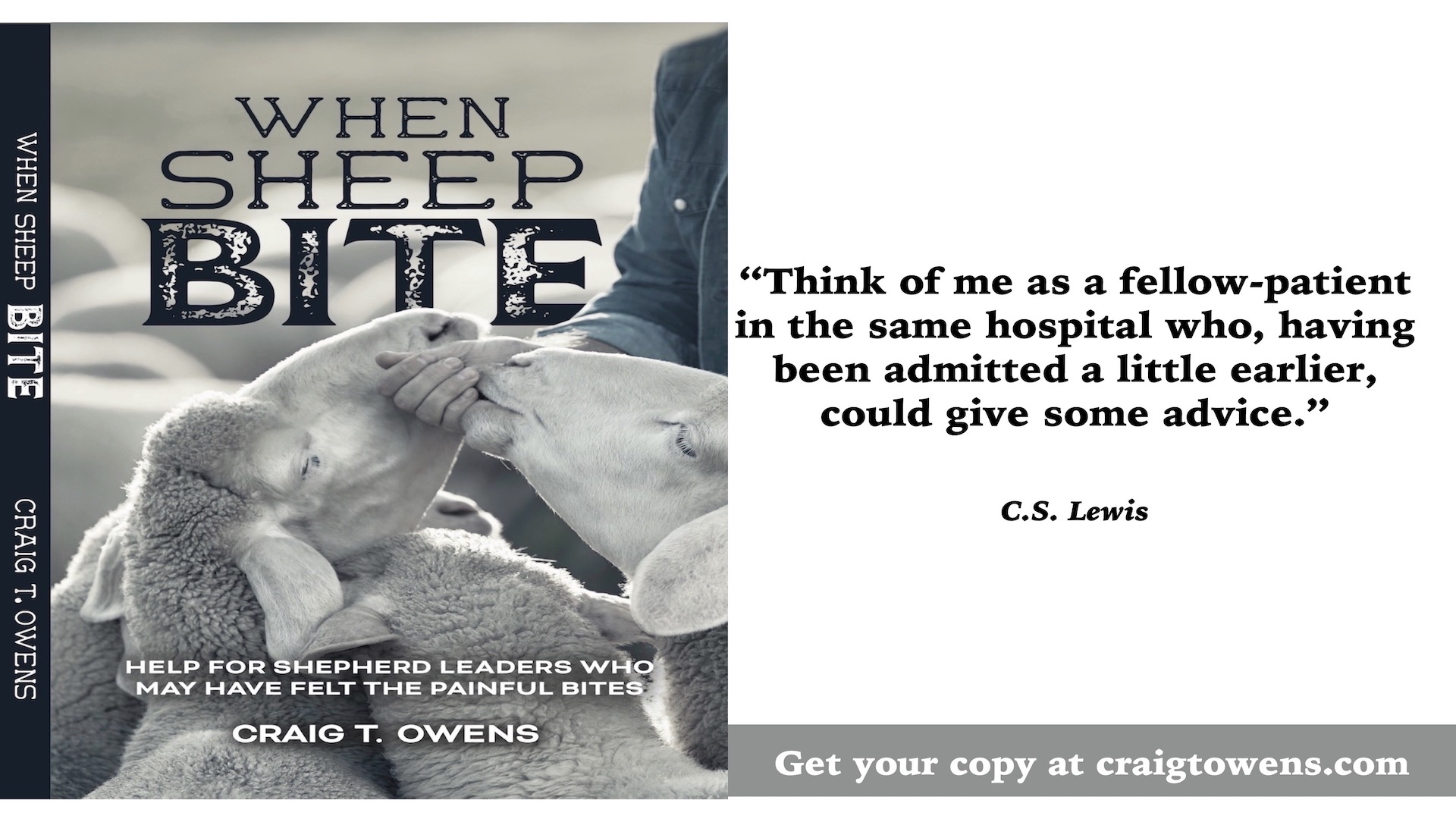
As you may have heard, I have written a new book! In this episode Greg and I sit down and chat about When Sheep Bite, and discuss how the valuable lessons it provides are critical for leaders of any organization.

  • [0:21] I have a confession to make…
  • [1:43] This book is for both business leaders and church leaders.
  • [3:07] Attacks usually lead to to fight-or-flight, but When Sheep Bite offers a new response.
  • [5:21] It’s healthy to validate our feelings when we’ve been hurt, but then good leaders go deeper.
  • [8:39] Empathy is health, but making excuses is not healthy.
  • [10:37] Watch out for the sneaky bite of flattery.
  • [11:26] Leaders who have been hurt have to guard against harboring that hurt.
  • [13:23] Leaders need to learn how to confront misbehavior correctly.
  • [14:46] In order for sheep to bite, and in order for the shepherd to lead, they have to be close to each other. How do both sheep and shepherds set boundaries?
  • [17:46] We can disagree but we cannot disrespect!
  • [19:49] Bitterness can rob a leader of vitality, so we have to find effective ways to heal.
  • [22:46] Fight-or-flight is natural, but we need to strive for the supernatural response of faithfulness to our calling.
  • [23:40] In many ways WSB points to what a good coach does. Contact Maximize Leadership about how our coaching huddles can help your leadership soarget in touch with us!

Order a copy of When Sheep Bite here.

Check out this episode and subscribe on YouTube so you can watch all of the upcoming episodes. You can also listen to our podcast on Spotify and Apple.

The Craig And Greg Show: Remembering The Details

Listen to the audio-only version of this podcast by clicking on the player below, or scroll down to watch the video.

Greg and I think that a great way to take your leadership to the next level is by paying attention to people. Keeping an eye out for the small details and remembering them shows people you care, which in turn makes them much more receptive to the leadership you want to pour into their lives. 

  • [0:15] Memorial Day is coming up 
  • [0:54] Great leaders remember the little details about others
  • [3:05] We share how leaders can leverage their retention of the details of others’ lives
  • [6:37] Exceptional leaders give way more than they take
  • [8:21] How do we get out of our own way so we can get to know others better?
  • [10:47] Greg and I both have some personal examples of how we learned to remember the details
  • [14:26] Leaders can lift up those around them by just doing the little things well
  • [16:24] John Maxwell wrote a “people principle” that I unpack 
  • [17:47] Greg learned a lesson from his grandparents about “taking a drive” to observe important people and places
  • [18:58] A powerful quote from John Ash
  • [22:55] Make every day special for others
  • [24:00] Greg and I can help you grow as a leader—get in touch with us!

Check out this episode and subscribe on YouTube so you can watch all of the upcoming episodes. You can also listen to our podcast on Spotify and Apple.
Empathizing Is Never One-Upping

Listen to the podcast of this post by clicking on the player below, and you can also subscribe on AppleSpotify, or Audible. 

When we are going through something difficult or painful, we want to get counsel from someone who has some understanding of what we’re facing. In a word, we want someone empathetic. 

Webster’s Dictionary defines empathy as the action of understanding, being aware of, and being sensitive to the feelings, thoughts, and experience of another. If you were telling me about your painful situation, to let you know that I “get you”—that I empathize with you—I might say something like, “I’ve been there, done that, and have the scars to prove it.” 

But as I tell you my story, I need to really guard against one-upmanship. Webster’s defines that as the art or practice of outdoing or keeping one jump ahead of a friend or competitor. Saying something like, “Oh, feel your pain, but let me tell you how I had it so much worse” is one-upping and unhelpful! 

In my book When Sheep Bite, I wrote this in the Introduction—

     When you share a tale of real pain with a trusted friend, you don’t want them to try to one-up your story. Instead, you would want them to comfort you in your pain, to give you some helpful insight, or to even just cry along with you. On the other hand, you probably aren’t going to share your story of pain with someone who has no understanding of your situation. We want someone who “gets us,” someone who can relate, someone who can truly empathize with what we are feeling. … 

     I want to give you what I wanted when this happened to me: empathy, insight, a helpful perspective, and a manual of help that God has provided in the Bible. I don’t want to try to one-up your story of pain, because I’m confident that no one could truly know how deeply you’ve been hurt. But I do want to give you some assurance that I know what I’m talking about. 

As I was discussing some of the ideas in my book with a group of pastors, I reminded them of the value of an iron-sharpening-iron friend (as Solomon describes in Proverbs 27:17) who is empathetic without crossing the line into one-upmanship. 

I truly believe that When Sheep Bite will be a healing resource for shepherd leaders who have been there, done that, and have the sheep bite marks to prove it. If you are a pastor—or if you love your pastor—please pick up a copy today! 

►► Would you please prayerfully consider supporting this ministry? My Patreon supporters get behind-the-scenes access to exclusive materials. ◀︎◀︎

How God Uses Pain

Listen to the podcast of this post by clicking on the player below, and you can also subscribe on AppleSpotify, or Audible. 

Romans 8:28 assures us that God uses everything for His glory. Even our pain. Here is when I learned this painful but precious truth.

On the Leading From Alignment podcast, John Opalewski asked me about lessons I have learned from painful experiences.

►► Would you please prayerfully consider supporting this ministry? My Patreon supporters get behind-the-scenes access to exclusive materials. Like this recent post where I shared a map and an app to help with your Bible study time. ◀︎◀︎

Leaders Serve By Empathizing

Listen to the podcast of this post by clicking on the player below, and you can also subscribe on AppleSpotify, or Audible. 

The gauge of a leader’s level of servant leadership is measured by how that leader interacts with their most difficult teammate. Check out this full conversation from The Craig And Greg Show here.

►► Would you please prayerfully consider supporting this ministry? My Patreon supporters get behind-the-scenes access to exclusive materials. ◀︎◀︎

Giving Preference To Others

Listen to the podcast of this post by clicking on the player below, and you can also subscribe on AppleSpotify, or Audible.

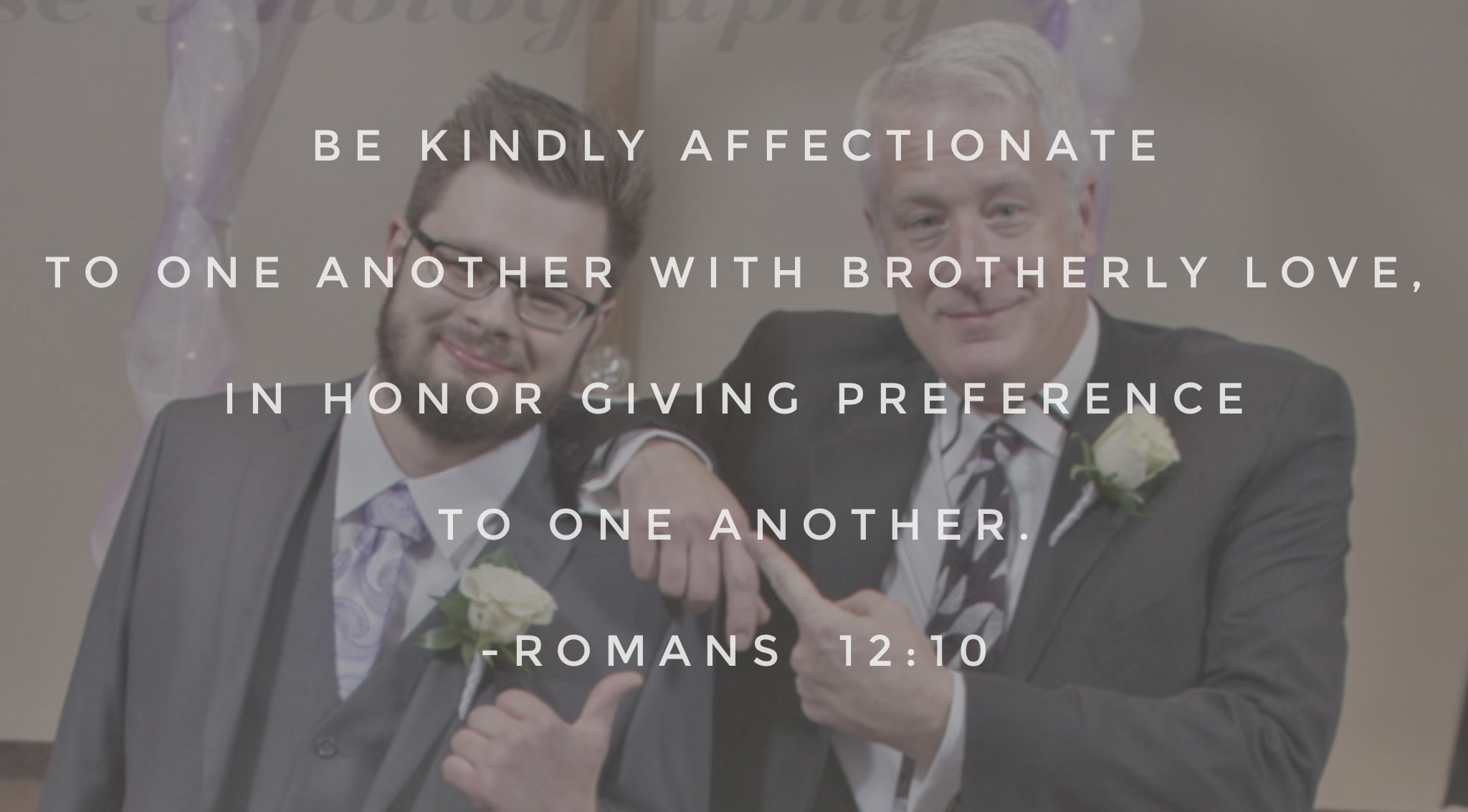
Be kindly affectionate to one another with brotherly love, in honor giving preference to one another” (Romans 12:10). 

What does it mean to give preference to a friend or loved one? Here are a few suggestions to get the ball rolling. 

Giving preference means I am…

  1. …speaking their “language.” I am a classic Doer, which means my style is, “Ready, Fire! aim.” I need to give grace to those who move a bit slower than me.
  1. …moving at their “speed.” My temperament is highly choleric, so I get fired up quickly and attack situations head-on. I need to give grace to those temperaments that are less emotional and want to handle things more strategically. 
  1. …sensitive to their “fears.” It’s insensitive for me to say, “It’s no big deal” about something that troubles them. Empathy is important so I can see and feel things like they see and feel them. 
  1. …helping them battle their “demons.” Perhaps viewing pornography isn’t a temptation for me, but it may be for someone else. So I need to seek out resources and accountability to help them fight this battle like I was fighting my own battle. 
  1. …avoiding their “stumbling blocks.” Perhaps I can watch certain genres of movies without compromising my Christian testimony, but it may cause my brother or sister a lot of grief. If I am going to prefer them in love, I will avoid talking about those movies in their presence, and I certainly won’t try to get them to “lighten up” to see things my way. 

Agape love is never selfish—it doesn’t want “my way” but it wants others to be edified. So, ultimately, what it means to give preference to another is to only promote those things that will build them up. Remember: saints is always plural in the New Testament, so we must build each other up to bring out the saintliness in all of us. 

►► Would you please prayerfully consider supporting this ministry? My Patreon supporters get behind-the-scenes access to exclusive materials. ◀︎◀︎

Poetry Saturday—I Stay Near The Door

Listen to the podcast of this post by clicking on the player below, and you can also subscribe on AppleSpotify, or Audible.

I stay near the door.
I neither go too far in, nor stay too far out,
The door is the most important door in the world—
It is the door through which men walk when they find God.
There’s no use my going way inside, and staying there,
When so many are still outside, and they, as much as I,
Crave to know where the door is.
And all that so many ever find
Is only the wall where a door ought to be.
They creep along the wall like blind men.
With outstretched, groping hands,
Feeling for a door, knowing there must be a door,
Yet they never find it…
So I stay near the door.

The most tremendous thing in the world
Is for men to find that door—the door to God.
The most important thing any man can do
Is to take hold of one of those blind, groping hands,
And put it on the latch—the latch that only clicks
And opens to the man’s own touch.
Men die outside that door, as starving beggars die
On cold nights in cruel cities in the dead of winter—
Die for want of what is within their grasp.
They live, on the other side of it—live because they have found it.
Nothing else matters compared to helping them find it,
And open it, and walk in, and find Him…
So I stay near the door.

Go in, great saints, go all the way in—
Go way down into the cavernous cellars,
And way up into the spacious attics—
In a vast, roomy house, this house where God is.
Go into the deepest of hidden casements,
Of withdrawal, of silence, of sainthood.
Some must inhabit those inner rooms,
And know the depths and heights of God,
And call outside to the rest of us how wonderful it is.
Sometimes I take a deeper look in,
Sometimes venture a little farther;
But my place seems closer to the opening…
So I stay near the door.

The people too far in do not see how near these are
To leaving—preoccupied with the wonder of it all.
Somebody must watch for those who have entered the door,
But would like to run away. So for them, too,
I stay near the door.

I admire the people who go way in.
But I wish they would not forget how it was
Before they got in. Then they would be able to help
The people who have not even found the door,
Or the people who want to run away again from God.
You can go in too deeply, and stay in too long,
And forget the people outside the door.
As for me, I shall take my old accustomed place,
Near enough to God to hear Him, and know He is there,
But not so far from men as not to hear them,
And remember they are there too.
Where? Outside the door—
Thousands of them, millions of them.
But—more important for me—
One of them, two of them, ten of them,
Whose hands I am intended to put on the latch,
So I shall stay by the door and wait
For those who seek it. 
‘I had rather be a door-keeper…’
So I stay near the door. —Samuel Shoemaker

►► Would you please prayerfully consider supporting this ministry? My Patreon supporters get behind-the-scenes access to exclusive materials. ◀︎◀︎

Poetry Saturday—If None

Listen to the podcast of this post by clicking on the player below, and you can also subscribe on AppleSpotify, or Audible. 

If none were sick and none were sad,
   What service could we render?
I think if we were always glad
   We scarcely could be tender.
Did our beloved never need
   Our patient ministration,
Earth would grow cold and miss indeed
   Its sweetest consolation.
If sorrow never claimed our heart,
   And every wish were granted,
Patience would die and hope depart—
   Life would be disenchanted. —Anonymous

►► Would you please prayerfully consider supporting this ministry? My Patreon supporters get behind-the-scenes access to exclusive materials. ◀︎◀︎

Poetry Saturday—Must I My Brother Keep?

Listen to the podcast of this post by clicking on the player below, and you can also subscribe on Apple or Spotify.

Must I my brother keep,
And share his pain and toil;
And weep for those who weep,
And smile with those who smile;
And act to each a brother’s part,
And feel his sorrows in my heart?

Must I his burden bear,
As though it were my own,
And do as I would care,
Should to myself be done;
And faithful to his interests prove,
And as myself my neighbor love?

Then Jesus at Thy feet
A student let me be,
And learn as it is meet,
My duty, Lord, of Thee;
For Thou didst come on mercy’s plan,
And all Thy life was love to man.

Oh! make me as Thou art;
Thy Spirit, Lord, bestow—
The kind and gentle heart
That feels another’s woe.
May I be thus like Christ my Head,
And in my Savior’s footsteps tread! —Thomas Raffles

Would you please prayerfully consider supporting this ministry? 

Learning Empathy

I’m an up-and-at-em, carpe diem kinda guy. Nothing gets me down for very long—I’m resilient and self-motivated. So I used to have a hard time relating to people who weren’t wired the same way. That is until I went through a time in my life where getting up-and-at-em was one of the hardest things I had to do each day.  

In the midst of this dark night, I would ask God, “Why is this happening to me? What did I do wrong?” But I heard the Holy Spirit gently but unmistakably remind me, “This isn’t about you!” 

The dictionary says that empathy is nearly a transliterated word from the Greek word empatheia. It means to be in suffering, but the emphasis is more on imaginative empathy. Something like, “If I was them and I was in that situation, I bet it might feel like this.” 

In the New Testament, a different Greek word is translated sympathy, which is also a transliterated word from the Greek sympatheō. This word means to enter into another’s suffering, but the emphasis is on experiential empathy. In other words, I don’t have to imagine how you might feel, but I know how you feel because I’ve gone through the same thing myself. 

Just as the Holy Spirit taught me this lesson, let me say the same thing to you: the dark night you are going through isn’t about you. It’s about learning empathy SO THAT you can help others persevere all the way to the end! 

Think about the dark night Jesus went through just before His crucifixion. He might have asked His Father, “Why is this happening to Me? What did I do wrong?” But He knew why He was going through this night: it was to prepare Him to be the perfect empathetic High Priest for all of us (check out these verses in Hebrews).  

When we invite Jesus to be our Lord and Savior, we become a part of His Body (1 Corinthians 12:13, 26). 

Dr. Paul Brand was a renowned hand surgeon and missionary who worked with leprosy patients in India for years. He learned that leprosy doesn’t mangle a person’s foot or hand, but their lack of ability to feel pain does. He wrote, “A body only possesses unity to the degree that it possess pain…. We must develop a lower threshold of pain by listening, truly listening, to those who suffer. … The body protects poorly what it does not feel.” 

Sometimes we have to go through the painful, dark nights so that we can learn to feel others’ pain so that we can learn empathy. 

Through those nights we can learn to hear what others aren’t saying, and feel what others aren’t expressing. We don’t have to ask, “Can I help?” but rather, “I’m here to help because I know what you’re going through.” 

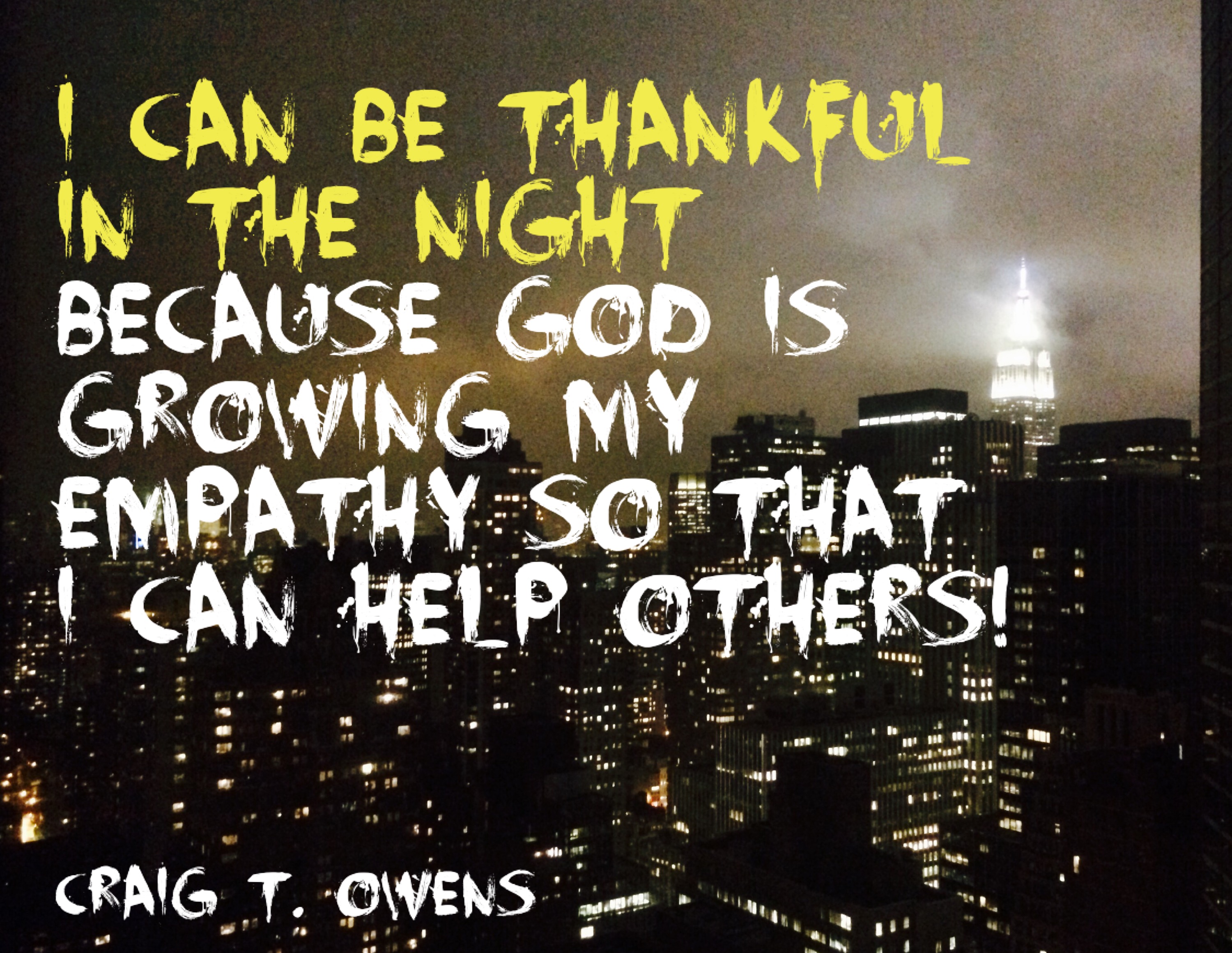
You cannot truly empathize until you go through your own dark night. I can be thankful IN the night because God is growing my empathy so that I can help others! 

If you’ve missed any of the other messages in this series, you can check out the full list by clicking here.