Winning Souls, Not Arguments

Listen to the podcast of this post by clicking on the player below, and you can also subscribe on AppleSpotify, or Audible. 

The men who were guarding Jesus mocked Him and beat Him. They blindfolded Him and hit Him again and then demanded, “Prophesy! Who hit You?” And it wasn’t just the physical abuse, but they heaped mocking insult upon mocking insult upon Jesus (Luke 22:64-65). 

All four of the Gospel writers recount how Jesus responded to both the physical and verbal abuse: 

  • To the false charges before the Sanhedrin, Jesus remained silent (Matthew 26:57-63) 
  • To the spitting and hitting by the members of the Sanhedrin, Jesus remained silent (Matthew 26:67-68) 
  • To the physical abuse of the guards, along with their mocking insults, Jesus remained silent (Mark 14:65; Luke 22:64-65) 
  • To the mocking He endured before King Herod, Jesus remained silent (Luke 23:9-11) 
  • To the false charges announced to Governor Pilate, Jesus remained silent (Matthew 27:12-14) 
  • To the insults and mocking thrown His way as He hung on the Cross, Jesus remained silent (Matthew 27:38-44; Mark 15:29-32; Luke 23:35-36) 

His only verbal response was after being slapped in the face by one of the officials in the Sanhedrin. Jesus said, “If I said something wrong, testify as to what is wrong. But if I spoke the truth, why did you strike Me?” (John 18:22-23). 

These are what we call an ad hominem attack. That is attacking the person, instead of confronting the ideas or arguments the person is presenting. 

The self-control of Jesus here is absolutely astounding! Peter records, “When they held their insults [and their fists and their spit] at Him, He did not retaliate; when He suffered, He made no threats. Instead, He entrusted Himself to Him who judges justly” (1 Peter 2:23). 

Even as His trial got underway, Luke records, “the council of the elders of the people…met together, and Jesus was led before them” (Luke 22:66).

Dr. Henry Halley points out that extra-biblical sources have told us that this trial violated at least four of the Sanhedrin’s own rules:

  1. Meeting on the morning of a festival 
  2. Meeting in Caiaphas’ personal residence 
  3. Trying a defendant without defense 
  4. Passing the verdict of a death sentence in one day instead of two days 

I would add a fifth rule which is found in Scripture: At least two witnesses need to be in agreement with their testimony for there to be a death sentence (Deuteronomy 17:6, 19:5; Mark 14:55-59). 

When the Sanhedrin then hauled Jesus before Pontius Pilate, even their charges made before the governor in Luke 23:1-2 were flimsy at best: 

  1. Subversion—there is no proof for this 
  2. Opposing taxes to Rome—this was false (see Luke 20:20-25) 
  3. Jesus was a rival to the Roman throne—not true 

And still Jesus remained almost completely silent! He only spoke when asked a direct question, but He remained silent throughout the false accusations, the verbal taunts, and the physical abuse. 

When I am treated unfairly, when the rules are bent against me, when false charges are lodged against me, I get angry! I want to defend myself! I want to put my accusers or abusers in their place! 

Could Jesus have prevented His arrest? Yes (Matthew 26:53)! 

Could Jesus have defended Himself before the Sanhedrin, Pilate, and King Herod? Yes! 

Could Jesus have come down from the Cross to prove His power? Yes! 

But Jesus wasn’t trying to win a momentary argument; He was winning souls for eternity! 

Jesus came not to be served, but to serve, and to give His life as a ransom for many (Mark 10:45). So, “for the joy set before Him He endured the Cross, scorning its shame, and sat down at the right hand of the throne of God.” 

When anger boils up because of the mistreatment we are enduring, we must “consider Him who endured such opposition from sinners, so that you will not grow weary and lose heart” (Hebrews 12:2-3). 

Like Jesus, let’s not try to win just a momentary argument that may result in the loss of a soul for all of eternity. There is a time to speak and there is a time for silence. As we keep our eyes on Jesus, we will know what time it is. 

(You can check out all of the Scriptures I referenced in this post by clicking here.)

P.S. You may also be interested in a previous blog post Winning the Argument or the Battle or my short video How Should Leaders Handle Pushback. 

►► Would you please prayerfully consider supporting this ministry? My Patreon supporters get behind-the-scenes access to exclusive materials. ◀︎◀︎

A Christlike Response To Skeptics

Listen to the podcast of this post by clicking on the player below, and you can also subscribe on AppleSpotify, or Audible. 

God is precise in His promise making and promise keeping. He doesn’t just fulfill promises in a vague way or in “the spirit of the law,” but He attends to the jots and tittles of every single detail.  

Last week we saw the example of Jesus going into a dark place to bring the light of hope. It’s the same for us: God uses circumstances to direct our steps into dark places because people need to see the light. 

But people living in darkness sometimes don’t like the light. 

When we feel like our message of hope is being ignored or rejected (or we’re even being persecuted for sharing the truth) we have a natural emotional response that begins to bubble up. That emotion is anger. How do I know this? Because Jesus experienced this too. 

We can do two things with our anger: 

  1. We can blast skeptics with righteous judgment <or> 
  2. We can follow the example of Jesus  

In The Pilgrim’s Progress, Faithful told how a man came and beat him because he had broken the law. Even when Faithful begged for mercy the man said, “I don’t know how to show mercy to anyone.” This man was Moses the Lawgiver. Faithful explained what finally gave him relief: “He would have finished me off, but then One came by, and told Him to stop. I did not know Him at first, but as He went by, I saw the holes in His hands and in His side and I concluded that He was Jesus.” 

Moses had every right to be angry, and he expressed it a way that tried to finish off Faithful. 

Jesus also got angry, but let’s see what He did with it. 

(Check out all of the Scriptures I list below by clicking here.)

In Matthew 12:9-10 we see the motive of the skeptics: catch Jesus doing something wrong. This opposition came from the religionists—they weren’t interested in the truth, they were interested in proving themselves right and righteous. 

As they are asking their entrapping question, Luke tells us that “Jesus knew what they were thinking” (Luke 6:8). And Mark tells us that Jesus then asked a question of His own (Mark 3:4-5). These religionists refused to answer His question, and their stubborn hearts made Jesus deeply angry! 

So Jesus answered His own question, concluding that the Sabbath was the day that god intended for healing and helping. To prove this point, Jesus then healed the shriveled hand of the man who stood before Him (Matthew 12:11-14). In response to this, the Pharisees plotted with the Herodians on how to kill Jesus (Mark 3:6). 

Matthew then writes, “Aware of this, Jesus withdrew from that place (Matthew 12:15). He didn’t withdraw in fear, but in complete awareness of His Father’s plan. Part of that plan was not for Jesus to win argument, but for Him to win souls. 

Perhaps in His anger in the moment, Jesus would have spoken words that were too harsh. There is a time to speak, but it’s usually not in the heat of the moment. In fact, Laurence J. Peter rightly said, “Speak when you are angry, and you will make the best speech you’ll ever regret.” 

So in fulfillment of another prophetic word given in Isaiah 42, Jesus withdrew to continue His teaching and healing ministry (Matthew 12:17-21). 

What does this mean for us today? I think we can see five important responses in these prophetic words: 

  1. I am to serve others as Jesus did—even those who want to silence me.  
  2. I can let the Holy Spirit use this opposition to bring greater fruitfulness out of my life (Galatians 5:19-26).  
  3. I don’t need to win an argument with skeptics. 
  4. I can be a peacemaker that points people to the Prince of Peace (1 Peter 2:8-12). 
  5. I should live in the assurance of ultimate victory, just as Jesus did (1 Peter 2:23).  

God gets the final word, the decisive word, and the best word, so I don’t have to try to win arguments with skeptics. Like Jesus, I can love and serve in a way that leaves them an unmistakable testimony. 

To check out the other messages in this series called Jots and Tittles: Why it matters that God is in the smallest of details, please click here. 

►► Would you please prayerfully consider supporting this ministry? My Patreon supporters get behind-the-scenes access to exclusive materials. ◀︎◀︎
Should Christians Debate?

Listen to the podcast of this post by clicking on the player below, and you can also subscribe on AppleSpotify, or Audible. 

One of the teachers of the law came and heard them debating… (Mark 12:28). 

The “them” in this verse are the Pharisees, the Herodians, the Sadducees, and Jesus. Mark especially loves this Greek word syzeteo, using it six times in his Gospel. Neither Matthew nor John uses this word at all. Luke uses it four times: twice in the Gospel of Luke and twice in the Book of Acts. This word appears nowhere else in the New Testament. 

Syzeteo is a compound word that means a joint pursuit. Check out some of the ways this word is translated: 

  • debating (NIV) 
  • arguing (NASB) 
  • disputing (AMP) 
  • lively exchanges of questions (MSG)
  • reasoning together (NKJV) 

The phrase “reasoning together” may sound familiar to you. It appears in the Old Testament when God says, “Come now, and let us reason together” (Isaiah 1:18). This is just one word in Hebrew (yāḵaḥ), which is defined as making something clear by demonstrating or proving. 

Whether in the Old or New Testaments, this is not considered to be one-upmanship, or attempting to get the knockout punch, or trying to prove one’s superiority. It is a legitimate journey of discovery—asking good questions, truly listening to the answer (not just listening to respond or counter), and then processing the other’s words before responding. Plato defined syzeteo as seeking or examining together. 

The teacher of the law noticed “that Jesus had given them a good answer.” He then asked a follow-up question. After hearing the reply from Jesus, he said, “Well said,” and reiterated Christ’s answer. To this Jesus noted “that he had answered wisely” and said to the teacher, “You are not far from the kingdom of God” (Mark 12:28-34). 

The word “argue” used to mean the presenting of premises that led to a conclusion. Then the other person would perhaps challenge one of the premises to maybe show a different conclusion. These arguments or debates weren’t screaming matches and they certainly weren’t intended to be over trivial matters. 

So should Christians debate? I would say yes IF all of these conditions are true:

  • IF this isn’t a trivial matter which has no impact on eternity. 
  • IF I can ask good questions and truly listen to the other person’s answer. 
  • IF I can have an attitude of journeying together toward the truth found in God’s Word. 
  • IF I can humbly receive the truth that is spoken to me by the other person. 

True Christian debating is not bantering with the other person, not attempting to score a “gotcha!” against the other person, not wanting to win an argument. The only true win comes when both parties arrive at the truth given to us in Scripture. This is true reasoning together. 

►► Would you please prayerfully consider supporting this ministry? My Patreon supporters get behind-the-scenes access to exclusive materials. ◀︎◀︎
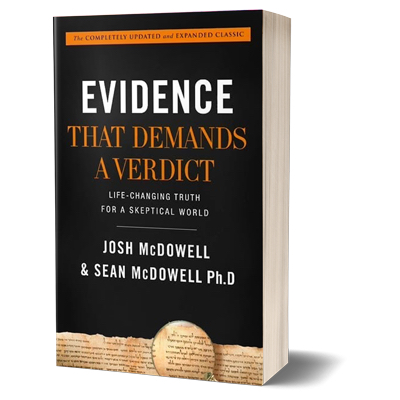
Evidence That Demands A Verdict (book review)

The Apostle Peter wrote a letter to Christians in which he called them “aliens and strangers” because of their belief in a personal Creator and Lord. In this letter, he tells Christians to “always be prepared to give an answer” to those skeptics who want to know about their faith in God. In Evidence That Demands A Verdict, Josh and Sean McDowell have given Christians a key component to help them be prepared to give sound answers.

This book is massive (at just under 900 pages)! But it is an encyclopedia of evidence that will prepare Christians to respond to any argument that an atheist or skeptic may bring up. To be honest with you, the Table of Contents is usually one of the first places I study in books I’m reading, but I usually end up skimming through it pretty quickly. But in Evidence, I was pleasantly surprised at the layout. Not only will you find a listing of the chapters, but a brief description of the contents. At the opposite end of the book, the Subject Index is also quite extensive. I know these are not things usually bragged on in a book review, but for a book this size—and for the numerous times you undoubtedly will be returning to prepare to answer a skeptic—these two reference points are extremely handy!

The first edition of Evidence (written by just Josh) came out nearly 20 years ago. If anything, the evidence for the beliefs that Christians hold has been further validated through research, archeological discoveries, and the like. So it was time for this classic book to be updated. The additional apologetic insights from Sean in this edition is a very nice addition.

Whether you read Evidence when it was first released or not, every Christian that wants to answer Peter’s directive for preparedness needs to get this new edition.

I am Thomas Nelson book reviewer.

A Leader’s Grace And Power

None of them could stand against the wisdom and the Spirit with which Stephen spoke. (Acts 6:10)

Here’s a truth we can all stand on: The man with an experience is never at the mercy of a man with an argument.

A large group of people wanted to debate with Stephen about his belief in Jesus Christ. I’m sure that these debaters had some excellent points. But they couldn’t win the debate with Stephen because he had something they didn’t have: grace and power from God that was irrefutable!

Stephen’s words were backed up and verified by a lifestyle that was undeniable—

Stephen, a man full of God’s grace and power, performed amazing miracles and signs among the people. But one day some men from the Synagogue of Freed Slaves, as it was called, started to debate with him. They were Jews from Cyrene, Alexandria, Cilicia, and the province of Asia. None of them could stand against the wisdom and the Spirit with which Stephen spoke. (Acts 6:8-10)

“Knowing that we have God’s ability in us, should give us the confidence to lead well when others don’t approve of or appreciate our leadership.” —Liz Sarno

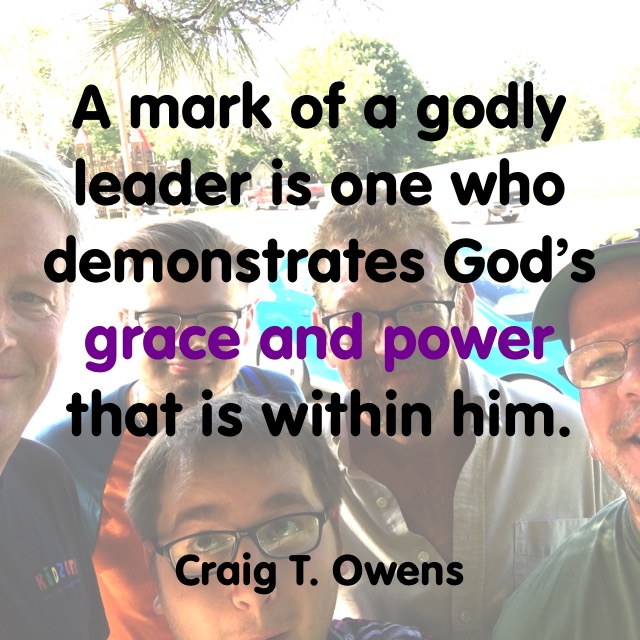
A mark of a godly leader is one who demonstrates God’s grace and power that is within him.

This is Part 8 in my series on godly leadership. To read my other posts, please click here.

8 Ways To Argue Correctly

8 ways to argue correctlyIf you argue your case with a neighbor… (Proverbs 25:9). Notice the first word of this proverb is “IF” which tells me I don’t have to argue. But if I do, then here are eight things to remember.

  1. Don’t betray a confidence (vv. 9, 10)
  2. Practice patience (v. 15a)
  3. Speak gently (v. 15b)
  4. Address foolishness without becoming foolish (26:4, 5)
  5. Stay out of arguments that aren’t my concern—don’t meddle (v. 17)
  6. Don’t gossip (v. 20)
  7. Tell the truth (v. 28a)
  8. Don’t flatter the other person (v. 28b)

Let’s try to keep this in mind IF an argument is unavoidable.

Links & Quotes

link quote

“To fulfill God’s destiny for your life, you likely don’t have to do more; you have to do less. … Enjoy the Christmas season. Wrap the presents. Prepare your home in a festive way. Make memories with your family. But don’t let this Christmas pass without spending some time at Jesus’ feet. Long after everything else fades from this Christmas, worshiping Jesus is all that will truly last.” —Rick Warren

“Holidays in America have come to be regarded as entitlements. They’re all about us, seasons of diversion, distraction, self-indulgence, and time off work. Even the great religious celebrations of the national calendar—Thanksgiving, Christmas, and Easter—are regarded by most Americans as opportunities to get some good bargains and enjoy a little time for relaxation, not for spiritual reflection and renewal, but just for doing whatever we want. Sort of like the way most Christians observe the Lord’s Day.” —T.M. Moore

As we are celebrating the First Advent, J. Warner Wallace asks a great question: Why didn’t the Apostle Paul mention the virgin conception?

“I am convinced many Christians today are troubled for the same reason Asa was [2 Chronicles 16:1-9]. They have war in their souls because they have traded faith for self-reliance. But the fact is, there is no way a follower of Jesus can have faith in any other source and not be troubled.” —David Wilkerson

“People who are exercised and preoccupied with such things as how the star worked and how the Red Sea split and how the manna fell and how Jonah survived the fish and how the moon turns to blood are generally people who have what I call a mentality for the marginal. You do not see in them a deep cherishing of the great central things of the gospel—the holiness of God, the ugliness of sin, the helplessness of man, the death of Christ, justification by faith alone, the sanctifying work of the Spirit, the glory of Christ’s return and the final judgment. They always seem to be taking you down a sidetrack with a new article or book. There is little centered rejoicing.” —John Piper

“Whether one makes the observation light-heartedly or in all seriousness, one must observe that, when the male body unites for procreation with the female, the pleasure that goes along with it is understood to be in accordance with nature, but that when male joins with male, or female with female, it is outside the bounds of nature. This outrage was first done by people whose desire for pleasure was without self-control.” —Plato. This agrees with what the Bible says in Romans 1:26-27.

Lenny Esposito has some good advice for students to defend their Christian faith in the classroom.

Seth Godin has some insight on whining—“Before starting, a question: Will it help? Like holding a grudge, or like panicking, whining rarely helps. If anything, any of the three make it far less likely that you’ll make progress solving the problem that has presented itself. And, like knuckle cracking, it’s best enjoyed alone.”

[VIDEO] Bobby Conway asks Lenny Esposito how to handle the claim “The Bible has contradictions in it”—

5 Quotes On Problem Solving From “Brain-Savvy Leaders”

Brain-Savvy LeadersCharles Stone’s book Brain-Savvy Leaders is chockfull of helpful information! When you understand more how your brain works, you can leverage its power more efficiently. Here are some quotes he shared about problem solving.

“Only in the mystery of the incarnate Word does the mystery of man take on light.” —Pope Paul VI 

“As a part of the C-system, the prefrontal cortex processes bits of information one after the other (serial) instead of several at the same time (parallel). … When we try to process too much information at once, the prefrontal cortex’s serial processing nature can result in mental processing bottlenecks that in turn can lead to unfinished thoughts and tasks. … When we attempt many mental tasks at once, our thinking degrades, accuracy drops, we focus on the urgent instead of the important, we forget things, and the quality of future decisions gets muddied.”

Coffee, caffeinated drinks (but not too many), exercise, and novelty can increase the amount of these neurotransmitters and get us into a more productive and focused state.”

“Charlan Nemeth, a psychology professor at the University of California-Berkeley, performed a creativity study in 2003. She divided 265 female students into groups of five and asked them to generate as many ideas as possible on how to decrease traffic congestion in the San Francisco Bay area. Each team received one of three conditions and was given twenty minutes to complete the task. Either they used the traditional ‘no criticism’ brainstorming technique, or they generated as many ideas as possible but could debate and criticize each one, or they received no instructions. The ‘debate and criticize’ teams generated 20 percent more ideas than the other two groups. … Debate…adds the element of surprise that engages the brain.”

“When trying to solve problems, encourage your team to imagine themselves a year from now instead of imagining themselves tomorrow. Studies show that this time perspective fosters more creativity.”

You can read my book review of Brain-Savvy Leaders by clicking here.

I have also shared other quotes from this book on learning, brain health, and emotional health.

Winning The Argument Or The Battle

When I entered college, I did so as a science major: pre-med biomedical chemistry, to be exact. I still really enjoy all of the medical sciences: biology, microbiology, organic chemistry, inorganic chemistry, and the like.

As you might be aware many of the scientists today have a bent toward the theory of evolution. That means that a few of my professors and several of the authors I was reading taught and wrote from that paradigm.

This set up the environment for me to want to debate for my Creationist beliefs.

I had one professor who would specifically challenge me during lectures to refute what he had just said about evolution. An author who wrote a lengthy book about evolution carried on a year-long correspondence with me where we each brought out our best arguments. In all instances—although we believed passionately in our positions and could adequately defend them—the discussions never became shouting matches.

The Bible taught me how to do this.

(This week I’m discussing my favorite book—the Bible—from a couple of different aspects. You can read some of those thoughts here, here and here.)

At times I was tempted to “cross the line” to win the argument. And I may have won the argument, but I would have put myself in a position to lose the overall battle. There are two key passages of Scripture that I keep in mind to help me with this.

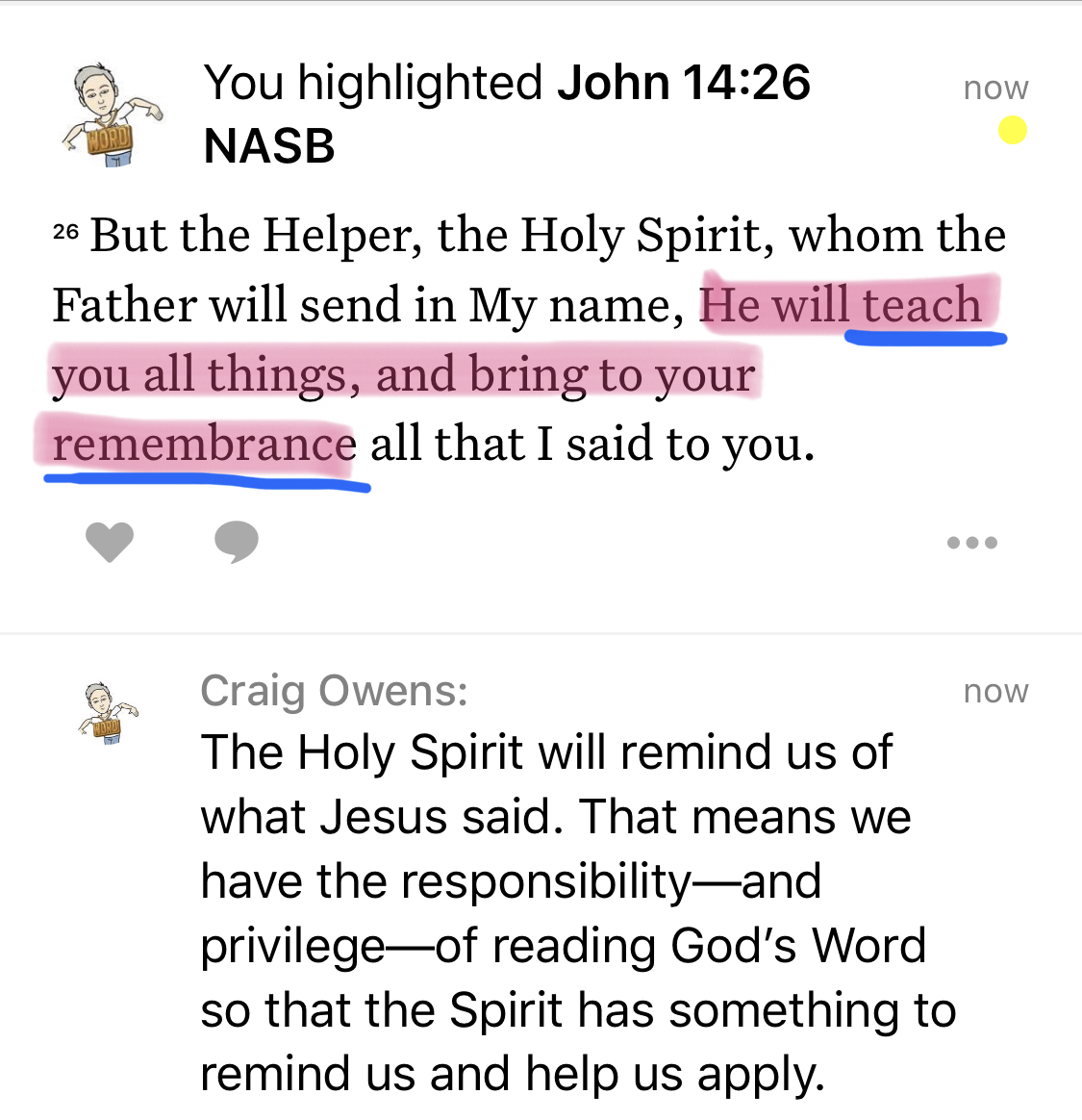
(1) In telling His followers about the Holy Spirit (John 14-16), Jesus said, “But when He, the Spirit of truth, comes, He will guide you into all truth” (John 16:13). And also, “But the Counselor, the Holy Spirit, whom the Father will send in My name, will teach you all things and will remind you of everything I have said to you” (John 14:26).

The Holy Spirit helps me apply biblical truths and principles to my everyday life. He guides me and reminds me of what I have studied.

(2) The second key passage is, “But in your hearts set apart Christ as Lord. Always be prepared to give an answer to everyone who asks you to give the reason for the hope that you have. But do this with gentleness and respect, keeping a clear conscience, so that those who speak maliciously against your good behavior in Christ may be ashamed of their slander” (1 Peter 3:15-16).

Yes, it is important for me to be prepared to give an answer, but this is the middle thought. First, I have to make sure what I’m saying is exalting Christ as Lord. Then I do my best to study and prepare to give an answer, but I must give that answer gently and respectfully.

Allowing the Holy Spirit to help you prepare from the Bible, and allowing Him to guide you into answering questions/critics gently and respectfully honors Christ. And that always wins the battle.