Links & Quotes

link quote

These are links to articles and quotes I found interesting today.

[INFOGRAPHIC] I love the resources from uknowkids.com. Check out this one on Online Identity Theft.

So you thought you were learning something during your all-night cramming session? Oops! Pulling All-Nighters Can Kill Brain Cells.

[INFOGRAPHIC] The New Testament church loved being together! Check out all the “one another” statements.

“Jesus Himself says, ‘Not every one that saith unto Me, Lord, Lord, shall enter into the kingdom of heaven’ (Matthew 7:21). Sadly, multitudes of Christians are not troubled at all by their sin; their besetting habit does not bother them in the least. They have convinced themselves that God is so merciful and full of grace, He will pardon them even if they stubbornly continue in sin.” —David Wilkerson. Read more of his post Only By Faith.

Over the last 2000 years, look The Christian Contribution To Medicine.

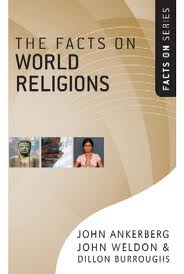
8 Quotes From “The Facts On World Religions”

The Fact On World ReligionsThe Facts On World Religions is a broad overview of the four major religions of the world—Christianity, Islam, Buddhism and Hinduism. You can read my full book review by clicking here. These are some of the passages I found noteworthy….

“Positive criticism: Being critical of other people’s beliefs is necessary for the sake of what is true and what is good. Every idea in the world is not true, regardless of what relativists claim. And some ideas are harmful, including religious ideas. We have also been critical of our own faith when needed, so when we ask adherents of other religions to analyze their own perspectives, we are not requesting that they do something we ourselves have neglected.” 

“The Bible’s uniqueness in some 20 different areas—including many specific predictions of the future (especially as to the Messiah), theology and content, textual preservation against all odds, the physical resurrection from the dead of its central character, scientific and medical prevision, the miraculous existence of Israel, historic and archaeological accuracy, victory over all criticism, and massive influence in human history—is virtual proof that the Bible comprises God’s revelation to humanity. Because it alone is evidentially and independently verified, at points of conflict all other scriptures are, by definition, false. … The manuscript evidence proving the New Testament’s accuracy is about a thousand times better than for ancient manuscripts that scholars everywhere concede are reliable.”

“Historical facts confirm that the Qur’an has experienced significant corruption through various means. Texts such as The Origins of the Qur’an (edited by Ibn Warraq), though sometimes displaying a rationalistic bias, nevertheless prove beyond doubt that the Qur’an is not a pure text. … Dr. William Miller reveals that for some years after the death of Muhammad there was great confusion as to what material of all that had been preserved should be included in the Qur’an. Finally, in the caliphate of Uthman (644-656 AD) one text was given official approval, and all other material was destroyed.” 

“Buddha did not even claim that his teachings were a unique and original source of wisdom. Buddha always said, ‘Don’t take what I’m saying [that is, on my own authority], just try to analyze as far as possible and see whether what I’m saying makes sense or not. If it doesn’t make sense, discard it. If it does make sense, then pick it up.’” —Clive Erricker

“Internal contradictions in Buddhism make it impossible to know what is true and what is false, leading to an emphasis on subjectivism and experientialism to discover ‘truth,’ rather than upon objective data.” 

“Consider the Wall Street Journal/Heritage Foundation’s ‘Index of Economic Freedom Report.’ From 1995 to 2008, the ‘mostly free’ categories of nations include only some Muslim states, while the ‘mostly unfree’ and ‘repressed’ categories include the large majority of Muslim nations; no Muslim nation exists in the ‘free’ category. Some 600 million souls live in dismal poverty. And it’s not difficult to see why: The average man, woman or child living in a repressed or mostly unfree economy lives a life of poverty on only about $2,800 a year. Compare this with the prosperous residents of the world’s free economies, where the average per-capita income is $21,200, or nearly eight times greater. Put simply, the difference between poverty and prosperity is freedom.”

“Islam may be called a ‘religion of peace,’ but history paints a different picture, no matter how many individual Muslims are peace-loving. The book that most regulates Islam, the Qur’an, is mixed at best in this regard. Entirely different religions, both logically justified, can be extracted from its pages. There are verses about peace and tolerance, but also verses about intolerance, Holy War against non-Muslims, and subjugating the world to the will of Allah. … Evils done in the name of Christian faith have been committed either by nominal Christians who are unbelievers or by deceived believers. In both cases the people are acting inconsistently with Christian faith and the clear teachings of Christian Scripture.” 

“Too few appreciate how critically unique biblical Christianity is when compared to other religions—or the implications. For example, Christianity is the only religion based on the death of its founder, a death that forever altered the course of human history. No other religion has the literal physical resurrection of its founder. Biblical Christianity is the only religion having solid evidence to prove it true. It’s the only religion offering eternal life as a free gift through grace, and the only religion demonstrating beyond the shadow of a doubt that God truly loves us—as demonstrated at the Cross. Biblical Christianity is the only religion to dramatically improve the welfare of humanity in a score of areas.”

Links & Quotes

link quote

These are links to articles and quotes I found interesting today.

This is really cool! 50 People In The Bible Confirmed Archaeologically

Please pray: 33 North Koreans To Be Executed For Contact With Christian Missionary

“Better have God and no other friend then all the patrons on the earth and no God.” —Charles Spurgeon

Thought-provoking questions: “Dear Christian, are you still on fire for Jesus? Are you in love with Him as passionately as when you first got saved? Or have you lost interest in His concerns, forsaking all ministry? Do you have too much else going on in your life? If so, the Lord says to you, ‘I have something against you—you have left your first love!’” —David Wilkerson

Great historical perspective on our current issues: John Wesley And Religious Freedom

Links & Quotes

link quote

These are links to articles and quotes I found interesting today.

Christians need to learn church history: 10 Reasons To Know A Little Bit Of Church History

“If I am not so much at ease as I ought to be, because my faith is dim, yet I am equally safe because the Lord’s eye is not dim, and He sees the blood of the great Sacrifice with steady gaze. What a joy is this!” —Charles Spurgeon

“Labels, labels, labels. I’m glad Jesus referred to people as people. He never mentioned His friend being a coward; He simply called him Peter. He never referred to the woman who loved Him deeply as a prostitute; He just called her Mary Magdalene.” —Joni Eareckson Tada

David Wilkerson wrote, “A person’s countenance is the outward expression of what is in his heart.”: More And More Like Jesus

Amazing! Anonymous Customer Leaves Waitresses $15,000 Tip

Planned Parenthood is embarrassed about abortions: Read about their donation appeal letter

[VIDEO] Benedict Cumberbatch On Sesame Street

Danger! How Obamacare Will Drive People Out Of The Workforce

Great news! Missing Children Rescued From Super Bowl Sex Trade In FBI Sting

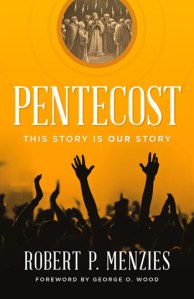
14 Quotes From “Pentecost”

Pentecost

I thoroughly enjoyed reading Pentecost by Robert P. Menzies, and learned quite a bit. You can read my full book review by clicking here. Here are a few quotes that stood out to me.

“It’s because Pentecostals fuse the biblical and contemporary horizons that we link baptism in the Holy Spirit with speaking in tongues, since that’s what Acts 2 does. It’s why we associate Spirit-baptism with empowerment for mission rather than with spiritual regeneration. And it’s why we expect God to perform ‘signs and wonders’ and to manifest spiritual gifts in worship services. All these things happened in the first Pentecostal community, and their story is our story.” 

“At its heart, the Pentecostal movement is not Spirit-centered but Christ-centered. The work of the Spirit, as Pentecostals understand it, centers on exalting and bearing witness to the Lordship of Christ.”

“Pentecostals are ‘people of the Book.’ Although Pentecostals certainly encourage spiritual experience, they do so with a constant eye to Scripture.”

“So, the stories of Acts are our stories, and we read them with expectation and eagerness: stories of the Holy Spirit’s power, enabling ordinary disciples to do extraordinary things for God. … The hermeneutic of the typical Pentecostal believer is straightforward and simple: the stories in Acts are my stories—stories that were written to serve as models for shaping my life and experience.”

“In Luke’s view, every member of the church is called (Luke 24:45–49; Acts 1:4–8/Isaiah 49:6) and empowered (Acts 2:17–21; cf. 4:31) to be a prophet. Far from being unique and unrepeatable, Luke emphasizes that the prophetic enabling experienced by the disciples at Pentecost is available to all of God’s people. … Through his two-volume work, Luke declares that the church, by virtue of its reception of the Pentecostal gift, is nothing less than a community of prophets. It matters not whether we are young or old, male or female, rich or poor, black or white; the Spirit of Pentecost comes to enable every member of the church, each one of us, to fulfill our prophetic call to be a light to the nations.” 

“Not long ago a Chinese house church leader commented, ‘When Western Christians read the book of Acts, they see in it inspiring stories; when Chinese believers read the book of Acts, we see in it our lives.’”

“Luke’s theology of the Spirit is different from that of Paul. Unlike Paul, who frequently speaks of the soteriological dimension of the Spirit’s work, Luke consistently portrays the Spirit as a charismatic or, more precisely, a prophetic gift, the source of power for service.” 

“Luke crafts his narrative so that the parallels between Jesus’ experience of the Spirit (Luke 3–4) and that of the disciples on the day of Pentecost (Acts 1–2) cannot be missed. Both accounts: 1. Are placed at the outset of Luke’s Gospel on the one hand, and the book of Acts on the other; 2. Associate the reception of the Spirit with prayer; 3. Record visible and audible manifestations; 4. Offer explanations of the event in the form of a sermon that alludes to the fulfillment of Old Testament prophecy.”

“Luke’s understanding of baptism in the Holy Spirit, I have argued, is different from that of Paul. It is missiological rather than soteriological in nature. … The tendency in Protestant churches has been to read Luke in the light of Paul. Paul addresses pastoral concerns in the church; Luke writes a missionary manifesto.” 

“Bold witness for Jesus is recognized as our primary calling and the central purpose of our experience of the Spirit’s power. Missions is woven into the fabric of our DNA.”

“I do not wish to minimize in any way the significance of the great doctrinal truths of Paul’s writings. I merely point out that since Paul was, for the most part, addressing specific needs in various churches, his writings tend to feature the inner life of the Christian community. His writings, with some significant exceptions, do not focus on the mission of the church to the world. … It is probably fair to say that while Paul features the ‘interior’ work of the Spirit (e.g., the fruit of the Spirit, Gal. 5:22–23); Luke features His ‘expressive’ work (Acts 1:8). Thus, by appropriating in a unique way the significant contributions of Luke-Acts, Pentecostals have developed a piety with a uniquely outward or missiological thrust.”

“The clarity of the Pentecostal message flows from the simple, straightforward manner in which we read the Bible. As I have noted, Pentecostals love the stories of the Bible. We identify with the stories that fill the pages of the Gospels and Acts, and the lessons gleaned from these stories are easily grasped and applied in our lives. For Pentecostals, the New Testament presents models that are to be emulated and guidelines that are to be followed. It should be noted that our approach to doing theology is not dependent on mastering a particular set of writings, say, the works of Luther; or coming to terms with a highly complex theological system. Pentecostals also do not worry much about cultural distance or theological diversity within the canon. We do not lose sleep over how we should understand the miracle stories of the Bible or how we might resolve apparent contradictions in the Bible. Our commitment to the Bible as the Word of God enables us to face these questions with a sense of confidence.”

“We must remember that whatever we do, God is measuring the work we do for Him in a qualitative, not quantitative way. … Only the work which is done by the power of the Holy Spirit can be acceptable in the Kingdom of God.” —David Yonggi Cho

“Some will still remain skeptical. They will ask: Is not this approach to church life, with its emphasis on ecstatic experience, emotional response, and spiritual power, filled with inherent dangers? Might it not encourage us to feature emotionally manipulative methods and to focus on superficial matters? Yes, undoubtedly, there are dangers. However, there is more danger in an approach that fails to make room for the full range of human experience, including the emotions, in our encounter with God.”

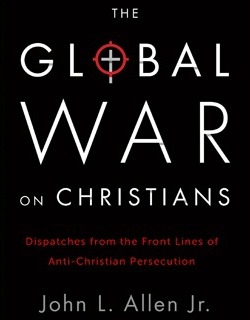
8 Statistics From “The Global War On Christians”

The Global War On ChristiansI found some of the statistics reported in The Global War On Christians by John L. Allen, Jr., to be quite eye-opening. You can read my full book review by clicking here, but these are some of the stats that caught my attention—

“Open Doors… estimates that one hundred million Christians worldwide presently face interrogation, arrest, torture, or even death because of their religious convictions.” 

“Two of the world’s leading demographers of religion, David B. Barrett and Todd Johnson, have performed an exhaustive statistical analysis of Christian martyrdom, reaching the conclusion that there have been 70 million martyrs since the time of Christ. Of that total, fully half, or 45 million, went to their deaths in the twentieth century, most of them falling victim to either Communism or National Socialism. More Christians were killed because of their faith in the twentieth century than in all previous entries combined. … Christians today are, by some order of magnitude, the most persecuted religious body on the planet, suffering not just martyrdom but all the forms of intimidation and depression mentioned above in record numbers. That’s not a hunch, or a theory, or in anecdotal impression, but an undisputed empirical fact of life.”

“In 1919, just 9 percent of Africa was Christian. As of early 2013 it was 63 percent, for a grand total of 380 million Christians on the continent. These folks are scattered across a stunning 552,000 congregations and 11,500 denominations…. Most of this growth has occurred since the last quarter of the twentieth century and is the result of indigenous African evangelizing efforts rather than Western missionaries.”

The top five most hazardous nations on earth in which to be a Christian:

  1. North Korea
  2. Afghanistan
  3. Saudi Arabia
  4. Somalia
  5. Iran

“One estimate is that there are 47 million Pentecostals in China alone, despite the best efforts of the officially atheistic government to rein in their expansion. … The Center for the Study of Global Christianity, which issues the much-consulted World Christian Database, says there are 111 million Christians in China, roughly 90 percent Protestant. That would make China the third largest Christian country on earth, following only the United States and Brazil.” 

“Open Doors… estimates the total number of Christians in North Korea to range from 200,000 to half a million, with at least a quarter of those believers currently behind bars in prison camps.”

“In the 1990s… conversions from Catholicism to Protestantism in Latin America during the twentieth century actually surpassed the Protestant Reformation in Europe in the sixteenth century.”

“A September 2012 report by the Pew Forum concluded that ‘a rising tide of restrictions on religion [has] spread around the world.’ Among other points, the study found that 37 percent of nations in the world have high or very high restrictions on religion, up from 31 percent a year ago, a six-point spike in just 12 months, and that three-quarters of the world’s population of 7 billion, meaning 5.25 billion people, live in countries with high or very high restrictions on religion. That’s up from 70 percent from the previous year.”

You can also read some quotes from this amazing book by clicking here.

Myth Buster

Dick BrogdenGuest Blogger: Dick Brogden

Currently there is an inordinate emphasis on size and speed when it comes to the development of the church. Church history soberly shows that orthodoxy tends not to spread as swiftly as heresy and that bad teaching outpaces good. It is the slow, steady repeated truth of God that builds the enduring church. The largest church at the end of the first century was found in Rome, thought by most scholars to be around two hundred members. The churches in Ephesus, Corinth, Philippi, Colosse, and Thessalonica (among others) were most probably between fifteen and fifty. The record of Acts takes place over about fifty years. Biblical precedent indicates that it takes about a generation to get a few churches to what we now consider modest size. One myth is that the church has to grow quickly; another that a strong church is a big church. The best churches tend to grow slowly and steadily, and the normal first century church comprised less than fifty people.

Disciples, too, are forged over time. If a church is but a collection of disciples, then it makes sense that strong churches require time to become solid. Another common myth today in mission is that all new disciples need is the Bible and the Holy Spirit. As appealing as this sounds, it has never been true in history, and if we are honest, it has not been true for any of us experientially. Consider how many books, sermons, mentors, friends, and external inputs help shape and form our spirituality over time. None of us grew to where we are without multiple sources of input over disparate seasons, all the input submitted to the authority of Holy Spirit and the Word. Biblically there always remains the need for an outside catalyst to help correct our biases and heresies. A group of people studying the Scriptures can just as easily end up pooling ignorance as illumining one another. Acts 15 is a classic example of ongoing external input necessary for the formation of strong disciples and churches. The negative example of external input (requiring circumcision) does not negate the massive, ongoing positive external input.

Paul and Barnabas report the wonderful turning of the Gentiles to Jesus. They also report the negative external pressure. James and the counsel respond by correcting the error and reinforcing what is necessary. In Acts 15:20, James delineates what they should not do–former religious forms and rituals. Paul reminds the council that coming to Jesus demands conversion (v. 3) and James cites Peter that the Gentiles must come out of false religion (v. 14). In Acts 15:32, Judas and Silas “exhort and strengthen the brethren with many words.” In verse 35, Paul and Barnabas teach and preach to the Gentiles and in verse 36, Paul and Barnabas commit to revisit their converts to ensure they are walking correctly. Disciples and churches are forged over time. Let us continue to believe that God will do great things and bring millions into His church. Let us continue to understand that it is slow, steady, life-on-life work to make disciples and build churches.

12 Quotes From “Pouring Holy Water On Strange Fire”

Pouring Holy Water On Strange FireIn Pouring Holy Water On Strange Fire, Frank Viola uses an extensive array of sources, both ancient and contemporary, in his critique of John MacArthur’s book Strange Fire. You can read my full book review by clicking here. I hope you will enjoy these quotes as much as I did.

“For some do certainly drive out devils, so that those who have thus been cleansed from evil spirits frequently both believe, and join themselves to the church. Others have foreknowledge of things to come: they see visions, and utter prophetic utterances. Others still, heal the sick by laying their hands upon them, and they are made whole. Yea, moreover, as I have said, the dead even have been raised up, and remained among us for many years. And what shall I more say? It is not possible to name the number of the gifts which the church throughout the whole world has received from God, in the name of the Jesus Christ (2.32.4) … For this reason does the apostle declare, who speak wisdom among them that are perfect, terming those persons perfect who have received the Spirit of God, and who through the Spirit of God do speak in all tongues, as he used himself also to speak. In like manner we do also hear many brethren in the church, who possess prophetic gifts, and who through the Spirit speak all kinds of tongues, and bring to light for the general benefit the hidden things of God, whom also the apostle terms spiritual, they being spiritual because they partake of the Spirit (5.6.1).” —Irenaeus, Against Heresies

“Now was absolutely fulfilled that promise of the Spirit which was given by the word of Joel: ‘In the last days will I pour out My Spirit upon all flesh, and their sons and their daughters shall prophesy; and upon My servants and upon My handmaids will I pour out of my Spirit.’ Since then the Creator promised the gifts of His Spirit in the latter days; and since Christ has in these last days appeared as the dispenser of spiritual gifts … it evidently follows in connection with this prediction of the last days, that this gift of the Spirit belongs to Him who is the Christ of the predictors … Let Marcion then exhibit, as gifts of his god, some prophets, such as have not spoken by human sense, but with the Spirit of God, such as have both predicted things to come, and have made manifest the secrets of the heart; let him produce a psalm, a vision, a prayer—only let it be by the Spirit, in an ecstasy, that is, in a rapture, whenever an interpretation of tongues has occurred to him; let him show to me also, that any woman of boastful tongue in his community has ever prophesied from amongst those specially holy sisters of his. Now all these signs of spiritual gifts are forthcoming from my side without any difficulty, and they agree, too, with the rules, and the dispensations, and the instructions of the Creator; therefore without doubt the Christ, and the Spirit, and the apostle, belong severally to my God. Here, then, is my frank avowal for any one who cares to require it (Bk. 5, Ch. 8).” —Tertullian, Against Marcion

“Anyone who cuts out portions of Scripture is guilty of very grievous sin … I say once more, there, that to hold such a view [cessationism] is simply to quench the Spirit.” —D. Martin Lloyd-Jones

“Therefore to say that because we now have all the writings of Scripture complete we no longer need the miraculous inspiration of the Spirit among men as in former days is a degree of blindness as great as any that can be charged upon the scribes and the Pharisees. … There is no degree of delusion higher than that which is evidenced by those who profess to teach from the divinely inspired Scriptures that the immediate, continual illumination and working of the Spirit in men’s hearts ceased when the canon of Scripture was complete. To deny the present prophetic gift in the church is to deny also that very manifestation of Christ today to His own which the Scriptures teach is the only means to the reality of Gospel Christianity.” —William Law

“But He has left to us the same power He possess. This [the indwelling Holy Spirit to continue Jesus’s life and ministry and to perpetuate miracles] is the mighty gift of our ascended Lord. This is the supreme need of the church today … the constitution of the church is identical with the twelfth chapter of First Corinthians. … We cannot leave out any part of the gospel without weakening the rest; and if there ever was an age when the world needed the witness of God’s supernatural working, it is the day of unbelief and satanic power.” —A.B. Simpson

“The devil only bothers to counterfeit that which is real and a threat to his kingdom.” —Frank Viola

“A Bible-based sermon can be equal in truth if rooted in Scripture, but not equal in authority to the Bible.” —Frank Viola

“Spirit can embrace intellect, but human intellect won’t comprehend Spirit.” —A.W. Tozer

“We need to learn that truth consists not in correct doctrine, but correct doctrine plus the inward enlightenment of the Holy Spirit.” —A.W. Tozer 

“We cannot make too much of this matter of revelation, illumination, seeing. It is basic in salvation (Acts 26:18). It is essential to effective ministry (2 Corinthians 4:6) and it is indispensable to full knowledge and full growth (Ephesians 1:17)…. The kind of seeing to which we refer is an epoch, an encounter, a revelation, a crisis. There is no power on this earth which could have changed that rabid, fanatical, bigoted Saul of Tarsus, a ‘Pharisee of the Pharisees,’ into ‘the apostle of the Gentiles’ (Romans 11:13)…. Argument would not have done it. Neither persuasion nor persecution nor martyrdom would have effected it. But it was done! That ‘conversion’ stood the test of all persecutions, sufferings, and adversities possible to man for the rest of his life…. Indeed, a fundamental and preeminent work of the Holy Spirit has to do with spiritual enlightenment and supremely as to the significance of God’s Son, Jesus Christ. It is all in the Scriptures, but still our eyes may be holden…. We can be governed by objective truth. It can be ‘the truth’—orthodox, sound, Bible truth. We can be governed by that simply because it is taught; we do it objectively. But there is something more than that. There is such a thing as the Holy Spirit taking hold of the truth of God and making it something that lives in us…. Many Christians are just Christians: that is, after they are saved, their Christian life consists in doing as they are told by the minister because it is presented to them as the thing they should do. But there is a much higher level of life than that. The thing is right, but it is altogether transformed when the Holy Spirit brings it home to us in an inward way, and adjusts us to it. We no longer do it because it has got to be done: we do it because the Lord has done something in us, and shown us that that is the thing that He wants done… it is no more mechanical, it is vital!” —T. Austin Sparks

“To downplay and criticize a genuine desire to know our Lord in greater capacity and to receive clear direction from God’s Spirit in greater measure is contrary to the exhortation and examples found in Scripture. Certainly, spiritual contentment and complacency would have drawn from Paul the strongest reproof. And it did so from Jesus in the book of Revelation.” —Frank Viola

“One thing the charismatic movement has been sent to do, I believe, is to alert us all to the fact that God, when trusted, will show His hand in many thrilling ways, and we should be expecting Him to do that, though without dictating to Him what He must do in particular situations.” —J.I. Packer

12 Quotes From “10 People Every Christian Should Know”

10 People Every Christian Should KnowWarren Wiersbe’s book 10 People Every Christian Should Know was filled with lots of quotes by and about the notable historical figures he covered in his book. You can read my book review by clicking here, but these are some of the quotes I highlighted while I was reading.

“You have been asked to take notice of the sayings of dying men—this is mine: that a life spent in the service of God and communion with Him is the most pleasant life that anyone can live in this world.” —Matthew Henry, on his deathbed 

“I am greatly persuaded that the generality of preachers talk of an unknown, unfelt Christ. And the reason why congregations have been so dead is because dead men preach to them.” —George Whitefield

“To quicken the conscience by the holiness of God, to feed the mind with the truth of God, to purge the imagination by the beauty of God, to open up the heart to the love of God, to devote the will to the purpose of God.” —William Temple, giving his definition of worship

“There are men called by God to preach on the issues of the hour, and we need their ministry. But for permanent strengthening of the church, we also need preachers who will dig again the old wells and lead us intelligently down the old paths and who, renouncing cheap pulpit rhetoric, will focus the white light of revelation on the human heart and examine us in that light.” —Warren Wiersbe

“Want of trust is at the root of almost all our sins and all our weaknesses, and how shall we escape it but by looking to Him and observing His faithfulness. The man who holds God’s faithfulness will not be foolhardy or reckless, but he will be ready for every emergency.” —J. Hudson Taylor

“I’d rather be able to pray than to be a great preacher. Jesus Christ never taught His disciples how to preach, but only how to pray.” —D.L. Moody

“The work will never go deeper than we have gone ourselves” —Amy Carmichael

“My Vow: Whatsoever Thou sayest unto me, by Thy grace I will do it.
My Constraint: Thy love, O Christ, my Lord.
My Confidence: Thou art able to keep that which I have committed unto thee.
My Joy: To do Thy will, O God.
My Discipline: That which I would not choose, but which Thy love appoints.
My Prayer: Conform my will to Thine.
My Motto: Love to live—live to love.
My Portion: The Lord is the portion of mine inheritance.” —Amy Carmichael

“You can be much more for Him than ever you know by just being yourself and relying on Him…. Keep praying and playing and being yourself.” —Oswald Chambers 

“You can never give another person that which you have found, but you can make him homesick for what you have.” —Oswald Chambers

“Stop having a measuring rod for other people. There is always one fact more in every man’s case about which we know nothing.” —Oswald Chambers

“The best book is not one that informs merely, but one that stirs the reader up to inform himself.” —A.W. Tozer

10 People Every Christian Should Know (book review)

10 People Every Christian Should Know10 People Every Christian Should Know is a quick survey of notable Christian movers and shakers from the 1600s through the 1960s. Warren Wiersbe gives us a quick overview of their lives, attempting to whet our appetites to learn more about them.

By no means are these in-depth biographies, but rather short biographical sketches of their lives. Rev. Wiersbe quotes from other biographies and works written by the person being studied to give us insight into why they belong on this “Top 10” list. Each chapter contains Rev. Wiersbe’s recommendations about which books to read by or about that person to go deeper in your study of their life and beliefs.

I don’t have any arguments with the list of distinguished people who made this list, and I found the book recommendations in each chapter helpful, as well as the extensive list of reference books and biographies at the end of the book. The only thing I found slightly off-putting was Rev. Wiersbe’s commentaries into why the spiritual experiences of some of the subjects weren’t what they were portrayed to be. It would have been far better for him to simply say, “Here’s what happened, and here’s where you can read more.” Other than that, I would recommend this book as a great starting point for anyone who loves studying history as much as I do.

By the way, the Top 10 people covered in this book are:

  • Matthew Henry—Bible commentator
  • Jonathan Edwards—pastor
  • John Henry Cardinal Newman—pastor
  • J.B. Lightfoot—Bible translator
  • J. Hudson Taylor—missionary
  • Charles H. Spurgeon—pastor
  • Dwight L. Moody—pastor
  • Amy Carmichael—missionary
  • Oswald Chambers—professor
  • A.W. Tozer—pastor