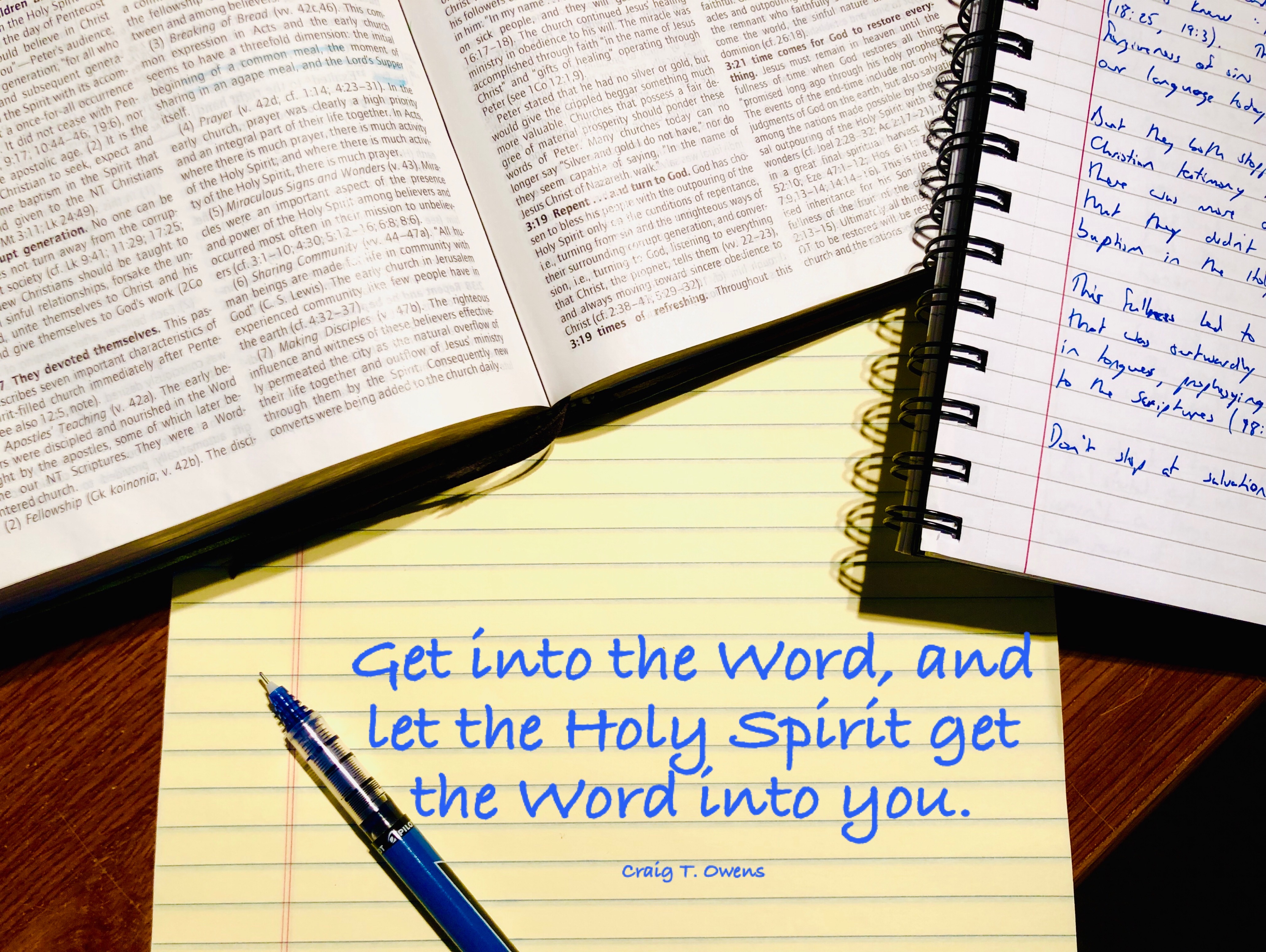
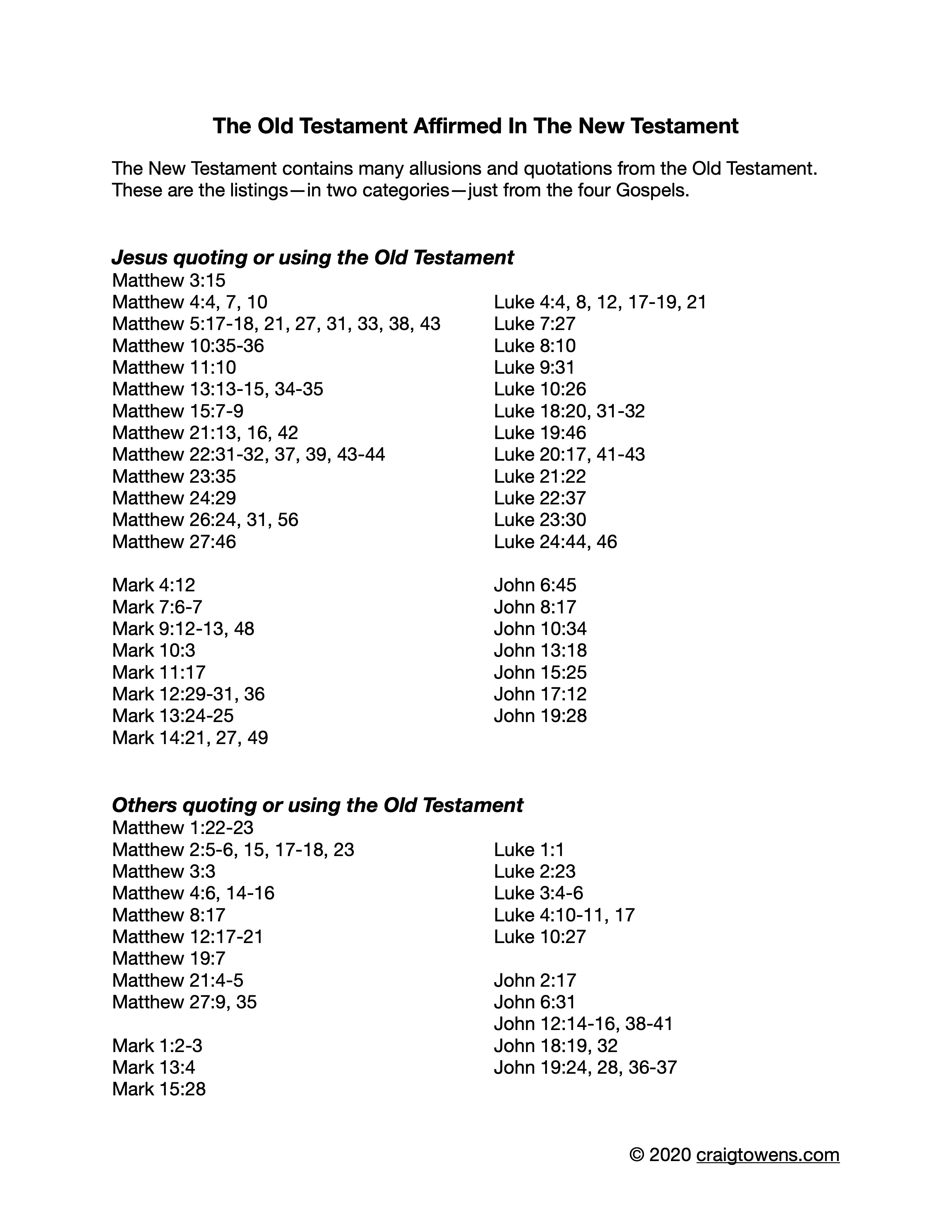
These are some outstanding lists I found in my Life In The Spirit Study Bible (sometimes referred to as “The Fire Bible”). If you want to see how the Holy Spirit is at work throughout the entire Bible, this study Bible is a must-have resource.
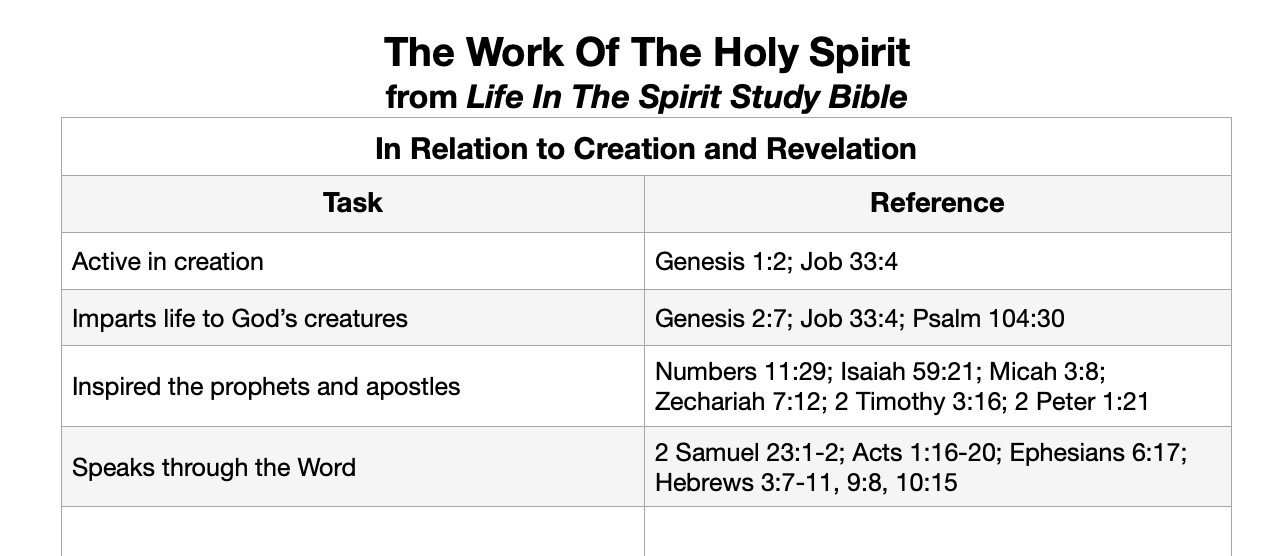
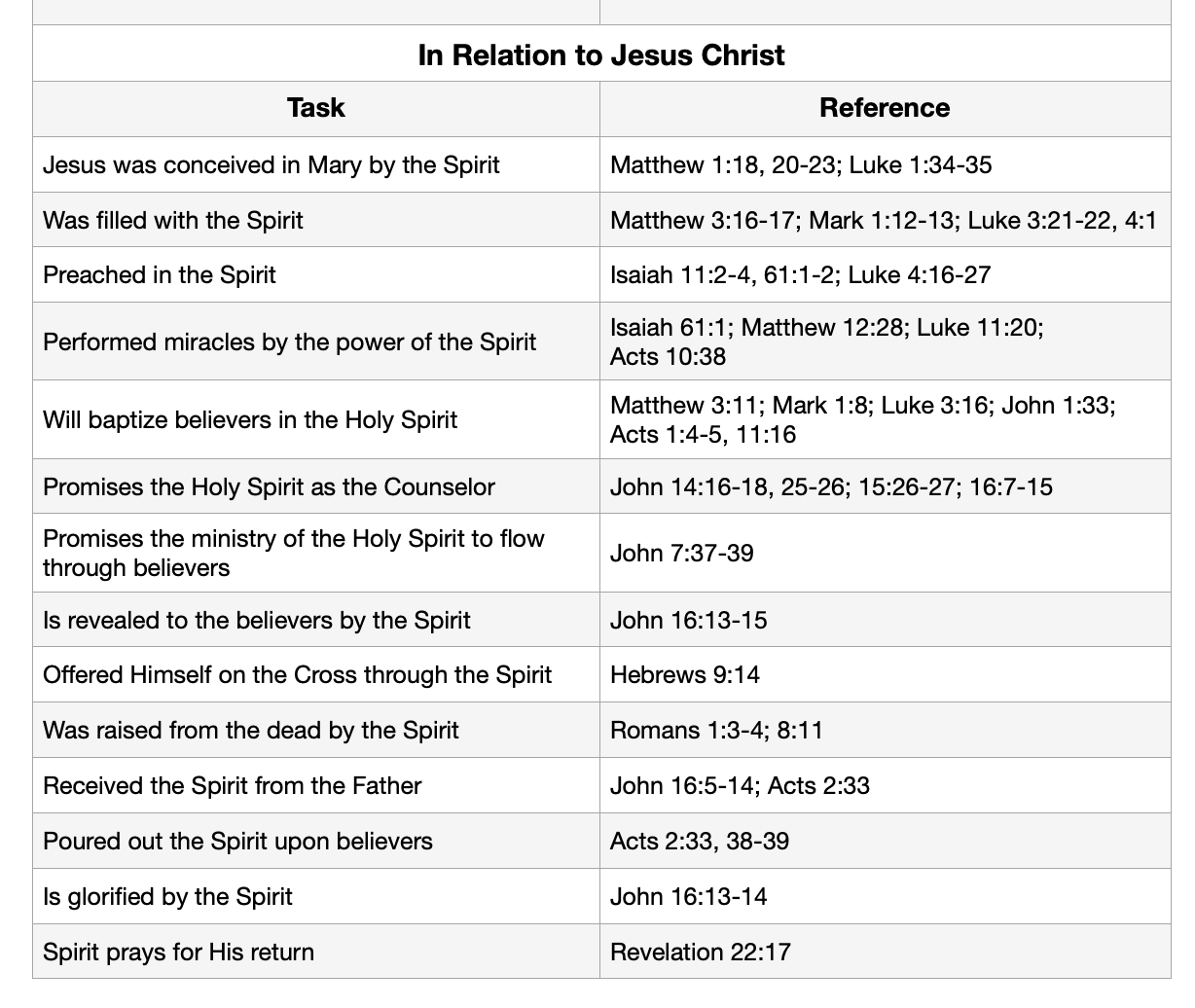
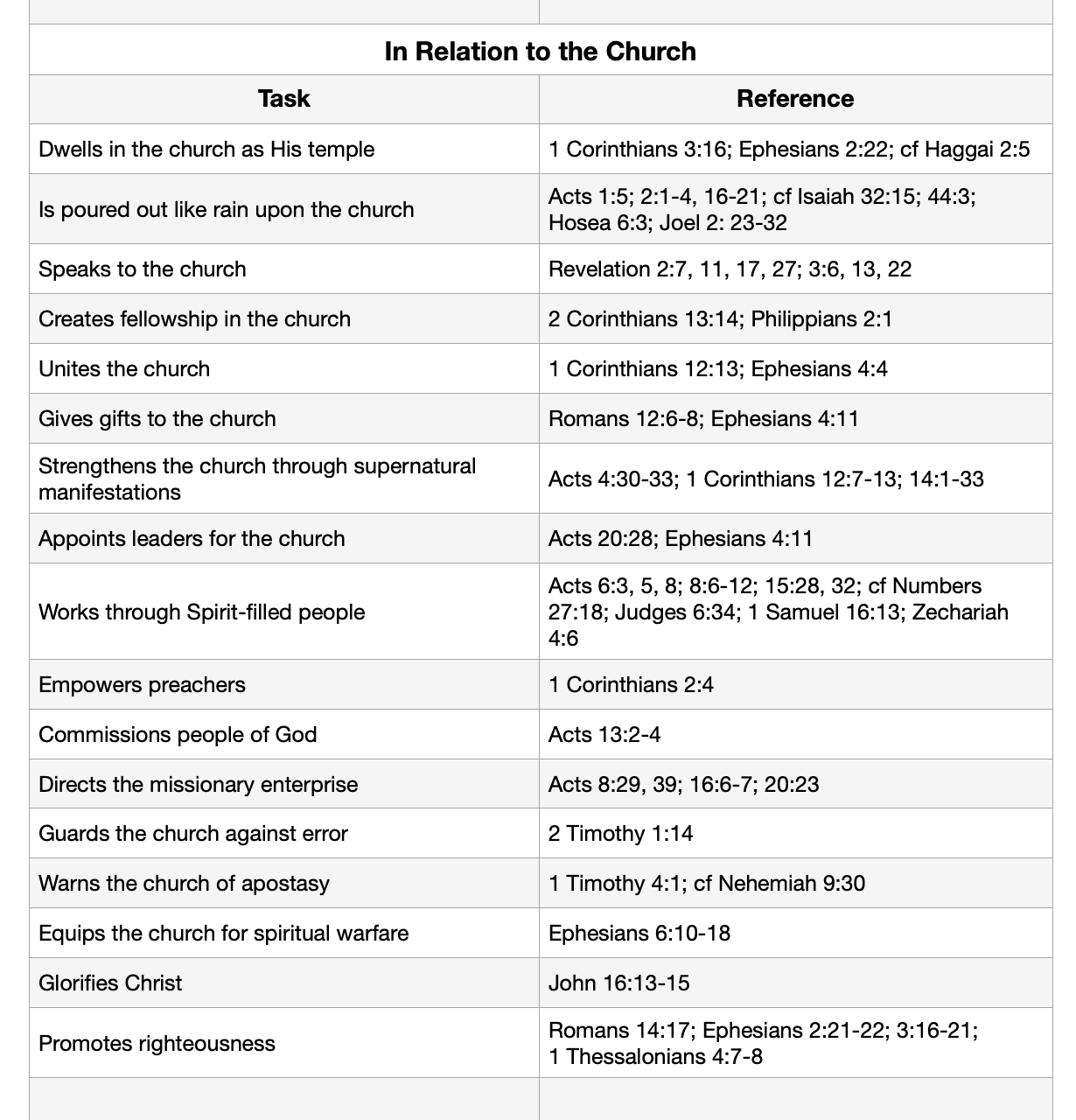
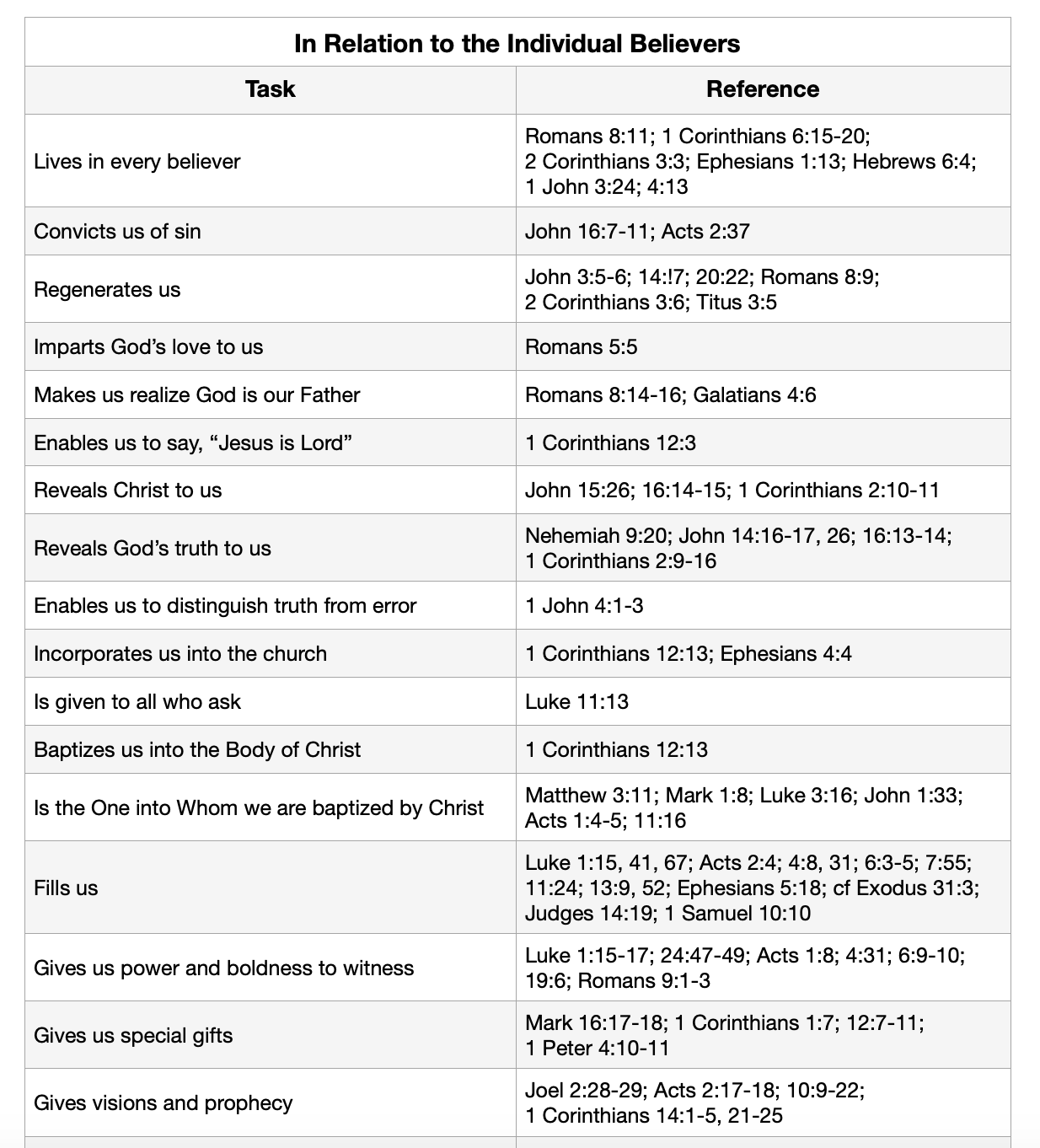
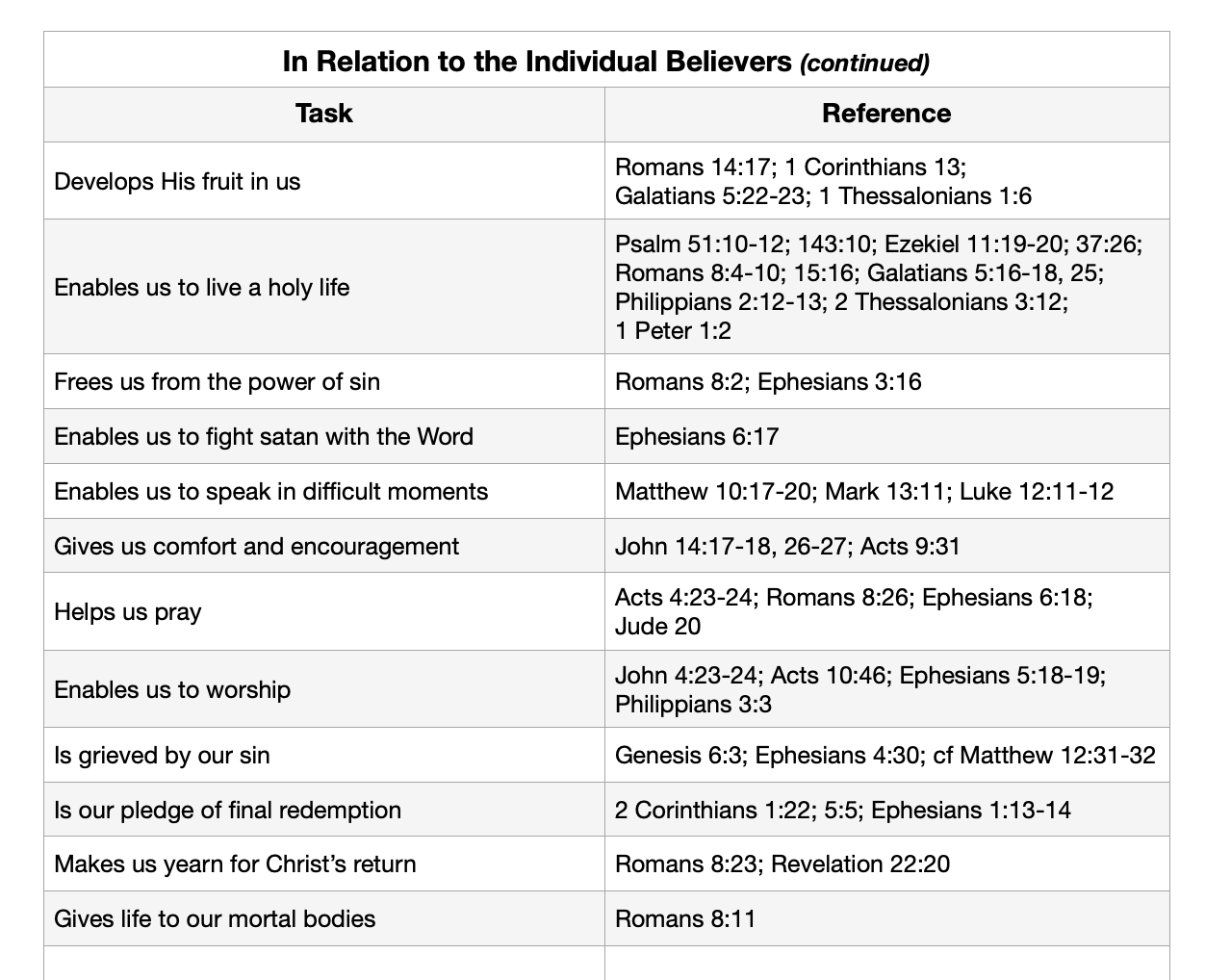
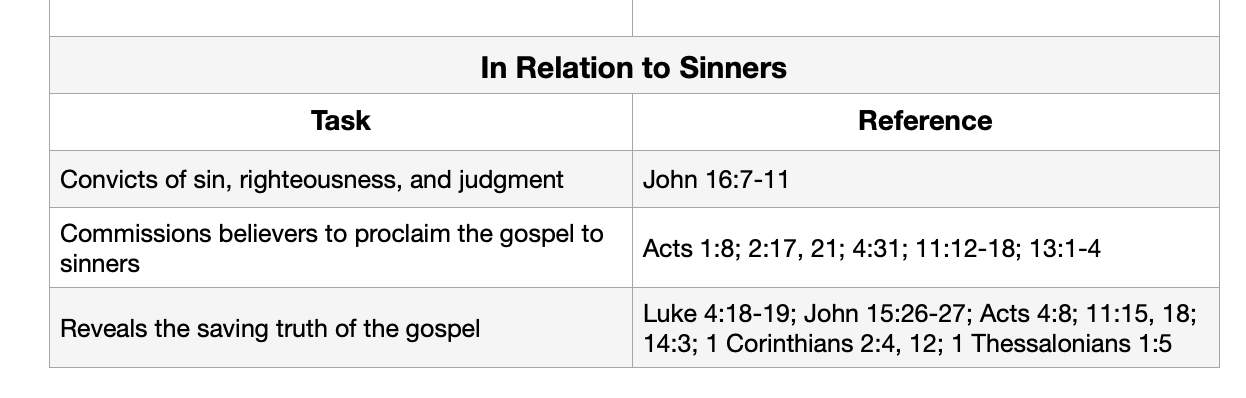
These are some outstanding lists I found in my Life In The Spirit Study Bible (sometimes referred to as “The Fire Bible”). If you want to see how the Holy Spirit is at work throughout the entire Bible, this study Bible is a must-have resource.

C.S. Lewis identifies one of the harmful effects of pornography. “For me the real evil of masturbation would be that it takes an appetite which, in lawful use, leads the individual out of himself to complete (and correct) his own personality in that of another (and finally in children and even grandchildren) and turns it back: sends the man back into the prison of himself, there to keep a harem of imaginary brides. And this harem, once admitted, works against his ever getting out and really uniting with a real woman. For the harem is always accessible, always subservient, calls for no sacrifices or adjustments, and can be endowed with erotic and psychological attractions which no woman can rival.” —C.S. Lewis
“Joy is not a requirement of Christian discipleship; it is a consequence.” —Eugene Peterson
Dan Reiland has an excellent post for leaders entitled 4 Layers To Gaining Wisdom.
In my personal devotional time, I came across a sobering idea in the book of Amos about God’s love. I am reading through the Bible in Halley’s Study Bible, where I also read this: “The basket of ripe fruit [Amos 8] is another symbol that the sinful kingdom was ripe for ruin. And Amos reiterates the causes: greed, dishonesty, and merciless brutality toward the poor. Over and over, through many images, the Bible makes it plain that there is no possible way to escape the consequences of persistent sin.” —Dr. Henry Halley
The Institute for Creation Research has a powerful post explaining how seafloor spreading matches Creation predictions.
J. Warner Wallace wrote, “The historic development of language and communication prepared the way for the birth of Jesus. God orchestrated this timing, along with the development of roads, postal services and a 200-year period peace within the Roman Empire (known as the Pax Romana) to prepare the world for the arrival of Jesus.”
Our church is taking time on Fridays to fast and pray. Here is a reminder of the expected results that I shared with our church family—
This is a weekly series with things I’m reading and pondering from Charles Spurgeon. You can read the original seed thought here, or type “Thursdays With Spurgeon” in the search box to read more entries.
Listen to the podcast of this post by clicking on the player below, and you can also subscribe on Apple, Spotify, or Audible.

The Final, Authoritative Word
…For the mouth of the Lord has spoken (Isaiah 1:20).
It would not be worth our while to speak what Isaiah had spoken if in it there was nothing more than Isaiah’s thought—neither should we care to meditate hour after hour upon the writings of Paul, if there was nothing more than Paul in them. …
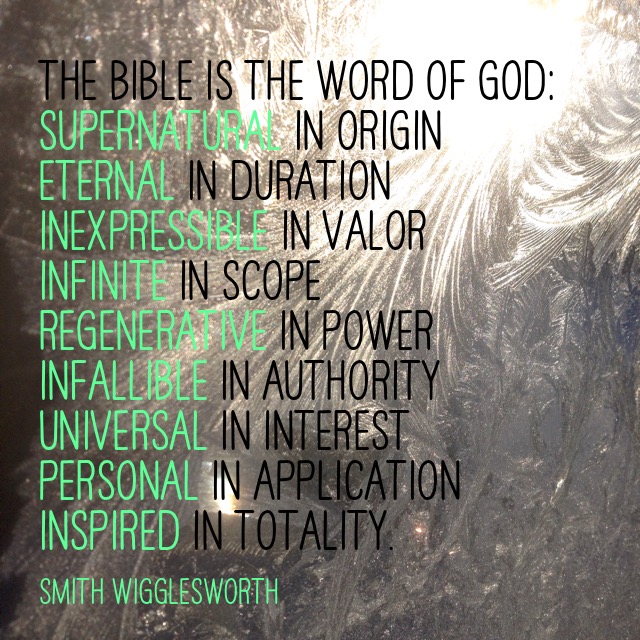
It is not mine to amend or adapt the gospel. What? Shall we attempt to improve upon what God has revealed? The Infinitely Wise to be corrected by creatures of a day? Is the infallible revelation of the infallible Jehovah to be shaped, moderated, and toned down to the fashions and fancies of the hour? God forgive us if we have ever altered His Word unwittingly. …
One Word of God is worth more than libraries of human lore. ‘It is written’ is the great gun which silences all the batteries of man’s thought.
From The Infallibility Of Scripture
As Solomon neared the end of his writings in the Book of Ecclesiastes, he made this observation, “Of making many books there is no end, and much study wearies the body” (12:12). How true that is. Have you walked through a bookstore lately?! There is no end to the opinions that people want to share with you.
But there is one thing that all of the books in all of the bookstores and all of the libraries have in common: not one of them is given to us by “the mouth of the Lord.”
There are certainly many, many books that are saturated in Scripture, but they are still the opinions of man. We need to make sure that everything we read, or every wise person that we listen to, or even every conversation that we have with ourselves are all proven to be true or false based on what God has spoken.
Jesus told us that the Holy Spirit would remind us of everything God’s mouth had spoken to us (John 14:26), and that He would guide us into all truth (John 16:13).
So go ahead and search out wise, godly books and wise, godly counselors. But remember that their word is not the final word—only the words that come from the mouth of the Lord are the authoritative words you should apply to your life.
►► Would you please prayerfully consider supporting this ministry? My Patreon supporters get behind-the-scenes access to exclusive materials. ◀︎◀︎
Listen to the podcast of this post by clicking on the player below, and you can also subscribe on Apple, Spotify, or Audible.
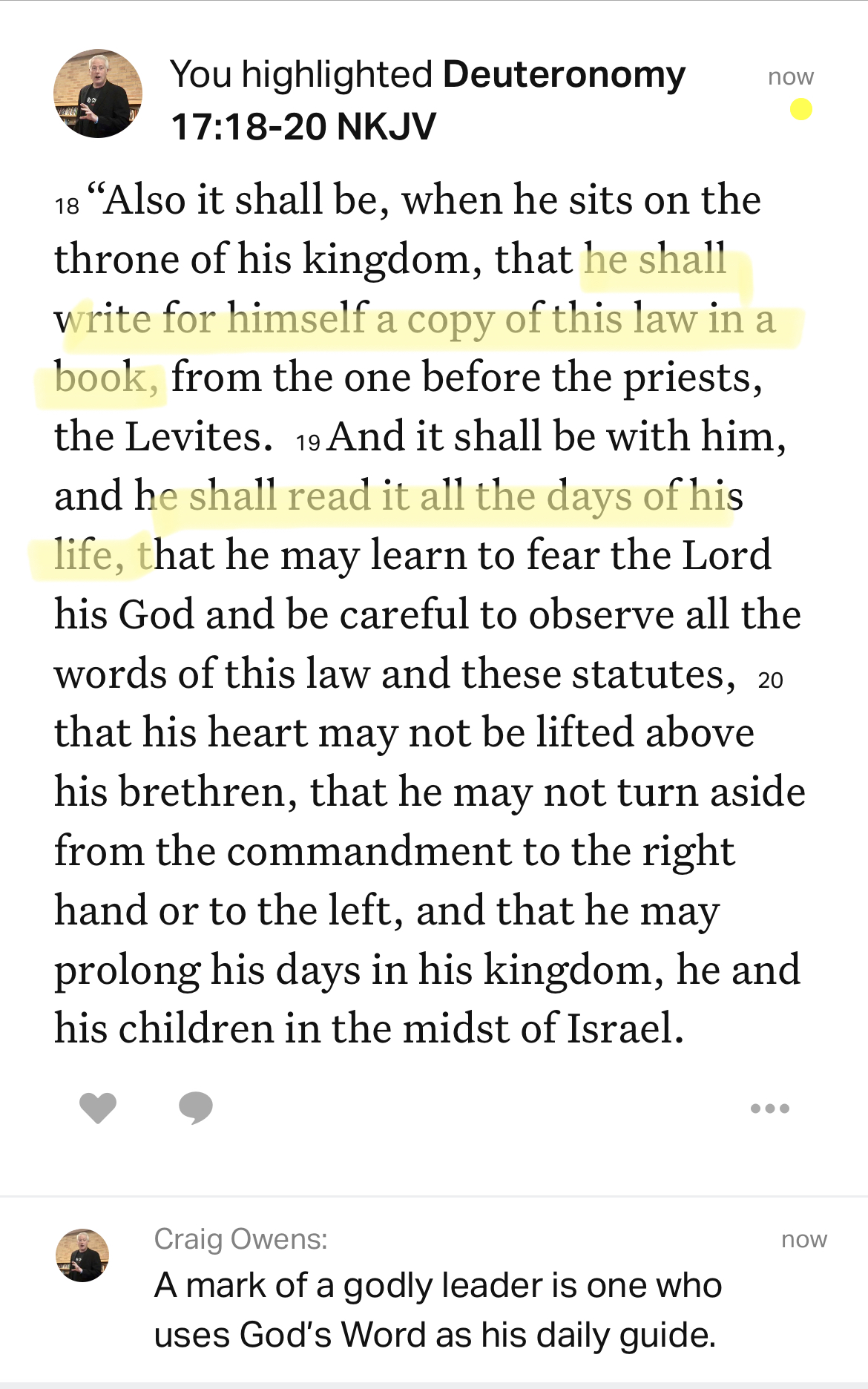 Sometimes it’s best just to let the Bible speak for itself.
As Moses was preparing the Israelites for life in the land God has promised them, he had these words for them about their leaders—
When you enter the land the Lord your God is giving you and have taken possession of it and settled in it, and you say, “Let us set a king over us like all the nations around us,” be sure to appoint over you a king the Lord your God chooses. … When he takes the throne of his kingdom, he is to write for himself on a scroll a copy of this law, taken from that of the Levitical priests. It is to be with him, and he is to read it all the days of his life so that he may learn to revere the Lord his God and follow carefully all the words of this law and these decrees and not consider himself better than his fellow Israelites and turn from the law to the right or to the left…. (Deuteronomy 17:14-15, 18-20)
This is part 64 in my series on godly leadership. You can check out all of my posts in this series by clicking here.
►► Would you please prayerfully consider supporting this ministry? My Patreon supporters get behind-the-scenes access to exclusive materials. ◀︎◀︎
This is a weekly series with things I’m reading and pondering from Charles Spurgeon. You can read the original seed thought here, or type “Thursdays With Spurgeon” in the search box to read more entries.
Listen to the podcast of this post by clicking on the player below, and you can also subscribe on Apple, Spotify, or Audible.
The Mouth Of The Lord Has Spoken
…For the mouth of the Lord has spoken (Isaiah 1:20).
However this sacred Book may be treated nowadays, it was not treated contemptuously, nor negligently, nor questioningly by the Lord Jesus Christ, our Master and Lord. It is noteworthy how He reverenced the written Word. The Spirit of God rested upon Him personally, without measure, and He could speak out of His own mind the revelation of God, and yet He continually quoted the Law, and the Prophets, and the Psalms…. I am sure, brethren, we cannot be wrong in imitating the example of our divine Lord in our reverence for that Scripture, which cannot be broken. …
The New Testament writers sit reverently down before the Old Testament and receive God’s words as such without any question whatever. You and I belong to a school that will continue to do the same, let others adopt what behavior they please. As for us and for our house, this priceless Book will remain the standard of our faith and the ground of our hope so long as we live.
From The Infallibility Of Scripture
As I have discussed before, the 39 books of the Old Testament were called “Scripture” by Jesus and those living in that same era. The New Testament writers saw Jesus as the fulfillment of those Old Testament Scripture, and what they wrote for us then became Scripture also (Luke 4:18-21; 24:27, 44-45; John 2:22, 17:12; Acts 1:16, 8:35; Galatians 3:8, 16, 22; James 2:8, 23, 4:5-6; 1 Peter 2:6; 2 Peter 3:16).
When we read the Bible, we are reading words from the mouth of God Himself!
This Book is the measure of truth, the guide for our lives, and the blessed assurance we need as we anticipate the second advent of Jesus. We need to be much in this Sacred Book!
►► Would you please prayerfully consider supporting this ministry? My Patreon supporters get behind-the-scenes access to exclusive materials. ◀︎◀︎
“Ministers should be persons of the same quiet, lamb-like spirit that Christ was of, the same spirit of submission to God’s will, and patience under afflictions, and meekness towards men; of the same calmness and composure of spirit under reproaches and sufferings from the malignity of evil men; of the same spirit of forgiveness of injuries; of the same spirit of charity, of fervent love and extensive benevolence; the same disposition to pity the miserable, to weep with those who weep, to help men under their calamities of both soul and body, to hear and grant the requests of the needy, and relieve the afflicted; the same spirit of condescension to the poor and mean, tenderness and gentleness towards the weak, and great and effectual love to enemies.” —Jonathan Edwards
“God has promised to supply all our needs. What we don’t have now, we don’t need now.” —Elizabeth Elliot
 In my book Shepherd Leadership: The Metrics That Really Matter, I talk about how important it is for us to get a good night’s sleep to keep our leadership skills sharp. Sleep is also vitally important to help in the battle against overcoming temptations.
A groundbreaking paper was released this year that appears to debunk evolutionary theories once again. Check out this commentary from John Stonestreet’s podcast.
“There’s no such thing as a spiritual vacuum in the cosmos. Whatever of our time, attention, interest, or strength is not devoted to the Lord, and His Kingdom and glory, will become susceptible to being taken over by contrary interests. These often take the form of false teachers who appeal to our selfish interests and encourage us to make of the faith of Jesus Christ a kind of spiritual smorgasbord for whatever we think we need. We leave off the solid food of sound doctrine and dabble in the sweets and crunchies of mere self-interest—if we spend any time in the Word of God at all. Our mind enters a period of arrested development which will become permanent atrophy unless serious measures are engaged.” —T.M. Moore
“Always make your gratitude greater than your success.” —Dan Sullivan & Catherine Nomura
This is a weekly series with things I’m reading and pondering from Charles Spurgeon. You can read the original seed thought here, or type “Thursdays With Spurgeon” in the search box to read more entries.
Listen to the podcast of this post by clicking on the player below, and you can also subscribe on Apple, Spotify, or Audible.
Fully Equipped For Success
The words of the Lord are flawless, like silver purified in a crucible, like gold refined seven times. (Psalm 12:6)
Oh, that we used more the naked Sword of the Spirit! I am afraid we keep this two-edged Sword in a scabbard, and somewhat pride ourselves that the sheath is so elaborately adorned. What is the use of the sheath? The Sword must be made bare, and we must fight with it, without attempting to garnish it. Tell forth the words of God. Omit neither the terrors of Sinai, nor the love notes of Calvary. …
My Master’s Word is a great opener of prison doors. … That is a most wonderful Word, which, like a battle-ax, smashes in the helmet of presumption, and at the same time, like the finger of love, touches the tender wound of the bleeding, and heals it in an instant! The words of the Lord—for breaking down or lifting up—are equally effective. …
The Bible may be compared to the locksmith’s bunch of keys. You handle them one by one, and say of one, ‘That is a strange key; surely it will fit no lock that ever was made!’ But one of these days the smith is sent for to open a very peculiar lock. None of his keys open it. At last he selects that singular specimen. Look! It enters, shoots back the bolt, and gives access to the treasure! …
Rest assured that you never will be in a labyrinth so complicated that this Book, blessed of the Spirit, will not help you through. …
Beloved, the words of God endure another test; they are our preservatives in times of temptation. You can write a book that may help a man when he is tempted in a certain direction. Will the same volume strengthen him when he is attracted in the opposite direction? … The devil himself cannot invent a temptation that is not met in these pages. And all the devils in hell together, if they were to hold parliament, and to call in the aid of all evil men, could not invent a device which is not met by this matchless Library of truth. It reaches the believer in every condition and position, and preserves him from all evil.
From The Bible Tried And Proved
There is no substitute for God’s Word, and there is no obstacle that the Holy Scripture cannot overcome—
ALL Scripture is God-breathed and is useful for teaching, rebuking, correcting and training in righteousness, so that the servant of God may be thoroughly equipped for EVERY good work. (2 Timothy 3:16-17)
The Bible is our sword and battle-ax for fighting battles, it is our key to the most complicated problems, it is our map to guide us to safety, and it is our life preserver to help us overcome temptation.
I say a loud, “Amen!” to these concluding words of Charles Spurgeon: “I grieve that even to some who bear the Christian name, Holy Scripture is the least read book in their library. … Brothers and sisters, open the Book! Do it freely. Do it heartily. Do it constantly.”
►► Would you please prayerfully consider supporting this ministry? My Patreon supporters get behind-the-scenes access to exclusive materials. ◀︎◀︎
This is a weekly series with things I’m reading and pondering from Charles Spurgeon. You can read the original seed thought here, or type “Thursdays With Spurgeon” in the search box to read more entries.
Listen to the podcast of this post by clicking on the player below, and you can also subscribe on Apple, Spotify, or Audible.
The Whole Counsel Of God’s Word
The words of the Lord are flawless, like silver purified in a crucible, like gold refined seven times. (Psalm 12:6)
Beloved friends, consider the quality of the words of God. ‘The words of the Lord are pure words.’ From this statement I gather, first, the uniformity of their character. No exception is made to any of the words of God, but they are all described as pure words. They are not all of the same character. Some are for teaching, others are for comfort, and others for rebuke. But they are so far of a uniform character that they are all pure words. I conceive it to be an evil habit to make preferences in Holy Scripture. We must preserve this volume as a whole. …
Above all, do not drop into the semi-blasphemy of some, who think the New Testament vastly superior to the Old. … They are of equal authority, and they cast such light upon each other that we could not spare either of them. … In the whole Book, from Genesis to Revelation, the words of Jehovah are found, and they are always pure words. …
Whether the Holy Spirit speaks by Isaiah, or Jeremiah, or John, or James, or Paul, the authority is still the same. Even concerning Jesus Christ our Lord this is true. For He says of Himself, ‘The word which you hear is not Mine, but the Father’s who sent Me’ (John 14:24). In this matter He puts Himself upon the level of others who were as the mouth of God.
From The Bible Tried And Proved
Because my parents were such amazing hosts, we had a steady stream of evangelists and missionaries that dined in our home. As a young man, I was so blessed to sit at the dining room table and listen to some of the wisest and godly preachers of their time.
One such evangelist was C.M. Ward, who hosted the “Revivaltime” radio broadcast for a quarter of a century. I remember listening intently to a conversation in our home when he turned and looked right at me. “Young man,” he said, “The Word of God is pure. You can devour it and feed on all of it. But anything else you read is like eating chicken: There’s some meat that’s good, but you have to watch out for the bones that can choke you.”
Those words have stuck with me for nearly 50 years. I delight in reading my Bible as my daily Bread—both Old Testament and New Testament, the words of the prophets, the words of Jesus, and the words of the apostles. It’s all so beneficial!
In a recent sermon, I talked about the value in reading and studying the whole counsel of God’s Word.
I encourage you not to pick and choose the biblical passages that you like best, but to read, study, and meditate on the whole Book. Find a study Bible to use, get into a Bible-preaching church, and make God’s Word your daily Source of wisdom.
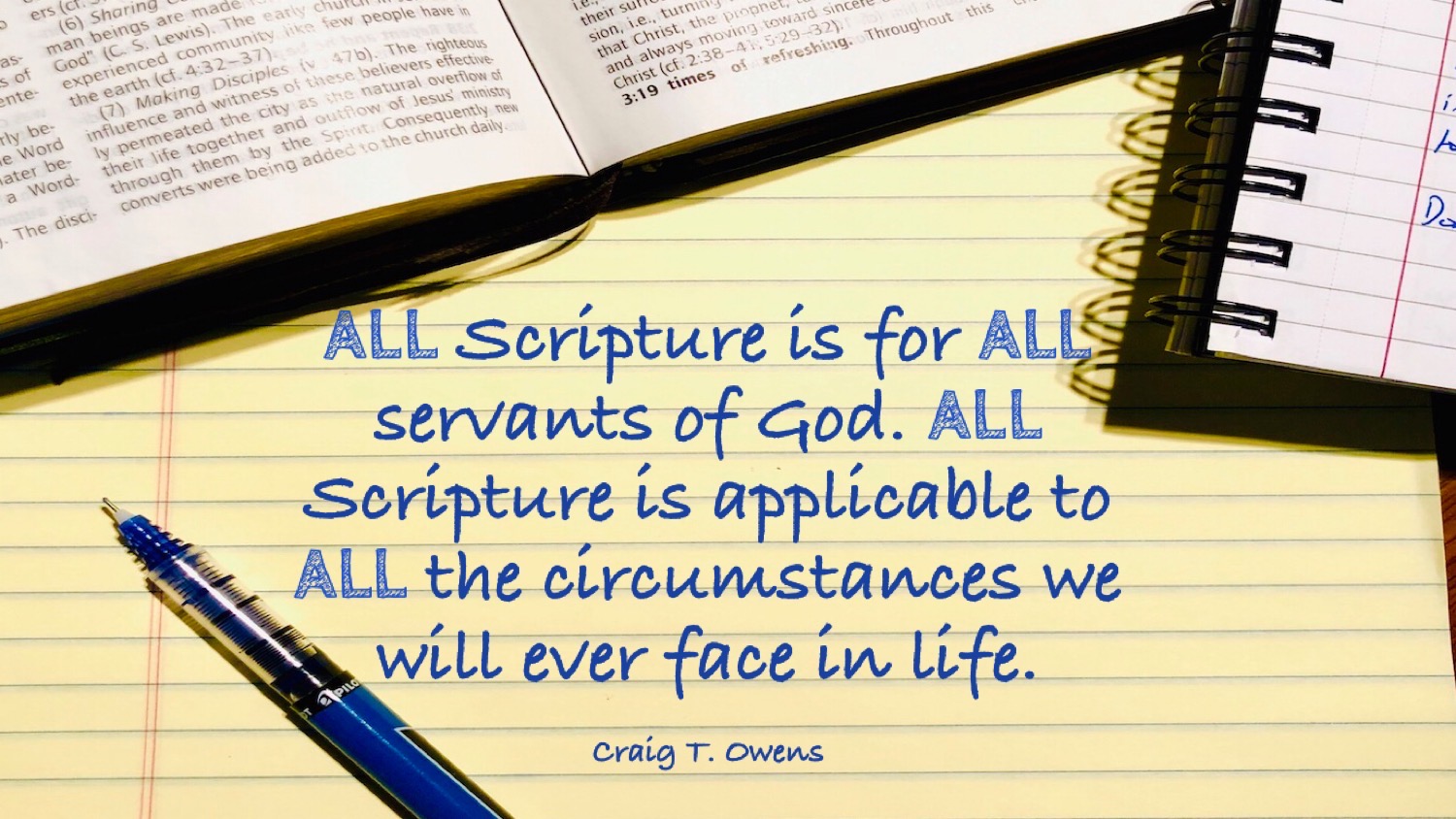
ALL Scripture is for ALL servants of God. ALL Scripture is applicable to ALL the circumstances we will ever face in life.
►► Would you please prayerfully consider supporting this ministry? My Patreon supporters get behind-the-scenes access to exclusive materials. ◀︎◀︎
Listen to the podcast of this post by clicking on the player below, and you can also subscribe on Apple, Spotify, or Audible.
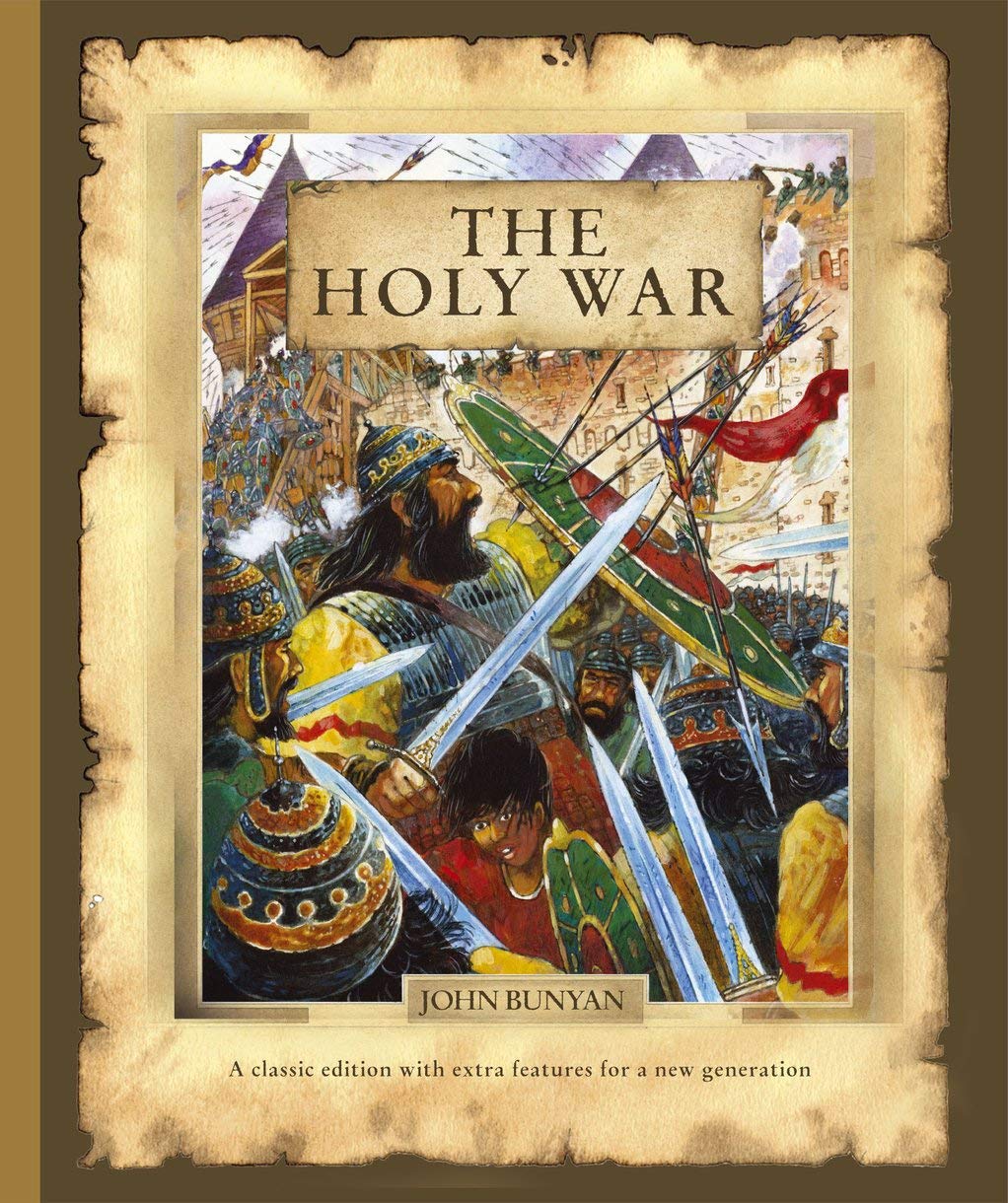 Many of the principles taught in the Bible are conveyed to us through graphic stories. Think about some of the imagery the prophets of the Old Testament used or even the parables Jesus used in the New Testament. In fact, even the Hebrew language of the Old Testament and the Greek language of the New Testament are very picturesque languages. John Bunyan takes full advantage of this in his book The Holy War.
If you have ever read a John Bunyan book or sermon, it is quite obvious that the Bible is his Source Book. In fact, Charles Spurgeon said of him, “Why, this man is a living Bible! Prick him anywhere—his blood is Bibline, the very essence of the Bible flows from him. He cannot speak without quoting a text, for his very soul is full of the Word of God.” Much like The Pilgrim’s Progress, The Holy War is steeped in biblical imagery that makes the story so engaging.
The title and subtitle of the book alone tell you the essence of the story: The holy war made by Shaddai upon Diabolus for the regaining of the metropolis of the world, or the losing and taking again of the town of Mansoul. With the assault taking place on Ear-gate and Eye-gate of Mansoul by such combatants as Lord Incredulity or Mr. Forget-Good, and the servants of King Shaddai such as Captain Conviction, Mr. Justice, and Mr. True-Man drawing up battle lines against the town, you can quickly see how picturesque the language truly is.
Much in the vein of C.S. Lewis’ The Screwtape Letters, Bunyan also lets us hear the correspondence and war counsels of Lucifer and his minions, as well as the conversation between King Shaddai and His Son Emmanuel.
As with anything I’ve ever read from John Bunyan, The Holy War is entertaining and insightful. If you have read and enjoyed The Pilgrim’s Progress, I think you will thoroughly enjoy this book as well.
►► Would you please prayerfully consider supporting this ministry? My Patreon supporters get behind-the-scenes access to exclusive materials. ◀︎◀︎
This is a weekly series with things I’m reading and pondering from Charles Spurgeon. You can read the original seed thought here, or type “Thursdays With Spurgeon” in the search box to read more entries.
Listen to the podcast of this post by clicking on the player below, and you can also subscribe on Apple, Spotify, or Audible.
Your Daily Companion
The words of the Lord are flawless, like silver purified in a crucible, like gold refined seven times. (Psalm 12:6)
In this psalm our text stands in contrast with the evil of the age. The psalmist complains, ‘The godly man ceases! For the faithful disappear from among the sons of men’ (12:1). It was a great grief to him, and he found no consolation except in the words of the Lord. So what if men fail, the Word of the Lord abides! … Live in communion with the Word of God, and even in the absence of Christian friends, you will not lack for company. …
Furthermore, the verse stands in fuller contrast still with the words of the ungodly when they rebel against God and oppress His people. They say, ‘With our tongue will we prevail; our lips are our own; who is Lord over us?’ (12:4). …
So, dear friend, if at any time your lot is cast where the truths you love so well are despised, get back to the prophets and apostles, and hear through them what God the Lord will speak. The voices of earth are full of falsehood, but the word from heaven is very pure. … Make the Word of God your daily companion….
The Word of the Lord is so instinct with everlasting life and eternal freshness, that it is as vocal and forceful in the heart of the saint today as it was to the ear of Abraham when he heard it in Canaan, or to the mind of Moses in the desert, or to David when he sang it on his harp. … By the Holy Spirit the words of Scripture come to us with a present inspiration—not only has the Book been inspired, it is inspired. This Book is more than paper and ink, it talks with us. Was not that the promise, ‘When you awake, they will speak with you’ (Proverbs 6:22)? We open the Book with this prayer, ‘Speak, Lord; for Your servant hears.’ … May the Holy Spirit at this hour speak to you yet again!
From The Bible Tried And Proved
I cannot say, “Amen!” loudly enough to convey just how much I agree with Spurgeon’s thoughts about the Bible. It is—without a close second—my favorite Book!
I spent a week blogging about this Book of books: how it helps us pray, and think, and be more creative and insightful than others, and how it helps us process our strong emotions.
The Bible also helps us fight victoriously. Do you want to fight like Jesus? Then get the Word of God in your heart and mind, and wield it like a sword the way Jesus did! Whether it was satan, or scribes and Pharisees, or even His own doubting disciples, Jesus returned to the Scripture time and time again.
Just as the Scriptures were to Jesus, let’s make the Word of God our daily companion!
If you would like some Bible study ideas, check these out. Or take a walk through the Psalms with me. Or begin by reading one chapter in Proverbs, or one section of Psalm 119, every day for a month. I can promise you that the Bible is the best daily companion you will ever know!
►► Would you please prayerfully consider supporting this ministry? My Patreon supporters get behind-the-scenes access to exclusive materials. ◀︎◀︎