Thursdays With Oswald—Jeremiah 19

Oswald ChambersThis is a weekly series with things I’m reading and pondering from Oswald Chambers. You can read the original seed thought here, or type “Thursdays With Oswald” in the search box to read more entries.

Jeremiah 19

[These are notes from Oswald Chambers’ lecture on Jeremiah 19.] 

     In the temple precincts judicious minds were without excuse, because they understood what Our Lord was doing. Outside Jerusalem, Our Lord always said, “Don’t tell anyone Who I am”; every time He went to Jerusalem He made it clear who He was. 

The presentation of the Gospel of God to sinners is one of love and mercy, but to the house of God one of judgment and truth. When we preach to the crowd outside we lambast drunkenness and other things, Jesus never did. The stern messages of the Bible are never given to sinners, but to God’s people.

From Notes On Jeremiah

Hmmm, are we doing this the right way? It seems like many times we get this reversed—we rebuke those outside because of their sin, and we speak tenderly to those on the inside. Definitely something for Christian leaders to consider carefully. 

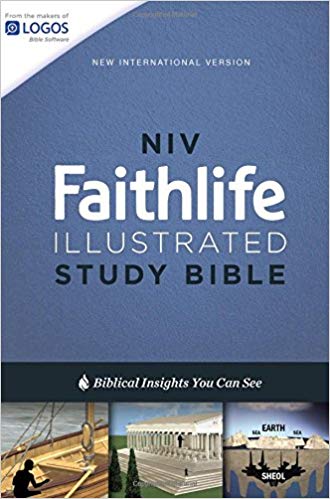
Faithlife Illustrated Study Bible (book review)

If you’ve ever looked at the list of books I’ve read and reviewed at the end of each year, you will quickly discover how much I enjoy reading! I read science, biographies, theological works, philosophy, financial resources, relationship helpers, and on and on. But hands-down, not-even-close to second place, I read the Bible more than anything else. Not only do I read the Bible extensively every day, I then read all of my other books through the lens of Scripture. 

So whenever I come across a resource that helps with Bible reading and study, I’m absolutely thrilled to share it with you. One such resource I’ve been so excited about is the Faithlife Illustrated Study Bible. 

I originally purchased this study Bible because of the “illustrated” part. I glanced through it and found several things that make the biblical accounts more understandable. Things like: 

  • timelines 
  • genealogical records
  • “blueprints” of notable buildings and structures
  • infographics 
  • maps and tables 

Then I was excited to discover the wealth of articles embedded in the notes section next to the biblical texts. 

But the happiest discovery I made was the ability to combine the written text with so much additional online content. Using the Faithlife Study Bible app on my iPhone, I can access all of the content in the print version in addition to more resources that have become available since this study Bible was published. My favorite way to do this is via the “reference scanner” in the app. I use my iPhone camera to take a picture of the part of the Bible I’m studying and then the app pulls up all of the resources associated with nearly everything on that page. Amazing! 

If you already love studying the Bible, this book/app combination will take you to a whole new level. Even if you’re just getting started in a Bible study, you will love how much fullness these resources quickly bring to your fingertips. 

Living Lives That Make Sense

This sounds totally contrary to common sense, but I’ll bet you’ve seen this before—Someone does something unexpectedly nice, and gets criticized for it. 

Why would that be? 

Christians can expect to experience this more frequently. Jesus told His followers to be prepared for persecution from those who didn’t believe in Him. One of Christ’s disciples named Peter added a few other warnings for Christians: 

  • Non-Christians will accuse you of doing wrong even when you’re doing right
  • Non-Christians will think it’s weird that you don’t do the same evil deeds they do
  • Non-Christians will heap abuse on you for not doing the evil deeds they do (1 Peter 2:12; 4:4)

This is because living good, Christ-honoring lives causes a burning in those hearts that don’t know Jesus yet. 

Solomon said there’s an aching void in the heart of every human being. It’s a longing to know what makes sense in life (see Ecclesiastes 3:11). When Christians live their lives focused on God, and they live—as Peter said—“such good lives,” it reminds non-Christians of what they’re missing. 

Christian, you need to remember why we live this way. The belief that Jesus is the Christ, the Son of the living God (Matthew 16:18) is the foundation for our lives. In fact, Peter called Jesus the Living Stone. As His followers, we are also called “living stones” that the Holy Spirit is building together to make a spiritual signpost to point others to Jesus (see 1 Peter 2:4-5, 9, 12). 

We cannot do this under our own power. Jesus Himself reminded us that we need the Scriptures which all point to Him (Luke 24:27, 44-45), and the Holy Spirit which will help us apply the revealed Scriptures (John 14:26) and live “such good lives.” 

So here’s how I’m challenging myself this week, and I’d like to extend this challenge to you too. For the next seven days, just before going to bed I’ll be asking myself these three questions:

  1. Did I read the Word of God today? 
  2. Did I see the God of the Word in the Word of God a little more clearly today?
  3. Did I live a good, Christ-honoring life today that pointed others to Jesus?

Join me this Sunday as we continue our look at how Christians should live as aliens and strangers. If you’ve missed any messages in this series, you may find the complete list by clicking here.

Saturday In The Proverbs—Knowing True & False Riches (Proverbs 22)

[Each chapter in the Book of Proverbs contains thoughts that fit into a theme; they are not just random thoughts gathered together. In this “Saturday In The Proverbs” series, I will share a theme that I see in each chapter. But the cool thing about God’s Word is that you may see an entirely different theme. That’s great! If you do, I would love for you to share it in the comments below.]

…riches… (Proverbs 22:1, 4, 16).

There are earthly riches and there are heavenly riches. There are temporary gains and there is eternal wealth. This Proverb helps direct us to true riches that last forever. 

Good character and a good reputation are better than money (v. 1)

God alone decides what is truly valuable (v. 2)

Prudence helps you avoid bankruptcy (v. 3)

Humbly fearing God is the path to eternal wealth (v. 4)

A perverse pursuit of wealth is a hard and painful path (v. 5)

Better godly children than gobs of money (vv. 6, 15)

Debt enslaves (v. 7)

Cutting corners to make a buck will come back to bite you (v. 8)

Generosity leads to more blessings (v. 9)

Don’t pay attention to those who scoff at God’s ways (vv. 10, 24, 25)

A grace-filled, pure lifestyle will get you noticed and rewarded (v. 11)

God rewards those who do things His way (vv. 12, 17-21)

A good work ethic brings rewards (vv. 13, 29)

Immoral pursuits end in a deep pit (v. 14)

Don’t treat people differently because of their ‘net worth’ (vv. 16, 22, 23; see also James 2:2-4)

Be careful to whom you make financial  commitments (vv. 26, 27)

Don’t encroach on others’ space (v. 28) 

Thursdays With Oswald—Jeremiah 18

Oswald ChambersThis is a weekly series with things I’m reading and pondering from Oswald Chambers. You can read the original seed thought here, or type “Thursdays With Oswald” in the search box to read more entries.

Jeremiah 18

[These are notes from Oswald Chambers’ lecture on Jeremiah 18.] 

     These people are affecting to be the people of God—“We are the people of God, this is the temple of God…the prophets we like to listen to are those who prophesy smooth things.” … The early aspirations God stirred in them have gone, and now they simply make God and everything in connection with Him an affectation to go on their own ways. …

     There is an obstinacy that deliberately takes the law into its own hand and leaves the source of its life. There needs to be a recognition of where the source of life is and a determination to stay at it. Backsliding is the prevailing human stubbornness after the experimental knowledge of salvation. Backsliding is never spoken of in the Bible as a degenerate tendency, but as a conscious forsaking. …  

     It is no longer “Satisfy us early with Thy mercy,” but “Satisfy us with these other things, we want material prosperity and success.” … Never falter by trying to make anything lesser the cause for what is greater; for instance, trying to make health of body the cause for a right spiritual relationship, or material prosperity the cause for worshiping God, and never make obedience the reason that God is blessing you, obedience is the effect of being rightly related to God. 

From Notes On Jeremiah 

Backsliding occurs when we deliberately try to find loopholes, evasions, or excuses for not obeying the Word of God. 

Whenever the Holy Spirit prompts us to make a change, we have a decision to make: we can obey or we can make excuses (which is conscious disobedience). Obedience shows we are rightly related to God. Our excuses and evasions show we are trying to get God to be rightly related to our way of thinking. 

What God is asking you to obey may be a hard thing, but it is always the best thing! Don’t evade, justify, or make excuses—simply, as the words of the old hymn remind us, trust and obey, for there’s no other way to be happy in Jesus. 

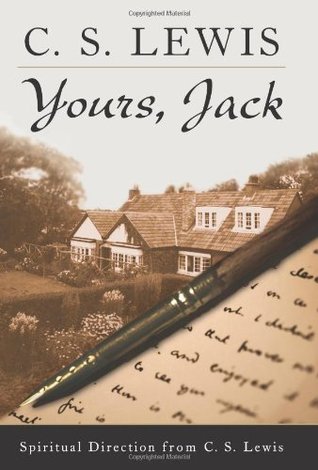
10 More Quotes From “Yours, Jack”

I love reading C.S. Lewis’ books, and I loved learning more about Lewis himself through his personal correspondence. Here are a few more quotes from Yours, Jack. 

“Indeed the best thing about happiness itself is that it liberates you from thinking about happiness—as the greatest pleasure that money can give us is to make it unnecessary to think about money. And one sees why we have to be taught the ‘not thinking’ when we lack as well as when we have.” 

“Read your New Testament (preferably a modern translation) intelligently. Pray for guidance, obey your conscience, in small as well as great matters, as strictly as you can. Don’t bother much about your feelings. When they are humble, loving, brave, give thanks for them: when they are conceited, selfish, cowardly, ask to have them altered. In neither case are they you, but only a thing that happens to you.”

“The Bible itself gives us one short prayer which is suitable for all who are struggling with the beliefs and doctrines. It is: ‘Lord, I believe, help Thou my unbelief.’ Would something of this sort be any good: Almighty God, who art the Father of lights and who has promised by Thy dear Son that all who do Thy will shall know Thy doctrine: give me grace so to live that by daily obedience I daily increase in faith and in the understanding of Thy Holy Word, through Jesus Christ our Lord. Amen.” 

“I would prefer to combat the ‘I’m special’ feeling not by the thought ‘I’m no more special than anyone else’ but by the feeling ‘Everyone is as special as me.’ In one way there is no difference, I grant, for both remove the speciality. But there is a difference in another way. The first might lead you to think, ‘I’m only one of the crowd like anyone else.’ But the second leads to the truth that there isn’t any crowd. No one is like anyone else. All are ‘members’ (organs) in the Body of Christ. All different and all necessary to the whole and to one another: each loved by God individually, as if it were the only creature in existence. Otherwise you might get the idea that God is like the government which can only deal with the people as a mass.” 

“As to the ‘state of the world’ if we have time to hope and fear about it, we certainly have time to pray. I agree it is very hard to keep one’s eyes on God amid all the daily claims and problems. I think it wise, if possible, to move one’s main prayers from the last-thing-at-night position to some earlier time: give them a better chance to infiltrate one’s other thoughts.” 

“One can’t help momentary wishes: guilt begins only when one embraces them. You can’t help their knocking at the door, but one mustn’t ask them in to lunch.” 

“I take it as a first principle that we must not interpret any one part of Scripture so that it contradicts other parts: and specially we must not use an Apostle’s teaching to contradict that of Our Lord.” 

“Any honest workmanship (whether making stories, shoes, or rabbit hutches) can be done to the glory of God.” 

“It is important to keep on giving thanks. Otherwise, as one continues to pray for the others who have not yet been relieved, one simply fails to notice how many of one’s intercessory prayers have been granted—never notices how the list of Thank-you’s grows and perhaps outstrips the list of mere Please’s.” 

“The only thing one can usually change in one’s situation is oneself. And yet one can’t change that either—only ask Our Lord to do so.” 

You can read my review of Yours, Jack by clicking here. And be sure to check out the first set of quotes I shared from this book by clicking here. 

Let’s Put That In Perspective!

How long is your life? If you’re a man living in the United States on average your life is 689,412 hours. But how long is that really? 

Here’s some perspective—if you drew a timeline 50 feet long that represented all of Earth’s recorded history, your life would cover about the breadth of your hand. But that’s only recorded history—what about the eternity that existed before history started and the eternity that will continue after history ends? 

Twice in Psalm 39, David described our brief life like this: each man’s life is but a breath. 

So what do we do with our breath-long life? Fortunately for us, David gives us godly perspective in five areas. 

  1. Perspective on the weight of my words and my silence (vv. 1-3) 

David had a good start: I will keep my tongue from sin, but what happens when sinful words slip out? I would suggest we count those as a gift. Really?! Yes, because those “slips” make us aware of what’s really in our heart (see Matthew 15:19) so that we can confess them. 

David also suggests putting a muzzle on our mouths when we’re around certain people. In other words, don’t get into petty fights with people who aren’t going to receive the wisdom we may have to share with them. 

  1. Perspective on the use of my time (vv. 4-5)

Why do we procrastinate doing good things? Some of our simple cliches reflect this, like TGIF. Why wait until Friday to get happy? Why not say TGIT—thank God it’s today! Do something memorable today… do something life-altering today… do something for God today.

  1. Perspective on my possessions (v. 6) 

David reminds us that we work so hard to accumulate stuff “not knowing who will get it.” Jesus had another word for someone who only wanted to get stuff to make his life easier: fool (see Luke 12:16-21). Use stuff to serve others. 

  1. Perspective on forgiveness (vv. 7-11)

Why oh why, would we spend one minute longer than we have to with unconfessed, unforgiven sin? I blogged last week about the freedom that immediately comes when we receive forgiveness from our confessed sin. Let’s do this quickly! 

  1. Perspective on the purpose of my life (vv. 12-13)

If I only have a breath-long life, I want to make every moment count. I love what C.T. Studd wrote: “Only one life will soon be past. Only what’s done for Christ will last. … Let us not glide through this world and then slip quietly into heaven without having blown the trumpet loud and long for our Redeemer, Jesus Christ. Let us see to it that the devil will hold a thanksgiving service in Hell when he gets the news of our departure from the field of battle.”

Here’s my prayer for all of us—Lord, help me to know how few days I have so I can live every one for Your glory. 

Saturday In The Proverbs—God Gets The Final Say (Proverbs 21)

[Each chapter in the Book of Proverbs contains thoughts that fit into a theme; they are not just random thoughts gathered together. In this “Saturday In The Proverbs” series, I will share a theme that I see in each chapter. But the cool thing about God’s Word is that you may see an entirely different theme. That’s great! If you do, I would love for you to share it in the comments below.]

The king’s heart is in the hand of the Lord, like the rivers of water; He turns it wherever He wishes (Proverbs 21:1).


I may be in charge of something, but I am never in complete control. God has the final say in my…

  • …affections (vv. 1, 17, 24)
  • …motives (vv. 2, 6, 10, 13, 14, 22, 27)
  • …righteousness (vv. 3, 4, 7, 8, 12, 15, 16, 18, 21, 29)
  • …plans (vv. 5, 31)
  • …household management (vv. 9, 19)
  • …attitude toward correction (v. 11)
  • …stewardship (v. 20)
  • …words (vv. 23, 28)
  • …work ethic (vv. 25, 26)

“There is no wisdom or understanding or counsel against the Lord” (v. 30). God always has the final say.

Thursdays With Oswald—Jeremiah 17

Oswald ChambersThis is a weekly series with things I’m reading and pondering from Oswald Chambers. You can read the original seed thought here, or type “Thursdays With Oswald” in the search box to read more entries.
Jeremiah 17

[These are notes from Oswald Chambers’ lecture on Jeremiah 17.] 

     All sin is unpardonable, every sinner is pardonable. … 

     God cannot pardon sin, but He instantly receives the sinner when the sinner leaves his sin and comes to Him. The Atonement of the Lord Jesus Christ does not mean that God forgives the sinner and leaves him in his sin; God forgives a man for being a sinner and puts him in the place where he need never be a sinner any more. …  

     God is only after one thing, a right relationship to Himself, and He does not care about our physical comforts. Until we are rightly related to Him, God will play ruthless havoc with every comfort and relationship we have. … 

     When we are sanctified the perpetual temptation is to do what Jesus did not do—“Now I am sanctified I can do what I like.” I cannot. My natural life and natural gifts are to be turned into a spiritual possession by offering them to God. 

From Notes On Jeremiah

God cannot tolerate sin, but He loves the sinner so much that He sent His Son to die in our place as payment for our sin. While we are still wallowing and trapped in our sin, God will not leave us alone; He will not make life comfortable for us; He will ruthlessly ruin everything that we try to use as a substitute for a relationship with Him. 

Once we do confess our sin and receive the Atonement that Jesus purchased on the Cross for us, the Holy Spirit will continue to harass our old nature. Our sinful flesh wants to return to wallowing in the muck of sin, but the Holy Spirit will make it tremendously uncomfortable for us to go there. 

Don’t strive for a comfortable life; strive for a God-honoring life. Pay attention to those areas of discomfort or dissatisfaction, because God is speaking to you through those and calling you into a deeper, more vibrant life in Him.

The Power Of Praying Scripture

I have always been a huge proponent of allowing the Scriptures to help form my prayers. I think there is great value in speaking God’s Word back to Him. 

“Knowing God’s Word helps us pray, and praying helps us know God’s Word.” —Craig T. Owens

I am currently reading Max Lucado’s book Praying The Promises in which he makes the same case. For instance, consider the following passages—

The rain and snow come down from the heavens and stay on the ground to water the earth. They cause the grain to grow, producing seed for the farmer and bread for the hungry. It is the same with My word. I send it out, and it always produces fruit. It will accomplish all I want it to, and it will prosper everywhere I send it. (Isaiah 55:10-11) 

[Abraham] was fully convinced that God is able to do whatever He promises. (Romans 4:21) 

For no matter how many promises God has made, they are “Yes” in Christ. And so through Him the “Amen” is spoken by us to the glory of God. (1 Corinthians 1:20) 

Here’s how Max Lucado turned those passages into a prayer—

Lord, You are the Maker and Keeper of promises. Your Word does not return void. When You say You will do something, You do it. You are able to do whatever You promise. So many years ago You made a covenant with Your people, and You have been faithful to the covenant.

Sometimes it is easier to put my faith in my circumstances rather than in Your promises. I want to rely on myself, my earthly possessions, and the people in my life, but these so often fail me. But Your promises will never fail me!

As I read through Your promises, give me a new passion for them. Show me what promises I have forgotten over the years and need to cling to again. Reveal Your true character to me. Remind me of the power of Your love and Your grace. Strengthen my faith, and teach me to lean on Your Word rather than on myself.

Thank You for keeping Your promises. I’m grateful for the ultimate promise I have in Your Son, Jesus. Amen.

Why don’t you start making this a regular habit yourself.