Using The Bible To Pray

Listen to the podcast of this post by clicking on the player below, and you can also subscribe on AppleSpotify, or Audible.

During the first year of [Darius’] reign, I, Daniel, learned from reading the Word of the Lord, as revealed to Jeremiah the prophet, that Jerusalem must lie desolate for seventy years. So I turned to the Lord God and pleaded with Him in prayer and fasting. I also wore rough burlap and sprinkled myself with ashes. (Daniel 9:2-3 NLT) 

Reading the Word of God prompted Daniel to pray to the God that is revealed in the Word, and the prayer he offered to God was grounded in biblical promises—in God’s own promises (vv. 4-19). 

It’s like when children are speaking to their earthly fathers and say, “Dad, you promised,” it gets the attention of that father’s heart because he wants to keep his word. 

God hasn’t forgotten His promises; in fact, He is always at work to fulfill what He has said. But when we pray, “Father, according to Your promise to me,” we are praying words that resonate with His heart. He delights for His children to see Him at work. And He is glorified when we praise Him for fulfilling what He has promised. 

When we end our prayer with “in the name of Jesus, Amen,” that is not just some magical phrase that we tag on, but it is a reminder that we can come boldly before God’s throne with our petition. And prayers that are aligned with the heart of God—prayers that are grounded in the Word of God—have the “Amen” of Jesus added to them (Hebrews 10:19-22; 2 Corinthians 1:20). 

We never need to be at a loss for words when we go to our Heavenly Father in prayer. Read His Word, see the Holy Spirit illuminate and apply the Word to your circumstances, and then pray confidently in the name of Jesus.

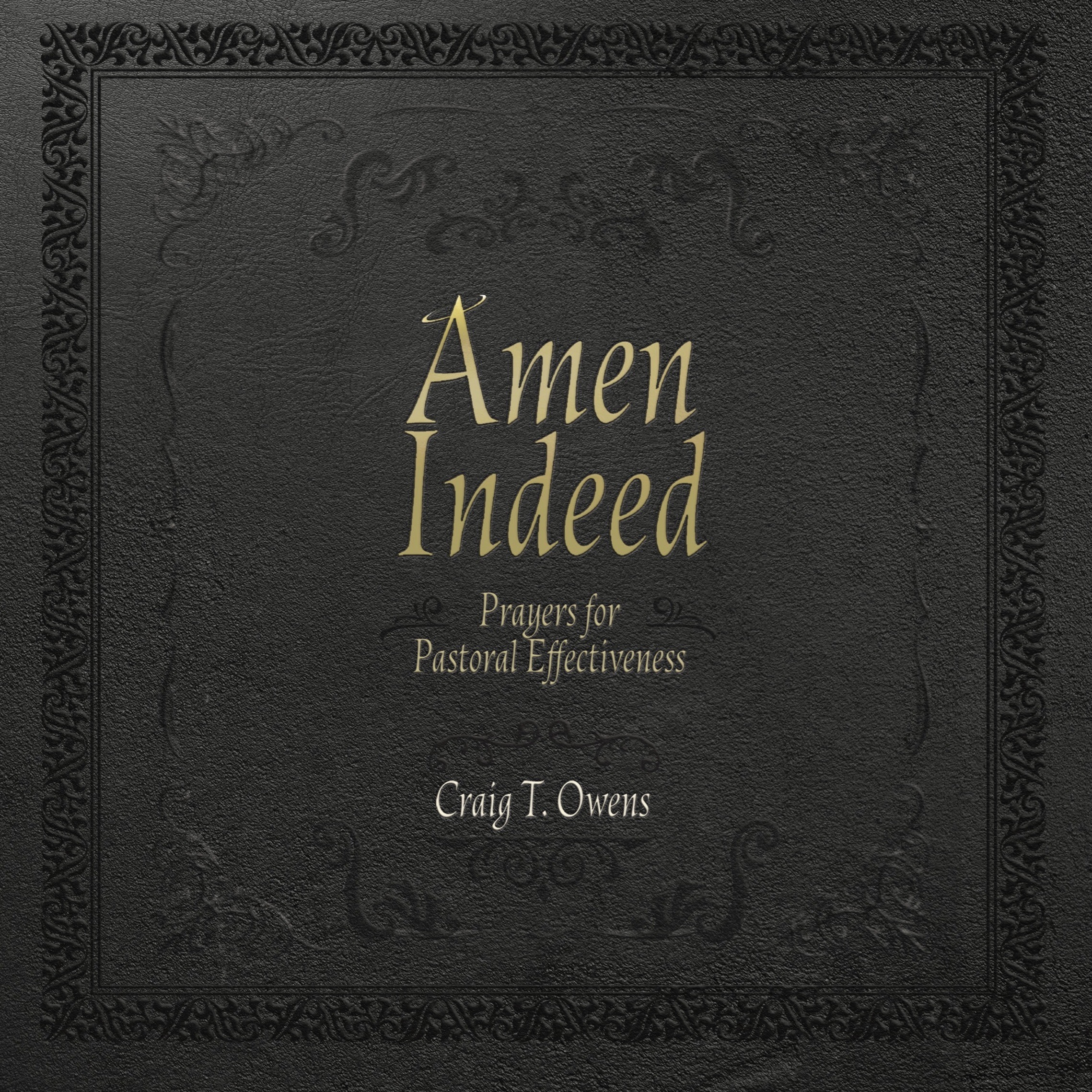
For pastors and shepherd leaders, my book Amen Indeed contains over 100 biblically-based prayers for many of the situations we face in our ministries. My prayer for you is that this book will help you learn how to use the Bible as your Prayer Book.

►► Would you please prayerfully consider supporting this ministry? My Patreon supporters get behind-the-scenes access to exclusive materials. ◀︎◀︎

Links & Quotes

The Bible doesn’t tell us to choose either love or spiritual gifts, but to be both loving and spiritually gifted. Let’s always go for the both-and!

I have a lot of new video content on my YouTube channel every week. Please check it out and subscribe so you don’t miss anything.

T.M. Moore is sharing a fascinating series of posts on economics through a biblical worldview. “All the ancient laws of Israel contain principles like this, principles which, if rightly understood and faithfully practiced, could tap into the grace of God and bring more honesty, respect, fairness, justice, generosity, forbearance, and love into the economic practice of a powerful nation such as the United States—more of grace and less of greed to our economic life.” 

“Christ had even a literary style of His own, not to be found, I think, elsewhere; it consists of an almost furious use of the a fortiori. His ’how much more’ is piled one upon another like castle upon castle in the clouds. The diction used about Christ has been, and perhaps wisely, sweet and submissive. But the diction used by Christ is quite curiously gigantesque; it is full of camels leaping through needles and mountains hurled into the sea.” —G.K. Chesterton 

David Mathis writes that the Bible is not just “a Book.” He says, “In my mind, one of the greatest imaginable tragedies is a professing Christian who is bored with the Bible. Could a truly loving husband cherish his wife but not care for her words? Could an adoring wife respect her husband but not what he says? What are words anyway? They are the breathed-out expressions of the person himself. Words are audible revelations of the otherwise unknown heart.”

Another archeological study supports the historicity of the Bible. This one identifies the battle preparations that King Joash made.

The Craig And Greg Show: Business By The Book

Listen to the podcast of this post by clicking on the player below, and you can also subscribe on AppleSpotify, or Audible.

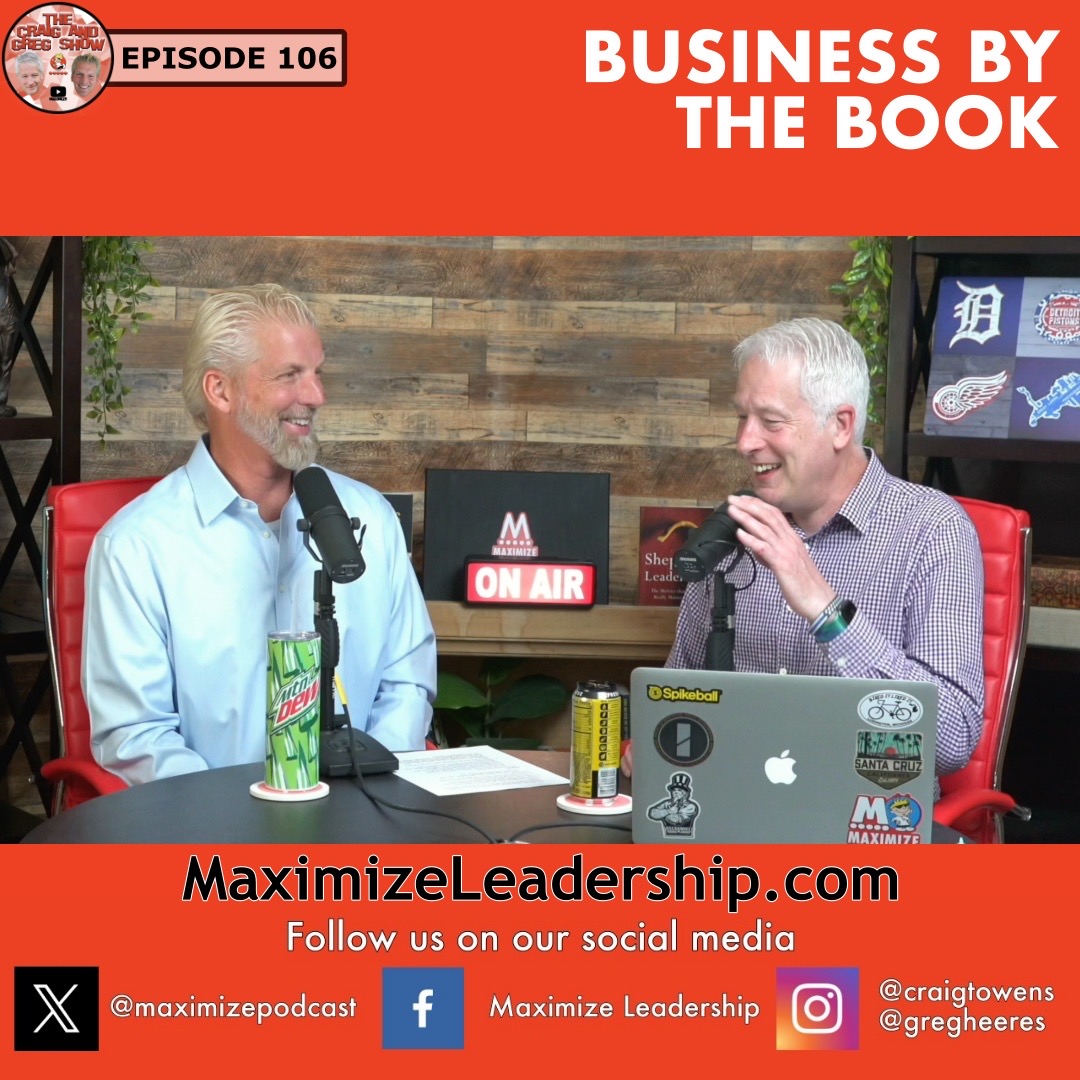
The multitude of books written about business and leadership is nearly incalculable. If you began reading now and did nothing else you could spend the rest of your life reading business books and still have many unread at the end of your life. Yet the wealth of knowledge contained within these books still pales in comparison to the insights provided to us by THE book—the Bible. In today’s episode Greg and I are happy to announce we are working on a new project called Business By The Book, which combines biblical insights with real-world applications.

  • [0:00] Introduction 
  • [0:40] Greg and I are working on a project that we are so excited to be doing!
  • [1:50] We cover all the “boxes” on a corporate flowchart with this project. We start with the CEO box.
  • [3:56] We have been working as leadership coaches before there even was such a term.
  • [5:34] I will be writing from the Bible side and Greg will be writing from the business side in all of these books.
  • [8:21] If you are the point leader in your organization, you need to go first in reading this book and getting copies for others.
  • [9:10] We need your help for future books in this series.

What Are You Reading?

Listen to the podcast of this post by clicking on the player below, and you can also subscribe on AppleSpotify, or Audible. 

I would like to ask you a simple question: What are you reading? 

You may have heard the phrase, “Leaders are readers.” Is that true? Is that the best use of your time? If this phrase is true, how do we know what to read? 

Here are some related blog posts I would suggest you peruse: 

The post from Scott Hubbard that I mentioned is called “What Should I Read Next? 

If you are a pastor or ministry leader, I would humbly suggest that my books might be a good addition to your reading list:

►► Would you please prayerfully consider supporting this ministry? My Patreon supporters get behind-the-scenes access to exclusive materials. ◀︎◀︎

The Prayer Before The Prayer

Listen to the podcast of this post by clicking on the player below, and you can also subscribe on AppleSpotify, or Audible. 

Last week I shared this thought with you from Pastor Tim Keller: “Your prayer must be firmly connected to and grounded in your reading of the Word. This wedding of Bible and prayer anchors your life down in the real God. … Without immersion in God’s words, our prayers may not be merely limited and shallow but also untethered from reality.” 

“Untethered from reality” means that we determine the manner in which we come to God in prayer, the way prayer works, and the way God must respond to our prayer. But what we read in the Bible is the opposite of this (Isaiah 1:11-15). 

(Check out all of the Scriptures in this post by clicking here.)

I think there are two opposite and equal erroneous thoughts about how we approach prayer:

  1. I’m not worthy to come into the presence of an all-holy God 
  2. I can waltz right into God’s presence whenever and however I please 

Both are wrong and both are strategies the devil has used to keep us prayerless. Either we don’t go to God at all or our prayers are unheard because the Bible says that our arrogance has made our prayer ineffectual. 

Our Prayer Book—the Bible—helps us find the balance. George Whitefield noted, “Reading the Bible is a good preparative for prayer, as prayer is an excellent means to render reading effectual.” So here’s what we read about those two errors. 

  1. I’m not worthy. God is unapproachable in His holiness, but Jesus has made it possible for us to enter in through His righteousness (1 Timothy 6:15-16; Isaiah 6:1-5; Hebrews 4:1, 14, 16; John 16:23-24). 
  2. I can come anyway I want to. Passages like Psalm 15:1-5 and Isaiah 58:2-4 make it clear that we cannot simply approach God in a way of our choosing. 

Let’s unpack that second error a little more. We have to be clothed in righteousness in order to come into God’s presence, but we cannot be clothed in a righteousness that is apart from Jesus. When we say that we are praying in the name of Jesus, it means we are praying in the nature of Jesus and through the righteousness of Jesus. We must be wearing His righteous robe (Romans 3:22-24; Isaiah 61:10). 

So I think we need to pray before we pray. Let’s try these actions which are tethered to the reality of our Prayer Book. 

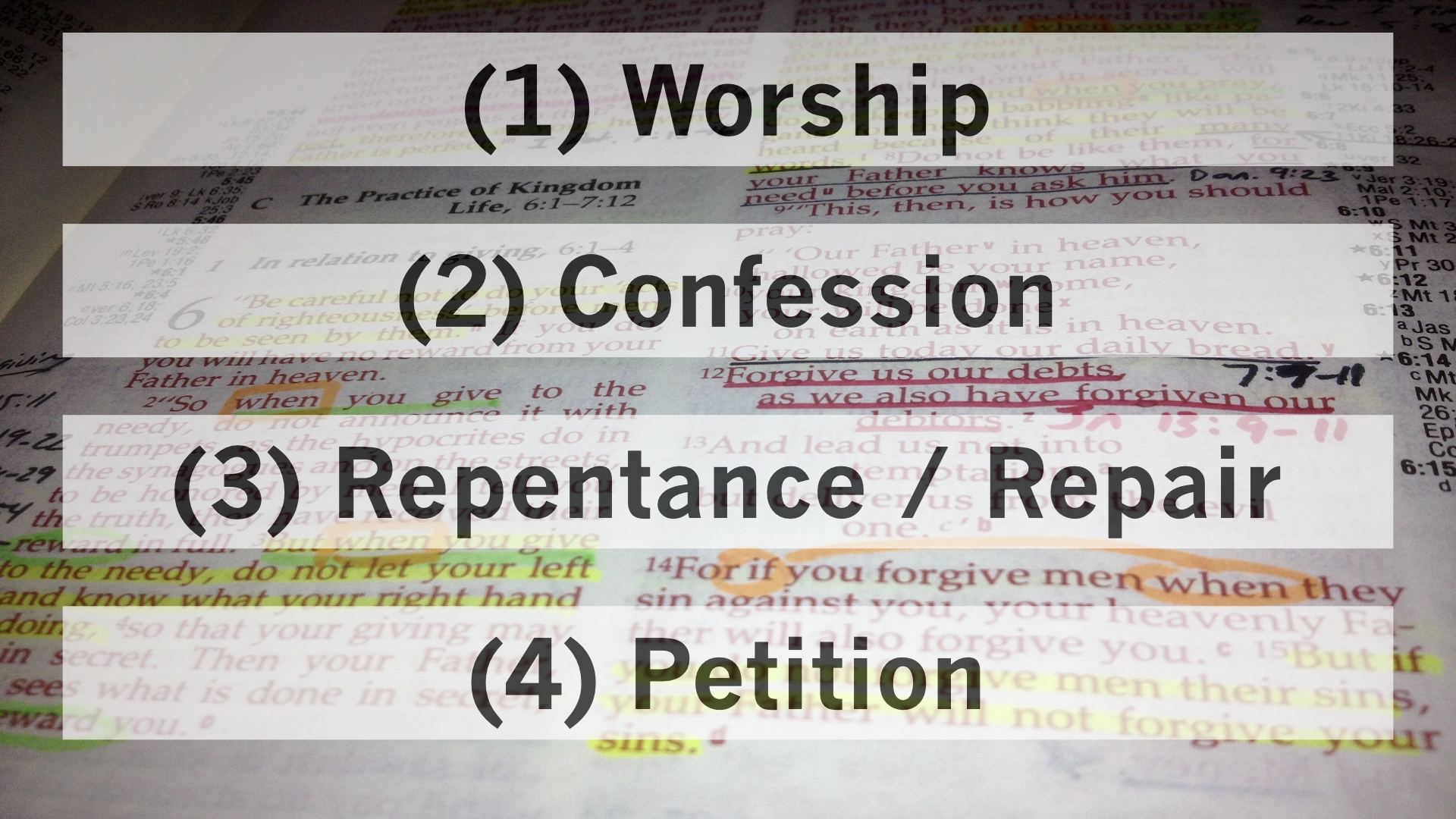
  1. Worship. This is a deep pondering of who God is; it is humbly assigning Him the highest worth. In face, the Old English spelling of this word (“worthship”) gives us insight into what worship does. It is this kind of humility that God responds to (Isaiah 6:5-7; 57:15; Luke 18:9-14).
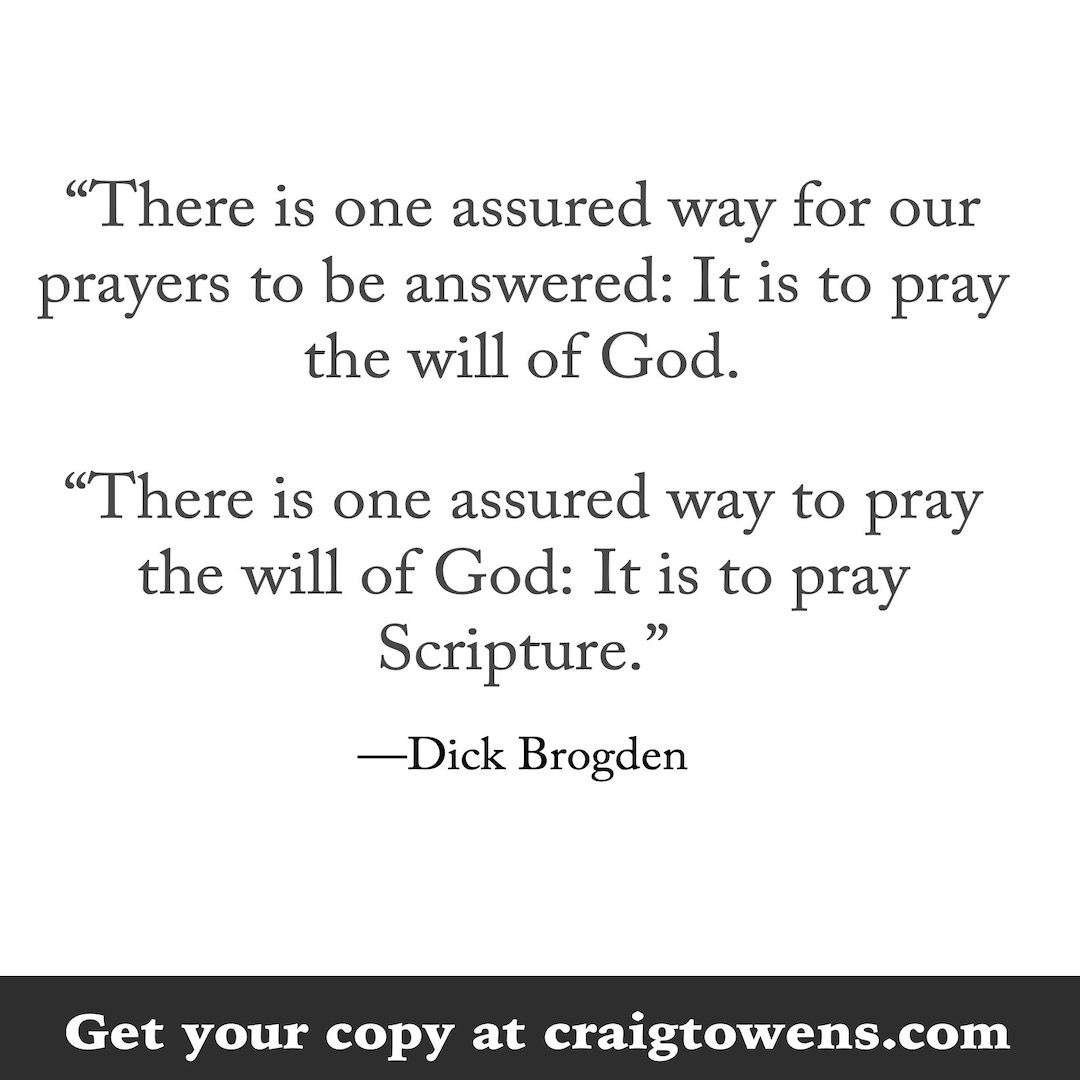
  1. Confession. As we are worshiping, we will see our inadequacies (much like Isaiah did in Isaiah 6, or the tax collector did in Luke 18). We then need to confession these shortcomings. Dick Brogden wrote, “Confessed sin opens the portals of heaven into our darkness, and light and glory overwhelm shame. Confession is our glory for it lifts our heads and eradicates shame.” We see this so vividly lived out in the prayers of David (Psalm 139:23-24; 51:1-2; 19:12-14). 
  1. Repentance. I think we could also call this Repair. After confession where we have fallen short, we resolve now to both take a different path and repair what was damaged (Matthew 5:23-24; Mark 11:25-26; 1 Peter 3:7). 
  1. Petition. After worship, confession, and repentance / repair, our heart’s attitude is now in the place for God to heed our cries for His help (1 Peter 3:12). 

Let’s learn to pray before we pray. Don’t just rush in and rush out of God’s presence. Take time to worship, confession any sins the Holy Spirit reveals, make things right, and then present your petitions. 

Our hearts need to be prepared to present our petitions. This is how we know that God will hear our voice. 

If you’ve missed any of the messages in our prayer series, you can find them all here. 

►► Would you please prayerfully consider supporting this ministry? My Patreon supporters get behind-the-scenes access to exclusive materials. ◀︎◀︎

Our Prayer Book

God has given us an amazing Book! The Bible addresses the human condition—all our desires, frustrations, hopes, and the only path on which we can find eternal and unfading joy. 

The Bible not only tells us how to live, but it also tells us how to pray. And it’s as we pray that the principles in the Scripture come alive with fresh applications for our daily life. We don’t have to fumble around, attempting to find the right words to pray and then wondering if those prayers were heard on high. We can learn to pray in agreement with God’s perfect will. 


God has spoken to us through His Word, and He invites us to use His words to form our prayers back to Him. I love beginning each new year with a reminder of the power of prayer, so I invite you to join me at Calvary Assembly of God for this life-changing series of sermons called Our Prayer Book.

If you have missed any of the messages, you can find them here:

Links & Quotes

We are to love the sinner but hate the sin. This is hard to do, especially when the sin they are doing is directed at us and making us angry! Jesus gave us a great example in these times of high anger: withdraw. Check out my full message “A Christlike Response to Skeptics.” I have lots of new content every week, which you can check out on my YouTube channel.

“In many pagan religions the purpose of worship is to placate the gods—to keep them happy and to stay on their good side, lest they mess with, you know, the harvest or procreation or whatever. Worship is thus a work pagans do to earn or keep the favor of their deity. Christians don’t worship to placate God or earn His favor. We don’t worship to make God happy or bring Him pleasure. God is all-satisfied, all-happy, and all-pleased in Himself alone. We add nothing to Him when we come together to worship. At the same time, as we worship, God adds Himself to us. He deigns to commune with us, inhabits our praises, and brings us into His presence and joy in ways that transform all we are, think, feel, value, say, and do. … In worship, rightly conceived and conducted, our minds and imaginations expand beyond their everyday thoughts and dreams, stretched and molded to fill up with the glory of the heavenly throne room, to be conformed to the mind of Christ, and to see the world as He does (1 Corinthians 2:16).” —T.M. Moore

J. Warner Wallace shares two reasons why we can still consider the Bible relevant today.

My grandpa had honey bees on his farm, and I’ve been intrigued by them ever since that time. In fact, honey bees were subject of my semester-long research project in my ecology class. So I’m always fascinated to read more discoveries about these amazing insects!

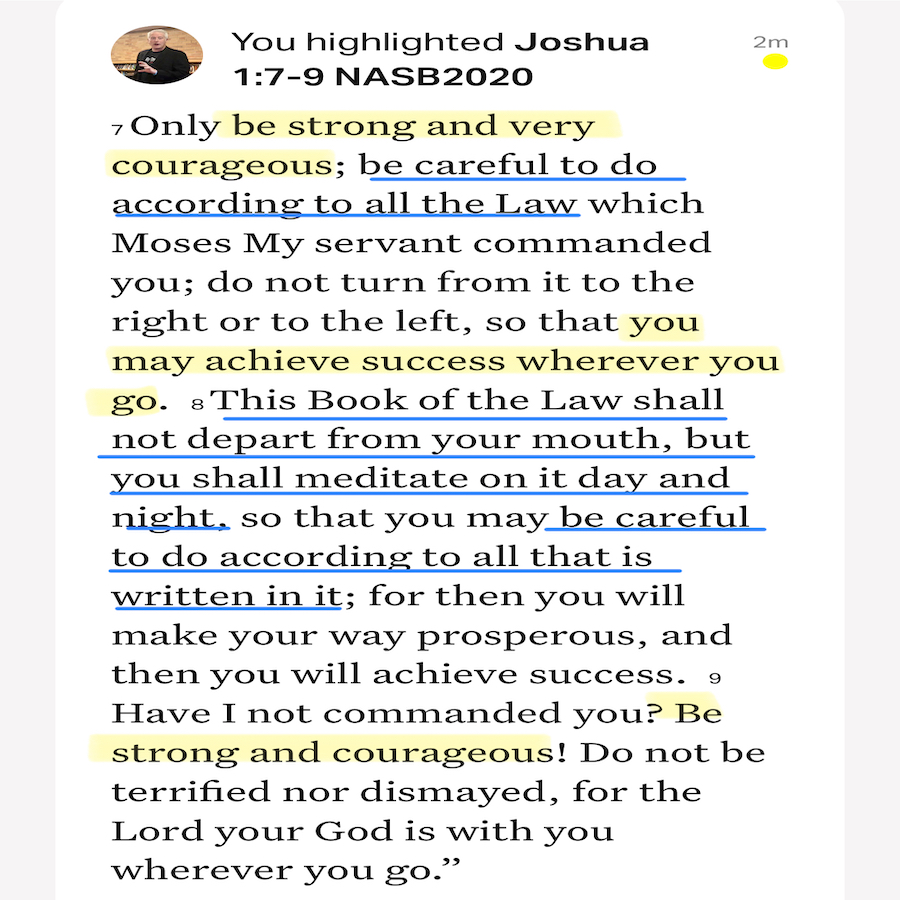
The level of a leader’s strength and courage is directly tied to the leader’s meditation upon God’s word. God’s wisdom transforms a leader’s heart and sharpens his thoughts. This is what gives the leader the necessary courage to lead people in a God-honoring way. I have a whole series of posts on godly leadership where I expand more on these thoughts. 

An Octopus And God’s Word

Listen to the podcast of this post by clicking on the player below, and you can also subscribe on AppleSpotify, or Audible. 

Watching a documentary about an octopus reminded me of something new about God’s Word.

Check out this episode of The Podcast.

Some resources to go along with this video:

►► Would you please prayerfully consider supporting this ministry? My Patreon supporters get behind-the-scenes access to exclusive materials. ◀︎◀︎

Links & Quotes

We can look back to learn or we can look back to relive. Looking back to learn is healthy, but looking back in regret to try to relive our past is unhealthy and unproductive. Learning vs. reliving makes all the difference. See my full message on this mental health thought hereI have lots of new content every week, which you can check out on my YouTube channel.

“I’ve learned one thing: You only really get to know a person after a fight. Only then can you judge their true character.” —Anne Frank

Lenny Esposito is an outstanding Christian apologist. Check out this podcast where Lenny discusses the historical facts about the crucifixion and resurrection of Jesus Christ.

“Life with God is not immunity from difficulties, but peace in difficulties.” —C.S. Lewis

“I believe it will only be known on the Last Day how much has been accomplished in missionary work by the prayers of earnest believers at home.” —James Fraser

John Piper expounds on why God would make mankind in His image, and why He would create such a vast and beautiful universe in which to place mankind.

Speaking of our amazing Creator. I’ve always been fascinated by honeybees! Professor Andrew Barron, in describing the results of an amazing study on bees’ decision-making process, said, “A honeybee has a brain smaller than a sesame seed. And yet she can make decisions faster and more accurately than we can. A robot programmed to do a bee’s job would need the back up of a supercomputer.”

This is a good reminder from Axis for parents with students returning to school. The heading of this section of Axis’ weekly Cultural Teanslator is “Back to Backpacking.” 

“What it is: As a new school year begins, teens might have mixed feelings of excitement, anxiety, and feeling overwhelmed.

How to approach this season: As Hannah King writes in Christianity Today, all seasons of transition bring with them an element of loss. Starting a new school year might mean making new friends, meeting new teachers, or starting a new curriculum. It can also mean the loss of free time, increased stress levels, and more difficulty creating intentional moments as a family. For parents, the beginning of a new school year might also feel like a reminder that time with their teens living at home is dwindling down, a feeling which can bring its own set of griefs, pressures, and regret. King recommends allowing space for teens and adults to name the things they’re disappointed about or not looking forward to, noting that repressed sadness can keep us from ‘entering freely into [the] joy’ of a new thing.

“Start the conversation: What will you miss the most about this summer?”

“Either you deal with what is the reality, or you can be sure that the reality is going to deal with you.” —Alex Haley

Power-Packed Sermons

Listen to the podcast of this post by clicking on the player below, and you can also subscribe on AppleSpotify, or Audible. 

Jesus began to speak to them in parables… (Mark 12:1). 

What Jesus relates here in the 12th chapter of Mark’s Gospel is only the fourth parable that Mark records, and as the final parable that Jesus shares, it brings His public ministry to a close. 

Jesus concludes this parable by quoting from Psalm 118. This Psalm is the last of the “Hallel Psalms” that were sung at the conclusion of the Passover celebration. This song specifically looks eagerly forward to the arrival of the Messiah. It contains the words that the crowd used on Palm Sunday: “Lord, save us! Lord, grant us success! Blessed is He who comes in the name of the Lord” (Psalm 118:25-26). By quoting from the same Psalm—that was perhaps hundreds of years old, but had just been sung and shouted by the crowd—Jesus was claiming to be the Messiah longed for in that Hallel Psalm. 

As you may recall, these shouts from the crowd and the activities of Jesus as He cleansed the temple got the religious leaders riled up! They, in essence, asked Jesus, “Who do You think You are?!” His answer is contained in this parable of Mark 12. 

At the conclusion of this parable, the religious leaders “knew He had spoken this parable against them” (Mark 12:12).

Mark’s observation about the response of the religious leaders is, in a nutshell, the essence of a Holy Spirit-anointed sermon. The connection of Scripture to current events is powerful! The Holy Spirit is also the One who brings the application of Scripture to bear on the hearts of the audience.

Pastors, if you want to deliver soul-shaking, life-transforming, eye-opening, heart-melting sermons, you must follow this example of Jesus: Stick with the Scripture! 

We don’t need to try to be clever or witty or even memorable. We just need to speak the Word of God that is inspired by the Holy Spirit, and then allow the Holy Spirit to illuminate that inspired Word to each person’s needs. As Randy Pope noted, “Preaching is not talking to people about the Bible; it is talking to people about themselves from the Bible.” 

I don’t want to try to make my voice impress people, but I am desperate for God’s voice to impact people. Nearly every week as I prepare a sermon, I’ll pray this prayer from Oswald Chambers: “In my preaching, cause Thy glorious voice to be heard, Thy lovely face to be seen, Thy pervasive Spirit felt.” My dear pastor, I would encourage you to make this your prayer as well. 

►► Would you please prayerfully consider supporting this ministry? My Patreon supporters get behind-the-scenes access to exclusive materials. ◀︎◀︎