11 Quotes And 7 Astronomical Tidbits From “Star Struck”

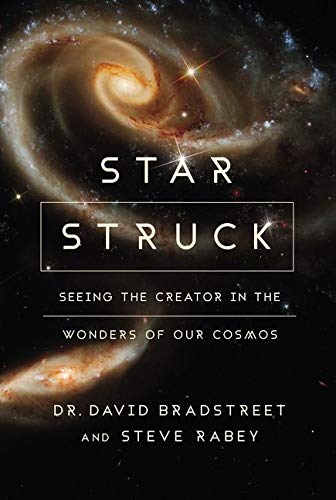
Star Struck by Dr. David Bradstreet is an insightful book for astronomical issues, but I found it lacking in the way he missed multiple opportunities to use the mind-boggling discoveries in astronomy to point to a majestic Creator. Check out my full book review by clicking here. 

“Those who study the stars have God for a teacher.” —Tycho Brahe, a sixteenth-century astronomer 

“Almost all ancient civilizations believed that the universe had existed forever. Throughout the ancient world there was just one civilization that didn’t subscribe to this cyclical vision of eternity. Jewish Scripture, with the story of the Creation, stated clearly that the world had a beginning.” —Martin Gorst, historian 

“Science is great as science, but it makes a lousy religion.” —Guy Consolmagno 

“The atoms that so liberally and congenially flock together to form living things on Earth are exactly the same atoms that decline to do it elsewhere.” —Bill Bryson 

“Eratosthenes of Alexandria (276–194 BC) “did the math, concluding that the earth was 24,662 miles around. His results were shockingly accurate: within 1 percent of our current estimate of 24,859 miles.” —Dr. David Bradstreet 

“The sun is so powerful that we sometimes must shield ourselves from its heat, even after that heat has taken an eight-minute journey to earth, losing a third to half of its radiant energy to the protective atmosphere of our clouds. ‘Nothing is deprived of its warmth,’ says the psalmist (Psalm 19:6).” —Dr. David Bradstreet 

“I wanted to become a theologian. For a long time I was restless. Now, however, behold how through my effort God is being celebrated in astronomy.” —Johannes Kepler 

“Science keeps religion from sinking into the valley of crippling irrationalism and paralyzing obscurantism. Religion prevents science from falling into the marsh of obsolete materialism and moral nihilism.” —Dr. Martin Luther King, Jr. 

“If we study science without Scripture, we risk falling into the ditch of atheistic evolutionism; on the other hand, the study of Scripture separated from God’s laws in nature risks ideologies that misinterpret God and distort His character.” —Timothy Jennings 

“Holy Scripture and nature are both emanations from the divine Word.” —Galileo 

“God cannot be reduced to the role of a scientific hypothesis.” —Father Georges Lemaître 

Interesting astronomical tidbits: 

  1. Unlike everyone else in the neighborhood, Venus rotates backwards. 
  2. Jupiter rotates on its axis in slightly less than ten hours, faster than on any other planet. 
  3. Saturn is twice as far away from the sun, lowering its temperature and stretching out its orbital period to nearly thirty Earth years. 
  4. Neptune is so far away that it takes 164 years to orbit the Sun. 
  5. Uranus’ North Pole is tipped a whopping 98 degrees to its orbital plane. 
  6. Every day our powerful atmospheric shield hijacks some 100 tons of small rocks and other pieces of space stuff heading our way, breaking up and incinerating everything before it can hit us. 
  7. Our own Milky Way galaxy is home to more than 200 billion stars. There are more than 200 billion additional galaxies in the cosmos. These galaxies serve as gigantic star factories, each of which has its own 100 to 300 billion stars. Do the math and the numbers are mind-boggling: our Sun is merely one among some 100,000,000,000,000,000,000,000 stars.

Star Struck (book review)

Listen to the podcast of this post by clicking on the player below, and you can also subscribe on AppleSpotify, or Audible. 

Because of my science background, I’m always fascinated by the discoveries of scientists that bring glory to God. So I was drawn in especially by the subtitle of Dr. David Bradstreet’s book Star Struck: Seeing The Creator in the Wonders of Our Cosmos.

This book is part autobiographic in how Dr. Bradstreet got into astronomy, part historical as he walks us through the advancements in the study of the heavens, and part devotional as he attempts to tie in biblical passages with these fascinating astronomical discoveries. But for me, this attempt to be all-encompassing didn’t “scratch the itch” that I thought it would when I first saw the subtitle. I think I would have appreciated it more if this were presented as three books: memoir, history, and devotional. 

For me, the best part of Star Struck was the history of astronomy. Hearing from an astronomer how his predecessors thought, reasoned, hypothesized, and then presented their findings to an often skeptical world (and usually an even more skeptical church) was quite fascinating. I especially enjoyed some of the many tidbits about stars and planets, particularly the look at our Sun, Earth, and Moon. 

I would not, however, recommend this book as a means to understand how astronomy shines such a clear light on the majesty of the Creator seen in the pages of the Bible, as I found that attempt quite lacking. 

As a pure astronomy history book, Star Struck is a great read for anyone, from students to adults. 

►► Would you please prayerfully consider supporting this ministry? ◀︎◀︎

The “Ologies”

Listen to the podcast of this post by clicking on the player below, and you can also subscribe on Apple or Spotify.

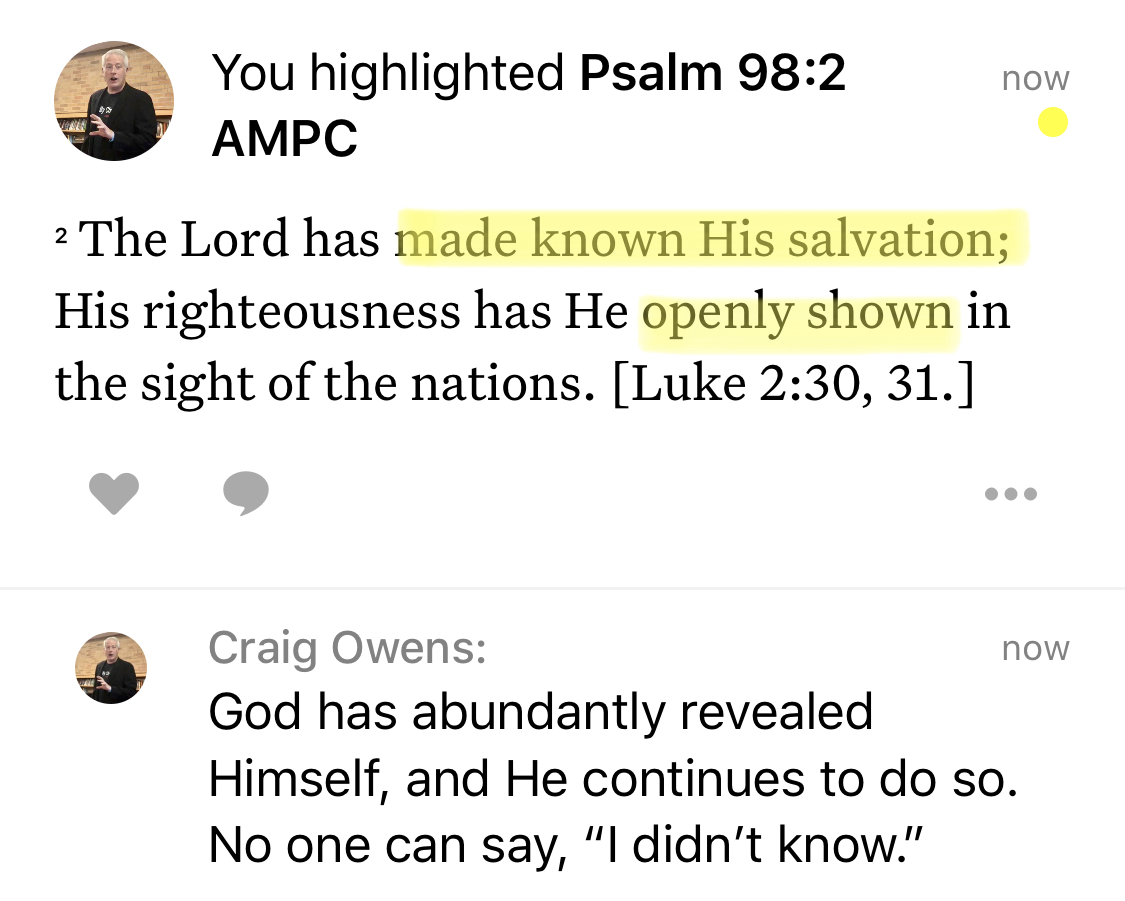
…God has done marvelous things; His right hand and His holy arm have wrought salvation for Him (Psalm 98:1 AMP). 

I like The Message paraphrase of this verse too: “Sing to God a brand-new song. He’s made a world of wonders! He rolled up His sleeves, He set things right! 

This psalmist happily extols all of the ways God the Creator has revealed Himself to mankind:

  • He has done marvelous things
  • the Lord has made His salvation known
  • He has revealed His righteousness to the nations
  • the ends of the earth have seen the salvation of our God
  • let the sea resound, and everything in it
  • let the world praise, and all who live in it
  • let the rivers clap their hands
  • let the mountains sing together for joy

This tells me how fitting it is for us to use all of the sciences—every “ology” to declare God’s greatness: biology, astronomy, cosmology, chemistry, psychology, anthropology, and even theology. All observations point to the glory of God. 

C.S. Lewis wrote, 

“If I swallow the scientific cosmology as a whole (that excludes a rational, personal God), then not only can I not fit in Christianity, but I cannot even fit in science. If minds are wholly dependent on brains, and brains on biochemistry, and biochemistry (in the long run) on the meaningless flux of the atoms, I cannot understand how the thought of those minds should have any more significance than the sound of the wind in the trees. And this is to me the final test. … Christian theology can fit in science, art, morality, and the sub-Christian religions. The scientific point of view cannot fit in any of these things, not even science itself. I believe in Christianity as I believe that the Sun has risen not only because I see it but because by it I see everything else.” 

The apostle Paul agreed with this psalmist, telling us that creation itself is enough proof that there is a God. But God went further: He gave us His word, He gave us prophets to remind us of His word, and ultimately, He sent His Son Jesus to earth. Paul concluded that “men are without excuse—altogether without any defense or justification” for refusing to believe in God. 

Don’t ever buy into the lie that science and Christianity are incompatible. All of the discoveries of science point to a Creator. We use all of these “ologies” because we never know which one may eventually get someone’s attention. 

Famed scientist Sir Isaac Newton noted, “In the absence of any other proof, the thumb alone would convince me of God’s existence.” 

Let’s join our minds, our hearts, and our voices in declaring the greatness of our Creator at every opportunity we have! 

►► Would you please prayerfully consider supporting this ministry? ◀︎◀︎

Poetry Saturday—The Scriptures

Listen to the podcast of this post by clicking on the player below, and you can also subscribe on iTunes or Spotify.

Note: the spelling in this poem is preserved from the 1663 edition of Herbert’s book of poems

Oh that I knew how all Thy lights combine,
And the configurations of their glorie!
Seeing not onely how each verse doth shine,
But all the constellations of the storie.

This verse marks that, and both do make a motion
Unto a third, that ten leaves off doth lie:
Then as dispersed herbs do watch a potion,
These three make up some Christian’s destinie:

Such are Thy secrets, which my life makes good,
And comments on Thee: for in ev’ry thing
Thy words do finde me out, & parallels bring,
And in another make me understood.

Starres are poore books, & oftentimes do misse:
This book of starres’ lights to eternall blisse. —George Herbert (see Psalm 19:1, 7, 10-11)

Book Reviews From 2020

Starlight And Time (book review)

Creationists (especially young-Earth creationists) have often been stymied to reconcile the biblical evidence for the creation of Earth with the astronomical evidence of observable stars and universes being billions of light-years away. As D. Russell Humphreys notes in his book Starlight And Time, “Good science requires that we try to reconcile both the young-earth data and the cosmological data.” 

So how can both things be true: an Earth that was created 6000 years ago and a distant star appearing to be billions of light-years old? Using the theories of general relativity applied to the best cosmological data, Dr. Humphreys presents a novel hypothesis that appears to accommodate all of the data we have gathered. 

The equations of general relativity have always indicated that time itself had a beginning, which means we have to be open to the idea that something outside of Time—outside of our universe—had a hand in the beginning of our universe. Dr. Humphreys does an excellent job of unpacking these equations to show how accurately they end up being in agreement with the biblical account of Creation. In fact, he notes that “as measured by clocks on earth, the age of the universe today could be as small as the face-value biblical age of about 6000 years.”

I’ll admit that physics wasn’t my favorite subject in school. However, after leaving school I was determined to get a better grasp on it, and found myself actually enjoying the studies of physics and cosmology. With my rudimentary grasp of these concepts, I still struggled to conceive the impact of all the equations that Dr. Humphreys laid out, but that didn’t keep me from being astounded at how well his theory fits all the evidence. 

The physics equations shouldn’t stop you from picking up a copy of this book either. In fact, if you enjoy creationist apologetics, this book needs to be on your “must read” list. 

8 Quotes From “Today’s Moment Of Truth”

Today's Moment Of TruthThere is so much excellent content to digest in each day’s reading from Today’s Moment Of Truth. Be sure to check out my book review by clicking here. Below are th first set of quotes I’m sharing from this book.

“For the scientist who has lived by his faith in the power of reason, the story ends like a bad dream. He has scaled the mountains of ignorance; he is about to conquer the highest peak; as he pulls himself over the final rock, he is greeted by a band of theologians who have been sitting there for centuries.” —Robert Jastsrow, founding director of NASA’s Goddard Institute For Space Studies

“As astronomers have discovered, our sun and moon are much more exceptional than once thought. Our sun is far from ordinary; it has exactly the right mass and composition and is the ideal distance from the earth to enable life on our planet. If it were much smaller, its luminosity wouldn’t allow the high-efficiency photosynthesis necessary in plants; if it were much closer, the water would boil away from the planet’s surface. Similarly, our moon is just far enough away and just the right size to stabilize the Earth’s tilt. Without the moon’s stabilizing presence, the Earth would experience wild temperature swings, with devastating consequences for life.” —Lee Strobel

“I think people who believe that life emerged naturalistically need to have a great deal more faith than people who reasonably infer that there’s an Intelligent Designer. —Walter Bradley, co-author of The Mystery Of Life’s Origin

“An honest man, armed with all the knowledge available to us now, could only state that in some sense, the origin of life appears at the moment to be almost a miracle, so many are the conditions which would have had to have been satisfied to get it going.” —Francis Crick, Nobel Prize winner

“It is my science that drove me to the conclusion that the world is much more complicated than can be explained by science. It was only through the supernatural that I can understand the mystery of existence.” —Allan Rex Sandage, cosmologist

“The beginning seems to present insuperable difficulties unless we agree to look on it as frankly supernatural.” —Sir Arthur Eddington

“Secular scientists often talk as though life came about through this formula: Matter + Energy + Time = Life. However, when scientists go into their labs and try to produce life, they add another ingredient—one they often don’t think about. The formula they really use is: Matter + Energy + Time + Ideas = Life. 

“In other words, they’re not just throwing all of the ingredients into a blender, switching it to the highest setting, and hoping life will pop out at the end. Rather, they’re applying the best of scientific knowledge to selecting the elements necessary for living matter as well as the conditions that will be conducive for life to flourish.

“Putting it another way, they’re trying to replicate what God did. And if they finally succeed, it’ll only serve to reinforce what the Bible says—that God created life.” —Dr. A.E. Wilder-Smith

“When this church service is over, I’m heading to the airport to fly back home. But it’s not enough for me to sit in the terminal and believe that airplanes fly. Just acknowledging the soundness of aviation science will never get me home. I have to go beyond mere belief that airplanes fly to a personal belief in the particular airplane that’s heading to my city—demonstrated by climbing on board. It’s that active trust that will ultimately get me where I want to go. Similarly, we all need to go beyond merely believing that Jesus is the Son of God who died on the Cross for our sins. We must take the next step and trust in Him personally, asking Him to forgive our sins and to lead our lives.” —Mark Mittelberg

If you would like to know when I post more quotes from Today’s Moment Of Truth, you may enter your email address in the form to the right, and you will be notified by email as soon as new content is available.

Also be sure to follow me on Twitter and Tumblr, where I will be sharing quotes from this book, along with lots of other material I’ve been studying.

Scientists + God

Modern-day scientists want to exclude the very mention of God from anything. This is not science, but scientism. It is a belief system as surely as any religion is.

But the one thing scientism overlooks is the reliance on God that the greatest scientific minds in the world had.

Johannes Kepler“Oh You who through the light of nature has aroused in us a longing for the light of grace, so that we may be raised in the light of Your Majesty, to You, I give thanks, Creator and Lord, that You allow me to rejoice in Your works. Praise the Lord you heavenly harmonies, and you who know the revealed harmonies. For from Him, through Him and in Him, all is, which is perceptible as well as spiritual; that which we know and that which we do not know, for there is still much to learn.” —Johannes Kepler, the astronomer who discovered the laws of planetary motion

“It is reasonable to believe, however, that the Creator, if He paid attention to the relation of the orbits [of the planets] in their general aspect, paid attention also to the relation of the varying distances of the individual orbits in detail….” —Johannes Kepler

“Nevertheless, all the observations which could possibly be made in so short a time, I was enabled, by Divine Providence, to complete….” —Jeremiah Horrox, astronomer who used Kepler’s principles to chart the orbit of Venus 

Galileo Galilei“All these facts were discovered and observed a few days ago by the help of a telescope devised by me, through God’s grace first enlightening my mind.” —Galileo Galilei, mathematician, philosopher and astronomer

“I do not feel obliged to believe that the same God who has endowed us with sense, reason, and intellect has intended us to forgo their use.” —Galileo Galilei 

“In the absence of any other proof, the thumb alone would convince me of God’s existence.” —Sir Isaac Newton, physicist and mathematician

Isaac Newton“Gravity explains the motions of the planets, but it cannot explain who set the planets in motion. God governs all things and knows all that is or can be done.” —Isaac Newton

“This most beautiful system of the sun, planets, and comets, could only proceed from the counsel and dominion of an intelligent and powerful Being.” —Isaac Newton

“We are compelled to acknowledge the effect of a cause; chance alone could not have given a form nearly circular to the orbit of all the planets.” —Pierre Simon, one of the fathers of the scientific revolution 

Links & Quotes

link quote

“It’s easy to label what we consider ‘good things’ in our lives as gifts from God and to welcome them with gratitude. But when difficult things happen, we don’t look at them as part of God’s good plan for us. Mary’s example [Luke 1:38] shows us we can also welcome those things we would not necessarily label ‘good,’ confident that God’s gifts sometimes come in perplexing and even painful packages. When we belong to God, we know He will use whatever He allows into our lives for good. Somehow, in God’s hands, these things also become gifts of His grace toward us.” —Nancy Guthrie

“Unless we intend completely to forfeit our holy seasons, and to allow them to be taken captive for the purposes of crass commercialism and narrow-minded narcissism, we need to make the best use of these times as God intends….” —T.M. Moore

“No one who is lost has lost one ounce of value to God. Even if you don’t have a relationship with Him, you have immense value to God. Lostness implies value. Whatever someone is willing to spend to recover something that’s lost shows how valuable that item is. In the most famous verse in the Bible, Jesus clearly explains our value: ‘God loved the world so much that He gave His one and only Son so that whoever believes in Him may not be lost, but have eternal life’ (John 3:16).” —Rick Warren

If you have trouble knowing whether to use theirthere, or they’re, this may help.

“By giving to You what You do not need, and what I might enjoy, I am saying more earnestly and more authentically, ‘You are my treasure, not these things.’” —John Piper on fasting

I was going through an Advent reading plan on YouVersion, and I came across this quote: “Each Christmas is practice for the moment of Christ’s second coming, when every knee will bend, either in worship or terror.”

In this video, Brett Kunkle explains from Scripture and from personal observation how we know humans are born into sin.

“Many Christians today…choose to listen only to soft, flesh-assuring preaching. Where there is no convicting word, there can be no godly sorrow over sin. Where there is no godly sorrow for sin, there can be no repentance. And where there is no repentance, there is only hardness of heart.” —David Wilkerson

“We are tempted in our day to be ashamed of the gospel. It is thought to be bare, unintellectual, almost childish by many. Hence, they would overlay it with argument and eloquence, to make it more respectable and more attractive. Every such attempt to add to it is being ashamed of it [Romans 1:16].” —Horatius Bonar

Check out some absolutely stunning pictures from the Hubble Space Telescope!

Links & Quotes

link quote


“We are not just connected to Jesus, our Head. We are also joined to each other. The fact is, we can’t be connected to Him without also being joined to our brothers and sisters in Christ.” Read more from David Wilkerson in his post Partakers Of The Bread.

“Hard work spotlights the character of people. Some turn up their sleeves, some turn up their noses, and some don’t turn up at all.” —Sam Ewing

“Grace is an active, present, transformative, obedience-enabling power.” —John Piper

Don’t miss tonight’s meteor shower.

These are some absolutely stunning pictures from National Geographic!