Links & Quotes

link quote

Open Door USA reports that Christian persecution around the world has never been worse than it is now. We must pray!!

Here is a cool story about how God used some praying Christians to save a young girl from sex trafficking.

J. Warner Wallace says, “When [Richard] Dawkins and [Sam] Harris say we, as Christians, believe in something for which there is no supporting evidence, they simply betray their ignorance about the nature of evidence and the way in which detectives and prosecutors build cases.” Check out his post on the evidence that supports the Christian worldview.

Frank Viola has an encouraging word. He says, “If God has called you to a specific work, there is a time in which that work will find its greatest fulfillment and its widest impact.” Please read Your Time Has Not Yet Come.

“Angels might have wept as they saw the folly of men who sought anything except the Lord, Who alone can make a house His temple; Who alone can make a ministry to be a ministration of mercy; without Whose presence the most solemn congregation is but as the herding of men in the market, and the most melodious songs but as the shoutings of those who make merry at a marriage. Without the Lord, our solemn days, our new moons, and our appointed feasts, are an abomination such as His soul hates.” —Charles Spurgeon

“Remember always that religious emotion is only a servant.” ―C.S. Lewis

I love this! Like an experience from the Book of Acts is Pastor Saeed Abedini in his Iranian prison.

Craig Gross writes this about Fifty Shades Of Grey, “This is not a love story. This is not even an erotic story. This is a story of broken people continuing a cycle of dysfunction in their lives rather than dealing with their issues.” Read the rest of his post.

Links & Quotes

link quote

“When we meet with our kinsfolk and acquaintances, let it be our prayer to God that our communion may be not only pleasant, but profitable; that we may not merely pass away time and spend a pleasant hour, but may advance a day’s march nearer heaven, and acquire greater fitness for our eternal rest.” —Charles Spurgeon

“When Scripture says that Christ died ‘for’ us, I think the word is usually υπερ (on behalf of), not αντι (instead of). I think the ideas of sacrifice, ransom, championship (over death), substitution et cetera are all images to suggest the reality (not otherwise comprehensible to us) of the atonement. To fix on any one of them as if it contained and limited the truth like a scientific definition would in my opinion be a mistake.” —C.S. Lewis

“Christ will really help us in our fight. He really will help you. He is on your side. He didn’t come to destroy sin because sin is fun. He came to destroy sin because it is fatal. It is a deceptive work of the devil and will destroy us if we don’t fight it. He came to help us, not hurt us.” —John Piper

A really cool timeline of the events surrounding Christ’s birth.

“You will not experience the real presence of Jesus until you have within you a growing hatred for sin—a piercing conviction for your failures and a deepening sense of your exceeding sinfulness. Those without Christ’s presence become less and less convicted by sin. The further they withdraw from His presence, the bolder, more arrogant and more comfortable in compromise they grow.” —David Wilkerson

Have you seen Unbroken or read the book? This post—Unbroken Uncut—is very interesting.

This is a disgusting twist of Scripture that perverts God’s Word to make it sound like those who are pro-abortion are the evildoers.

“You will never forgive anyone more than God has already forgiven you.” —Max Lucado

[VIDEO] A sweet video of a 10-year-old boy who finds out he is going to be a big brother—

Spiritual Warfare

The Bible makes it clear that we are involved in an epic battle (see Ephesians 6:10-17; 1 Peter 5:8-11). It’s spiritual in its roots, but many parts of it are carried out in the physical realm every single day. I love these two passages from some great thinkers about this spiritual battle we face each day…

C.S. Lewis at his desk“The doctrine of the Fall (both of man and of some ‘gods,’ ‘eldils’ or ‘angels’) is the only satisfactory explanation. Evil begins, in a universe where all was good, from free will, which was permitted because it makes possible the greatest good of all. The corruption of the first sinner consists not in choosing some evil thing (there are no evil things for him to choose) but in preferring a lesser good (himself) before a greater (God). The Fall is, in fact, Pride. The possibility of this wrong preference is inherent in the very fact of having, or being, a self at all. But though freedom is real it is not infinite. Every choice reduces a little one’s freedom to choose the next time. There therefore comes a time when the creature is fully built, irrevocably attached either to God or to itself. This irrevocableness is what we call Heaven or Hell. Every conscious agent is finally committed in the long run: i.e., it rises above freedom into willed, but henceforth unalterable, union with God, or else sinks below freedom into the black fire of self-imprisonment. That is why the universe (as even the physicists now admit) has a real history, a fifth act with a finale in which the good characters ‘live happily ever after’ and the bad ones are cast out. At least that is how I see it.” —C.S. Lewis (emphasis added)

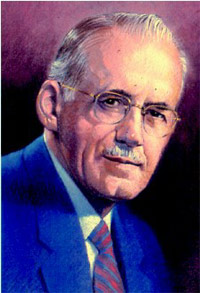
A.W. Tozer“In the early days, when Christianity exercised a dominant influence over American thinking, men and women conceived the world to be a battleground. Our fathers believed in sin and the devil and hell as constituting one force, and they believed in God and righteousness and heaven as the other. By their very nature, these forces were opposed to each other forever in deep, grave, irreconcilable hostility. Humans, our fathers held, had to choose sides—they could not be neutral. For them it must be life or death, heaven or hell, and if they chose to come out on God’s side they could expect open war with God’s enemies. The fight would be real and deadly and would last as long as life continued here below. People looked forward to Heaven as a return from the wars, a laying down of the sword to enjoy in peace the home prepared for them….

“How different today. The fact remains the same, but the interpretation has changed completely. People think of the world, not as a battleground, but as a playground. We are not here to fight; we are here to frolic. We are not in a foreign land; we are at home. We are not getting ready to live, but we are already living, and the best we can do is rid ourselves of our inhibitions and our frustrations and live this life to the full.” —A.W. Tozer (emphasis added)

Links & Quotes

link quote

Some good reading from today…

“Are you allowing satan to magnify the memories of your spiritual failures? He will always keep them before you unless you take your stand and move up in faith. … Remember, the Bible does not teach that if a man falls down, he can never rise again. The fact that he falls is not the most important thing—but rather that he is forgiven and allows God to lift him up.” —A.W. Tozer

Christian leadership is not about being a lone ranger. Here are 12 benefits of team leadership.

Parents & grandparents, you should be aware of the sex education curriculum the US government has proposed.

George Whitfield was a very well-read, articulate preacher. Here are 13 powerful quotes from him.

“Away with tears and fears and troubles! United in wedlock with the eternal Godhead Itself, our nature ascends into the Heaven of Heavens. So it would be impious to call ourselves ‘miserable.’ On the contrary, Man is a creature whom the Angels—were they capable of envy—would envy. Let us lift up our hearts!” —C.S. Lewis

Pastor Saeed Abedini has been held in an Iranian prison for two years. This letter that he wrote to his daughter for her 8th birthday is both moving and convicting. I hope I could be as faith-filled as he is if I was in a similar situation.

Poetry Saturday—Eternal Power

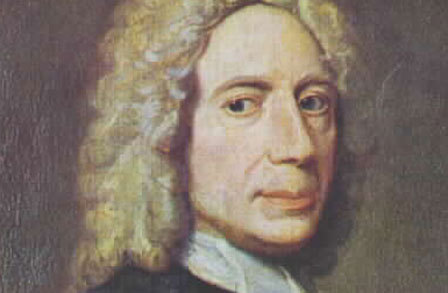
Isaac WattsEternal power, Whose high abode
Becomes the grandeur of a God,
Infinite lengths beyond the bounds
Where stars resolve their little rounds!

The lowest step around Thy seat,
Rises too high for Gabriel’s feet;
In vain the favored angel tries
To reach Thine height with wond’ring eyes.

There while the first archangel sings,
He hides his face behind his wings,
And ranks of shining thrones around
Fall worshiping, and spread the ground.

Lord, what shall earth and ashes do?
We would adore our Maker, too;
From sin and dust to Thee we cry,
The Great, the Holy, and the High.

Earth from afar has heard Thy fame,
And worms have learned to lisp Thy name;
But, O! the glories of Thy mind
Leave all our soaring thoughts behind.

God is in Heaven, and men below;
Be short our tunes, our words be few;
A solemn reverence checks our songs,
And praise sits silent on our tongues. —Isaac Watts

Joni On Suffering

Finding GodIf anyone understands suffering, it would be Joni Eareckson Tada. She is paralyzed from the chest down, due to a diving accident she suffered as a teenager. For the past 40+ years she has relied on her husband and others to help her with most of her daily tasks. Yet none of this has slowed down her world-wide ministry, nor has it dampened her trust in God.

I recently read her book Finding God In Hidden Places (you can read my book review by clicking here). These are some quotes about suffering that Joni has learned firsthand.

“Some refuse to believe it. Surely, if we hate suffering, God must hate it worse and could never have founded an institution as horrible as hell. But the same Jesus who gave heaven a five-star rating also described an otherworldly chamber of horrors. ‘[Hell] has long been prepared; it has been made ready… its fire pit has been made deep and wide… the breath of the Lord, like a stream of burning sulphur, sets it ablaze’ (Isaiah 30:33). Stop and listen. Do you feel the rattling? The down-deep rumbling of something gone haywire? Had the Bible not told us otherwise, we might think this life was the only life there is. We’d continue to arrange our days as though rearranging deck chairs on the Titanic. We’d clink our brandy glasses and toast our fate, as though we were only facing a soul-sleep—a dull, gray existence without God, who, as a matter of fact, was a bit of a bore on earth anyway. Don’t misunderstand. God didn’t make hell for people. Jesus said it was ‘prepared for the devil and his angels’ (Matthew 25:41). It’s unnatural for humans to be there—as unnatural as turning our backs on a Creator who loves us. As unseemly as shrugging off the Father’s kind arm while we caress Eden’s serpent, coiled around our hearts. No. God takes no joy in anyone heading for eternal misery. And His Son is the lifeboat—big enough and wide enough to rescue all of the perishing.”

“I was collapsing from a time of interior questioning. Suffering does this. It forces us to be utterly alone with ourselves. Once sequestered, suffering is what tests us most as persons. It examines us, sifting and asking, ‘Who are you, really?’ … Suffering, then, can be our friend. … Suffering goes below the surface, sandblasting us to the core. It brings us into a new relationship with ourselves. It also brings us into a new relationship with God. When pain and problems press us up against a holy God, guess what goes first? You’ve got it. The selfishness that pain unmasks. The pride and pettiness that problems reveal. … The beauty of being stripped down to the basics is that God can then fill us up with Himself. It’s not just that sin is removed; the saint is built up: ‘Christ in you, the hope of glory’ (Colossians 1:27). Think of the Father’s joy when He sees Christ in you. Nothing pleases Him more. When the soul empties itself of pride and pettiness, Christ fills it up. It’s just another way of saying, ‘You died, and your life is now hidden with Christ in God’ (Colossians 3:3). Suffering doesn’t teach me about myself from a textbook; it teaches me from my heart.”

If you would like to check out some other quotes from this book, please click here.

Scared Half To Death

Mega fearHave you ever had a really good scare that turned your life around? For some people, they need to be scared half to death in order for them to make changes in their lives.

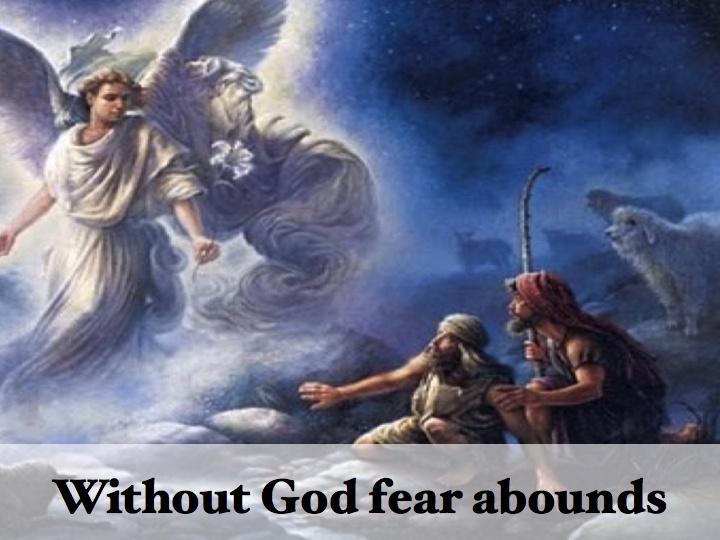
I think this is what happened to the shepherds outside Bethlehem the night Jesus was born (Luke 2:8-20). The Bible says that when the glory of the Lord shone around them they were terrified (the King James Version is very picturesque when it says they were sore afraid). The Greek word for fear is phobeo, but the phrase Luke uses here for “terrified” is megas phobeo phobos. Get the picture? They were scared half to death!!

But now, what to do what that fear? The angel gave them the first step—Go find Jesus. He didn’t tell them to get themselves cleaned up, or start going to church, or even to stop acting a certain way. Simply go find Jesus.

The shepherds obeyed and went to meet Jesus, and then something amazing happens.

  • Their fear is turned to praise—the shepherds returned, glorifying and praising God.
  • Their silence is turned to testimony—they spread the word concerning what had been told them.

Jesus was born as a Man to experience all our fears and sorrows and pains. But He took these upon Himself as He became the perfect, once-for-all sacrifice. Now there are no fears that can keep us from God’s presence. Jesus conquered all that kept us from God! 

There was nothing beautiful or majestic about His appearance, nothing to attract us to Him.He was despised and rejected—a Man of sorrows, acquainted with deepest grief. We turned our backs on Him and looked the other way. He was despised, and we did not care. Yet it was our weaknesses He carried; it was our sorrows that weighed Him down. And we thought His troubles were a punishment from God, a punishment for His own sins! But He was pierced for our rebellion, crushed for our sins. He was beaten so we could be whole. He was whipped so we could be healed.

All praise to God, the Father of our Lord Jesus Christ, who has blessed us with every spiritual blessing in the heavenly realms because we are united with Christ. Even before He made the world, God loved us and chose us in Christ to be holy and without fault in His eyes. (Isaiah 53:2-5; Ephesians 1:3-4)

This Christmas I pray you will…

Find Jesus for yourself!

Let your praises to Him ring out!

Tell others what Jesus has done for you!

If you have missed any of the messages in our Fear Not! series, you can find them all by clicking here.

What Does It Mean To Fear God?

Fear GodWhat does it mean to fear God? Does it mean we cower before Him? That He is utterly unapproachable? Or maybe it means we’re always looking over our shoulder wondering if God is coming after us in anger?

Let me ask the question another way:

  • Are you afraid that you won’t buy the right Christmas gift for someone?
  • Are you afraid that you’ll forget someone?
  • Are you afraid that your response won’t be right when you open a gift?
  • Are you afraid you’ll offend a family member by something you say or do?
  • Do other people’s opinion of you factor into your decisions?

If you answered “Yes” to the above questions, you have a fear problem. That is: you fear letting other people down.

I think this was the issue for Joseph in the Bible (Matthew 1:18-25). When he found out that Mary was pregnant before their marriage, Joseph carefully deliberated his response. Based on the meaning of the words had in mind and considered, and examining the way the angel told Joseph to “Fear not,” it appears that Joseph, too, lived in this same fear of letting others down.

But here’s the issue: Joseph placed greater value on people’s opinions than he did on God’s opinion. And what makes it even worse is that Joseph simply assumed what people would say about him, as he never actually asked anyone.

The angel challenged Joseph to re-evaluate his value system. To give greater weight to God’s opinion than to man’s opinion. In short, to change his fear of man to fear of God.

That’s really what it means to fear God: To give greater weight to His Word and His opinion than to anyone or anything else.

The wise king Solomon explored everything he could to find the meaning of life. He tried money, education, art, travel, women, food, power, and the like. At the end of his exploration, he came to this conclusion—

Now all has been heard; here is the conclusion of the matter: Fear God and keep His commandments, for this is the whole duty of man. (Ecclesiastes 12:13).

We should be living for the approval of an Audience of One. 

We should be longing to hear, “Well done, good and faithful servant” from our Creator. 

We should be listening only for the applause from nail-scarred Hands. 

“The remarkable thing about fearing God is that when you fear God you fear nothing else, whereas if you do not fear God you fear everything else.” —Oswald Chambers

If you have missed any of the messages in our Fear Not! series, you can find them all by clicking here.

Are You Worthy Of God’s Favor?

Listen to the podcast of this post by clicking on the player below, and you can also subscribe on AppleSpotify, or Audible. 

Today some call her “the holy mother” and revere her as a saint. But 2000 years ago, Mary saw herself as only an ordinary, faceless, fame-less, Israelite girl.

  • She came from Nazareth (a town of which people said, “Can anything good come from Nazareth?!”)
  • Nazareth was in the region of Galilee (an area of which people said, “No one special has ever come from Galilee”)
  • She was pledged to be married (probably a marriage that she had no say in)
  • And she was a young teenager

What did Mary think of herself? We can infer her self-image from what went on her mind when God’s angel greeted her with the words, “Greetings, you who are highly favored! The Lord is with you.”

She was greatly troubled and wondered what kind of greeting this might be. Psychologists today would describe Mary’s response as inner dissonance—the feeling that something is not quite right, but she couldn’t put her finger on exactly what was wrong. The phrase greatly troubled is a single Greek word which means agitated and perplexed by doubts.

In short: the way the angel greeted Mary didn’t jive with the way Mary saw herself (see Luke 1:26-38).

Mary, like many of us still today, didn’t think she was worthy of God’s attention, let alone His special blessings.

But the word the angel used when he said she was highly favored is a wonderful word! It’s root word is grace, and it only appears twice in the New Testament. This word means God’s grace which is constantly reaching out to us, even when we’re unaware of it. Look at the other passage where this word is used—

God decided in advance to adopt us into His own family by bringing us to Himself through Jesus Christ. This is what He wanted to do, and it gave Him great pleasure. So we praise God for the glorious grace He has poured out on us who belong to His dear Son. (Ephesians 1:5-6 NLT)

How amazing! God wants to adopt you! It’s something that brings Him great pleasure, so He constantly pours out the blessing of His grace on us!

Are you worthy of God’s favor? YES!! Not because you did anything to earn it, but because Jesus paid the price for you on the Cross.

Now you need to respond the way Mary did. The angel told Mary to “Fear not!” The verb tense implies that Mary needed to stop fretting about her (un)worthiness, and simply accept the grace that God was extending to her. In other words, she needed to see herself as God saw her.

Mary’s response should be our response: “I am the Lord’s servant. May it be to me as you have said.”

If you have missed any of the messages in our Fear Not! series, you can find them all by clicking here.

►► Would you please prayerfully consider supporting this ministry? My Patreon supporters get behind-the-scenes access to exclusive materials. ◀︎◀︎

No Missed Opportunities

Listen to the podcast of this post by clicking on the player below, and you can also subscribe on AppleSpotify, or Audible.

One fear that can haunt us is the fear that we’ve missed an opportunity. The fear becomes even more acute when the opportunity we fear we’ve missed is an opportunity that we believe God has promised us.

That’s the fear that plagued Zechariah (Luke 1:5-13). He and his wife Elizabeth were both PKs (priest’s kids), they were godly people who were upright in God’s estimation. Zechariah was even chosen by God to offer the incense in the Holy Place of the temple. Yet one fear haunted Zechariah: He and Elizabeth were childless.

The Bible says they were well along in years; or as the King James Version more poetically says it, they were stricken with years. This literally means they had moved on—they weren’t in their prime childbearing years any longer.

Zechariah had almost pushed this out of his mind, thinking that he had missed his window of opportunity, when the angel showed up with God’s message to him—

Do not be afraid, Zechariah; your prayer has been heard. Your wife Elizabeth will bear you a son…. (Luke 1:13)

Did you notice this phrase: your prayer HAS BEEN heard? The verb tense really makes it say: “The thing you used to pray for—the child you used to believe for, the pregnancy you used to try for—has been heard. But you stopped praying, you stopped believing, you stopped trying to get pregnant.”

Zechariah let his fears speak louder than God’s voice. That’s why the angel called him by name. Zechariah means Jehovah doesn’t forget

What has God promised you? Are you still praying for it? Still believing for it? Are you still doing what you need to do to see it happen? Zechariah needed to sleep with his wife. What do you need to do? Do you need to go back to school? Make a phone call? Set up an appointment?

If God spoke it to you, He has not forgotten you! Don’t believe the lie that the window of opportunity has closed!

If it seems slow in coming, wait patiently, for it will surely take place. It will not be delayed. (Habakkuk 2:3)

If you have missed any of the messages in our Fear Not! series, you can find them all by clicking here.

►► Would you please prayerfully consider supporting this ministry? My Patreon supporters get behind-the-scenes access to exclusive materials. ◀︎◀︎