God Is The Gospel (book review)

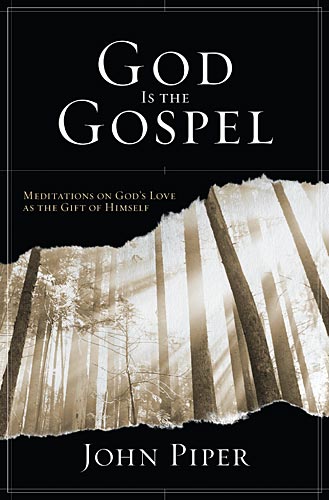
John Piper is always a challenging read for me. He stretches my horizons, challenges my paradigms, and forces me to dig deeper into Scripture. In God Is The Gospel, I felt like he was writing to me specifically in my role as a pastor of a growing church.

The gospel is good news, right? But good news about what? Or more importantly: Who? Here’s how Pastor John himself describes why he wrote this book:

“The point of this book is that the Christian gospel is not merely that Jesus died and rose again; and not merely that these events appease God’s wrath, forgive sin, and justify sinners; and not merely that this redemption gets us out o Hell and into Heaven; but that they bring us to the glory of God in the face of Jesus Christ as our supreme, all-satisfying, and everlasting treasure. ‘Christ… suffered once for sins, the righteous for the unrighteous, that He might bring us to God’ (1 Peter 3:18).”

Too many times as a pastor I’m guilty of pointing people to the gifts of salvation, and not to the Giver of salvation. The gifts are wonderful, but the Giver of the gifts is supremely important!

This is a book about glorifying God. This is a book about worshiping God for Who He is, and not for what He gives.

Everyone will benefit from reading this book. But I would most recommend it to those who are called to preach the gospel of Jesus Christ.

Hard Times

Have you ever asked yourself, “Why do I have to go through these difficulties?” Or maybe: “What is being accomplished through this pain and heartache?” I know I’ve asked these questions of myself—and of God—numerous times. I have come to three conclusions why Christians must go through hard times:

  1. So that I know that I can trust God to help me pass this test.
  2. So that God will be glorified in helping me pass this test.
  3. So that others will know that God can help them pass their test.

These trials will show that your faith is genuine. It is being tested as fire tests and purifies gold—though your faith is far more precious than mere gold. So when [not “if”] your faith remains strong through many trials, it will bring you much praise and glory and honor on the day when Jesus Christ is revealed to the whole world. (1 Peter 1:7)

Others will see this and be encouraged to trust God too! Look what Thomas Paine wrote in The Crisis:

“I love the man that can smile in trouble, that can gather strength from distress, and grow brave by reflection. ‘Tis the business of little minds to shrink; but he whose heart is firm, and whose conscience approves his conduct, will pursue his principles unto death.”

So to help in your hard times, may this prayer from Charles Spurgeon encourage you:

The graces of the Christian character must not resemble the rainbow in its transitory beauty, but, on the contrary, must be established, settled, abiding.
 
May your character not be a writing upon the sand, but an inscription upon the rock!
 
May your faith be no baseless fabric of a vision.
 
But may it be built of material able to endure that awful fire which shall consume the wood, hay, and stubble of the hypocrite.
 
May you be rooted and grounded in love.
 
May your convictions be deep, your love real, your desires earnest.
 
May your whole life be so settled and established, that all the blasts of Hell, and all the storms of earth shall never be able to remove you.

UPDATE: I shared a series of messages on this topic called Where’s God? You can check them out by clicking here.

The Church In Exile (book review)

Although originally published 20 years ago, The Church In Exile by James W. Thompson is even more on-target today.

Taking its title from a phrase in the book of 1 Peter in the Bible (aliens and strangers in the world), Dr. Thompson makes the Apostle Peter’s counsel readily applicable for today. Christians don’t belong to this world, we are simply exiles living here temporarily until we reach our true home in heaven. Peter addresses how we as exiles are to conduct ourselves in foreign—often hostile—territory.

Dr. Thompson brings in just enough cultural background from the first century to set the stage, but then quickly shows the reader the parallels to the twenty-first century. He also uses just enough of his extensive knowledge Greek to pull out the deeper definition of words, but not so much as to make this a dry read. On the contrary, I was almost instantly hooked, and learned so much from every chapter.

I found this quote near the beginning of the book which set the stage for me:

“The changes that have taken place within the last generation will not make exiles of those whose Christian commitment demands little of them. Nor will it make exiles of churches that speak only to echo what others are already saying. Indeed, religion may remain popular in our culture as long as it exists only to bless the popular values. However, those who are willing to say that God has decisively revealed Himself only in Jesus Christ, and that our response to Him is a matter of ultimate importance, will be exiles in a culture that believes that all commitments are equally valid.”

The Church In Exile could easily be used as a personal Bible study tool, as a companion to reading through 1 Peter. However, the discussion questions at the end of each chapter would also make this book an excellent study guide for a small group Bible study.

I am an ACU Press book reviewer.

For Men Only (book review)

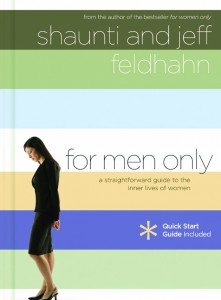
After nearly 21 years of marriage, I thought I had my wife pretty well figured out, but Shaunti & Jeff Feldhahn made me second-guess that belief in For Men Only.

This book is the compilation of surveys, focus group discussions, and lots of highly revealing emails and letters from women all over the country. Then Jeff & Shaunti dig through all of the data to help us guys figure out what’s really going on inside the hearts and minds of the special women in our lives.

Although there were a lot of statistics and bar charts throughout the book, For Men Only is not a dry academic book. On the contrary, the Feldhahns make these results so “livable” for all of us clueless men. The bottom line: when we guys try to understand and communication with the women in our lives the same way we understand and communicate with other guys, we’re setting ourselves up for a lot of frustration.

In the famous “love chapter” in the Bible (1 Corinthians 13), the Apostle Paul implies that love should always be maturing. And when the Apostle Peter says that men should live considerately with our wives, he is really saying that we should live with ever increasing knowledge of them. For Men Only is really helping me do this, and I believe it will help any other men who are serious about continuing to understand their wives better so they can love them more deeply.

A great read for every guy!

I am a Multnomah book reviewer.

Dichotomy & Ricky Gervais

Dichotomy is a big word that means two parts that are opposed to each other. But it also means that they were once joined together—they were once in unity. Much like the first Christians: when people looked at them they saw Jesus; when they heard them speak they heard Jesus; when they watched their lives they saw the life of Jesus.

Christ and Christian were the same unified picture.

Today this is, sadly, far from the truth. People have a lot of wonderful things to say about Jesus, and a lot of nasty things to say about Christians. An unfortunate, and unnecessary, dichotomy exists.

I read an editorial from Ricky Gervais, a self-proclaimed atheist, entitled “Why I’m A Good Christian.” You can read his full editorial in the Wall Street Journal here, but for me this was the key passage:

I am of course not a good Christian in the sense that I believe that Jesus was half man, half God, but I do believe I am a good Christian compared to a lot of Christians.

It’s not that I don’t believe that the teachings of Jesus wouldn’t make this a better world if they were followed. It’s just that they are rarely followed.

Gandhi summed it up really. He said, “I like your Christ, I do not like your Christians. Your Christians are so unlike your Christ.”

I have always felt this way, even when I believed in God, and in a weird way I feel I am still a pretty good “Christian” who doesn’t believe in God.

I think the way back from this dichotomy is two-fold:

(1) Christ-followers need to make an intentional effort to act more Christ-like.

(2) We Christians need to be more thoughtful in our responses to people like Ricky Gervais. I like the pattern Peter recommends

Honor Christ and let Him be the Lord of your life [our motivation for action]. Always be ready to give an answer when someone asks you about your hope [“hope,” not theology, not bad behavior]. Give a kind and respectful answer and keep your conscience clear [there is zero justification for a Christian to give a crass, disrespectful, or sarcastic answer]. This way you will make people ashamed for saying bad things about your good conduct as a follower of Christ [good conduct = we live, talk, and act like Jesus].

C’mon, followers of Christ, let’s close this dichotomy between us and Jesus!

Buying Into It

But now you must be holy in everything you do, just as God who chose you is holy. For the Scriptures say, “You must be holy because I am holy.” (1 Peter 1:15-16)

There is something basically wrong with our Christianity and our spirituality if we can carelessly presume that if we do not like a Biblical doctrine and choose not to “buy” it, there is no harm done.

Commandments which we have received from our Lord or from the apostles cannot be overlooked and ignored by earnest and committed Christians. God has never instructed us that we should weigh His desires for us and His commandments to us in the balances of our own judgment and then decide what we want to do about them.

…Of course you can walk out on it! God has given every one of us the power to make our own choices. …We have the power within us to reject God’s instructions—but where else shall we go? If we refuse His words, which way will we turn? If we turn from the authority of God’s Word, to whose authority do we yield? Our mistake is that we generally turn to some other human—a man with breath in his nostrils. —A.W. Tozer

Notice that Peter tells us being holy comes before doing holy things: “Be holy in all you do.”

  • I cannot do holy things unless I am holy.
  • I cannot be holy unless I have the life of the Holy One in me.
  • I cannot have the life of the Holy One in me unless I totally buy in to His Lordship.

I’m buying in to holiness today. How about you?

Codependent?

Modern psychologists have coined the term codependent to mean someone who allows their life to be controlled by another person, much like the moon controls the tides on the earth’s oceans. Almost always this relationship ends up being a lose-lose relationship: both the person being controlled and the person doing the controlling are headed the wrong way.

Codependent is not a biblical term.

But there is a concept in Scripture that is the anti-codependent. I would call it interdependent. Here’s a couple of verses to back it up…

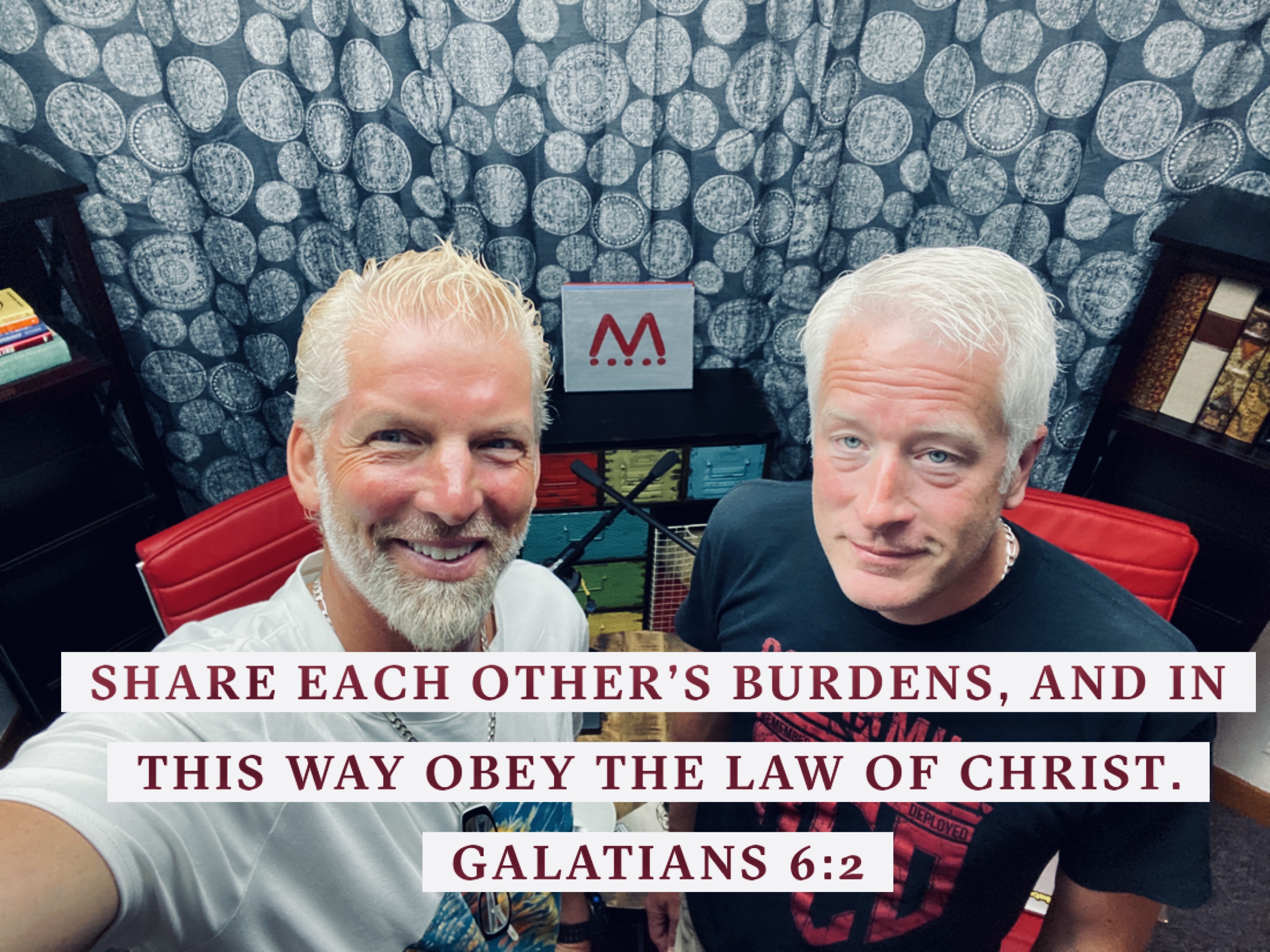
Dear brothers and sisters, if another believer is overcome by some sin, you who are godly should gently and humbly help that person back onto the right path. And be careful not to fall into the same temptation yourself. Share each other’s burdens, and in this way obey the law of Christ. (Galatians 6:1-2)

Wounds from a friend can be trusted, but an enemy multiplies kisses. (Proverbs 27:6)

It is absolutely clear that God has called you to a free life. Just make sure that you don’t use this freedom as an excuse to do whatever you want to do and destroy your freedom. Rather, use your freedom to serve one another in love; that’s how freedom grows. (Galatians 5:13)

God has given each of you a gift from His great variety of spiritual gifts. Use them well to serve one another. (1 Peter 4:10)

This isn’t excusing bad behavior, or winking at poor choices, or rescuing someone from the consequences of sin. Excusing, winking, and rescuing are symptoms of codependency.

Interdependency is saying, “I need you to be stronger—to be healthy—because I may need to lean on you someday.”

Christians try to get stronger and develop their own spiritual gifts so that they can help a friend-in-need get stronger and develop his/her spiritual gifts.

The Body of Christ needs you to be interdependent, which completely trumps codependent.

Sin

I know in politically correct circles it’s not very chic to talk about sin. After all, we’re not supposed to impose our personal values on someone else, right?

Well, I do believe in right and wrong, and the wrong is called sin. So if you are offended by me calling something sin, it would be best for you to stop reading now.

Are you still with me? Then read this: satan…incited David to sin… (1 Chronicles 21:1).

Incited means this wasn’t a straight-up fight. Sin seldom makes a bold, in-your-face attack. Sin isn’t really an ambush. It’s sort of a whispering campaign.

  • Sin is an appeal to ego
  • Sin is a half-truth
  • Sin is an attempt to be subtle
  • Sin is so innocent looking

The Bible says satan lurks like a lion in the underbrush (1 Peter 5:8).

He waits for the perfect opportunity to strike (Luke 4:13).

satan is sneaky (Genesis 3:1).

He lies (John 8:44).

He distorts the truth (Luke 4:9-11).

That’s why I cannot give sin an inch. I have to take every thought captive (2 Corinthians 10:5), and pull everything into the light of The Truth (John 3:20-21).

[Check out all of these verses by clicking here]

It’s not usually the blatant sin that brings down great men and women, but the subtle. So stay on your guard. Always!

Devilish Scheming

If you’ve ever locked horns with the devil in spiritual warfare, you know that he’s a schemer. Paul wrote to the church at Corinth to remind them that we shouldn’t be unaware of his scheming. And Peter said that the devil is always on the prowl, like a scheming lion looking for a place to attack.

So it should come as no surprise that since my message was about unity in the Body of Christ that the devil’s scheming would be to bring about disunity. There was just a weird mood happening yesterday. In fact, in our pre-service prayer time, I felt prompted to pray out loud that God would knock down any distractions to what the Holy Spirit wanted to do.

I saw it coming … I prayed hard against it … and my prayers knocked down the enemy before he could fully implement his devilish scheme.

Well, not exactly.

Yes, I did feel prompted to pray against distractions, but I should have been praying against disunity too. As a result, I could feel the fight all morning. It would be more accurate to say that I could feel something all morning. It wasn’t until I got home and commented to Betsy about what I had been feeling that I got clued in. She said, “What did you expect? You were talking about unity today, so obviously the devil is going to attack that very thing.”

Duh! Why didn’t I see that? I’m so grateful for a godly wife who catches these things for me.

But I learned something yesterday. I learned that my prayers need to be more specifically-targeted prayers. Sort of like the “smart bombs” our military uses that are laser-guided right on target. Like Paul said, I’m not going to be unaware of the devilish scheming.

Spiritual warfare is always hard work, which is why in Paul’s teaching on spiritual warfare he told us to keep on praying for each other.

What’s So Good About Good Friday?

Good Friday? Good for whom?

For you and me? Yes.

Good for Jesus, no. It was Bad Friday for Him, wasn’t it?

Or was it?

The writer of Hebrews says, “For the joy set before Him, Jesus endured the Cross, scorning its shame.”

What joy?

It was for the joy of what was nailed to the Cross.

So what exactly was nailed to the Cross?

Isaiah records an usual statement from God –

Comfort, comfort My people, says your God. Speak tenderly to Jerusalem, and proclaim to her that her hard service has been completed, that her sin has been paid for, that she has received from the Lord’s hand double for all her sins.

That seems unfair! We receive double (!) for our sins! Here’s a brief video where I explain what this means culturally –

Only when invoices were paid-in-full did they get doubled-up.

The Bible tells us that we’ve all sinned, and that the invoice or penalty for our sin is death. We have the IOUs of sin nailed to the door of our heart where God says “You owe Me your life!” But we cannot pay this debt by ourselves.

But Jesus can. And Jesus did! Check this out –

He personally carried our sins in His body on the Cross…. (1 Peter 2:24, NLT)

Having cancelled and blotted out and wiped away the handwriting of the note with its legal decrees and demands which was in force and stood against us. This He set aside and cleared completely out of our way by nailing it to His Cross. (Colossians 2:14, AMP)

That’s what is good about Good Friday. Jesus knew that taking our sins on His body, and then allowing His body to be nailed to the Cross, would double-up and nail-down our sin once and for all!

When Jesus said, “It is finished!” He was really saying, “It is was paid-in-full!”