Eyes On The Eternal

Listen to the podcast of this post by clicking on the player below, and you can also subscribe on AppleSpotify, or Audible. 

Most of our Royal Psalms have taken us from King David to King Jesus. Psalm 72 is a bit different because King David is speaking some of his last words as a blessing and a reminder to King Solomon. Jesus, Peter, and those in a church prayer meeting all affirmed that David’s words were inspired by the Holy Spirit (Matthew 22:43; Acts 1:16, 4:25), so these words in Psalm 72 are just as inspired. 

(Check out all of the Scriptures in this post by clicking here.)

The introduction to this psalm in the NIV says “Of Solomon.” But because the Hebrew word for “of” can also be “for” and since v. 20 says these are the final words of David, I think we can say that this psalm is of David and for Solomon. 

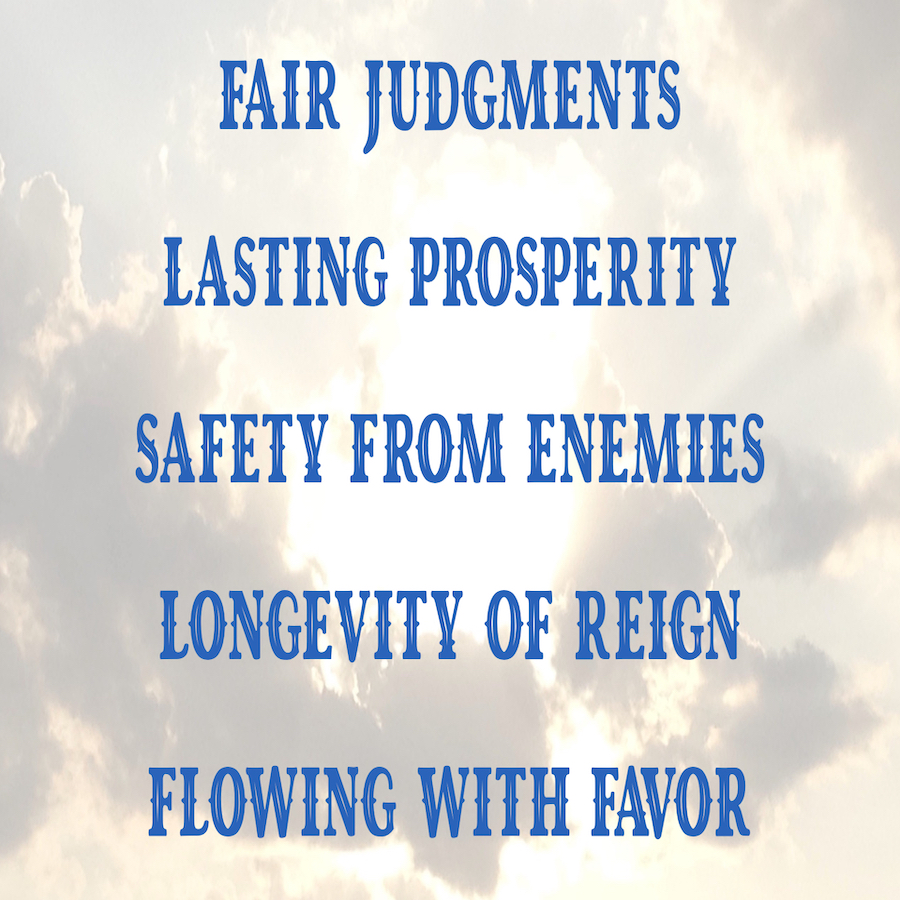
David has received God’s promise of an heir always on the throne of his kingdom. Here is the first transfer of power, and David is foreseeing the blessing that Solomon will be to the Israelite nation because of the endowment of God’s righteousness. Those blessings for his subjects include: 
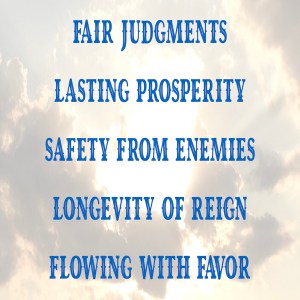
  • fair judgments (v. 2; 1 Kings 10:1-3) 
  • prosperity (v. 3; 1 Kings 10:7, 27) 
  • safety from enemies (v. 4; 1 Kings 10:26) 
  • longevity (v. 5; 1 Kings 10:8) 
  • favor (vv. 6-7; 1 Kings 10:9) 

Historically, we know of the fulfillment of these things. We can especially see it in the visit of Queen Sheba in 1 Kings 10. 

In this next paragraph, as we have seen with other royal psalms, there is a modulation back-and-forth between King Solomon and King of kings Jesus (vv. 8-11). Verse 8 is the ends of the earth rule of Jesus; vv. 9-10 are the local rule under Solomon; v. 11 then speaks of all kings…all nations bowing to Jesus as the King of kings. 

This modulation reminds us that no earthly king can ever stand-in for the Eternal King. After the static of switching back-and-forth, from our perspective at this point in history a flashback event becomes crystal clear. 

  • David gives instructions and a warning to Solomon (1 Kings 2:1-4) 
  • Solomon wields his power in Israel (2 Chronicles 1:1) 
  • Solomon falters under his power by becoming intoxicated by it (1 Kings 3:3; 11:1-4)
  • Solomon’s kingdom is diminished (1 Kings 11:10-13) 

This is not the case for our King of kings! His kingdom has no end because His rule has no end (Isaiah 9:6-7; Luke 1:32-33). 

The devil tried to limit Jesus by offering Him a shortcut, but Jesus stood firm. So the remainder of this Royal Psalm can only be fulfilled by Jesus:

  • vv. 12-14 foreshadow the prophecy of Jesus Isaiah 61:1-2 and its fulfillment in Luke 4:21 
  • vv. 15-17 foretell all nations being blessed forever under the lordship of King Jesus 

Don’t get caught up in looking at what’s before your eyes right now. Don’t get discouraged by the voice that’s in your ears right now. Don’t get mesmerized by the glittery things of earth. Keep your focus on the Eternal King. David’s conclusion to this Royal Psalm is that we worship our King above all else (Psalm 72:18-19). 

And David’s final words should echo from our lips as well: Amen and Amen! 

If you’ve missed any of the other messages on these Royal Psalms, you can find them all here. 

►► Would you please prayerfully consider supporting this ministry? My Patreon supporters get behind-the-scenes access to exclusive materials. ◀︎◀︎

A Lost Culture Of Reverence

Listen to the podcast of this post by clicking on the player below, and you can also subscribe on AppleSpotify, or Audible. 

There are several psalms that are regal in their focus—talking about the King’s coronation, or the King ruling on His throne, or the ultimate victory of the King that is coming in the future. Although these royal psalms are extolling God as King, many of these psalms use King David as an object lesson. The idea is seeing how a man after God’s heart (1 Samuel 13:14) became the standard by which all other kings were measured: 

  • Asa did what was right in the eyes of the Lord, as his father David had done (1 Kings 15:11) 
  • Amaziah did what was right in the eyes of the Lord, but not as his father David had done (2 Kings 14:3) 
  • Unlike his father, Ahaz did not do what was right in the sight of the Lord, as his father David had done (2 Chronicles 28:1) 

(Check out all of the Scriptures in this post by clicking here.)

The people followed their king in both righteousness and evil. They were fiercely loyal to their monarch. We don’t really get that loyalty today. “We’re Americans,” we cry, “We live in the land of the free and don’t ever bow our knee to a king!” 

That’s an appropriate response for those living in a democratic republic, but we would do well to learn to bow our knee to a true King. 

After the United States Constitution was adopt adopted, Elizabeth Willing Powel asked Benjamin Franklin, “Well, Doctor, what have we got, a republic or a monarchy?“ Franklin replied, “A republic, if you can keep it.” Franklin went on to say, “In these sentiments, Sir, I agree to this Constitution, with all its faults, if they are such; because I think a General Government necessary for us, and there is no form of government, but what may be a blessing to the people if well administered; and believe further, that this is likely to be well administered for a course of years, and can only end in despotism, as other forms have done before it, when the people shall become so corrupted as to need despotic government.” 

Because of our defiance as free people in our government, we have become lacking in our loyalty, which shows itself in a lack of proper reverence or respect. Just listen to how people talk so disrespectfully or even hatefully about those in “the other political party.” Benjamin Franklin also said, “Only a virtuous people are capable of freedom. As nations become corrupt and vicious, they have more need of masters.” 

Where are the days of the armor bearer who said to Prince Jonathan, “Do all you have in mind. I’m with you heart and soul,” even though Jonathan was proposing an impossible task? Or the loyalty of the men around David who heard him sigh about the water in Bethlehem, and they put their lives at risk to bring him a drink? This was even before he was on a throne, and yet they showed their loyalty to him. I fear that our lost culture of reverence for earthly leaders has eroded our reverence for the King of kings, and vice versa. 

The first royal psalm (Psalm 2) practically open the Psalter. This psalm calls us to consider the differences between earthly kings and the King of kings.  

Notice that earthly kings “conspire”—they angrily boast and rage. They plot (v. 1b) and scheme (AMPC). They take their stand together (v. 2). 

Against Whom? Against the LORD (Jehovah) and against His Anointed One (the Messiah)! 

Much like the fiercely independent people I described us as earlier, these earthly rulers want to call their own shots—they don’t want to take directions from anyone else because they think they know best (v. 3). But notice in v. 1 that the peoples have followed their leaders in their plot. 

God doesn’t rage at them, but He laughs, He scoffs, He rebukes, and the people are terrified when they realize that they cannot overcome Him. In v. 1 we see their plots are “in vain.” 

There is nothing men can do—no matter how powerful they may seem or how many of them “take their stand…together”—to thwart or even delay the plans of Jehovah. 

All of History is His Story. Notice the phrase that God speaks, “I have … I will” (in vv. 6-7; c.f. Daniel 4:25). 

In vv. 7-9 God speaks to His Son—the Messiah, the Anointed One, the King of kings. We hear this repeated in Acts 13:32-33 and in God’s own voice in Matthew 3:17. Then we see the fulfillment of this in passages like Philippians 2:9-11 and Revelation 11:17-18. 

This royal psalm ends with an important conclusion: Therefore (vv. 10-12): 

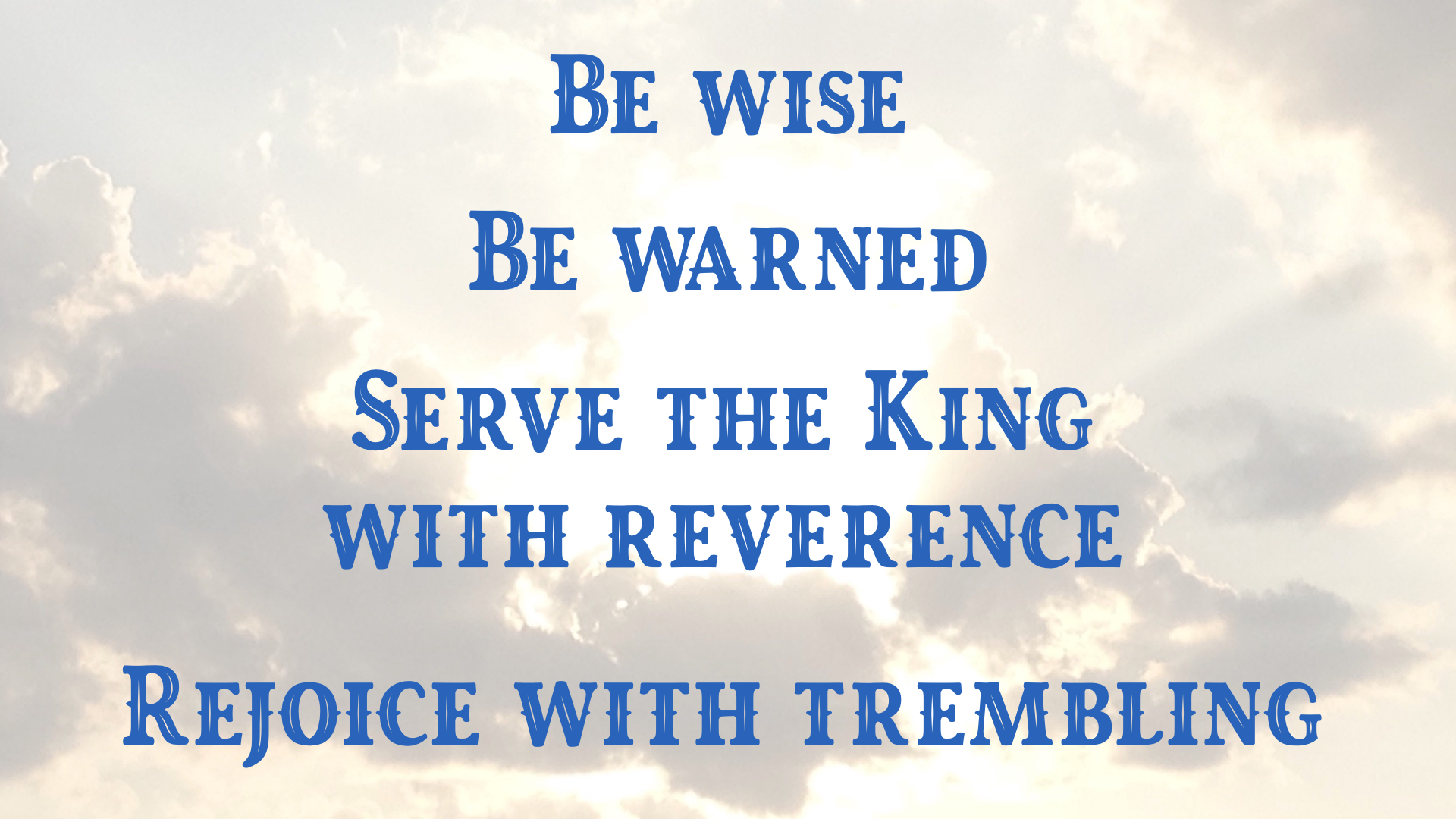
  • Be wise 
  • Be warned 
  • Serve the King with reverential fear 
  • Rejoice with trembling  
  • Kiss the Son with absolute loyalty and joyful reverence 

Check out another “therefore” in Philippians 2:12-16. This is a call for righteous, reverent living for those who have acknowledged Jesus as their King. It’s only those who live this way who will know the blessed refuge in Him that is unshakable for ever and ever! 

Follow along with our look at all of the royal psalms by clicking here. 

►► Would you please prayerfully consider supporting this ministry? My Patreon supporters get behind-the-scenes access to exclusive materials. ◀︎◀︎
The Warnings In Jeroboam’s Sin

Jeroboam knew that saints who worship together will stick together. A unified church is hard to defeat. 

He first appeals to an easier option than the hard work it takes to travel all the way up to Jerusalem for the feasts of worship. 

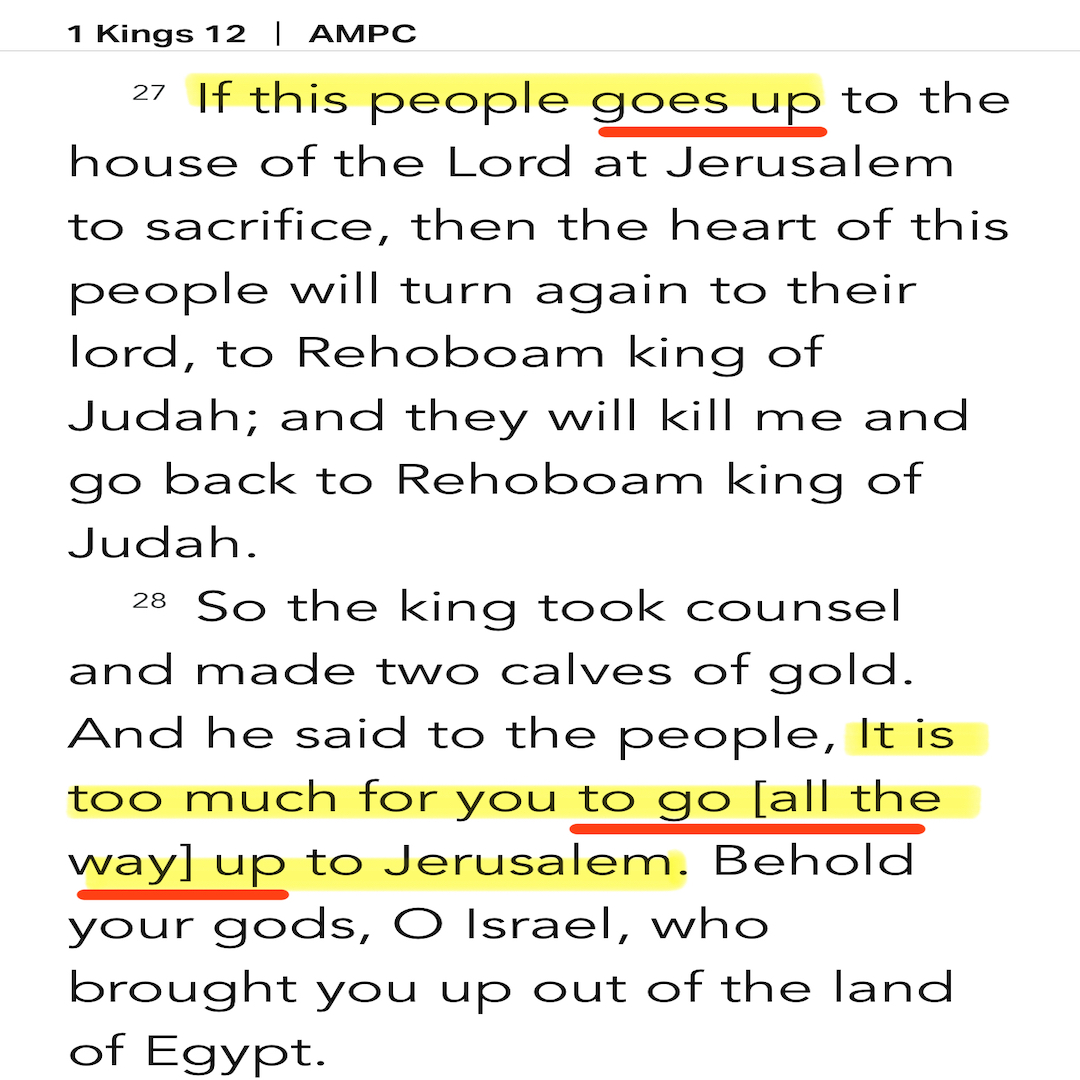
   If this people goes up to the house of the Lord at Jerusalem to sacrifice, then the heart of this people will turn again to their Lord, to Rehoboam king of Judah; and they will kill me and go back to Rehoboam king of Judah. So the king took counsel and made two calves of gold. And he said to the people, “It is too much for you to go all the way up to Jerusalem. Behold your gods, O Israel, who brought you up out of the land of Egypt.” (1 Kings 12:27-28)

He then gave them replicas of the devoted things in Jerusalem—“behold your gods.” He tricked them to accept the counterfeit as the real thing. 

Next, he appointed unqualified priests (v. 31; 13:33). These priests weren’t accountable to God, but only to Jeroboam. 

Finally, he proposed an alternative date that they could gather to “worship” (vv. 32-33). 

Jeroboam’s sin was to make true worship seem like burdensome work, and then to pass off cheap and easy substitutes to make it appear that the people were worshiping God. But the Bible says, “And this thing became the sin of the dynasty of Jeroboam that caused it to be abolished and destroyed from the face of the earth” (1 Kings 13:34). 

What Would You Ask For?

If God said to you, “Ask for whatever you want,” what would you ask for?

God did ask Solomon that very question in 1 Kings 3:5. Here’s how Solomon replied—

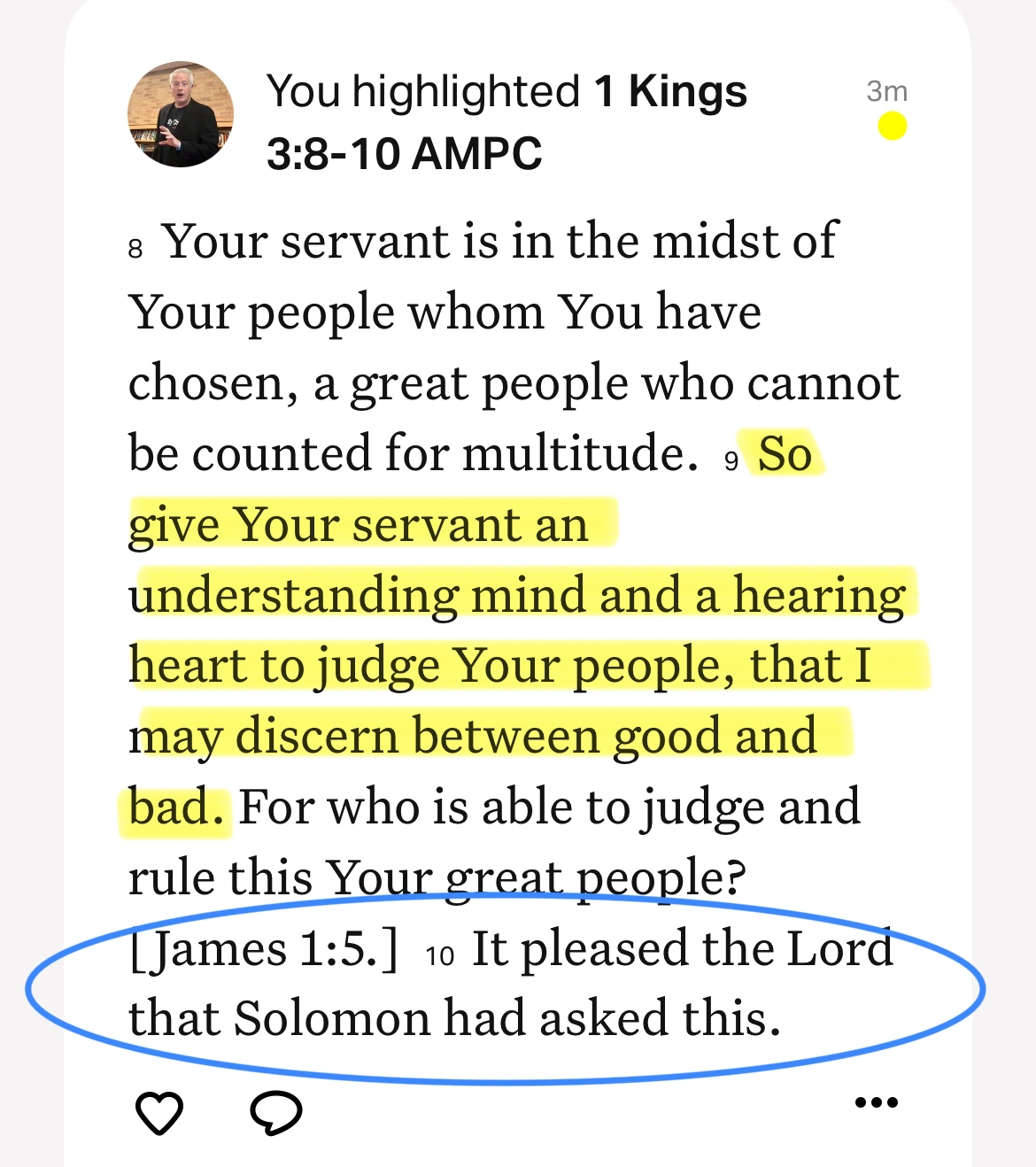
“Your servant is in the midst of Your people whom You have chosen, a great people who cannot be counted for multitude. So give Your servant an understanding mind and a hearing heart to judge Your people, that I may discern between good and bad. For who is able to judge and rule this Your great people?” (1 Kings 3:8-9 AMPC) 

And how did God respond to this request? “It pleased the Lord that Solomon had asked this” (v. 10).

Solomon didn’t ask for things but for a greater intimacy with God—he wanted to know God’s mind. Sadly, we tend to reverse this, saying, “Because I have things, I bless God for them.” 

Instead, our prayer should echo what Solomon prayed here in 1 Kings 3 and what Jesus taught us in His Sermon on the Mount: My desire is solely for Your glory and Your Kingdom (see Matthew 6:9-10, 33). When you pray this way, it will please that Lord that you had asked that! 

Check out these related blog posts and videos:

Loving Rebuke

Listen to the podcast of this post by clicking on the player below, and you can also subscribe on AppleSpotify, or Audible. 

When I say a rebuke can be loving, let me start off with this reminder: People need to know you truly love them before they will pay attention to a rebuke. If they don’t know you love them and want the best for them, your rebuke will simply make them angry and may create an uncrossable chasm between you. 

Nathan was the prophet who confronted David with his sin, saying, “You are the man!” (2 Samuel 12:1-7). Nathan not only took his life into his hands by speaking so boldly against King David, but he risked the lives of his family as well. 

Thankfully, David acknowledged his sin, repented, and asked forgiveness (2 Samuel 12:13; Psalm 51:3-12). Instead of being banished, Nathan was honored. In fact, we see Nathan faithfully serving in King David’s inner circle even after the king is dead and King Solomon ascends to the throne. 

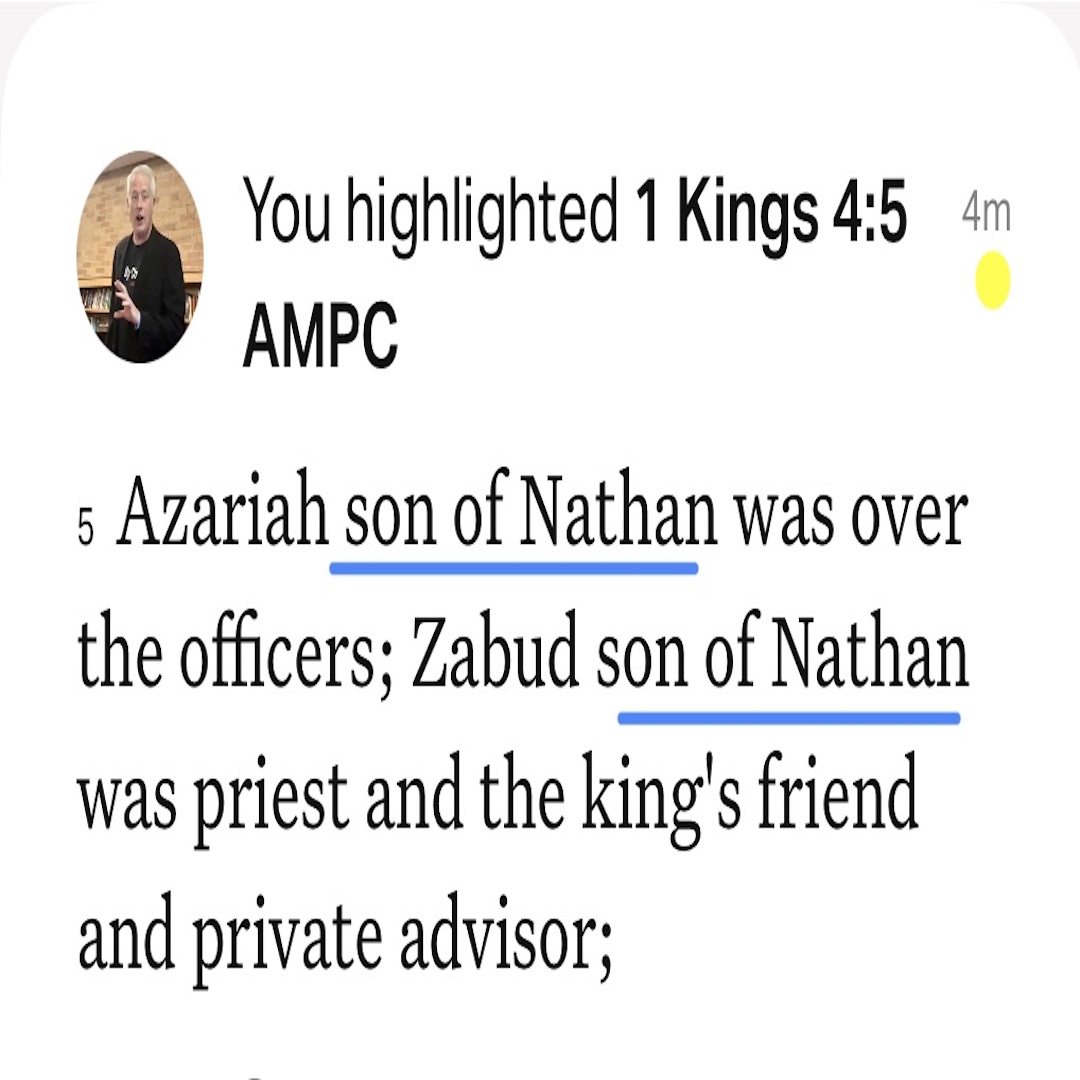
And then during the reign of King Solomon, two of Nathan’s sons are honored with prestigious positions in Solomon’s court. “Azariah son of Nathan was over the officers; Zabud son of Nathan was priest and the king’s friend and private advisor” (1 Kings 4:5). 

Solomon wrote, “He who rebukes a man shall afterward find more favor than he who flatters with the tongue” (Proverbs 28:23). 

We must speak the truth in love. Not so that we are rewarded here (because that may or may not happen), but because God has called us to this. And He keeps perfect records so that we will be rewarded in Heaven. 

You may also be interested in— 

►► Would you please prayerfully consider supporting this ministry? My Patreon supporters get behind-the-scenes access to exclusive materials. ◀︎◀︎
My Most Popular Bible Study Resource

Listen to the podcast of this post by clicking on the player below, and you can also subscribe on AppleSpotify, or Audible. 

Back in 2014, I was reading through the history of the divided kingdoms of Judah and Israel. The historical accounts of these kingdoms in both the Books of Kings and Chronicles go back-and-forth from kings in the north to kings in the south. I was having trouble keeping them all straight, so I began designing a side-by-side chart to help me. 

I had no idea that this chart would be viewed and downloaded by other Bible students literally thousands and thousands of times each year. 

You can find all of the download information for this chart by clicking here. 

A few of my other popular downloads:

►► Would you please prayerfully consider supporting this ministry? My Patreon supporters get behind-the-scenes access to exclusive materials. ◀︎◀︎
Should We Listen To Critics?

Listen to the podcast of this post by clicking on the player below, and you can also subscribe on AppleSpotify, or Audible. 

Do you know this pair of cantankerous men from the Muppets? Statler and Waldorf sit in the balcony of the theatre and criticize everything that is happening on the stage. I mean everything! They have a good laugh at their barbs, but no one on the stage seems to find it humorous. 

Have you ever met people like this? How do you typically respond to their criticism? 

Unfortunately, those who are trying to do the right thing are often the targets of almost constant criticism. Abraham Lincoln said, “If I were to attempt to answer all the criticisms and complaints I receive, I would have no time for any other business.” 

President Lincoln was a great leader but he wasn’t without fault, so to certain extent we could expect a little bit of criticism from people who didn’t like his policies. But what about Jesus? It was prophesied about Him that He would be the target of criticism (Isaiah 53:3). 

(Check out all of the Scriptures in this post by clicking here.) 

Those out to get Jesus even criticized those who attended to Him. In Mark 14:1-5, they are criticizing a woman who poured perfume on Jesus out of her sincere desire to honor Him. Yet they spoke about her and her actions “indignantly” (v. 4), and they rebuked and criticized her (v. 5). The Greek word in this verse literally means he snorting of horses! 

Jesus stepped in to protect this God-fearing woman, “Why are you bothering her? Why are you criticizing this beautiful thing she had done for Me?” 

Notice that Jesus responded to the critics, but the woman did not respond. Does that mean that we never answer critics? Are we supposed to ignore them? 

First, let’s go back in time to the origin of the words critic and criticism. These words originally meant someone capable of giving a meaningful—perhaps even constructive or helpful—judgment. Think of a trained and skilled chef critiquing your recipe, as opposed to someone who cannot tell the difference between nutmeg and ginger. 

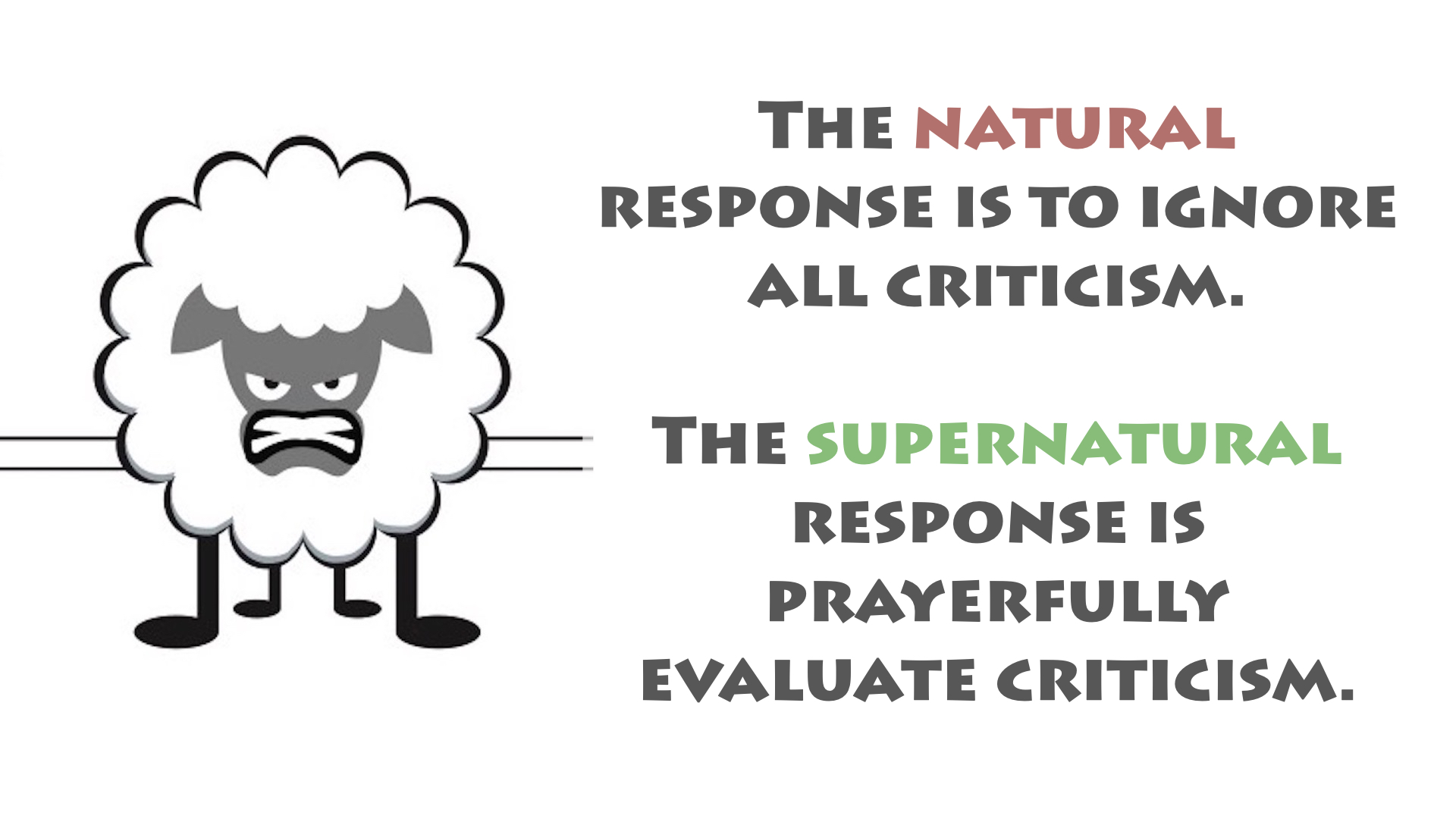
The natural response is to ignore all criticism. The supernatural response is prayerfully evaluate criticism. Solomon says there is such a thing as valid criticism (Proverbs 25:12). 

So who is a valid critic? 

(1) Someone who loves me (Proverbs 27:17; Ephesians 4:15). Paul loved Peter and respected his leadership role in the church, but he still criticized Peter when he messed up (Galatians 2:9, 11).  

(2) Someone who has experience or godly wisdom that we don’t yet have (Ecclesiastes 7:5). Micaiah had a word from God, even though King Ahab thought Micaiah simply didn’t like him (1 Kings 22:1-18). 

(3) Someone who wants to hurt me. Really!? Dick Brogden wrote, “The Lord uses critics to show us our own hearts, even if what they say is not fully true, informed, or even fair. There is almost always a germ of truth in what our critics (in their own pain and disappointment) shout at us. The wise [person] will humble himself and look for the truth embedded in every oppositional interaction.” As we saw previously from Psalm 26:2, when we hear words of criticism, we need to make it a matter of prayer. 

Jesus told the woman’s critics to “leave her alone” but He never defended Himself against the childish barbs (Isaiah 53:7; Matthew 27:13-14). I think we would do well to follow His example. So when criticized, take a deep breath, smile, hear them out, ask clarifying questions, and then say, “Thank you for sharing that with me. I’ll make this a matter of prayer.” 

They might accuse you, but you should turn it over to God (Psalm 109:4). 

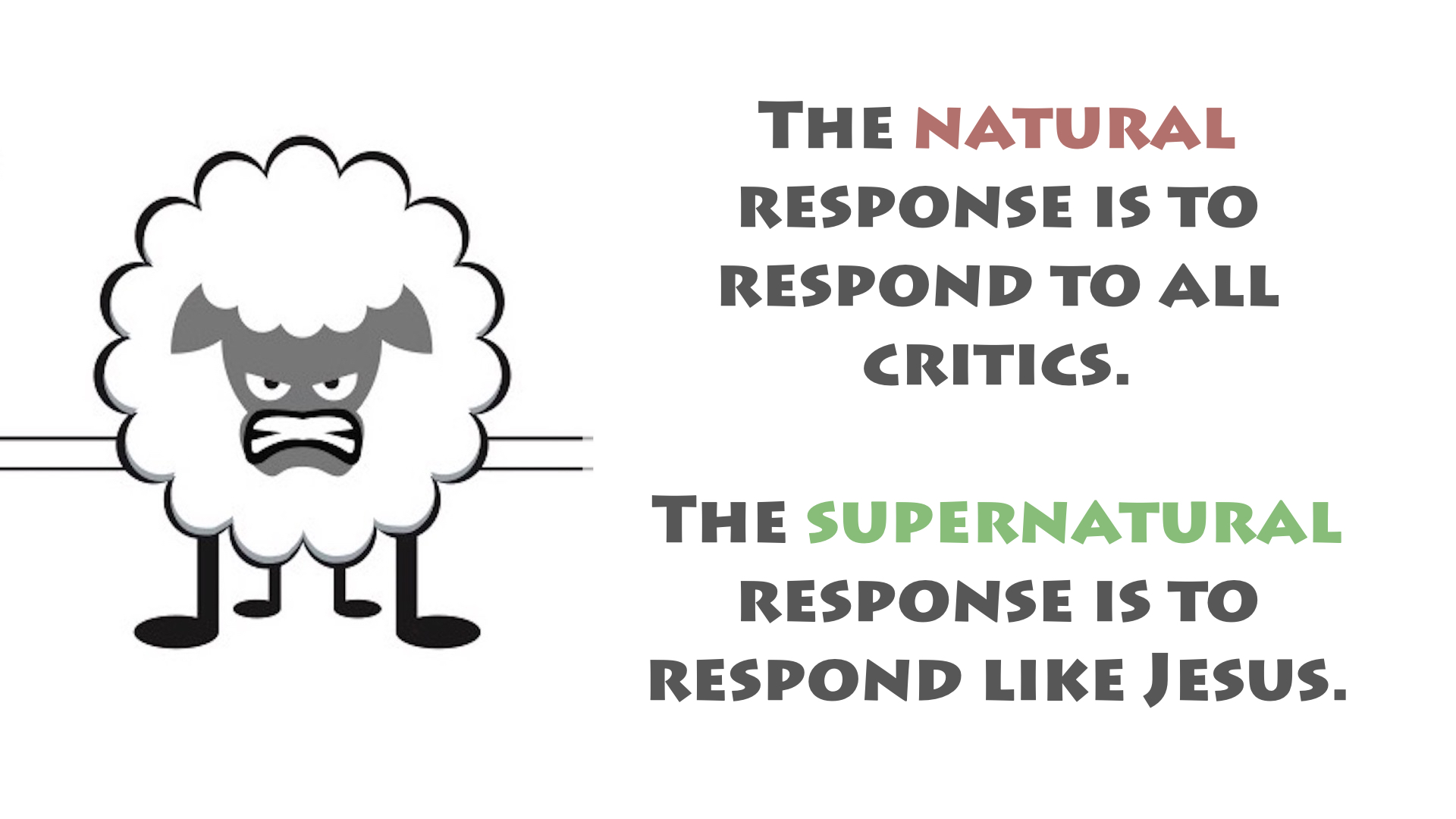
The natural response is to respond all critics. The supernatural response is to respond like Jesus (see 1 Peter 2:21-23). 

Remember that quote from Abraham Lincoln we saw earlier? Here’s the rest of his quote—

“From day to day I do the best I can and will continue to do so till the end. If in the end I come out all right, then the complaints and criticisms and what is said against me will make no difference. But, if the end brings me out wrong, then ten angels coming down from heaven to swear I was right would still make no difference.” 

Ultimately, we are longing to hear Jesus say, “Well done.” If He cannot say that to us, does it really matter if everyone else praised us? But if Jesus says, “Well cone,” does it really matter the criticism others said about us? 

Let’s ask the Holy Spirit to help us respond supernaturally to our critics—listen prayerfully to ever critic, but only respond to them as Jesus did. 

If you have missed any of the other messages in this series When Sheep Bite Sheep, you can find them all here. And if you’re a pastor, be sure to check out my book When Sheep Bite. 

►► Would you please prayerfully consider supporting this ministry? My Patreon supporters get behind-the-scenes access to exclusive materials. ◀︎◀︎
“Give Me This Hill”

Listen to the podcast of this post by clicking on the player below, and you can also subscribe on AppleSpotify, or Audible. 

Let’s review the historical background for the Psalms of Ascent. The Jewish people made four pilgrimages to Jerusalem each year, which sit about 2500 fee above sea level, so this was a physical climb. But this also has a spiritual lesson for us today: We are to continue progressing in our walk with God—upward and onward! 

The songs of ascent that these pilgrims sang give us life-changing lessons that we can still apply today. 

I’m sure there were some pilgrims who thought, “We have to go to Jerusalem.” Just as there are some people today who may something like, “I have to tithe.” But when you have experienced the blessing that comes from obedience, your “have to” turns to “get to” really quickly! 

There is a longing in Psalm 128 for God’s blessing. In fact, we see it in nearly every verse: blessed (v. 1), blessing and prosperity (v. 2), blessed (v. 4), bless and prosperity (v. 5), and peace (v. 6). 

We have to remember that our obedience doesn’t earn God’s blessing, but rather our obedience keeps us in the place where we can receive God’s ever-flowing blessings. When I have experienced the blessing that followed even my “have to” attitude, I now joyfully “get to” obey because I know that keeps me in a blessed place. 

But even knowing that these blessings are flowing for us, sometimes we still get weary. Sometimes it seems as if we are being faithful but we aren’t seeing the results that perhaps we saw before. 

Think about these pilgrims ascending 2500 feet year after year after year. It was challenging enough during the golden days of King David and King Solomon, but can you imagine the feelings of futility during the dark days? Perhaps during the exile when the temple was in ruins, or after the exile when the temple didn’t look as it did before and there were overlords ruling Israel? And then it was unquestionably true that the older a pilgrim got, the harder the climb became for them. 

But the struggle keeps us reliant on God. Like Solomon said, “The way of life winds upward for the wise, that he may turn away from hell below” (Proverbs 15:24). The longer I walk, the more I get to rely on God’s help, and the sweeter He becomes to me! 

(Check out all of the Scriptures in this post by clicking here.) 

I love the line in the hymn Great is Thy Faithfulness, “Strength for today and bright hope for tomorrow—blessings all mine with ten thousand beside.” Because of God’s blessings that I’ve already experienced, I can trust Him for more, even in the struggle of the climb. 

Look at some of these promises that come out in other biblical translations. 

  • Blessed are those who fear God (NIV) = “How joyful are those who fear the Lord” (NLT) 
  • Blessing and prosperity will be yours (NIV) = “You will enjoy the fruit of your labor” (NLT) and “You will eat what you worked so hard to grow” (NET) 

The middle of this psalm is in verses 3-4. Remember above when I said nearly every verse contains a word of blessing? I didn’t list verse 3, but there is language in this verse that makes it pregnant with blessing—Your wife will be like a fruitful vine within your house; your sons will be like olive shoots around your table. 

You may ask, “How is this a blessing?” 

The phrase “under their own vine and under their own fig tree” appears throughout the Old Testament. It described a blessed, prosperous, happy, and peaceful home. It was a home at peace within because there was also peace without. 

This described the golden era of King Solomon—During Solomon’s lifetime Judah and Israel, from Dan to Beersheba, lived in safety, everyone under their own vine and under their own fig tree (1 Kings 4:25). 

After the northern kingdom of Israel fell and the southern kingdom of Judah was surrounded by the Assyrian forces of King Sennacherib, the king’s field commander tried to entice them the people with similar words—

Do not listen to Hezekiah. This is what the king of Assyria says: “Make peace with me and come out to me. Then each of you will eat fruit from your own vine and fig tree and drink water from your own cistern until I come and take you to a land like your own—a land of grain and new wine, a land of bread and vineyards, a land of olive trees and honey. Choose life and not death! Do not listen to Hezekiah, for he is misleading you when he says, ‘The LORD will deliver us.’” (2 Kings 18:31-32)

Notice that he said the land would be “a land like your own.” He was trying to get them to compromise, to no longer listen to God’s voice, to no longer climb up into God’s presence. Much like satan tempted Adam and Eve to eat the forbidden fruit with the promise, “You will be like God.” 

But these blessings in Psalm 128 don’t come from fearful “have to” obedience to man, but from reverencing God above all else. So the longing of verses 1-4 become the prayer of verses 5-6 (notice the word may used three times in these verse). 

The focus of our longing—where we need to keep our eyes—is on God’s heavenly throne: Zion, Jerusalem, Israel (vv. 5-6; Micah 4:1-5). 

In an earlier story, Caleb may have gotten tired while he waited for God to fulfill His promise to him, but he always trusted God as he walked on (see Joshua 14:9-12).

What promises of God are you still praying for?
What are you longing to see accomplished?
What has God already done that you can look back on?

In The Pilgrim’s Progress, Christian is facing another high hill when he says—
The Hill, though high, I covet to ascend,
The Difficulty will not me offend;
For I perceive the Way to life lies here.
Come, pluck up Heart, let’s neither faint nor fear;
Better, though difficult, the Right Way to go,
Than wrong, though easy, where the End is Woe. (John Bunyan)

Don’t give in.
Don’t give up.
Keep climbing.

Like Caleb say, “It may have been 85 years of walking and climbing, but I’ll keep climbing. GOD, GIVE ME THIS HILL!” 

If you would like to check out the other songs of ascent that we’ve already studied, please click here. 

►► Would you please prayerfully consider supporting this ministry? My Patreon supporters get behind-the-scenes access to exclusive materials. ◀︎◀︎

God Knows Best

Now behold, a prophet approached Ahab king of Israel, and said, “This is what the Lord says: ‘Have you seen all this great multitude? Behold, I am going to hand them over to you today, and you shall know that I am the Lord.’ ” … Then the prophet approached the king of Israel and said to him, “Go, show yourself courageous and be aware and see what you have to do; for at the turn of the year the king of Aram will march against you.” (1 Kings 20:13, 22)

God may miraculously intervene for you. 

God may strengthen you for battle. 

God may give you wisdom for your work. 

He knows best. 

So we must listen and obey His specific word each time He tells us what to do. Never presume that this time will be like the last time, but hear God’s word at each new situation.

Takin’ Him To Hollywood Boulevard

Listen to the podcast of this post by clicking on the player below, and you can also subscribe on AppleSpotify, or Audible. 

Jesus sent us and the Holy Spirit empowers us to take the Good News to all nations—all the streets (Luke 24:47-49; Acts 1:8)—even the streets of Samaria where we will have more differences than similarities. 

There is one street that has infiltrated and affected every other street more profoundly than any other: Hollywood Boulevard. The constant bombardment of messages through movies, television programs, music, literature, and the arts is almost immeasurable. 

I think Christians rarely stop to ponder how much of the culture on Main Street is influenced by the content from Hollywood Boulevard. Probably because so few Christians are involved in the artistic or creative communities.  

Here’s what we need to remember: All of this creativity is God-given. The opening words in the Bible say, “In the beginning God created…” (Genesis 1:1). 

We specific examples of God-given creative skills in:

  • Bezalel—Exodus 31:1-5 
  • Oholiab—Exodus 31:6, 35:34 
  • craftsmen and craftswomen—Exodus 31:6; 35:10, 22, 25 
  • Huram—1 Kings 7:13-14 
  • food administrators—Acts 6:3 
  • Tabitha—Acts 9:36-39 

(You can check out all of the Scriptures mentioned in this post here.) 

In more modern times, we see notable creative people giving credit to God for their abilities. 

  • William Shakespeare’s use of biblical themes—and even exact phrases—throughout his work is easy to spot. In the opening line of his last will and testament, he wrote, “I commend my soul into the hands of God my Creator, believing through the merits of Jesus Christ, my Savior, to be made a partaker of life everlasting.” 
  • Johan Sebastian Bach, considered by many to be the greatest composer to ever live, placed “S.D.G.” on every one of his musical compositions, which stands for Sola Deo Gloria: only for the glory of God. 

The apostle James tells us that every good and beautiful gift has come to us from God our Creator (James 1:17). And then this is my paraphrase of a similar thought the apostle Peter—

Each of you should use whatever gift you have received to serve others, as faithful stewards of God’s grace in its various forms. If anyone speaks [writes, paints, composes, sculpts], they should do so as one who speaks [writes, paints, composes, sculpts] the very words of God. (1 Peter 4:10-11)

So, here are four thoughts about how we can take the Good News of Jesus to Hollywood Boulevard. 

  1. Create a beautiful culture in your home, your Main Street, your workplace, your school. Ask the Holy Spirit to help you answer the question, “What can I do so that the love and beauty of Jesus will be felt here?” 
  1. Use your creative skills—write poems, compose music, paint a picture, sew clothing, bring innovation to your job.
  1. Support beautiful authors, musicians, moviemakers, painters, etc. Hollywood produces what they think will make money, so if you are supporting creators of beautiful things, they will produce more of those things. 
  1. Leverage Hollywood’s culture to talk to others about heavenly culture. Point out biblical themes, challenge the rationale behind unbiblical lyrics, etc.  

“Christians need to ask themselves a few key questions to help us respond to the society around us. First, what is good in our culture that we can promote, protect, and celebrate? Second, what’s missing in our culture that we can creatively contribute? Third, what’s evil in our culture that we can stop? And fourth, what’s broken in our culture that we can restore?” —John Stonestreet 

Don’t complain—create something better. 

Don’t compromise—promote what is beautiful and edifying. 

The Holy Spirit can empower us to take the Good News of Jesus even to Hollywood Boulevard! 

If you’ve missed any of the other messages in our series Takin’ Him to the Streets, you can find them all here. 

►► Would you please prayerfully consider supporting this ministry? My Patreon supporters get behind-the-scenes access to exclusive materials. ◀︎◀︎