Thursdays With Oswald—Instantly Detecting Compromise

This is a weekly series with things I’m reading and pondering from Oswald Chambers. You can read the original seed thought here, or type “Thursdays With Oswald” in the search box to read more entries.

Instantly Detecting Compromise

     We must be continually renewed in the spirit of our mind so that the slightest beginning of compromise with the spirit of the world is detected. “Well, what’s the harm; there’s nothing wrong in it,” when you hear that you know you have the spirit of the world, because the Spirit that comes from Jesus says, “Does this glorify God?”

From Biblical Ethics

There’s a HUGE difference between a Christian being in the world and of the world. A Christian who is compromising, is slowly becoming of the world. They say, “This isn’t wrong.”

A Christian who is uncompromising, is slowly becoming in the world but of Heaven. They judge everything by whether or not it brings glory to God.

Compromise is the slow erosion. Seldom does one go from a passionate follower of God to a worldly person suddenly. It is the small compromises day after day that are the most dangerous.

So one of my frequent prayers must be—

Search me, O God, and know my heart; test me and know my anxious thoughts. Point out ANYTHING in me that offends You. (Psalm 139:23-24, NLT)

A-to-Z Love

You probably have heard that Psalm 119 is the longest chapter in the Bible (176 verses). The anonymous author clearly loved God’s Word—everything about it from aleph to taw (that’s Hebrew for “from A to Z”).

The psalm’s 176 verses are divided into 22 sections, with eight verses in each section (the Hebrew alphabet has 22 letters). All of the verses except three mention God’s Word in some way (law, statutes, commands, etc.). In other words, this author loved God’s Word from start to finish, and everything in-between!

How about if we continue the A-to-Z love?

I love that God’s Word is…

A—An attitude adjustor

B—Bright hope

C—Comforting

D—Direction for life

E—Educational

F—Fulfilling my deepest longings

G—Good and good for me

H—Historically accurate

I—Illuminating

J—Just what I need, when I need it

K—Keeping me from sin’s grip

L—Liberating me from anxiety

M—Making me the God-fearing man I should be

N—Never condemning, always encouraging

O—Opening my understanding

P—Purifying my motives

Q—Quality time

R—Revealing God’s love for me

S—Strength for today

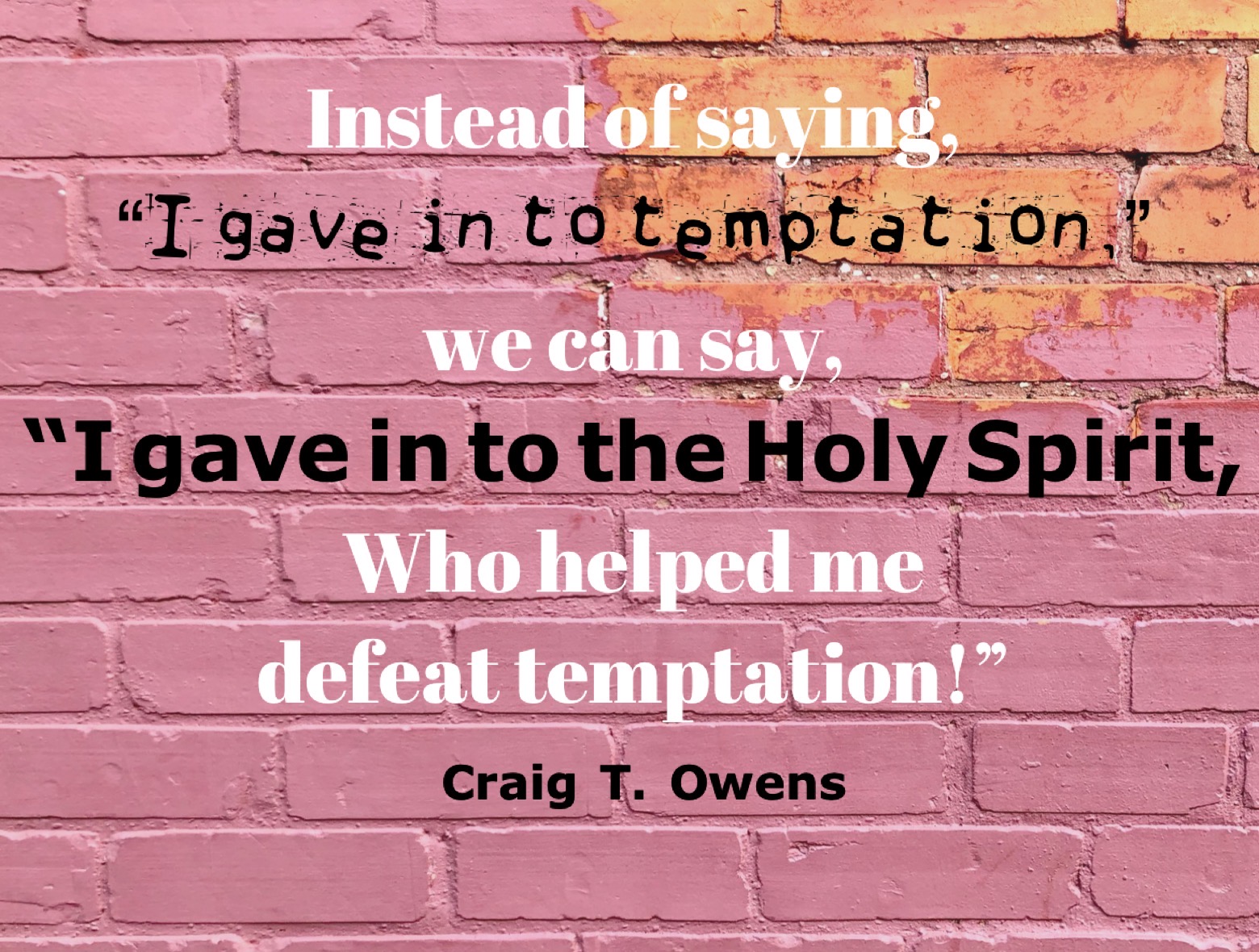
T—Temptation defeater

U—Unfailing truth

V—Visionary

W—Worth more than all my other books

X—Xenografted into my heart (James 1:21)

Y—Yahweh’s love letter to me

Z—Zoe (1 John 1:1)

Go ahead and add your A-to-Z love of God’s Word in the comments…

I also shared a series of 22 messages looking at each of the sections of Psalm 119. You can find the complete list of those messages by clicking here.

Tiger Woods & I Have Something In Common

One part of Tiger Woods’ statement stood out to me this morning:

“I knew my actions were wrong, but I had convinced myself that normal rules did not apply … I thought only about myself…  I thought I could get away with anything I wanted to. … I thought I was entitled….”

This hits me right between the eyes. Because that sounds like… me.

And probably you, too.

I think the biggest stumbling points into sin are:

  • “This won’t hurt me.”
  • “I can handle it.”
  • “I deserve it.”

Tiger’s fame magnified what he did, but only in the eyes of our media and culture. In God’s eyes, my sins are just as painful as Tiger’s. In God’s eyes, my sins hurt my relationships with Him and with others as much as Tiger’s. But here’s the great truth for Tiger Woods, for me, and for you:

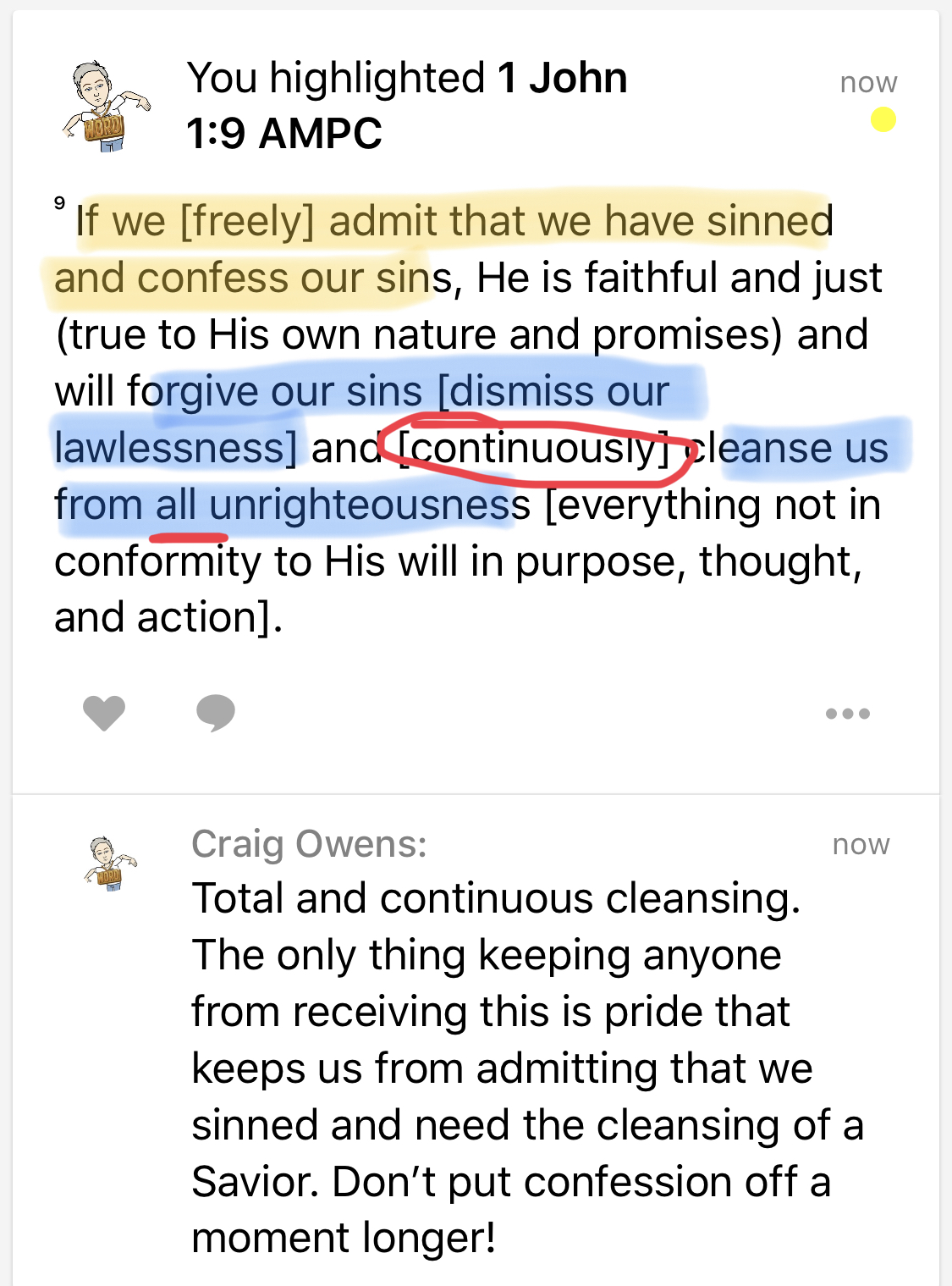
But if we confess our sins to Him, He is faithful and just to forgive us our sins and to cleanse us from ALL wickedness.

I’m glad that I can be forgiven!

Naked Before God

Imagine: You and your wife are the only people on the face of the earth. No bills, no employer, no economic downturn, no kids, no school, no traffic. Just you and God. That was Adam and Eve in the Garden of Eden. The Bible gives this commentary, “Now the man and his wife were both naked, but they felt no shame.”

Nothing to hide from God. Nothing to hide from each other. A perfect relationship with God. A perfect relationship with each other.

Then the temptation, and the bite of the forbidden fruit. Sin enters. Now, something changes when God comes to talk with His favorite couple: “Then the man and his wife heard the sound of God as He was walking in the garden in the cool of the day, and they hid from God among the trees.”

“Why are you hiding from Me?” God asks.

“Uh,” Adam stammers, “because we’re naked.”

Sin made mankind uncomfortable in God’s presence. Sin made them want to hide from God. They knew He was there, but they tried to pretend He wasn’t. This is why I think many of us don’t come into God’s presence in prayer: we’re uncomfortable because of our sin.

We should not run away from God, instead, we should run to Him. “If we confess our sins to Him, He is faithful and just to forgive us our sins and to cleanse us from all wickedness” (1 John 1:9).

What happens when we’re forgiven? We’re re-clothed. God Himself clothes us. He made clothes for Adam and Eve, and He clothes us, too, in the righteous robes of Jesus. “And all who have been united with Christ in baptism have put on Christ, like putting on new clothes” (Galatians 3:27).

And when we’re clothed in Christ, we no longer have to hide from God, nor feel uncomfortable in His presence. Instead, we can “come boldly to the throne of our gracious God. There we will receive His mercy, and we will find grace to help us when we need it most” (see Ephesians 3:12 and Hebrews 4:16).

Perhaps the reason we don’t spend enough time in prayer is that we feel self-conscious, sinful, uncomfortable… naked.

You don’t have to be naked. You can be clothed in Christ. You can enter into God’s presence without shame and find the mercy and grace and help that you need.

Still Learning

I live by the axiom, “If you’re through learning, you’re through.” So I try to learn something new every day.

I just finished a class called New Testament Survey: a quick overview of the 27 books that compromise the New Testament of the Bible. Here’s a couple of interesting factoids I picked up from my studies:

  • The earliest-written book was James. Interesting, because at one point James thought Jesus (his half-brother) was nuts.
  • Only Matthew uses the term kingdom of heaven; all of the other writers use kingdom of God.
  • Mark uses the word immediately more times than anyone else. Perhaps because his source (Peter) was always doing things so quickly… sort of a ready, FIRE!, aim kinda guy.
  • Luke wrote what is called “the global gospel” for everyone, so he included 45 teachings/events that no one else records.
  • John doesn’t record any of Jesus’ parables.
  • John uses the word believe nearly 100 times— way more than any other writer.
  • Luke talks about the Holy Spirit nearly 60 times in the 28 chapters of Acts.
  • Romans is the longest of Paul’s epistles with 7101 words; Philemon is the shortest with just 355 words.
  • With the exception of the pastoral epistles (1 Timothy, 2 Timothy, Titus) Paul’s letters are arranged in the Bible from longest to shortest.
  • In 1 & 2 Thessalonians (only 136 verses) Paul refers to God, Christ, the Holy Spirit, or a combination thereof more than 150 times.
  • Paul gives Timothy seven word pictures to describe the kind of pastor he should be: son, soldier, athlete, farmer, workman, instrument, and servant.
  • Hebrews is called “the book of better things” so better is used 13 times. This word is used only six times in the remaining 26 books of the New Testament.
  • James wrote 108 verses but issues 50+ direct commands.
  • In John’s three short epistles he uses the word know 33 times, and the word dear ten times.

Keep on learning! There’s a lot of good stuff out there. What have you learned lately?

Cheap Trade-Off

During the reign of King Rehoboam in Judah, God’s judgment fell on the land. Because of their sin against Him, God allowed Shishak, the king of Egypt, to plunder Jerusalem. Shishak carried off all of the valuable furnishings of the temple in Jerusalem.

To replace what had been plundered Rehoboam commissioned the casting of shields made of bronze (1 Kings 14:27). Whenever the king went to the temple, all the guards would carry these shiny shields with them, but then immediately after the king left the temple the guards returned their shields to the armory.

It looked good, but it was all a cheat … an imitation … a cheap trade-off.

Looking back a few chapters we read that not only did Rehoboam’s father, King Solomon, make the original shields out of gold, but he made almost everything out of gold. In fact, the Bible says, “Nothing was made of silver, because silver was considered of little value in Solomon’s days.” If silver was of little value, can you imagine how cheap bronze was?!

The temple is plundered. The gold shields—along with anything else of value—are gone, but there is no outcry from Rehoboam or the people, no repentance for their crimes against God, no anger at their sin that allowed Shishak’s raid.

Instead, Rehoboam wanted to try to keep up appearances.

He made bronze shields to look like the stolen gold shields.
He made his trip to the temple a spectacle of pomp and circumstance.
He hid the bronze shields away after he left the temple.

Isn’t this how many people deal with the plundering of their lives? I know I have at times. It seemed so much easier to try to cover up what was lost because of my sin, than to simply admit I sinned, repent of that sin, and ask for God’s merciful forgiveness.

Sure, Rehoboam still looked like he had his act together. But he knew—every time he was on this way to the temple and saw those bronze shields—that he was living a lie. He accepted a cheap trade-off for the real deal.

I am so grateful that, “If we confess our sins, He is faithful and just and will forgive us our sins and purify us from all unrighteousness” (1 John 1:9).

I’m not going to settle for cheap trade-offs anymore. How about you?