Here is Brian Regan at his best! There are some valuable social lessons here…
I thoroughly enjoy photography. Looking at the way a photographer creatively captures his image has always fascinated me, and I’ll never forget the thrill of the first time I developed my own roll of film from my 35mm SLR camera. I’m still learning this art, and Bryan Peterson’s book Learning To See Creatively is a wonderful textbook to help me grow.
Although, it’s really more than just a textbook. The way Bryan walks the reader through the process of seeing the shot, setting up the shot, and processing the shot feels like I was taking a class with him, allowing me to look through his viewfinder with him. This book is chockfull of pictures that are detailed in their account of which lens he used, at what settings, and what point of attraction caught his attention.
God has given us an amazing camera in the eyes He created for us. Learning To See Creatively allows us to capture the way we are seeing the world to share with those around us. What a gift this is! Anyone interested in upping their photographic game will enjoy this book.
I am a Random House book reviewer.
These are sobering words from Charles Spurgeon…
“Men can be so careless about the ruin of men’s souls. Let us hear the cry of ‘Fire! fire!’ in the streets, and our heart is all in trepidation lest some poor creature should be burned alive; but we read of hell, and of the wrath to come, and seldom do our hearts palpitate with any compassionate trembling and fear. If we are on board a vessel, and the shrill cry is heard, ‘Man overboard!’ whoever hears of a passenger wrapping his overcoat around him, and lying down upon a seat to contemplate the exertions of others? But in the church, when we hear of thousands of sinners sinking in the floods of ruin, we behold professed Christians wrapping themselves up in their own security, and calmly looking upon the labours of others, but not even lifting a finger to do any part of the work themselves. If we heard tomorrow in our streets the awful cry, more terrible than fire, the cry of ‘Bread! bread! bread!’ and saw starving women lifting up their perishing children, would we not empty out our stores? Who among us would not spend our substance to let the poor ravenous creatures satisfy the pangs of hunger? And yet, here is the world perishing for lack of knowledge. Here we have them at our doors crying for the bread of heaven, and how many there are that hoard their substance for avarice, give their time to vanity, devote their talents to self-aggrandisement, and centre their thoughts only on the world or the flesh! Oh! could you once see with your eyes a soul sinking into hell, it would be such a spectacle that you would work night and day, and count your life too short and your hours too few for the plucking of brands from the burning.” (emphasis added)
A quick show of hands: How many of you would consider your difficult situations a blessing from God?
Probably not a lot of hands went up, but it’s true.
Peter lists six blessings of God for which we can bless Him (see 1 Peter 1:3-3-9):
Trials?! Yep!
Peter is quick to tell us that trials only last for a little while, but they are sent our way to prove that our faith is genuine. He says that trials result in praise, glory and honor from God to us, and that successfully going through our trials lead to “an inexpressible and glorious joy.”
In trials you probably don’t feel like praising God, but our God-breathed soul is made up of more than just emotions. We also have been given a mind and a will. So here’s what I would suggest—in your trials, use your mind to reflect on the blessings of God. Then use your will to open your mouth. When you you do this, you will experience the emotion of an inexpressible and glorious joy.
In other words: you are more likely to act yourself into feeling than you are you feel yourself into action!
Look at how David did this in Psalm 34. In a huge trial…
Seeing your trials as a way to bless God not only benefits you, but it draws others to God’s sustaining power as well.
If you’ve missed any messages in this series, you may find the complete list by clicking here.
Jackie Hill Perry on how the church can reach those who are LGBT—
Was the Constitution written in a way that was designed to protect freedom and limit the government’s size? Here is how Robert George answers that—
Voddie Baucham talks about how to fight pornography—
Re. Trent Franks makes a passionate appeal for Planned Parenthood to be defunded—
Bobby Conway talks with J. Warner Wallace, a cold case detective, about how he uses his investigative skills to examine the existence of God—
“Average” is what the failures claim to be when their family and friends ask them why they are not more successful.
This is a post for my fellow preachers (but the rest of you are free to listen in as well).
When Jesus says someone is the greatest preacher in history, it gets my full attention. Think about what John didn’t have…
He only had the Word of God and the Holy Spirit.
His sermons were thoroughly grounded in Scripture (Luke 3:4-6).
His sermons were anointed by the Holy Spirit (Luke 1:66).
His message was simple: “Repent from your sins, and produce fruit in keeping with repentance” (Luke 3:3, 8).
His messages prompted people to ask, “What should we do?” and he gave them Spirit-anointed answers (Luke 3:10-14).
His messages “exhorted the people” and brought “the good news to them” (Luke 3:18).
His sermons unashamedly called out sin (Luke 3:19).
And he will go on before the Lord, in the spirit and power of Elijah, to turn the hearts of the fathers to their children and the disobedient to the wisdom of the righteous—to make ready a people prepared for the Lord. (Luke 1:17)
Fellow preachers, may we be of the same spirit in our preaching!
We are two weeks into our series called Aliens and Strangers, in which we are looking at the book of 1 Peter on how Christians are to live as citizens of Heaven. I have greatly appreciated John Piper’s teaching called “Look At The Book,” where the Scripture is front-and-center.
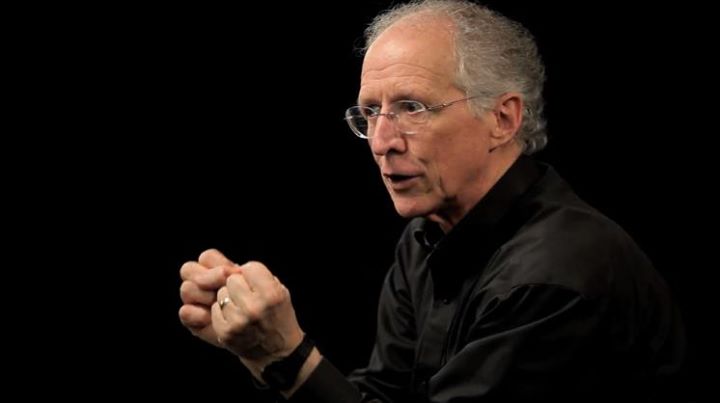
Pastor Piper has just begun a series on 1 Peter as well. Here is his introduction to this book—
If you are in the Cedar Springs area and don’t have a home church, I would love for you to visit us this Sunday morning. If you cannot make it in person, please tune-in via Periscope (search for @craigtowens) at 10:30am.
Keep Your Love On! is an outstanding resource for anyone who wants to repair or strengthen a relationship. As I said in my book review, I think pastors and marriage counselors should definitely get a copy of this book. Here are a few more quotes.
“If you want to preserve relationships, then you must learn to respond instead of react to fear and pain. Responding does not come naturally. You can react without thinking, but you cannot respond without training your mind to think, your will to choose, and your body to obey. … Powerful people are not slaves to their instincts. Powerful people can respond with love in the face of pain and fear. This ‘response-ability’ is essential to building healthy relationships.”
“If you were raised with a powerless, fear-driven mindset based on the belief that you can control people and they can control you, then you will naturally perceive God as a controlling Punisher. You will take the laws of the Old Testament—all the verses and stories about wrath, judgment, and the fear of the Lord—and conclude, ‘See, God wants to control us, and we need to be controlled.’ … The problem is that the Bible doesn’t show us a God Who is pursuing the goal of distance between Himself and a bunch of scary sinners. Instead, the Bible reveals a God Who is relentlessly closing that distance and paying the ultimate price to repair the disconnection we created in our relationship.”
“Fear and love are enemies. They come from two opposing kingdoms. Fear comes from the devil, who would like nothing more than to keep you permanently disconnected and isolated. Love comes from God, Who is always working to heal and restore your connection with Him and other people and bring you into healthy, life-giving relationships. … When Paul told Timothy that the spirit of love is also the spirit of power and a sound mind, he implied that its opposite, the spirit of fear, is the spirit of powerlessness and a weak, divided mind. When you grow up partnering with the spirit of fear, as most of us do, you learn to simply hand over your brain and your power, letting fear take control. But as soon as you decide to partner with the spirit of love, you have to think and make powerful choices.”
“Do you want to win the battle between fear and love in your relationships? You can start by making these two fundamental commitments: (1) It’s my job to control myself. I do not get to control other people. (2) My number-one goal and priority in relationships is building and protecting connection.”
“Each display of love, no matter how seemingly small, is a powerful act of spiritual warfare that removes anxiety from the environment, replaces it with freedom and safety, and invites each person to bring his or her best self forward in the relationship.”
“True honor is the practice of two powerful people putting one another before themselves, empowering one another, working together to meet one another’s needs, and adjusting as necessary in order to move together toward the shared goal of the relationship.”
“In order for us to practice self-control, we must have a goal. We must have something we are saying ‘Yes’ to, which necessarily comes with things that we must say ‘No’ to. … When we find ourselves with more freedom than self-control, then that freedom erodes the quality of our life and friendships. Self-control is what allows us to manage increasing levels of freedom in our life and relationships.”
“When you put a person in the position of God, you set him or her up for failure. … Mysterious as it is, making ourselves accountable to God and putting ourselves under His authority is the only way we can become powerful and learn to govern ourselves. … When two people are consistently pursuing a connection with the Perfect One, that connection will set the pace for their connection with each other. They will be learning to love from Love Himself, which can only bring the best into their relationship.”
“The faster you can get to the question, ‘What do you need?’ the faster you can start doing something about it. Unfortunately, because many people are not used to being listened to, they don’t know what they need, or how to communicate it. They think they have to present a solid case for someone to help them, agree with them, or change for them.”
You can read the the first batch of quotes I shared here.
My book review is posted here.