“God has called His Church into existence to be a Body so filled with His presence, so luminous with His glory, so moved by His goodness and love, and so empowered by His Spirit, that the peoples of the world will be eager to learn from the Church how they, too, might become part of such an admirable and praiseworthy endeavor (cf. Micah 4:1-8). God intends to make His Church an object of the world’s praise. And to do this, He is placing people on the walls, so that they can see the world as it exists without, and the community of faith as it struggles within; and so that, elevated above both, they can cry out day and night, taking no rest and giving Him no rest, until He does what He intends to do in making His Church a praise in the earth once again [Isaiah 62:6-7]. … When it comes to seeing God’s people revived, His churches renewed, and the world awakened for the Gospel, the power of God will flow in response to the prayers of His faithful people, or it will not flow at all.” —T.M. Moore
This is a weekly series with things I’m reading and pondering from Oswald Chambers. You can read the original seed thought here, or type “Thursdays With Oswald” in the search box to read more entries.
A Dangerous (But Vital) Prayer
No one but a fool or a sincere soul would ever pray this prayer—‘Search me, O God’ [Psalm 139:23-24] … Any soul who prays that prayer will be answered. …
If you want to know what the scrutiny of God is like, listen to Jesus Christ: “For from within, out of the heart of man, evil thoughts proceed…” [Matthew 15:19], and then follows a rugged catalog of things few of us know anything about in conscious life, consequently we are apt to be indignant and resent Jesus Christ’s diagnosis—“I have never felt like a murderer, or an adulterer, therefore those things cannot be in me.” To talk in that way is proof that we are grossly ignorant of ourselves. If we prefer to trust our ignorant innocence we pass a verdict on the only Master of the human heart there is, we tell Him He does not know what He is talking about. The one right thing to do is to listen to Jesus Christ and then hand our hearts over to God to be searched and guarded, and filled with the Holy Spirit. …
Jesus Christ has undertaken through His Redemption to put into us a heart so pure that God Almighty can see nothing to censure in it, and the Holy Spirit searches us not only to make us know the possibilities of iniquity in our heart, but to make us “unblameable in holiness” in His sight.
From The Soul Of A Christian
Are you willing to really pray this prayer, listen to what the Holy Spirit says, and then allow Christ’s work of redemption to make you unblameable in holiness?
Or, Chambers asks, “Are we willing to let God scrutinize us, or are we doing the worst of all things, trying to justify ourselves?”
It’s your choice.
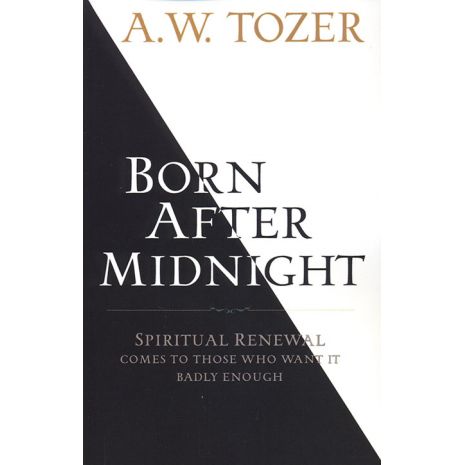
A.W. Tozer’s writings are nearly five decades old, but they still ring with prophetic truth for this generation. Check out my book review of Born After Midnight by clicking here. Below are a few of the quotes from this book.
“It may be said without qualification that every man is as holy and as full of the Spirit as he wants to be. He may not be as full as he wishes he were, but he is most certainly as full as he wants to be. … The problem is not to persuade God to fill us, but to want God sufficiently to permit Him to do so.”
“In of book of Acts, faith was for each believer a beginning, not an end; it was a journey, not a bed in which to lie while waiting for the day of our Lord’s triumph. Believing was not a once-done act; it was more than an act, it was an attitude of heart and mind that inspired and enabled the believer to take up his cross and follow the Lamb whithersoever He went.”
“I am afraid we modern Christians are long on talk and short on conduct. … Our Lord and His apostles were long on deeds. The Gospels depict a Man walking in power, ‘who went about doing good, and healing all that were oppressed of the devil; for God was with Him’ (Acts 10:38). The moral relation between words and deeds appears quite plainly in the life and teachings of Christ; He did before He spoke, and all the doing gave validity to the speaking.”
“We settle for words in religion because deeds are too costly. It is easier to pray, ‘Lord, help me to carry my cross daily’ than to pick up the cross and carry it.”
“‘Whoever will be great among you, let him be your minister,’ said our Lord (Matthew 20:26), and from these words, we may properly conclude (and the context strongly supports the conclusion) that there is nothing wrong with the desire to be great provided (1) we seek the right kind of greatness; (2) we allow God to decide what is greatness; (3) we are willing to pay the full price that greatness demands; and (4) we are content to wait for the judgment of God to settle the whole matter of who is great at last.”
“God may allow his servant to succeed when He has disciplined him to a point where he does not need to succeed to be happy. The man who is elated by success and cast down by failure is still a carnal man. … God will allow His servant to succeed when he has learned that success does not make him dearer to God nor more valuable in the total scheme of things.”
“While we cannot determine circumstances, we can determine our reaction to them. And there is where the battle is to be fought and the victory won.”
“To ‘accept the universe’ does not mean that we are to accept evil conditions as inevitable and make no effort to improve them. So to teach would be to cancel the plain teaching of the Scriptures on that point. Where a situation is contrary to the will of God, and there are clear promises concerning it in the Scriptures, it is our privilege and obligation to pray and labor to bring about change.”
More quotes from this book are coming soon…
A.W. Tozer spoke and wrote with a prophet’s voice. Though many of his books are nearly a half-century old, they ring with a timely message to which the church today must take heed. Tozer’s Born After Midnight is one of his most hard-hitting, but needed messages.
Tozer notes that many revivals in church history were born after midnight. Not that there is anything super-spiritual that takes place in the wee hours of the morning, but really this is a call to perseverance. Tozer spoke out strongly against cushy Christianity, against those who thought becoming a Christian was their key to an easy life, or those who expected God to work for them.
Those Christians who are ready to roll up their sleeves and go to work for Christ, Tozer preached, were those who were more in line with the very first Christians of the Bible. Tozer reminds us that “taking up a cross” to follow Jesus isn’t popular, nor is it a road to accolades from the world. But those who will persevere with Christ—even working late into the hours after midnight—will reap the blessings of God’s presence.
A.W. Tozer pulls no punches, but he doesn’t purposefully go out of his way to wound people either. His tone is both confident and humble. Listen to his words as he opens this book:
“To sit even for a moment in the chair of the teacher and write that which may affect the life and character of numerous persons is not only a lofty privilege but a grave responsibility as well.
“The only qualifications I bring to the writing of these pages are love for the Triune Godhead and a sorrowful concern for the spiritual welfare of the church, which our Lord purchased with His own blood.
“If there is anything here good or helpful to the children of God, it must be attributed to the operation of the Holy Spirit who often condescends to work through unworthy instruments. Whatever else may be found here is due to human weakness and is better forgotten.”
This is a fantastic book for our age, and I urge all Christians to read it.
I am a Moody Press book reviewer.
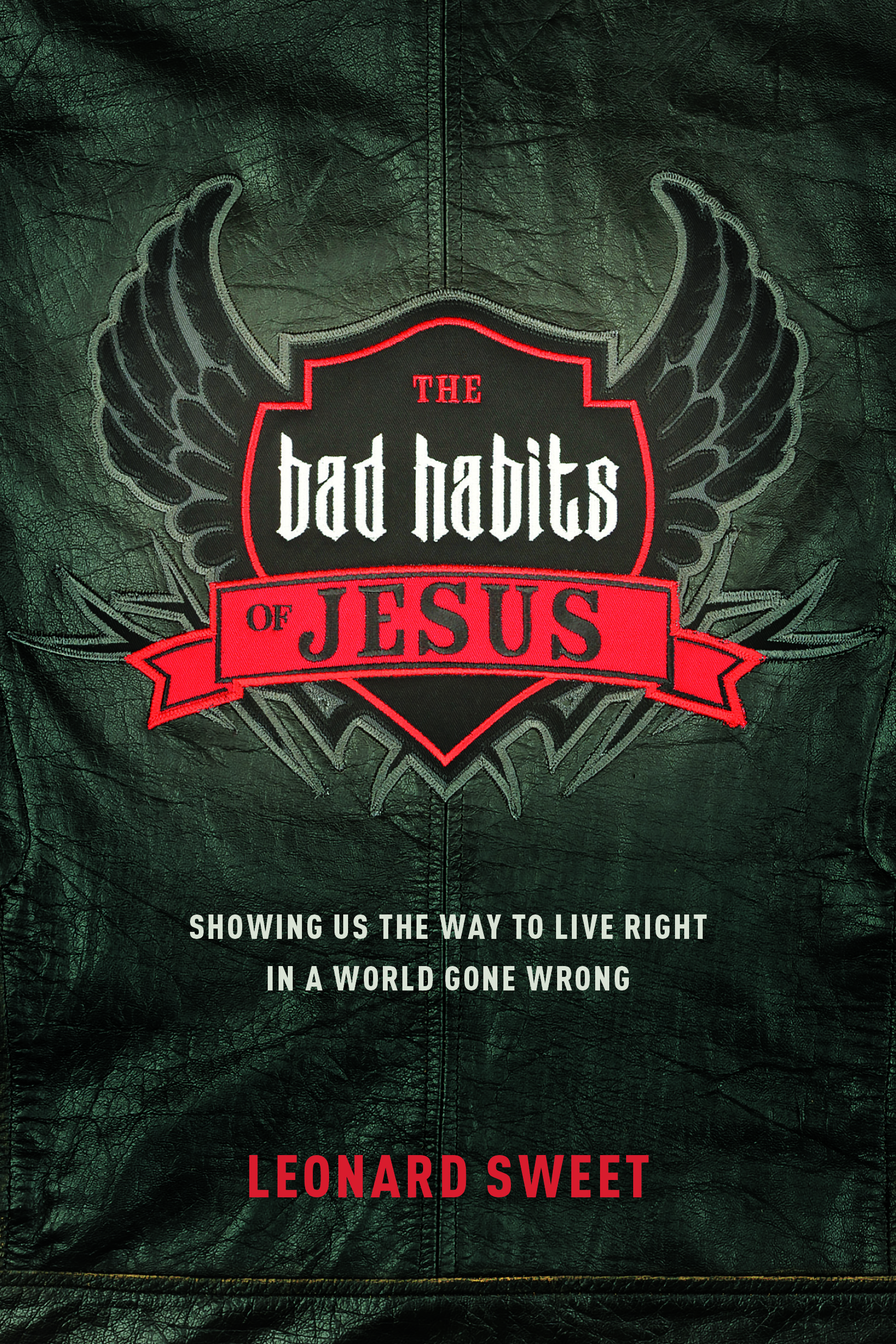
“Jesus’ prayer time was not alone time but Father time. He was always escaping into boats, up mountains, to the water, into the desert—anywhere to grab a moment with God. These were not retreats. These were advances. The soul needs two things as a tree needs water and light: solitude and society. Together they form a barbell that the soul lifts to get strong and healthy.
“Solitude is not solo time but time with God. Solitude is a relationship word, another name for a relationship with the self and with the Source. Solitude is not a time-out from relationships, for relationship is central to solitude. Aloneness is not soulful sophistry but sophistication and maturity of relationship with God. A lot of ‘spiritual problems’ are not struggles with God but with self. A lot of mental torments and tossing and turnings of the soul could be solved by a good night’s sleep … or a good day’s diet … or a good long walk … or a good hug … or some deep solitude. But true spiritual struggle needs God-time.” —Leonard Sweet, The Bad Habits Of Jesus
For more quotes from this book click here and here.
All throughout the Old Testament we find hints about Jesus. Then as the New Testament dawns, the brilliant light of Jesus makes sense of all the hints we had previously seen.
One of the way God hints at the arrival of Jesus and what He would do for mankind is found in the names of people. Hebrew names are interesting things. Sometimes they are quite literal. For instance…
At other times God tells parents what to name their babies before they are born. These names tell a story in themselves of what is coming…
But what is most interesting to me is when God changes someone’s name to reflect the new nature in their life.
Abram’s name meant exalted father, but God changed his name to Abraham, which means father of a multitude. His wife’s birth name was Sarai (princess) and it was changed to Sarah (a noble woman).
In these name changes, two things happened (see Genesis 17:1-15):
As you follow Abraham and Sarah’s descendants, you will see time and time again God reminding people: You can’t do it on your own. You must have Me in you in order to live the life I have for you!
Hoshea was born as an Israelite slave in Egypt, yet his parents gave him this name that means deliverer. Before God could use Hoshea to bring the Israelites into the Promised Land, He first changed his name to Joshua, which means God is the ultimate deliverer.
Joshua in the BC Hebrew language is the same as Jesus in the AD Greek language.
Jesus Christ is the ultimate example of being able to fully deliver people not just from physical slavery, but from the eternal consequences of sin. Man cannot save himself, but Jesus Christ can.
That’s why when you surrender to Christ and allow Him to be your Lord and Master, He puts His name in you: CHRISTian! A new name, and a brand new nature because of what it means to have Christ in you.
Check out this video where I explain the cool story behind more name changes—
“We can simply pour from the fullness of our heart the burdens of our spirit and the sorrow that seems to crush us. We can know that God hears, loves, understands, receives, and separates from our prayer everything that is in error, imperfect, or wrong. And then He presents the remainder, along with the incense of the great High Priest, before His throne on high.
“We may be assured that our prayer is heard, accepted, and answered in Christ’s name. … Do we truly know the power of our supernatural weapon of prayer? Do we dare to use it with the authority of a faith that not only asks but also commands? God baptizes us with holy boldness and divine confidence, for He is looking not for great people but for people who will dare to prove the greatness of their God!” —A.B. Simpson
[see Romans 8:26-27; Psalm 141:2; Revelation 5:8, 8:3-4]
This is a weekly series with things I’m reading and pondering from Oswald Chambers. You can read the original seed thought here, or type “Thursdays With Oswald” in the search box to read more entries.
Your Peace Vs. True Peace
Conviction of sin is the realization that my natural life is based on a disposition that will not have Jesus Christ. The Gospel does not present what the natural man wants but what he needs, and the Gospel awakens an intense resentment as well as an intense craving. …
If I am peaceful and happy and contented and living my life with my morality well within my own grasp, why does the Holy Spirit need to come in and upset the balance and make me miserable and unfit for anything? It is time we asked ourselves these questions. God’s Book gives us the answer. Thank God, we are coming to the end of the shallow presentation of Christianity that makes out that Jesus Christ came only to give us peace. Thousands of people are happy without God in this world, but that kind of happiness and peace is on a wrong level. Jesus Christ came to send a sword through every peace that is not based on a personal relationship to Himself. He came to put us right with God that His own peace might reign. …
If once we have allowed Jesus Christ to upset the equilibrium, holiness is the inevitable result, or no peace forever. …
Before the Spirit of God can bring peace of mind He has to clear out the rubbish, and before He can do that He has to give us an idea of what rubbish there is.
From The Soul Of A Christian
Jesus said, “Do not suppose that I have come to bring peace to the earth. I did not come to bring peace, but a sword” (Matthew 10:34).
The Apostle Paul also noted that he was perfectly happy living his life as he was, until he read in the Scripture that the way he was happily living was actually sinful. And once he realized that, the sin actually became harder to break (see Romans 7:7-20).
Oswald Chambers reminds us of the same fact: God wants to upset anything on which we have based our peace that is not rooted in Him. He wants to make us aware of our trust in other sources, our wrong beliefs, our human-based equilibrium. In short, He wants to show us the rubbish in our life so that He can help us clear out that rubbish and know true peace!
Will you let Him disturb your peace so you can know true peace?