Some of the most formative leadership books I read early in my leadership journey were written by J. Oswald Sanders. Books like Spiritual Maturity and Spiritual Leadership. It’s my desire to be a lifelong learner, and in that pursuit, I need an external, objective source to help keep me on track. Sanders’ book A Spiritual Clinic is just the check-up I needed!
In the physical world, we may get a check-up from our primary care physician, a counseling session with a mental health professional, or perhaps a regular check-up with a spiritual advisor like a pastor or mentor. All of these are healthy if they are all grounded in the principles in God’s Word.
Sanders brings us to his spiritual clinic for a well-rounded check-up of our spiritual leadership. He says, “[This book’s] thesis is that the complex strains and problems which the Christian worker encounters in the contemporary world find their answer, not in tranquilizers or stimulants, but in a correct understanding and application of scriptural principles, and effectiveness in Christian work is the natural outcome of conformity to spiritual laws enunciated in the Scriptures.”
So “doctor” Sanders holds up the mirror of God’s Word to our activities to see how we are performing in light of God’s standards. He addresses topics like stress, learning, suffering, depression, spiritual ups-and-downs, and our conscience. He zeros-in on leadership topics like ambition, authority, discipleship, use of time, and understanding God’s calling.
Each chapter is short but packed with so many principles that it should take you quite a while to evaluate and implement. This is time well spent!
My dear friends Josh and Judy are moving. They feel like God has been calling them to Nebraska, and I affirm that God is directing them into this new chapter for their lives. I will miss them dearly, but I know God has indeed called them.
During times like this many people will often ask, “How do I know that God is directing me?”
In the Bible we see God speaking to people in several ways:
The Holy Spirit is a Person. He is described as having a mind, a will, and emotions. Although He doesn’t have a physical body, He is still a Person. Just like any person you could get to know, you can get to know the Holy Spirit more and more personally, becoming increasingly more acquainted with His voice.
All of us are unique individuals. God has never, ever duplicated a person. Your combination of genes, talents, personality, and personal experiences make you a one-of-a-kind in all of human history. That means that God speaks uniquely to each of us.
Even though the exact manner God will speak to us will be unique, there are some clear principles that we can know from the Bible.
1. Humbly listen for God’s voice.
Solomon wrote, “Trust in the Lord with all your heart and lean not on your own understanding; in all your ways acknowledge Him, and He will make your paths straight” (Proverbs 3:5-6). Let me unpack three key phrases:
lean not on your own understanding really means humbly exchanging an “I know best” posture for a “God, You know best” posture.
acknowledge Him is the Hebrew word yada. This word means knowledge that comes from personal experience. This is where you act on something you think the Holy Spirit is saying to you and then evaluate it. It’s how you get to know the Person of the Holy Spirit better and better.
He will make straight your paths might be better stated, “He will make your paths agreeable to His will.” In other words, you begin to feel in-sync with the Holy Spirit. The opposite of this would be grieving the Holy Spirit, where you feel out-of-step with God.
2. Consult with godly friends.
In Acts 16, the apostle Paul and his companions are attempting to go into new territories to share the good news about Jesus but Luke records twice that the Holy Spirit wouldn’t allow them. Perhaps they felt out-of-sync with the Spirit when they attempted to make their plans. Ultimately, God did open a door for them to move forward and Luke writes, “Concluding that God had called us.” Notice that word “us.” Paul shared his heart with his godly friends and they affirmed God’s voice, much as I affirmed the call on Josh and Judy’s lives in their move.
3. Don’t be overly concerned about making a mistake.
In Romans 8, Paul reminds us that God is working all things together for your good and for His glory. “All things” means even your mistakes—like not noticing that the Spirit was prompting you to move, or perhaps temporarily heading down a wrong path. The Holy Spirit can help you look back and see how these experiences have prepared you for your present moment. Even those missteps can be used for God’s glory. But most importantly, those missteps have never diminished God’s love for you!
Your journey will be unique from everyone else’s journey, but these three principles are applicable to everyone who wants to walk in the paths God has set for them.
Here’s the seed thought for this episode of Think On This…
Do to others what you would like them to do to you. (Matthew 7:12)
Think on this: Do I apply the Golden Rule negatively (just trying to avoid offending)? Or do I apply it positively (creatively trying to find ways to help others)?
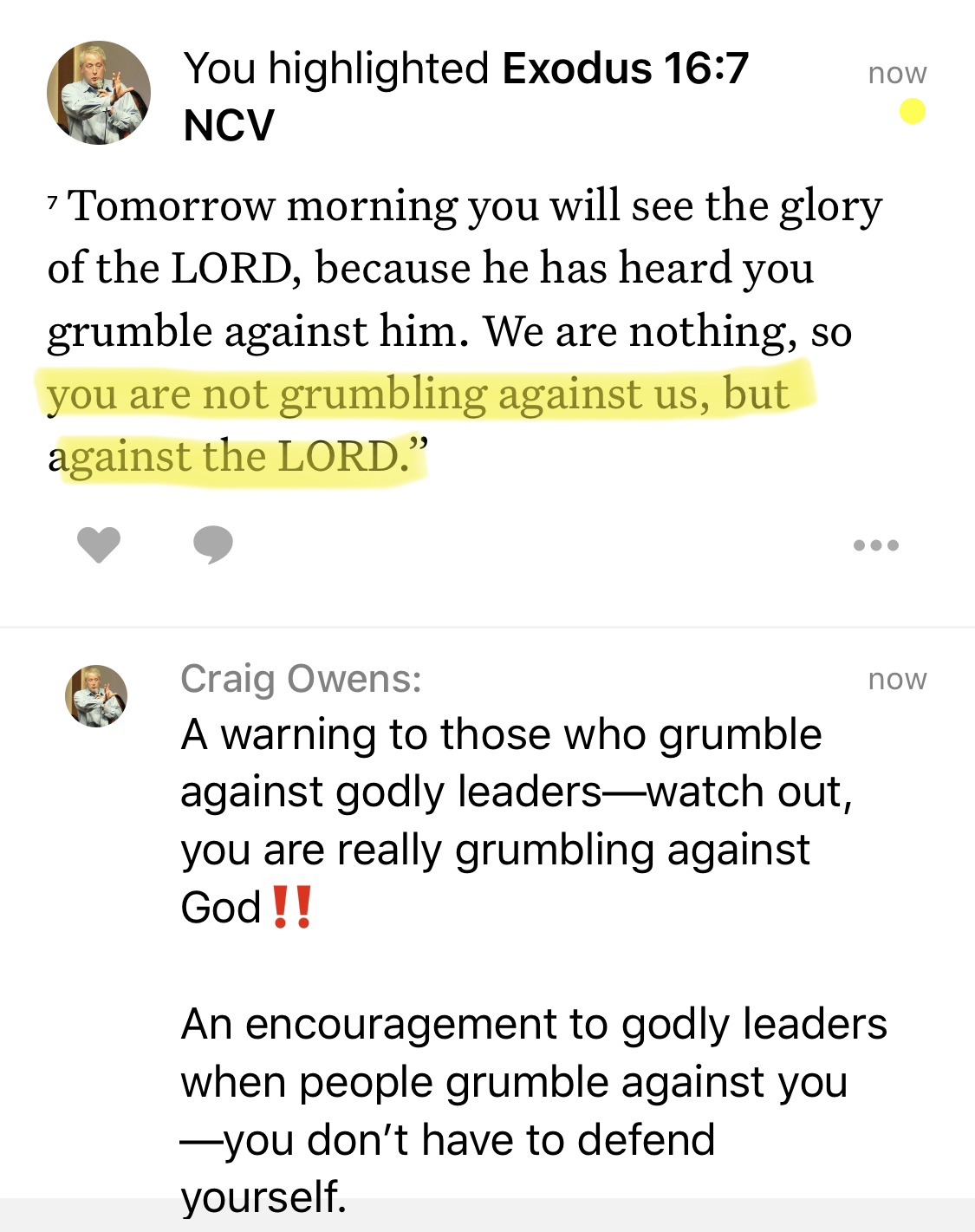
It seems like these two things go together: leadership and grumbling. Sadly, it is usually an ugly, downward spiral: people grumble against those in leadership, the leaders feel the need to defend themselves and typically respond angrily, which causes even more grumbling against those in leadership. And down goes the spiral!
It doesn’t have to be this way. And it should neverbe this way among Christians!
Grumbling can be deadly for grumblers, but it doesn’t have to be for godly leaders.
(What does it mean to be a “godly leader”? I have an ongoing series of posts with the consistent theme “A mark of a godly leader is…” catalogued here.)
This is a weekly series with things I’m reading and pondering from Charles Spurgeon. You can read the original seed thought here, or type “Thursdays With Spurgeon” in the search box to read more entries.
Getting Into The Truth
The difficulty is the truth is not so easy to discover. There is no man born in this world by nature who has the truth in his heart. … Then since we are not born with the truth, we have the task of searching for it. … But here is the difficulty, that we cannot follow without a guide the winding path of truth. Why is this?
First, because of the very great intricacy of truth itself. Truth itself is no easy thing to discover. … The most earnest student of Scripture will find things in the Bible that puzzle him. However earnestly he reads it, he will see some mysteries too deep for him to understand. He will cry out, ‘Truth! I cannot find you.’ … But we bless God it is said, ‘When the Spirit of truth has come, He will guide you into all truth’ [John 16:13]. …
We also need a guide because we are so prone to go astray. … David says, ‘I have gone astray like a lost sheep’ (Psalm 119:176). … If grace did not guide a man, he would go astray though there were hand-posts all the way to heaven.
The ‘Spirit of truth’ [is] not an influence or an emanation but actually a Person. ‘When the Spirit of truth has come, He will guide you into all truth.’ … He is infallible. … He is ever-present. …
Man can guide us to a truth, but it is only the Holy Spirit who can guide us into a truth. ‘When He, the Spirit of trying has come, He will guide you into’—mark that word—‘truth.’ … You may be brought to a chamber where there is an abundance of gold and silver, but you will be no richer unless you effect an entrance. It is the Holy Spirit’s work to unbar the two-leaved gates and bring us into a truth so we may get inside it.
From The Holy Spirit: The Great Teacher
I have often said that the greatest Expositor of Scripture is the Holy Spirit. He is the One who inspired the biblical authors, and He is also the One living in a Christian to illuminate the biblical texts.
Before you open your Bible, pray this prayer from the psalms, “Open my eyes to see wonderful things in Your Word” (Psalm 119:18). And then listen to the Spirit’s voice as He takes you into the truth that will enrich your life and bring God greater glory. Just like those first Christians who were baptized in the Holy Spirit became skilled in their understanding of Scripture, you can experience the exact same thing today!
I have a whole series of messages on the power of Pentecostal Christians that you can read by clicking here and here.
…Ben-Hadad king of Aram mobilized his entire army … [King Joram said] “May God deal with me, be it ever so severely, if the head of Elisha son of Shaphat remains on his shoulders today” (2 Kings 6:24, 31).
Two kings who both think that their overwhelming force can override God’s plan.
Ben-Hadad had already experienced God’s power when his previous plans were disclosed by God to Elisha, and when his “strong force” has been thwarted by God’s power (vv. 8-10, 14-20). As a result, Ben-Hadad temporarily stopped sending his small raiding parties into Israel. Now, he somehow believes that sending his “entire army” can overwhelm God’s plan?!
King Joram also had first-hand experience is of God’s power. Not only in the above incident with King Ben-Hadad, but also in the desert when God miraculously provided water for his army. Now, he somehow thinks “this disaster is from the Lord” and Elisha is the cause. He thinks that killing Elisha will somehow intimidate God into lifting the Aramean siege?!
Here are the facts:
God brought the Aramaeans together to demonstrate His power.
God left Israel without any resources on their own to demonstrate His power.
God foretold events yet to come through Elisha to demonstrate His power.
And then God fully demonstrated His power!
God’s plans can never be overruled. That means that when I place my trust in God, I can never be overwhelmed by the enemy’s plans.
No matter the circumstances, God is in control. Let me say that again: GOD IS IN CONTROL.
God will demonstrate His unequaled love and His unmatched power at just the right moment. He will bring about “a day of good news” and superabundance for all who fear and trust Him (7:9, 16).
Don’t ever despair, no matter how dark the battle is. Don’t ever try to coerce God into doing something you want Him to do. Don’t ever become frustrated with God’s timing. Only wait in eager expectation for His answer: His all-loving, all-powerful answer.
God is never overruled so you are never overwhelmed!
I have been friends with Greg Heeres for nearly 30 years. During that time we have truly lived out the truism from wise King Solomon, “As iron sharpens iron, so a friend sharpens a friend.”
Greg and I have partnered together on both for-profit and non-profit ventures. We learned together, sharpened each other, and are both better off because of our close friendship.
Now it’s time for us to give back to others.
I’m so excited to announce a new podcast series we are launching on YouTube in just a couple of weeks. It’s called “The Craig And Greg Show.” We are passionate about investing in emerging leaders so each podcast is a short conversation designed to help sharpen leaders.
Check out the Maximize Leadership channel—both our website and our YouTube channel. Be sure to subscribe and click the bell on YouTube so that you are notified when each episode posts.
You can also get in touch with us through Twitter and Facebook.
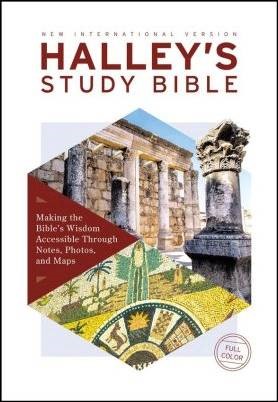
I believe Halley’s Bible Handbook may have been the first Bible study resource I got my hands on when I was a pre-teen. It was a slender book but packed with insights that even this third-generation Pentecostal boy hadn’t heard before. So I was quite intrigued when I heard about Halley’s Study Bible.
Let me get something out of the way right upfront. I’m a blogger for the BibleGateway Blogger Grid (sometimes called #bgbg2 on Twitter), so I’m occasionally offered a free book in exchange for my honest book review. However, there are more books that I pass on than books I agree to review. Since I am already working my way through the Faithlife Illustrated Study Bible, I wasn’t too eager to dive into another study Bible just yet. But I’m so glad I did!
Reading Henry Halley’s concise overview of each book of the Bible was nostalgic for me, reminding me of what initially intrigued about his handbook: taking voluminous information and giving such a clear, concise overview.
The study notes on each page offer fascinating insights, and the unique perspective Halley offers of the people, places, and practices chronicled in the pages of Scripture are unparalleled. And what I especially appreciate is Halley’s whole-Bible approach. By that, I mean his ability to show you a theme that originates in the Old Testament and finds its fulfillment in the New Testament, showing how all of the Bible is interconnected.
If you are looking for a new way to study your Bible, I highly recommend Halley’s Study Bible to you.
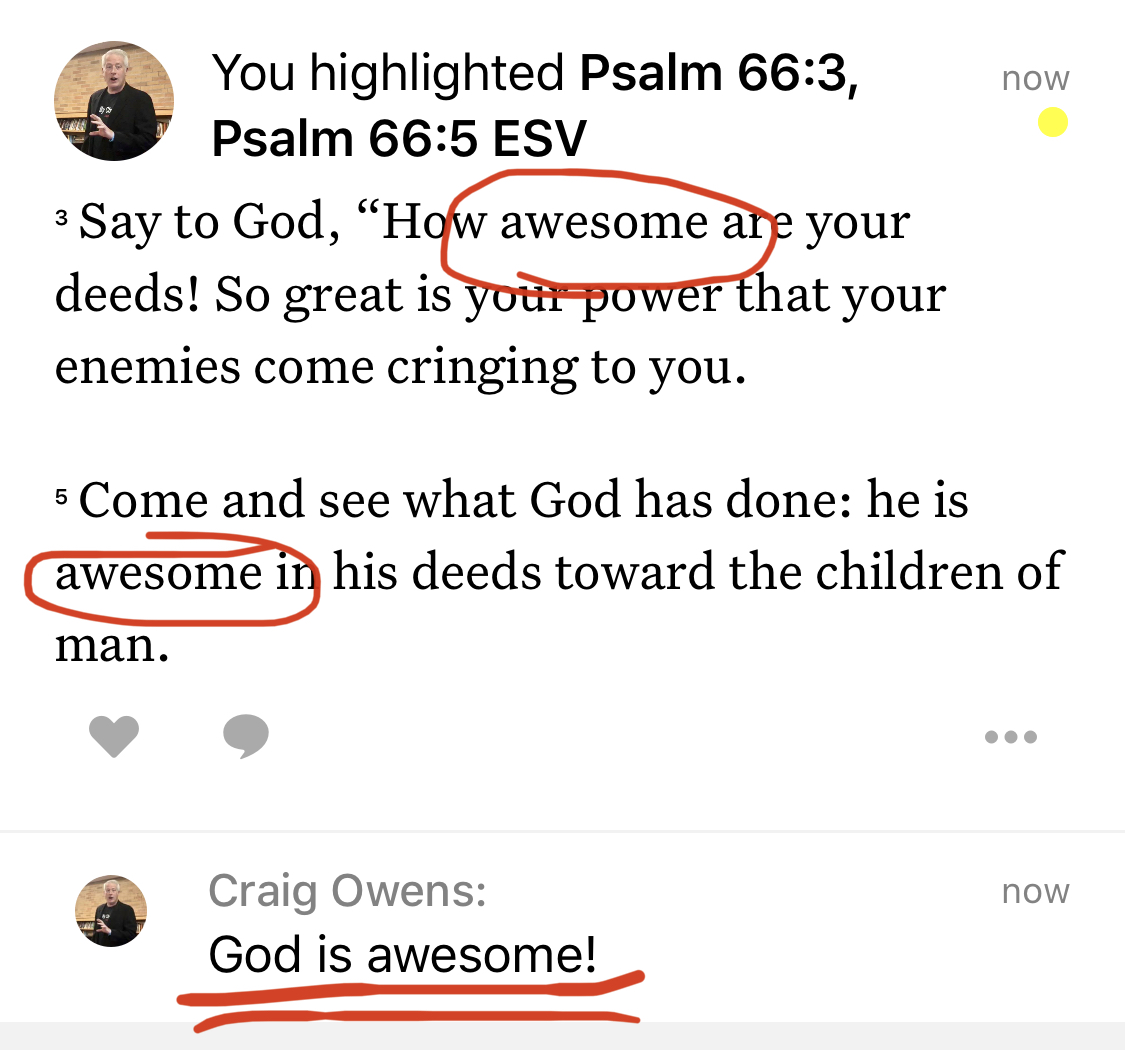
As my friend Josh Schram led us through Psalm 66 in our Selah series, I was reminded how our worship of God—especially in our trials—canleave a godly legacy that crosses generations and continents.
There are three Selahs in this psalm. Remember that Selah is a call to pause to consider the impact of what the inspired biblical text just said to us. The Selahs in this psalm are surrounded by praise to God, as well as the impact of that praise.
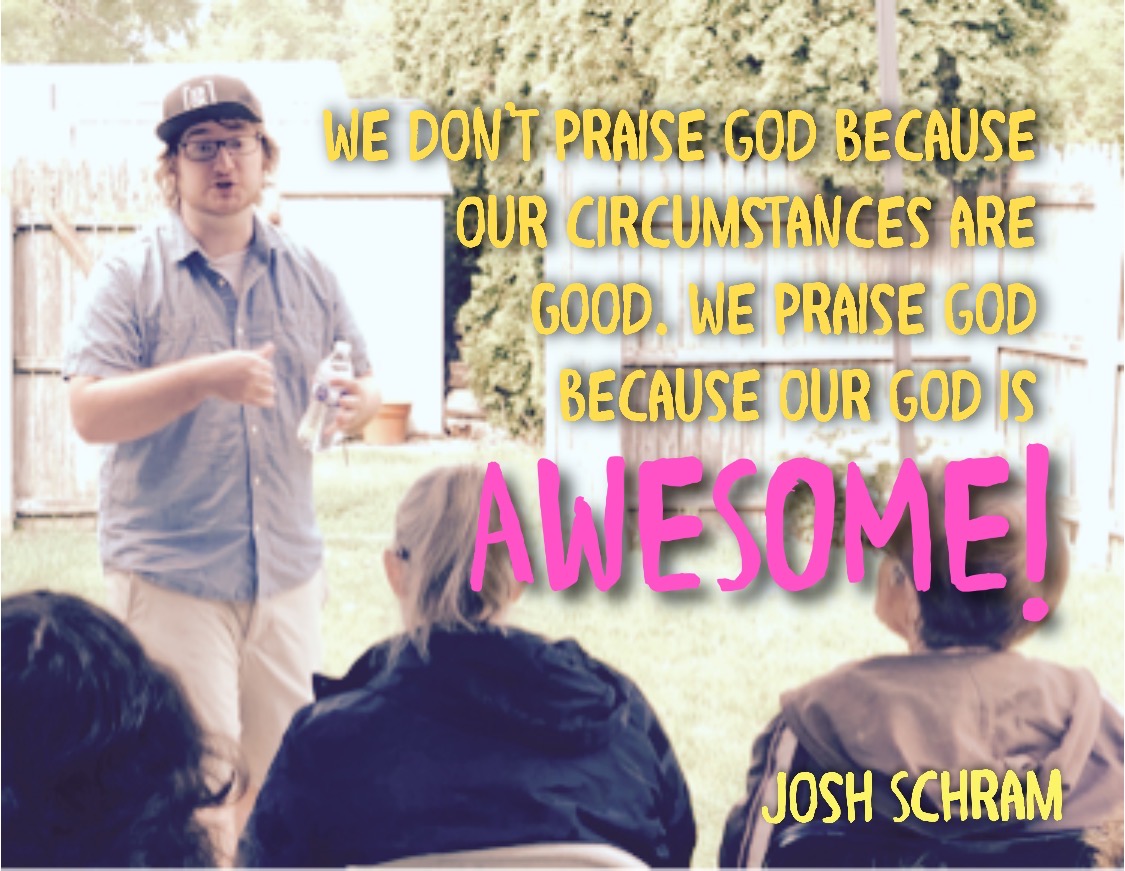
“We don’t praise God because our circumstances are good. We praise God because our God is awesome!” —Josh Schram
Psalm 66 could be briefly outlined like this:
We say to God, “How awesome are Your deeds!”
Selah—pause to ponder how awesome God is.
We say to others, “Come and see the awesome things God has done!”
Selah—pause to let our worship of God impact others.
Others join with us in saying, “God is worthy to be praised!”
Selah—pause and rejoice as their praise to God reverberates.
Now we can say to an even larger audience, “Come and listen to the awesome things God has done!”
Notice that our praise of God—despite the circumstances we’re in—makes all of the other steps possible.
“Come and see my life of praise” (v. 3) precedes the opportunity to say, “Come and listen to my testimony” (v. 5). In other words, we live out our love for God and earn the right to speak out to others about our love for God.
They are thrown in prison on sham charges and they still are about to sing through their physical pain, “How awesome is our God!”
God sends an earthquake that breaks off their shackles and opens the prison doors.
The jailer asks how he also can have this kind of relationship with Jesus.
Paul and Silas have the opportunity to say to him and his family, “Come and listen.”
The jailer and his family accept Jesus as their Savior.
But it’s not just this jailer. Luke wrote that the other prisoners were also listening to Paul and Silas sing about their awesome God. Through the jailer and perhaps some of these prisoners, a church was started in Philippi.
Later on, Paul would write to this church about their partnership in ministry, and he would write to the Corinthian church about the amazing missions generosity of the Philippian church (see Philippians 1:3-5; 2 Corinthians 8:1-2). That’s what I mean about leaving a godly legacy that crosses generations and continents.
God is worthy to be praised! Let others hear you saying, “God is awesome” even in the midst of your painful trials, and you, too, will earn the opportunity to say to them, “Come and listen as I tell you how awesome it is to be in a relationship with God through His Son Jesus!” You can be a part of this godly legacy in your community.



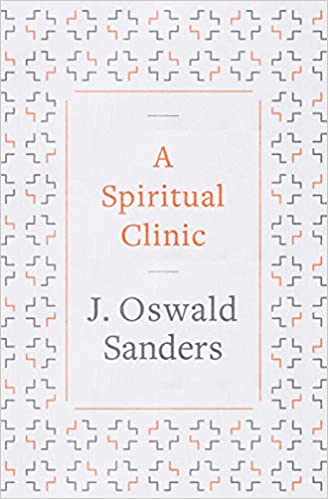 Some of the most formative leadership books I read early in my leadership journey were written by J. Oswald Sanders. Books like Spiritual Maturity and Spiritual Leadership. It’s my desire to be a lifelong learner, and in that pursuit, I need an external, objective source to help keep me on track. Sanders’ book A Spiritual Clinic is just the check-up I needed!







 Craig T. Owens
Think On This…
September 4, 2020 — Craig T. OwensDo to others what you would like them to do to you. (Matthew 7:12)
Think on this: Do I apply the Golden Rule negatively (just trying to avoid offending)? Or do I apply it positively (creatively trying to find ways to help others)?
Share this: