Willie Mays is arguably the best all-around player in baseball history. There’s only a few that surpass him in individual statistics like home runs, stolen bases, and fielding prowess, but combining all of his stats puts the Say Hey Kid into a rarefied category!
Willie overcame such huge obstacles and racism, took time away from baseball to serve his country during the Korean War and still racked up mind-boggling statistics, and exhibited a loyalty to both teammates and opposing players that make hardly anyone a comparable peer. He played the game competitively, seldom took a day off, always had time for the fans (especially the kids), and has remained an integral part of his beloved San Francisco Giants for more years in retirement than he even did as a player.
He accomplished all of this with class and professionalism.
John Shey compiled twenty-four life lessons from Willie Mays’ life, to match his iconic jersey number. Each chapter tells the story of his life before, during, and after baseball while elaborating on that particular leadership lesson. This book is extremely well written.
Both baseball fans and students of leadership will find many rich lessons in 24, all presented in a very enjoyable format.
I just finished a series looking at the minor prophets. After Malachi, there is about 400 years of silence as far as what is recorded in the Bible for us. That doesn’t mean nothing is happening on the pages of history. In actuality, there is so much happening on the world scene.
Listen to the podcast of this post by clicking on the player below, and you can also subscribe on Apple, Spotify, or Audible.
I get a little leery when people are advocating for a government that is friendly to Christianity. In biblical history and world history, Christians tend to backslide when things are going smoothly for them.
As the Jews returned from their exile in Babylon, things were going fairly easily for them. And as they had done so many times before, they began to backslide. The Archeological Study Bible noted, “This generation was not guilty of the gross idolatry of its forefathers. Rather, these Israelites embraced a kind of dead orthodoxy, in which they tried to get by with the minimum that their faith required.”
Onto this scene comes a prophet named Malachi. Malachi means “My messenger,” and we don’t know if this was actually the prophet’s name or not, but he took it on as his nature, delivering the heavy words of God. In fact, he held the words of God with such respect that when he says this is “an oracle,” he literally is saying, “This is a heavy burden to bear!”
Malachi uses the phrase “LORD Almighty” (or LORD of Hosts in the KJV, and Lord of Heaven’s Armies in the NLT) twenty-four times. By contrast with the other minor prophets…
Hosea, Joel, Amos, Obadiah, and Jonah use this phrase zero times
Micah and Habakkuk each use it once
Nahum and Zephaniah each use it twice
Haggai uses it 12 times (or 32 percent of the total verses in his book)
Zechariahuses the phrase 46 times (which 22 percent of his total verses)
But Malachi’s 24 times is 44 percent of his total verses! In other words, he wanted his audience to be crystal clear that it wasn’t him who was speaking, but the King of kings was speaking to us through Malachi!
God is still speaking through Malachi to us today! Just like Israel in Malachi’s day, I think Christians today run the very real risk of backsliding. Just like Israel, when we forget the weightiness of the glory of the LORD ALMIGHTY we can begin to slip into an it’s-no-big-deal attitude.
By contrast, when we’re honoring the LORD of Hosts, and reverencing Him, and desirous of His glory being seen, it’s a very big deal that we listen to His voice and closely follow His commands.
So Malachi’s six warnings to the Israelites of his day should still be heeded by Christians today. We should examine ourselves very closely to see if we have the same it’s-no-big-deal attitude. We should ask ourselves, “Are we…
(1) …offering less-than-our-best sacrifices? Are we just giving God the leftovers?”
(2) …listening to church leaders that don’t reverence God’s name?”
(3) …honoring the sanctity of marriage?”
(4) …self-seeking instead of neighbor-loving?”
(5) …withholding the full tithe from our local church?”
(6) …following God only for personal gain?”
(Check out all of the verses for these questions by clicking here.)
If this study of the minor prophets—especially these last three—has told us anything, it’s that God keeps His word. When He says He is coming back as the righteous Judge, that will happen. In fact, it could happen at any moment!
We must be ready! We must guard our hearts against the it’s-no-big-deal attitude. We must reverence our awesome God. The things of God are a very big deal indeed (see Hebrews 10:37-39; Revelation 22:12-16).
To guard ourselves against this backsliding attitude, we must live every day reverencing the awesome, weighty, majestic name of Jesus!
Listen to the podcast of this post by clicking on the player below, and you can also subscribe on Apple, Spotify, or Audible.
I had a great time on the Ailbe Podcast with Rusty Rabon.
Rusty noted that I used Jesus as the ultimate example of a Shepherd Leader, but then he wondered why I also used a man named Joseph Barnabas. Actually, I used Barnabas as a phenomenal example twice in my book—once in a chapter called “Secure to Serve” and again in a chapter about the importance of having other strong shepherds around us in the chapter “Going Farther.”
Please check out the Scriptures I mention in this snippet by clicking here.
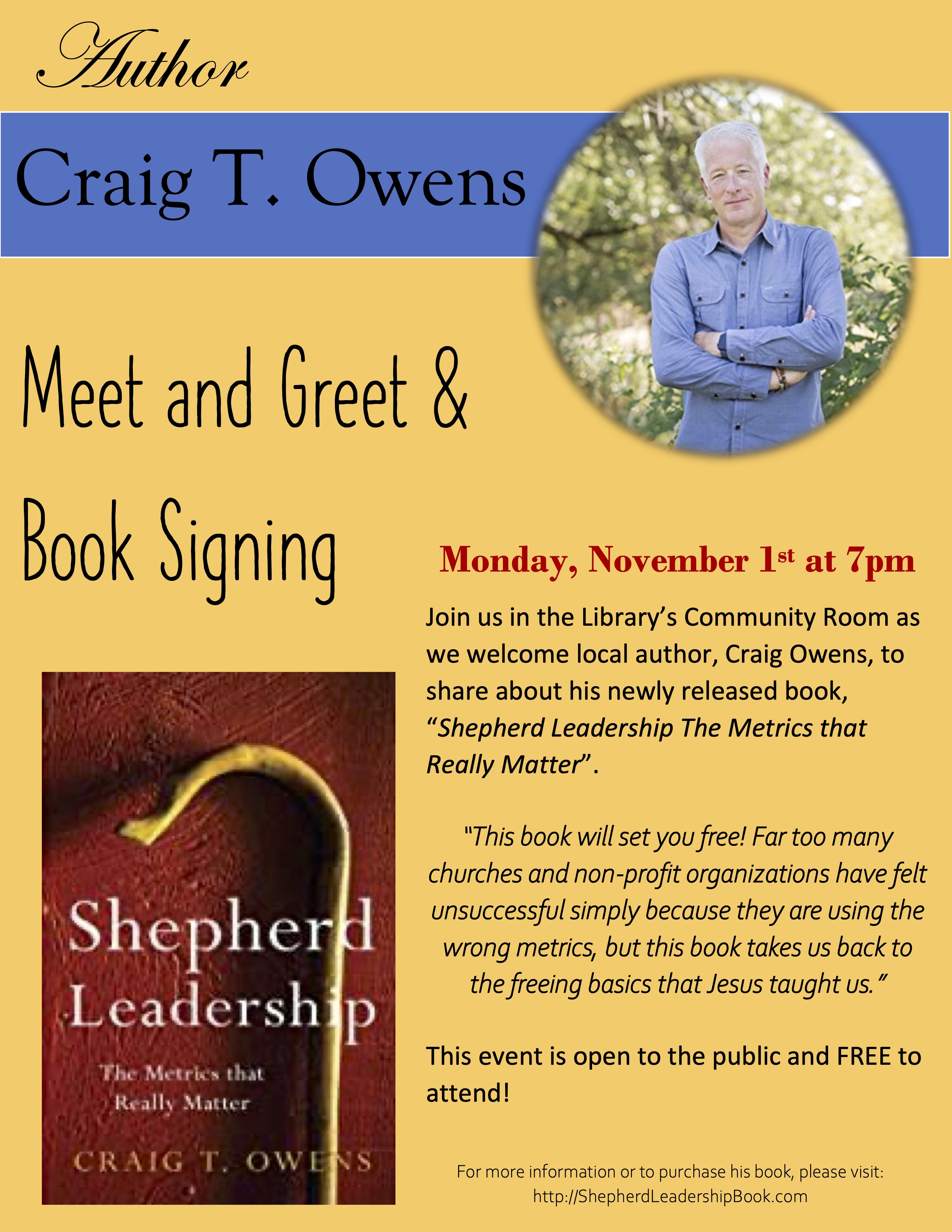
I’ll be sharing more clips from this interview soon, so please stay tuned. Shepherd Leadership: The Metrics That Really Matter is now available in print or ebook, and in audiobook through either Audible or Apple.
This is a weekly series with things I’m reading and pondering from Charles Spurgeon. You can read the original seed thought here, or type “Thursdays With Spurgeon” in the search box to read more entries.
Listen to the podcast of this post by clicking on the player below, and you can also subscribe on iTunes or Spotify.
Faith Sees Better Than Sight Does
For we walk by faith, not by sight. (2 Corinthians 5:7)
There is walking by faith, and there is walking by sight. The most of men, all men indeed, naturally walk by sight. They have a proverb that says, ‘Seeing is believing,’ and they are wise men, for they trust people as far as they can see them, and no further. … Self-reliance is the name of the principle, and according to the world, the best and grandest thing that a man can do is have faith in himself. …
I think the world must be pretty well ashamed of itself if it still considers this poor earth to be all that a soul has to live for. I feel as if I could not talk upon the matter. Solomon tried everything there was in this world—riches, power, pleasure—every sort of delicacy and delight he had, beyond the point of satisfaction. And what was his verdict upon at all? ‘Vanity of vanities, all is vanity’ (Ecclesiastes 1:2). …
If there is not another world to live for, I must say that this life is a most unutterably empty kind of thing! It is not worthy of a man! But oh, to believe what God tells me: that there is a God; that God became flesh to bear me up to Himself! To believe that I am God’s son, that I have an immortality within myself that will outlast the stars, that I will one day see His face and sing His praise forever with cherubim and seraphim! Why, there is something here! …
If you walk only by sight and believe only what you see, what do you believe? You believe that while you are living here, it is a good thing to make the best you can of it. And then you will die and be buried, and that will be the end of you! What a poor, miserable, ignorant belief this is! … But when you believe in what God reveals and come to walk by faith, how your information expands! Now riddles are all solved, and the inexplicable is understood! …
The principle of faith does best in the dark. He who walks by faith can walk in the sunlight as well as you can, for he walks with God. He has enlightened eyes, but he can walk in the dark as you cannot, for his light is still shining upon him. He trusts in the unseen and in the invisible, and his soul rejoices when present things are passing away.
The devil’s strategy hasn’t changed. He will try to get you to say, “Woe is me! Look at all of the bad things happening around me!”
But we walk by faith, not by sight. “Faith is the assurance—the confirmation, the title deed—of the things we hope for, being the proof of things we do not see and the conviction of their reality—faith perceiving as real fact what is not revealed to the senses” (Hebrews 11:1 AMP).
Don’t give in to the temptation to believe only what you see. There is so much more waiting for you. It’s all yours by faith in Jesus Christ!
Zechariah and Haggai are both very specific in the dating of their prophetic activity. We can also cross-reference their dates with the historical books of Ezra and Nehemiah, and with numerous other extra-biblical sources.
Listen to the podcast of this post by clicking on the player below, and you can also subscribe on Apple, Spotify, or Audible.
Proverbs 10 begins with these words, “The proverbs of Solomon…” (Proverbs 10:1).
Over the next six chapters (184 verses) Solomon generously employs the contrasting conjunction “but” 144 times—that’s nearly 80 percent of these verses! He clearly tells us the blessings of trusting God’s wisdom contrasted with the pitfalls of trusting our own wits.
I am also intrigued by the 21 verses where Solomon uses the amplifying conjunction “and.” These proverbs give us either the double advantage of leaning into God’s wisdom, or the double whammy of trying to do it our own way.
I’ll let you read through these six chapters and notice the contrasting conjunction “but” for yourself, but in this blog post I want to especially direct your attention to some of the “and” statements. I’ve listed these in three categories.
(1) The double whammies—
malicious people cause grief to others AND ruin to themselves (10:10)
trusting mortals is short-lived AND self-defeating (11:7)
a quick-tempered person does foolish things AND is hated (14:17)
(2) The double blessings—
a generous person prospers AND is refreshed (11:25)
a righteous life is a blessed life now AND an eternal life forever (12:28)
fearing God brings security for you AND gives your children a sure refuge (14:26)
(3) And these mixed proverbs using both a whammy and a blessing—
a righteous person is rescued from trouble AND it falls on the wicked instead (11:8)
a prudent person is praised AND the one with a warped mind is despised (12:8)
evildoers are trapped in their own evil AND innocent people escape evil (12:13)
There is so much wisdom to be gleaned not only in these words of Solomon, but throughout the entire Bible. Take your time and soak it in as you read the Scripture for yourself.
Here are some of the other posts I’ve shared that may help you in your Bible study time:
However you do it, and whatever tools you may use, get into your Bible every single day, and then let the Word of God get into you too. I can promise you this: Your time in God’s Word will absolutely change your life!
[0:58] Our empowerment comes from facing our fears.
[1:35] How does fear paralyze a leader?
[2:14] One fear leaders need to address in themselves and others: The fear of dropping the ball.
[3:00] Leaders need to be aware that confidence can ebb and flow.
[3:50] How we lead through fear.
[4:27] Transparency in a leader empowers the team to greatness. On the other hand, blaming is a defense mechanism that disempowers the team.
[5:49] Greg shares how we lead by example and with transparency.
[7:25] I address the fear that blocks leaders from giving authority to others.
[8:15] Greg suggests we switch our mindset from fear to learning opportunities.
[9:21] I share a Little League lesson that served me well into adulthood.
[10:50] How Greg and I help coach people through their fears.
[11:34] What other fears to leaders face?
[12:50] Creating a culture of safety helps our teammates confront their fears.
[14:03] How can leaders encourage people who are trapped by their fears?
[15:41] Leaders have to go first. I said, “Sometimes bravery is just going one step farther than you went before.”
[16:50] Greg shares a brave moment in his adoption process.
[18:18] We need to assess the gifts that others on our team possess.
[19:20] Greg unpacks a great quote about bravery.
[20:03] I share about the moment when I think bravery begins.
Check out this episode and subscribe on YouTube so you can watch all of the upcoming episodes. You can also listen to our podcast on Spotify and Apple.
Listen to the podcast of this post by clicking on the player below, and you can also subscribe on Apple, Spotify, or Audible.
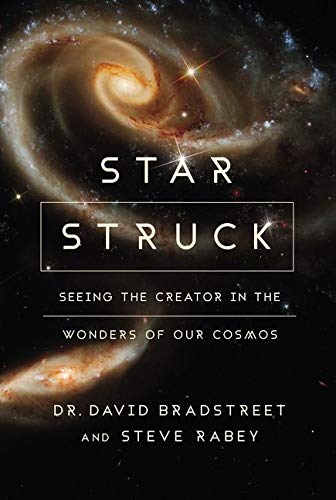
Because of my science background, I’m always fascinated by the discoveries of scientists that bring glory to God. So I was drawn in especially by the subtitle of Dr. David Bradstreet’s book Star Struck: Seeing The Creator in the Wonders of Our Cosmos.
This book is part autobiographic in how Dr. Bradstreet got into astronomy, part historical as he walks us through the advancements in the study of the heavens, and part devotional as he attempts to tie in biblical passages with these fascinating astronomical discoveries. But for me, this attempt to be all-encompassing didn’t “scratch the itch” that I thought it would when I first saw the subtitle. I think I would have appreciated it more if this were presented as three books: memoir, history, and devotional.
For me, the best part of Star Struck was the history of astronomy. Hearing from an astronomer how his predecessors thought, reasoned, hypothesized, and then presented their findings to an often skeptical world (and usually an even more skeptical church) was quite fascinating. I especially enjoyed some of the many tidbits about stars and planets, particularly the look at our Sun, Earth, and Moon.
I would not, however, recommend this book as a means to understand how astronomy shines such a clear light on the majesty of the Creator seen in the pages of the Bible, as I found that attempt quite lacking.
As a pure astronomy history book, Star Struck is a great read for anyone, from students to adults.



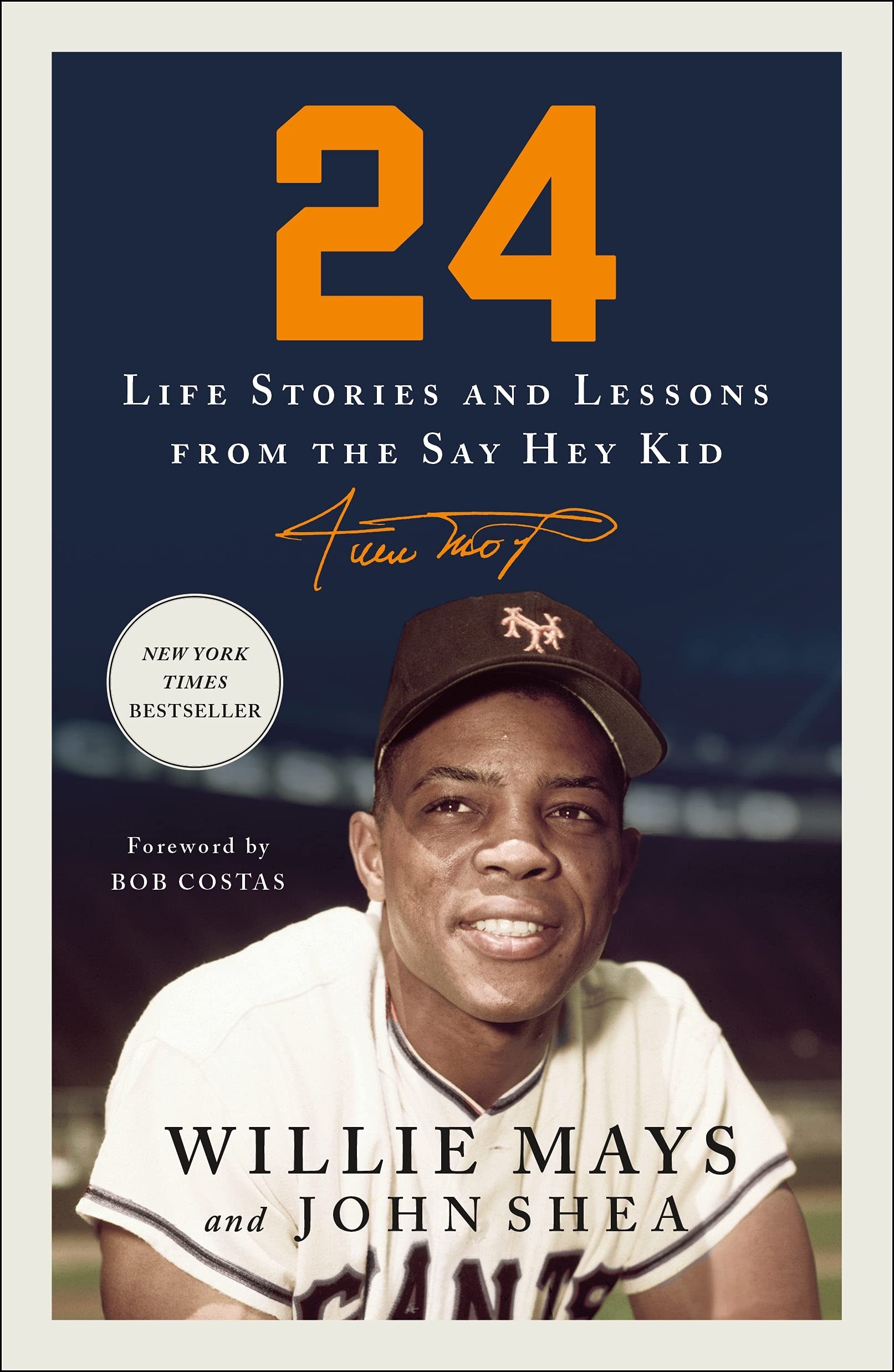 Whether you are a Major League baseball fan or not, there is so much to love about 24: Life Stories and Lessons from the Say Hey Kid by John Shey.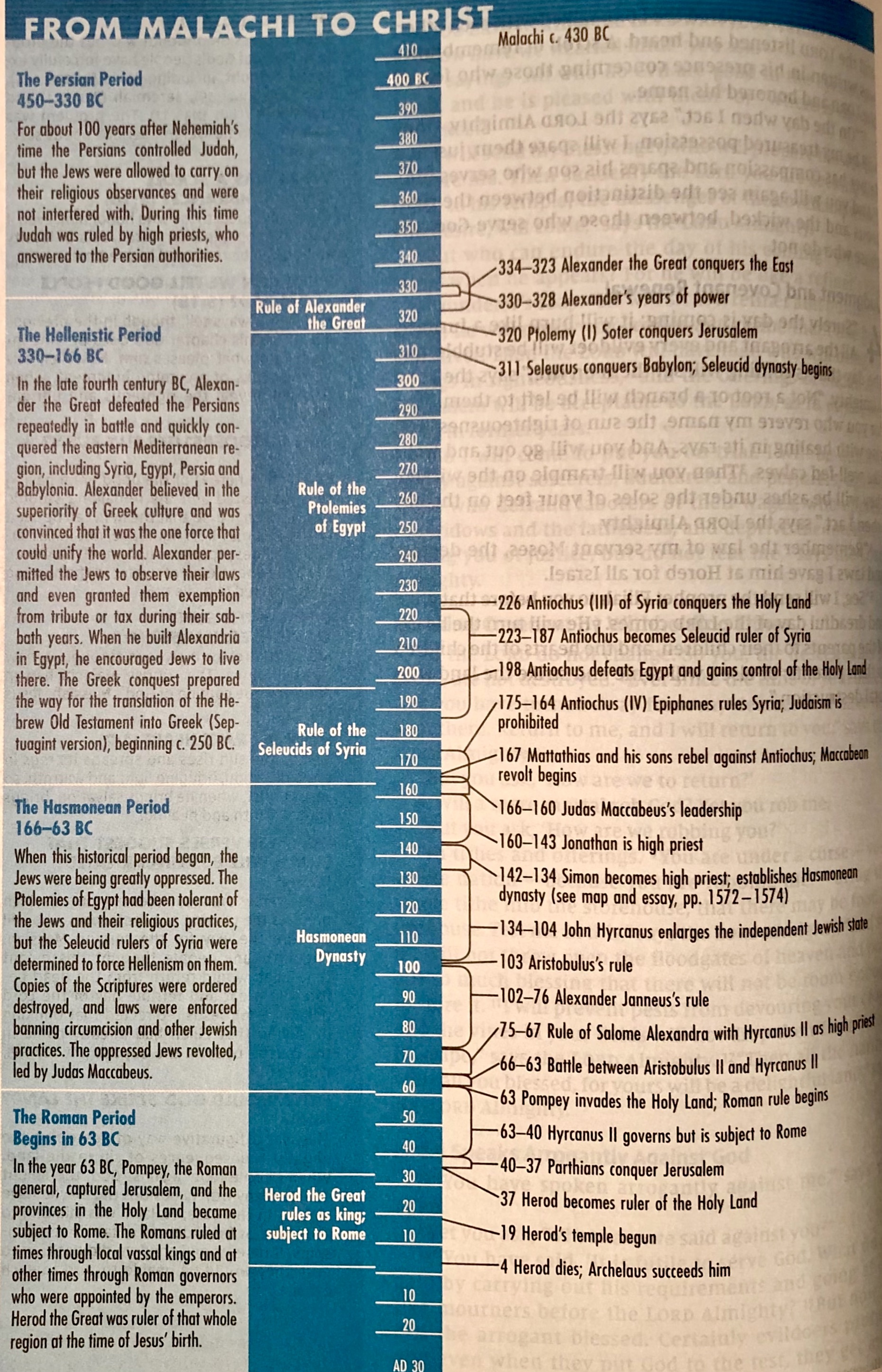








 Craig T. Owens