Never Invulnerable

Listen to the podcast of this post by clicking on the player below, and you can also subscribe on AppleSpotify, or Audible. 

Before beginning His public ministry, Jesus resisted the fierce onslaught of the devil in the wilderness. After using the Word of God to defeat all three of the devil’s temptations, Luke records, “the devil…left [Jesus] until an opportune time” (Luke 4:13). 

The verb Luke uses here is suggestive of a time when the devil may think he has an advantage over his intended victim. The KJV says the devil departed for “a season.” Just like farmers know the proper season to plant, to weed, to harvest, and to rest, so does our adversary. 

Check out how some other translations of the Bible render Luke 4:13—

  • another more opportune and favorable time (AMPC) 
  • until the next opportunity came (NLT) 
  • lying in wait for another opportunity (the Message paraphrase) 

Jesus warned Peter that the devil wanted to sift him as wheat (Luke 22:31-32). Although Peter knew the “opportune time” was coming, he was unprepared when it did come and he failed in his initial time of temptation. Jesus restored Peter and told him that he was going to be the one to help prepare others to be victorious when the devil attacked them. 

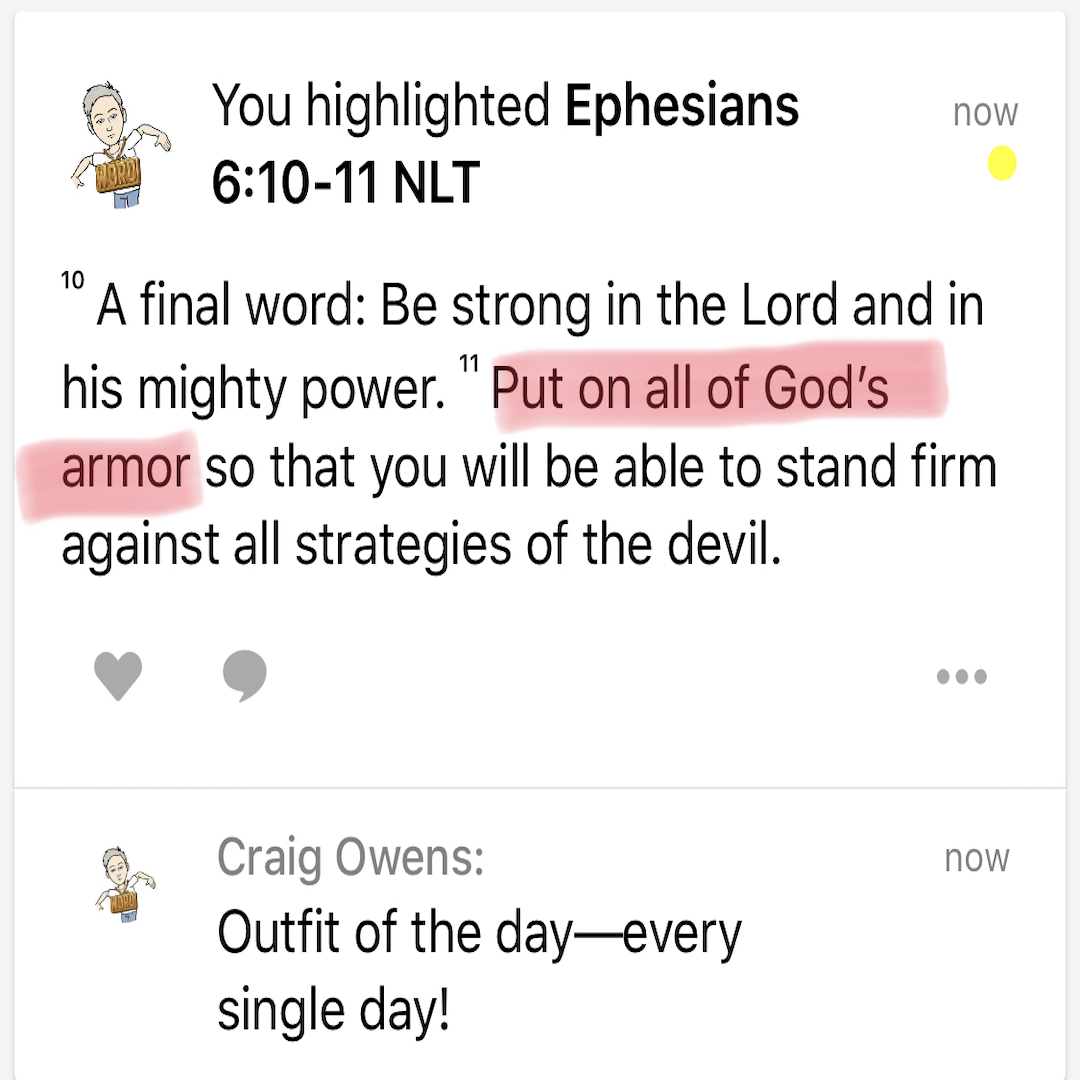
Peter may have had this in mind when he warned us to be alert for our prowling enemy (1 Peter 5:8). The apostle Paul also tells us to be aware of the devil’s schemes, and to never be without our spiritual armor (2 Corinthians 2:11; Ephesians 6:11). 

There is never a time when I am invulnerable to a spiritual attack. 

The moment I think I am self-secure is an opportune season for the devil to unleash his attack on me. “If you think you are standing firm, be careful that you don’t fall” (1 Corinthians 10:12). 

Peter tells us to “resist [the devil], standing firm in the faith” (1 Peter 5:9). In the preceding three verses, Peter tells us just how to do this:

  • humble yourself before God—no feelings of self-sufficiency 
  • don’t be anxious about an impending attack 
  • remain alert and sober minded (1 Peter 5:6-9) 

Don’t be caught off-guard by giving the devil “an opportune time,” but stay utterly dependent on God. As James says, we have to first submit ourselves to God and then we will be prepared to resist the devil and watch him flee from us (James 4:7). 

►► Would you please prayerfully consider supporting this ministry? My Patreon supporters get behind-the-scenes access to exclusive materials. ◀︎◀︎
A Different Response To Attacks

Listen to the podcast of this post by clicking on the player below, and you can also subscribe on AppleSpotify, or Audible. 

Sir Isaac Newton may have said for every action there was an equal and opposite reaction, but that’s not true for God-fearing leaders. 

Check out this episode of The Podcast. 

The story of Paul and Barnabas that I reference in this video is found in Acts 14:1-21. 

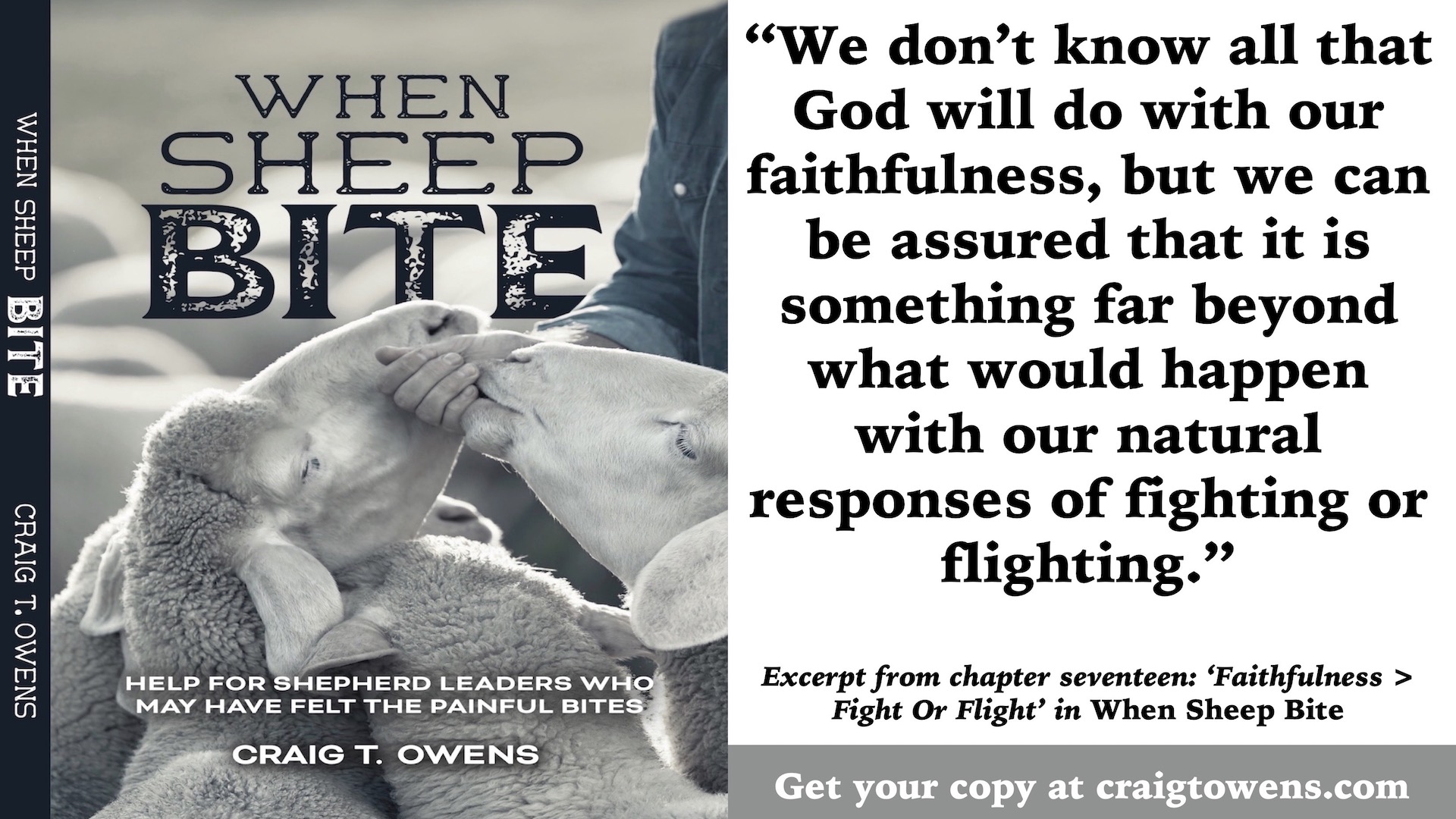
My book When Sheep Bite is divided into three section. In the first section I talk about a shepherd leader’s heart and section two diagnosis the sheep bites leaders endure. The final section is all about the faithfulness to finish well—not giving in to the natural responses of fight or flight. 

I open that final section of the book like this—

     Psychologists and medical doctors have all described what happens to our minds and bodies when we are under attack. They are universal responses that our loving Creator has implanted in all of us to be able to respond to threats that come at us. When confronted with a biting sheep, without consciously thinking about it our minds and bodies prepare for fight or flight. 

     But let’s consider those responses in the context of a shepherd pasturing his sheep. Is it an effective strategy for the shepherd to fight his sheep? No, of course not. Paul told Timothy that a shepherd is “not quarrelsome but forbearing and peaceable” (1 Timothy 3:3 AMPC). 

     Is it allowable for the shepherd to run away from the threat, leaving the flock without a shepherd? Again, no, as Jesus told us that one who resorts to flight isn’t worthy to be called a shepherd but is considered a mere “hired hand [who] cares nothing for the sheep” (John 10:12-13). 

     So if godly shepherds cannot give in to the natural responses of fight or flight, what are we to do? Since we serve an all-power, all-loving Chief Shepherd we must look to Him for the supernatural response of faithfulness. 

     Not fight. Not flight. But faithfulness. 

Check out some of my other posts about godly leadership too. 

►► Would you please prayerfully consider supporting this ministry? My Patreon supporters get behind-the-scenes access to exclusive materials. ◀︎◀︎
Grief From God

Listen to the podcast of this post by clicking on the player below, and you can also subscribe on AppleSpotify, or Audible. 

The insidious thing about leprosy is that it kills the body’s pain receptors. Lepers may walk on a broken ankle, utterly mangling their foot. Or they may stick their hand in the first without realizing it.  

Pain is important to us—it tells us that something isn’t right and that we should seek help. Just as there is a danger if we ignore physical pain, there is a greater danger if we ignore spiritual pain. It’s a greater danger because eternal separation from God is far more deadly than mere physical death. 

Moses warned the Israelites of the danger of spiritual complacency, or we could call it spiritual leprosy. Check out the warning in Deuteronomy 8:10-14, 17. It didn’t take too long for this spiritual numbness to set it (see the fulfillment of Moses’ words in Judges 2:10-15). 

(Check out all of the Scriptures in this post by clicking here.) 

When we read in Judges 2, “The hand of the Lord was against them,” this is actually a very loving statement. Think about it: What would happen if God continued to give them success in their sinful endeavors? 

We can see this a little more clearly in Isaiah 63:7-10 where we see that God’s love is both redemptive and corrective. His fighting against His people caused them to recall God’s ways and wait on Him once again (63:11; 64:4-5). Notice the last question of verse 5, “How can we be saved?” 

It starts with remembering—that’s what Moses said at the beginning of this journey, and it’s also what Jesus says at the end (Revelation 2:5). 

We have to meditate on God’s Word because it…

  • …is a mirror (James 1:22-25) 
  • …is a bright, revealing light (Psalm 90:8 AMPC) 
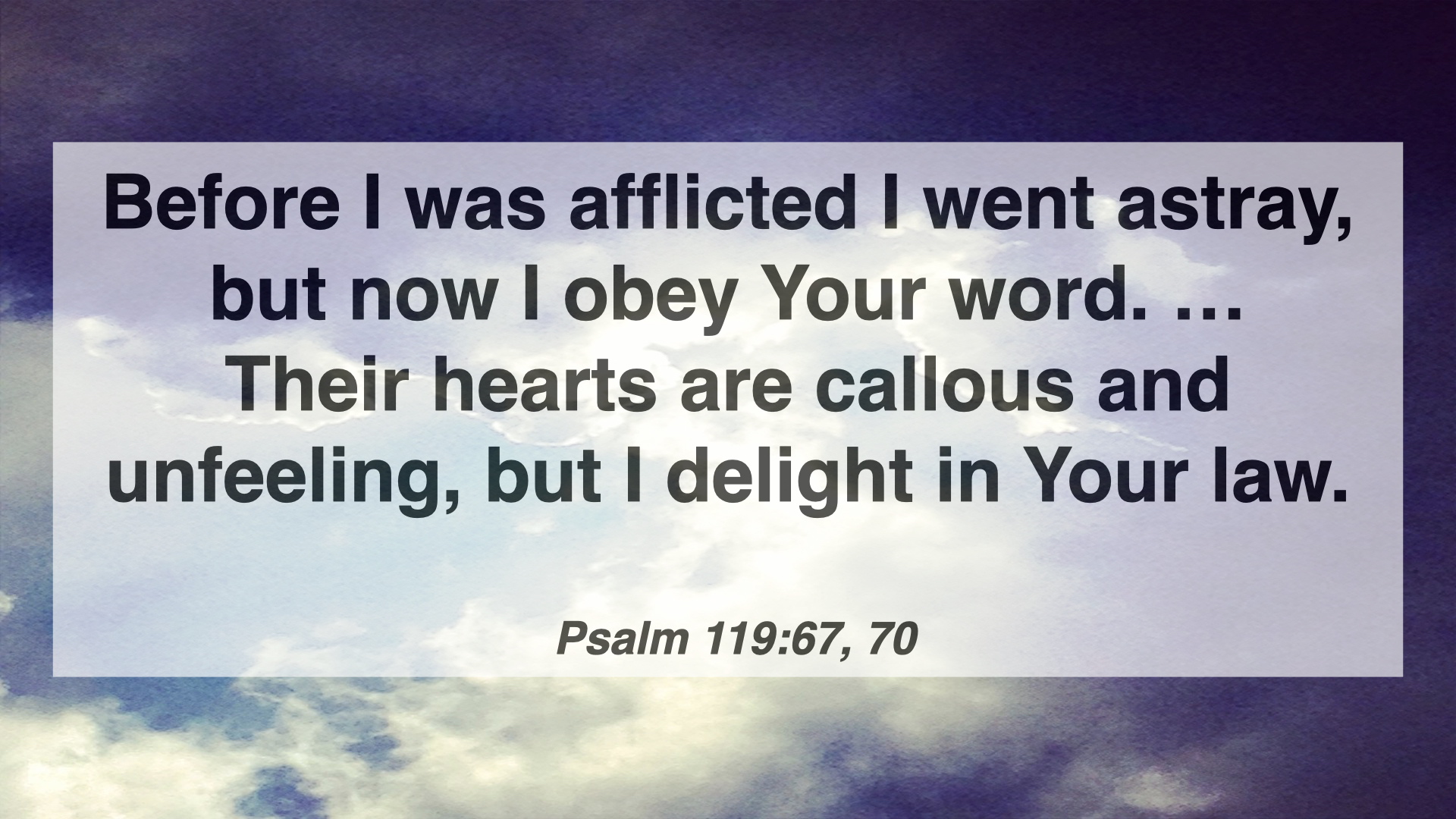
  • …surgically brings healing (Hebrews 4:12-13; Psalm 119:67, 70) 
  • …prompts godly sorrow without condemnation (Romans 8:1-2; 2 Corinthians 7:8-9) 

Only when this grief is turned to joy again can God use us to minister to others. We are able to comfort and redirect others because God has comforted and redirected us back onto His path. 

David became enamored with his spiritual success and forgot God’s laws. His sin caused God to turn and fight against him. In his deep grief, David cried out to God (Psalm 51:7-13). It was only after David repented that his grief was lifted and he was able to teach others about our loving God. 

Let’s not ignore our grief, but instead let’s ask God what He is trying to tell us through that grief. Remember, in our distress He is distressed and will carry us. But if our spiritual leprosy has taken us away from God, He will lovingly fight against us to get us to return to Him! 

You can check out all of the other messages in this series by clicking here. 

►► Would you please prayerfully consider supporting this ministry? My Patreon supporters get behind-the-scenes access to exclusive materials. ◀︎◀︎

Links & Quotes

High-capacity leaders may need to tap the brakes a bit for the sake of their teammates. Otherwise, their teams may get discouraged and then completely disengage. Check out the full conversation on The Craig and Greg Show.

I have a lot of new video content on my YouTube channel every week. Please check it out and subscribe so you don’t miss anything.

“The important thing is not to stop questioning. Curiosity has its own reason for existing. One cannot help but be in awe when he contemplates the mysteries of eternity, of life, of the marvelous structure of reality. It is enough if one tries merely to comprehend a little of this mystery every day. Never lose a holy curiosity.” —Albert Einstein 

“A steady and balanced diet of God’s Word provides the spiritual energy disciples need for the work of the Lord. … Preachers and teachers must always bear this in mind. Disciples don’t grow into Christlikeness in leaps and bounds, but incrementally, here a little and there a little. We must teach the glory and majesty and scope of the whole counsel of God, but we must teach the disciples how to discern what that requires for every next step in their lives.” —T.M. Moore 

Some skeptics of Christianity try to push their claim that Easter is really a pagan holiday co-opted by Christians. But reading the historical records shows that this is clearly not the case. Check out this helpful article from Michael A.G. Haykin. 

Caiaphas was a key high priest during the New Testament era. The Bible Archeology Report has a really cool archeological biography of this man.

“One step at a time is all it takes to get you there.” —Emily Dickinson 

Invited To Common Ground

This is an audio portion of a video teaching I recently shared with my Patreon supporters.


My supporters received the full teaching video and audio, along with some supporting resources. 

Would you consider supporting this teaching ministry for just $5 per month? My supporters get exclusive content that no one else receives, as well as early access to content that will eventually be shared publicly. 

The Craig And Greg Show: Blind Spots

Listen to the podcast of this post by clicking on the player below, and you can also subscribe on AppleSpotify, or Audible.

In our last episode, Greg and I discussed how vital it is to focus on your own internal development. If you’ve been doing that, chances are you have identified a few blind spots in yourself. While it might feel more comfortable to simply hide these away and hope nobody notices, we would like to encourage you to be vulnerable: Drag your blind spots into the light, address them, and watch how your leadership improves as a result.

  • [1:30] Leaders have to get comfortable with being vulnerable if they are going to make any meaningful changes in their life.
  • [2:17] Blind spots have to be brought out into the light.
  • [5:44] Paying attention to the feedback from others requires us to slow down to process what we need to change.
  • [7:35] Leaders need to understand the speed of their team in the area of productivity.
  • [8:34] Greg shares a “blind spot” example from one of his kids.
  • [9:53] Why do leaders avoid their blind spots?
  • [11:45] Peripheral vision isn’t good just for athletes, but for leaders too.
  • [13:11] I share how asking good questions has helped my teammates with their blind spots.
  • [14:50] If leaders assume things about their teammates or work with their favorite teammates, they will never improve the morale of the team.
  • [18:17] Greg talks about the movie “Blindside” as a learning point about having the right people watching out for us.
  • [20:10] We need to be thinking about the kind of people we need around us.
  • [25:42] The one word most people are afraid to say.
  • [26:59] Sometimes a fresh set of eyes is necessary to see a blind spot. Maximize coaching would love to be a resource for you in this area.

Check out this episode and subscribe on YouTube so you can watch all of the upcoming episodes. You can also listen to our podcast on Spotify and Apple.

Again And Again And Again

Listen to the podcast of this post by clicking on the player below, and you can also subscribe on AppleSpotify, or Audible. 

I don’t know if this ever happens to you, but I’ve lost count of the number of times that this happens to me. I open up my Bible and begin reading right where I left off the day before, and as I’m reading, my attention is riveted by words that seem to pop off the page! 

I look at them again and see that this passage contains highlights or underlining or notations from when I read here before. Yet I’m left scratching my head saying, “How did I miss this when I read this passage earlier?!” 

I know this is because I’m a different person now than I was the last time I was reading this passage. I’ve learned some things and hopefully I have grown in the process. Quite simply, the Holy Spirit knew I wasn’t ready earlier for the new concept that jumped off the page at me. 

The other day I was reading in the Book of Romans and I noticed something that Paul wrote—

     And, moreover, that the Gentiles might glorify God for His mercy. As it is written: “Therefore I will praise You among the Gentiles; I will sing the praises of Your name.” Again, it says, “Rejoice, you Gentiles, with His people.” And again, “Praise the Lord, all you Gentiles; let all the peoples extol Him.” And again, Isaiah says, “The Root of Jesse will spring up, One who will arise to rule over the nations; in Him the Gentiles will hope.” (Romans 15:9-12) 

Look at that wording: “As it is written … again it says … and again … and again….” Paul is telling us that God tells us the same thing in different ways, at different times, and through different voices. It’s the same message, but it resonates a little differently in each place. As God’s Word speaks to us again and again and again, we see the richness and fullness of the message. 

In v. 9, Paul quotes David in 2 Samuel 22:50 and Psalm 18:49. 

In v. 10, the quotation is from Moses in Deuteronomy 32:43.

In v. 11, an anonymous psalmist in Psalm 117:1 is quoted. 

And in v. 12, Paul quotes the prophet Isaiah in Isaiah 11:10. 

(Check out all of these Scriptures for yourself by clicking here.)

The Jews considered the Holy Scripture to be divided into three sections: The Law, the Prophets, and the Writings. Look again what Paul did: 

  • He quotes Moses from the Law 
  • He quotes Isaiah from the Prophets
  • He quotes David and the anonymous psalmist from the Writings

Jesus said, “Do not think that I came to destroy the Law or the Prophets. I did not come to destroy but to fulfill” (Matthew 5:17). And after His resurrection, as He walked and talked with a couple of disciples, He reminded them, “This is what I told you while I was still with you: Everything must be fulfilled that is written about me in the Law of Moses, the Prophets and the Psalms” (Luke 24:44). 

One of the reasons that the consistent message of the Scripture is repeated again and again and again is so that everyone will have a chance to hear it and believe it. 

There is such a beauty in this! I encourage you to take the time to look up the cross-references that many Study Bibles have put together. As you read the “it is written” statements in the Bible, I hope you will be encouraged as you see it throughout all the Bible again and again and again! 

Check out the book reviews I’ve shared on these study Bibles: 

I would also recommend 3 Bible studies for you to try and 2 more Bible studies for you to try. 

►► Would you please prayerfully consider supporting this ministry? My Patreon supporters get behind-the-scenes access to exclusive materials. ◀︎◀︎

Not Forsaken

Listen to the podcast of this post by clicking on the player below, and you can also subscribe on AppleSpotify, or Audible.

Although some people are afraid of this, the Bible makes it clear that God doesn’t forsake us. But the Bible also makes it equally as clear that we can forsake God. 

Listen to the words God spoke through Moses—

     And the Lord said to Moses, “Behold, you shall sleep with your fathers, and this people will rise up and play the harlot after the strange gods of the land where they go to be among them; and they will forsake Me and break My covenant which I have made with them. Then My anger will be kindled against them in that day, and I will forsake them and hide My face from them. And they shall be devoured, and many evils and troubles shall befall them, so that they will say in that day, ‘Have not these evils come upon us because our God is not among us?’ And I will surely hide My face in that day because of all the evil which they have done in turning to other gods.” (Deuteronomy 31:16-18 AMPC)

To forsake means to depart from someone or to neglect them. 

While we are following God, He will never forsake us. But when His people turn aside in fascination of sinful things, they forsake God by no longer following Him. We read this in the words of God’s people, “Our God is not among us.” 

When we don’t follow God, He still never forsakes us. However, God refuses to bless people who persist on doing their own thing. 

God’s blessing is reserved for those who continue to follow Him. In the language of the New Testament, God’s blessing only flows into the branches that continue to abide in Jesus (see John 15:1-8). 

When we forsake God, we cut ourselves off from His life flow. It is not the Vine who has left us, but we who have severed ourselves from the Vine. 

If God feels distant from you, be assured that He hasn’t forsaken you. Perhaps you could pray a couple of prayers that David prayed. Maybe a prayer asking for the Holy Spirit to reveal to you where you may have detached yourself from the Vine of God (Psalm 139:23-24). Or perhaps a prayer of forgiveness and assurance of God’s forgiveness and restoration (Psalm 51:1-10). 

Don’t give into the feelings of despair, but run back into the embrace of the One who loves you—the One who never leaves you nor forsakes you:

     Be strong, courageous, and firm; fear not nor be in terror before them, for it is the Lord your God Who goes with you; He will not fail you or forsake you. (Deuteronomy 31:6) 

►► Would you please prayerfully consider supporting this ministry? My Patreon supporters get behind-the-scenes access to exclusive materials. ◀︎◀︎

Joyful Proof

Listen to the podcast of this post by clicking on the player below, and you can also subscribe on AppleSpotify, or Audible. 

This whole series of messages is about how God can turn our grief into joy. On Easter Sunday we celebrate the most joy-filled event in all of history: the resurrection of Jesus! 

At our Good Friday service, we talked about how the day was anything but good for those who were there. The day is only good for people who have been rescued from eternal, inescapable grief. 

The Bible tells us that all of us have sinned and the penalty for that sin is eternal separation from God (Romans 3:23, 6:23a). But Jesus died in our place (Romans 5:8) to turn our eternal grief into eternal joy. Check out this out: God promises to exchange the cup of wrath and judgment with the cup of righteousness and peace (Isaiah 51:17-22). That’s exactly what Jesus accomplish with this death and resurrection! 

(Check out all of the biblical references in this post by clicking here.) 

On Friday, no one was joyful. In fact, it was just the opposite: Grief gripped their hearts and held them in fear. Probably the only one who was happy on that day was the devil. 

On Saturday, the clouds of grief and fear darkened even more. It was the Sabbath day, and the Jewish followers of Jesus would still have to attend the synagogue and go through the motions of the day. Can you imagine how hollow and meaningless all of the activities seemed? 

Then Sunday morning arrived. Jesus had predicted this (Matthew 12:40), but when some of the women who attended to His needs during His years of ministry came to the tomb, they were completely unprepared for what they found (Luke 24:1-7). 

Jesus told them that they would see their grief turned to joy (John 16:20, 22; Luke 22:53), but when these ladies told His disciples, they still couldn’t comprehend it (Luke 24:9-12, 19-24). 

Grief can so grip our emotions, that it will effect us physically as well: our eyes are clouded, our mind is fuzzy, and our ears seem stuffed with cotton (John 20:14-16; Luke 24:15-17). 

So what finally convinced them? Their own hearts! 

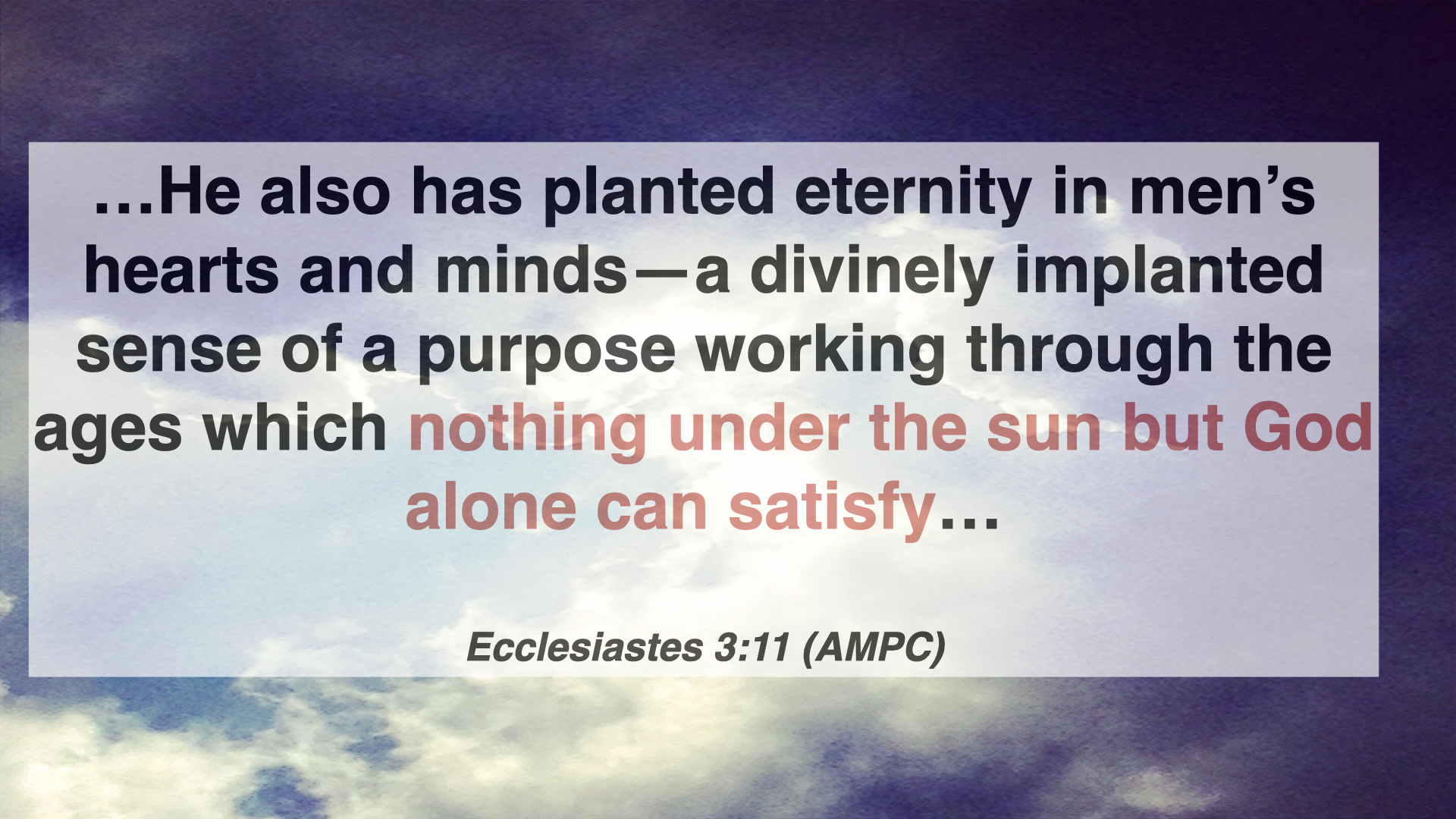
Solomon wrote, “He has planted eternity in the human heart” (Ecclesiastes 3:11). The AMPC says: He also has planted eternity in men’s hearts and minds—a divinely implanted sense of a purpose working through the ages which nothing under the sun but God alone can satisfy. 

Mary finally saw Jesus and saw her grief turned to joy when she heard Jesus say, “Mary.” 

These men on the road said their hearts burned in them when Jesus explained the Scripture to them (Luke 24:31-32, 27). 

And when the other disciples were locked away for fear of the Jews (John 20:19), Jesus spoke to them about how His Word was fulfilled in His actions (Luke 24:44-46). 

There is a hymn that ends, “You ask me how I know He lives, He lives within my heart.” There is something unmistakable and irrefutable when someone knows what it is to have their sins forgiven—to have their grief turned to unquenchable joy! 

In fact, the best proof of a risen Savior is seeing a life freed from gripping grief that used to plague them.  

If you don’t know Jesus as your Savior, the thought of the end of life and what comes next probably fills you with a sense of uneasiness. It doesn’t have to be this way! 

If you do know Jesus, please remember that your best testimony is a life that doesn’t get bogged down in the same grief the world experiences. When you can show supernatural joy while everyone else is gripped by grief, people will turn to you (1 Peter 3:15). 

Please check out the other messages in this series called Grief Into Joy by clicking here. 

►► Would you please prayerfully consider supporting this ministry? My Patreon supporters get behind-the-scenes access to exclusive materials. ◀︎◀︎

Temporary Sorrow For Eternal Joy

Listen to the podcast of this post by clicking on the player below, and you can also subscribe on AppleSpotify, or Audible. 

On Sunday we looked at the thought that our grief often comes because our current situation isn’t what we expected it to be. Notice that we say, “what we expected,” as though we can control anything!  

Today we remember the horrific death of Jesus on the Cross and we call it Good Friday. We can only call it “good” now because we see the results on the other side. If we were to go back in time to the weeks, days, and even moments before Jesus was arrested and so cruelly treated, those around Him would call that time anything but good. 

Look how the disciples responded to this coming event (Matthew 16:21-22). Grief can also come when we give more weight to today’s pain than we do to eternity’s joy. 

(Check out all of the Scriptures in this post by clicking here.) 

This has always been a strategy of the devil to get people to look at now and not consider eternity. That’s how he tempted Adam and Eve, who gave in to this ploy. And then he tried the same strategy on Jesus, but failed (see Genesis 3:1-5; Matthew 4:1-10). 

Jesus knew why He came to earth (Matthew 20:28). And as He got closer and closer to the day of His crucifixion, the weight began to build (John 12:27). 

Look at how Jesus fought grief by making sure He gave more weight to eternity. He turned His pain into prayer so His Father could exchange His grief for His joy (Matthew 26:36-44).

Jesus prepared His disciples by trying to give them an eternal focus (Luke 22:14-20). He told them to pray that they wouldn’t give in to this temptation to trade eternal joy for momentary pain, but they didn’t understand. This is what focusing on the pain of now does—the weight of it exhausts us emotionally, physically, and spiritually.

But look at the eternal focus in vv. 17-19:

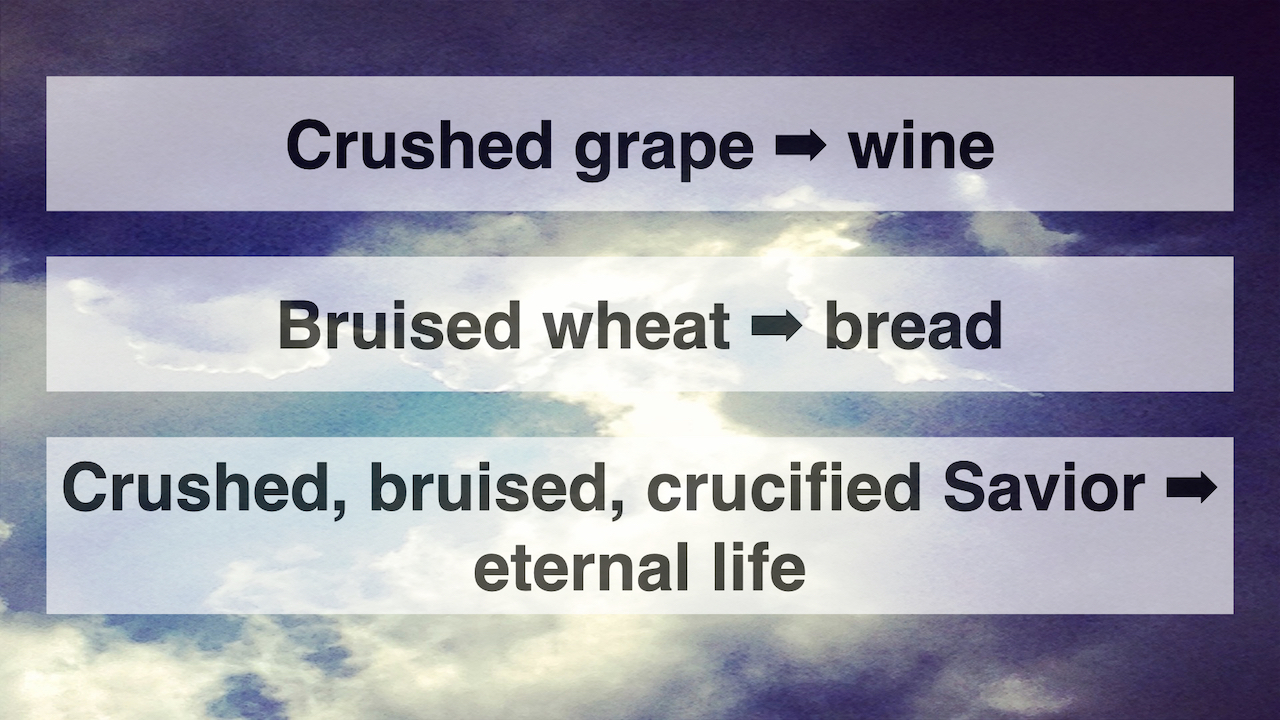
  • The crushed grape gives us wine 
  • The bruised wheat gives us bread 
  • The crushed, bruised, crucified Savior gives us eternal life  

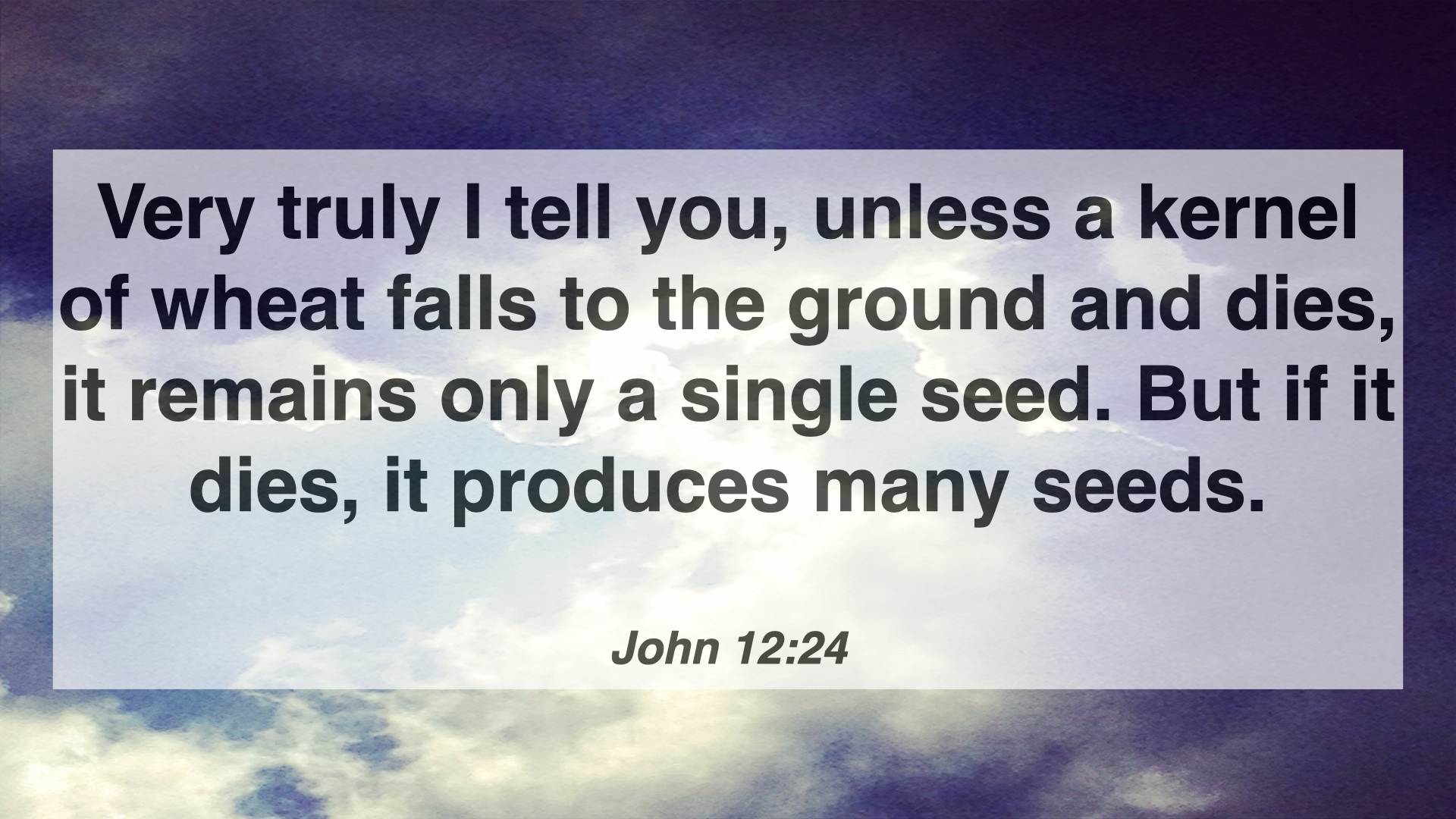
“Very truly I tell you, unless a kernel of wheat falls to the ground and dies, it remains only a single seed. But if it dies, it produces many seeds” (John 12:24).

Remember the devil’s strategy: get us so focused on the pain of now that we forget about the far greater joy that lasts forever. 

Jesus wants us to “do this in remembrance of Me”—to see the crushed grape and the bruised wheat and the crucified Savior in the light of eternity. 

Check out the other messages in this series called Grief Into Joy by clicking here.

►► Would you please prayerfully consider supporting this ministry? My Patreon supporters get behind-the-scenes access to exclusive materials. ◀︎◀︎